Posts tagged “William Glasser

A Violin, a Music Teacher, and Punished by Rewards

A teaching credential candidate at Pacific Union College recently shared an article with me that she felt certain reflected the principles of choice theory. She posted it on Facebook and I shared it with my friends on Facebook, too. A number of my Facebook friends, who are choice theory instructors, affirmed the importance of the article. So I figured I should pass on the article to you as well. Click on the following link to access the article –

Bribery Should Not Be Used as Motivation to Practice

Bribery1

Thank you, Laura Helms, for drawing our attention to this helpful article. This is not the first time Laura has contributed to The Better Plan. I included a paper she submitted on Choice Theory and Classroom Management in the post for December 16, 2013, entitled Glasser Biography Is Published! (kind of).

=====================

It’s easy to get an electronic copy of the Glasser biography for your iPad or Kindle and it is only $10. Click here to get your copy –

William Glasser: Champion of Choice (eBook)

Now priced at $18.50 on Amazon.

Now priced at $18.50 on Amazon.

The Holidays Require All of Our Choice Theory Superpowers

The S actually stands for Self-Control.

The S actually stands for Self-Control.

Even though the Holidays are supposed to be . . . well . . . the Holidays, many of us struggle to get through them with our mental health intact. Thanksgiving, Christmas, and New Year’s are supposed to be joyous, need-fulfilling occasions, right? So what’s with the pain and dysfunction?

The Holidays can be joyous and warm and need-fulfilling, however they can also accentuate things that are emotionally or physically painful for us. For instance –

+ the loss of loved ones is more keenly felt;
+ family estrangements show up in stark relief;
+ dysfunctional behavior often comes out during family reunions;
+ we sense our own aloneness more;
+ illnesses and physical disabilities tempt us toward deeper discouragement; and
+ we experience financial stress from pressure to buy presents or travel.

Like a superhero, choice theory can help us stay in the driver’s seat when it comes to our thinking and our emotions. Consider some of the superpower elements of choice theory –

+ We can directly control our thinking.
Amazing, really! Choice theorists learn to recognize when negative or destructive thoughts intrude on their consciousness and choose to reject them and to think about something that is happier and more productive.

It is Christmas eve morning and Jill feels weighed down emotionally. After waking up she lies in bed and just gets sadder and sadder over the passing of her mother nine months earlier. She started having thoughts of staying in bed, and maybe even not going to the party that evening that she had been looking forward to. The thought flitted across her mind that she was starting her own pity party right then for some reason and she decided to nip it in the bud. “I do miss my mother terribly, but staying in bed and feeling bad about it isn’t going to help. I’ve got stuff to do today and I want to go the party tonight.” She swings her legs out from under the covers and puts her feet on the floor, ready to take one step at a time. “Hmm . . . should I get in the shower or start the coffee?”

xinstallation-landing-page-banner.jpg.pagespeed.ic.xZuai7LHhy

+ We set the thermostat for our personal lives.
We place very specific pictures in the quality world photo albums in our heads and then we try to make those pictures come to life. One of the premier superpowers of choice theory is recognizing the importance of these pictures and then being able to manage them well. The photo album is very much like a thermostat in that in both cases we intentionally and strategically set the course of our lives.

Geoff really doesn’t want to put up Christmas lights on the house. He usually does it by himself, it’s cold, and it takes a lot of time. As a result he comes up with a lot of reasons not to put up the lights – “I don’t even know where the lights are stored” or “I am really jammed for time this year” or “I don’t want to put lights up when so many people are hurting in the world.” Monica, his wife, really likes it when the house has Christmas lights and she comes up with reasons to make that happen – “the lights are in the garage” and “we’ll be the only house without lights” and “it means so much to the kids.” They remained entrenched in their QW pictures until Geoff pointed out that he felt overwhelmed adding Christmas lights to his To Do List and Monica responded that she understood and offered to help him with the project. They actually had fun together getting it done.

cv13

+ Our feelings do not need to control us.
Feelings, be they helpful or not, are a part of our total behavior. They are aligned with our thinking and our actions, both of which are under our direct control. We may not have direct control over our feelings, but we have a great deal of control over our behavior. Our feelings can’t hijack our happiness unless we give them that power.

Carl does not want to go to his family reunion. As far as he is concerned his sisters are jerks who manipulate their parents into all kinds of bad decisions. He gets angry whenever he thinks about it. Choice theory could help Carl learn the difference between the Caring and the Deadly Habits. Instead of his feelings automatically taking him to blaming, complaining, and punishing, he could learn to accept his loved ones, flaws and all, truly listen to them, and try to negotiate with them without disconnecting.

Other choice theory superpowers include –

+ Recognizing that our personal view of reality is just that, our personal view, our interpretation of the facts as we see them.
+ Understanding that, to a very great degree, we create our reality.
+ Breaking the chains of victimhood and taking responsibility for our thinking and our behavior.

The Holidays are a special time of year that tends to intensify our emotions and our thinking. If ever there is a time of year in which choice theory is needed to help us navigate our circumstances, the Holidays are the time.

Here’s to our mental health for 2015!

happy-holidays-banner-bluehappy-holiday-banner-quotes-10t9k2jh

===============

The Glasser biography is easy (and cheaper, too, at just $10) to get for your iPad or Kindle by going to the following link –

https://www.zeigtucker.com/product/william-glasser-champion-of-choice-ebook/

Now priced at $18.50 on Amazon.

Now priced at $18.50 on Amazon.

Good Bye for Now, Kalispell

MT_27756

Margaret and I have been visiting our son and daughter-in-law in Kalispell, Montana, during the last week. In the process we have been reminded of what cold temperatures are like (although locals would laugh at my referring to high 20s and low 30s as cold). Our time together here has been so good, so relaxed. We headed to Spokane yesterday (the weather looked good to get over Lookout Pass) and then home today.

Jordan, Katy, Maggie, and Jim.

Jordan, Katy, Maggie, and Jim.

Kalispell sits next door to Glacier National Park and a couple of days ago we headed there to take in some of its beauty. The low clouds and snow on the ground kept us from exploring or seeing much, though. We’ll save Glacier for our next trip.

Had it been a clear, sunny day, apparently we would have had views like this.

Something we did see was an interesting place on the way to the park. Surrounding three large wooden crosses was an expansive half-circle of billboards, all proclaiming the Ten Commandments, the U.S. needing to be a God-governed place, or anti-abortion messages. The place was closed, so I am not sure about the overall goal of the place. It would seem somebody there wants to change the thinking and behavior of those who pass by. For me, the display of giant signs was a “2 x 4 up side the head” reminder of our human tendency to attempt to change the behavior of others.

photo 1 photo 4

I respect a person’s right to put up large signs proclaiming what they believe to be religious and moral truth, even as I think the signs do much more harm than good. People aren’t drawn to God through “sledgehammer” signs, civil legislation, or threats of impending punishment. Jesus understood the human mind and heart and from the upper room Sinai proclaimed –

So now I am giving you a new commandment: Love each other. Just as I have loved you, you should love each other. Your love for one another will prove to the world that you are my disciples. John 13:34, 35

Thinking that we are supposed to change the beliefs and behaviors of others creates a lot of pressure and tension within us. It is a huge burden to be the conscience and judge of others. Ever desiring our good, Jesus lifts that burden from us and reminds us that the Holy Spirit is an expert at the kind of conviction and convincing that leads to change.

But in fact, it is best for you that I go away, because if I don’t, the Advocate won’t come. If I do go away, then I will send him to you. And when he comes, he will convict the world of its sin, and of God’s righteousness, and of the coming judgment. John 16:7, 8

The Holy Spirit will do the convicting. We have been freed from that role. If we want to “change” others there is really only one way, and that is to truly love them, without strings, without demands, without agenda. Christianity has somehow become something Jesus never intended. Christianity isn’t about power or even about being “right.” It is about love and unity.

I am praying not only for these disciples but also for all who will ever believe in me through their message. I pray that they will all be one, just as you and I are one – as you are in me, Father, and I am in you. And may they be in us so that the world will believe you sent me.   John 17:20, 21

God is about relationships. Always has been. Choice theory is about relationships. Always has been. He created us to be in harmony with others, indeed, to love one another. In God’s words there is no stronger example of His way of being.

===============

Get the Glasser biography easily and quickly –

Get signed copies from the author at jimroyglasserbio@gmail.com.

Now priced at $18.50 on Amazon.

Now priced at $18.50 on Amazon.

Stamina

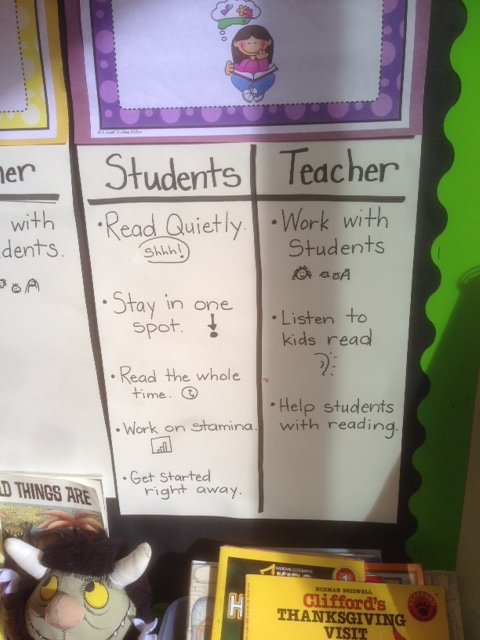
As a board member of NapaLearns, an amazing non-profit committee that supports Napa County schools, I have the privilege of visiting a different school each month. Yesterday our meeting took place at Donaldson Way Elementary School in American Canyon, California. Part of our meeting involved visiting classrooms and seeing first hand what students were working on. I saw the small poster in the picture below in a first grade classroom there. Something on the poster caught my eye. Do you see it?

Procedural steps for reading time for both the students and the teacher.

Procedural steps for reading time for both the students and the teacher.This is a poster that shares the steps for the Procedure to follow when it is reading time.

This is a poster that shares the steps for the Procedure to follow when it is reading time. Students are reminded to –

Read quietly

Stay in one spot

Read the whole time

Work on stamina

Get started right away

The step that caught my eye was the one that asks students to “work on stamina.” I thought I had a grasp of what the procedural step was wanting, but just in case I asked a first grade student to explain to me what “work on stamina” meant. The student didn’t hesitate and described how it takes practice to read for longer than a few minutes, but that the class was doing better at it. The goal was to sit still and quietly read for like, a while.

I was excited about this approach for several reasons, all of the reasons in some way having to do with choice theory.

Reason #1
Procedures help things run smoothly. When lots of students in a classroom need to do lots of different things at lots of different times, Procedures just help everything work better. Procedures aren’t like rules where students get in trouble for not doing them. The Procedures are reviewed and practiced, and when students forget them they are asked to do the Procedure correctly. In the spirit of choice theory, this is such a humane way to create important routines in the classroom. As teachers we have expectations and we state these expectations to our students, yet there is a way to teach expectations without turning them into a power struggle.

Reason #2
The step that asked students to “work on stamina” acknowledged that 1st grade students don’t automatically know what stamina is, nor do they have great amounts of it when it comes to reading. The teacher anticipated that her students wouldn’t have a lot of reading stamina, but that it’s ok and they would work on it. No need to get frustrated at students or worse, to get disgusted at them for their poor habits. No need to try and control them or force them into quiet reading time. Stamina is something that can be learned. It is so choice theory to recognize the age-appropriate abilities of students, and to support them as they work to grow and improve those abilities.

The remarkable reading data chart.

The remarkable reading data chart.

Reason #3
When I had a chance to talk with the teacher about the “work on stamina” step, she pointed to a poster next to the window that tracked the students’ progress. It’s the picture above. I hadn’t noticed it before, but now I honed in on this simple, yet remarkable data. She explained that they were tracking how long everyone in the class, when it was time for reading, could quietly read in one place. The chart shows that the first day some students could only make it for one minute. The second day, though, all the students made it for at least two minutes. The third day they all read quietly for almost five minutes. By day six, all of them read quietly, in one place, for 22 minutes. Think about it. A full classroom of active, diverse 1st grade suburban kids and all of them reading for 22 minutes. Obviously, the teacher presented the Procedure in such a way that the students themselves bought into it. They wanted to improve; they wanted to read more; they wanted the bar on that chart to go higher. It wasn’t a behavioral issue. It was simply about working on and building stamina.

Student books waiting to be read.

Student books waiting to be read.

It would have been easy, common actually, to try and discipline these young readers into reading quietly. But the results would have been far different than the results in this classroom. Criticizing, blaming, nagging, threatening, and punishing would harm the relationship between the teacher and the students, and the students would most likely grow up to not enjoy reading. I like the Procedure and data chart a lot better.

==========

Send me an example of how choice theory is showing up in your classroom. I would love to see it or hear about what you are doing!

==========

Now priced at $17.82 on Amazon; 22 reviews have been submitted.

Now priced at $17.82 on Amazon; 22 reviews have been submitted.

The Glasser biography, Champion of Choice, can make a great Christmas gift. It’s easy to purchase the book through Amazon at –

For a signed copy of Champion of Choice, contact me at –

thebetterplan@gmail.com.

The book, plus shipping it anywhere in the U.S., comes to $26.

For international orders, going through Amazon is the cheapest way to go. I am happy, though, to sign a bookplate and send it to you so that it can be placed on the inside cover. Let me know.

200 Top Psychologists – Where Is Glasser On the List?

William Glasser (1981)

William Glasser (1981)

A recently published APA article listed in rank order the top 200 psychologists of the modern era, which means since WWII. The authors of the article emphasized that they wanted to systematically identify eminent psychologists. Eminent has to do with the degree of recognition, impact, and respect an individual has on the field. To do this they focused on three main criteria – citation metrics, textbook page coverage, and major awards.

Albert Bandura

Albert Bandura

Although not from the field of psychology myself, there were a number of names I recognized. Here is a sampling from the list of 200 –

#1 Bandura, Albert
#2 Piaget, Jean
#5 Seligman, Martin
#6 Skinner, B.F.
#7 Chomsky, Noam
#12 Rogers, Carl
#17 Allport, Gordon
#33 Bruner, Jerome
#52 Beck, Aaron
#74 Gardner, Howard
#134 Csikszentmihalyi, Mihalyi
#139 Dweck, Carol

Carl Rogers

Carl Rogers

So, you’re probably wondering, where is William Glasser on this list? Incredibly, to me, Glasser is nowhere to be found among the top 200 psychologists. Zilch. Nada. It doesn’t seem possible that he isn’t on the list. But maybe the criteria were not suited to him. The list seemed to honor psychologists who pursued that role as scientists. Someone more knowledgeable than me can probably provide a better explanation.

The reference for the article is –

Diener, E., Oishi, S., and Park, J. (2014, August 25). An incomplete list of eminent psychologists of the modern era. Archives of Scientific Psycholgy, Vol 2(1), pp. 20-31.

===============

In anticipation of my teaching a classroom management course this quarter, on September 6 I posted a blog inviting you to share the elements that you felt were essential in a class on classroom management. Many of you responded. More recently, on November 7, I posted a blog asking for advice on how teachers can effectively work with parents. Again, you responded. The reason I am mentioning this is that students in my class have been reading your posts and have responded to many of them. I encourage you to take a look at the responses that follow these two posts – September 6 and November 7 – and even consider responding to the students who wrote to you. Thanks again for your help on this!


A Spine Surgeon’s Road Map Out of Chronic Pain

For those who are dealing with chronic pain, especially back pain, the following short clip from a recent Dr. Oz program could be the springboard to a new, pain-free life.


One of the reasons that the clip is so significant to me is that David Hanscom and I have been friends since we attended Pacific Union College together in the mid-70s. Over the years we have stayed in touch, although not consistently. A few years back, a mutual friend created a reunion golf event and David and I were able to briefly catch up.

I described how I was in the process of writing the biography of a guy named William Glasser, and he described how he was writing a book on how people could effectively deal with chronic pain, more often without invasive surgery. I knew about the years of training Dave had devoted to becoming a successful and respected spine surgeon, a man skilled at healing through cutting into tissue, so it very much caught my attention as he talked about the answer, for most people, having nothing to do with a scalpel.

I remember a feeling of excitement coming over me as I realized we were probably working on extremely complimentary topics, and I sensed he was coming to that realization, too, as he processed the implications of choice theory. Our conversation took place in the parking lot after the golfing was done, amidst quick conversations with other friends, some of them needing to get to other appointments or catch planes back to home. Yet Dave and I both knew we needed to talk more, to compare notes more, regarding the separate work we were each doing. We made the promise to each other to do just that, although truth be told, it is a promise we still haven’t kept.

We will make good on our promise. It is important that we do. We are both into people experiencing optimal mental and physical health. The healing power of the mind is incredibly amazing! Dr. Glasser understood it and Dr. Hanscom understands it. For now, I will share the following –

back-in-control-front


Back in Control is an Editors’ Favorite, one of the Best Books of 2014, and a Book of the Year on Amazon. You can access it here –http://www.amazon.com/Back-Control-surgeons-roadmap-chronic/dp/0988272903/ref=sr_1_1?s=books&ie=UTF8&qid=1415493599&sr=1-1&keywords=Back+in+Control

Or here –  www.backincontrolbook.com

You can also follow David Hanscom on Facebook at – Back in Control by Dr. David Hanscom

If you or someone you know is dealing with chronic pain, I hope today’s post has provided helpful information. From what I can tell it is consistent with and complimentary to a choice theory way of life. As always, I am open to your responses.

=================

Several of you responded to my request for teacher tips on how to effectively work with parents. Thank you, a lot for taking a moment to share an insight. We could still use a few more tips, so take a moment and type out a strategy or two. When you respond, remember to click the box that sets it up so that you will be alerted when someone responds to your comment. Click on the following link to get to the teacher tip post – https://thebetterplan.org/2014/11/07/taking-the-ugh-out-of-working-with-parents/


Good News About Guilt

dreamstime_132351051-300x200

During one of our interviews for the biography, Glasser said something that caught my ear. Maybe it was my religious upbringing that acted like Velcro to his comments on guilt, but whatever it was the comments have stuck with me ever since.

One of the girls Glasser worked with at the Ventura School seemed to have a breakthrough, and upon realizing she needed to start being truthful with those trying to help her, began revealing the details of her destructive past. She felt a lot of guilt and hoped to be forgiven.

The Ventura School for Girls, before it was moved to Ojai.

The Ventura School for Girls, before it was moved to Ojai.

Recalling this later, Glasser wrote in Reality Therapy (1965) that, “Instead of forgiving her, which used to be my natural impulse before I discovered how wrong it is therapeutically, I told her she was right to feel miserable and probably would continue to feel bad for the next few weeks. In reality therapy,” he continued, “it is important not to minimize guilt when it is deserved.”

From my own upbringing the idea of guilt had been a kind of bad word, something you needed to stay away from, and even to be cleansed from, so considering it from this matter of fact perspective was ear-catching. The following excerpt from Champion of Choice (2014) further explains his perspective.

When I questioned Glasser on that stance, he replied, “Yeh, yeh, I think guilt is a perfectly good emotion. I have nothing against guilt.” He added: “Well, the girls used to ask me this question, ‘Dr. Glasser, will you forgive me for the things I’ve done?’ You know they have a little religious background, some of them, and I said, ‘That’s not up to me to forgive you. I won’t hold what you’ve done against you, but in terms of forgiving that’s something you have to work out with your own self. I can’t forgive you. You did something wrong. You did it. The best way, if you’ve done something wrong, is to stop doing it, and maybe even treat the people you wronged, if you treated people wrong, better. That’s my advice, but that again up to you.’”

But if someone, like a person may come into my private office and say, ‘I feel so guilty, and I don’t know why.’ I said, ‘What have you done wrong?’ And that came as a new concept. Guilt without sin is a very common concept among people. It’s like you carry around the sin of the world or something like that. I said, ‘Well, if you can tell me something you’ve done really wrong, then I could certainly appreciate that you feel guilty about it, and I think that’s good. The guilt will prevent you from doing it again. But if you’re all upset and worked up and you’ve done nothing wrong, then I have no interest in it. It’s up to you.’”   pg. 111

Guilt is a huge factor when it comes to mental health. Not dealing with guilt effectively leads to a poor self-concept, broken relationships, and often a series of trips to a counselor or therapist. Religion is supposed to help us deal with guilt, but unfortunately, religion often does the opposite.

Shame3-720x380

Thanks to a tip from a friend I was alerted to the work of Dr. Brene Brown, who does research on shame and guilt. In her book, Daring Greatly (2012), Brown states that “Shame derives its power from being unspeakable. That’s why it loves perfectionists—it’s so easy to keep us quiet. If we cultivate enough awareness about shame to name it and speak to it, we’ve basically cut it off at the knees. Shame hates having words wrapped around it. If we speak shame, it begins to wither.”

Shame is a foreboding sense of unworthiness that is powered by the belief that, at the core of who I am as a person, “I am bad.” Guilt, on the other hand, has to do with a specific behavior or mistake. Instead of thinking I am bad, our self-talk would say that “I did something bad.” Interestingly, while shame leads toward self-protection, blaming others, and rationalizing our imperfections, guilt can prod us toward apologizing and changing a behavior.

Glasser alerted me to the idea that guilt can be useful and serves a purpose when it 1) causes us to stay aligned with our deeply held values, and 2) helps us stay connected to others. Brown seems to view guilt in the same way, that it can be a healthy part of our lives, but emphasizes how shame is different altogether from guilt. Shame causes us to isolate rather than reach out, to become silent rather than communicate openly, and to wrap ourselves in aloneness rather than foster intimacy with those who are important to us.

It might be hard to believe there is good news in guilt, but apparently there is.

===============

Now priced at $18.51 on Amazon; 21 reviews have been submitted.

Now priced at $18.51 on Amazon; 21 reviews have been submitted.

The eBook version can be accessed at –

https://www.zeigtucker.com/product/william-glasser-champion-of-choice-ebook/

The paperback version can be accessed at –

http://wglasserbooks.com

or from Amazon at –

http://www.amazon.com/William-Glasser-Champion-Jim-Roy/dp/193444247X/ref=sr_1_1?s=books&ie=UTF8&qid=1410617000&sr=1-1&keywords=champion+of+choice

Signed copies of Champion of Choice can be accessed through me at –

jimroyglasserbio@gmail.com

Compassion and Slim Choices

photo

The power of choice may be the most powerful power that human beings can access! We have the ability, do we not, to choose what we will do this moment, to choose our course of action, to literally choose our destiny. Some embrace this as the reason for their own success, while at the same time citing it as the reason for other’s failure. People who are struggling could make different choices. It is as simple as that. But is it that simple?

A friend who works with people who are coping with grinding, generational poverty, recently talked with me about this. He described how the spectrum of choices available to different individuals can vary so greatly that they are barely comparable. Consider the following graphic –

photo 1

Person 1 – Joe, does have a spectrum of choices, however financially, socially, and emotionally slim those choices might be.

photo 2
Person 2 – Gavin, has a much wider spectrum of choices. He comes from a financially solid background and has a large number of social connections from which to attain his own goals.

It is interesting that the choice options which may appear as the absolute best for Joe appear as the lowest possible options for Gavin. Their worlds are that different. And given this reality, what are the implications for those who work with the Joe’s and Gavin’s among us?

1950s, pre-fame Bill Glasser

1950s, pre-fame Bill Glasser

In his first big seller, Reality Therapy (1965), Glasser emphasized the role of personal responsibility. He described then how being responsible is analogous to being mentally healthy, while being irresponsible is equated with mental illness. Responsibility was basic to reality therapy and living responsibly ultimately led to happiness. These statements may have been accurate, yet Glasser became uncomfortable with how the concept of responsibility was being applied. Practitioners, many of them teachers, social workers, counselors, or in law enforcement, were using responsibility more like a “sledge hammer” than a goal or guide. When it became apparent that a student or parolee or client was behaving irresponsibly, then guilt or threats or disappointment would be applied in various forms. Seeing this trend develop, Glasser pulled back from the responsibility emphasis. The strands of responsibility could only be presented or emphasized from a foundation of involvement or a positive relationship.

The spectrum of choice issue may be similar to the responsibility issue, in that it may be too easy to assume that choice is choice and that everybody has access to a wide spectrum of options. If we think that way it will be just as easy to become judgmental toward anyone that doesn’t access good choices (which are obvious to us) or who may even make bad choices (when to us it is so plain that it could only be a bad choice).

The implication for us is to remember how different the choice options are for people, especially those affected by poverty, and how important it is for us to be compassionate in our thinking and our behavior.

Expecting Joe to view his life options in the same way that Gavin views his options is not realistic, and in some ways even cruel. One of the awesome aspects of choice theory is that it enables us to work with others as individuals, truly taking their reality into account as plans are formed toward a better future.


An Unpublished Glasser Letter to the Editor

It’s good to hear Glasser’s voice again in this unpublished letter to the editor of the Los Angeles Times.

Bhs_2014-01-18_20-33

First, an introduction. Birmingham High School, located in the San Fernando Valley of Southern California, came under attack as a bad high school at the close of 2005 and the beginning of 2006. Three years later, in 2009, the school was allowed to become a charter school, with part of the school breaking away to become a smaller magnet school. In 2006, though, because of multiple articles appearing in the LA Times, Glasser became aware of Birmingham’s challenges and wrote a letter to the editor that he hoped would be published. He shared it with me at the beginning of February, 2006. I don’t think the letter ever was published, but I pass it on to you as a reminder of the ideas that Glasser held dear. (The letter is a little long, but you can take that up with Bill.)

THE SCHOOLS ARE NOT OUR ONLY FAILING INSTITUTION
By William Glasser, M.D.

After reading the high school articles in the Los Angeles Times, I feel it is important that the reader not get the impression that school failure is the most serious failure of our society. Many of your readers might be interested in hearing how school failure compares with other failures that are more difficult to solve and much more costly than improving the schools. Our schools are hardly the least effective institution in our society.

Let’s take a look at some of our other failures and I think you’ll see what I mean. Right now, around half the marriages end in divorce and a majority of the half who stays together are very unhappy. There are huge costs in both money and misery associated with so many broken homes.

It is also very interesting to note that while school failure occurs predominantly among low economic classes, marital failure strikes mostly the rich and the middle class. Many couples get sexually involved and have children without getting married. Divorce rates would be much higher if more of them married.

Right now our three domestic car manufactures are failing because the workers and the managers have not been able to figure out how to make a car Americans will buy. Schools often fail because they are both under funded and challenged by student poverty but that is not the problem in the auto industry. They are trying to sell millions of cars below cost, losing billions in the process and laying off thousands of well-paid employees they no longer need. American workers making American cars were the mainstay of our middle class for almost a century. As that class shrinks, many people will suffer.

But our schools, marriages and auto industry are bastions of success compared with our health care delivery system. We spend more money on health care than any other first world country and deliver less care in the process. This system is run by highly educated people who have billions of dollars at their disposal but they are so ineffective that over 40% of our population, many of them well educated and hard working, have no coverage at all. Health care costs adversely affect education, marriage and the work place. But even agreeing on what’s wrong with the system much less fixing it, is no more than a distant dream.

With due respect to the authors of these four articles, they could have written about these other failures as well because the basic questions that need to be answered are (1) Why is there so much failure? And 2) What can we do to reduce it? But if we could answer those questions for Birmingham, the answers would not only be relevant to schools; they would be relevant to marriage, work and health care, literally to many other failures we struggle with not mentioned here.

If we ask teachers, parents and students, what’s wrong with Birmingham, their answers would be clear and simple: each group would blame either one or both the other groups. If we ask husbands and wives, what’s wrong with their marriage, the same thing occurs: they blame each other. If we ask the car manufacturers why their cars which used to sell, no longer move off the showrooms, they’ll blame the workers for asking for too much pay and too many benefits. In turn, the workers will blame the management for poor product design, out of date engineering and exorbitant salaries.

Even in delivering health everyone will tend to agree that it costs too much. But if you ask all the people actually involved in health care such as doctors, nurses, technicians and drug manufacturers why the costs are so high, no one will stand up and say I charge too much. What they will say is that the other group or groups are to blame for the failure even though none of them would be clear on specifics. But to be fair, we can’t expect them to have this knowledge. If they had it, these problems would have already been solved.

The general answer the people involved in these failures use is to go beyond blame and use coercion to try to force the other to change. But even coercion has problems. When low grades, failure and detention were used in Birmingham the students stopped attending. When coercion is used in marriage, divorce or not, the marriage is destroyed. When it is used in industry the workers do low quality work.

In delivering health care, there is no one to coerce. You can’t force people to pay for something with money they don’t have. In desperation, sick people are now clogging our emergency rooms that must treat them or break the law.

Peaceful persuasion, through negotiation, has been the hallmark of what we call democracy for centuries. When we negotiate no one gets all he or she wants but each gets enough to be satisfied, at least for a while. Our whole legal system is based on using a court, judge and jury when the parties can’t negotiate successfully by themselves.

But there is another ancient way to solve our failure problems that could be used in school, marriage, work or health care. That way is education. This gets me back to what initially led me to write this paper. I believe that we can teach people to get along with each other much better than they do now. But it is also true that we, as a society, don’t even attempt to teach in any school from kindergarten through graduate school, what we all need to learn: how to get along with the important people in our lives much better than we do now.

I believe many people don’t even think about the previous statement. They don’t for two reasons. First, they see so many people failing in the schools and in marriage that they don’t think getting along better is even possible. Second, as long as our society seems to function well enough to satisfy the low standards of the majority, we accept large, amounts of school failure, marital failure, product failure, and even medical failure. Most people will read about Birmingham and our other failures and think, that’s the way it is, what can I do about it?

But what if we can easily find a large school in which the students, staff and parents have been taught to care for and support each other and learned how satisfying this experience is. This is now taking place in the Grand Traverse Academy, K-12, one of a group of highly effective public schools, charter and non charter, in which, essentially, every student enjoys school and is successful.

While it may seem that this would be a very expensive, these schools accomplish this for no more, often less, than is spent in neighboring public schools. What they do in these schools will work in any school including Birmingham High. But, please, don’t believe me. Send two of the reporters writing the articles to visit Grand Traverse, talk with the students, staff and parents all of whom know exactly what is going on and see with their own eyes what has been accomplished. I advise two, one might not be convincing.

The problems in marriage could be substantially reduced if we could offer both premarital and marital partners a course in how to get along well together, essentially, using the same ideas that are used in Grand Traverse. Marriages fail not because the partners have never loved each other but because they have not learned how add lasting friendship to early infatuation.

Our car manufacturers fail because they have made low quality cars for so long that they don’t believe that they and their workers can make a quality car. They managed their workers for years in ways that did not build long lasting supportive relationships among the lower managers and with the workers. Right now they are giving steep price cuts to try to sell cars their former customers have lost faith in. Cutting prices is not the way to persuade customers to regain faith in their cars. The customers see the price cuts as a way to sell a shoddy product.

There is a way that has a good chance to persuade their customers to come back without steep price cuts. Advertise and sell the cars with a five year or hundred thousand mile warranty that covers every repair by giving the owner, no questions asked, a loan car until his or her car is fixed.

Americans want to buy American cars and support American workers. American workers can certainly do quality work. They are doing it now for our foreign competitors. If this warranty were provided, both the workers and the management would have an incentive to learn to work together for quality that they don’t have now.

Health care costs could immediately be lowered substantially if we would only provide health care for people who were sick. Right now half of the people who seek medical care have no diagnosable disease which means they have no pathology to explain their symptoms. Without pathology there are no specific treatments. They suffer from symptoms, including a lot of severe pain and fatigue, because they are unhappy. And they are unhappy because they do not know how to get along with each other and still maintain their self-respect.

Basically, all four of these institutions are filled with adversaries. Adversaries cannot design or build quality cars any more than they can build quality schools, quality marriages, or quality health care systems.

So in the end because we are genetically social creatures, it’s all about learning how to pursue happiness together. Everyone who wants to could do this by learning some version of what is now being taught at the Grand Traverse Academy. For a few pennies on each dollar we spend now, we could teach unhappy teachers, students, parents, husbands, wives, workers, managers, doctors and nurses how to get along better with each other and the people they work with.

Add to that group, millions of unhappy people who are symptomatic but not sick, most of them now wrongly labeled with an illness they do not have, we could teach groups of these unhappy people to become much happier by learning how to improve their relationships. All these people are now miserable, not all the time, perhaps, but in substantial parts of their lives.

Teaching what is done at Grand Traverse to the students, staff and parents of Birmingham High would result in many more students, not only graduating but also convinced of the value of education. An education in which, starting in kindergarten, they would learn to get along well with each other. This would not to hard to do at Birmingham because even the group who called themselves the “outsiders” realized what they had thrown away and were still trying. I don’t believe you could convince many of the 500 students who graduated last June that they graduated from a failing school.

=============
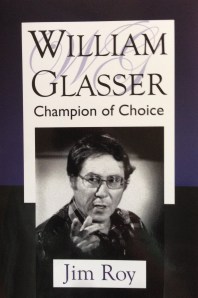
Now priced at $17.34 on Amazon; 19 reviews have been submitted. (We're closing in on 20. Yes!)

Now priced at $17.34 on Amazon; 19 reviews have been submitted. (We’re closing in on 20. Yes!)

Somebody needs to enter a review of the biography so that we can get to 20 reviews. It could be you!

Let me know if you want to order a signed copy of the book from me at jimroyglasserbio@gmail.com.

If you prefer an electronic copy of the book, go to  https://www.zeigtucker.com/product/william-glasser-champion-of-choice-ebook/

============

The greatest weapon against stress is our ability to choose one thought over another.  William James
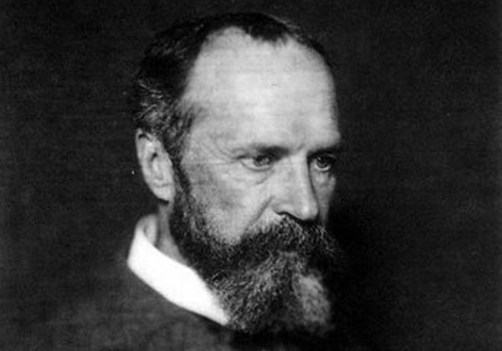
William James (1842-1910); some saw him as the "father of American psychology."

William James (1842-1910); some saw him as the “father of American psychology.”

 

God as Coercer

Belief-in-an-Angry-God-Now-Linked-to-Mental-Illness-2

When it comes to God being coercive, we can respond in one of several ways.

Way #1 – If the Bible says it then that is how it is. Sure, He was coercive during those Old Testament times. He had to be coercive to do what needed to be done. I would have been coercive, too, if I were Him.

Way #2 – The Bible says stuff that I am not totally comfortable with, but I am going to give God a break until all the facts come out.

Way #3 – If God is like how the Bible portrays Him, then I want to head another direction entirely. Agnosticism or atheism suits me fine.

The topic of God as Coercer has been an important one for me personally. Choice theory explains human motivation and behavior better than any other theories of which I am aware. And I have come to appreciate God even more as I think about Him actually creating humankind with the freedom and power that choice theory proclaims. It is so significant to me that God did not create us to be his puppets, but instead gave us this incredible ability to decide what or who we will follow. “Come let us reason together,” He invites (Isaiah 1:18). He seems to be saying, weigh the evidence and choose. There is much in Scripture to support this view. And yet, there are passages in Scripture that also portray God in a different light. This different light portrays God as controlling and even violent. Some see a difference between the God of the Old Testament and the God of the New Testament. God is unchanging, though. Jesus himself said, “If you have seen me, you have seen the Father.” (John 14:9) So how are we to view these God as Coercer passages?

puppet-strings-image

For years I have been collecting Scriptural texts that relate to choice theory. I have categories like Survival & Safety, Love & Belonging, Power & Achievement, Freedom & Autonomy, Joy & Fun, Perceived World, and God the Coercer. As I read different stories and passages, some of them seem to step forward and urge me to store them in one of these folders. Of the three “Ways” described earlier, I am most closely aligned with Way #2, although rather than passively waiting for details to emerge, I am on a mission to find out what’s going on with God and the use of force or manipulation.

Here, for example, are some stories of God as manipulative coercer –

And the Lord told Moses, “When you arrive back in Egypt, go to Pharaoh and perform all the miracles I have empowered you to do. But I will harden his heart so he will refuse to let the people go.” Exodus 4:21

The way this is worded it leads us to think that God needed Pharaoh to be a power-hungry jerk, so He touched Pharaoh’s heart and made him jerky. Or how about this passage describing a scene from the life of King Saul, which led Saul to look for an anti-depressant in the form of the musician, David –

Now the Spirit of the Lord had left Saul, and the Lord sent a tormenting spirit that filled him with depression and fear. 1 Samuel 16:14

angry-god-13106479

Again, the writer attributes Saul’s mental distress directly to God. Apparently, Saul was minding his own business when God sent a tormenting spirit to attack him. These texts fly in the face of God creating humankind with free will and the intelligence to make reasoned choices. It flies in the face of the hundreds of times in Scripture where God or angels reassure humans with the words “Don’t be afraid,” or “Fear not.” And it contradicts the apostle Paul’s clear statement that “God has not given us a spirit of fear, but of love, power, and a sound mind.” (1 Tim. 1:7)

The book of 1 Kings in the Old Testament is full of language that makes God responsible for every terrible and destructive action that takes place. When kings and their entire families were assassinated during a coup, it was because God wanted it to happen. If God’s people didn’t obey Him then He would “uproot” them from the land; He would “reject” them; and He would make them “an object of mockery and ridicule.” People will gasp in horror and ask, “Why did the Lord do such terrible things?” You get the gist.

The story of Elijah begins in 1 Kings 17 and even here we see the same language and view of God. Because of a severe drought, Elijah finds shelter and food with a poor family, a widow and her son, in the village of Zarephath. God is miraculously sustaining this little unit, yet when the boy gets sick and dies the mother cries out to Elijah, “O man of God, what have you done to me? Have you come here to point out my sins and kill my son?” (1 Kings 17:17, 18) Her comment reminds us of the way people then viewed the behavior of their gods and the fact that there were uncontrollable forces about that could only be attributed to the supernatural.

elijah_the_prophet__image_1_sjpg2104

I would have expected better from Elijah. I mean, he was one of the greatest prophets in the Old Testament. And he was one of the few people in the history of the earth to be translated without seeing death. The dude has some rather impressive credentials. Yet when he took the boy’s lifeless body upstairs he then did his own crying out. “O Lord my God,” he began, “why have you brought tragedy to this widow who has opened her home to me, causing her son to die?” (v20) Even Elijah had been saturated with this way of looking at God.

AngryGod1

I think it is hard for us living in a 21st century secular world to relate to the 9th century BC religious world. If we define religion as a vehicle for humans to access, relate to, and appease their gods, then the world during Old Testament times would have been a deeply religious place. Unfortunately, similar to the Greek gods of mythology, the “gods” of the Old Testament were capricious, arbitrary, moody, and self-serving, even to the point of demanding human sacrifices. “Gods” of that day were thought to control nature and cause catastrophes as a way to manipulate humans. This was the context of the day; not an accurate context, but it was their view of reality. And it was the context in which God had to communicate. I think this issue, the context issue, is the cause for a lot of our misunderstanding regarding God’s Old Testament behavior. I don’t have it all figured out yet, but I think this is a part of the answer.

My quest to know God better and to be in relationship with Him is very important to me, and my belief in choice theory is very important to me, too. The two really need to be able to go together. I want to remain open as I continue to search for clues that speak to the extent to which God is a choice theorist. My belief is that God is the ultimate choice theorist, that He invented the concept of freedom and wants us to experience freedom every day. Stay tuned.

“Now, the Lord is the Spirit, and wherever the Spirit of the Lord is, He gives freedom.”   2 Cor. 3:17

===============

Now priced at $17.40 on Amazon; 19 reviews have been submitted. (We're closing in on 20. Yes!)

Now priced at $17.40 on Amazon; 19 reviews have been submitted. (We’re closing in on 20. Yes!)

The eBook version can be accessed at –

https://www.zeigtucker.com/product/william-glasser-champion-of-choice-ebook/

The paperback version can be accessed at –

http://wglasserbooks.com

or from Amazon at –

http://www.amazon.com/William-Glasser-Champion-Jim-Roy/dp/193444247X/ref=sr_1_1?s=books&ie=UTF8&qid=1410617000&sr=1-1&keywords=champion+of+choice

Signed copies of Champion of Choice can be accessed through me at –

jimroyglasserbio@gmail.com