Posts tagged “choice theory

Choosing One Thought Over Another

New-William-James-quote

One of choice theory’s strongest and most important concepts is that we have direct control of our thinking and our actions. This is one of the keys of the internal control model.

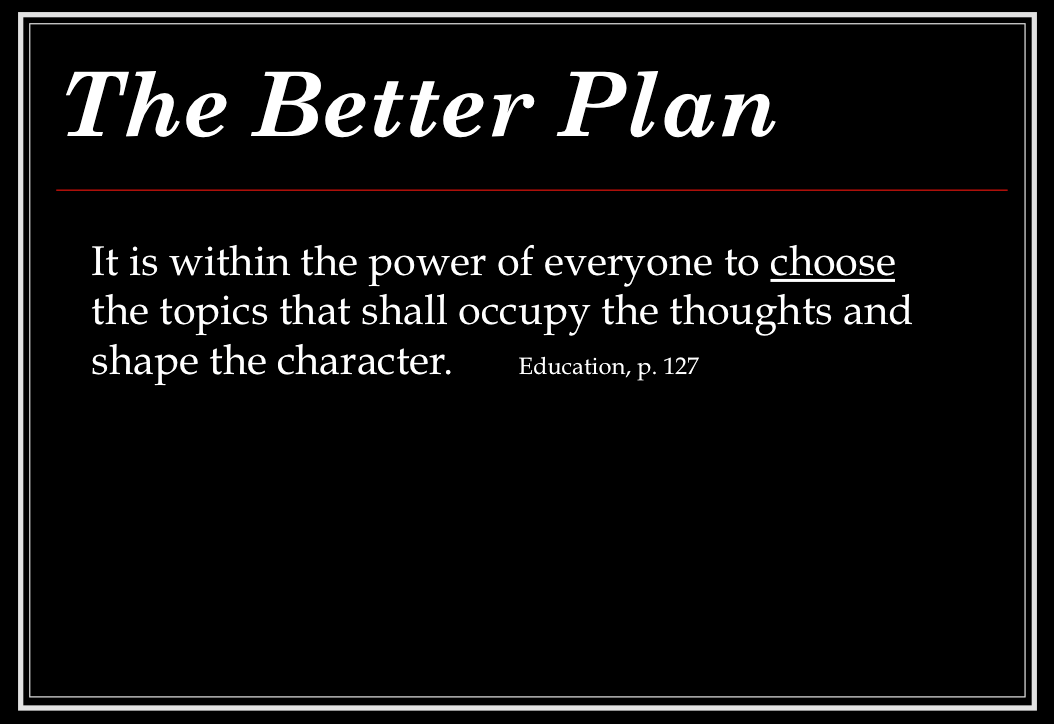
Megan Milholland-Brooks, English teacher at PUC Prep (the Seventh-day Adventist 9-12 school here in Angwin) recently saw the following slide in a PowerPoint presentation and said that she thought of The Better Plan blog. I have seen this somewhere in my past, however I am glad that she shared it with me, and glad, too, that I can pass it on to you.

Untitled

This could be made into a great classroom poster, which would remind students about the importance of their thinking.

Since we are on the topic I will share an insight from the book Education that seems to fit here.

Screenshot 2015-02-04 12.59.57

The implications of this element of our human design are huge! For the most part, what we wrestle with or fret over or seek to overcome has everything to do with our thoughts. We really do create the weather in our lives.

I recently saw a powerful description in the little book, Jesus Calling, a meditational book that I have been opening in the morning for several years now. (My iPad version allows me to make notes in the margins and I have started dating my comments from year to year, which helps me see the steps I am taking along the way.) The thought for January 29 begins (remember, this is written as if God is talking to you personally) “I have gifted you with amazing freedom, including the ability to choose the focal point of your mind. Only the crown of My creation has such remarkable capability; this is a sign of being made in My image.”

“I have gifted you with amazing freedom,
including the ability to choose the focal point of your mind.”

As teachers and parents, let’s pass this gift on to our children. In a world filled with so much external control, let’s model and teach our students about internal control. It may require a significant shift in our own lives, but it will be worth it, for us personally and for our students.

=================

793px-Cigarette_smoke

Coming soon on The Better Plan — The California legislature will soon be considering a measure to raise the legal cigarette smoking age to 21, up from 18 years of age. How might this be an excellent current issue from which to consider the concepts of choice theory?

=================

Get the eBook version of William Glasser: Champion of Choice, by clicking HERE.

Now priced at $18.51 on Amazon.

Now priced at $18.51 on Amazon.

Freedom Calls Us to a Higher Standard

high-jump-300x200

Why do external enforcers like threats and punishments not work as well as an internal control environment based on freedom? Maybe some insights from sixth graders can help shed light on the topic.

“It’s weird, I know, but that’s how things work. My old teacher was big into control, lots of threatening and punishing. Probably more threatening, but it was pretty constant. Names on the board, calling parents, staying in from recess, and not being allowed to go on field trips. We saw it all. Then a different teacher comes in and changes things. We have rules and all, don’t think we don’t, but it’s different. For one thing, the classroom doesn’t feel like a Zap You kind of place. If you mess up, you need to take responsibility for what you did and deal with the situation. The new teacher actually helps you deal with the situation, too, if you want him to.   Ryan

Before you didn’t feel trusted. You always felt like you were bad somehow, even when you weren’t being bad. Sometimes I acted kind of bad because I felt like, whatever, I’m bad so I might as well act like it. Now I feel like we are trusted more, and it’s like, if I’m trusted I don’t want to break that trust. Do you know what I mean?   Lauren

It was like a competition. You’d come to school kind of wondering   . . . well, like . . . I knew what the teacher wanted and expected from me, but he made such a big deal of forcing me to be that way that I wanted to do the opposite. I wasn’t like that in the lower grades, but I turned out that way in the sixth grade.   Tyler

We all feel freer. Our new teacher wants us to enjoy school. He really does. He doesn’t let us get away with stuff, but we really don’t want to get away with stuff like before anyway. Before it felt like school was kind of a fight every day; the new guy just took the fight out of it. Before I dreamed up ways to cause a little ruckus, now I don’t do that.   Taylor


earth-from-space-1


I like how Desire of Ages (1898) says that “Our little world is the lesson book of the universe.” (p.19) Said another way – we are God’s classroom. And apparently he has had to make the same kind of decisions in his classroom that we make in ours. Hmm . . . force or freedom? In his letter to the believers in Rome, Paul explained that we “no longer live under the requirements of the law. Instead, we live under the freedom of God’s grace.” (Rom. 6:14) As we study God’s classroom management plan two words become more and more important – love and choice.

Just prior to the birth of Jesus, Desire of Ages describes how –

The earth was dark through misapprehension of God. That the gloomy shadows might be lightened, that the world might be brought back to God, Satan’s deceptive power was to be broken. This could not be done by force. The exercise of force is contrary to the principles of God’s government; He desires only the service of love; and love cannot be commanded; it cannot be won by force or authority. Only by love is love awakened. (p.22)

God created us with the power of choice and He places incredible value on our freedom. One of the reasons I am drawn to the concepts of choice theory is that it provides me with a psychological framework that complements my view of God, and further helps me to include freedom and grace at home and at school. I want to do what works and freedom and choice do that – they work.

==================

decorator-accessories-m_f-welcome-sign-17394001

I want to welcome teachers from the Upper Columbia Conference who are now following The Better Plan blog. I hope you will feel free to add to our conversations about non-coercive living. I have very good memories from my time as one of the superintendents in Upper Columbia. Thank you, Sharon Searson, for letting teachers know about The Better Plan.

===================

1308277

Click here to access Soul Shapers on Amazon – new copies are going for around $12; used copies for around $4. Contact me at thebetterplan@gmail.com for a signed copy.


So Long, 2014! Hello, 2015!

NYE2015-300x202

It’s interesting the effect that January 1 can have on so many of us. Apparently, there is something about starting over that appeals deeply to us. The beginning of a new year can feel like an opportunity for a new beginning in our lives. Like a lot of you I certainly have some “new beginnings” in mind for myself.

A case could be made for January 1 being celebrated as Choice Theory Day. Maybe more than any other day of the year, January 1 represents the “kick off day” for putting into practice the quality world pictures that we believe captures the best version of ourselves. January 1 represents our ability to choose to embrace a new, better us. We take an inventory of ourselves, especially in October, November, and December, and we come up short. We recognize we aren’t making good choices and thank goodness January 1 is just around the corner so we change things for the better. I say let’s do it! Let’s pursue the best versions of ourselves!

==============

thebetterplan PP redo

The Better Plan blog has completed its second year of sharing choice theory posts and the following data may be of interest to you.

The blog was viewed 18,000 times during 2014. (Compared to 8,000 views in 2013)

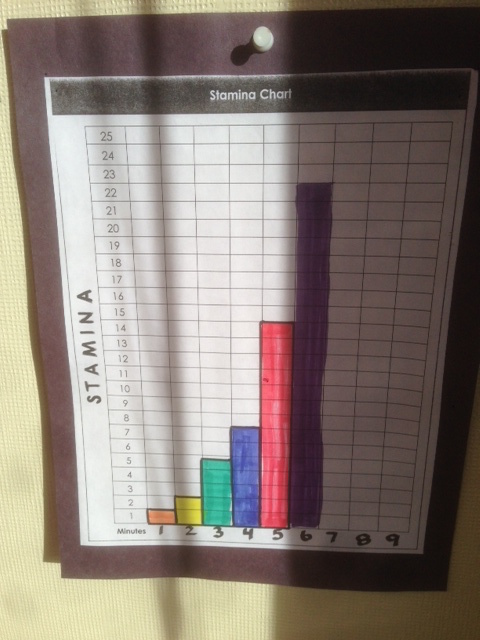
The busiest day of the year was November 19 with 161 views. The most popular post that day was entitled Stamina. (The Stamina post was about a classroom I visited during a NapaLearns board meeting. NapaLearns shared the post with their peeps and it led to more views.)

There were 90 new posts during the year, contributing to the 174 total posts in the archives.

And followers contributed 532 comments responding to the posts. (Compared to 371 in 2013)

The day I posted on most frequently was Saturday (hmm . . .) with 18 posts.

The five posts that got the most views in 2014 were –

#5 – Linda, Gone Too Soon on April 8

Linda Harshman and Jim Roy, both attending the 2005 Glasser International Conference in Dublin, Ireland.

Linda Harshman and Jim Roy, both attending the 2005 Glasser International Conference in Dublin, Ireland.

#4 – GREAT DREAM – Acronym for Happiness on March 9

happiness

#3 – 25 Ways to Ask Your Kids “How was school today?” – on September 1

2014-08-29-25ways-890x395_c

#2 – Stamina on November 19

The remarkable reading data chart.

The remarkable reading data chart.

And at #1 – 7 Cardinal Rules for Life on January 21

Cardinal

Some posts (like the 7 Cardinal Rules) continue to be discovered and read long after the date they first are posted. I am not sure if search engines lock onto an effective tag associated with the post or if people are looking through the Year in a Glance archives and locking onto a catchy title.

Top referring sites include Facebook, Twitter, and Pinterest. I thought I was hooked into Google and general search engines, too, but maybe I’m not. I’ve got to look at that.

People from 138 different countries read posts from The Better Plan blog during 2014, although most readers were from the United States, Australia, and Canada.

The most commented on post was Essential Elements in a Classroom Management Class? which appeared on September 6. This was excellent because I gave an assignment to my class that connected them with the insights that so many of you shared. Very cool!

As of December 31, 2014, the blog has 300 followers. (Compared to 189 followers at the end of 2013)

=================

December 31 is also significant in that the publisher tallies the number of Glasser biographies, both paper and electronic, that have been sold. I don’t know what that number is as I write this, but I assume I will soon learn how well or how poorly the biography has done. To those of you who have purchased the book and have shared supportive comments with me, and to those who have uploaded reviews of the biography on Amazon — Thank You! Hopefully, the word will continue to get out there regarding the existence of the biography, with the result being even more people learning about William Glasser and his life-changing ideas.

Now priced at $18.50 on Amazon.

Now priced at $18.50 on Amazon.

A Violin, a Music Teacher, and Punished by Rewards

A teaching credential candidate at Pacific Union College recently shared an article with me that she felt certain reflected the principles of choice theory. She posted it on Facebook and I shared it with my friends on Facebook, too. A number of my Facebook friends, who are choice theory instructors, affirmed the importance of the article. So I figured I should pass on the article to you as well. Click on the following link to access the article –

Bribery Should Not Be Used as Motivation to Practice

Bribery1

Thank you, Laura Helms, for drawing our attention to this helpful article. This is not the first time Laura has contributed to The Better Plan. I included a paper she submitted on Choice Theory and Classroom Management in the post for December 16, 2013, entitled Glasser Biography Is Published! (kind of).

=====================

It’s easy to get an electronic copy of the Glasser biography for your iPad or Kindle and it is only $10. Click here to get your copy –

William Glasser: Champion of Choice (eBook)

Now priced at $18.50 on Amazon.

Now priced at $18.50 on Amazon.

The Holidays Require All of Our Choice Theory Superpowers

The S actually stands for Self-Control.

The S actually stands for Self-Control.

Even though the Holidays are supposed to be . . . well . . . the Holidays, many of us struggle to get through them with our mental health intact. Thanksgiving, Christmas, and New Year’s are supposed to be joyous, need-fulfilling occasions, right? So what’s with the pain and dysfunction?

The Holidays can be joyous and warm and need-fulfilling, however they can also accentuate things that are emotionally or physically painful for us. For instance –

+ the loss of loved ones is more keenly felt;
+ family estrangements show up in stark relief;
+ dysfunctional behavior often comes out during family reunions;
+ we sense our own aloneness more;
+ illnesses and physical disabilities tempt us toward deeper discouragement; and
+ we experience financial stress from pressure to buy presents or travel.

Like a superhero, choice theory can help us stay in the driver’s seat when it comes to our thinking and our emotions. Consider some of the superpower elements of choice theory –

+ We can directly control our thinking.
Amazing, really! Choice theorists learn to recognize when negative or destructive thoughts intrude on their consciousness and choose to reject them and to think about something that is happier and more productive.

It is Christmas eve morning and Jill feels weighed down emotionally. After waking up she lies in bed and just gets sadder and sadder over the passing of her mother nine months earlier. She started having thoughts of staying in bed, and maybe even not going to the party that evening that she had been looking forward to. The thought flitted across her mind that she was starting her own pity party right then for some reason and she decided to nip it in the bud. “I do miss my mother terribly, but staying in bed and feeling bad about it isn’t going to help. I’ve got stuff to do today and I want to go the party tonight.” She swings her legs out from under the covers and puts her feet on the floor, ready to take one step at a time. “Hmm . . . should I get in the shower or start the coffee?”

xinstallation-landing-page-banner.jpg.pagespeed.ic.xZuai7LHhy

+ We set the thermostat for our personal lives.
We place very specific pictures in the quality world photo albums in our heads and then we try to make those pictures come to life. One of the premier superpowers of choice theory is recognizing the importance of these pictures and then being able to manage them well. The photo album is very much like a thermostat in that in both cases we intentionally and strategically set the course of our lives.

Geoff really doesn’t want to put up Christmas lights on the house. He usually does it by himself, it’s cold, and it takes a lot of time. As a result he comes up with a lot of reasons not to put up the lights – “I don’t even know where the lights are stored” or “I am really jammed for time this year” or “I don’t want to put lights up when so many people are hurting in the world.” Monica, his wife, really likes it when the house has Christmas lights and she comes up with reasons to make that happen – “the lights are in the garage” and “we’ll be the only house without lights” and “it means so much to the kids.” They remained entrenched in their QW pictures until Geoff pointed out that he felt overwhelmed adding Christmas lights to his To Do List and Monica responded that she understood and offered to help him with the project. They actually had fun together getting it done.

cv13

+ Our feelings do not need to control us.
Feelings, be they helpful or not, are a part of our total behavior. They are aligned with our thinking and our actions, both of which are under our direct control. We may not have direct control over our feelings, but we have a great deal of control over our behavior. Our feelings can’t hijack our happiness unless we give them that power.

Carl does not want to go to his family reunion. As far as he is concerned his sisters are jerks who manipulate their parents into all kinds of bad decisions. He gets angry whenever he thinks about it. Choice theory could help Carl learn the difference between the Caring and the Deadly Habits. Instead of his feelings automatically taking him to blaming, complaining, and punishing, he could learn to accept his loved ones, flaws and all, truly listen to them, and try to negotiate with them without disconnecting.

Other choice theory superpowers include –

+ Recognizing that our personal view of reality is just that, our personal view, our interpretation of the facts as we see them.
+ Understanding that, to a very great degree, we create our reality.
+ Breaking the chains of victimhood and taking responsibility for our thinking and our behavior.

The Holidays are a special time of year that tends to intensify our emotions and our thinking. If ever there is a time of year in which choice theory is needed to help us navigate our circumstances, the Holidays are the time.

Here’s to our mental health for 2015!

happy-holidays-banner-bluehappy-holiday-banner-quotes-10t9k2jh

===============

The Glasser biography is easy (and cheaper, too, at just $10) to get for your iPad or Kindle by going to the following link –

https://www.zeigtucker.com/product/william-glasser-champion-of-choice-ebook/

Now priced at $18.50 on Amazon.

Now priced at $18.50 on Amazon.

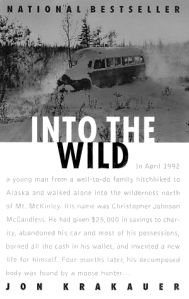
Into the Wild

Into_the_Wild_(book)_cover

Recently I observed a student teacher as she taught her high school English class and I found myself captivated by the discussion through which she was leading her students. The class had read Into the Wild, the story of a young man, Chris McCandless, who was on a journey to experience nature in its rawest form. The discussion covered everything from his desire to get away from it all to the relationship he had with his parents. I had heard of the story and knew about the basic premise (it was also made into a movie), but I hadn’t read the book for myself. I got so caught up in this high school discussion, though, that as I sat there I got on iTunes and bought an electronic copy of the book for myself.

Chris Mccandleuss high school yearbook picture

Chris Mccandleuss high school yearbook picture

The author of the book, Jon Krakauer, is a very good writer and, based on journal entries, letters, interviews with family and close friends, and interviews with people who befriended Chris, was able retell the story in amazing detail. Chris graduated from Emory University in 1990 and soon thereafter dropped out of sight and hit the road. He wanted none of the trappings of his well-to-do home and before setting on his adventures in the West, donated $24,000 from his own savings account to a non-profit dedicated to fighting hunger. He wasn’t a recluse per se, yet he was committed to experiencing nature in its purest form with as little in the way of supplies as possible. Besides little in the way of supplies, he was also alone. Whether in the desert, by the ocean, or in the wilderness, he was by himself. In between his alone times he got odd jobs in various communities and made connections with some of the locals. He got close (at least close for him) to a family in North Dakota. Ultimately, he ended up in an Alaska wilderness where his decisions, combined with unfortunate circumstances, took his life.

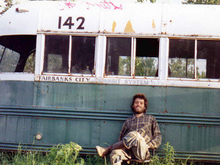
Chris, in front of the bus that was his Alaska home until the end.

Chris, in front of the bus that was his Alaska home until the end.

The story is gut wrenching to read, yet captivating at the same time. It is especially hard as a parent to read about his rejection of his dad and mom and to think of the anguish they went through during the years he was missing (traveling) and certainly when they learned that his remains had been discovered in an abandoned bus along the Stampede Trail. The book describes the poor relationship that he had with his parents, but even more than that it describes a young man with a ridiculously high need for freedom. One thing that Into the Wild does well is introduce readers to the many men, from the 1800s and 1900s, who had a similar high need for freedom. A significant number of them headed into mountains or deserts and were never heard from again. Whether they survived or not, though, their diaries consistently describe the incredible amounts of freedom and joy these men found in raw nature.

Chris's parents, Walt and Billie McCandless.

Chris’s parents, Walt and Billie McCandless.

The story of Chris McCandless is an important one for teenagers to consider. Chris stood for so much that is good in this world, yet he also embraced qualities that separated him from others and that put him in dangerous situations. Adolescents want to understand themselves and the world better, often desperately so, and I am more convinced than ever that the concepts of choice theory can help them in their quest.

th

Stories like Into the Wild provide an incredibly powerful platform or springboard from which to study human behavior. I saw first hand how relevant the story is to adolescents. What an opportunity to talk about the basic needs and the quality world. Questions related to choice theory might include –

What were the strength levels of each of Chris’s basic needs?
How strong was Chris’s need for freedom?
How strong was Chris’s need for safety and survival?
How about Chris’t need for love and belonging, how does that fit into his story?
Chris had pictures in his quality world that reflected his views of wealth, possessions, and the political power structure. What basic need was met by creating these pictures?

What led to Chris choosing to disappear from his parents and family?
Comment on Chris’s choice to disappear from his parents for years, keeping them in the dark about where he was and whether or not he was even alive.
Did Chris’s parents deserve the way Chris treated them?
How accurate was Chris’s perceived world when it came to his parents?
Could Chris’s parents have prevented Chris from escaping on his adventure?
In general, why do parents and teenage children seem to go through so much angst?

How did Chris’s need for love and belonging influence the story?
Did he have a really low love and belonging need or did he just suppress it while on his travels?
How could Chris be so comfortable with being alone, yet so charismatic to people he met along the way?

IMG_0515

Chris actually tried hike out of his self-imposed refuge earlier in the summer, but a raging river of snow melt turned him around for a more extended stay. It was during this extended stay that Chris’s health took a serious turn for the worse and he died in this remote place. Krakauer discovered a book among his things in which Chris had written in the margin, “HAPPINESS ONLY REAL WHEN SHARED.” I would like to think that this all-caps message reflected an epiphany for Chris and that he wanted to hike out so that he could re-connect with the important people in his life. But we will never know if that was true.

Chris is beyond our ability to help him now, but we can help the adolescents in our families and classrooms who are groping to understand themselves and the world around them better. Living choice theory ourselves and sharing choice theory with the teenagers in our circles of influence is an essential part of that help.

=================

A good read can be a great Christmas gift! Why not share the story of William Glasser and his life-changing ideas with someone that matters to you this holiday season? Amazon can help –

For a signed copy contact me at jimroyglasserbio@gmail.com.
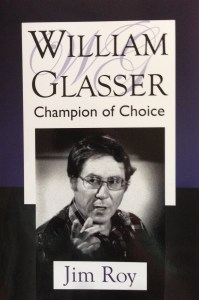
Now priced at $18.13 on Amazon.

Now priced at $18.13 on Amazon.

From the Mouths of Kids – Thanksgiving and Choice Theory

If you remember this popular daytime TV show you'd be .  .  . as old as me.

If you remember this popular daytime TV show you’d be . . . as old as me.

When elementary students (who had been taught about choice theory) were asked “What is choice theory about Thanksgiving?” this is what they had to say.

“If the need for survival is about food, well, Thanksgiving is about food.”   Nash, 6th grade

“I get to stay up as long as I want during vacation and staying up late is in my quality world. Well, not as late as I want  .  .  .  but late.”   Molly, 5th grade

“I love my aunts and uncles and I feel like I belong when I am with my cousins.”   Megan, 4th grade

“My freedom need is thrown out the window during Thanksgiving break, since I am trapped in a car forever driving to my grandparents house.”   Dak, 8th grade

“I let Aunt Helen kiss me. I think that’s love.”   Ryan, 3rd grade

“It’s deadly habits day at my house. My mother always invites a lot of people over and she’s all freaked about the food situation, and then my dad is spaced out watching football all day. Not a good situation.”   Becky, 7th grade

“I feel powerful when I help my mother make a lot of pies.”   Kalin, 4th grade

“My dad gets a couple of days off of work so my fun need is met being with him.”   Brett, 5th grade

“Mashed potatoes and turkey are need-satisfying on so many levels.”   Grady, 8th grade

“I think about how much I have when so many other people have so little. It’s not right when people’s survival need isn’t being met.”   Heather, 5th grade

“People bring us bags of food, which is nice. But it’s a little embarrassing, too. It doesn’t feel very powerful when you need people to bring you food.”   Amy, 7th grade

“Black Friday is about chaos. Wait a minute, chaos isn’t a basic need.”   Darcy, 8th grade

“I get a good feeling when I think about Thanksgiving leftovers. What choice theory thing would that be about? Quality world pictures? Yeh, that’s it.”   Brad, 7th grade

“My parents seem to get along better during Thanksgiving. I guess that’s love and belonging, right? Or maybe the caring habits. Whatever it is, I like it.”   Madelyn, 6th grade

“Everything would be good about Thanksgiving if it wasn’t for the yams. I do not feel powerful and I do not feel free because of the yams.”   Ethan, 3rd grade

“Thanksgiving is about love! That’s just it.”   David, 1st grade

============

The Glasser biography, Champion of Choice, would make an excellent Christmas gift. Get in touch with me for a signed copy at jimroyglasserbio@gmail.com.

Now priced at $17.49 on Amazon.

Now priced at $17.49 on Amazon.

You can also get copies through Amazon at –

Remember that electronic versions of the biography are available at –

http://www.zeigtucker.com/product/william-glasser-champion-of-choice-ebook/

===========

Detachment is not that you should own nothing. But that nothing should own you.
Ali ibn abi Talib

8 Do’s and Don’ts Choice Theory Taught Me About Working with Parents

Remarkably, not only are BOTH parents present at this conference, but they are holding hands and smiling. Oh, wait, this is a picture of realtor telling clients their house has just sold for more than the asking price.

Remarkably, not only are BOTH parents present at this conference, but they are holding hands and smiling. Oh, wait, this is a picture of a realtor telling clients their house has just sold for more than the asking price.

It can be stressful working with parents, especially parents that are difficult in some way, but keeping the following points in mind will go a long way toward minimizing the stress.

Do affirm the parent’s love for their child and your mutual desire for the child to thrive.
This is an area in which teacher and parent can always agree; sometimes it can feel like it’s the only area of agreement.

Do describe matter-of-factly the child’s behavior or performance.
You don’t need to pile on, but you shouldn’t hold back from sharing essential details either. The key lies in using a matter-of-fact tone, infused with ample amounts of optimism.

Do express confidence in the child’s ability to create and keep an improvement plan.
Pretty much everything hinges on the child’s desire and ability to meet reachable goals, whether behaviorally or academically. Parents sometimes need to be reminded that their child is capable of taking steps toward being responsible.

photo


Do involve the student in conferences when appropriate.
This is an interesting, in that, the more choice theory becomes a part of a classroom, the more students handle their own problem-solving conferences. The statement could just as easily be turned around to say, “Do involve parents in conferences when appropriate.”

Do teach parents how to support their child while not rescuing him from appropriate consequences.
It is very common, especially (ironically) by by those who punish, for parents to “rescue” their child from dealing with natural consequences or resolving a problem he/she created. Punishment is about applying punitive pain to an already bad situation, and something in parents, even within this who think they need to apply it, that wants to protect their children from such pain, especially when they see an “outsider” doing it. It often comes as a relief to parents that we are not talking about adding arbitrary pain, but instead want to simply help students learn to address problems they have caused.

Don’t enter a conference with a parent with the intention of having to prove the “guilt” of their child.
Seeking to build a case against a student is a defensive strategy and comes out of our fear. It almost guarantees a conference with a parent will not go well. As you present your “case” the parent becomes defensive and stakes out a zone of protection for their child. Better to stay away from building cases.

Don’t look to parents to solve their child’s behavior problems at school.
It comes as such a relief to parents when a teacher informs them that problems or challenges at school can be handled at school. In traditional school settings, parents are used as part of the discipline plan. (i.e. – if you get three checks on the board I will have to call your parents), as a part of the threat that you better shape up. Not so in a choice theory school. Parents are kept informed, but are encouraged to let their child work through the improvement process.

Don’t allow the student to create a school vs parent conflict.
If the student is not planning and implementing his own behavior plan, then he is learning to play his teacher against his parents, or vice versa. When a teacher “bypasses’ the student to involve his parents in making their child behave, a cat and mouse strategy game is created where the student sits back and watches his teacher and his parents go at it. Better to work with the student directly.

Most parents are a pleasure to work with and appreciate choice theory tips that will help them work with their own children more effectively. Some parents are at their wits end when it comes to managing their child’s behavior at home and are desperate for insights into how to do it better. Kids don’t come with instruction manuals and parenting can be what feels like a lonely, intense struggle at times. Viewing choice theory as an instruction manual for teachers and parents is probably a pretty good way to look at it.

===============

If you have read Soul Shapers it would be great if you could share a short review of the book on Amazon.

If you have read Soul Shapers it would be great if you could share a short review of the book on Amazon.

The book, Soul Shapers: A Better Plan for Parents and Teachers, provides many insights into how teachers and parents can manage students in a way that improves relationships and behavior. You can easily access the book through Amazon at –

Or you can get a signed copy of Soul Shapers by contacting me at thebetterplan@gmail.com.

A Spine Surgeon’s Road Map Out of Chronic Pain

For those who are dealing with chronic pain, especially back pain, the following short clip from a recent Dr. Oz program could be the springboard to a new, pain-free life.


One of the reasons that the clip is so significant to me is that David Hanscom and I have been friends since we attended Pacific Union College together in the mid-70s. Over the years we have stayed in touch, although not consistently. A few years back, a mutual friend created a reunion golf event and David and I were able to briefly catch up.

I described how I was in the process of writing the biography of a guy named William Glasser, and he described how he was writing a book on how people could effectively deal with chronic pain, more often without invasive surgery. I knew about the years of training Dave had devoted to becoming a successful and respected spine surgeon, a man skilled at healing through cutting into tissue, so it very much caught my attention as he talked about the answer, for most people, having nothing to do with a scalpel.

I remember a feeling of excitement coming over me as I realized we were probably working on extremely complimentary topics, and I sensed he was coming to that realization, too, as he processed the implications of choice theory. Our conversation took place in the parking lot after the golfing was done, amidst quick conversations with other friends, some of them needing to get to other appointments or catch planes back to home. Yet Dave and I both knew we needed to talk more, to compare notes more, regarding the separate work we were each doing. We made the promise to each other to do just that, although truth be told, it is a promise we still haven’t kept.

We will make good on our promise. It is important that we do. We are both into people experiencing optimal mental and physical health. The healing power of the mind is incredibly amazing! Dr. Glasser understood it and Dr. Hanscom understands it. For now, I will share the following –

back-in-control-front


Back in Control is an Editors’ Favorite, one of the Best Books of 2014, and a Book of the Year on Amazon. You can access it here –http://www.amazon.com/Back-Control-surgeons-roadmap-chronic/dp/0988272903/ref=sr_1_1?s=books&ie=UTF8&qid=1415493599&sr=1-1&keywords=Back+in+Control

Or here –  www.backincontrolbook.com

You can also follow David Hanscom on Facebook at – Back in Control by Dr. David Hanscom

If you or someone you know is dealing with chronic pain, I hope today’s post has provided helpful information. From what I can tell it is consistent with and complimentary to a choice theory way of life. As always, I am open to your responses.

=================

Several of you responded to my request for teacher tips on how to effectively work with parents. Thank you, a lot for taking a moment to share an insight. We could still use a few more tips, so take a moment and type out a strategy or two. When you respond, remember to click the box that sets it up so that you will be alerted when someone responds to your comment. Click on the following link to get to the teacher tip post – https://thebetterplan.org/2014/11/07/taking-the-ugh-out-of-working-with-parents/


Taking the UGH Out of Working with Parents

Erasmus. He looks a bit smug to me.

Erasmus. He looks a bit smug to me.

The Dutch philosopher Erasmus (1466-1536) is credited with originating the famed statement, “Women, can’t live with them, can’t live without them.” It isn’t unusual for teachers to apply this same philosophical insight to their own field of endeavor when they sometimes mutter, “Parents, can’t live with them, can’t live without them.”

Books have been written on the topic, even though NOT all parents are difficult.

Books have been written on the topic, even though NOT all parents are difficult.

There are so many different kinds of parents with whom teachers work. Some parents are incredibly supportive of teachers; others are less engaged in their child’s education, a distant entity when it comes to academic or social events; while others are just plain difficult to work with. It could be that the difficult ones are difficult enough that they tempt teachers and principals to view all parents through a defensive lens, but if this is so it is unfortunate. There are all kinds of parents and for the sake of the students it is important that teachers connect with parents as effectively as possible.

YOU CAN HELP!

Finger_pointing

With this in mind, I have a request of you. One of the topics we will cover in my Classroom Management class this quarter is the topic of “Working with Parents.” Will you take a moment and share a strategy or insight that pre-service teachers can keep in mind when they work with their students’ parents? It can be one strategy or it can be several. Your insights can be from the perspective of a teacher or they can be from the perspective of a parent? It could be a strategy that you have found to work well, or it can be something to be avoided. My students truly will benefit from what you share.

There is a dialogue box below in which you can quickly type your thoughts. Thank you for taking the time to help us!