Posts tagged “Soul Shapers

Ears, Mouth, and Choice Theory

A young principal described how his dad was a great guy, but that he didn’t know how to listen. With the challenges that come with being a school administrator, Dave (we’ll call him) would occasionally share what he was up against with his dad. He confided that –

I would call him, just needing to talk with someone, someone not close to the situation. My dad was a sharp guy and had a lot of life experience and as soon as I explained the problem, sometimes even before I was done explaining, he would quickly start telling me what I needed to do. He was trying to help. I have no question about that. But I didn’t call for advice. I just needed to talk. The sad thing is that when he started giving me advice during the phone call, I would feel myself withdraw or pull away. I kinda wanted the phone call to be over at that point.

It is easy to fall into the same habit as Dave’s dad. We are quick to tell what the answer is or where the solution lies, rather than simply listening and then accepting or affirming. Husbands are quick to do this with wives, parents are quick to do this with children, and teachers are quick to do it with students. We mean well. The answer seems obvious to us. We just want to save time and get to the solution.

Teachers who learn about choice theory begin to understand the pitfalls of telling, rather than listening, and begin to see that one of the best things we can do for another person is to help them develop their own solutions. In other words, the goal is to help a person effectively self-evaluate. Whether we are a listening to a friend explain why she wants to quit her job and go back to school, a husband listening to his wife wonder aloud about problems with the upcoming Home & School potluck, or a teacher working with a student who keeps forgetting one of the classroom procedures, the answer may have more to do with asking the right question, instead of giving the person your solution.

———-

Conferencing is about

helping another person effectively self-evaluate

in a way that maintains or strengthens the relationship.

———-

Becoming a listener who knows how to ask questions that can lead to self-evaluation is one of the most important steps we can take toward being a choice theory teacher or parent.

One of my mentors, Kendall Butler, once shared with me that “it is better to get something out of someone’s mouth than it is to put it into their ear.” Rather than being smart enough to emphasize the right point, the skill and wisdom lie in asking the right question.

——————–

A new Facebook page has been created called The Better Plan. I invite you to Like the page and become a part of The Better Plan community. Joel Steffen will be helping me manage it and our goal is to locate helpful teaching resources, many of them from within our own community, and to provide a place for teachers and parents to ask questions or comment on other’s questions.

Real Freedom

amnesty_print_chains

The topic of control is a big deal!

Many of us commit a lot of energy to trying to control others. This is a discouraging process that drains us emotionally and physically. Most importantly, trying to control others, usually the people we want to be the closest to, hurts our relationship with them. I feel there is a good chance that this “control” process is almost single-handedly responsible for the ridiculously high divorce rates.

We also commit a lot of energy and effort into trying to control ourselves. If we believe in a reward and punishment approach to life, and if we are using reward and punishment to try to control others, we will use those same tactics on ourselves. And, as you may have learned from experience, with pretty much the same ineffective results. In the same way that external control negatively affects our relationship with others, an external control approach negatively affects the relationship we have with ourselves, too. As self-control seems to elude us, we come to resent and even loathe ourselves.

With today being a Sabbath[1], a day of rest, our blog today will focus on some of the spiritual implications of control.

One of the most powerful themes of Jesus, at least for me, was the message that He came to set the captives free. Some took offense to this offer. When Jesus said “the truth will set you free,” the religious leaders of His day protested that they were descendants of Abraham and had never been slaves to anyone. “What do you mean,” they accusingly inquired, that “You will be set free?” (John 8:32, 33) A lot of us, though, know exactly what Jesus was talking about. Those who sin are slaves of sin. (John 8:34) We get caught in the sticky webs of our own behavior and like Paul, who admitted that he couldn’t seem to do right, even when he really wanted to do right, can only cry out in desperation, “Oh, what a miserable person I am. Who will free me from this life that is dominated by sin?”[2] (Romans 7:24)

Peter agreed that  “you are a slave to whatever controls you.” (2 Peter 2:19) And a little book called Steps to Christ[3] explains that “What we do not overcome will overcome us.”  (p.33) Regardless of our culture, nationality, or religious background, this is what human beings are up against. Either we are becoming more trapped within our own physical and psychological appetites, feeling almost like we are in chains to silly or destructive habits, or we are becoming more free, more in control of our thinking and our acting.

I think that God appreciates choice theory. He created us with free will and He died to preserve our power to choose. He doesn’t want us to stop with just choice theory, though. Choice theory can help to explain our behavior, but it can’t change our hearts. That kind of change requires Holy Spirit help, which He offers freely and immediately. Amazing! The Bible writer, Titus, partly captured this truth when he wrote that “He [Jesus] gave His life to free us from every kind of sin, to cleanse us, and to make us His very own people.” (Titus 2:14)

It is draining to constantly be involved in controlling others and ourselves. The whole control thing can be distressing to say the least. Jesus offers us something different, though. “Come to me, all of you who are weary and carry heavy burdens, and I will give you rest.” (Matt. 11:28) Don’t worry about things. Don’t worry about what you wear, don’t worry about food, don’t worry about tomorrow, don’t worry about the behavior of others. “Seek the kingdom of God, and live righteously, and he will give you everything you need.” (Matt. 6:25-7:5)

The adversary, Satan, wants to trap, enslave, chain, and addict. But Jesus’ promise is as real today as when He first proclaimed it – “I have come to set the captives free!”


[1] The seventh-day Sabbath is known for being a Jewish custom, but this is not entirely correct. Jewish people do observe Saturday Sabbath, however I am not Jewish, yet still observe this weekly gift of rest. The Sabbath was instituted at the creation of the world, before there were any nationalities or cultures. The Sabbath was included in the Ten Commandments many hundreds of years after creation, but the wording is significant. “Remember the Sabbath day,” the fourth commandment reminds. It wasn’t something new for the Hebrews after leaving captivity. The Sabbath was a day that God gave to all creation as His special gift. Even in the perfect world He originally created He must have known it would be good for us to truly rest one day out of seven. With the entrance of sin into the world and the pressures it brought to bear on us, His gift is all the more important. “Take it easy,” He gently encourages us. “Come apart from your busyness, your worries, and your to-do lists. Let’s hang out together during this special day.” After all, the earth is God’s coffee shop.

[2] The answer is Jesus! Romans 7:25

[3] Steps to Christ, by Ellen White, is an incredible book on spirituality and the power of choice.

Stringless Love

strings-attached

A key choice theory axiom, maybe THE choice theory axiom, states that the only person we can control is ourselves. This doesn’t mean that we don’t try to control others. We very often do, and in ways that are so subtle that we aren’t aware of it, even as we are in the midst of doing it. Today’s blog will attempt to pull back the curtain of our behavior and give examples of just how powerful this process is, a process that has everything to do with our quality world pictures.

When it comes to axiom #1 it would be more accurate to say that we are controlling for our perceptions, rather than controlling our own or another’s behavior. In other words, the only person’s perceptions we can control is our own. Let me give you an example that Mike (not his real name) shared with me recently –

The other day I am out shopping with my wife, each of us with a list of items to find, and while working on my list I notice her further down the same aisle I am in. I see her and for some reason I want to go to her and express my affection for her, to touch her, you know, to “look lovingly into her eyes” kind of thing. So I’m thinking about that as I’m standing there in the bread section. Some of you may be thinking, “What are you waiting for? Go tell her you love her!” But it’s not exactly that simple. We’re working through some stuff. We’re doing good, but anyway .  .  .

For some reason the question occurs to me, there in the bread section, am I wanting to express my affection to her because I just want to give her affection, or am I wanting to express affection so that she will give me affection in return? Am I wanting to touch her because she would then touch me, too? As I thought about it, I realized that what I really wanted was for her to want me, for her to express affection for me, and for her to touch me. I did feel affection toward her, but more importantly, I was fishing for something from her. My gift was not so much a gift, as much as it was a prompt, maybe even a bit of a trap.

I must admit I was stopped in my tracks at that moment. What you had been saying in the Soul Shapers class kind of just flashed into me. I had this picture in my mind of how I wanted my wife and I to be, how I wanted her to treat me, and there I was trying to create it, trying to turn my picture into a reality. I was stunned at how subtle, yet how real, the process was in my thinking. I was further stunned by how many years I had been behaving this way. My “affection” was really a form of manipulation.

Mike realized that his “love” had strings attached. He was giving, but it was giving to get something in return. When his giving wasn’t responded to in a way that matched his expectations he became frustrated and hurt, and then went about creating another behavior to try to get what he wanted. Maybe this new behavior would be another “loving” action; maybe it would be a punishing action like the silent treatment.

Spouses face this process every day. So does a teacher with his/her students. People have antennae that discern the strings that are attached to gifts. Love with strings attached really isn’t love. Let’s be clear, though. The problem isn’t that we have expectations, at least if the expectations are reasonable and healthy, the problem occurs when we manipulate or coerce to get what we want. It is actually relationship-strengthening to state your expectation and then, using the caring habits, discuss and negotiate the ways in which that expectation can happen.

——   “Love with strings attached really isn’t love.”   ——

On a deeper and more important level, I think this process reveals something about what the presence of sin has brought to our little planet. Jeremiah wrote about our righteousness being like filthy rags, or in other words, even our love seems to involve selfishness. I think the process also reveals one of choice theory’s limitations – that being that choice theory can give us insights into our behavior, but it cannot change the heart. Only the Holy Spirit can give us a perfect love that doesn’t care about strings. Stringless love. That would be powerful.

—————————————

How about telling a friend about The Better Plan blog? It’s easy – http://thebetterplan.org

If today’s blog is helpful, take a moment and click on the Liked link.

What does a lead-manager sound like?

(Not the actual seagulls that Tim photographed. These gulls were willing to fill in as substitutes at the last second. A big thank you to them.

(Not the actual seagulls that Tim photographed. These gulls were willing to fill in as substitutes at the last second. A big thank you to them.)

Lead-management is based on persuasion, invitation, and reasonable guidelines with natural consequences; on the other hand boss-management is based on directing, demanding, and often arbitrary boundaries with reward and punishment applied when boundaries are broken. Capturing the tone of a lead-manager is an important step toward becoming a choice theory teacher or parent. Today’s blog comes to us courtesy of Tim Mitchell, Bible teacher at Mountain View Academy in Mountain View, California. Tim has been a successful pastor for many years, but last year he decided to teach Bible, rather than preach it, and made the switch to the classroom from the pulpit. After attending summer classes, including Soul Shapers 1 at PUC, Tim sent the following Facebook message to his students, a message that captures the tone and content of a lead-manager.

Just took this shot from my backyard where I am working on my summer homework. These birds were about 500 feet in the air and pass overhead regularly. Whenever they fly over I think of you, my students — I want you guys to soar!

My summer school classes are about giving students room to feel freedom and plot out the course of their education as a team. Most schooling is too confining. It’s worse than the average workplace. “Sit in your chair.” Don’t talk.” “Do the (irrelevant) work I tell you to do.” I hated school from 7th grade until about age 22 when I was getting my Masters Degree. And I can see the same in many of your eyes. Once I got interested in school again my grades shot back up.

Pray for me/us so that Bible class can be more relevant, free, team-oriented, humane, and FUN! (Fun is one of the basic human needs!) Let’s begin working in August to set up our procedures so they don’t get in the way of your natural human interest in learning and experiencing new things.

Soar!

I really appreciate Tim’s message. Teaching Bible, teaching any subject for that matter, can be challenging and it’s not unusual for teachers to turn classroom interactions into struggles and battles when students act like, well students. As teachers, we may not want fights, but we tend to go into fight mode when students “ask for it.” Tim’s message “takes the fight out of the classroom” and is setting the tone for a fun, productive, enjoyable school year.

———————————————-

Do you have artifacts — letters, messages to parents, lesson plans, management strategies — that have helped to implement a choice theory approach? I would love to see them, and share them, when you send them on to me. Please take a moment and send me something that has worked for you, or even that you are working on.

———————————————-

Remember to click on the Follow link to become a part of the blog. Our goal is to strengthen and support the choice theory community. Let friends and colleagues know about the blog, too. Thanks.

http://thebetterplan.org

Behaviorism, Religion, Stimulus-Response, and the Character of God

Character of God

During the recent Soul Shapers class, I asked those in attendance to comment on four important areas or implications of choice theory. We had reviewed and discussed these areas in some depth and I wanted to check in regarding their level of understanding. In the activity format I used they each had two minutes to comment on each of these topics. Here are the topics and their answers. I think you will really find this interesting and useful. (After the topics and answers I also share how to set up a round robin activity.) If given two minutes to answer these questions, what would you write?

Something I have learned about –

. . . stimulus-response theory.

• May or may not work in the short term; does not work in the long term.
• It is a myth. May work with animals and people to a point, but is not how humans were made to respond or think. There are many factors involved in why we do what we do and this theory doesn’t address all of it.
• I learned that stimulus-response will work for some the kids, some of the time, but the students aren’t always responding to the stimulus for the reasons we as teachers think they should.
• The carrot trick can work, but the long-term effect is no good. EGW use the word disastrous. It destroys the ability to think for one’s self and it takes away the personality.
• We will never reach our full potential if we are chasing a carrot. We are not animals driven by desires or impulses. We need to be touched on a spiritual level for us to maximize our potential. Don’t drink the water in Mexico.
• Students naturally want to learn when they see the relevance of what they are learning, when it touches a chord within their hearts.

. . . the Caring Habits and the Deadly Habits.

• Criticizing, nagging, etc. are ultimately not helpful. Caring habits energize, enlighten, encourage, and help with choices.
• Use of the deadly habits will dull a student’s ears and prevent them from caring about learning.
• The deadly habits will ultimately destroy relationships, whereas the caring habits will build relationships. The caring habits take more time and energy to carry out, but the reward is worth it.
• That I am a more deadly person; I need to change. I have both, but I can see that what I fall back to mostly are more in the deadly list. I must make a conscious effort to change. My choice!
• Deadly habits are those I’ve been trained to use. I was amazed by how using these strategies “put down” or stifled creativity. I need to put a conscious effort into using “caring habits” and responses with all the people with whom I interact.
• No more smart-ass responses to smart-ass kids.
• How harmful criticism, nagging, and punishing are on relationships. How switching to using caring habits will increase connectedness and help engage students and even families.
• It is important to be aware of which habits you’re using when interacting with others. The deadly habits will push others away and cause damage, whereas the caring habits will open up doors and cause a deeper, more honest relationship to form.
• That healthy relationships are about building up the students, looking for wars to praise and spotlight. The deadly ones are about picking on faults and causing them to feel like they can’t measure to our standards. I love the Oakland A’s.

. . . Behaviorism and its effect on religion and spirituality.

• Behaviorism can be put on or taken off, but that does not necessarily affect or reflect what the heart is doing.
• It has eroded religion and spirituality. Religion focuses on the do’s and don’t’s. The focus should be more on God’s love for us.
• Behaviorism should not be the beginning of our relationship with God. Attempting to understand His great love for us and the freedom He gives us should be the most important thing. Unfortunately, we often start with the behavior, not the love.
• God will not pour obedience into us and bypass our will. The will and spirituality are linked. Being good is not the same thing as being whole and restored to the original image of God.
• God does not give us spirituality. God guides us, but with our free will we choose to obey God or Satan. My thoughts and behaviors are guided by my internal desires.
• Taking away free choice in religion and putting it in a box will turn students and adults away from the thought of any form of religion.
• That control takes away from the experience. Forcing kids to be baptized when they are 12 or pressuring people to believe or follow without choice makes the experience shallow or meaningless. Tacos are delicious.
• Forcing or not allowing choice in a religious setting will likely end up causing the person to turn away from religion as it becomes too legalistic.

. . . the character of God.

• God’s love is very deep. The power He gives us to choose is such an amazing gift. Wow!
• God’s love is so great for us that He has given us the power of choice. To love is not to force.
• Righteousness by choice; we choose our level of connectedness to Jesus. He does not force us on any front.
• God gives us free will. I may believe God is controlling me, but He is not. My behavior stems from my will to want to obey God and be like Him and like Christ.
• He loves a cheerful giver, not someone who gives under compulsion. This is probably why EGW says that rules should be few (but strictly enforced).
• From the beginning of the Great Controversy, God has let choice be the measure of your love. Decide today who you will serve. Love is not forced. Choice is not forced or coerced. That’s why prosperity gospel ministries are so shameful. God is love.
• That we have free will. God has the power to change – past, future, and present – but He allows us to choose, so that the universe can see what choices we make. I love burritos.
• God has given us free will to choose. God wants us to make the choices based on our connection with Him. God wants us to allow others to right to choose.
• He bravely gives me the ability to choose. I have been created in His same character and can reject His will or love in my life. His character teaches me to love others via His love for me.

————————————–

These topics and answers came out of a Round Robin learning format. The Round Robin format is simple to set up, yet it can lead to powerful learning results. To use a Round Robin in your classroom –

1. Identify four topics that students have recently been studying and develop clear, concise questions that can serve as writing prompts. It works best when the questions are open-ended.

2. Create quads. Divide students into learning teams with four on each team. (You can have a team of three, but don’t go more than four.)

3. Have team members number off from 1 – 4, and then provide every team member with a piece of paper.

4. Team member #1 will then write the first topic question, in bold letters, at the top of his/her paper; team member #2 will write the second topic question at the top of his/her paper; team member #3 will write the third question; and team member #4 the fourth question.

5. Each of the team members will now have a sheet of paper in front of them with a topic question headline written across the top. At the signal, students will have two minutes to write an answer to their sheet’s question. (The time can be lengthened or shortened as needed.) When the time is up, students will stop writing and slide their sheet to the team member on their left. Each team member now has a new question in front of them. At the signal, they will have two minutes to answer another prompt. This process continues until each team member has been given a chance to comment on each of the questions.

7. The round robin activity can help teachers check for understanding, as reading student answers to the prompts will show how students view the topics. Students can read what their team members wrote and then discuss their answers within the group. Small group discussions can then lead to a full-class discussion. In general, the round robin format is a good way to get 100% of your students engaging in the lesson content. And that’s a good thing!

————————————————–

If The Better Plan blog has been helpful to you, why not invite a friend or colleague to join us at –

http://thebetterplan.org

There Is Something About Grandparents

Grandma Maggie and Charlie, who is several hours old in this picture. (Charlie, that is.)

Grandma Maggie and Charlie, who is several hours old in this picture. (Charlie, that is.)

Yesterday was truly a birth day, as my daughter gave birth to my second grandson yesterday afternoon. (Sometimes you hear people say, “I wasn’t born yesterday,” but Charley can’t say that. He was born yesterday.) As you can imagine, it was a day of joy, celebration, love and belonging, thankfulness, and, yes, there was some concern mixed in there, too. It was so good to have mother and son healthy and cuddled together following the procedure’s successful conclusion.

Given that my grandchildren will be doubling in number, I thought it might be appropriate to think about the role of grandparents, and more specifically, how grandparents, when it comes to loving and supporting children, seem to “get it right.” Grandparents have in common that this is our second go-around with the whole “little people thing.” It’s like we’ve been given another chance to get it right when it comes to kids, or at least get it better. We learned some stuff the first time around and now is a chance, as summarized in the following list, to show what we know.

We are MORE RELAXED
We have seen it all. We survived our children and a host of their dramas, some of them real (Ok, some of them very real). We realize the journey is doable, though, and that life goes by faster than you think. Now we want to live in and enjoy the moment.

We SAVOR THE RELATIONSHIP
We recognize the importance of the relationship, and we are careful to not let children’s little mistakes and learning blunders threaten our connection with them. We are more apt to live in the moment and treasure the many ways in which children grow and mature. We are less concerned about controlling children and more aware that they are in the process of becoming who they will be.

We are MORE FOCUSED ON IDENTITY, RATHER THAN ROLL
We seem to accept that children aren’t placed on earth to fulfill our job descriptions. It is so easy for parents to want to have their own needs met through the accomplishments of their children. Children can hear early in life about the kind of role – doctor, administrator, Indian chief, etc. – they are expected to fill in society. Grandparents have learned that helping children form a healthy self-identity is much better than pressuring them into a certain role in life. Coming into a sense of your identity, of who you are and what you stand for, as a child is way better than postponing this process into adulthood. I know people in their 50s that are still desperate for this kind of self-knowledge.

We DISCIPLINE DIFFERENTLY
Well, actually we don’t discipline much at all. We joke about getting to do all the fun stuff with the grandchildren without the headaches of discipline that parents have to deal with. There is truth in this joking, but the joking hides the fact that we discipline differently, too. It’s not that we ignore bad behavior in our grandchildren. We just keep things in perspective in ways that we didn’t the first time around with our own children. We strategically overlook some behaviors, gently deal with others, and for the behaviors that just can’t be ignored we confront them in a way that will not harm our relationship.

We SEEK TO BE NEED-SATISFYING
We get accused of giving too much stuff to our grandchildren, having too much fun with them, being willing to help them in any way at the drop of a hat, and being too interested in them. Guilty. What we are is grandkid-centric. It’s not about spoiling kids. They can see through that. It’s about love and support. We literally give ourselves to them. We love to hear about our grandchildren, talk about them, show pictures of them to others, and most of all, spend time with them.

Not all grandparents are into choice theory, but choice theory gives us insight into a lot of grandparents. Grandparents have a patience and a flexibility when it comes to their grandchildren that a lot of first time parents would do well to emulate. Here’s to parents who can show up like grandparents!

Choice Theory on Interstate 5

Passing on I 5

This past Friday I headed north on Interstate 5 to be a part of a reunion for my wife’s extended family. She had gone up earlier in the week to help her mother and to get ready for everyone’s arrival, so I was driving there by myself. I usually drive pretty reasonably as far as speed goes, however on Friday I decided to try and get there a little quicker, maybe even see how fast I could get there without any of the common stops we usually make.

Traffic, as is almost always the case on Interstate 5, was moving right along. A car in front of me in the fast lane wasn’t going as fast as I would have liked and I moved into the right hand lane to go around him. As I did so, though, the car sped up. I went a little bit faster to get around him, but he sped up even more. At this point we going over 80 mph. It was plain to me that he didn’t want me to pass him. He stayed out in front, which was fine with me. I had no desire to turn it into some sort of competition, and best of all, I now had a blocker in front of me. If you are driving a bit faster, it is good to have someone clearing the way in front of you.

Later on I thought about this little event as a choice theory moment — in reverse. He reacted to my wanting to pass and ended up driving at a speed that was more of my choosing, than of his. It was like he had given me the power to control his speed.

We hear phrases like “pushing his buttons” or “yanking his chain,” which linguistically captures the process of one person messing with another’s boundaries or preferences, especially when pushing buttons leads to an entertaining reaction. I must have pushed the other driver’s button when I attempted to pass him. In the end, I got better in return than I intended.

Children and adolescents, especially those with anger management issues or low frustration levels, can be helped by examples such as these. Kids seem to “get” that when they are reacting to a classmate’s behavior in a way that leads to trouble or embarrassment, they are actually giving their power away to the classmate who did the button-pushing. I have seen the light go in a student’s head when they begin to realize that they don’t want to be a game piece on someone else’s chess board. They want to decide how they are going to act, rather than letting someone supposedly dictate their behavior.

This is an important reminder for all us, regardless of our age. If you have “buttons” featured prominently in your demeanor, why not get rid of them? If you have a “chain” that people keep yanking, how about losing it once and for all? It’ll be great for you, and as you model being in control of your life in front of your children or students, it will be great for them, too.

———————————

I am very thankful how well the Soul Shapers 1 class went this past week. What a great group of people! We indicated our desire to stay in touch during the coming school year, and I hope we do that. The Better Plan blog is one way we can all keep choice theory in our thinking and stay connected in the process. Soul Shapers 2 is taking place this week.

Give Me Victory, or Give Me Death

I just finished reading The Secret Race, by Tyler Hamilton and Daniel Coyle, which was an incredibly interesting read that candidly addresses the state of elite cycling and the use of performance-enhancing drugs. With the start of another Tour de France just around the corner, I thought I would re-post a blog I did in January, which looks at PEDs through the lens of choice theory.

Jim Roy's avatarThe Better Plan . .

SI cover

It was haunting, stark, in-your-face. The cover of the April 14, 1997, Sports Illustrated, drew your attention to an image that dramatically captured, in one stroke, the state of affairs in athletics, indeed, the state of affairs in society. An arm, a strong arm with bulging bicep, fist clenched, wrist cupped, formed the bulk of the image, yet placed between the cupped wrist and bulging bicep was a syringe, it’s needle plunging into the taunt muscle. That was it, just an arm and a needle, yet you couldn’t look away. Although it appeared 16 years ago I have never forgotten that image.

The lead article, titled Over the Edge, opened with survey results that were, it doesn’t seem possible, even more haunting than the cover image. Quoting the article’s opening statement, it reads –

A scenario, from a 1995 poll of 198 sprinters, swimmers, power lifters and other assorted athletes…

View original post 1,178 more words

Thanks Choice Theory for a Happy Fathers’ Day

My son and I at a New York City subway stop (2008)

My son and I at a New York City subway stop (2008)

A dad I knew once said to me –

“When my kids say Happy Fathers’ Day to me I want them to be able to mean it.”

When I asked him to elaborate a bit more he continued –

“It isn’t rocket surgery. I just want to have treated them in such a way that they would be comfortable wishing me well. I want to care for them and appreciate them in the hope that they would want to care for me, too.”

I have admitted more than once that the concepts of choice theory saved my relationship with my own children. I began really reading about choice theory around 1992 (it was actually known as control theory until 1996), and received Quality School training a short time later. In 1995, when the school in which I was principal embraced choice theory, my daughter was 16 and my son was 13. The timing here is significant. I was coming into a deeper knowledge and understanding of choice theory at just the time my children were dealing  with the angst of adolescence. When conflict arises, as can happen between parent and teenage children, I am just as capable as the next guy of being arbitrary and controlling. I am capable of wanting to take charge and be in control.

It was rare that I would do something like this, but one time I asked Glasser for some personal advice. After graduating from high school my son wanted to buy a very old van with two other friends and move to Southern California to make it in the music business. I could tell he was serious. I really didn’t want him to do it, for a number of reasons, but I wasn’t sure what to say or how to say it. Glasser listened as I described the situation and when I was finished he said –

“You want to keep two things in mind. The first thing is stay connected. Whatever you do or say, do or say it in a way that keeps the two of you connected. The second thing is to not say anything that in any way smacks of I told you so. In other words, don’t come across in a way that would ever make it harder for your son to come back home.”

I thought that maybe I understood enough about what Glasser was trying to get across to me and I decided to talk with my son. What I said went something like this –

“You already know that I don’t really want you to do what you have described to me, and that I would rather you get started in college. Instead of belaboring that, though, I just want to say a couple of things. It might sound like it isn’t smart for me to say this, but I think you are very capable of making this idea happen, of buying the van and carving out an existence in Los Angeles. I would worry a bit about how you were doing, but you are resourceful and resilient when the going gets tough. I also think you are an excellent and entertaining musician. If you didn’t get discovered it wouldn’t be because of a lack of talent. There are just so many excellent athletes and musicians that never make it to the big show. If you do decide to go ahead with this plan, please remember that whether you get discovered or not, you always, always have home to come back to. Thanks for listening. Let me know if you want to talk more about this.”

Glasser and choice theory helped me to say my peace in a way that not only kept my son and me connected, it actually brought us closer. Choice theory taught me to listen, to respect, to accept, and to negotiate. I wanted to understand the basic need that was urging my son to come up with this plan. I wanted to understand the quality world pictures that he wanted his life to match. The ideas of choice theory helped me, I think, to be a better dad.

If you are interested, my son eventually decided not to head to LA in a 1965 van. The van was already purchased, so there was momentum in the plan, but it was like our talk had taken the fight out of it. I acknowledged his ability and talent, yet stated my preference. He knew that I knew he could do it if he chose to. I believe that if I had come across in a traditional, controlling way, that he would have headed to LA, if only to prove that I was wrong.

Waiting for the next train, New York City subway (2008)

Waiting for the next train, New York City subway (2008)

It’s been 12 years since this took place and my children have gone on to begin lives and families of their own. It meant a lot to me that both of them wished me a happy Fathers’ Day yesterday and that our relationship is such that I think they meant it. Thanks, choice theory for being a part of our family.

Heredity loads the gun and environment pulls the trigger, BUT . . .

Ruth Rittenhouse Murdoch

Ruth Rittenhouse Murdoch

After graduating from Pacific Union College in 1977 I headed to Andrews University to get a Masters degree. While there I had the privilege of taking classes from Ruth Murdoch, a retired professor who by then was an icon in education and psychology. (The large elementary school in Berrien Springs had already been named after her.) On a day that she was scheduled to give a presentation, it just so happened that my father-in-law was visiting us and attended the talk with me. He had been attending psychiatry meetings in Chicago and drove up to Andrews to say to hi.

Her presentation was about the nature vs. nurture question and at one point in the talk she stated that “heredity loads the gun and environment pulls the trigger.” It was a catchy phrase that emphasized her point well. (So catchy that I still remember it 35 years later.) Although it was not necessarily a discussion format I noticed that at this point my father-in-law, Charles Lindsay, was raising his hand. I hadn’t been a part of the Lindsay family that long (Maggie and I had been married only a few months then) yet I had heard of Charles legendary antics. At that moment I could only wonder what he had in mind as Dr. Murdoch stopped her presentation and acknowledged him.

“I think heredity is important,” Charles began, “and I think environment is super important, too, but I also think that the power of choice can overrule both of them.” Dr. Murdoch affirmed the point Charles had made and went on with her talk, but I don’t think  I went with her, so to speak, because what Charles said made a real impression on me.

At this time in my life, early 1978, I had not even heard of William Glasser (although I would read Schools Without Failure for one of my MA classes in April of that year), yet there was something in me, the very young version of me, that resonated with the theme of choice and freedom. I would learn later that it was in early 1978 that the power of choice began resonating with Glasser, too, as it was then that he started working with William Powers. Powers introduced Glasser to control theory and mentored Glasser as the new ideas took hold. It would be a few years down the road before control theory would take hold of me, too, 14 years to be exact. As a young principal I read The Quality School in 1992 and I have been on a distinct journey ever since.

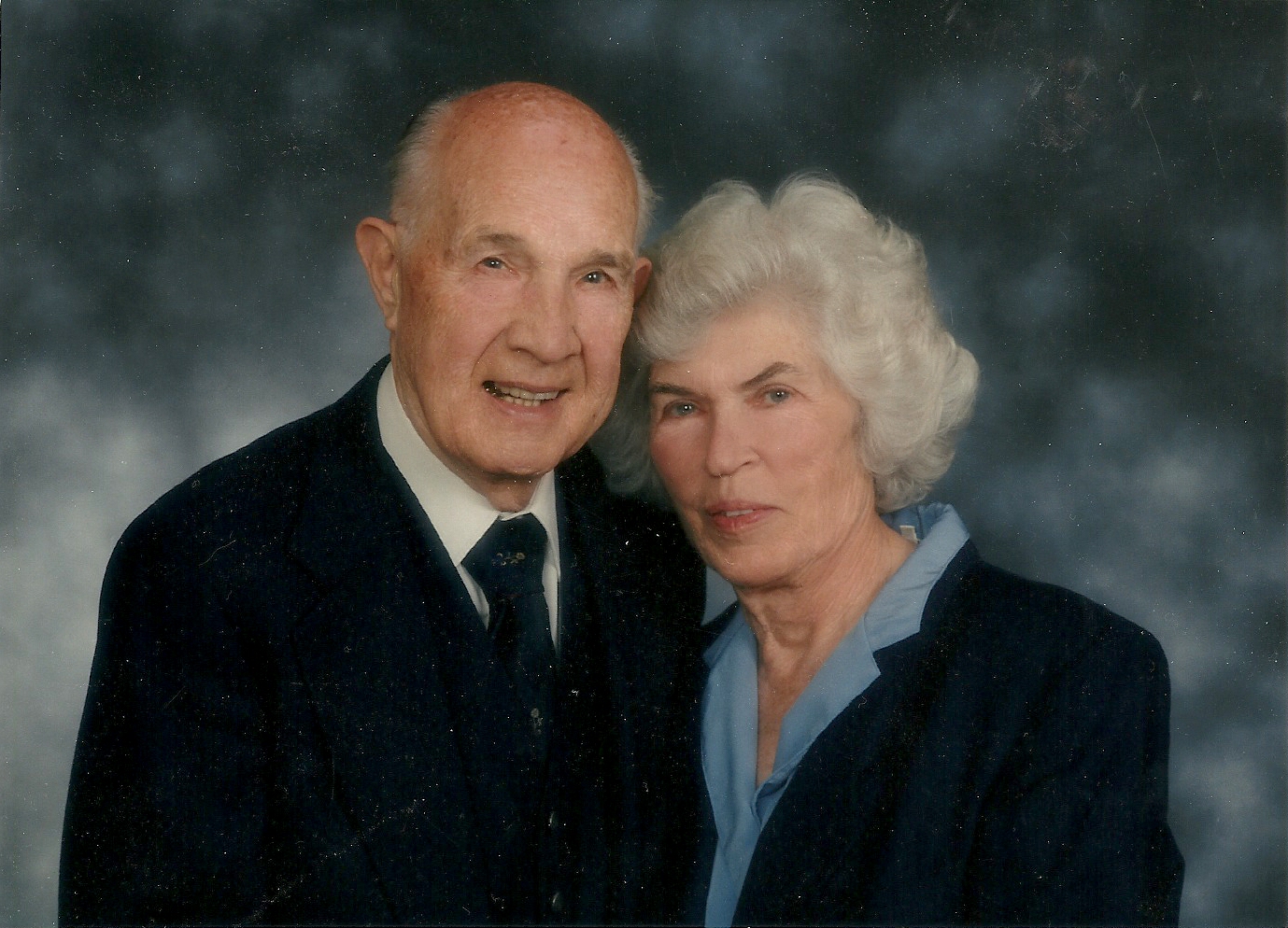
Charles and Rae Lindsay (circa 1995)

Charles and Rae Lindsay (circa 1995)

Charles Lindsay, a psychiatrist and to me an icon in his own right, said something very significant that day. Our heredity may be flawed and our environment might have been troubled, but we need not be captives of dysfunction. Our power to choose can be a part of overcoming a painful or frustrating past. I say “part of” because I believe Jesus was right when He said that without Him we can’t do anything. (John 15:5) And Steps to Christ reminds us that “Education, culture, the exercise of the will, human effort, all have their proper sphere, but here they are powerless. They may produce an outward correctness of behavior, but they cannot change the heart; they cannot purify the springs of life. There must be a power working from within . . that power is Christ.” (SC 18) Our power of choice does have an important role in our lives, but it can only go so far. Real heart change comes when our choices are tied into the Holy Spirit’s leading and power.

Heredity is important, and environment is important, but the power of choice can overrule them both.