Posts tagged “Soul Shapers

Things Every Parent Should Know

I very much concur with Jeremy Dean, the author of PSYBLOG, and the ten studies which follow that he believes every parent should know about. Choice theory is not mentioned in the article, but it is lurking behind almost every phrase. You can access PSYBLOG at spring.org.uk

10 Current Psychology Studies Every Parent Should Know

Post image for 10 Current Psychology Studies Every Parent Should Know
Whether parents are happier than non-parents, why siblings are so different, the perils of discipline, bedtimes, TV and more…

One of the many reasons parenting is an impossible job is that everyone is giving you advice, and much of it is rubbish. Frankly, it’s amazing we’ve all made it this far. So, bucking the trend of random anecdote and superstition, here are ten recent psychology studies that every parent should know.

1. Parents are happier than non-parents

In recent years some studies have suggested that the pleasures of having children are outweighed by the pains. “Ha!” said parents to themselves, secretly, “I knew it!” Not so fast though: new research has found that, on average, parents feel better than non-parents each day and derive more pleasure from caring for their children than from other activities (Nelson et al.,. 2013). Fathers, in particular, derive high levels of positive emotions and happiness from their children.

2. Putting your child first is worth it

Underlining the pleasures of having children, research finds that child-centric attitudes are beneficial. A study by Ashton-James et al. (2013) found that parents who were the most child-centric were also happier and derived greater meaning in life from having children. Performing child-care activities was associated with greater meaning and fewer negative feelings.

“These findings suggest that the more care and attention people give to others, the more happiness and meaning they experience. From this perspective, the more invested parents are in their children’s well-being — that is, the more ‘child centric’ parents are — the more happiness and meaning they will derive from parenting.” (Ashton-James et al., 2013)

So, what’s good for your kids, is also good for you.

3. Helicopter parenting may be depressing

As with many things in life, though, it’s a fine line between caring and smothering; especially when children have grown up. Schiffrin et al. (2013) asked 297 undergraduate students about their parents’ behaviour and how they felt about it. The study found links between ‘helicopter parenting’ and higher levels of depression amongst the students, as well as lower levels of autonomy, relatedness and competence.

“Parents should keep in mind how developmentally appropriate their involvement is and learn to adjust their parenting style when their children feel that they are hovering too closely.” (Schiffrin et al., 2013)

4. Avoid strict discipline

Around 90% of American parents admit at least one instance of using strict verbal discipline with their children, such as calling names or swearing at them. Rather than helping keep adolescents in line, though, be aware that this may just exacerbate the problem. A study of 967 US families found that harsh verbal discipline at 13-years-old predicted worse behaviour in the next year (Wang et al., 2013). And it didn’t help if parents had a strong bond with their children. The study’s lead author Ming-Te Wang explained:

“The notion that harsh discipline is without consequence, once there is a strong parent-child bond–that the adolescent will understand that ‘they’re doing this because they love me’–is misguided because parents’ warmth didn’t lessen the effects of harsh verbal discipline. Indeed, harsh verbal discipline appears to be detrimental in all circumstances.”

5. Regular bedtimes

Regular bedtimes really matter to children’s developing brains. Researchers followed 11,000 children from when they were 3-years old to the age of 7 to measure the effects of bedtimes on cognitive function, (Kelly et al., 2013). The researchers found that:

“…irregular bedtimes at 3 years of age were associated with lower scores in reading, maths, and spatial awareness in both boys and girls, suggesting that around the age of 3 could be a sensitive period for cognitive development.”

Regular bedtimes are important for both boys and girls and the earlier these can be implemented, the better for cognitive performance.

6. Do the chores together

Bringing up happy children is easier if Mum and Dad’s relationship isn’t too rocky. One frequent bone of contention between parents is the chores. A trick for achieving marital satisfaction over the chores is to do them together. When partners perform their chores at the same time–no matter who is doing what–both people are more satisfied with the division of labour (Galovan et al., 2013).

7. Limit infant TV viewing

The American Academy of Pediatrics recommends that children should watch no more than two hours of TV per day after two years of age, and none before that age. Here’s why: a new study that followed almost 2,000 Canadian children from birth found that an extra hour’s TV viewing at 2.5-years-old predicted worse performance later when they attended kindergarten (Pagani et al., 2013). The more children exceeded this recommendation at 2.5 years old, the worse their vocabulary, math and motor skills were at 5-years-old. More on this study: One Extra Hour of TV Reduces Toddlers’ Kindergarten Chances

8. Exercise boosts kids’ school performance

Kids are increasingly sedentary and, as I frequently write here on PsyBlog, exercise is a wonderful way to boost brain power, and it has many other benefits (see 20 Wonderful Effects Exercise Has on the Mind). A new study of 11-year-olds has found that moderate to vigorous exercise was associated with increased academic performance in English, Maths and Science (Booth et al., 2013). These gains from exercise were also seen in exams taken at 16-years-old. Interestingly, girls’ science results benefited the most from extra exercise.

9. Dangers of intense mothering

Some women say that taking care of children is more stressful than being at work. There are also links between child-rearing and stress and guilt. How can we square this with the reports and research findings that children fill your life with joy and meaning? It may be down to differences in attitudes to parenting. In particular, being an ‘intense mother’ may be bad for you. In their study of 181 mothers of children under 5, Rizzo et al. (2012) found that mothers who most strongly endorsed the idea that children were sacred and that women are better parents than men, were more likely to be depressed and experience less satisfaction with life. Yes, nurture your children, but don’t sacrifice your own mental health.

10. Why siblings are so different

Anyone with more than one child will have noticed a curious thing: their personalities are often very dissimilar. In fact, according to a study by Plomin and Daniels (1987), siblings have no more in common in their personalities than two completely unrelated strangers. This is very weird given that 50% of their genetic code is identical. The answer isn’t in the genes at all, but in the environment in which children grow up. Far from having the same environments, each child has:

  • a different relationship with their parents,
  • a different relationship with their other siblings,
  • different friends and experiences at school…

…and so on. And all these differences add up to quite remarkable dissimilarities between siblings–often such that if they didn’t look alike, you’d never know they were related. All this means, of course, that because their personalities are often so different, parenting strategies that work with one child, may not work with another. It’s just one more challenge of being a parent! Image credit: Paolo Marconi

Jeremy Dean is a psychologist and the author of PsyBlog. His latest book is “Making Habits, Breaking Habits: How to Make Changes That Stick“. You can follow PsyBlog on FacebookTwitterand Google+.

———————————–

The William Glasser Institute (WGI-US) has a new website that you may be interested in. You can access it at –

http://www.mentalhealthandhappiness.com

The Fisherman and the Monkey

The restaurant beside the small harbor.

The restaurant beside the small harbor.

During my last day in Lebanon, I was reminded about just how powerful the basic need for freedom can be in a person’s life. I had visited a very unique and important school in Tyre (yes, the Tyre talked about in the Bible) and afterward was taken to a seaside restaurant where I was able to talk more with the school’s principal about the history of the school and its future mission. The story of the school must be told, as it is an amazing tale of faith and courage, but for now I will share something (else) I observed as I sat by the water’s edge.

Mending nets.

Mending nets.

There was a sea wall that protected a marina area that was home to many small fishing boats. Nets were piled on the sterns of many of the boats, or piled along the docks just behind the boats. This was a working marina, if you will. I noticed one man sitting in his boat working on one of his nets. He had white hair pulled back tightly into a short ponytail and was shirtless, revealing his weathered, overly tanned skin. It struck me as I watched him concentrating on a portion of fishing net on his lap how that might have been Peter’s exact position when Jesus walked up and asked Peter to join him. (When the school principal saw me looking at the white-haired fisherman he told me about how this fisherman was so distinctive that when documentaries are made about Tyre, as National Geographic did, the film makers always want scenes that include this man.)

A literal monkey on his back.

A literal monkey on his back.

A few moments later a younger man (younger than 35) walked onto another boat near where I was sitting. He was in jeans and an old t-shirt, and he had a little monkey on his back. Literally. This got my attention and I continued to watch this interesting duo. The man struggled to get the monkey off his back, literally, but eventually did. The monkey was on a leash and the man attached the leash to one of the metal uprights supporting a small roof for the boat. The monkey settled in, at times climbing the upright for a better view, at times just sitting on the deck and watching his companion work on nets. When the principal saw that I was focused on this younger fisherman and the monkey he told me something that expanded my understanding of the basic need that people have for freedom.

Another day at the office for the monkey.

Another day at the office for the monkey.

The young fisherman, the principal explained, had a good job as a pilot of a large boat or yacht for some rich person in the area, but that he didn’t like being under someone’s supervision or direction, and that he preferred the life of a simple fisherman, not knowing how much his income would be, but being in total control of his actions and destiny. Instead of good-sized paycheck, and having to answer to someone else, he chose a smaller, sporadic paycheck, and having total say over the details of his life. Once, the principal continued, the young fisherman caught a huge lobster, easily worth $50 if he sold it. “But he didn’t sell it,” the principal said with some passion in his voice. “When I asked him what he did with the lobster if he didn’t sell it, he told me, I ate it!

Somewhere Frank Sinatra is singing "I Did It My Way."

Somewhere Frank Sinatra is singing “I Did It My Way.”

This story reminds us of the power of the basic needs, in this case the need for freedom. He acted on his need for autonomy, which strikes some of us as gutsy. He could have stayed with the good paying job, which provided security, but for him the trade-off wasn’t worth it. Apparently, he has a lower survival need. The need for freedom doesn’t force a person to give up good paying jobs. Sometimes people work in what for them is a less than ideal situation because it pays them enough money to satisfy their need for freedom in other ways besides their jobs – maybe they travel or have expensive hobbies. If we have a high need for freedom, though, and don’t satisfy that need we will most likely be unhappy. The basic needs don’t just go away. We were born with them and they are with us for life.

The young fisherman struggled to get the monkey off his back when he wanted to start working on his nets. That moment may have captured what the fisherman felt as he wrestled with what to do with his life. Maybe his good paying job felt like a monkey on his back, too. Monkeys can be like that for all of us.

—————————————-

 The Choice Theory Study Group is meeting this coming Sabbath, November 2, at 2:00 pm in room 212 of the Education building at Pacific Union College in Angwin, California.

$10 and Push Ups

Working with partners during one of the morning session activities.

Working with partners during one of the morning session activities.

Some anecdotes from the Beirut conference, Sunday, October 20, 2013:

My view of the Middle East culture, now that I am a veteran of a few days here, is that they are reserved with someone they don’t know that well, but not reserved at all with each other. By the end of the conference, people were greeting me and even saying thank you, but not much more than that. They seemed to be into the topics that were covered, especially if the learning involved an activity, but I didn’t get a lot of direct feedback from them one way or another. There was positive energy in the room; I could definitely feel that. One woman who attended came up to me during a break and thanked me rather strongly, ultimately sharing with me that I had come to the Middle East just so she could here about choice theory.  Made my day, actually.

it's about 67 cents per push up.

It’s about 67 cents per push up.

I do an activity where I hold up a $10 bill and say that I will give it to the person who comes to the front of the room and does 15 legal push ups. Usually, there will be some who start waving their hands to be chosen as I slowly approach others and one by one offer them the money for the pushups. People will decline; some refuse even to give me any eye contact for fear I will ask them. I continue trying to get someone (not waving his/her hands) to go for it. Eventually, I select a person and he/she does the push ups, whereupon I congratulate them and hand them the money. This activity is a lead-in to a discussion on behaviorism and stimulus-response approaches to motivation. I ask them “What just happened here? Did the $10 make the person do the push ups?” It didn’t seem to work with those who declined, some of whom could have done the push ups. Ultimately, the group realizes that external motivators work for some people, some of the time, and always for reasons that are inside of them. The reason I share this is that when I did this activity in Beirut I had fewer responses than at any other place I have used it. Absolutely no women were interested in doing the push ups, and basically none of the men were either. One raised his hand briefly, but then his hand kind of disappeared. An American student missionary eventually said he would do it, which he did, and he got the $10. I am curious, though, if this is a cultural thing or if I just didn’t do it right. I’ve been doing it for a long time, so I don’t think it is the latter, but you never know. (Most of the participants who have done the push ups and won the $10 over the last, say three or four years, have been women.)

Great rendition, from the heart, of the Lebanese national anthem.

Great rendition, from the heart, of the Lebanese national anthem.

For variety, I also offer $10 to the person who will come to the front and sing the national anthem, a cappella. People seemed even less interested in doing this than they did in doing the push ups. I offered and invited, but no takers. Finally, a gentleman said he would do it and moved to the piano on the stage to play as he sang. I said, no, it needed to be a cappella. He complied, took the microphone, and begin to sing the Lebanese national anthem. He sang with conviction and gusto. Very quickly after he began to sing, one by one audience members stood to their feet and began to sing as well. Rather than simply being entertained by this impromptu solo, they felt compelled to stand in honor of their country and join in singing their national anthem. It was an impressive moment, a touching moment. I was out another $10, but it was totally worth it, though.

An afternoon problem-solving group solving problems.

An afternoon problem-solving group solving problems.

After lunch, problem-solving groups were created that were asked to apply information from the morning session to real classroom settings. For instance, one of the questions asked group members to identify a need-satisfying classroom strategy or activity for each of the Basic Needs. I was very impressed as group reporters from each of the groups went to the microphone and explained their choice theory strategies for a better classroom environment.  Examples included –

Purpose and Meaning– explaining assignments better; allowing students to ask and explore “why” questions; helping students to research career possibilities without pressuring them in a certain direction

Love and Belonging – greeting students personally at the start of the school day and asking them how they are doing; teaching them to work with partners or in small groups more effectively; looking out for the student who may not feel as connected; modeling positive relationships by being supportive of each other as staff members

Power and Achievement – having students present to the class or to teach the class a skill that they do well; allowing students to re-do an assignment until they get it; giving students roles or jobs in the classroom; try to provide students with choices when it comes to how they fulfill assignments

Freedom and Autonomy – trust students more and expect them to live up to that trust; allow to give input into how an assignment could best be done; allow students to give input into the selection and wording of some of the class procedures and rules

Joy and Fun – read funny stories or share jokes; create an environment that is emotionally and physically safe, where creativity can flourish; be optimistic with students; express belief in their ability

Survival and Safety – design and implement a structured school program that protects students physically, emotionally, and academically; be aware of any students displaying bullying behaviors; repair damaged or broken equipment or furniture quickly; prioritize the emotional well-being of every student

————————————

Check your calendar, because if you were really responsible and organized you would have Sabbath afternoon, November 2, from 2:00-4:00 pm already scheduled for the next Choice Theory Study Group. If you haven’t scheduled it yet, you can go ahead and do that now. Hope you can be there!

————————————

Let me know if you have questions or topics for The Better Plan blog to address. Get in touch with me at thebetterplan@gmail.com or through the blog contact form.

Choice Theory in Beirut

Beirut sunset

Beirut sunset

I am in Beirut. Yes, Lebanon.

As I write this there is a beautiful sunset to the west and the lights of the city, like stars, are beginning to come alive and twinkle. I hear the sounds of sirens echoing from the city below. I see the sunset, the sky turning gorgeous shades of darker hues, and hear the sounds of the city from my third floor dorm room, my room with a view. Quite spectacular, actually.

I am in the Middle East for the first time in my life, invited here to share the ideas of choice theory. My perception of this area of the world is that it tends toward authoritarian approaches to life, maybe especially so in the Muslim community, and both of these thoughts were confirmed by Beirut natives in discussions after I arrived. Still, though, there is a desire by teachers here to consider the principles of choice theory.

My presentations occurred on Sabbath afternoon, October 19, and most of the day on Sunday, October 20. Dr. Ed Boyatt, recently retired Dean of the School of Education at La Sierra University, is a co-presenter with me and gave his talks on Friday evening and Sabbath morning. There were three things I wanted to emphasize during the comparatively short time I had to introduce the group to the concepts of choice theory. They were –

1. God designed us for internal control based on freedom.

2. Positive relationships are the foundation on which other success pieces are built.

3. Schools can be need-satisfying places that students and teachers want to come to each day.

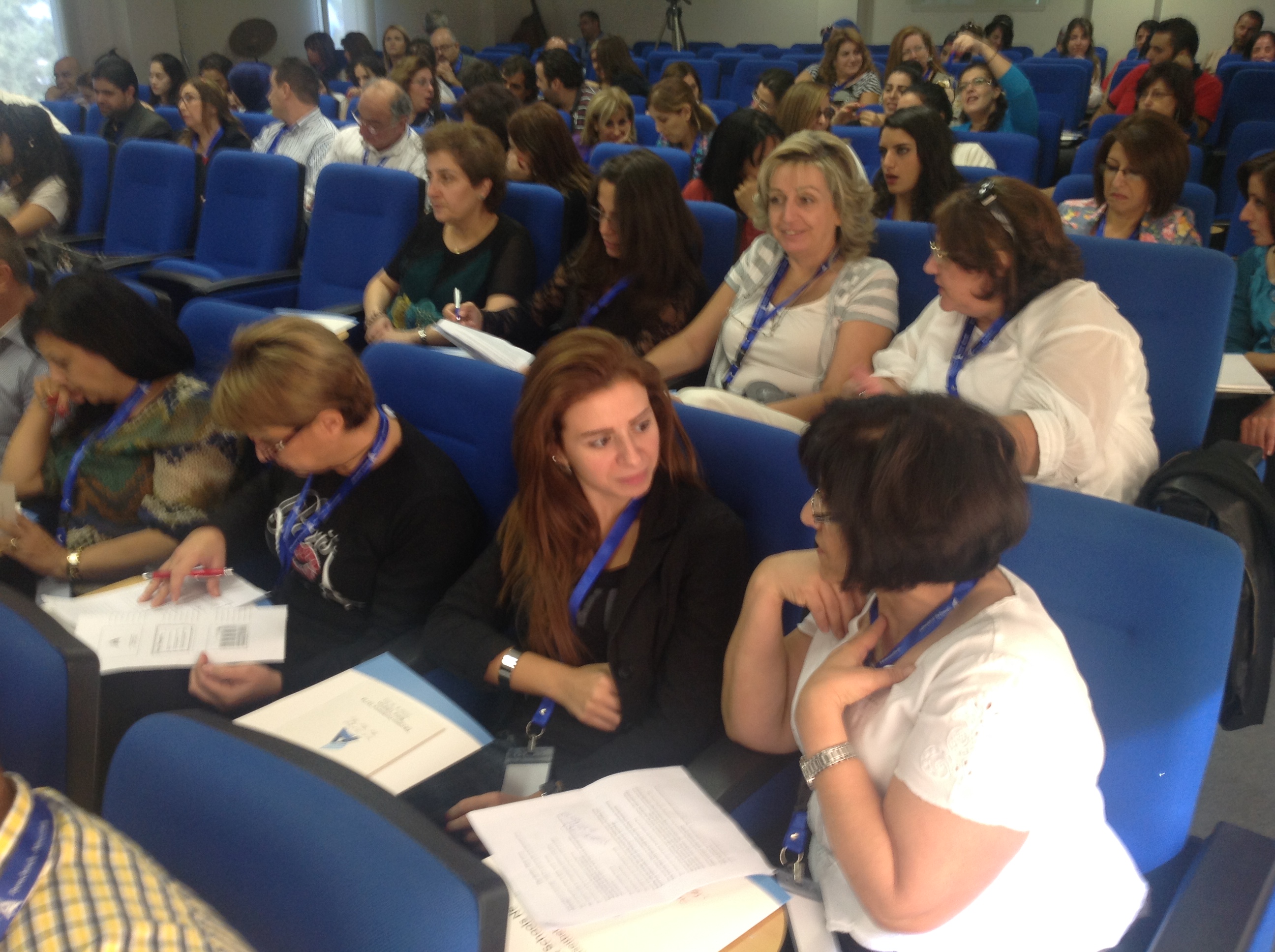
A large group came together for the choice theory conference on Sunday.

A large group came together for the choice theory conference on Sunday.

Sabbath afternoon really focused on the first theme, including the idea that since God created us for internal control even He won’t control us. Sunday focused on some of the choice theory elements – understanding the basic needs and the concept of the quality world – that contribute to fulfilling the second and third themes.

One of the quotes that supports the idea that we have been created for internal control, and the quote that years ago first alerted me to a possible similarity between Ellen White, one of the SDA church founders, and William Glasser, says that

The training of children must be conducted on a different principle from that which governs the training of irrational animals.  The brute has only to be accustomed to submit to its master; but the child must be taught to control himself.  The will must be trained to obey the dictates of reason and conscience. A child may be so disciplined as to have, like the beast, no will of its own, his individuality being lost in that of his teacher.  Such training is unwise, and its effect disastrous.             Fundamentals of Christian Education, p. 57

This quote led me to further reading of Ellen White’s books, which then led me to a detailed comparison between Glasser and White, and which ultimately led to the writing of the Soul Shapers book. Both Glasser and White explain, describe, remind, warn, invite, and encourage. Their written words state ideas in ways that get our attention. For example (a few other quotes shared during the conference) –

True education is not the forcing of instruction on an unready and unreceptive mind.    Education, p. 41

Those who train their pupils to feel that the power lies in themselves to become men and women of honor and usefulness, will be the most permanently successful.  Their work may not appear to the best advantage to careless observers, and their labor may not be valued so highly as that of the instructor who holds absolute control, but the after-life of the pupils will show the results of the better plan of education.                    Fundamentals of Christian Education, p. 58

The latter quote provided the idea for the name of this blog. For Ellen White, “the better plan” had everything to do with working with students in a way that honors the internal control with which they are designed. These are just some of the quotes that spurred our discussion during the conference.

Jim Roy and Jimmy Choufani

Jim Roy and Jimmy Choufani

This is a picture of Jimmy Choufani and me as we talk about the Sunday afternoon session of the conference. I can’t say enough good things about Jimmy! He will read this and probably be a little upset at me for saying these nice things about him, but .  .  . well .  .  . tough. Jimmy is a gifted educational administrator. If you haven’t been to Beirut, it may be hard for you to understand what he and his team have accomplished at Bouchrieh Adventist Secondary School (BASS). Ed Boyatt and I had the privilege of observing in classrooms today at the school and I am impressed. I am impressed with the organization and structure of the school, the ability of the teachers, and the level of respect by the students.

Isaac Atem Thon Atem and Jim Roy.

Isaac Atem Thon Atem and Jim Roy.

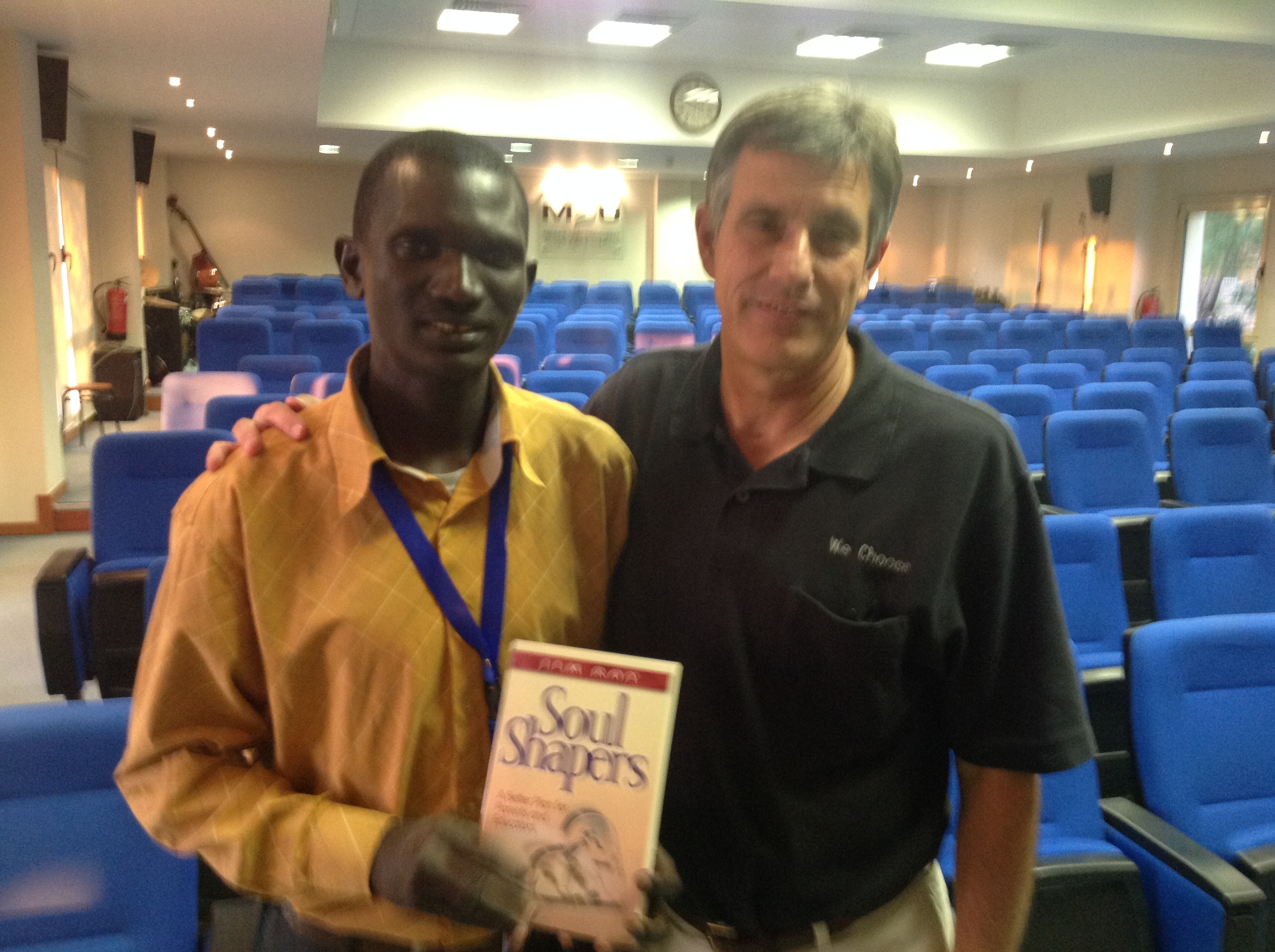
This last picture is of me and Isaac Atem Thon Atem. Isaac is just about to complete his teaching degree at Middle East University and attended the conference over the weekend as a future teacher on the lookout for good ideas. He approached me during one of the breaks and asked if he could purchase one of the Soul Shaper books. I didn’t bring any with me to sell, but as I listened to him tell me about his plan to return to South Sudan and to teach there, I quickly said, please, take my copy. It is a privilege for me to support Isaac. He is a gentle soul ready to go to a difficult place and do what he can to make life better for his students.

I never imagined that choice theory would bring me to the Middle East, but it has and I am very thankful for it. I look forward to a few more days here, and to discussions about the future of choice theory in Beirut!

It’s Been Awhile

IMG_0673

I knew it had been a while since my last bike ride, but I didn’t know it was that long. When I got home after riding today I downloaded the last several rides from my Garmin and discovered my last ride was three weeks ago. My goodness, or should it be my badness. It has been a while since my last blog, too. It’s been almost two weeks since the last Better Plan posting and that is a record. Not a record I am proud of mind you, but a record none the less.

The beginning of this school year has been so full and so busy for me, more than usual, I think. Besides getting classes set up and going this Fall quarter, several additional things also have my attention. To find out if you are interested in any of these things keep reading.

Beirut Trip

I am leaving for Beirut, Lebanon, this coming Wednesday, where I will be giving several choice theory presentations to teachers and school administrators. Jimmy Choufani, one of the school principals (and a follower of this blog), has been talking with me for over a year about getting this to happen, so it is awesome that the plan has come together. Jimmy read Soul Shapers over a year ago and wants his colleagues to have an opportunity to at least hear about the principles of choice theory. He has shared with me that on one of the days during the conference the audience will be made up of Christians and Muslims. What a testimony to their unity in the midst of so much unrest all around them. I am humbled to be a part of this venture.

1308277

Also going to Beirut as a co-presenter with me is Dr. Ed Boyatt, recently retired Dean of the School of Education at La Sierra University. Ed, along with Dick and Anita Molstead, (all followers of the blog) was Superintendent of Education in the Oregon Conference while I was principal at Livingstone Academy in Salem from 1993-1996. (Livingstone was the school where most of the Soul Shapers book took place.) Their support meant a great deal to me and I dedicated Soul Shapers to them because of that. I am so thankful that Ed is going on this trip! Together we want to share how the principles of choice theory actually reflect the character of God, as well as share choice theory details that will be especially helpful to educators. After the weekend conference Ed and I will be observing in schools in Beirut and then talking with principals and teachers there about how choice theory can begin to have a presence in classrooms.

We solicit your prayers as we prepare for the trip. Any words of advice would be welcomed as well.

Glasser Biography

The Glasser biography – William Glasser: Champion of Choice – is supposed to come out in late November. The inside of the book looks wonderful. I am really pleased with the look and visual tone of the book. It will be a pleasant read in that way. I am in the midst of a slight disagreement regarding the cover of the book, but it is not a major thing. Hopefully, my input will sway them, but then again, what do I know about cover design. It will just be so good to have the book done!

The Evolution of Psychotherapy conference in Anaheim is at the beginning of December and I think they want to have the book available for that.

Masaki Kakatani, long time Glasser Institute member, has contacted the publisher to begin translating the biography into Japanese. Very cool.

Choice Theory Study Group

Our next Choice Theory Study Group will be on Sabbath afternoon, November 2, at 2:00 pm in the Education building at Pacific Union College. Mark it in your calendar.

Agenda items include:
+ Brief updates on any choice theory lessons or experiences in your classroom or school.
+ I will give a brief update on the Beirut trip.
+ Role play review on how to conference with a student with an attainable want.

Let me know if you have a topic or question for us to consider on November 2.

Choice Theory Study Group
November 2, 2013
PUC Education building

Shifting the Culture – Roots of Change

images

During the last NapaLearns board meeting I sat next to Paul Curtis, Director for School Quality of the New Tech Network. New Tech is an amazing advocate for progressive educational change and has gone from having one high school in Napa, California, to having more than 130 schools across the U.S. Project-Based Learning (PBL) forms the basis for a lot of their success, but schools wanting to emulate the New Tech approach soon learn that such success is based on a lot more than just PBL. Project-Based Learning can only thrive when other important factors are present. In other words, there needs to be a culture shift for progressive ideas to take root and become a permanent part of the school or district landscape.

Visiting with Paul got me to thinking about the kinds of cultural shifts that a choice theory emphasis would bring about in a school. I probably should have been paying more attention during the meeting, but this is what I came up with instead –

The Cultural Shifts of Choice Theory

1. Shifting from “You Will Be Forced to Adjust to School Requirements” to “How Can We Better Meet Your Needs?”

2. Shifting from Intimidation to Relationships

3. Shifting from Rote to Relevance

4. Shifting from External Evaluation to Internal Evaluation from “Other” Evaluation to Self-Evaluation

5. Shifting from Mediocrity to Mastery

6. Shifting from Compliance to Cooperation

7. Shifting from Punishment to Problem-Solving

I was asked to serve as a panel member for History/English presentations at New Tech High School (Napa) last Thursday. Their presentations, by four member teams, were impressive, but I was even more impressed with the way the rest of the class listened so respectively and attentively, and with the questions they asked afterward. New Tech has made cultural shifts that contribute to their model’s success, shifts that you feel as soon as you walk in the front door. Too often schools focus on details of change, like the nuts and bolts of forming a PBL lesson plan, without creating the environment in which PBL can thrive.

Glasser Quality Schools should not be left out of this conversation, as they are alive and well across the country, too. For a review of the criteria for a Quality School, along with a list of the current declared Glasser Quality Schools, go to

http://www.wglasser.com

On the left hand side of the page click on The Glasser Approach; then click on Glasser Quality School Education.

As always, if you can add to the “Shifts” list above, let me know and I will add your suggestion.

Thirteen (so far) Essential Psychological Skills for Kids

Kids

In the last Better Plan blog we considered the kinds of skills that kids should have before they turn 18 and definitely before they leave home. One of the categories that was missing from the list, though, was a category for Psychological Skills. Several of you responded to my request for help at forming such a list. The following list summarizes your suggestions.

Psychological Skills We Want Our Kids to Learn
1. To be able to recognize the motivation behind their choices.
2. To be able to handle failure and see it as an opportunity to learn.
3. To be able to self-evaluate.
4. Knowing the seven Caring Habits (Supporting, Listening, Encouraging, Accepting, Trusting, Respecting, and Negotiating Differences) and using them.
5. To really recognize their priceless worth, not because of their performance, achievement, or behavior, but because they are a child of God.
6. Relational skills, such as connecting, compassion, communication, and empathy.
7. To be able to process and navigate emotions in a positive way.
8. To be aware of the ability to choose their response to the conditions/circumstances of life.
9. To understand that divergent thinking is healthy.
10. To know when to –
FIGHT for something worth fighting for;
ACCOMMODATE when the relationship is more important than the issue, and
AVOID when it makes sense to split the difference and compromise.
11. Also knowing and understanding the seven Deadly Habits (Criticizing, Blaming, Complaining, Nagging, Threatening, Punishing, and Rewarding to Manipulate).
12. To learn to be caring and compassionate, especially using the skill of empathy.
13. To gain a work ethic that reflects a willingness to work and a desire to do their best.
This list is a great start, but (I wonder) have important psychological skills been left off? Reply to this blog with more suggestions and help to make the list even more complete. This could be a great resource to those of us who work with kids and to those of us who give workshops and presentations. For instance, I am scheduled to begin teaching choice theory to 10th graders this coming Friday morning. I could see myself sharing this list with “kids” and getting their response. Let’s grow this list and identify more of the psychological skills we want our kids to have.
===============================
???????????????????????????????????????
The Choice Theory Study Group that met near where I live this past Sabbath was a success! Group members shared examples of ways they have taught or used choice theory so far this school year, and coached and affirmed each other throughout the process. Some things that came out of our time together include –
George Barcenas, PE teacher, athletic director, and language teacher at Redwood Adventist School in Santa Rosa, CA, described how grades 9-12 began the school year with a multi-day retreat in the Santa Cruz mountains, with choice theory principles as the theme they wanted to set the tone for the school year. He has followed that opening week by consistently referring to the choice theory elements in his classes. Already students are beginning to bring up the basic needs, maybe their own or those of another student, when problem-solving moments arise.
Joel Steffen, fifth and sixth grade teacher at Foothills Adventist Elementary School, has been conducting daily class meetings. One thing he shared is that it really makes a difference which guiding question you use to start the meeting. When you choose well and kids are interested in the topic the meeting goes pretty well. Choose less well and it becomes apparent rather quickly. He sees both the effective and the less effective meetings as steps in the learning process, though, and plans to continue honing his questioning skills.
Joel Steffen is having his fifth and sixth graders create their own quality world cup.

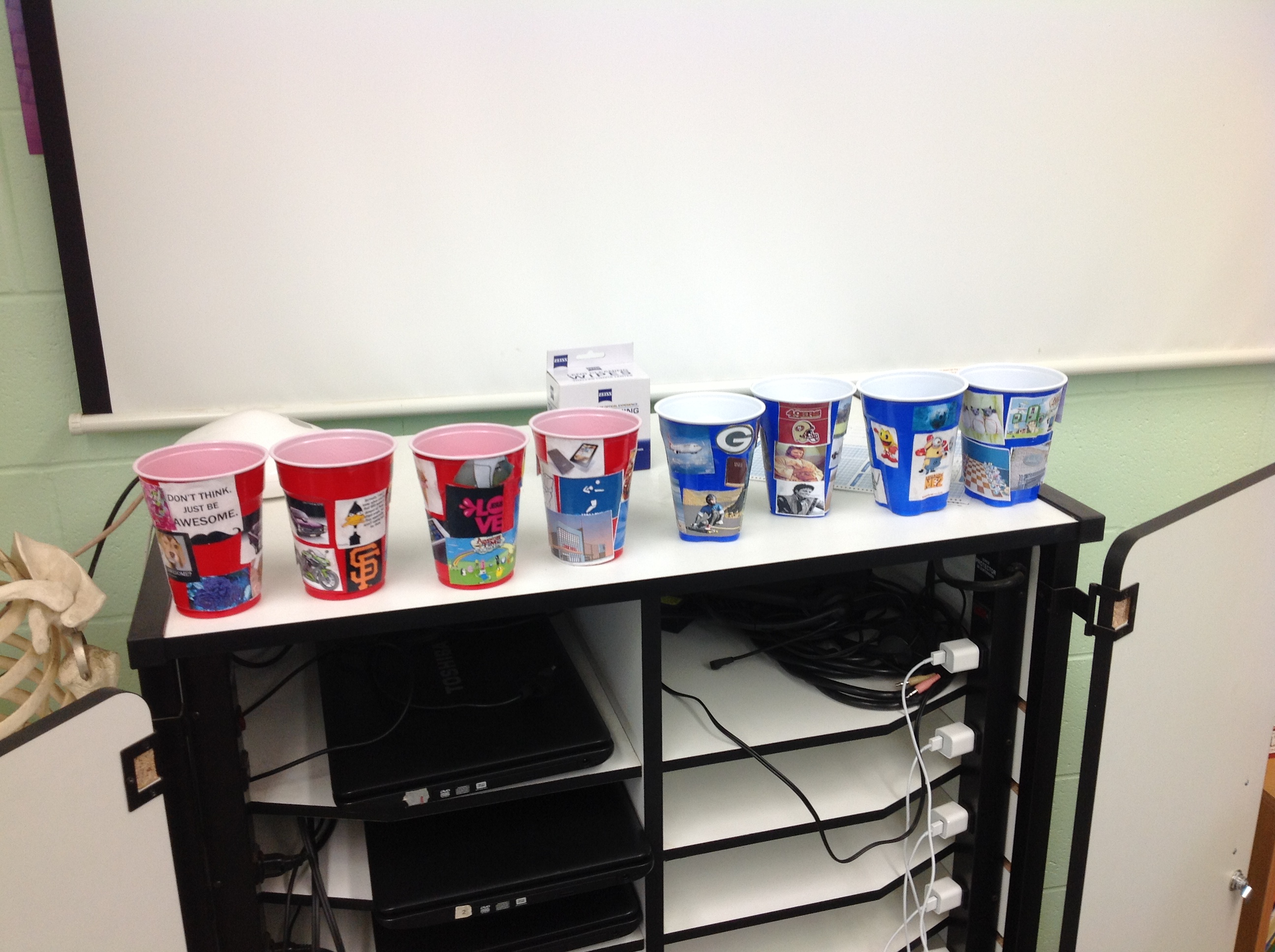
Joel Steffen is having his fifth and sixth graders create their own personal quality world cup.

Amy Palma, fifth grade teacher at Calistoga Elementary, has been teaching there for 10 years, and has been implementing a choice theory management approach, specifically Marvin Marshall’s ABCD model for seven of those years. Amy’s story is important because she is an example of a teacher who successfully uses choice theory, even though she is the only one in the school doing so. Over the years, the school has tried different external control programs, and each time Amy has respectfully declined. While other teachers have been less than satisfied with how a school year has gone, Amy likes how it has gone and attributes choice theory as one of the key reasons. Teachers sometimes ask me, “What if I am the only teacher in the school teaching this way?” At that moment I tell them about Amy.
Sean Kootsey, History teacher at Pleasant Hill Adventist Academy, described how significant the idea of giving students multiple chances to master the learning has been for him, and for his students. He reminded us that learning and assessing is not a “gotchya” process. If students need more than one chance to learn the concepts, why is that bad, he asked. At first other teachers in the school chuckled or even scoffed at the idea of multiple learning chances, but now all of them are teaching that way and are pleased with the results. The culture there has shifted.
Ron Bunch, a local community member, shared how much the ideas have influenced his personal relationships, and especially how the choice theory ideas have helped him in his spiritual journey. He described new insights regarding the character of God and His design of us and for us. God did not create us to be a victim of circumstances, but instead gave us incredible freedom and power to make choices.
These were just a few of the things expressed in the recent study group. One thing the group decided was that we want to keep meeting, maybe even on a monthly basis. It was felt like the get-together is a good way to keep choice theory ideas from being crowded out by other things; it is a good way to re-charge the concepts and to feed off the energy of colleagues. We will be meeting twice more before the Christmas break. I’ll share those dates soon.
==========================
One thing that came out of the blog entitled Compelling Reasons to Teach Choice Theory is the recognition that we need to begin sharing more about how to get this done. We need to assemble a clearinghouse, a place where people can go to access resources and materials, or even specific lesson plans that address choice theory elements. This is important! We need to get this started!
==========================
Become even more popular than you already are by sharing The Better Plan with colleagues and friends. It’s simple –
You can also improve your popularity by sharing this post on your Facebook page. It’s easy to do and it will help to grow The Better Plan community.

What to Teach Your Kids Before They Leave Home

YOU ARE INVITED!

YOU ARE INVITED!

Reminder and Invitation
For those of you within driving distance of the Napa Valley, remember you are invited to our Choice Theory Study Group on Sabbath afternoon, September 21, from 2:00-4:00 PM at Foothills Elementary School, located just up the hill from St. Helena. The address is 711 Sunnyside Road, St. Helena, 94574. It is very easy to get to. Head north on the Silverado Trail from Napa; turn right on Deer Park Road (the blinking red light); turn right at Sunnyside Road; the school is at the corner of Deer Park Road and Sunnyside.

——————————

It would be great if by 18 every young person could do the following –

So began an article I re-discovered today while going through some old files. I am getting ready to teach a classroom management class (classes begin on Monday) and found an article I filed 12 years ago titled What to Teach Your Kids Before They Leave Home. It included a list of 12 different categories with specific skills under each one.

Domestic Skills
Cook a traditional breakfast, lunch, and dinner.
Wash and iron clothes.
Replace a button.
Bake bread.

DSCF97631-300x225

Physical Skills
Throw and catch balls.
Swim half a mile and tread water for half an hour.

Handyman Skills
Hang a picture straight.
Paint neatly and be able to clean up afterwards.
Know which tools perform which functions.

Changing Tire_2

Outdoor Skills
Hike with friends all day.
Bait a hook.
Plan and manage a weekend camping trip.

Practical Skills
Type with both hands.
Drive a car.
Change a flat tire.

You get the idea. There were other skills, too, things like –
Speaking before a group.
Knowing how to play a musical instrument.
Reading a map.
Knowing basic first aid.

355903-26712-50

The short article of bulleted lists drew me in and I soon was evaluating the skills the author suggested, wondering to myself if these lists really did represent the necessary survival skills for life. One category, I noticed, that was missing was a category for Psychological Skills. What do you think? Of all the categories, wouldn’t Psychological Skills be the most important one of all? Let’s add this category and answer the following question –

What Psychological Skills Would You Want to Teach Your Kids Before They Leave Home?

I really want to hear from you on this one. Let’s see what kind of skills we can come up with.

———————————

Some news on the Glasser biography!! It looks like it will be published in November. Stay tuned.

Compelling Reasons to Teach Choice Theory to Students

IMG_0635

1. It will improve students’ mental health

I was reminded recently of one of the essential pieces of choice theory implementation, that being the need for teachers to teach their students about the concepts of choice theory. It is a little bit frustrating for me to see the excitement for choice theory and the commitment to nurture a choice theory environment in classrooms, and then learn that the usual pressures of the school year seem to derail the idea of sharing choice theory with students. I am convinced, though, that bringing students on as choice theory partners will sooner establish choice theory as part of the school culture.

The recent reminder came from an article I read in the Psych Central online journal. The title — Mental Health in High School: Teach Students Link Between Thinking Patterns, Emotions and Behavior — caught my eye. Sure enough, the article could have been written by a choice theorist.

Researchers from the Ohio State University College of Nursing found that a program called COPE (Creating Opportunities for Personal Empowerment) reduced depression, enhanced health behaviors, and improved grades. Health classes used an intervention that focused on cognitive behavioral skills. While not the only focus, the study’s author, Bernadette Melnyk, observed that –

“This is what has been missing from prior healthy lifestyle programs with teens — getting to the thinking piece. We teach the adolescents that how they think directly relates to how they feel and how they behave.”

The important thing about the program is building skills that help students learn to become aware of their negative thoughts, the ways in which such thoughts affect their self-concept, and the behaviors that can come out of that kind of thinking.

“Schools are great at teaching Math and Social Studies,” Melnyk continues, “but we aren’t giving teens the life skills they need to successfully deal with stress, how to problem-solve, or how to set goals, and those are key elements in this healthy lifestyle intervention.”

We know, as teachers and parents, how much our own mental health has been improved through our understanding of choice theory. What is keeping us from intentionally and purposefully teaching the concepts to our students? Glasser once pointed out that expecting students to be successful at life without teaching them about choice theory is like expecting them to play and win a game without teaching them the rules. Kids are wrestling with so many personal challenges and conflicts. And without choice theory (or something like it) their mental health is put at risk.

2. It will improve teacher understanding of choice theory principles

It has been said that a person never understands something so well as when he has to teach it to someone else. A German proverb comments on the same principle by stating –

He who teaches children learns more than they do.

A classic book from 1971, Children Teach Children: Learning by Teaching, cited the results of an anti-poverty reading program in New York City in which older students tutored younger students with reading difficulties. After five months of one on one help it was discovered that the younger students showed a six month gain in their reading scores, which was great. They also tested the older tutors and were blown away to discover that they had made a gain of 3.4 years in their reading scores. Not expecting that kind of gain at all, it alerted them to the potential of increasing the learning through teaching.

IMG_0633

Not only will we learn choice theory better as we teach the concepts to our students, imagine for a moment how well students could learn choice theory by teaching it to each other.

I think some teachers may hesitate to teach about choice theory because they don’t feel like they have a lot of expertise in it yet. Maybe they’ll share more after they read another book or attend another workshop. I think some may hesitate, too, because giving the choice theory concepts away to students could lead them to monitor or judge our fledgling efforts toward non-coercive change. It is true that at the very beginning we may want to experiment with the ideas privately, without making a big deal out of them. Pretty quickly, though, we need to share choice theory with our students. Maybe they will monitor our fledgling efforts. All the better as situations and events become teachable “choice theory” moments.

Chances are you don’t need the Psych Central article to remind you that students need mental health instruction as much as they need physical health instruction. I encourage you to go for it!

————————–

One of the things we’ll be doing at our Choice Theory Study Group this coming Sabbath afternoon, Sept. 21, at Foothills Elementary is sharing some of the ways we have used or implemented choice theory so far this school year. I will pass on some of these examples in future blog posts.

————————–

Spread the word about The Better Plan blog. Share it with a colleague or share a post that you appreciate on your Facebook page.

It Is More Important That I Like Them

IMG_0629

Fall quarter begins on September 23 at Pacific Union College, the school at which I teach in the teacher credential program, which means that two weeks from today I will be teaching. Next week there will be quite a few campus meetings and time will feel crunched. Therefore, I thought it wise to get going on office organization and class preparation today. I attacked some stacks of stuff on top of my file cabinets, stacks that had been resting there for some time (it turns out), and re-discovered some papers, folders, and articles that were actually worthwhile in some way. One of the sheets of paper I ran across was some notes I took from a presentation I attended. It is written in my handwriting, but I had no name or no date anywhere on the paper. I remember being impressed with the talk, but I can’t remember who gave it. If one of you shared these thoughts, let me know. In any case, I have typed out my notes from the talk below –

What have you not learned yet?

What can I offer you?

It takes three years to figure out if you’re in the right place, doing it well, etc.

Give yourself permission to fail; and then to fail again.

Be reflective about your teaching.

I felt I couldn’t do anything well.

It is more important that I like them, rather than focusing on them liking me.

What mountain are you willing to die on?

One week does not a year make.

God does not call us to be successful; He calls us to be faithful.

#1 rule of teaching – Do no harm.

The one about it being “important that I like them” really jumped out at me. Of course, it oozes and overflows with choice theory. We can choose and nurture our own thoughts and behavior, but that is where our control stops.

It is amazing how much energy we can put into worrying about being liked by others. New teachers especially have to come to grips with this. Until they do it can be so draining trying to manipulate others into behaving a certain way. Being a teacher takes real strength. It takes strength to like students when they aren’t very likeable.

It can be easy to skip over the liking part and focus on having a spirit of love. The thing is, liking is loving in action. Liking is the “hi” in the morning, even when you know you’re not going to get an enthusiastic hi in return. Liking is talking about the football game and making small talk. Liking is being interested in another person and the things they are interested in. Liking is wishing another person a good evening and reminding them that you are looking forward to seeing them tomorrow.

I really believe that some students have never experienced an unconditional liking relationship. As their teacher or significant adult in their life, you may be the first to treat them like they are special and that they have a purpose in this world. They may be used to being ignored, resented, yelled at, manipulated, and controlled. It may be a shock to them to have someone say, “good morning,”

——————————-

Which of the statements from the notes speaks to you? I’d love to hear from you.

——————————-

Remember September 21!

If you live within driving distance of PUC, think about joining us for a choice theory study group!

Where: Foothills Elementary (just down the hill from PUC)

When:   Sept. 21, 2:00-4:00 pm

Attend services at one of the local churches (The Haven, next to the St. Helena Hospital, is close and they provide a lunch each week after church) and then head over to Foothills for choice theory ideas and support.