Posts tagged “Glasser

Is My Self-Evaluation the Only One That Matters?

self-assessment-1

My friend, Tim, who I respect a lot, questioned the idea that self-evaluation is the only evaluation that really matters. I think there is definitely room for discussion on this point. His comment follows below and my reply follows after that.

The irony–

I read this: “Glasser and Deming agreed that self-evaluation was really the only evaluation that mattered. We have to hold to this principle, pursue it, nurture it, if we are to create learning environments that are need-satisfying.”

While the seniors are filling out their evaluations of me and the various mini-courses in their religion class this year, I don’t think my self-evaluation is the only one that matters!

Even since writing the following reply I continue to think about the need for and process of evaluation. Here’s the response I came up with a couple of days ago, though.

Yes, student feedback is important, but the real question is what is the feedback for?
If it is for you, then how you evaluate or respond to their feedback is the key piece in the process.
Some teachers will have student feedback available, but not even look at it for fear of what it might say.
Other teachers will read the student data and comments, but dismiss them because the students really don’t understand what education is about or what the teacher is trying to accomplish.
Still others will read the comments and resent the students for their candor.
And finally, some teachers will read student comments and truly reflect on what they are saying and how those comments might help them improve their instruction.
Students can say all kinds of things, but what they say matters only in the ways the specific teacher relates to their comments.
In the end, the only evaluation that really matters is self-evaluation, or how I process the feedback from others.
I have a personality that can get positive feedback from nine people and feedback for improvement from one person and it will be that “negative” comment or feedback for improvement that I will obsess on. My self-evaluation is not helpful to me at that point. I would benefit from someone who could help me see things more accurately, both the positive and the areas for growth. I think this is a special area in which superintendents and principals could change the way in which teacher evaluations are done.
Ultimately, it is how I respond to being evaluated that is the important thing.
Presently, I don’t think that most evaluators or evaluatees get this at all.

Still a classic, no matter how many times I see it.

I see that my response might clarify things a bit, but not nearly enough. In the next blog post I will share an article that Bob Hoglund wrote a while back that offers further clarification when it comes to evaluation. He sees an important difference between reasonable external expectations (standards) and external control. For instance –

Do you want a pilot who self-evaluated that he is able to fly a passenger jet?

================

Just a reminder – The Choice Theory Study Group for this weekend has been cancelled.
Glasser’s Big 3 Quality School Pieces

IMG_0465

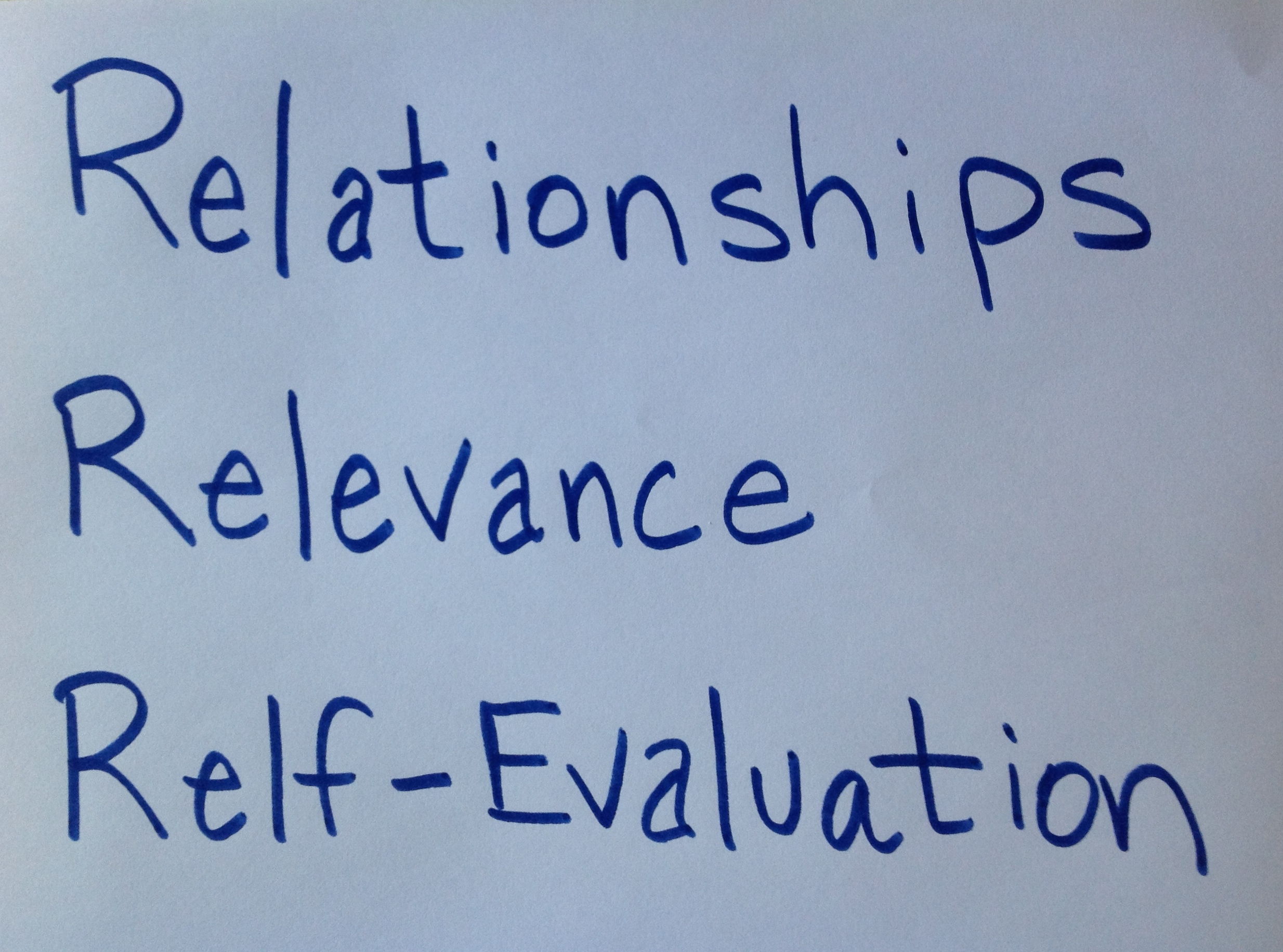
Glasser believed that three essential elements in a Quality School are –

+ Relationships

+ Relevance, and

+ Relf-Evaluation

(It helps if all the elements on a list like this begin with the same letter.)

There are nuances to these three elements, and there are other elements entirely, but any school that authentically and effectively addresses these three will be well on its way to being a Glasser Quality School.

IMG_0469

Relationships

Glasser wanted schools to be places of joy, where staff and students treated each other warmly and with respect. I refer to this piece as Intentional Friendship. It isn’t something we just hope for, it is something we strategically plan for and implement. Students respond well to our Intentional Friendship efforts, however not all will do so right away. Some have attended schools that rely on coercion and punishment and have never experienced a place – at home or school – that is based on positive relationships and natural consequences. They have used their cold, adversarial attitudes as leveraged responses to the school’s effort to control them. When a school ceases to behave in this way, and to literally take the fight out of their rules and procedures, students don’t exactly know how to respond at first. So they test their teachers to see if this approach is really real or just some form of control in disguise. I think a term we need to embrace is the idea of Unconditional Liking. And by that I mean that we behave like we like our students, not just love them in some ethereal, spiritual way, but really like them. Many of our students have never experienced unconditional anything. It’s a powerful element in a Quality School.

IMG_0468

Relevance

We all crave it. We want things in which we are involved to matter. Students are no different in what they experience at school. Busy work is the opposite of relevance. Teachers know this, yet it isn’t always easy to develop lessons that are relevant. Part of students’ complaints about school is that so much of what they do isn’t relevant to them. Consider some simple ways that topics and assignments can be made to matter more.

+ Fifth and sixth graders learn and review Math processes by calculating the performance data of their favorite baseball team – earned run averages of pitchers and batting averages of batters. Older students can study the concepts of Billy Beane, the GM of the Oakland A’s, and the metrics from which little known players are evaluated and ultimately hired at a much lower rate than the well-known, but expensive stars. (The A’s are in first place as we speak.)

+ Second and third graders track 10 day weather predictions on The Weather Channel and determine their rate of accuracy.

+ Eighth graders consider the effects that a meat diet has on the planet. How would things be different if everyone was a vegetarian?

+ It is now being said that major portions of the Antarctic ice shelves are melting and that the rate of melt is now irreversible. High school students present reports on the extent to which this claim is true.

+ High school students research the effects on the economy of raising the minimum wage to $12.00 and hour and give presentations that include the math they used to support their conclusions.

These are just examples. You can come up with even more I am sure. The point is that as teachers we must be vigilant in our search for relevance.

IMG_0467

Self-Evaluation

The Self-Evaluation piece is an essential piece of a Quality School, yet it is easy for educators to leave this piece out. Our view that academic evaluation is the teacher’s domain runs deep apparently. Maybe we view evaluation as our responsibility; maybe we see evaluation as an element of control that we don’t want to share; or maybe we think students won’t take it seriously. Whatever our reason for doing all of the evaluating, as teachers we need to reconsider this way of doing things and think of ways we can share this process with students.

One way to do this is to include a student self-evaluation column, as well as a teacher verification column, in the rubrics that you produce. Not every assignment will have such a rubric, but certainly the major assignments and projects will benefit from giving students a chance to rate their own performance. When they submit their assignment or project they will also submit a completed self-evaluation. My experience is that they in fact do take self-evaluation seriously. Their scoring and my scoring as teacher do not always match, but our scoring differently always leads to important conversations about their performance.

I may say that “I notice that you have given your self a 5 out of 5 on the personal examples section of the paper. Could you show me where those are?” The student may then attempt to show me how they interpreted that requirement or they may admit that maybe they didn’t do as much as they thought on that area. We eventually agree on a score, politely, focusing on the content rather than the person. I have noticed that it isn’t unusual for them to give themselves lower scores than I gave them. It is fun when that happens to point out to them the ways they got it right.

Glasser and Deming agreed that self-evaluation was really the only evaluation that mattered. We have to hold to this principle, pursue it, nurture it, if we are to create learning environments that are need-satisfying.

Relationships, relevance, and self-evaluation are just as important in the home, or in our churches, too. They are basically three of the essential principles of life.

=====================

Remember that our Choice Theory Study Group has been cancelled this coming Sabbath, May 24. I know you may be keenly disappointed, maybe even overcome with despondency, but try to have a good weekend anyway.

Identity Theft

Although I am an adult, it feels like I am still trying to figure out who I am. Does that make sense? I’m not sure what I want or what I have to offer. It’s a bit depressing, actually.   Shane N.

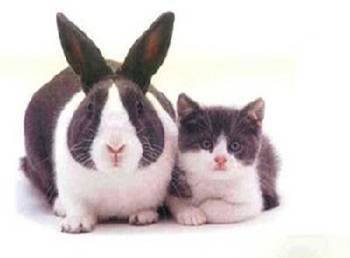
Identity theft and the fraud often associated with it affect 15 million Americans a year at a cost approaching 50 billion dollars. It is maddening when a person usurps another person’s identity and then steals his victim’s income or savings. As a result, a lot of effort goes into protecting identities. As important as our financial identity is, though, it shrinks in importance when compared to our personal identity, which is the essence of how we see ourselves. If anything must be nurtured and protected, especially in children, it is this persona we refer to as identity.

identity-theft-bunny-kitten

As adults we forget this nurturing thing, a lot, and often shift towards emphasizing that our children assume a role, rather than helping them identify their identity. Roles are like “job descriptions” that an adult wants a child to fulfill or a mask that an adult wants a child to put on. When roles are forced on young people, rather than their identity being nurtured in freedom, to me, it is a form of identity theft. It is like stealing who a child really is and replacing it with a forgery of someone else’s design.

One of the greatest things my parents did for me was to help me become the person I wanted to be. I never felt pressure to become what they wanted me to be or to make them look good. Now that I am older I realize what an amazing thing that was for parents to do.   Raine W.

It is a great gift when adults support young people in every way possible, yet give them the space to become the best versions of themselves. As adults we may have a picture of what we want our child to become—a doctor, a pastor, a sports hero—or we may have pictures of what they should look like, what their hobby should be, who they will marry, and where they will live. And, once these pictures are in place, we tend to manipulate circumstances in such a way that reality will come to match those pictures. Manipulation is a part of the identity theft process. The gift lies in staying away from it.

id-theft-solutions-2

Choice theory is a big help when it comes to identity formation. It helps adults who are trying to fix themselves later in life; better yet, it helps parents and teachers keep from screwing kids up in the first place. The theory helps because it is based on the idea that the only person I can control is me. Rather than being externally controlled, we are internally guided. This internal guidance system starts to be formed at birth. When parents and teachers understand choice theory they behave in a way that honors the internal guidance systems in children. We come to recognize how ill-advised it is for us to be the guidance system for another person, and how necessary it is for children to develop their internal guidance as soon as possible.

Compass-Integrity

===========


William Glasser: Champion of Choice

is being discounted on Amazon!

Just sayin .  .  .

 IMG_1030

===========

The Choice Theory Study Group scheduled for May 24 has been cancelled. Stay tuned for next school year’s calendar.
===========

Those just joining The Better Plan check out the 2013 – Year At  a Glance link in the upper left hand corner of the page to easily discover articles from last year.

The Simon Cowell In Each of Us

$T2eC16h,!)EE9s2uiwPRBR)O6o2dG!~~60_35

At their core the 7 Deadly Habits are built on the foundation of judging others. Think about it.

The 7 Deadly Habits are –

1. Criticizing
2. Blaming
3. Complaining
4. Nagging
5. Threatening
6. Punishing
7. Rewarding to manipulate

Each of these habits involves the spirit of judgment. Criticizing, blaming, complaining, and nagging serve as tools for one person to apply behavioral pressure on a family member or colleague. Threatening and punishing take the spirit of judgment to a more intense level. And even rewarding to manipulate, which feels better than punishment, is still a form of manipulation.

This year's American Idol judges - Harry Connick, Jr., Jennifer Lopez, and Keith Urban.

This year’s American Idol judges – Harry Connick, Jr., Jennifer Lopez, and Keith Urban.

We marinate in a judging society, with TV shows like American Idol, Dancing with the Stars, Survivor, The Bachelor, America’s Next Top Model, The Voice, and Top Chef thriving and calling for our attention. Immersed in a society of judgment it shouldn’t be a surprise that we view others, even our family and friends, in this same way. And in this same way we begin to develop a little “Simon Cowell” in our brains, an overconfident, opinionated, supposedly “all knowing” presence that knows what’s best.

The choice theory axiom that Glasser put at the top of the list is –

The only person you can control is yourself.

This axiom, or principle as I would call it, really does speak to this issue. It’s not about judging and controlling others. It’s about knowing and directing ourselves. When we honor this axiom we become happier and our relationships become stronger and more intimate.

School Application

I think it can be said that –

Without intervention students will judge others.

Schools can make a significant positive social impact by minimizing, or even eliminating, activities that rely on students being ranked and compared to one another. Resist the temptation to turn activities into contests in which students are pitted against each other. We don’t need to determine the “best” essay or who is the “best” speller. Instead, our goal should be to design activities in which all of the students are drawn to participate in and engaged in the learning.

Even our recess games and rainy day indoor games can contribute to this spirit of inclusion. For instance, consider the following version of musical chairs.

In the normal version of musical chairs there are always fewer chairs than participants and the goal is to be quicker, stronger, and more aggressive than your playmates and get one of those remaining chairs. There is often a sneaky piano player or musical device to add to the drama, but the basic premise is you better get one of those chairs, even at the expense of someone else who has the same goal. The result is that very quickly most of the players are standing against the wall watching while the few remaining players push, pull, tackle, and attack their way to victory.

musical-chairs

In a cooperative version of musical chairs you still have the sneaky music (ya gotta have the music) and you still remove chairs as the game goes along. The difference is that you don’t remove players. This means that as the game goes on you have the same number of players having to sit, stand, and be suspended from fewer and fewer chairs. It gets pretty hilarious when 10 players have to somehow get situated on two chairs.

The message we send to children in the normal version is that in life there will always be fewer prizes than participants and that you better be quicker and more aggressive in getting your needs met, even if it keeps someone else from meeting theirs.

In the cooperative version children are introduced to the idea that we are in this thing called life together, and that if we hold on to one another and help each other we can all make it. There may be fewer chairs in life, but that doesn’t mean we can’t share what’s left.

=============

The Glasser biography can be had through the following link –

The Glasser Book Store
http://wglasserbooks.com/books.html

Zeig, Tucker & Thiesen Publishing
http://www.zeigtucker.com/product/william-glasser-champion-of-choice/

Amazon
http://www.amazon.com/William-Glasser-Champion-Jim-Roy/dp/193444247X/ref=sr_1_1?s=books&ie=UTF8&qid=1398205174&sr=1-1&keywords=william+glasser+champion+of+choice


Hot Off the Press! Really.

Bob Wubbolding, who wrote the Foreword for the biography, and Glasser at the Evolution of Psychotherapy Conference in 2005.

Bob Wubbolding, who wrote the Foreword for the biography, and Glasser at the Evolution of Psychotherapy Conference in 2005.

The Glasser biography became available yesterday on the Zeig, Tucker & Theisen Publishers website. The following link takes you to the right page –

http://www.zeigtucker.com/product/william-glasser-champion-of-choice/

I first learned about the biography being available through an email from William Glasser, Inc.   Hot Off the Press it proclaimed; ten years in the making it pointed out; followed by a short testimonial by Carleen Glasser –

Champion of Choice is a wonderful story and a great read because it gives you the feeling that you are present, watching the life and ideas of a true genius evolve.”

The book is listed at $22.95, but is being sold right now for just $22.00 on the publisher’s website. Buyers are given the option of giving a $5 donation, along with their book purchase, to the William Glasser International organization. It is a very simple process and a nice touch, I think.

I received a compliment yesterday when someone said they loved the promo I wrote for the book on the publisher’s website. I had to admit that I didn’t write it, but that I liked it, too. The promo in question went like this –

WILLIAM GLASSER: Champion of Choice
A biography by Jim Roy

William Glasser did not just have a profession, he had a mission—to empower people through choice, free will, and self-determination. He envisioned a better world, and the weighty issues he tackled reflected that—the definition, diagnosis, and treatment of mental illness; the explosion of psychotropic drugs; addiction and self-medication; failing marriages and the high divorce rate; disconnected families; crime and crowded prisons; underachieving students and marginal schools; and worldwide political oppression and violence.

Jim Roy chronicles the life and legacy of William Glasser whose controversial ideas and brilliant insights significantly impacted mental health and education professionals. Champion of Change illustrates Glasser’s lifelong dedication to help others lead productive, meaningful lives.

Although Glasser was already gaining recognition in the early ‘60s with the publication of his first book, Mental Health or Mental Illness, his notoriety changed significantly after his second, Reality Therapy (1965). Working as psychiatrist in the late ‘60s at the Ventura Schools for Girls, a school for troubled teens, Glasser’s professional life really began to take shape as his ideas were implemented, dramatically changing and reforming young women who most had given up on. His long and successful run at the school prompted another book, Schools Without Failure (1969), which is still a bible to many present-day educators.

Over the next four decades Glasser published 23 books and a slew of booklets and articles, and was interviewed and written about in myriad books, magazines, and journals. The principles and concepts he held and generously shared and articulated through his books and public speaking were reality therapy, control theory, choice theory, and mental health as a public issue rather than a medical issue. The latter being the most controversial in that Glasser swam against the tidal wave that swept in the growing belief that drug therapy should supersede talk therapy.

Also captivating is Glasser’s personal life – his own dysfunctional family history, the family losses he endured, and his quest to find love again. And through it all he selflessly continued to work to change the bigger picture. In the introduction of William Glasser – Champion of Change, it’s stated that novelist Thomas Berger once said writers write because “it isn’t there,” and Jim Roy takes that to heart giving us a comprehensive and compelling biography on voice that will surely echo throughout history.

2014 / 420 Pages / 6 x 9 / Paperbound / Illustrated / ISBN 978-1-934442-47-0 / $22.95
Add $5 donation to William Glasser International ($27.95)

You may have noticed that twice in the promo the biography was referred to as Champion of Change. The layout editor of the biography somehow got that phrase in his mind early on in the process and it continues to show up at various times. My wife thinks that Champion of Change might actually be a better title, but Champion of Choice has won out so far.

Kim Daub Olver, current Executive Director of Glasser International, shared on Facebook yesterday that she feels the book will be a huge contribution to the world. To that I say, I hope so. It would be so cool if the biography really made an impact on people’s thinking and acting.

================

Enjoying The Better Plan blog? Why not click on the Follow link and receive updates as they are posted. You also have my permission to tell family and friends about the blog. We all could use an insight now and then on living a non-coercive life.

Linda, Gone Too Soon

Linda Harshman and Jim Roy, both attending the 2005 Glasser International Conference in Dublin, Ireland.

Linda Harshman and Jim Roy, both attending the 2005 Glasser International Conference in Dublin, Ireland.

Linda Harshman, longtime Executive Director of the Glasser Institute, passed away on Friday evening, April 4. She faithfully held that position for over 20 years and did everything she could for William Glasser and his organization to be successful. Bob Wubbolding, who worked with Linda as the longtime Director of Training for the Institute, wrote that –

Many of you have undoubtedly received the sad news that Linda Harshman died at her home about 11:15 pm Pacific Time on April 4, 2014. She was with her sister Judy and her friend Frank. She was under the care of Hospice for a short time before her death.

Sandie and I spoke to Carleen Glasser today and she joins us in expressing our sadness at the loss of a very fine person. Linda was an anchor for the William Glasser Institute for many years and a dear friend to many of us.

Carleen, Sandie and I were very fortunate to visit with her about 2 weeks ago. Throughout her illness Anna Corbett and Jean Suffield frequently visited with her and cared for her. We owe them a great deal of gratitude for their unrelenting care giving and support. Also, her sister Judy from Nova Scotia provided family closeness and support as Linda approached death.

It was Linda’s wish that there be no public service held for her. Nevertheless, our prayers and thoughts have accompanied her and will continue in the future as we hold her memory close to our hearts.

And John Cooper, chairperson of William Glasser International, wrote that –

I have just learned of the passing of Linda Harshman some 24 hours ago. A sad time for everyone who knew Linda and of her support for Dr Glasser and his work.

It was just recently we heard that Linda was fighting a valiant battle with Stage 4 Cancer. The cards and messages that many people sent to Linda, in the intervening weeks were all read to her by Frank, her friend. We are advised the words of love and appreciation were well received and meant a lot to Linda. Then just days ago we learned that chemotherapy had been ceased and that she was under Hospice Care.

For those who had the opportunity to meet and work with Linda or just knew of her work it is hard to accept that one so animated, strong and energetic in administering the work of the William Glasser Institute is no longer with us. I am advised that Linda played a large part in supporting affiliates / countries as they began to establish their own institutes and that many people would like to acknowledge Linda. Such testimonies may form a part of our recognition. WGI will advise everyone what we will be doing to celebrate her life and work and how you can all contribute.

I am sure I voice the thoughts of all in sending a message that we share the sorrow of Linda’s near friends and family at this time.

I appreciate these messages from Bob and John a lot. They bring all of us together in a shared sense of loss, an appropriate grief. In that spirit I would like to add a tribute to Linda. What follows is an excerpt from the Glasser biography. The excerpt is from a very significant talk that Glasser gave in 1996.  He was setting a course for the future of the Institute, even though others disagreed with him. The disagreement had to do with school discipline plans, but that’s not our focus here. Our focus here is on Linda and the esteem in which Glasser held her. With that in mind, from the biography –

At the end of the talk he said something that really put into perspective what he was trying to say. “So that’s the dilemma we have,” he began to conclude. “On Sunday we’ll talk about that dilemma and see if we can come to some resolution that will be satisfying, but the resolution will not be that I can accept any discipline programs, cuz I can’t. If it ends up right back where it was with me and all the rest of the people go, it’ll be me and Linda and we’ll keep hammering away for the rest of our lives. I feel very, very serious about this. Because I finally recognized what my mission in life is.”

Could there be a higher tribute to Linda’s faithfulness and commitment to Glasser’s vision? Organizationally, Glasser had been walking shoulder to shoulder with Linda and knew that he could count on her, through thick and thin, come what may.

Who would have thought, even just a few years ago, that Glasser and Linda would be gone from us, having passed away only seven months apart? Their passing is a stark reminder that if the show is to go on, the baton must be passed on to others – us – who will accept it in the kind of spirit that inspired the two of them.


Listening to Understand


We may not have ears as big as Abby's, but we still concentrate on really listening to the person talking to us.

We may not have ears as big as Abby’s, but we still concentrate on really listening to the person talking to us.

One of the things I like on Facebook are the concise, insightful quotes and statements that friends share. The quotes often pack a lot of wisdom into a small amount of space. An example of such a quote was recently posted by Maureen Craig McIntosh, a Glasser faculty member from New Brunswick. It read –

The biggest communication problem is we do not listen to understand. We listen to reply.

Most of us quickly recognize truth in this statement, but don’t let quick agreement cause you to miss some of the deeper truths it contains. An experienced Glasser trainer thought enough of the statement to pass it on to us. What are the choice theory implications of listening to understand? Let’s identify a few –

1. One of the reasons we are quick to reply, rather than listen, is that we think we know what’s best for others. As soon as we hear the problem, we want to let others know about our solution.

2. More than simply wanting to share a solution, another reason we are quick to reply is that we may want to control the person who is talking to us. This can be especially true if the person is one of our children, or a spouse, or one of our students.

3. One of the most need-satisfying things we can do for another person is to truly listen to what he/she is trying to say. Active listening can assist another person in problem-solving for himself, which honors the choice theory axiom that the only person I can control is me.

Billy Joel sang about a New York state of mind; it would seem the idea of listening to understand or listening to reply involves a state of mind, too. Fortunately, a state of mind is something we can influence, a lot. We can choose to concentrate on listening more and talking less. One of Covey’s famous 7 Habits of Highly Effective People is to “Seek first to understand, then to be understood.”

==============

Classroom Application

Listening to reply –

Student: I don’t want to go out to recess today.

Teacher: What? What are you talking about?

Student: I don’t want to go out to recess. I just want to stay inside the classroom.

Teacher: That’s ridiculous! You’re coming outside. I can’t have kids all over the place.

Listening to understand –

Student: I don’t want to go out to recess today.

Teacher: I think that might be a first for you. You really don’t want to go outside?

Student: No, I just want to stay in the classroom.

Teacher: Can you tell me what it’s about? Are you not feeling well?

Student: I guess I feel ok; I just want to hang out in here.

Teacher: You know, it felt a little bit like something was troubling you when you came in the classroom at the start of school this morning.

Student: (shrugs)

Teacher: Would you be willing to come outside and hang out with me as I supervise the playground? If you’re ok with talking about it, I would like to hear what you’re thinking this morning. If you don’t want to talk about it, that’s ok, too. And if you don’t want to hang out with me at all, you can sit on the bench outside of the classroom. I’m ok with that. Would either of those options work for you?

Student: (smaller shrug) Yeh, I guess I could hang out with you. That’d be ok.

Home Application

Listening to reply –

Wife: I got offered a promotion today at work.

Husband: Wow! Way to go!

Wife: Yeh, I probably should be excited, but I just . . . I don’t know.

Husband: What do you mean, you don’t know? You’ve earned it. Ya gotta go for it! I assume there would be a raise and we definitely could use the money.

Listening to understand –

Wife: I got offered a promotion today at work.

Husband: Wow! Way to go!

Wife: Yeh, I probably should be excited, but I just . . . I don’t know.

Husband: It looks like you have mixed feelings about it.

Wife: Yeh, I do. I really do. A part of me realizes it is a great opportunity, while another part of me likes what I have going right now. (pauses)

Husband: (gives a little smile, but doesn’t break the silence)

Wife: The promotion offers more pay.

Husband: Besides more money, how would your life change if you took the job?

Wife: I’ve thought about that a lot. (pauses) I see what supervisors have to do, the way they spend their days, and the problems they are expected to solve, and there is just nothing in me that wants that. I really like what I do now. I look forward to going to work on most days. (pause) And I like that my schedule is so good for our home. I can pick the kids up after school, which is a huge advantage compared to what I see other parents juggling. The extra pay is tempting, but I don’t think it outweighs all that.

============

We’ll close today with another quote that captures something important with very few words. I was alerted to it by Bette Blance, a choice theory leader in New Zealand. The quote reads –

Listen and silent are spelled with the same letters. Think about it.

As the wife was talking to her husband in the last scenario about her possible promotion there were several times when she paused and silence filled the moment. Yet her husband did not jump in and fill the silence with his ideas. He simply remained silent, too, and let his wife work through her thoughts. Like the quote says, Think about it.


Shifting the Culture – Roots of Change

images

During the last NapaLearns board meeting I sat next to Paul Curtis, Director for School Quality of the New Tech Network. New Tech is an amazing advocate for progressive educational change and has gone from having one high school in Napa, California, to having more than 130 schools across the U.S. Project-Based Learning (PBL) forms the basis for a lot of their success, but schools wanting to emulate the New Tech approach soon learn that such success is based on a lot more than just PBL. Project-Based Learning can only thrive when other important factors are present. In other words, there needs to be a culture shift for progressive ideas to take root and become a permanent part of the school or district landscape.

Visiting with Paul got me to thinking about the kinds of cultural shifts that a choice theory emphasis would bring about in a school. I probably should have been paying more attention during the meeting, but this is what I came up with instead –

The Cultural Shifts of Choice Theory

1. Shifting from “You Will Be Forced to Adjust to School Requirements” to “How Can We Better Meet Your Needs?”

2. Shifting from Intimidation to Relationships

3. Shifting from Rote to Relevance

4. Shifting from External Evaluation to Internal Evaluation from “Other” Evaluation to Self-Evaluation

5. Shifting from Mediocrity to Mastery

6. Shifting from Compliance to Cooperation

7. Shifting from Punishment to Problem-Solving

I was asked to serve as a panel member for History/English presentations at New Tech High School (Napa) last Thursday. Their presentations, by four member teams, were impressive, but I was even more impressed with the way the rest of the class listened so respectively and attentively, and with the questions they asked afterward. New Tech has made cultural shifts that contribute to their model’s success, shifts that you feel as soon as you walk in the front door. Too often schools focus on details of change, like the nuts and bolts of forming a PBL lesson plan, without creating the environment in which PBL can thrive.

Glasser Quality Schools should not be left out of this conversation, as they are alive and well across the country, too. For a review of the criteria for a Quality School, along with a list of the current declared Glasser Quality Schools, go to

http://www.wglasser.com

On the left hand side of the page click on The Glasser Approach; then click on Glasser Quality School Education.

As always, if you can add to the “Shifts” list above, let me know and I will add your suggestion.

Thirteen (so far) Essential Psychological Skills for Kids

Kids

In the last Better Plan blog we considered the kinds of skills that kids should have before they turn 18 and definitely before they leave home. One of the categories that was missing from the list, though, was a category for Psychological Skills. Several of you responded to my request for help at forming such a list. The following list summarizes your suggestions.

Psychological Skills We Want Our Kids to Learn
1. To be able to recognize the motivation behind their choices.
2. To be able to handle failure and see it as an opportunity to learn.
3. To be able to self-evaluate.
4. Knowing the seven Caring Habits (Supporting, Listening, Encouraging, Accepting, Trusting, Respecting, and Negotiating Differences) and using them.
5. To really recognize their priceless worth, not because of their performance, achievement, or behavior, but because they are a child of God.
6. Relational skills, such as connecting, compassion, communication, and empathy.
7. To be able to process and navigate emotions in a positive way.
8. To be aware of the ability to choose their response to the conditions/circumstances of life.
9. To understand that divergent thinking is healthy.
10. To know when to –
FIGHT for something worth fighting for;
ACCOMMODATE when the relationship is more important than the issue, and
AVOID when it makes sense to split the difference and compromise.
11. Also knowing and understanding the seven Deadly Habits (Criticizing, Blaming, Complaining, Nagging, Threatening, Punishing, and Rewarding to Manipulate).
12. To learn to be caring and compassionate, especially using the skill of empathy.
13. To gain a work ethic that reflects a willingness to work and a desire to do their best.
This list is a great start, but (I wonder) have important psychological skills been left off? Reply to this blog with more suggestions and help to make the list even more complete. This could be a great resource to those of us who work with kids and to those of us who give workshops and presentations. For instance, I am scheduled to begin teaching choice theory to 10th graders this coming Friday morning. I could see myself sharing this list with “kids” and getting their response. Let’s grow this list and identify more of the psychological skills we want our kids to have.
===============================
???????????????????????????????????????
The Choice Theory Study Group that met near where I live this past Sabbath was a success! Group members shared examples of ways they have taught or used choice theory so far this school year, and coached and affirmed each other throughout the process. Some things that came out of our time together include –
George Barcenas, PE teacher, athletic director, and language teacher at Redwood Adventist School in Santa Rosa, CA, described how grades 9-12 began the school year with a multi-day retreat in the Santa Cruz mountains, with choice theory principles as the theme they wanted to set the tone for the school year. He has followed that opening week by consistently referring to the choice theory elements in his classes. Already students are beginning to bring up the basic needs, maybe their own or those of another student, when problem-solving moments arise.
Joel Steffen, fifth and sixth grade teacher at Foothills Adventist Elementary School, has been conducting daily class meetings. One thing he shared is that it really makes a difference which guiding question you use to start the meeting. When you choose well and kids are interested in the topic the meeting goes pretty well. Choose less well and it becomes apparent rather quickly. He sees both the effective and the less effective meetings as steps in the learning process, though, and plans to continue honing his questioning skills.
Joel Steffen is having his fifth and sixth graders create their own quality world cup.

Joel Steffen is having his fifth and sixth graders create their own personal quality world cup.

Amy Palma, fifth grade teacher at Calistoga Elementary, has been teaching there for 10 years, and has been implementing a choice theory management approach, specifically Marvin Marshall’s ABCD model for seven of those years. Amy’s story is important because she is an example of a teacher who successfully uses choice theory, even though she is the only one in the school doing so. Over the years, the school has tried different external control programs, and each time Amy has respectfully declined. While other teachers have been less than satisfied with how a school year has gone, Amy likes how it has gone and attributes choice theory as one of the key reasons. Teachers sometimes ask me, “What if I am the only teacher in the school teaching this way?” At that moment I tell them about Amy.
Sean Kootsey, History teacher at Pleasant Hill Adventist Academy, described how significant the idea of giving students multiple chances to master the learning has been for him, and for his students. He reminded us that learning and assessing is not a “gotchya” process. If students need more than one chance to learn the concepts, why is that bad, he asked. At first other teachers in the school chuckled or even scoffed at the idea of multiple learning chances, but now all of them are teaching that way and are pleased with the results. The culture there has shifted.
Ron Bunch, a local community member, shared how much the ideas have influenced his personal relationships, and especially how the choice theory ideas have helped him in his spiritual journey. He described new insights regarding the character of God and His design of us and for us. God did not create us to be a victim of circumstances, but instead gave us incredible freedom and power to make choices.
These were just a few of the things expressed in the recent study group. One thing the group decided was that we want to keep meeting, maybe even on a monthly basis. It was felt like the get-together is a good way to keep choice theory ideas from being crowded out by other things; it is a good way to re-charge the concepts and to feed off the energy of colleagues. We will be meeting twice more before the Christmas break. I’ll share those dates soon.
==========================
One thing that came out of the blog entitled Compelling Reasons to Teach Choice Theory is the recognition that we need to begin sharing more about how to get this done. We need to assemble a clearinghouse, a place where people can go to access resources and materials, or even specific lesson plans that address choice theory elements. This is important! We need to get this started!
==========================
Become even more popular than you already are by sharing The Better Plan with colleagues and friends. It’s simple –
You can also improve your popularity by sharing this post on your Facebook page. It’s easy to do and it will help to grow The Better Plan community.

What to Teach Your Kids Before They Leave Home

YOU ARE INVITED!

YOU ARE INVITED!

Reminder and Invitation
For those of you within driving distance of the Napa Valley, remember you are invited to our Choice Theory Study Group on Sabbath afternoon, September 21, from 2:00-4:00 PM at Foothills Elementary School, located just up the hill from St. Helena. The address is 711 Sunnyside Road, St. Helena, 94574. It is very easy to get to. Head north on the Silverado Trail from Napa; turn right on Deer Park Road (the blinking red light); turn right at Sunnyside Road; the school is at the corner of Deer Park Road and Sunnyside.

——————————

It would be great if by 18 every young person could do the following –

So began an article I re-discovered today while going through some old files. I am getting ready to teach a classroom management class (classes begin on Monday) and found an article I filed 12 years ago titled What to Teach Your Kids Before They Leave Home. It included a list of 12 different categories with specific skills under each one.

Domestic Skills
Cook a traditional breakfast, lunch, and dinner.
Wash and iron clothes.
Replace a button.
Bake bread.

DSCF97631-300x225

Physical Skills
Throw and catch balls.
Swim half a mile and tread water for half an hour.

Handyman Skills
Hang a picture straight.
Paint neatly and be able to clean up afterwards.
Know which tools perform which functions.

Changing Tire_2

Outdoor Skills
Hike with friends all day.
Bait a hook.
Plan and manage a weekend camping trip.

Practical Skills
Type with both hands.
Drive a car.
Change a flat tire.

You get the idea. There were other skills, too, things like –
Speaking before a group.
Knowing how to play a musical instrument.
Reading a map.
Knowing basic first aid.

355903-26712-50

The short article of bulleted lists drew me in and I soon was evaluating the skills the author suggested, wondering to myself if these lists really did represent the necessary survival skills for life. One category, I noticed, that was missing was a category for Psychological Skills. What do you think? Of all the categories, wouldn’t Psychological Skills be the most important one of all? Let’s add this category and answer the following question –

What Psychological Skills Would You Want to Teach Your Kids Before They Leave Home?

I really want to hear from you on this one. Let’s see what kind of skills we can come up with.

———————————

Some news on the Glasser biography!! It looks like it will be published in November. Stay tuned.