It’s Been Awhile

IMG_0673

I knew it had been a while since my last bike ride, but I didn’t know it was that long. When I got home after riding today I downloaded the last several rides from my Garmin and discovered my last ride was three weeks ago. My goodness, or should it be my badness. It has been a while since my last blog, too. It’s been almost two weeks since the last Better Plan posting and that is a record. Not a record I am proud of mind you, but a record none the less.

The beginning of this school year has been so full and so busy for me, more than usual, I think. Besides getting classes set up and going this Fall quarter, several additional things also have my attention. To find out if you are interested in any of these things keep reading.

Beirut Trip

I am leaving for Beirut, Lebanon, this coming Wednesday, where I will be giving several choice theory presentations to teachers and school administrators. Jimmy Choufani, one of the school principals (and a follower of this blog), has been talking with me for over a year about getting this to happen, so it is awesome that the plan has come together. Jimmy read Soul Shapers over a year ago and wants his colleagues to have an opportunity to at least hear about the principles of choice theory. He has shared with me that on one of the days during the conference the audience will be made up of Christians and Muslims. What a testimony to their unity in the midst of so much unrest all around them. I am humbled to be a part of this venture.

1308277

Also going to Beirut as a co-presenter with me is Dr. Ed Boyatt, recently retired Dean of the School of Education at La Sierra University. Ed, along with Dick and Anita Molstead, (all followers of the blog) was Superintendent of Education in the Oregon Conference while I was principal at Livingstone Academy in Salem from 1993-1996. (Livingstone was the school where most of the Soul Shapers book took place.) Their support meant a great deal to me and I dedicated Soul Shapers to them because of that. I am so thankful that Ed is going on this trip! Together we want to share how the principles of choice theory actually reflect the character of God, as well as share choice theory details that will be especially helpful to educators. After the weekend conference Ed and I will be observing in schools in Beirut and then talking with principals and teachers there about how choice theory can begin to have a presence in classrooms.

We solicit your prayers as we prepare for the trip. Any words of advice would be welcomed as well.

Glasser Biography

The Glasser biography – William Glasser: Champion of Choice – is supposed to come out in late November. The inside of the book looks wonderful. I am really pleased with the look and visual tone of the book. It will be a pleasant read in that way. I am in the midst of a slight disagreement regarding the cover of the book, but it is not a major thing. Hopefully, my input will sway them, but then again, what do I know about cover design. It will just be so good to have the book done!

The Evolution of Psychotherapy conference in Anaheim is at the beginning of December and I think they want to have the book available for that.

Masaki Kakatani, long time Glasser Institute member, has contacted the publisher to begin translating the biography into Japanese. Very cool.

Choice Theory Study Group

Our next Choice Theory Study Group will be on Sabbath afternoon, November 2, at 2:00 pm in the Education building at Pacific Union College. Mark it in your calendar.

Agenda items include:
+ Brief updates on any choice theory lessons or experiences in your classroom or school.
+ I will give a brief update on the Beirut trip.
+ Role play review on how to conference with a student with an attainable want.

Let me know if you have a topic or question for us to consider on November 2.

Choice Theory Study Group
November 2, 2013
PUC Education building

Shifting the Culture – Roots of Change

images

During the last NapaLearns board meeting I sat next to Paul Curtis, Director for School Quality of the New Tech Network. New Tech is an amazing advocate for progressive educational change and has gone from having one high school in Napa, California, to having more than 130 schools across the U.S. Project-Based Learning (PBL) forms the basis for a lot of their success, but schools wanting to emulate the New Tech approach soon learn that such success is based on a lot more than just PBL. Project-Based Learning can only thrive when other important factors are present. In other words, there needs to be a culture shift for progressive ideas to take root and become a permanent part of the school or district landscape.

Visiting with Paul got me to thinking about the kinds of cultural shifts that a choice theory emphasis would bring about in a school. I probably should have been paying more attention during the meeting, but this is what I came up with instead –

The Cultural Shifts of Choice Theory

1. Shifting from “You Will Be Forced to Adjust to School Requirements” to “How Can We Better Meet Your Needs?”

2. Shifting from Intimidation to Relationships

3. Shifting from Rote to Relevance

4. Shifting from External Evaluation to Internal Evaluation from “Other” Evaluation to Self-Evaluation

5. Shifting from Mediocrity to Mastery

6. Shifting from Compliance to Cooperation

7. Shifting from Punishment to Problem-Solving

I was asked to serve as a panel member for History/English presentations at New Tech High School (Napa) last Thursday. Their presentations, by four member teams, were impressive, but I was even more impressed with the way the rest of the class listened so respectively and attentively, and with the questions they asked afterward. New Tech has made cultural shifts that contribute to their model’s success, shifts that you feel as soon as you walk in the front door. Too often schools focus on details of change, like the nuts and bolts of forming a PBL lesson plan, without creating the environment in which PBL can thrive.

Glasser Quality Schools should not be left out of this conversation, as they are alive and well across the country, too. For a review of the criteria for a Quality School, along with a list of the current declared Glasser Quality Schools, go to

http://www.wglasser.com

On the left hand side of the page click on The Glasser Approach; then click on Glasser Quality School Education.

As always, if you can add to the “Shifts” list above, let me know and I will add your suggestion.

Thirteen (so far) Essential Psychological Skills for Kids

Kids

In the last Better Plan blog we considered the kinds of skills that kids should have before they turn 18 and definitely before they leave home. One of the categories that was missing from the list, though, was a category for Psychological Skills. Several of you responded to my request for help at forming such a list. The following list summarizes your suggestions.

Psychological Skills We Want Our Kids to Learn
1. To be able to recognize the motivation behind their choices.
2. To be able to handle failure and see it as an opportunity to learn.
3. To be able to self-evaluate.
4. Knowing the seven Caring Habits (Supporting, Listening, Encouraging, Accepting, Trusting, Respecting, and Negotiating Differences) and using them.
5. To really recognize their priceless worth, not because of their performance, achievement, or behavior, but because they are a child of God.
6. Relational skills, such as connecting, compassion, communication, and empathy.
7. To be able to process and navigate emotions in a positive way.
8. To be aware of the ability to choose their response to the conditions/circumstances of life.
9. To understand that divergent thinking is healthy.
10. To know when to –
FIGHT for something worth fighting for;
ACCOMMODATE when the relationship is more important than the issue, and
AVOID when it makes sense to split the difference and compromise.
11. Also knowing and understanding the seven Deadly Habits (Criticizing, Blaming, Complaining, Nagging, Threatening, Punishing, and Rewarding to Manipulate).
12. To learn to be caring and compassionate, especially using the skill of empathy.
13. To gain a work ethic that reflects a willingness to work and a desire to do their best.
This list is a great start, but (I wonder) have important psychological skills been left off? Reply to this blog with more suggestions and help to make the list even more complete. This could be a great resource to those of us who work with kids and to those of us who give workshops and presentations. For instance, I am scheduled to begin teaching choice theory to 10th graders this coming Friday morning. I could see myself sharing this list with “kids” and getting their response. Let’s grow this list and identify more of the psychological skills we want our kids to have.
===============================
???????????????????????????????????????
The Choice Theory Study Group that met near where I live this past Sabbath was a success! Group members shared examples of ways they have taught or used choice theory so far this school year, and coached and affirmed each other throughout the process. Some things that came out of our time together include –
George Barcenas, PE teacher, athletic director, and language teacher at Redwood Adventist School in Santa Rosa, CA, described how grades 9-12 began the school year with a multi-day retreat in the Santa Cruz mountains, with choice theory principles as the theme they wanted to set the tone for the school year. He has followed that opening week by consistently referring to the choice theory elements in his classes. Already students are beginning to bring up the basic needs, maybe their own or those of another student, when problem-solving moments arise.
Joel Steffen, fifth and sixth grade teacher at Foothills Adventist Elementary School, has been conducting daily class meetings. One thing he shared is that it really makes a difference which guiding question you use to start the meeting. When you choose well and kids are interested in the topic the meeting goes pretty well. Choose less well and it becomes apparent rather quickly. He sees both the effective and the less effective meetings as steps in the learning process, though, and plans to continue honing his questioning skills.
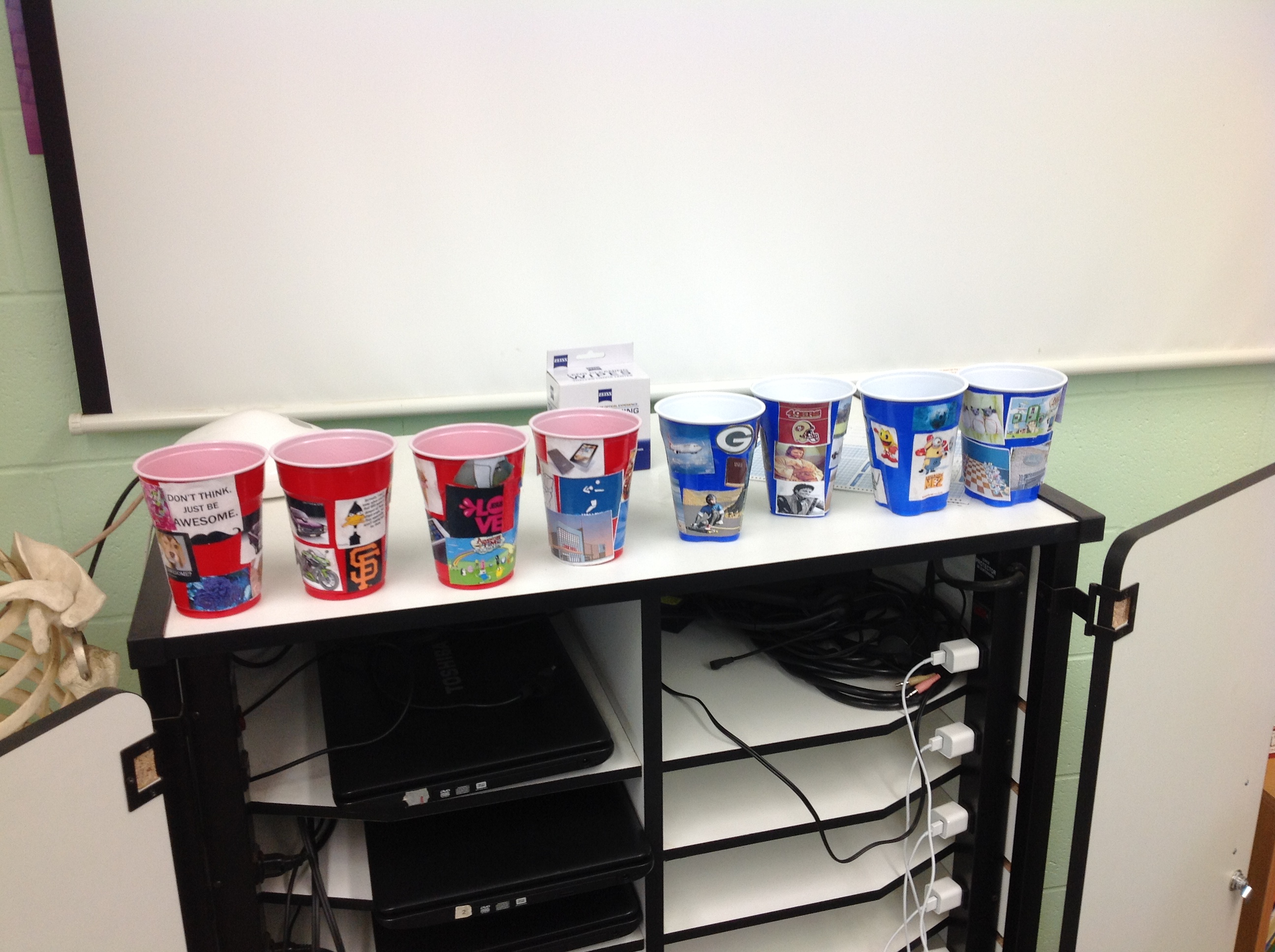
Joel Steffen is having his fifth and sixth graders create their own quality world cup.

Joel Steffen is having his fifth and sixth graders create their own personal quality world cup.

Amy Palma, fifth grade teacher at Calistoga Elementary, has been teaching there for 10 years, and has been implementing a choice theory management approach, specifically Marvin Marshall’s ABCD model for seven of those years. Amy’s story is important because she is an example of a teacher who successfully uses choice theory, even though she is the only one in the school doing so. Over the years, the school has tried different external control programs, and each time Amy has respectfully declined. While other teachers have been less than satisfied with how a school year has gone, Amy likes how it has gone and attributes choice theory as one of the key reasons. Teachers sometimes ask me, “What if I am the only teacher in the school teaching this way?” At that moment I tell them about Amy.
Sean Kootsey, History teacher at Pleasant Hill Adventist Academy, described how significant the idea of giving students multiple chances to master the learning has been for him, and for his students. He reminded us that learning and assessing is not a “gotchya” process. If students need more than one chance to learn the concepts, why is that bad, he asked. At first other teachers in the school chuckled or even scoffed at the idea of multiple learning chances, but now all of them are teaching that way and are pleased with the results. The culture there has shifted.
Ron Bunch, a local community member, shared how much the ideas have influenced his personal relationships, and especially how the choice theory ideas have helped him in his spiritual journey. He described new insights regarding the character of God and His design of us and for us. God did not create us to be a victim of circumstances, but instead gave us incredible freedom and power to make choices.
These were just a few of the things expressed in the recent study group. One thing the group decided was that we want to keep meeting, maybe even on a monthly basis. It was felt like the get-together is a good way to keep choice theory ideas from being crowded out by other things; it is a good way to re-charge the concepts and to feed off the energy of colleagues. We will be meeting twice more before the Christmas break. I’ll share those dates soon.
==========================
One thing that came out of the blog entitled Compelling Reasons to Teach Choice Theory is the recognition that we need to begin sharing more about how to get this done. We need to assemble a clearinghouse, a place where people can go to access resources and materials, or even specific lesson plans that address choice theory elements. This is important! We need to get this started!
==========================
Become even more popular than you already are by sharing The Better Plan with colleagues and friends. It’s simple –
You can also improve your popularity by sharing this post on your Facebook page. It’s easy to do and it will help to grow The Better Plan community.

What to Teach Your Kids Before They Leave Home

YOU ARE INVITED!

YOU ARE INVITED!

Reminder and Invitation
For those of you within driving distance of the Napa Valley, remember you are invited to our Choice Theory Study Group on Sabbath afternoon, September 21, from 2:00-4:00 PM at Foothills Elementary School, located just up the hill from St. Helena. The address is 711 Sunnyside Road, St. Helena, 94574. It is very easy to get to. Head north on the Silverado Trail from Napa; turn right on Deer Park Road (the blinking red light); turn right at Sunnyside Road; the school is at the corner of Deer Park Road and Sunnyside.

——————————

It would be great if by 18 every young person could do the following –

So began an article I re-discovered today while going through some old files. I am getting ready to teach a classroom management class (classes begin on Monday) and found an article I filed 12 years ago titled What to Teach Your Kids Before They Leave Home. It included a list of 12 different categories with specific skills under each one.

Domestic Skills
Cook a traditional breakfast, lunch, and dinner.
Wash and iron clothes.
Replace a button.
Bake bread.

DSCF97631-300x225

Physical Skills
Throw and catch balls.
Swim half a mile and tread water for half an hour.

Handyman Skills
Hang a picture straight.
Paint neatly and be able to clean up afterwards.
Know which tools perform which functions.

Changing Tire_2

Outdoor Skills
Hike with friends all day.
Bait a hook.
Plan and manage a weekend camping trip.

Practical Skills
Type with both hands.
Drive a car.
Change a flat tire.

You get the idea. There were other skills, too, things like –
Speaking before a group.
Knowing how to play a musical instrument.
Reading a map.
Knowing basic first aid.

355903-26712-50

The short article of bulleted lists drew me in and I soon was evaluating the skills the author suggested, wondering to myself if these lists really did represent the necessary survival skills for life. One category, I noticed, that was missing was a category for Psychological Skills. What do you think? Of all the categories, wouldn’t Psychological Skills be the most important one of all? Let’s add this category and answer the following question –

What Psychological Skills Would You Want to Teach Your Kids Before They Leave Home?

I really want to hear from you on this one. Let’s see what kind of skills we can come up with.

———————————

Some news on the Glasser biography!! It looks like it will be published in November. Stay tuned.

Compelling Reasons to Teach Choice Theory to Students

IMG_0635

1. It will improve students’ mental health

I was reminded recently of one of the essential pieces of choice theory implementation, that being the need for teachers to teach their students about the concepts of choice theory. It is a little bit frustrating for me to see the excitement for choice theory and the commitment to nurture a choice theory environment in classrooms, and then learn that the usual pressures of the school year seem to derail the idea of sharing choice theory with students. I am convinced, though, that bringing students on as choice theory partners will sooner establish choice theory as part of the school culture.

The recent reminder came from an article I read in the Psych Central online journal. The title — Mental Health in High School: Teach Students Link Between Thinking Patterns, Emotions and Behavior — caught my eye. Sure enough, the article could have been written by a choice theorist.

Researchers from the Ohio State University College of Nursing found that a program called COPE (Creating Opportunities for Personal Empowerment) reduced depression, enhanced health behaviors, and improved grades. Health classes used an intervention that focused on cognitive behavioral skills. While not the only focus, the study’s author, Bernadette Melnyk, observed that –

“This is what has been missing from prior healthy lifestyle programs with teens — getting to the thinking piece. We teach the adolescents that how they think directly relates to how they feel and how they behave.”

The important thing about the program is building skills that help students learn to become aware of their negative thoughts, the ways in which such thoughts affect their self-concept, and the behaviors that can come out of that kind of thinking.

“Schools are great at teaching Math and Social Studies,” Melnyk continues, “but we aren’t giving teens the life skills they need to successfully deal with stress, how to problem-solve, or how to set goals, and those are key elements in this healthy lifestyle intervention.”

We know, as teachers and parents, how much our own mental health has been improved through our understanding of choice theory. What is keeping us from intentionally and purposefully teaching the concepts to our students? Glasser once pointed out that expecting students to be successful at life without teaching them about choice theory is like expecting them to play and win a game without teaching them the rules. Kids are wrestling with so many personal challenges and conflicts. And without choice theory (or something like it) their mental health is put at risk.

2. It will improve teacher understanding of choice theory principles

It has been said that a person never understands something so well as when he has to teach it to someone else. A German proverb comments on the same principle by stating –

He who teaches children learns more than they do.

A classic book from 1971, Children Teach Children: Learning by Teaching, cited the results of an anti-poverty reading program in New York City in which older students tutored younger students with reading difficulties. After five months of one on one help it was discovered that the younger students showed a six month gain in their reading scores, which was great. They also tested the older tutors and were blown away to discover that they had made a gain of 3.4 years in their reading scores. Not expecting that kind of gain at all, it alerted them to the potential of increasing the learning through teaching.

IMG_0633

Not only will we learn choice theory better as we teach the concepts to our students, imagine for a moment how well students could learn choice theory by teaching it to each other.

I think some teachers may hesitate to teach about choice theory because they don’t feel like they have a lot of expertise in it yet. Maybe they’ll share more after they read another book or attend another workshop. I think some may hesitate, too, because giving the choice theory concepts away to students could lead them to monitor or judge our fledgling efforts toward non-coercive change. It is true that at the very beginning we may want to experiment with the ideas privately, without making a big deal out of them. Pretty quickly, though, we need to share choice theory with our students. Maybe they will monitor our fledgling efforts. All the better as situations and events become teachable “choice theory” moments.

Chances are you don’t need the Psych Central article to remind you that students need mental health instruction as much as they need physical health instruction. I encourage you to go for it!

————————–

One of the things we’ll be doing at our Choice Theory Study Group this coming Sabbath afternoon, Sept. 21, at Foothills Elementary is sharing some of the ways we have used or implemented choice theory so far this school year. I will pass on some of these examples in future blog posts.

————————–

Spread the word about The Better Plan blog. Share it with a colleague or share a post that you appreciate on your Facebook page.

It Is More Important That I Like Them

IMG_0629

Fall quarter begins on September 23 at Pacific Union College, the school at which I teach in the teacher credential program, which means that two weeks from today I will be teaching. Next week there will be quite a few campus meetings and time will feel crunched. Therefore, I thought it wise to get going on office organization and class preparation today. I attacked some stacks of stuff on top of my file cabinets, stacks that had been resting there for some time (it turns out), and re-discovered some papers, folders, and articles that were actually worthwhile in some way. One of the sheets of paper I ran across was some notes I took from a presentation I attended. It is written in my handwriting, but I had no name or no date anywhere on the paper. I remember being impressed with the talk, but I can’t remember who gave it. If one of you shared these thoughts, let me know. In any case, I have typed out my notes from the talk below –

What have you not learned yet?

What can I offer you?

It takes three years to figure out if you’re in the right place, doing it well, etc.

Give yourself permission to fail; and then to fail again.

Be reflective about your teaching.

I felt I couldn’t do anything well.

It is more important that I like them, rather than focusing on them liking me.

What mountain are you willing to die on?

One week does not a year make.

God does not call us to be successful; He calls us to be faithful.

#1 rule of teaching – Do no harm.

The one about it being “important that I like them” really jumped out at me. Of course, it oozes and overflows with choice theory. We can choose and nurture our own thoughts and behavior, but that is where our control stops.

It is amazing how much energy we can put into worrying about being liked by others. New teachers especially have to come to grips with this. Until they do it can be so draining trying to manipulate others into behaving a certain way. Being a teacher takes real strength. It takes strength to like students when they aren’t very likeable.

It can be easy to skip over the liking part and focus on having a spirit of love. The thing is, liking is loving in action. Liking is the “hi” in the morning, even when you know you’re not going to get an enthusiastic hi in return. Liking is talking about the football game and making small talk. Liking is being interested in another person and the things they are interested in. Liking is wishing another person a good evening and reminding them that you are looking forward to seeing them tomorrow.

I really believe that some students have never experienced an unconditional liking relationship. As their teacher or significant adult in their life, you may be the first to treat them like they are special and that they have a purpose in this world. They may be used to being ignored, resented, yelled at, manipulated, and controlled. It may be a shock to them to have someone say, “good morning,”

——————————-

Which of the statements from the notes speaks to you? I’d love to hear from you.

——————————-

Remember September 21!

If you live within driving distance of PUC, think about joining us for a choice theory study group!

Where: Foothills Elementary (just down the hill from PUC)

When:   Sept. 21, 2:00-4:00 pm

Attend services at one of the local churches (The Haven, next to the St. Helena Hospital, is close and they provide a lunch each week after church) and then head over to Foothills for choice theory ideas and support.

The Rest of the Story: Part 2

Today’s blog continues where we left off in The Rest of the Story: Part 1. You’ll get more out of the story if you read Part 1 first.

——————————————-

I began the presentation, and had only been going a few minutes when I noticed someone in the corner of my eye enter the room. There were no seats left and he edged along the wall to my left and sat down on the floor. When I realized that the person sitting on the floor was Jeff Tirengel, I was almost overcome emotionally, and even physically. Jeff and I had met 10 years earlier, when we were both completing the Glasser certification week training. We became friends and stayed in touch from then on. Although he possesses a wonderful, dry wit, he has a way of always bringing the conversation to the important. And as we talked about the important things in life we became close. As he sat there on the floor, though, I knew the rest of the story, as the late Paul Harvey would say. I knew that he was in a battle for his life, that he was hanging in there through tough chemotherapy that, while trying to kill the bad cells, was draining him of the good, too. That he would somehow muster up the strength, which he had in such small supply, and come to my talk .  .  . I can barely write about it even now without choking up.

I briefly described each of the chapters, occasionally reading excerpts from the manuscript. I pulled back the curtain and talked about how the whole thing began and how Bill and worked together. Pictures of Bill on the screen behind me, from childhood to adulthood, added to the story. The hour and fifteen minutes for the breakout went by quickly and I began to wrap things up. I had prepared more material than the breakout time would allow, but had presented what I could. I fairly frequently give breakout talks and trainings, so I know the drill, but I was not prepared for what happened next. Instead of people saying thanks and then heading off to supper, they started asking me when they could hear the information from the rest of the chapters that I was not able to get to. I got my wits about me and stammered that I would be open to that. One person wondered aloud if we could continue early the next morning before breakfast. Other suggestions were tossed back and forth and it was finally decided to continue that evening after supper. Instead of the classroom we were in at that moment we agreed to meet in the general area, a large open space surrounded by vendor tables.

When the breakout was over I went over to Bill. He tried to speak, but he was too choked up to get the words out. “I don’t know what to say,” he finally got out. I tried to lighten the moment (I’m not saying it was the right thing to do, but it’s what I did.) and said, “I couldn’t have done it without you, Bill,” in an obvious attempt at understatement. “Thank you,” he said quietly as he held my hand tightly. I became overcome, too, the two of us in a moment that only the two of us could understand. Jeff joined us, our hug simultaneously conveying congratulations and appreciation. After I returned home Jeff emailed a picture he had taken with his cell phone during the breakout. It shows me talking to the group with Glasser in his wheelchair in the background. The resolution is not very good, yet it will always be one of my most treasured photographs. Jeff was not in the picture, but to me, he is as much in the picture as Bill and I.
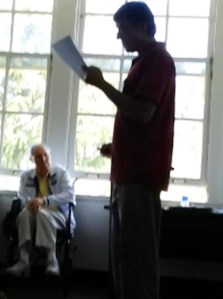
Jeff Tirengel's picture of me presenting during the first breakout session with Glasser in the background.

Jeff Tirengel’s picture of me presenting during the first breakout session with Glasser in the background.

I was drained, in a good way, as I headed to supper. I don’t remember eating much. Instead I got ready for part two of the presentation. As it turned out, more than twice as many people came to the next session. In spite of the late hour, Bill came to the next session, too. There was so much interest in Glasser’s life, the circumstances surrounding his career, and the evolution of his ideas. He was quiet throughout the evening, but I could tell he was taking everything in, the appreciation that people at the session had for him, the admiration, and the affection.

After the conference was over and I was driving back home to northern California it began to sink in. I had met or re-connected with so many wonderful people, learned important ideas from other breakout presenters, poured everything I had into my own breakout sessions, and, as I visited with others, even came upon more anecdotes for the ending of the biography, yet none of these things represented the most significant piece of the conference for me. It began to sink in that the most important part of the conference for me, the best reason for my attending the conference, was Glasser hearing and seeing the interest that others had in his story and hearing their thanks and affirmation for his efforts. I had been concerned for months and even years that he might pass away before I could put a physical copy of the book in his hands. Now, after the breakout sessions that he attended, I felt that he had experienced what readers would feel as they read his story. Somehow it felt to me that a ribbon had been placed on the package, so to speak, during those breakout sessions. He knew the book was coming and got a taste of the interest others had in the book’s content. I didn’t have a publisher yet, but at least I knew that Glasser knew it was coming and knew that people were looking forward to it.

Driving on Hwy 5 from Los Angeles to northern California can provide a lot of time to think.

Driving on Hwy 5 from Los Angeles to northern California can provide a lot of time to think.

As I drove up Hwy 5, the main north and south roadway artery from the southern part of California through Oregon and Washington all the way to the Canadian border, I had such a deep feeling of contentment as I reflected on my Glasser conference experiences. It struck me just how close I had come to not attending at all. I would have missed so much had I not attended. A bit of pride could have kept me from wanting to do the breakout at all. Discomfort at the thought of having to share a room with someone tempted me to pull the plug on the whole idea of attending the conference.

The good feelings I had, especially the feelings I had about Glasser attending the breakout sessions, were enough to fuel my contentment for quite a while. (Here comes the Paul Harvey “Rest of the Story” part.) But there’s more. In November, 2012, five months after the Glasser conference in June, I get a call from Carleen Glasser. I was just getting out of my car and about to head into Calistoga High School to observe a student teacher when her call came in. She said something about Barry Karlin and that I should call Jeff Zeig because he was interested in seeing the manuscript. For months I had been working on finding a publisher for the book, even exploring self-publishing options. Harper-Collins was a possibility, I thought, but they turned it down, even though they liked the manuscript a lot. It appeared there might be a possibility with Simon & Schuster, but that didn’t work out either. Queries to Beacon Press didn’t open any doors and I was really wondering what to do next. Then the phone rings and it is Carleen encouraging me to get in touch with Jeff Zeig. Zeig is the founder and CEO of the Milton Erickson Foundation, a highly respected organization in the field of counseling and psychotherapy. I did get in touch with Zeig and sure enough he was interested in seeing the manuscript.  He read it, along with others on their editorial board, and they decided they wanted their publishing company to print it. We have been working on the book together, especially with his editor, Suzi Tucker, ever since.

It turns out that Barry Karlin, who I met at the Glasser conference months before, contacted Jeff Zeig and let him know of the manuscript’s existence. Barry and I had good visits during the conference and I was impressed with how committed he was to the Glasser message. He attended my breakouts and was one of the voices that asked for the second breakout session later that evening. Barry and I departed the conference as friends. I sent him the manuscript and sought his comments on what he read. He really felt like the book needed to be published and on his own he contacted Jeff Zeig and the Milton Erickson Foundation. That contact ultimately led to the book being published within the next few months.

Once again, the details of the situation hit me. Had I not gone to the conference I wouldn’t have met Barry and he wouldn’t have become part of the manuscript and the publisher search. The Milton Erickson Foundation would probably never have come up on my radar screen. I knew that Jeff Zeig was the force behind the success of the Evolution of Psychotherapy conference, but I didn’t know that the Milton Erickson Foundation had a publishing house until Carleen and Barry told me about it. Barry taking the initiative made all the difference in the world.

So now you know how the biography came to be published. It’s a bit of a convoluted tale, but most good tales are. The moral of the story? Don’t let pride keep you from experiencing life. As far as this story is concerned, a little bit of pride would have scuttled everything.
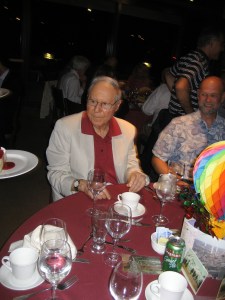
Bill Glasser at the banquet, held on the last evening of the conference, June, 2012.

Bill Glasser at the banquet, held on the last evening of the conference, June, 2012.

————————————————-

If this post has been interesting or helpful to you, it might be of interest to others, too. It’s easy to share this post with your Facebook friends or Twitter connections. Simply click on the Facebook icon at the end of the article. The rest is easy.

The Rest of the Story: Part 1

Bill and Carleen Glasser during the 2012 international conference.

Bill and Carleen Glasser during the 2012 international conference.

This is a story I think needs to be shared, however I am not sure where to share it. At first I thought about it as an Epilogue for the biography, but I don’t think it is a good fit for that. So I will share it here. Some of you will be especially interested in the details of the story; others of you probably not so much. But there are lessons in the story, particularly one that stands out for me. The story is too long for one blog article so I will share it in parts. Here goes Part 1.

~~~~~~~~~~~~~

William Glasser passed away in his home, the home that he built after first moving to Los Angeles in 1954, on Friday evening, August 23, 2013. He was 88 years old.

I had wanted to place a copy of his biography in his hands while he was still living, but I will miss being able to do that by just a couple of months. While writing the manuscript I shared portions of it with him and he affirmed the story that was taking shape, so he was aware of at least that much. Something happened last summer, though, that helps me to better accept that he never held a copy of the completed book in his hands. That “something” goes like this –

The annual International Glasser Conference was held at Loyola Marymount University in southern California during June, 2012. Compared to most international conferences the planning took place rather quickly, however this was due, to a great extent, to Glasser’s health. It was clear that he was not doing so well and Institute board members realized that if colleagues and friends from around the world were going to be able to thank him for all he had done that a conference should be planned as soon as possible, and that it should take place as close to Glasser’s home as possible.

When I received the announcement about the conference, which also included a call for breakout proposals, I immediately felt that I should submit a proposal that would serve as an update on Glasser’s biography. I had been less involved with the Institute since 2008 and wanted to let people know that the manuscript was almost done. More than that, though, it would be a way for me to say thank you to Glasser for what he meant to me and for what we had accomplished together.

I went ahead and completed a breakout proposal called My Time with Bill, and then waited to hear from the organizers. Several weeks later I heard back from them and was surprised, and a bit miffed, to learn that they wondered whether I would be alright with doing a half a breakout, instead of a full time allotment breakout. My ego pretty quickly echoed thoughts like, Well, if they don’t think this is important enough for a full breakout then I don’t need to do it all. I didn’t respond to their email immediately, though, and thought about the situation for a bit. Within a couple of days I realized that this wasn’t about me or my ego. The conference was about him, about Bill, and it was about me saying thank you to him. And so I emailed back and said, Sure, I’ll take whatever time you give me. I had already begun communicating with Jim Coddington, the person I was going to split the breakout time with, when I received word that things had changed and that he and I would each be given a full breakout slot. I was fine with that, too, and proceeded to prepare the presentation.

Not long after that I contacted the organizers to reserve a room at Loyola during the conference. I had wrestled with what to do about lodging, but eventually settled on staying in one of the dorms right there on campus. I indicated that I wanted a private room, thinking my dorm days and living with other guys was behind me. I learned, however, that there were no more private rooms available and that I would have to share a room with someone. (The words surprised and being miffed come to mind.) Once again, my ego weighed in–Why even go to the conference when it felt that at every turn things felt difficult? I didn’t want to share a room with a stranger, probably listening to his snoring at night (or him listening to mine). But again, after thinking about it, I remembered that this wasn’t about me. It was about saying thank you to Glasser. So I let the room reservation people know that it was fine and to put me with whomever.

The conference turned out to be an amazing experience for me! Even the lodging arrangements contributed to the positivity. When I checked in to my room I discovered that one of the two wonderful gentlemen with whom I shared the rather spacious accommodations was Rhon Carleton. Rhon and I were acquaintances before the conference. We knew each other through various Glasser Institute functions. During the conference, though, we were able to become much closer friends. He and I are somewhat unique in that while we are fully immersed and committed to the principles of choice theory, we come at these principles from a faith perspective. Rhon is a former chaplain in the armed services, and now serves as a pastor in Mississippi. I am a professor in a teacher credential program in a liberal arts college sponsored by the Seventh-day Adventist church. My first book, Soul Shapers, alerted SDA teachers to the incredible ways in which Glasser’s ideas informed and supported the journey of faith. During the conference, Rhon and I had many discussions on these kinds of topics. As a result, my lodging arrangements actually added to the quality of my experience.

I met or re-connected with many wonderful people as the conference progressed. Those who were aware of the Glasser biography project expressed interest in it and wanted to know how close we were to seeing it in print. One of the people I was surprised to see at the conference was Diane Gossen. Diane was viewed as controversial by some because of her central role in the organizational schism of 1996. She had authored a program called Restitution, which became very successful in schools looking for practical help with effective student discipline. Diane was a long time Glasser trainer and had tapped into control theory principles as she developed Restitution. Yet, when Glasser rejected all school discipline plans, including his own Ten Step Plan, he rejected Restitution, too. Ultimately, Diane left the Institution, along with others, and continued on her own. When I saw her walk into the general eating area as the conference began, it had been over 15 years since she had attended a Glasser function. Maybe her presence, more than anything else, underscored to me what the conference really was about. It was about saying thank you to an important person in a lot of our lives. It was about saying good by, too. In spite of whatever had happened in the past, Diane was proclaiming loud and clear that Glasser was that important to her! It meant a great deal to me to see her there.

Diane Gossen and Bill Glasser share a moment at the conference.

Diane Gossen and Bill Glasser share a moment at the conference.

I also met Barry Karlin at the conference. He was very interested in the Glasser biography project and, as it happens, I like talking with people who are interested in projects on which I am working. He had an energy about him and I enjoyed listening to his ideas.

When it came time for my breakout the room began filling as I set up my computer and got things ready. By the time I started the room was packed to overflowing, however it wasn’t the numbers in the room that caught my eye. As I scanned the room it hit me what I was about to do. Glasser himself was there, along with Carleen. He was in a wheelchair, as he had been throughout the conference, yet he seemed very present to me. Many who had been part of the Glasser organization for many years, some since almost the very beginning, were seated there, too. Diane Gossen was part of those in attendance as well. Diane and Bill in the same room after all these years. I couldn’t believe it! I looked at the faces looking at me, so many of them people I had written about or mentioned in the biography. I thought, with a note of panic, Who am I to be talking about Glasser’s journey when these people experienced the journey with him.

That concludes Part 1; stay tuned for Part 2

——————————-

Those of you in the northern California area, remember to join us for our first Choice Theory Study Group on Sabbath afternoon, September 21, at 2:00 PM at Foothills Elementary in St. Helena. Mark it in your calendar right away!

——————————-

If you haven’t already done so, sign up for The Better Plan Facebook page. By “signing up” it would be more accurate to say LIKE the page.

William Glasser: A Life to Celebrate

Bill and Carleen Glasser (2007)

Bill and Carleen Glasser (2007)

William Glasser passed away on August 23, 2013. He was 88 years.

As an every-man psychiatrist, Glasser was appreciated by people around the world for his views on mental health and his strategies for counselors and especially educators. A progressive before it was in fashion to be progressive, he rejected commonly held beliefs that blamed mental disease for people’s behavior and instead described methods whereby people could recognize their own role in returning to wellness.

Glasser’s ideas on mental health began to form in the late 1950s when he worked with veterans in a mental hospital in Los Angeles and with delinquent teenage girls in a prison school. He burst onto a national stage, though, when he published Reality Therapy in 1965, and then Schools Without Failure in 1969. Reality Therapy was like a psychiatric shot heard around the world and he began to receive a lot of attention, especially from those working within the helping professions — counselors, social workers, corrections officers, addiction clinics, and especially teachers.

Reality therapy went on to become one of the main talking therapy options that future therapists learned about in degree programs and established Glasser as one of the most well-known psychiatrists in the world. He believed that the concept that people suffer from a mental illness was actually a road block to effective treatment, rather than being a help. Glasser wanted to compassionately help people become stronger and more responsible. To that end, reality therapy emphasized the need for a warm, caring relationship between therapist and patient; was built on the belief that people are capable of becoming responsible for their behavior; focused on the present and future, rather than the past; focused on present, conscious thinking and behavior, rather than trying to discover “unconscious” thought patterns; and desired to teach patients ways to fulfill their own needs within an effective (personal) moral framework. It was a groundbreaking approach that ultimately led to many others also building on the site that he began.

School principals and teachers recognized something special in reality therapy that could make a positive difference in the lives of students and when Glasser received a large grant to improve public education in 1967 the Educator Training Center was established and he embarked on a lifelong quest to show educators the importance of providing a need-satisfying environment for students. Of his 23 books, five of them were exclusively school related.

Glasser came to be known for control theory, the theory that he felt explained why reality therapy was so effective. Control theory described how people are internally motivated and are always acting in a way that they think will best meet their needs, which may even include choosing to be miserable. He became known for his emphasis on the idea that the only person we can control is ourself. Mental health, or happiness, is maintained as a person learns to stop trying to control others behavior and instead learns how to form and keep good relationships with the important people in his life. Glasser liked the details of control theory, but not the label, and in 1996 he changed the label to choice theory, which he felt more accurately described the essence of his beliefs.

Glasser was a prolific writer and lecturer and leaves behind a body of work–23 books, multiple booklets, and many, many journal articles– that will provide support and challenge traditional approaches for years to come. Besides eight active regional organizations throughout the U.S., the Glasser Institute also has a presence in more than 20 countries on six continents. Australia is one of the countries that has especially embraced Glasser’s ideas.

Glasser became a board-certified psychiatrist in 1961, and while he was well known in the popular press, he was not embraced by his own field. Writing books like Warning: Psychiatry Can Be Hazardous to Your Mental Health (2003) may have something to do with that. Being progressive has a price. Yet, even though he was somewhat ignored within psychiatry, toward the end of his career he received a great deal of official appreciation. In 2003 Glasser received the Professional Development Award from the American Counseling Association for his significant contributions to the field of counseling. The following year the ACA conferred to him the Legend in Counseling Award for his development of reality therapy. In 2005, along with being one of the faculty for the esteemed Evolution of Psychotherapy conference, he was presented the prestigious Master Therapist designation by the American Psychotherapy Association. He received two honorary doctorates–one from the University of San Francisco in 1990 and the other from Pacific Union College in 2006.  And in May, 2013, Glasser was officially recognized by the California state senate for a lifetime of achievements and his meritorious service to humanity.

Glasser was preceded in death by his first wife, Naomi, and his son, Joe. He is survived by his wife, soul mate, and co-author, Carleen; and his daughter, Alice, and son, Martin; five grandchildren and two great-grandchildren; as well as his brother, Henry, and sister, Janet. He is survived, too, by the many who heard him talk and read his books and articles and who, in some small way, felt like they were his soul mate as well. To his loved ones and close friends, and to every one of his “survivors” — Here’s to a life of choice!

———————————————-

What could be added to this tribute to make it even better? What did I leave out?

———————————————

Thank you to those of you who responded to the initial announcement of Bill’s passing away. Some very heartfelt and eloquent thoughts were expressed in those comments.

———————————————-

If you haven’t, I hope you’ll take a moment and sign up to follow The Better Plan blog. It’s also easy to register for WordPress, which then allows you to click on the LIKE button of blogs you appreciate. I think this would be especially good for the blogs about Glasser’s passing away. WordPress is the biggest of all blog sites and a blog like this one being LIKED by a large number of people would alert  a huge blogging community to the life and work of William Glasser.

I will miss you, Bill.

Bill Glasser, as we were watching a basketball game together.

Bill Glasser, as we were watching a basketball game together.

William Glasser passed away yesterday, August 23, at 6:30 PM. He died peacefully in the loving arms of his wife, Carleen. He was 88 years old.

I anticipated this day, his being gone, but it didn’t prepare me for the loss that I feel. He became more than a mentor to me. His ideas appealed to me at a deep level and ultimately changed the paradigm from which I view the world. That he and I were able to spend so much time together talking about his life and his views will always mean a great deal to me. In some ways, the biography that came out of those visits takes on even greater meaning now.

To a great extent, The Better Plan blog exists because of him. Scripture and other spiritual writers like Ellen White pointed toward a human behavior model of internal control, yet for some reason it was Bill Glasser that alerted me to the importance of the internal control model. It was my agnostic friend Bill Glasser that, in his own unique way, encouraged me to take another look at what Scripture and Ellen White have been saying all along. It was Bill who put me on the trail of the better plan.

For me, a light has gone out today. I feel a little bit more alone, a little bit more on my own. Grief is like that. It has its own agenda, it’s own clock. In time, the grief will lessen and I will see more clearly the many lights that his message ignited. Many besides me were affected by his ideas. As the creator of reality therapy and the architect of choice theory, Glasser meant a lot to a lot of people. That really is where I want my focus to be. Instead of dwelling on the light that has gone out, I want to think about the many lights that will begin to shine brighter. And by many lights I mean you and me and the potential of our modeling lives of strength and freedom.

In the coming days and months there will be time to say more. For now I am of the mind to reflect on Glasser’s effect on my life and cherish the time I had with him. My heart goes out to those who are especially feeling his passing–his immediate family and his close circle of friends and colleagues. We will miss him and there’s no getting around it.

I hope the media takes note of his passing and reminds people of what Glasser stood for and what he accomplished during his career. I would appreciate it if you would let me know if you see or hear something on the news or in the print media regarding William Glasser.  I feel blessed to have called him my friend.