Door Mats and Place Mats. Pretty Cool.

hi_im_mat_door_mat_3

I love this door mat for its sheer creativity! I give a tip of the hat to the person who came up with this idea.

Speaking of mats, there were some creative mats in my life this past week, some place mats to be more exact.

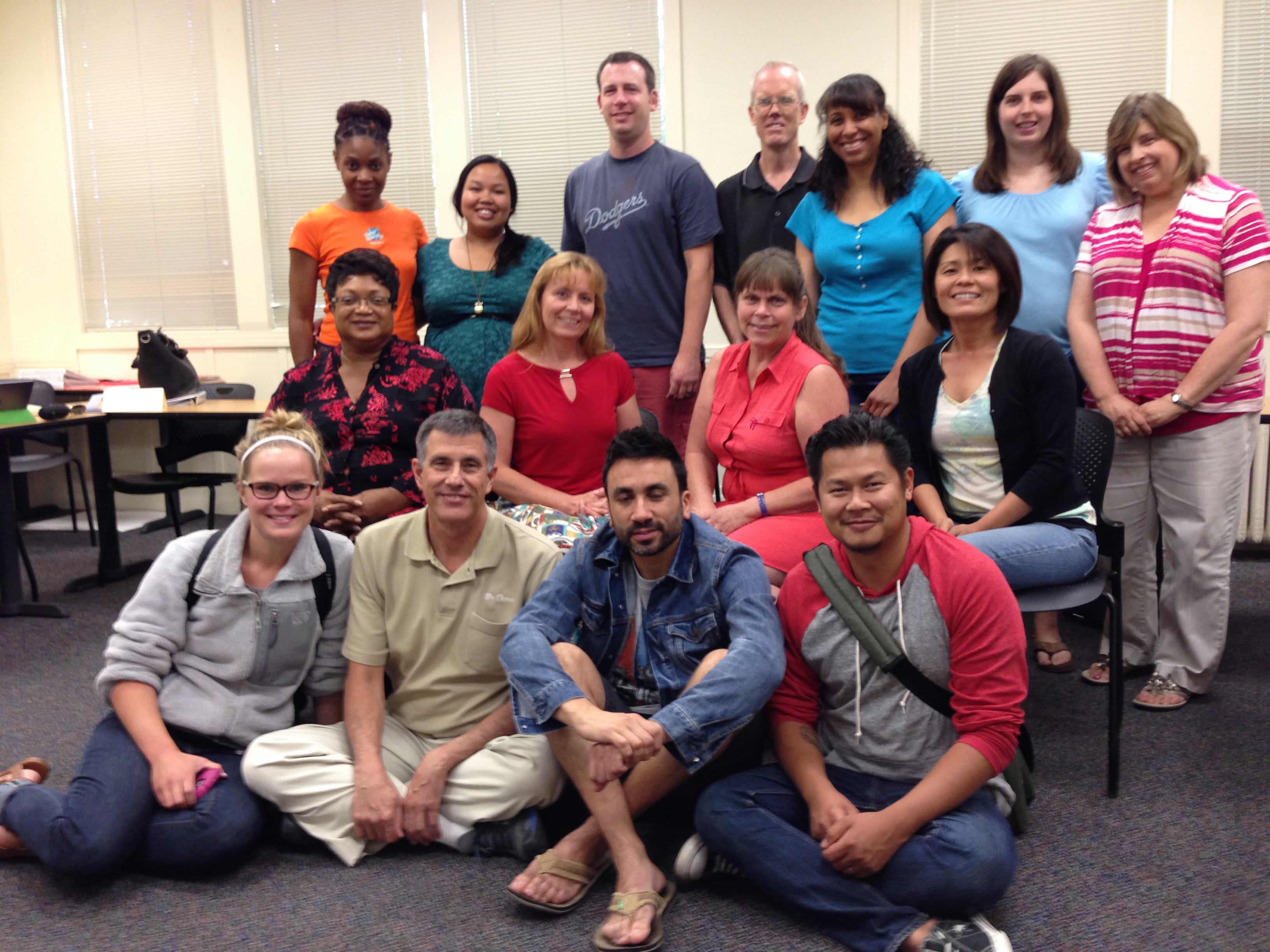
I had the privilege this week to teach The Better Plan 1 course here at Pacific Union College, a summer class I have now taught for 10 years in a row. The Better Plan (also the name of this blogsite) is an experiential class in choice theory for educators. This summer, teachers in the class came from California, Arizona, and Oregon.

The Better Plan 1 class, summer, PUC, 2015

The Better Plan 1 class, summer, PUC, 2015

It has been a very special week for me (alumni of the class will know what I am talking about) and now I am sitting in the class reflecting on our experiences and our discussions. The tables and chairs are empty, yet I have a distinct memory of each person in the class sitting at their usual place. I see them even now. I think about their journey this week and the shifts that began to take place in their thinking. The room become a kind of sacred place as people shared about their lives and their challenges, a sacredness that for me still remains as I sit here and think about all we did and said. I shared of myself, too; my thinking has shifted, too.

Tom Amato, director of the Napa Valley Youth Advocacy Center, during the Better Plan class.

Tom Amato, director of the Napa Valley Youth Advocacy Center, during the Better Plan class.

I yearn for everyone in the class to be fully grown in their choice theory understanding and hope that we covered everything needed for choice theory expertise. Just as quickly, I know that we didn’t cover everything, and that even if we had covered everything expertise in choice theory takes time. Glasser himself said that “choice theory is easy to understand and hard to do.” I hope that students in the class this week will 1) recognize the week as a beginning, 2) be patient with themselves as they experiment with the choice theory ideas, and 3) continue to seek resources that will support them in the choice theory journey. Resources include books by Glasser and other authors on choice theory, as well as, for example, The Better Plan blog you are reading now. Also, I have found that Scripture and the Spirit of Prophecy are a huge part of the choice theory journey for me.

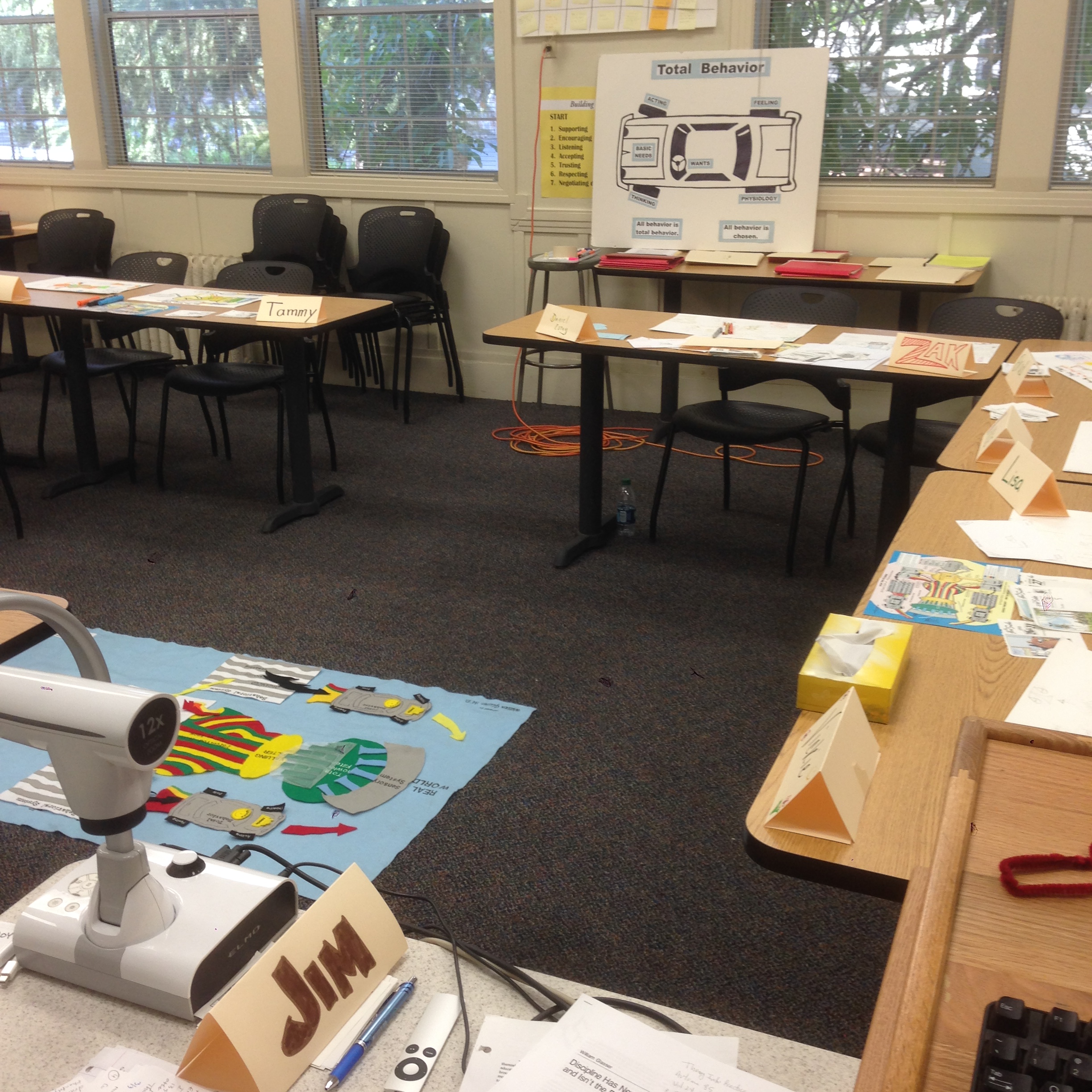
A quiet classroom in the early morn. Soon the buzz of learning will make its wonderful presence felt.

A quiet classroom in the early morn. Soon the buzz of learning will make its wonderful presence felt.

Can a classroom get better than this?

Can a classroom get better than this?

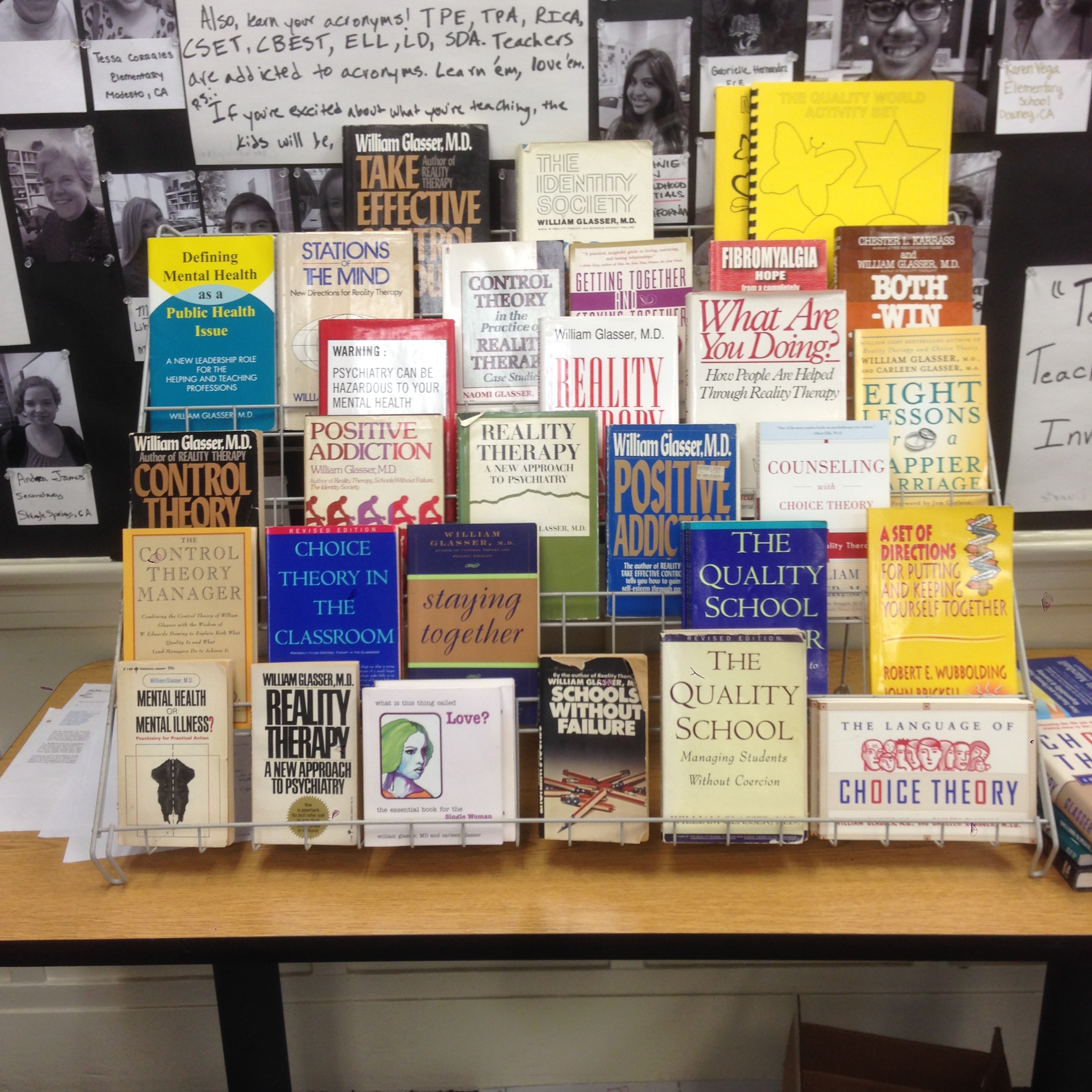
One of the book racks available to students all throughout the week.

One of the book racks available to students throughout the week.

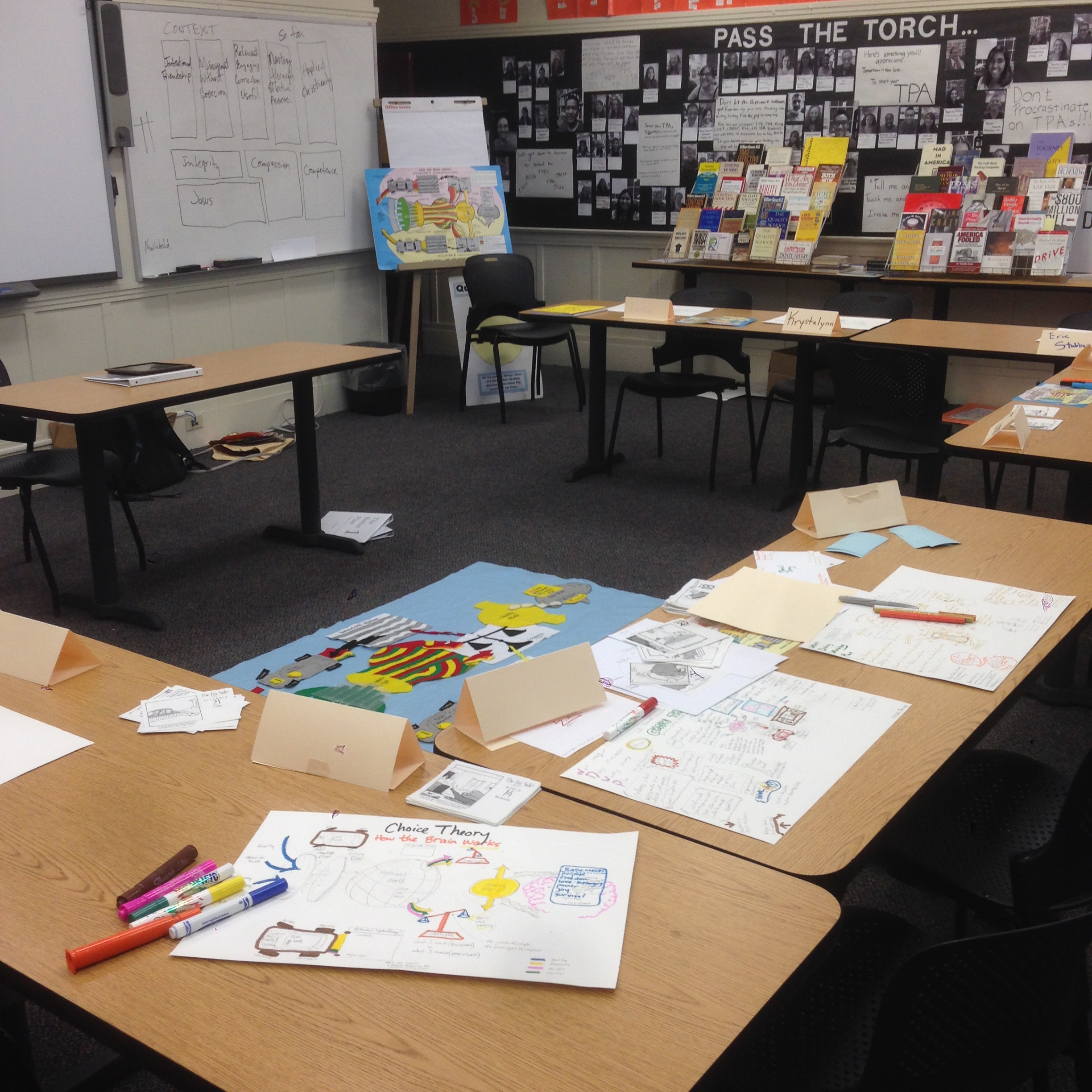
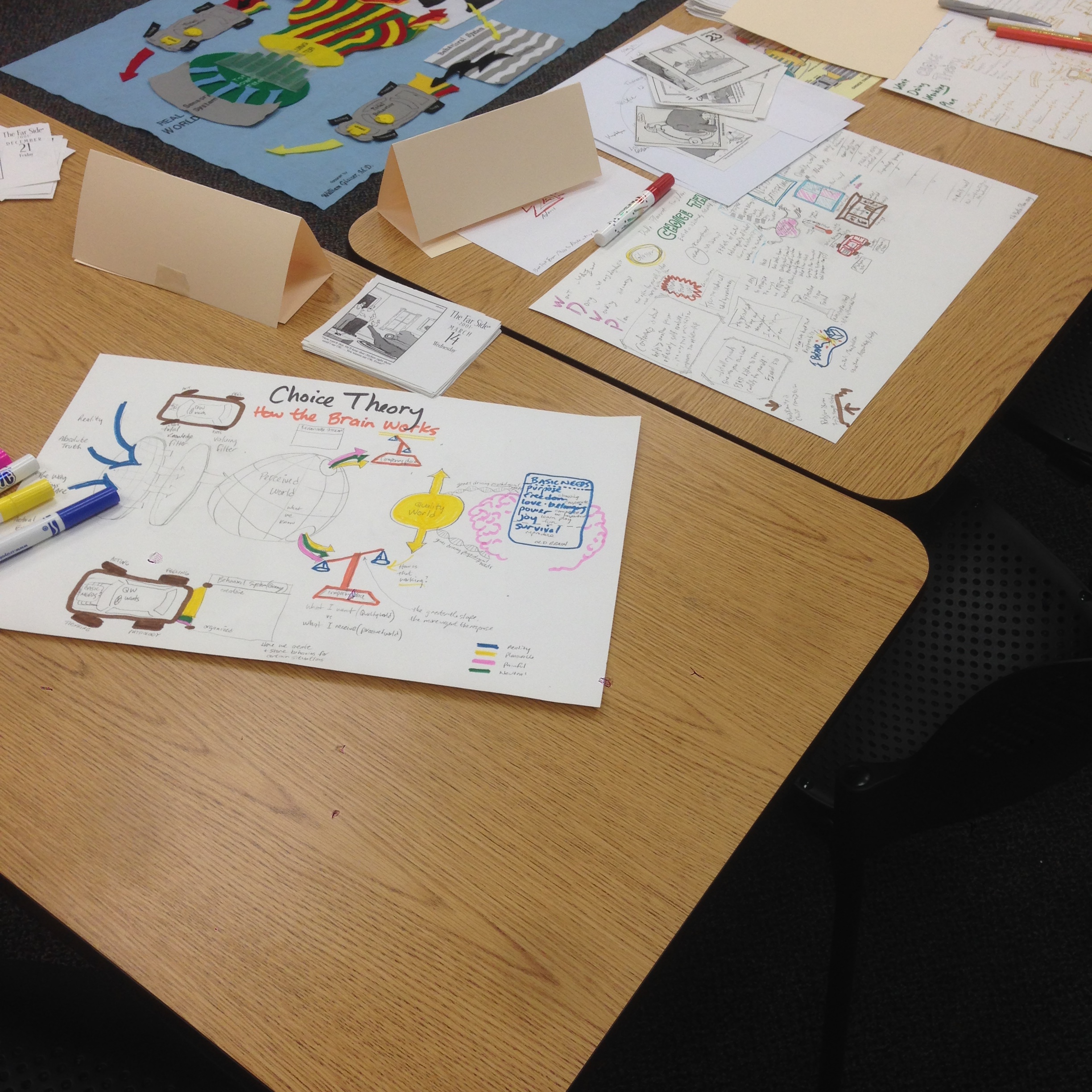
On the last day of the class, early in the morning, I took a few pictures before anyone else arrived. I like hanging out in a classroom pleasantly cluttered with learning. One of the ideas that seemed to work well this week had to do with place mats. Everyone received a small poster, or place mat, that they could doodle on and, in whatever they wanted, capture important thoughts or concepts that were important to them. I explained that except for one thing that I wanted them to include, they could put anything they wanted on it. The one thing I requested they include on their place mat was the How the Brain Works chart. (The Chart as the Glasser “family” affectionately refers to it as.) There is something about creating or drawing something yourself that strengthens the learning, I think.

Learning place mats.

Learning place mats.

So much good stuff here!

So much good stuff here!

These could be framed.

These could be framed.

And so, while the Better Plan 1 class ends, the choice theory journey really begins. For some the journey will continue with The Better Plan 2 class that kicks off on Monday. Looking forward to our time together!

===================


The Last Soul Shapers

The Soul Shapers 1 class I teach each summer at Pacific Union College begins on Monday (6-22-15) and I plan on it being the last one. No more Soul Shapers for me. I’ve taught the class for 10 summers in a row, ever since the Soul Shapers book was first published, and this is it. Soul Shapers is about to be history.

Last summer's Soul Shapers 1 class. (2014)

Last summer’s Soul Shapers 1 class. (2014)

Truth be told, the only thing that I want to be history is the label Soul Shapers. I look forward to future summer classes and in-services across the U.S. and beyond, but I want them to be billed using a different title. I want them to be billed as The Better Plan. I am as convinced and enthusiastic as ever about the ideas and principles of choice theory, and I am as committed as ever to sharing choice theory with others. Labels are important, though, and The Better Plan is accurate, whereas the title Soul Shapers is not.

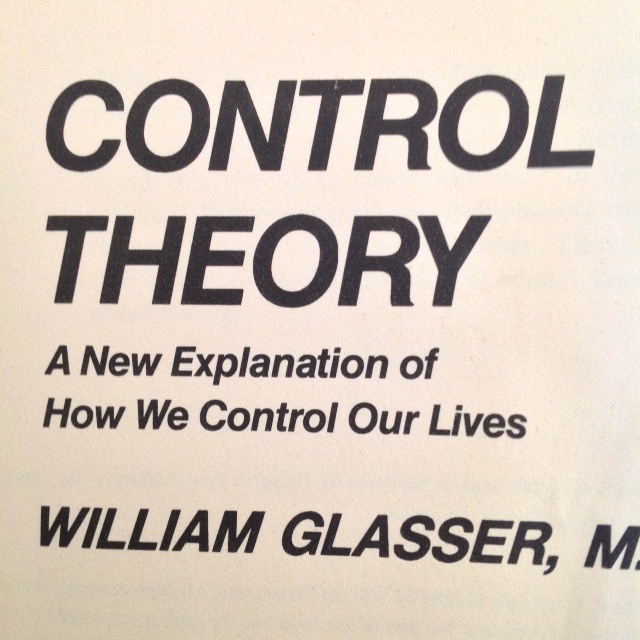
IMG_0616

Glasser faced something similar with the label control theory, a story with which I was completely familiar, so it is interesting to me that I could have gotten into the same situation. Glasser adopted the label control theory during his initial work with William Powers in the late 70s, but eventually changed the label to choice theory in the late 90s. (His book Choice Theory was published in 1998.) He was frustrated with the label control theory, partly because he frequently had to explain how the theory was about self-control, not about controlling others. The internal vs. external control issue is so important to grasp and apply that Glasser wanted the label of his ideas to contribute to an accurate understanding.

IMG_0626y

I got into the label situation because I wasn’t assertive enough to push for what I wanted. When you sign a publishing contract you pretty much sign away the rights to the book, including whatever the title of the book will be. My experience has been, though, that publishers don’t bulldoze their way to the title they prefer. They want your input. I was contacted early on by a rep from the Review & Herald (one of the main publishing houses of the Seventh-day Adventist church at the time; it has since gone out of business) and excitedly told that they had come up with a title for my manuscript. She then told me the book would be called The Blind-Folded Dolphin. I said “Excuse me?” One of the anecdotes I shared in the book referred to the dolphin show at Marine World and the manner in which the dolphins use echo-location to navigate (p. 33). While I like dolphins a lot, I didn’t want the book to be titled that way. The rep was not pleased with my response, but begrudgingly said they would keep working on it. (The working title of the manuscript I initially submitted was The Better Plan, but apparently that title wasn’t grabbing them.)

dolphin

When they called later with a new title, Soul Shapers, I must have been so relieved that it wasn’t based on fish (ok, mammals) that I went for it. When I later received my 10 free copies of the book (as the author) it was the first time I had seen its cover – the title, the graphics, and the color scheme. There was a richness about its look – the layout and colors were very good – however as I considered the title and the graphics my heart sank a bit.

IMG_0630

As agreed, in bold, large letters, the title Soul Shapers is prominently featured. And then below the title is a picture of a cookie-cutter in the shape of a heart, with what appears to be a child inside the heart. The implications of this title and graphic began to form in my awareness. In the world of tools and gadgets there are few items more externally-controlling than a cookie-cutter. It’s sharp, strong edges push into the soft dough and form an exact, very particular shape. The large words above the cookie-cutter, Soul Shapers, complete the supposed message of the book – teachers and parents are externally shaping the souls and characters of the children in their care. In some ways, it would be challenging to come up with a more inaccurate title.

Soul Shapers cover

The message of the book is that every person is responsible for the shaping of their own character, and that as teachers and parents our role is to guide and support children as they begin the journey of self-control and character formation. It is a delicate process based on free will and choice. As adults our goal is to reveal to children the details of their own personal internal control systems. There is no greater gift we can endow to them. The Soul Shaper book was meant to alert readers to the ways in which Scripture, Ellen White, and William Glasser emphasize this internal control system.

Ellen White, who wrote at the turn of the last century, explained that –

True character is not shaped from without, and put on; it radiates from within. Desire of Ages, p. 307

You yourselves are responsible for the kind of character you build.   Fundamentals of Christian Education, p. 245

“Every child should understand the true force of the will… The will is the governing power in the nature of man, the power of decision, or choice.”           Education, p. 289

The sub-title of Soul Shapers is A Better Plan for Parents and Educators. When the publisher let me know I responded “Why not use the original phrase and refer to it as The Better Plan, rather than A Better Plan?” They explained that using the word “the” makes it sound like this plan is the only way or the one best way and that the letter “a” made it sound more reasonable, like it was just one of many ways to accomplish what was needed. I responded that “the better plan” was not my phrase, not something that I came up with, but that it was directly from the pen of Ellen White. As you can see the cover ended up with “A” Better Plan. Sigh.

IMG_0628

The Ellen White quote that originally alerted me to the better plan, and more importantly to the principles of the better plan, is such a powerful choice theory statement. It goes like this –

Those who train their pupils to feel that the power lies in themselves to become men and women of honor and usefulness, will be the most permanently successful. Their work may not appear to the best advantage to careless observers, and their labor may not be valued so highly as that of the instructor who holds absolute control, but the after-life of the pupils will show the results of the better plan of education.             Fundamentals of Christian Education, p. 57

“The better plan” is about helping students to recognize and apply their own internal control guidance systems. Sadly, she admits that teachers who help students in this way will be misunderstood and underappreciated. This is significant. How much more clearly can this be said?

Born in an Adventist home, educated in Adventist schools, having served in Adventist education my entire career, yes, I have heard the term “blueprint for Adventist education.” My dad was an Adventist preacher who was very, very supportive of Adventist education and I heard him refer to the “blueprint” more than once. As it turns out, though, I have never seen this blueprint. The closest I have come to seeing something like a blueprint is this phrase “the better plan,” an approach that has everything to do with the principles of internal control and choice theory. This is the direction we need to head together.

And so this is the last time I am going to teach a class called Soul Shapers. I like The Better Plan a lot better.


Being What We Want Our Students to Become

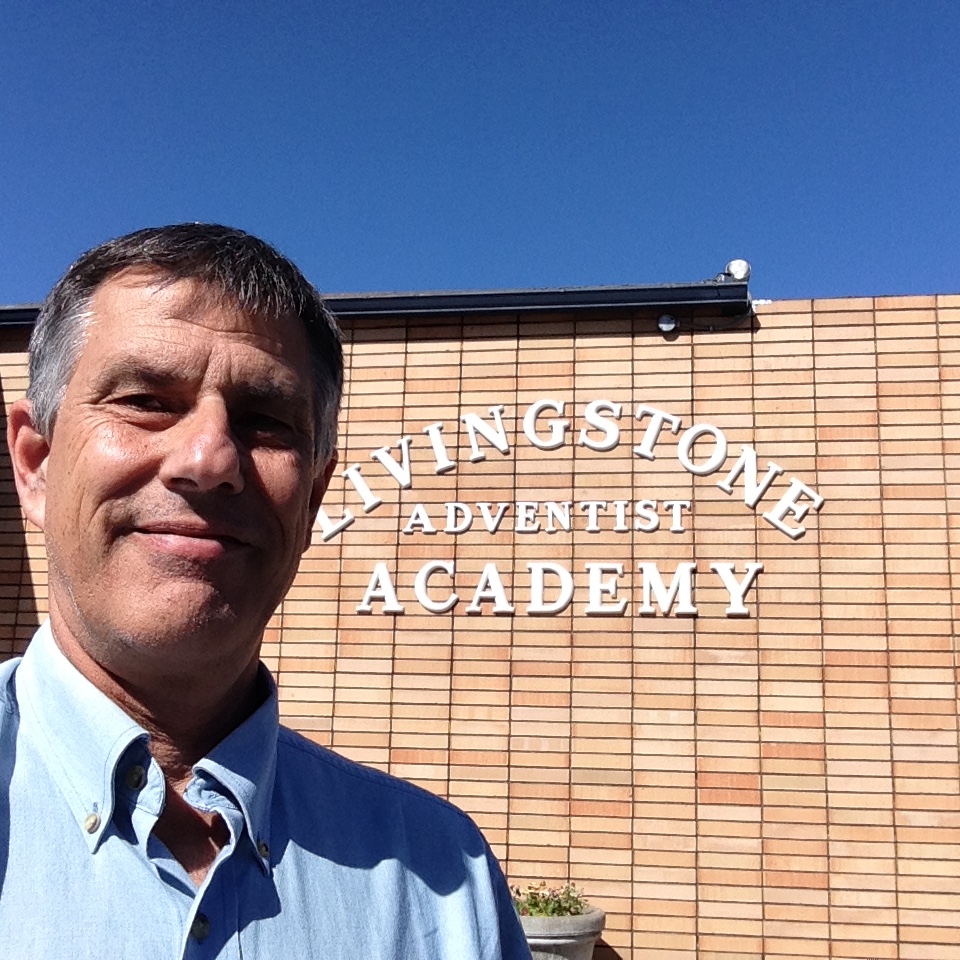
The sun was in my eyes. Not all pictures can be great pictures. The important thing is I got a shot in front of a place that's important to me.

The sun was in my eyes. What can I say? Not all pictures can be great pictures. The important thing is I got a shot in front of a place that’s important to me.

I was privileged this past Thursday and Friday (June 11-12) to provide a Better Plan in-service to the staff at Livingstone Adventist Academy in Salem, Oregon. This was especially meaningful to me as my choice theory journey and the Soul Shaper book came out of my experience at Livingstone 20 years ago. I was principal of the school from 93-96. While several teachers (I always refer to the team I worked with as the Original Soul Shapers) from the mid-90s continued at the school until very recently, only one remains now, that being Chris Sequeira, who teaches History and Bible there. I was very pleased that the new team at Livingstone wants to learn about choice theory principles and consider ways to apply them in a classroom setting.

Chris Sequeira (on the right) and me in his classroom after the in-service was over, and just before we bid farewell to each other - him to see his daughter graduate from Walla Walla and me to head to PUC for graduation weekend.

Chris Sequeira (on the right) and me in his classroom after the in-service was over, and just before we bid farewell to each other – him to see his daughter graduate from Walla Walla and me to head to PUC for graduation weekend.

With the in-service behind me now, like school teachers and workshop facilitators around the world, I am now in that place called reflection. How did the workshop really go? What did I do or what took place that worked? What could be improved? What needs to be tweaked to make it better the next time I do a two-day training? Reflection is the act of self-evaluating, and self-evaluation is a powerful part of choice theory. It’s not about beating myself up over not covering as much content as I wanted to, or not covering a concept as effectively as I would have liked. It’s about authentically (and compassionately) reviewing what took place and then modifying my lesson plan for the next go at it. I did the best I could; now I think maybe my best can be better.

work-1578969-5-flat550x550075f-self-reflection

The team at Livingstone seemed to resonate with the choice theory concepts. Most of them had read some or all of Soul Shapers before the in-service, so that helped. They had questions about some of the psychology pieces, but I didn’t pick up any “dealbreaker”responses. Their real questions, the tougher questions, had to do with how do you put these ideas into action? How, for instance, do you use choice theory with five-year-olds? How would choice theory affect classroom management in a high school classroom? What do you do with the kid who refuses to respond to reasonable choices or additional chances for success? These kinds of questions are similar to the challenges we all face. Choice theory sounds good, but how does it really work?

The title and subtitle on the syllabus I used at Livingstone read:

The Better Plan
Being What We Want Our Students to Become

The subtitle came to me as I was putting the finishing touches on the handouts, but the more I think about it the more I like it. There’s a lot contained in the phrase, “Being what we want our students to become.” For one thing, as teachers and parents we tend to focus on the behavior of our children or our students. In other words, we focus on what we want them to become. Choice theory reminds us, though, indeed thoroughly explains the importance of our first focusing on ourselves and what we bring to our homes and classrooms. Choice theory emphasizes the value of understanding our own being – our thoughts, our goals, our habits, and our beliefs. Only as I come into an appreciation of my own internal control design can I share the theory of that design with my students. Only as I come to see the sense of the axiom that the only person I can control is myself will I be better able to implement a classroom management plan that honors the internal control design of each of my students.

be-the-change-you-want

Our first focusing on our “being” as teachers does not mean that we cannot seek to guide and influence the behavior of our students. It is always interesting, though, when we consider how our own thinking and acting may have been a part of creating the problem we want changed. The clearer we see ourselves the better our management strategies will be.

Like Ellen White wrote over a hundred years ago –

“Let it never be forgotten that the teacher must be what he desires his pupils to become.”                Fundamentals of Christian Education, p. 58

========================

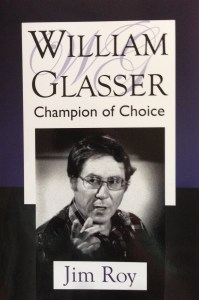
Not that I want to compete with Amazon, but I can beat (sounds competitive) the Amazon price when it comes to the Glasser biography – Champion of Choice. Amazon’s price right now for the book and shipping is $30.17. My price for the book and first class shipping is $26, plus I will sign the book if you request it. (Media Mail shipping would be less.) Get in touch with me to order your copy at jimroyglasserbio@gmail.com. Expedite the order by sending me a check for $26, along with shipping instructions, to P. O. Box 933, Angwin, CA 94508.

I can now sell for lower than Amazon. Get the book from me.

I can now sell for lower than Amazon. Let me know if you want one or several copies.

The Notebook

MiGcfk4JN5VMTbzdE5W1ZsjU9Mi5bZWcalaX_RIWq8Q

KQED News, the PBS affiliate in the SF Bay Area, recently ran the following headline, To Break the Mold, Is Competency Learning the Key? Once again a current topic in the news echoed what Glasser emphasized for so many years. While admittedly I am a bit frustrated that Glasser is not included in a conversation he started, mostly I am pleased that voices within the educational community are suggesting that maybe a competency-based focus is the way to go.

Glasser described how the school program at the Ventura School for Girls ultimately had to focus on competency. With a student body of approximately 400 students, and with 3-5 of them leaving Ventura every week and 3-5 of them arriving each week, it was obvious that a traditional program just wouldn’t work. A new learning arrangement needed to be devised.

When I was a kid (which was at the same time Glasser was working at Ventura) I participated in a youth organization called Pathfinders. It was like Boy Scouts and Girl Scouts rolled into one co-ed club. Pathfinders are a Seventh-day Adventist thing. My Pathfinder memories are from 50 years ago, but the organization is still going strong today.

Every five years almost 50,000 Pathfinders from around the world converge on Oshkosh, Wisconsin, for an incredible conference.

Every five years almost 50,000 Pathfinders from around the world converge on Oshkosh, Wisconsin, for an incredible conference.

A group of Pathfinders in uniform.

A group of Pathfinders in uniform.

So why bring up Pathfinders here? What does Pathfinders have to do with competency-based learning? I’m glad you asked. Ok, so when I was in Pathfinders there was this big notebook that held all the information on how to get honor badges.* (See the impressive criteria for earning a badge in Cycling below.) These badges were small, embroidered patches with pictures that represented various skills and areas of expertise. As kids we were interested in that notebook because we wanted the patches. Once a year there was a special ceremony that included handing out all the patches we had earned. I don’t remember being that enamored with the ceremony part, but I did like the patches.

IMG_2060

My honor sash from 50 years ago.

We did other stuff in Pathfinders, too, like marching and saluting, and we went on a lot of camping trips, which was fine with me. Through it all, though, that notebook was never far from our attention. Some of the honor patches were pretty easy to get (Cats), while others required special equipment (Astronomy). Some patches you could do on your own, while others necessitated adult instruction. We would read through the honors’ criteria looking for ones that interested us, keeping in mind the extent to which it was actually possible to earn the honor. We were pretty strategic as I recall. Of course, whether the honor was simple or not you had to demonstrate your knowledge or skill in front of the Pathfinder leader or one of the counselors. When you showed that you knew the stuff or could do the required skill, you earned the honor and at that once a year ceremony you got your patch.

I think these badges represent Camp Crafts, Cats, Intermediate Swimming, Mammals, and Amphibians.

I think these badges represent Camp Crafts, Cats, Intermediate Swimming, Mammals, and Amphibians.

I had no idea at the time that I was experiencing competency-based learning. The girls at the Ventura School experienced something similar and it contributed to their graduating from high school, which most of them, prior to arriving at Ventura, had given up hope of ever accomplishing. Regular high schools had failed them. Traditional grading identified them as non-performers and nudged them out the door while muttering “good riddance” and “get your act together.” Ventura was different, though. Grades weren’t used as a threat or a punishment. In fact, grades were different altogether. You got credit for competence on an assignment when you demonstrated it and then you moved on. If competence was difficult in a specific area a teacher would help you until you got it. In this environment the girls seemed to thrive and accomplished things that maybe surprised even themselves.

There was no pressure at Ventura on the girls to perform academically. Yet they became involved in their education like never before. There was no pressure on me and my fellow Pathfinders to earn honors and get patches, yet we actively pursued them none-the-less. I can remember our Pathfinder leaders saying, more than once, “Will you get out of that notebook?” Maybe they felt that the more we were in the notebook the more work there would be for them.

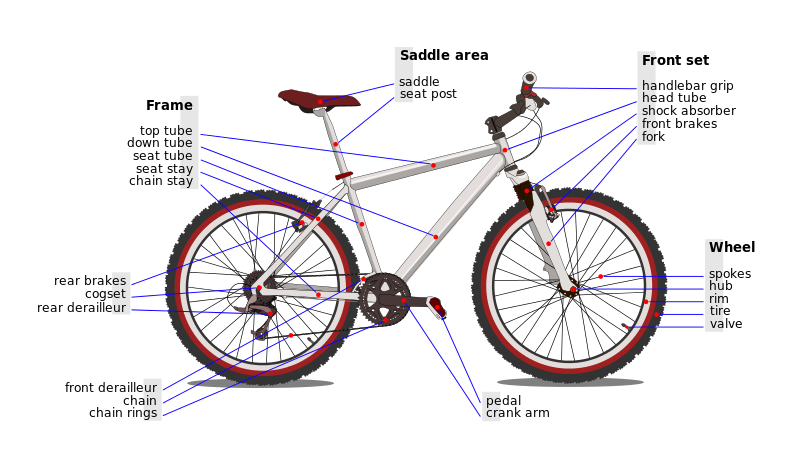
The parts of the bicycle that need to be learned for the Cycling honor.

The parts of the bicycle that need to be learned for the Cycling honor.

The KQED Break the Mold article points out that “More schools are starting to question whether traditional age-based classrooms are the best way to go, and to change the dynamic of teaching to the middle, they’re experimenting with competency-based learning, a system that moves kids along at different paces once they’ve shown they can grasp a key concept of a unit.” The alternative is passing students along who aren’t competent (those that get Ds for example) and failing students even though they may know more than half of the material (those scoring less than 60%).

The ship is turning.

Shifting to a competency-based system will require big changes at every level, although states like Oregon, Iowa, Maine, New Hampshire, and Minnesota are already making this transition. Our obsessive focus on testing will need to change, along with the way we evaluate teachers, and the way we train them to be teachers in the first place. Yes, there is a feeling that we are trapped in a system that is “obsolete,” and that “provides diplomas with little validity,” but there are examples of the ship turning. Glasser certainly tried to alert us to this needed change. To the extent each of us is able, let’s keep pushing and nudging toward competency-based learning.

– – – – – – – – – – – – –

* For example, the honor badge criteria for Cycling includes:
+ Knowing the name and explaining the purpose of the parts of a bicycle.
+ Repairing a punctured bicycle tire.
+ Taking apart, cleaning, and re-assembling a bicycle.
+ Adjusting the brakes and front and rear derailleur.
+ Knowing the rules of bicycle safety and courtesy.
+ Understanding the advantages of wearing a helmet.
+ Achieving a riding record that includes a) three 10 mile rides in different locations and b) one 50 mile ride accomplished in 10 hours or less.
+ Knowing how to read a road map and successfully plotting the 50 mile ride.

Click here for the link to the full criteria for the Cycling honor.

===================

Click here for the Champion of Choice link to Amazon. Contact me for a signed copy of the biography.

Quickly order the biography from Amazon.

Quickly order the biography from Amazon.

Click for the Soul Shaper link to Amazon. Signed copies are also available.

Available new on Amazon from $12.59; used from $1.01..

Available new on Amazon from $12.59; used from $1.01..

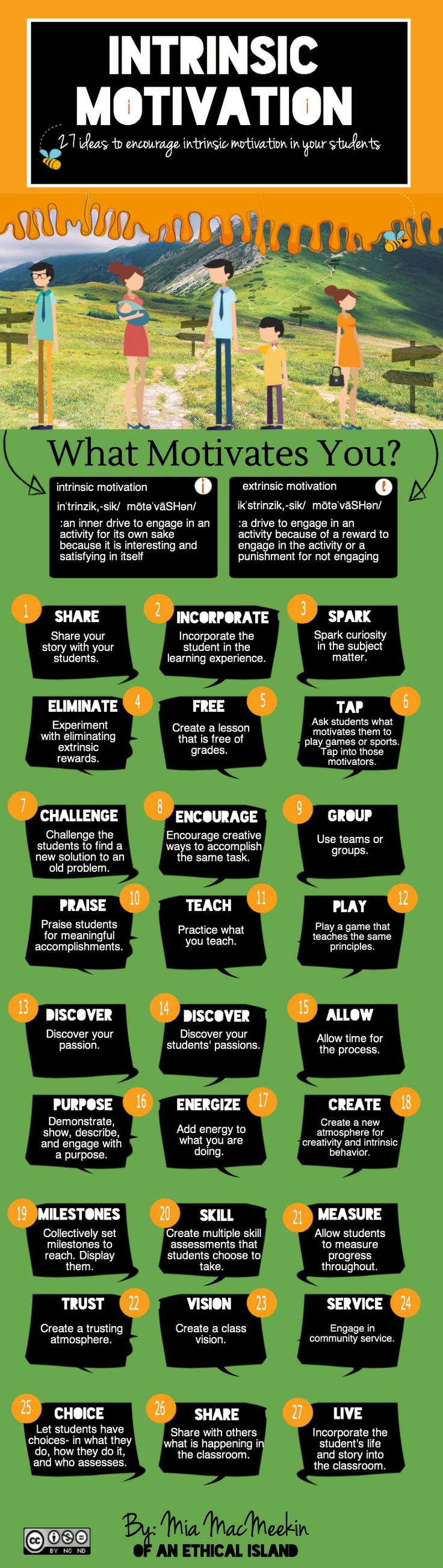
27 Intrinsic Motivation Ideas

“My students won’t do anything unless I make them do it!”

“If we are going to get kids to stop running in the hallway we need to increase the punishment. We need to get their attention!”

“Ok, children, whenever I ask for quiet I am going to be looking to see which group gets quiet first. I will then put a check by that group’s name on the board. When that group reaches 10 checks they will get a special prize.”

polls_scolding_0345_424529_poll

As teachers and parents (and everybody else for that matter) it is all too easy, even when we know its weaknesses and dangers, to revert to extrinsic (external) motivators. Choice theory explains that students (and everybody else for that matter) always behave for intrinsic (internal) reasons. External factors influence us, to be sure, but ultimately we make choices for reasons that are important to us personally. A student may rush to get quiet in the hope of getting a check by her group’s name. Other students may care less about the special prize for getting quiet. This is the great dichotomy that teachers face every day. Most teachers know about the value of intrinsic motivation, but consistently implementing this kind of an approach can feel elusive. As Glasser pointed out many times, we live in an external control world where extrinsic motivators have become the norm. Choice theory teachers are committed to swimming against this current, though. One such teacher came up with a series of suggestions that will help us as teachers tap into and honor the internal control design of our students.

Today’s blog post is a wonderful infographic by Mia MacMeekin at teach thought.com. Read her 27 ideas on increasing intrinsic motivation in order from 1 – 27.

instrinsic-motivation

You Are Responsible. Period. Is That Choice Theoryesque?

A friend recently posted this picture on Facebook. She shared it after discovering it on Dr. Wayne Dyer’s Facebook page. What should we think and feel about this statement? A person into choice theory would have to agree with it, right, maybe even say an amen over it, yet for all the rightness in this statement there is something unsettling about it, too. We are drawn to it and repelled by it at the same time.

IMG_0604

I have seen the statement before and I think it is correct to attribute it to Wayne Dyer. I am aware of Dyer’s material, but not that familiar with it. Glasser talked about him. During one of my interview visits to his house (late 2003-early 2004) he was excited to be in communication with Dyer. He described how he had attended one of Dyer’s presentations and that Dyer had acknowledged William Glasser’s presence in the audience and briefly talked about the ways in which Glasser had influenced his thinking. I could tell this meant a lot to Glasser, even though he then went on to refer to Dyer’s spiritual views as being a bit loony. At the time of my visit Glasser did a lot of communicating through his fax machine. A fax was coming in as we were going to break from the interview for lunch and I remember him thinking aloud that it was from Dyer and that he was nervous about what it was going to say. In the end, Glasser enjoyed lunch without looking at it right away because he thought it might not say what he wanted it to say.

Dr. Wayne Dyer

Dr. Wayne Dyer

But I digress . . . back to the statement. What are we to make of it? “Everything you do is based on the choices you make,” it begins. Isnt this one of the essences of choice theory? “You are responsible for every decision and choice you make. Period.” it concludes. What could be more choice theory than this focus?

You Are Responsible. Period!

I agree with the truth in this statement, but I have to be careful where I allow that “truth” to take me. If the statement empowers me to better action, then good. If it inspires hope in me, also good. If it helps me to recognize my responsibility for my thinking and my behaving, more good. But if it encourages me to judge the poor circumstances of others as simply being the result of their poor choices, then not so good. If it keeps me from empathizing with those who are struggling or from seeking to truly understand their circumstances, and their choices, then this statement is much more harmful than helpful.

20100916-195421-pic-964184612_s640x376

One such circumstance – that being poverty – that people have opinions about and make judgments about was recently addressed in an article with a really long title: 7 Things People Who Say They’re Fiscally Conservative But Socially Liberal Don’t Understand. What so many of us don’t understand or forget is that the cycle of poverty creates a permanent trap lasting generations. Ironically, it points out how being poor is actually more expensive than being rich. If we look at those struggling within this cycle of poverty and quickly assess that they are experiencing the result of their own choices we 1) seriously misunderstand their situation, 2) misuse the Dyer quote as an accusation, and 3) misrepresent the principles and spirit of choice theory.

photo 2

I wrote on this topic a bit last October in a post entitled Compassion and Slim Choices, which described how choices and options vary greatly from one person to the next, and on how we can’t view everyone as if they have the same choices and options. Compassion is the key. The lens of compassion must be the lens through which we see others, regardless of their circumstances. Yes, people possess the ability to make better choices, but these choices are often baby-steps within an atmosphere of love and support. Looking through the lens of judgment and conveying to others in poor circumstances that they are responsible for every decision and choice they make . . . period . . . doesn’t cut it.

Choice theory does not shy away from responsibility, but first it embraces compassion and connection.

====================

Soul Shaper summer classes at PUC are just around the corner!

Soul Shapers 1: June 22-25
Soul Shapers 2: June 29 – July 2

Let me know if you are interested in attending at thebetterplan@gmail.com.

====================

Two books that will greatly contribute to your understanding of choice theory –

Available new on Amazon from $12.59; used from $1.01..

Available new on Amazon from $12.59; used from $1.01.

Soul Shapers provides evidence that Choice Theory changes people and schools into nurturing places of respect and choice. Roy shares his experience on how choice theory principles can be applied individually and collectively in educational settings, and offers practical suggestions on how true maturity begins with choices, not control and punishment. Dr. Ed Boyatt, retired educator

Soul Shapers combines the life changing clinical principles of choice theory that drive mental well-being and abundance and the spiritual principles of Christianity in a most powerful way! Tom Amato, Director of the Napa Valley Youth Advocacy Center.

Quickly order the biography from Amazon. Click on the book to

Quickly order the biography from Amazon.

Jim Roy’s biography is fascinating, and this book is a treasure. I have known Bill Glasser for over 20 years and have presented at many Glasser conferences. Reading about Dr. Glasser’s journey and Dr. Roy’s clear explanations of Dr. Glasser’s points in his numerous books on psychology, mental health, and education rate William Glasser as a major contributor in each of these areas. Anyone who is interested in becoming more efficient, improving relationships, and living a happier life will truly enjoy and learn from Jim Roy’s biography of William Glasser.  Dr. Marvin Marshall

Jim Roy has done a wonderful thing here: he has captured the truth and essence of the great unsung hero of psychology. William Glasser was a maverick, a licensed MD and psychiatrist who was not afraid to stand up against an ineffectual system of mental health and tell the world why and how it does not serve the needs of the afflicted. Glasser’s life journey is described in intimate detail from his early days in practice through all of the peregrinations and struggles in, not only developing his revolutionary ideas, but in finding an audience who would listen. Today his audience is strong and committed. Why? Because Dr. Glasser’s ideas work. Choice Theory and Reality Therapy, the two components of Glasser’s mental health system, are used by thousands of mental health practitioners around the world who report surprising results among even the most dismal populations. Anyone interested in what’s behind the veil in mental health practice should find much to resonate with in Jim Roy’s excellent biography.  Banning Lary

The Fox and the Chicken Coop

A Robert Whitaker blog title, Psychiatry Through the Lens of Institutional Corruption, recently got my attention.

I first heard of Robert Whitaker when Glasser told me about a book Whitaker wrote called Mad in America. Glasser was particularly excited about the book, which led to me buying the book for myself, and which further led to me strongly agreeing with Glasser’s assessment of it. Mad in America was a really well-written book on the history of mental illness and the bad medicine and science that has attempted to treat it.

madcoverbig

My interviews with Glasser, which took place between late 2003 and early 2008, often began with him catching me up on what his latest brainstorm was or what his latest idea for a project was or what article or book had caught his attention. Mad in America was such a book. Glasser’s biography includes several illustrations and quotes from Whitaker’s book as the two men, although not colleagues who had worked together or communicated at all, and although looking at the topic from very different perspectives actually saw mental health in very similar ways.

Robert Whitaker

Robert Whitaker

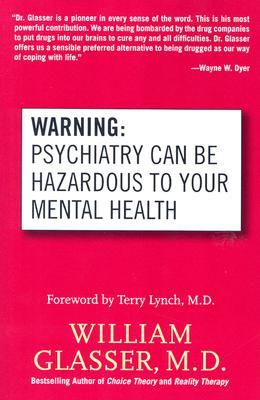
Whitaker’s Mad in America, published in 2002, and Glasser’s Warning, which came out in 2003, were highly complimentary views on what ailed the mental health industry. Both Whitaker and Glasser saw psychiatry as part of the problem, rather than contributing to the solution. Glasser pointed out in Warning that “The unwillingness of the medical profession to come to grips with the creativity of an unhappy brain costs billions of dollars every year. If we wait for the medical profession to take the lead here, we will wait forever.” Warning took direct aim at psychiatry and at the pharmaceuticals that benefitted from psychiatry’s treatment strategies, but it was a role Glasser didn’t relish. He was more into the good fight of mental health than the bad fight of mental illness. During one of our interviews when I questioned him about not staying in a more aggressive stance, he explained that “I’m damning psychiatry as much as I’m gonna damn it. I’m saying they diagnose diseases that don’t exist, they give drugs that can harm you, and they tell you that you can’t help yourself. That’s about as good as I can do.”

678610

Glasser came to believe that psychiatry was perpetrating a medical fraud on the American people, a belief that Whitaker appears to have arrived at as well. In his 2015 book, Psychiatry Under the Influence, Whitaker writes about his investigation of the American Psychiatric Association through the lens of institutional corruption. Working with Lisa Cosgrove, a professor at UMASS Boston, through a grant to the Safra Center for Ethics at Harvard University, he looked at the bigger picture of the APA’s role in current practice.

9781137506948

“The basic concept of institutional corruption is this,” Whitaker explained. “There are economies of influence that create incentives for behaviors by members of the institution that are antithetical to the institution’s public mission. When this happens, the corrupt behavior may become normative, and even go unrecognized as problematic by those within the institution.”

The year 1980 was significant for the APA in that, due to the 3rd edition of the DSM being published, it became the year in which they created a disease model for diagnosing and treating psychiatric disorders. Once the disease model was adopted, it laid claim to having societal authority over three domains: 1) diagnosis of psychiatric disorders, 2) research into their biological causes, and 3) drug treatments.

dsm_3

1. Diagnosis of psychiatric disorders
2. Research into their biological causes
3. Drug treatments

These domains created economies of influence that included the influence of the pharmaceutical industry, and the influence of psychiatry’s own guild (profession) interests. This guild then had a need to inform the public its diagnoses were valid, that its research was producing an understanding of the biology of psychiatric disorders, and that its drugs were effective. In other words, the psychiatric “fox” was now guarding the psychiatric “chicken coop.”

fox-guarding-the-hen-house

This is a big deal. “If science supported these stories,” Whitaker points out, “there would be no problem. But if science did not support the stories, then the [psychiatric] guild would be tempted to tell society stories that were out of sync with science and betray its public mission.” This is what is meant by corruption. His investigation was not over whether psychiatric disorders are real, or about the risks vs benefits of psychiatric drugs. Instead, Whitaker’s inquiry focuses on whether the institution is fulfilling its duty to the public.

Whitaker concludes with “The institution of psychiatry, with its disease model, has dramatically changed our society over the past 35 years. It has given us a new philosophy of being, and altered how we view children and teenagers, and their struggles. It has touched every corner of our society, and this societal change has arisen because of a story told to the public that has been shaped by guild and pharmaceutical influences, as opposed to a record of good science. That is the nature of the harm done: our society has organized itself around a ‘corrupt’ narrative.”

This is what Glasser was trying to tell us when he wrote the Warning book. This is why he wanted us to see mental illness as a public health issue centered around education rather than drugs. Using a baseball metaphor, Glasser kept his eye on the ball throughout his career. Writers like Robert Whitaker are helping us keep our eyes on the ball, too.

===================

Click on the book to access the Glasser biography through Amazon.

Quickly order the biography from Amazon. Click on the book to access the Amazon link.

Quickly order the biography from Amazon. Click on the book to access the Amazon link.

The Wrecking Crew

WreckingCrewLogo

I recently saw The Wrecking Crew, a movie about the burgeoning music industry around Los Angeles in the 1960s, and the almost unknown studio musicians that played anonymously on many of the albums that were then being recorded. An impressive number of these songs went to the top of the billboard charts and achieved widespread fame.

Carol Kaye, bass player for The Wrecking Crew, and one of the best bass players of all time.

Carol Kaye, bass player for The Wrecking Crew, and one of the best bass players of all time.

These incognito studio musicians came to be known as The Wrecking Crew and were highly regarded throughout the Southern California music industry. Unfortunately, that almost invisible regard was all the notoriety these musicians would receive, as they were never mentioned on album covers or with singles that achieved #1 billboard status.

The list of individuals and groups they recorded with is too long to list here, but a few of them include: The Beach Boys, The Mamas & the Papas, The 5th Dimension, The Association, The Monkees, John Denver, Nat King Cole, Simon & Garfunkel, The Grass Roots, Gary Lewis & the Playboys, Cher, The Partridge Family, Bing Crosby, and Nancy Sinatra. They also recorded countless TV program theme songs (recall the opening to Bonanza) and commercial jingles.

Tommy Tedesco, probably the best guitarist you never heard of.

Tommy Tedesco, probably the best guitarist you never heard of.

So what’s the problem, you might be thinking. Let’s take The Beach Boys as an example. Brian Wilson, a member of The Beach Boys, was a music genius and arranged harmonies that are incredible. The rest of the group could sing well, but they weren’t as good as Brian when it came to the instruments. Brian would work with The Wrecking Crew musicians when it came to recording an album, since musically these guys were amazing. Another of The Beach Boys admitted that they were on the road 150 days out of the year and didn’t have time to practice. And yes, the sound of the live group on the road was quite a bit different than the studio musicians back home. This same scenario played out time and time again with other groups, too.

The Beach Boys

The Beach Boys

I loved a Gary Lewis & the Playboys album I listened to a lot as a kid back in 1967, yet now I know the actual musical impact of Lewis and the playboys on that album was pretty insignificant. There are some wonderful background guitar riffs, for instance, in the song Sure Gonna Miss Her, but as it turns out there was never anyone in the group capable of playing a guitar like that. (Thank you, Tommy Tedesco, of The Wrecking Crew.)

And so these little known musicians stayed very busy during this unique beginning of the rock and roll era, and they made good money in the process, yet they were rarely acknowledged for their contributions. Hit song after hit song was the result of their talent, but they were not given credit for any of them.

Things would change in the music industry and the studio era would pass. Music groups would come to be made of individuals with serious music talent, able to both record in the studio as well as to perform on the road. The Wrecking Crew musicians became less and less busy as a result. Some of them, like Glen Campbell, created solo careers, but this was pretty rare. For those of us who still enjoy a good song from the late 60s, we owe these musicians a big thank you.

Bill Glasser, at home, ready to visit about whatever is on your mind.  (Photo by Jim Roy)

Bill Glasser, at home, ready to visit about whatever is on your mind. (Photo by Jim Roy)

On the way home from the movie I couldn’t help but think of Glasser in the same way. I continue to see articles and books that build on (whether they realize it or not) the beliefs of William Glasser, yet he is never mentioned or acknowledged in the articles. A recent such article, How Our Thoughts Control Our DNA, explains how our perceptions can actually re-write our genes. Bruce Lipton, author of The Biology of Belief (2005), writes that –

“The common idea that DNA determines so much of who we are – not only our eye or hair color, for example, but also our addictions, disorders, or susceptibility to cancer – is a misconception. This concept says you are less powerful than your genes. The problem with that belief system is that it extends to another level. You find yourself to be more or less a victim of your heredity. You become irresponsible. You say, ‘I can’t do anything about it, so why try?’ In reality, a person’s perception, not genetic programming, is what spurs all action in the body. It is actually our beliefs that select our genes, that select our behavior.”

“It is actually our beliefs that select our genes, that select our behavior.”

Anyone who has read much of Glasser cannot read this Lipton passage without tracing the important connection between the two. One of my hopes for the Glasser biography was that it would establish and remind readers of Glasser’s influence. There is a growing awareness of the human capacity to make choices and the implication this capacity has on psychological and physical health. The psychology of internal control is gaining momentum!

The psychiatric shot heard around the world!

The psychiatric shot heard around the world!

It is good that The Wrecking Crew is now being recognized for their sizable contributions to the world of music. I loved their music as a kid and continue to love their music now. In the world of psychology the most important thing is that people understand how to be responsible for their own happiness and that they understand how to meet their basic needs without bulldozing or manipulating others in the process. That said, though, I would like for William Glasser to be seen as a major contributor to this view of mental health.

==================

Quickly order the biography from Amazon. Click on the book to access the Amazon link.

Quickly order the biography from Amazon. Click on the book to access the Amazon link.

10 Minutes to Live

How do you share in 10 minutes that which is most important to you?* (And now I only have 9 minutes and 45 seconds.) Think of the great death bed blessings of the Old Testament—like Jacob blessing his twelve sons. Or think of those great movie scenes, the hero is dying or wounded, only able to mutter something while others bend close to hear the words, a final message—like Tom Hanks in Saving Private Ryan, with his dying breath telling Private Ryan to “Earn this.”
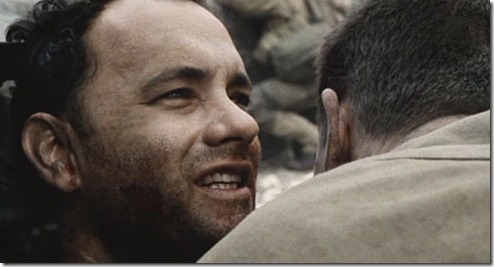
miller-whispers-to-ryan_thumb11

I thought about using a gurney as a prop and being wheeled out here to the mike and leaning over to it and gasping or muttering something important, but dying and final messages are not very funny to me now. I have been reminded of that with the recent passing of my good friends, Trevor Murtagh and Bob Buller, and of the tragic passing of Luke, Boaz, Chong, and Simon, and just last week the passing of one of our teacher credential candidates—Oscar Munoz.

x12TRGnnagNN_large

And so we are here, seeking that which is important, that which is essential. As I look at my life I can see four major lessons that I have learned, ideas that have pointed to the best version of myself, ideas that have pointed to eternity. These four lessons have been hugely important to me, since they have been like beacons, calling me, nudging me, to the best path. The other evening I got back from a walk behind the airport later than I planned. It was after dusk, pretty dark really, yet airplanes were still landing. As I walked around the flight center the entire runway came into alignment with where I was standing and I could see the long ribbon of lights clearly indicating the runway position. These four lessons have been like runway lights to me. You may relate to these lessons. These beacons may have beckoned to you, too, although one of them is a bit controversial. I have experienced these lessons at the rate of about one per decade. We’ll start with the current decade and then move backward, to the beginning, to the controversial one.

God, through His Holy Spirit, is actively involved in my life.

The most recent lesson that I have embraced is that God is, through his Holy Spirit, actively involved in my life. He is anxious to talk with me and to listen to me. He is quick to support me.

I choose. I can choose to see the positive or I can choose to see the negative.

The next lesson is that I choose. I can choose to be happy or, if I think it is the best option for me at the moment, I can choose to be miserable. But in the end, I make a choice. George Bush was right—he is a decider. We all are deciders.

There is nothing I can do to make God love me more, or to make Him love me less.

Going back a little further I come to the incredible lesson that there is nothing I can do to make God love me more, and that there is nothing I can do to make God love me less. It’s amazing when you think about it! That God, the Creator and Sustainer of the universe, would care about this dust speck of a planet, this rebel outpost that rejected him and his way of being, and that further he cares about me personally, one of the rejecters of his love—I can only pause and bask in the thought of Amazing Grace.

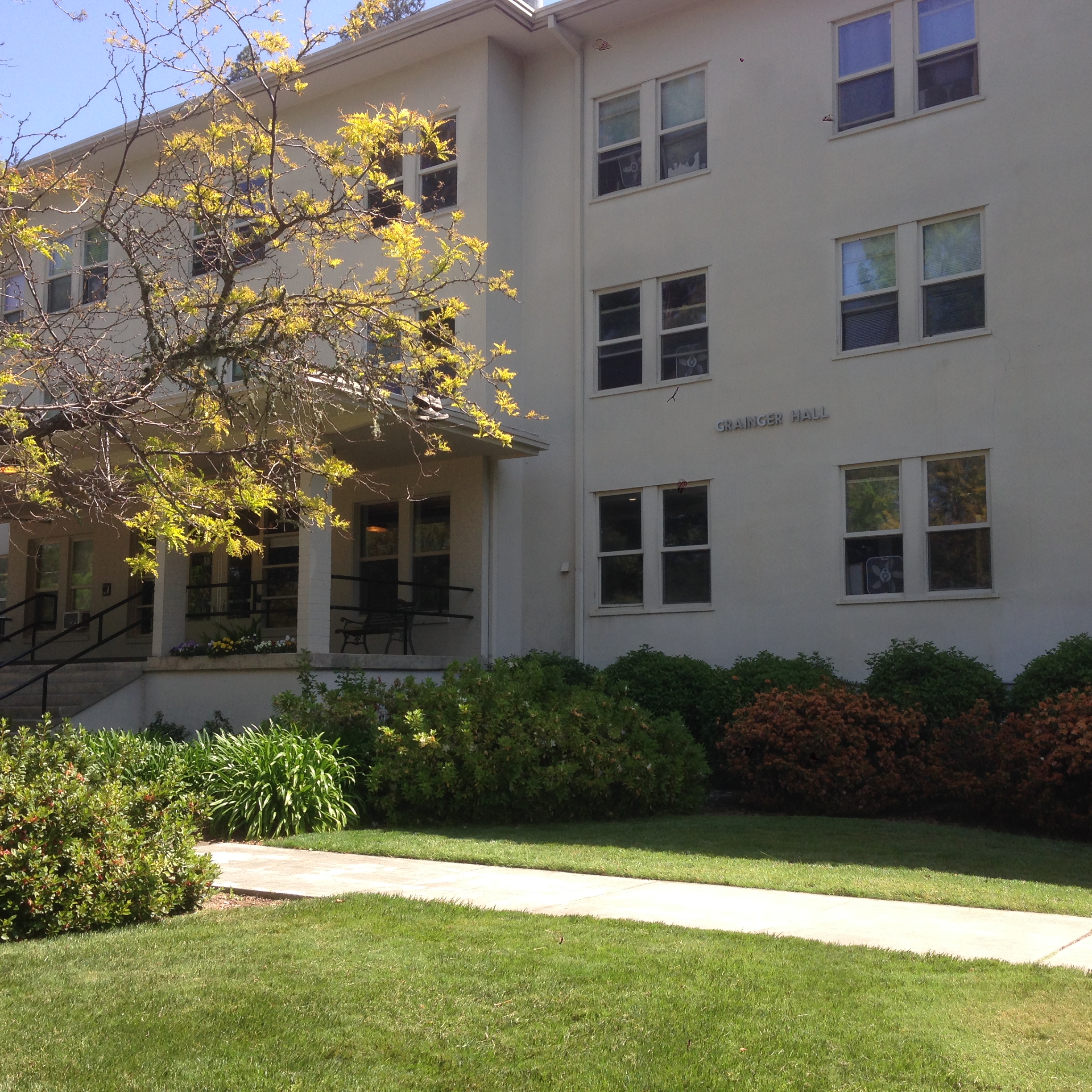
Lesson #s 4, 3, and 2 were and are important for me. I don’t know if they are important to you. We are each on an individual journey. The Spirit brings us to the lessons and ideas we need. For me, these lessons came in their turn, maybe as I was ready for them. But lesson #1, the lesson that will be controversial to some, is the one that started the lesson-learning process for me. And for me lesson #1 took place when I was a student at Pacific Union College from 1973-1977, when I sat where you are sitting right now, when I lived on third floor Grainger Hall, room 324, with Chuck Evans, longtime faculty member in the Exercise Science department, as my roommate, and just down the hall from Harold Crook, long time principal at Newbury Park Academy, as our R.A., and just down the hall from Brad Benson, now director of development at Rio Lindo Academy, and just one floor above Tim Mitchell, our beloved pastor; lesson #1 took place when I played in the gym, our large, old gym, when intramurals was king and dorm-village basketball games were even kinglier, when I had to not only win games but had to score 30 points a game to feel good about myself, when winning the MVP award of the dorm-village game was what mattered to me; when, whether on the football field, the softball diamond, or the volleyball court, I was driven to win and to be better than anyone else; when this need to prove my worth spilled over into everything I did, including my relationships. Lesson #1 came in the midst of this struggle, the struggle for value, worth, and acceptance. It came quietly, began almost imperceptibly, yet it was distinct—lesson #1 was You don’t need to compete.

You don’t need to compete.

Picture one of the final scenes in Good Will Hunting. Robin Williams, playing a counselor, has moved close to Matt Damon, a dysfunctional math genius, abused as a child, and unable to move ahead in his life, and quietly says, “It’s not your fault.” Matt Damon shrugs it off, but Williams moves even closer and keeps saying, “It’s not your fault.” Damon continues to fend him off, psychologically and even physically, as he is forced to confront this demon. The intensity of the scene is profound. Now picture the Holy Spirit, the Counselor, as he comes into room 324, and moves close to me, spiritually dysfunctional, friendly yet deeply selfish, jovial enough yet desperate, a joker yet scared, and quietly says, “You don’t need to compete.” Like Damon I try to fend Him off, to hem and haw. “It’s really not that big of a deal,” I offer. Or I point out that “You probably have a lot bigger problems than this to deal with.” But the Spirit comes closer still and whispers again, “You don’t need to compete. You don’t need to even compare yourself to others.”

gwh-02919-detail

You might be expecting me to say that at that moment a transformation took place and in a flash my mind was illuminated with truth. But that was not the case. Rather than illumination, that moment with the Spirit was an invitation, an invitation to discover why I craved the approval of others, why I was so focused on my needs at the expense of others, why I found it so hard to be happy when others were successful, and why fear was such a part of my life. I became a researcher. I wanted to know why I was self-centered and insecure. The Bible says, “Seek and you will find,” and that is how it was for me. One of things I did was to do what our pastor at the time, Morris Venden, continually encouraged us to do, that being to read the Desire of Ages, a book about the life of Jesus. Without any of my friends knowing I started to read it in the morning. And what I read began to point me to a life far different than the one I was living. There were no demands, no guilt trips. Instead it was like one of the heavenly spirits in C.S. Lewis’s The Great Divorce coming to me and asking, “Do you want to be free?” I was coming to see how imprisoned I was by my concern over how I looked to others, and how handcuffed I was by the fear of failing, by the worry of not being good enough, of not being better than you. I was addicted to other’s approval, and competition was my drug of choice. After a game or an award or somehow getting what I wanted, I might experience a high, but it was fleeting, and I would need to go looking for the next fix. You might ask, “How could anyone live this way?” Or “Why wouldn’t you jump at the chance to be free?” But I would remind you that as tenuous as the competitive existence is, there is a sense of control, if you will, based on a belief that buys into the notion that these are the rules of the game here on earth and we might as well play by them. Think about it. Is your existence that different than mine? You may not be that involved with sports, but this goes deeper than basketball courts and football fields. Are you telling me that you don’t worry about how you look compared to others? That you aren’t concerned about whether you are pretty enough, buff enough, thin enough, smart enough, witty enough, or just plain cool enough. Isn’t life like a game of musical chairs, where there are always fewer chairs than players, and where the quicker, the sneakier, the more aggressive are rewarded? Are you saying you’re not involved with this game? That when you come to the short section of passing lane as you’re driving up the hill, you don’t push down on the accelerator just a bit harder?
Grainger Hall (men's dorm), Pacific Union College

Grainger Hall (men’s dorm), Pacific Union College

I have not meant to preach. I can only talk about my own journey. I can only describe how driven I was and how afraid I was and how the Spirit came to me in room 324 of Grainger Hall, came to me even though I was unconverted and insecure and selfish, and began asking me, “Do you want to be free? Do you want to be fearless?” For me, as I was growing up, the world was a place of musical chairs, where I had to be faster or funnier or friendlier, but Jesus said “that’s not my game, that’s not how my kingdom operates.” It was my first lesson, the lesson on which all the other lessons were built.

And so, whether you live in Grainger or Newton or Nichol or Winning or Andre or Graf or McReynolds, or whether you live off-campus, or whether you are just visiting PUC this weekend, the Spirit, our Counselor, comes to your room, comes to your home, and asks –

Do you want to be free? Do you want to be fearless?


* Six years ago I was asked to give a talk to PUC students based on the idea of what you would share if you had ten minutes to live. Other faculty were invited to speak on this topic as well. As a result, this talk is very specific to my life and very specific to Pacific Union College, in general. For instance, Luke, Boaz, Chong, and Simon, were PUC students who were killed in a car accident while going down the hill to St. Helena. The four white crosses at the side of the road remind us of that terrible loss, and hopefully remind PUC students to be especially careful when they drive. While specific in this way, the talk emphasized principles that are not bound by time or location. Hopefully these principles are helpful in some way.

=================

Take note of the Soul Shaper workshops scheduled for PUC this summer.

Soul Shapers 1: June 22 – 25

Soul Shapers 2: June 29 – July 2

You can contact me directly if you have questions at jroy@puc.edu.

=================

Signed copies of Soul Shapers can be purchased through me for $14. Let me know at thebetterplan@gmail.com.

Now priced at $14.76 on Amazon.

Now priced at $14.76 on Amazon.
Lighthouse Then, Lighthouse Now

IMG_0096

I had the privilege recently to visit Juvenile Hall in Napa, California, and the classrooms that provide coursework to young people being held there, as well as the alternative middle school and high school community schools that are a part of that system as well. I was inspired by the work being done by educators who teach within this challenging environment. Because of the compassion and commitment of these teachers, students are being reached and lives are being changed for the better.

IMG_0097

I was reminded a month ago about the work of the Napa County community schools and decided to reach out to them and learn more about what they do and how they do it. I am teaching a secondary methods class this quarter that seeks to help teaching candidates work with students who struggle with traditional textbooks and who struggle with traditional learning in general. My initial reaching out to the community schools was because I thought my students could probably learn from their methods. As it turns out, I was right. The community school student population is predominantly high poverty, significantly English-Language Learners, and with almost all of them having Individualized Education Plans. Their home backgrounds are mostly difficult, to say the least, and many of them are on probation. The influence of gangs is a factor the schools must continually address.

A student assembly focusing on making plans for a successful future.

A student assembly focusing on making plans for a successful future.

In spite of these difficulties and challenges, some that might tempt the faint-hearted to shrink from, the schools have created a consistent, supportive learning environment that students appreciate. Even when students meet court appointed goals and are eligible to return to regular schools, they often decline this option and express their desire to stay in the alternative school. They feel like they matter in the community school and that teachers want to help them.

Jim and Tom

Jim and Tom

Tom Amato, Director of the Napa Valley Youth Advocacy Center, went on this field trip with me and was as blown away by the positive and loving energy of the school leadership as I was. He describes how “the experience highlighted that the Napa County Office of Education understands the needs of youth in crisis and is there to advocate for and support them, regardless of poor choices, toward a better place. The compassion and passion of those involved was most inspiring.”

Seeing the facilities and listening to teachers and staff brought to mind Glasser’s experience as consulting psychiatrist at the Ventura School for Girls over 50 years ago. The school was part of the California correctional system and many of the 400+ girls being held there had committed serious offenses, yet, like the Napa staff, Glasser and the Ventura staff saw something in the girls that was worth investing in. He would talk about what a pleasant place the Ventura school was and how nice the girls were to work with and how they could go many weeks without a serious incident at all.

I wish I had pictures of Glasser during the Ventura years.

Students respond to love and respect. They can live with reasonable rules and expectations, especially when they are consistently applied without a dependence on punishment. They appreciate it when teachers try to make classes relevant. These are the elements that came to be a regular part of the Ventura School for Girls while Glasser was there from 1956-1967; these are elements I picked up on my tour of the Napa community schools.

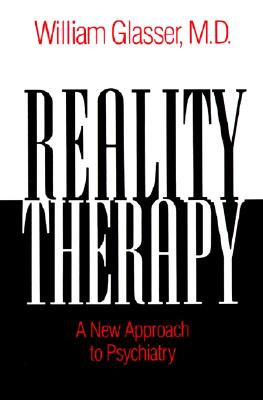
Students from the Ventura School were very instrumental in the creation of two of Glasser’s early books – Reality Therapy (1965) and Schools Without Failure (1969) – which were both very successful. The girls’ stories and experiences were included in Reality Therapy, and some of the girls even helped to type manuscript pages for Schools Without Failure. Glasser wanted to acknowledge the importance of the school and explained that “The Ventura School was where I really developed the concepts of reality therapy.”

William Glasser and Brad Greene (2005) Photo by Jim Roy

William Glasser and Brad Greene (2005)
Photo by Jim Roy

In 1986, Glasser began working with Brad Greene, who at the time was the principal of Apollo High School, an alternative school in Simi Valley, California. Their collaboration led to Glasser writing The Quality School (1990), one of his most important books. The subtitle of the book is Managing Students Without Coercion, a key goal in his approach to school management. William Glasser and Brad Greene are examples of adults who combine the head of a teacher with the heart of a social worker, and who seek to instill a belief in students that students do not have in themselves.

I guess what I am trying to say is that whether choice theory methods were used in a prison school 50 years ago or in a prison school today, the methods are equally effective. Whether choice theory principles were a part of Apollo High School in Simi Valley 25 years ago or a part of Chamberlain High School in Napa today, the principles are effective 100% of the time. Thank you to those of you who work with challenging populations, with the goal of inspiring them to see their potential and go for it. So many of us in the greater community do not realize what a big THANK YOU you deserve!

=========================

The Glasser biography, Champion of Choice, captures so much insight from his early years, including many anecdotes from his time at Ventura. Get a paperback or digital copy today.

Digital version only $10.

Digital version only $10.


========================

Invite a friend or colleague to follow The Better Plan blog and spread the good news about the value of choice theory in the process.

Follow The Better Plan on TWITTER
@thebetterplan