Posts tagged “William Glasser

Reflections on Toronto

IMG_1281

Jim Roy and Bob Wubbolding. (Bob is wearing the Bengals hat he got for my son. Thank you, Bob.)

My emotions were truly mixed as I left Toronto yesterday afternoon, after good-byes to fellow choice theorists, some of them having traveled from the other side of the world to attend the conference. In total behavior language, my back tire of feeling, and even my physiology, was experiencing the reality of saying farewell to people who I may not see again for quite a while. I had been looking forward to seeing them as the conference approached, but now the conference had ended and we were all heading home. I intentionally decided to get back on the front tire of thinking and tried to embrace thoughts like – I’ll stay in better touch, or I’ll see people again at the next conference in Korea (summer, 2016), or We can stay connected through The Better Plan blog – but no sooner had I got on the front tires when that huge back feeling tire reminded me that the conference was over and the wonderful time I had spent with dear friends was soon to be a moment in the past. Maybe there is a kind of appropriate grief at the end of a Glasser conference.

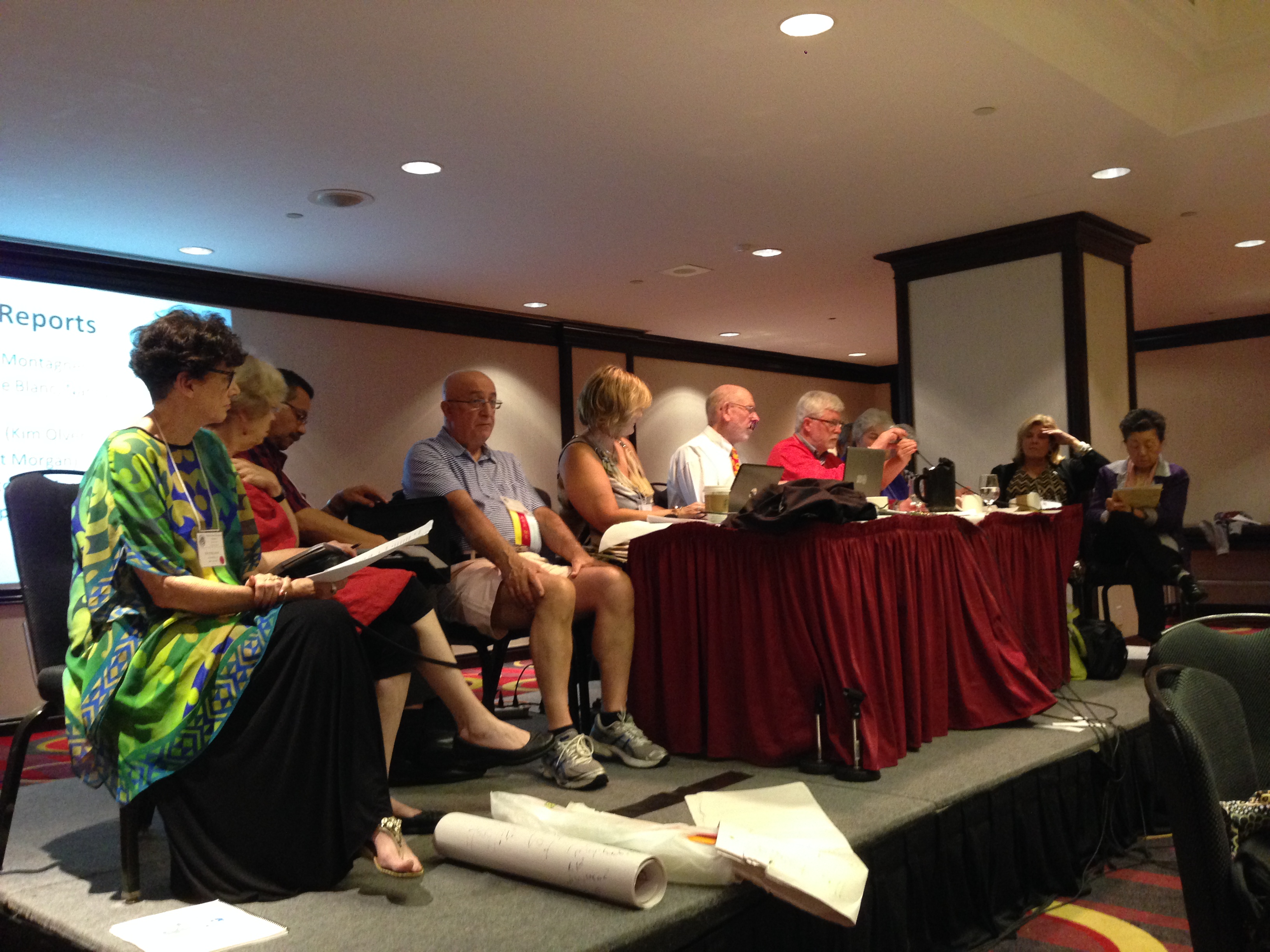
The board members of William Glasser International.

The board members of William Glasser International.

The conference was such an international event! I can’t provide a complete list of the countries represented at the conference, however I spoke to people from Canada, Ireland, Australia, Croatia, New Zealand, South Africa, Iran, Columbia, Argentina, Japan, Korea, and Malaysia. Pretty amazing! And several of these countries have fostered an incredible choice theory presence in their respective cultures. An example of this international success was seen during the conference when representatives from Japan stood and indicated that the Achievement Corporation, the company in Japan that promotes the Glasser ideas through publishing and training, was giving $100,000 to the newly established William Glasser International endowment fund. They are doing something right to be able to donate that kind of money! Very cool!

izmqWKcGwBzY

The support for and affirmation of the Glasser biography was very special for me personally, especially from those who were actually a part of Glasser’s life. My hope is that, as a result of my speaking at the conference, more people now know about the book, and that they will pass the word along to others in their communities that Glasser’s story is available. Throughout his life Glasser wanted to make mental health understandable to anyone interested in learning about how our brains work. I wanted his biography to do the same, and I attempted to write it in a way that would capture any reader’s attention. Time will tell the extent to which the biography does that.

thebetterplan PP redo

A big WELCOME to those of you just joining The Better Plan blog as a result of the recent Glasser conference! I think you will find a lot of choice theory support here. Previous posts are listed on the left hand side of the page, and you can quickly and easily access all of the blogs from last year by clicking on the 2013 – Year At A Glance link. Take a moment to enter your email address and click on the FOLLOW link. It’s great to have you join The Better Plan community.

================

Remember to write a review on Amazon for Champion of Choice. Your review will alert others to the value of the book. Take a quick moment and spread the word about reality therapy and choice theory.

IMG_1030


A Selfie from Toronto

I am in Toronto, Canada, attending the 2nd International Glasser Conference, from July 9-13. I was asked to give the opening keynote address, which I did yesterday morning. The following selfie, taken as I began the talk, captures part of the crowd as the conference opened.

Hello from everyone at the 2nd International Glasser Conference in Toronto!

Hello from everyone at the 2nd International Glasser Conference in Toronto!

The energy in the room was very positive, which helped my creativity as I shared details of the writing of Glasser’s biography, as well as stories from his life. (The talk was video-taped, so I am may be able to post that on The Better Plan soon. Feedback from those who have already read the biography has been very positive. Glasser “old-timers” are pointing how there are details about Glasser’s life and his ideas that they did not know about. There is a strong desire to “get the word out” about the book, including other countries like Australia, Ireland, Japan, and Korea. The biography is already being translated into Japanese, and people approached me about translating the book into Korean and Arabic, too.

I brought close to 40 copies of the book to the conference, but they all sold very quickly. I wish I could have brought more copies with me. Those wanting signed copies of the book can get them from me directly. (More on that later.) Of course, the book is also quickly accessible through Amazon.

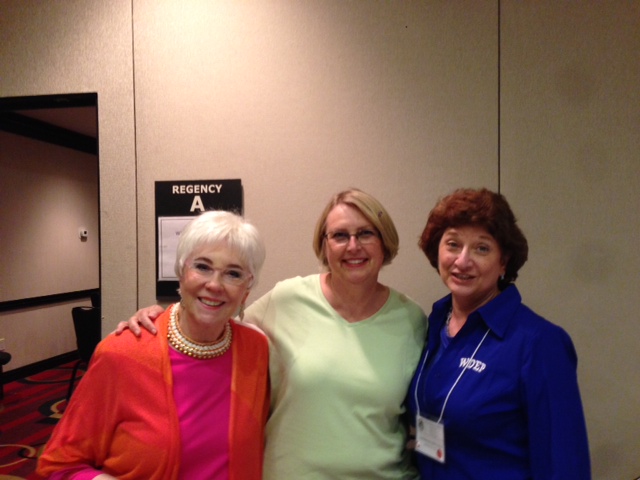
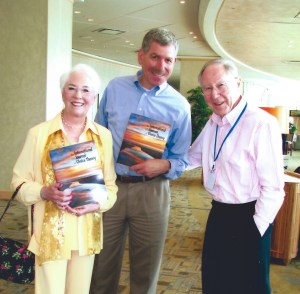
Carleen Glasser, Maggie Roy, and Sandie Wubbolding.

Carleen Glasser, Maggie Roy, and Sandie Wubbolding.

I was especially frustrated that so many of those attending the conference from other countries were not able to bring copies of the book back home with them. I have checked on shipping costs to Canada and the rates are ridiculous. If I am looking at the websites of the US Postal Service, FedEx, and UPS correctly, it will cost more to ship the book than the cost of the book itself. Not acceptable. My hope is that something can be done to make the cost of the book reasonable to Glasser advocates around the world. We will solve this!

There are so many wonderful things going on at the conference, so many wonderful presentations and breakout sessions. One of the wonderful things is a choice theory curriculum for children out of Australia. Developed by Ivan Honey, the program is called The Amazing Adventures of Doug Dragster. A pilot project is going on right now in Los Angeles, in cooperation with Loyola Marymount University, to determine the extent to which the program teaches children the skills to improve their mental health, resiliency, and well-being. There is actually a really good sale going on until Sunday, July 13. Through Sunday you can download the book for 99 cents; plus all proceeds from the book will go to support the research project that is being done by LMU on the effects of the Doug Dragster curriculum.

51t5bNhzuSL._AA160_

Speaking of Amazon, it’s really important for everyone to submit a review of the Glasser biography, Champion of Choice. It’s easy to do and it will make a huge difference toward getting the word out there about so many of the positive things William Glasser did throughout his life. It doesn’t have to be long.

More tomorrow! In the meantime .  .  .

Ahh .  .  . Toronto. What a great city!

Ahh . . . Toronto. What a great city!

A Picture Is Worth a Thousand Discussions

satirical-art-pawel-kuczynski-6-620x


Some pictures just cause us to pause and think about what we are seeing. This picture did that for me. (Thank you, Chris Kinney, for sharing this picture with us.) What a great discussion-starter it would be in a class, especially a choice theory workshop. Or maybe ask participants to come up with a title for the picture. It certainly causes us to think about classroom learning strategies and our own experience as a teacher and as a learner. In the year and a half The Better Plan blog has been going, the posts have shared several “discussion starter” pictures. Today’s blog is a gallery of those pictures. So much can be captured in a photo, a drawing, or a painting.

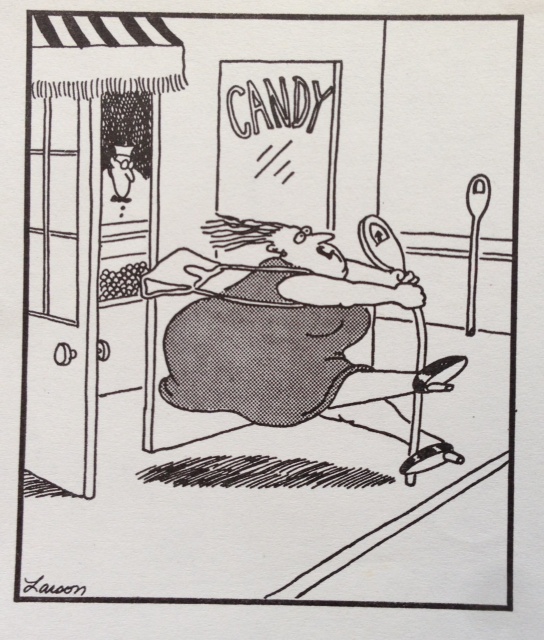
Candy Vacuum   We Choose   strings-attached   Push or Pull
Still a classic, no matter how many times I see it.

Still a classic, no matter how many times I see it.

self-assessment-1
This is such a dark picture, yet it captures a process in which we might find ourselves.

This is such a dark picture, yet it captures a process in which we might find ourselves.

amnesty_print_chains


It is a good thing when we can help people see how powerful the pictures they place in their quality worlds are, and how these pictures drive us toward their fulfillment. It is good, too, when people come to see how valuable freedom is, not just freedom from political tyranny, but freedom within our own thinking and behavior. Sometimes a picture can say more than a 20 minute lecture, and it invites a personal response in ways that a lecture may not.

==================

Leaving tomorrow morning for the 2nd International Glasser Conference, being held in Toronto, Ontario, from July 9-13. I am looking forward to seeing some of you there. I am presenting at the conference, first thing Thursday morning, about the biography and key aspects of Glasser and his ideas. I think I’m ready. We’ll see how it goes.

I spent a lot of time yesterday trying to be able to sell my books, Champion of Choice and Soul Shapers, right here on the blog. It can be done, however it is fairly expensive to set it up. I may end up just having people send me a check, along with their shipping address and any instructions for how they may want me to sign the book. If the requests for signed editions of the book are great enough, I would definitely want to add an on-line sales option.

================

Have you contributed a review of Champion of Choice on Amazon? Why not take a moment and do that now? It doesn’t have to be lengthy, and it’s easy to do.

Three Types of People – Awesome, Dangerous, and Run

Three Types of People


It is so interesting to me how involved human beings are in creating their own reality. I think this is one of choice theory’s important contributions to understanding our own beliefs and behaviors.

In our Soul Shapers 1 class last week we covered the quality world, the photo album in our heads where we store specific pictures of everything that is need-satisfying to us, and the perceived world, which basically is our view of reality. Choice theory describes how we create pictures that represent what we want;  choice theory also describes how we create a world view that represents what we think we have. This explains how a person can be so sure of his/her interpretation of an event, in spite of viable alternative interpretations or data that says otherwise. (Imagine a wife being incredulous as she wonders aloud to her moody husband, “You took it that way when I said that?” Really?”) An alumnus of a choice theory training I did last summer sent me the graphic above, which really portrays the possible views of reality.

In #1 the arrangement is considered healthy because the person understands that his view of reality may contain elements of the Truth (I use a capital T on purpose), or reality as it really is, but he also recognizes that his view may not be totally accurate. Such a position allows for growth and new learning as new information and experiences come into view. Such a person believes in his view of Truth, but he also allows others to follow their path toward Truth.

In #2 the arrangement is becoming dangerous because the person believes that his views all fit within what is ultimately True and real. He might not have all the Truth yet and may not have a total picture of reality, but he is in the right place to discover Truth. It is good that this person allows for not knowing everything yet; it is less healthy, and even dangerous, since the person has defined the bounds of Truth and his views all come within those boundaries.

In #3 the arrangement has reached a point where the rest of us can only be encouraged to run away from this person as fast as we can. This person believes that his view of reality is exactly the same as Truth; that the world as he sees it and prefers it is exactly as it should be.  Such a view becomes especially dangerous when a person believes that his view is ordained by God.

Because I believe in the first arrangement, the one where a person may perceive reality exactly as it is, and then again may not, does not make me a relativist. To me, such a view doesn’t mean anything goes. I have beliefs that I hold dear, including beliefs about God and His role in the creation and redemption of humankind, yet I embrace these beliefs through faith. I can’t prove them, at least in the way we think of the word prove. I have beliefs about how people should treat one another and the role that government should play toward providing a fair playing field for all citizens, and my beliefs may be right, although I recognize I don’t have a pipeline to Truth. I am convinced that Truth, capital T exists, and I desire to find it and come more and more into alignment with it.  Rather than thinking that I have arrived at Truth and Reality, I appreciate it when others can improve my views and help me see things more clearly.

=================

Tomorrow is the last day of Soul Shapers 2. It’s been a very good week. I’ve appreciated the Soul Shapers alumni that have joined us each day to join in the role plays and provide added coaching. The role plays were really good today. We’ve eased into the role plays, starting with attainable wants, but moving into more challenging scenarios today. The role play below has a teacher talking with a student who was involved in a fight again and may be expelled from school. I should have recorded it as it was that good! Sean Kootsey, History teacher at Pleasant Hill Adventist Academy, in the role of teacher, talks with Yuliana Pandjaitan, Math teacher at Newbury Park Academy, who is in the role of the student who was caught fighting.  Both Sean and Yuliana hit this role play out of the park! So well done. Yuliana played the role of the student a little “too” well. 🙂  Dan Muhic, Science teacher at Napa Adventist Christian School, is in the role of observer and will help Sean and Yuliana in the process of self-evaluation when the role play is completed. Herb Dunn, Industrial Technology and Business teacher at Monterey Bay Academy, also observes and will give feedback to the trio afterward.

What to do after being caught for fighting?

What to do after being caught for fighting?

While the class includes instruction and discussions and film clips and guest presentations and group activities, role playing is at the heart of the advanced Soul Shaper workshop. It is pretty amazing the way in which insights and skills can be gained through role playing real-life scenarios.

The Drive Home


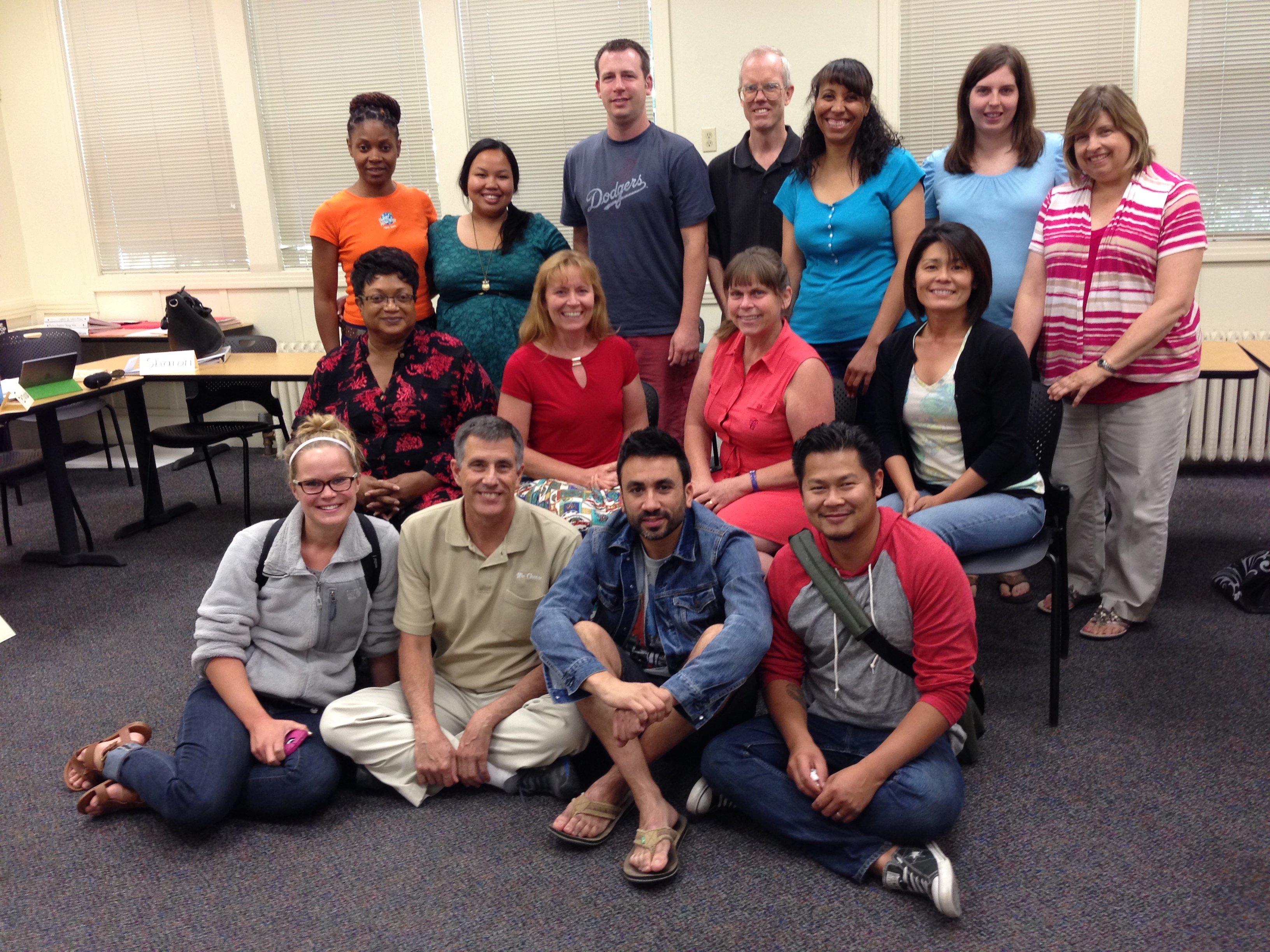
Soul Shapers 1 class, summer of 2014; a talented group of teachers who taught me a lot.

Soul Shapers 1 class, summer of 2014; a talented group of teachers who taught me a lot.

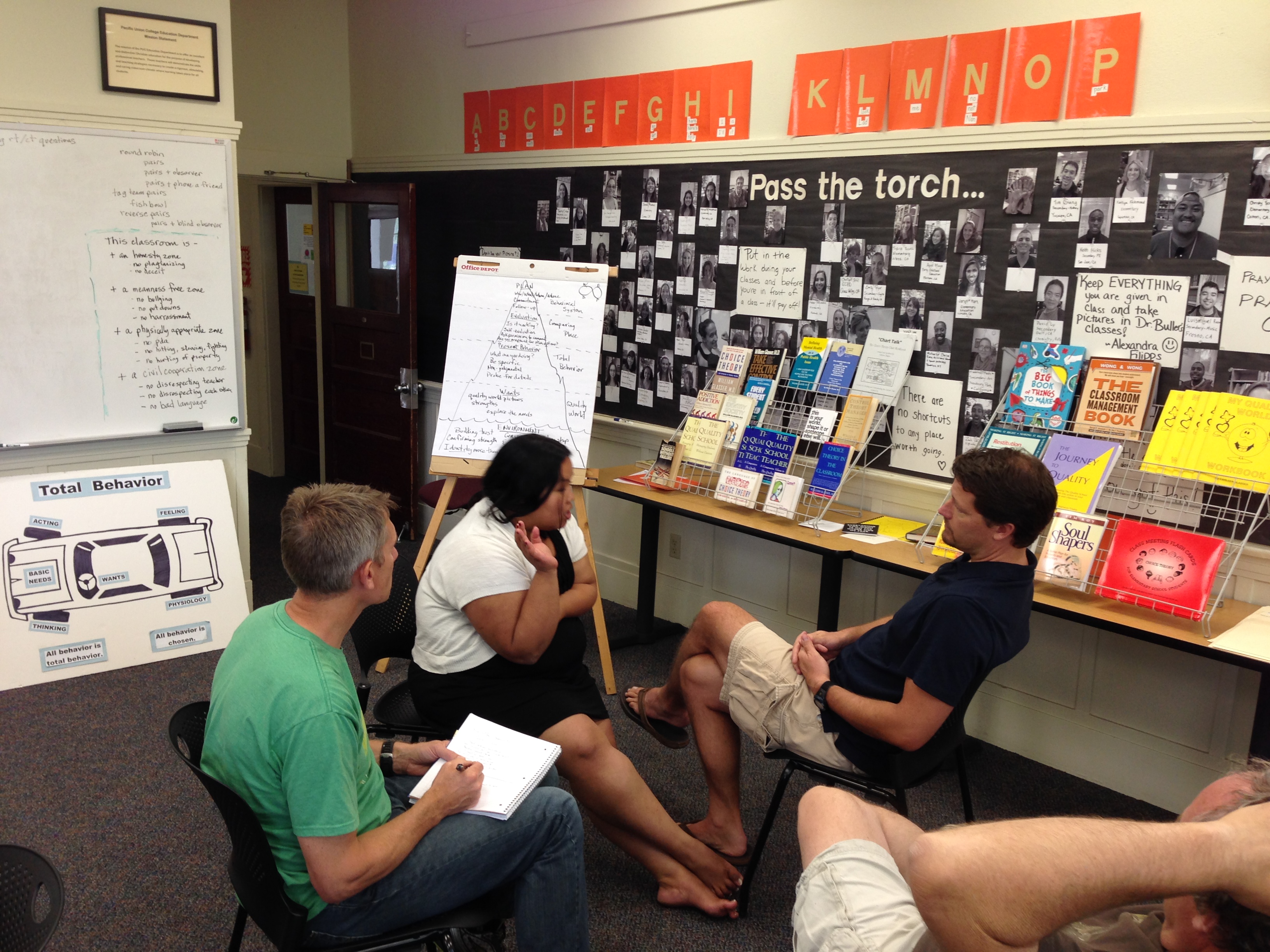
I want to give a big thank you to the Soul Shapers 1 group from this past week! I said a few things, facilitated a few activities, and led a few discussions, but it was their openness, creativity, and insight that really made the week a fun and meaningful experience. For instance, the following chart presentation examples were all created by them.

Chart presentations: A teacher-created small booklet could by used by students to identify their basic needs.

Chart presentations: A teacher-created small booklet could by used by students to identify their basic needs.


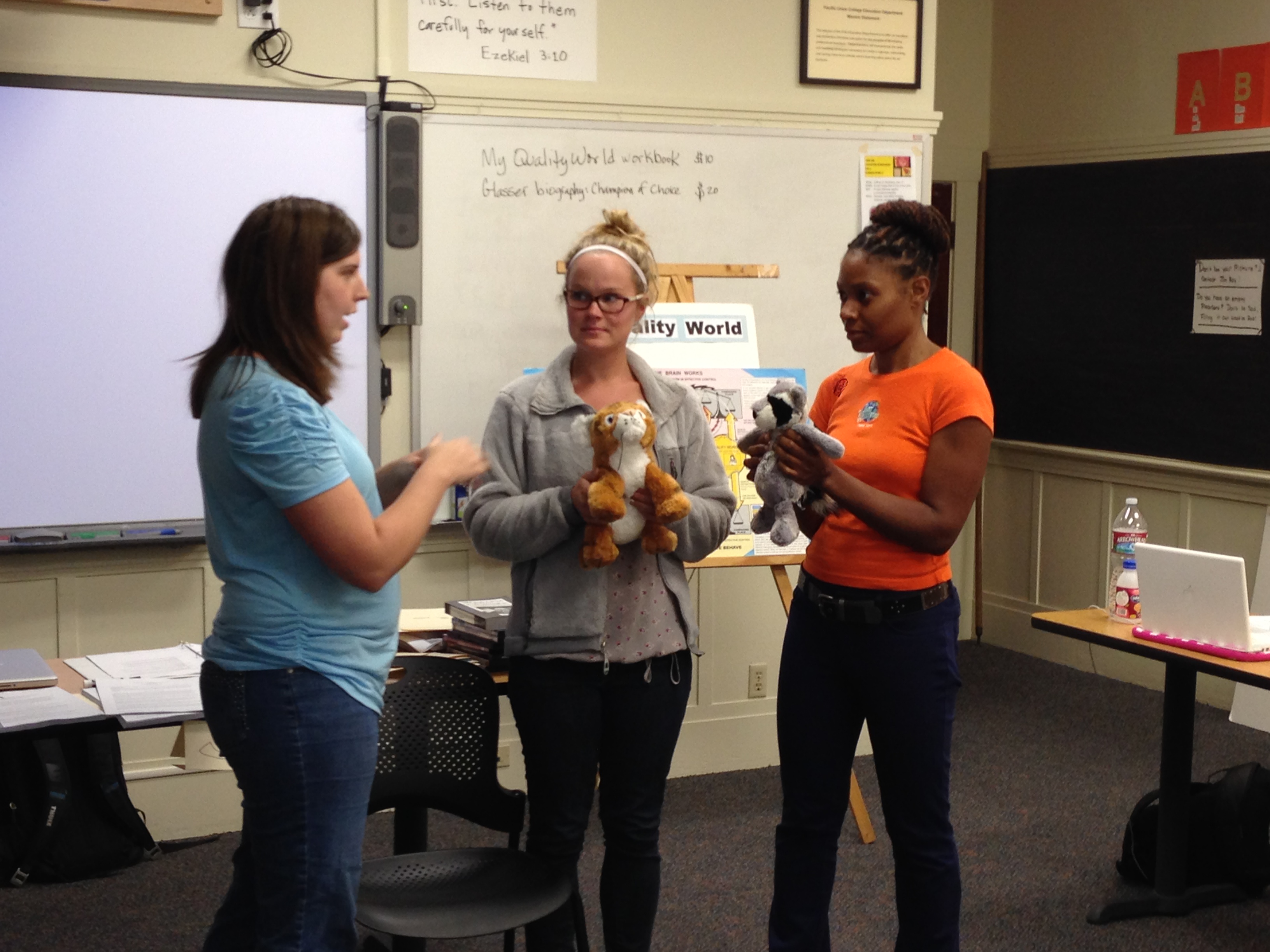
Chart presentations: Puppets can be used to help students process their behavioral center choices.

Chart presentations: Puppets can be used to help students process their behavioral center choices.


Chart presentations: A creative role play format leads to a better understanding of total behavior.

Chart presentations: A creative role play format leads to a better understanding of total behavior.

Most of the classmembers headed out for home after class ended on Thursday afternoon, although not all of them. A few of them are sticking around for the weekend so that they can continue in Soul Shapers 2, which begins on Monday. One of the those heading home didn’t have far to go, as she works right here at PUC. Others from the class, though, had longer trips – five from locations around northern California, three from central California, two from southern California, and three from Salt Lake City.

The trip home after experiencing a choice theory workshop can be an intense time of reflection. So many new concepts that have us thinking about our motivations and evaluating our behaviors. I haven’t checked in yet with this class about their trip home yet, but former participants have shared things like –

“Well, my head was kind of spinning, that’s for sure. The choice theory ideas, plus the Scripture and Ellen White stuff, it was pretty clear, and it made sense to me. But hearing this stuff for the first time, I was like, now what?   RG

“Well, to be honest, I was a little bit discouraged as I drove home. I had great memories from the time in class, the new friendships and all, but as I really thought about how I had been showing up with others, especially my own children, I just felt a little bad. I really want to get rid of the deadly habits and use more of the caring habits.”   HR

“Hmm .  .  . the trip home? I think I was pretty obsessed with the whole concept of how we control for our perceptions, you know, the idea that we place a picture in our quality world and then live in a way to make that picture happen, including manipulation as needed. That really nailed me for some reason.”   PA

“I was pretty excited, actually! I was thinking of ways that I could present the choice theory ideas to my students. I agree with you that doing the ideas ‘with’ them will be way better than doing the ideas ‘to’ them. If all I did was teach them about their Basic Needs and the Quality World, that would be such a gift for them. I plan on doing more than that, but just those two concepts would make a huge difference!”   AS

“I found myself thinking about the classroom management things I am going to change next school year.”   DS

“It hit me how much I was in the habit of blaming others for stuff, which kind of absolved me from any role in helping to make things better. Like I would blame the kids’ homes for not raising them right, and I would blame the kids for their lack of performance in class. Of course, with this way of thinking it never occurred to me that how I set up the classroom and the learning may have had something to do with their poor performance.”  JJ

Choice theory does indeed invite us to reflect on our own thinking and our own behavior. Instead of our musings being aimless, though, or negative, choice theory helps us reflect in a positive way that leads to effective change. I look forward to checking in with the latest classmembers about their reflections as they traveled home.

==================

If you have read William Glasser: Champion of Choice, I encourage you to write a review of the book on Amazon. Together we can get the word out there that Glasser’s story and the ideas he championed are worth paying attention to. It’s not hard to contribute a Review of the book on Amazon and it doesn’t have to be long. Think about it.

==================

If you haven’t read Champion of Choice yet, then put it on your reading list for this summer. Besides a good story, you will learn a lot about choice theory and how to live your life.

photo


The Incredible Lemon Cake

A piece of cake from the Social Work consecration reception at PUC yesterday.

A piece of cake from the Social Work consecration reception at PUC yesterday.

A magical cake was served at yesterday’s Social Work reception and during the celebration and visiting I was reminded of the power of choice and how all behavior is purposeful. It is graduation weekend at Pacific Union College and several of the subject-area departments have special ceremonies for their graduates. The Social Work consecration yesterday also included farewell messages to Dr. Monte Butler, longtime faculty member of the department, who has accepted a position at Loma Linda University. So, back to the cake.

I guess it could be described as a lemon cake, but this simple label falls far short of how good this cake really is. It is so moist, and so just-right tart, with cream layers in between the lemon cake layers, that it can only be described as epic, even life-changing. It comes from somewhere in Canada and is shipped frozen to fortunate buyers across the country.

My wife organizes the reception and I was helping her and some students get the cake out on the serving tables. The first person to arrive at the reception area after the consecration service was a woman who came directly to the cake table and picked up one of the plates on which sat a beautiful piece of the magical lemon cake. I was close by and pointed out how her life was about to be changed by a cake that was beyond good. She mentioned how hungry she was, as she was about to bring it to her mouth, but I stopped her. I wanted her to fully appreciate the culinary excellence she was so close to enjoying. She paused, but then bit into the richness. “Wow!” she affirmed, with a faraway look of reflection on her face, taken to that place where only a few all-star food items can go. The she looked at me, though, and asked, “Is this citrus .  .  .?”

I replied, “It’s lemon.”

“Because I’m allergic to citrus,” she continued. “I’ll break out if I eat this.”

I pointed to the chocolate cake that was also on the serving table, thinking that this was a pretty good secondary option under the circumstances. However, she looked at that magical lemon cake again, then at me, then back to the lemon cake, and quietly admitted, “But this is too good. I’m gonna eat this anyway.”

She had exclaimed, “Wow!” just a moment before, and now I was privately thinking “Wow!” to myself as she walked off and continued to eat the incredible lemon cake. A part of me was curious as to how long it would take for the breaking-out process to occur, but I got busy with other reception duties and am unable to report on that.

What I can say is that our brains are wonderfully complex organs that at times defy logic. The human quest to satisfy our basic needs, and the uniquely personal ways we develop to meet those needs, is a powerful process. This lady’s decision to eat the cake, a thoughtful decision as she paused with the cake on her fork, in spite of her body’s negative reaction to it, is an important reminder of our ability to make choices. We each face similar decisions every day. Choice theory doesn’t make us make good decisions, but it does reveal our purposefulness in the decisions we make, which is a good thing, a very helpful thing. Choice theory is also empowering, sometimes frustratingly so, since we can’t blame circumstances, other people, or even an incredible lemon cake, for the choices we make.

This particular lemon cake came pretty close to being blame-able, though.


Cancer and the Tyranny of Positivity


Jeff Tirengel with Bill and Carleen at the International Glasser Conference in New York City, 2006.

Jeff Tirengel with Bill and Carleen at the International Glasser Conference in New York City, 2006.

The response to the video of Jeff Tirengel’s talk regarding his cancer journey, posted in the last blog, has been very positive. The video is almost an hour long, yet some of you were able to watch it right away and let me know how much the talk meant to you. Some of you related to Jeff’s message on a deeply personal level.

Last summer Jeff wrote an article for The Los Angeles Psychologist magazine that I have been thinking about ever since. Choice theory was never mentioned in the article, yet I have come to see it as full of the highest kind of freedom and love that we can give to another person, especially a loved one or friend engaged with cancer. It was titled “Cancer Survival and the Tyranny of Positivity,” two phrases that at first glance would not seen to go together. Check out the following excerpts from the article and reflect on how you relate to the tyranny of positivity. As you do I believe your concept of choice theory will be deepened

Cancer Survival and the Tyranny of Positivity
by Jeff Tirengel, Psy.D., MPH

I was diagnosed and hospitalized with an aggressive form of lymphoma, a type of blood cancer, in December 2009. While still in the hospital I began to hear from family members, friends, and colleagues, including fellow psychologists, that I was the kind of individual who was likely to do well under these circumstances. After all, they said, you are generally a positive and optimistic person, and you have the fighting spirit that characterizes those who are most resilient when dealing with cancer.

Although I fully understood that these messages were intended to be caring and supportive, it was clear to me immediately that they reflected a particular cultural viewpoint, “the triumph of character and attitude over biology” (Coyne and Tennen, 2010, p. 17). As I continued to hear similar sentiments expressed by physicians, nurses, and even other cancer patients, I began to sense the shadow side of these same messages, i.e., they discouraged open communication about the uncertainty, distress, and pessimism that were part of my actual mix of thoughts and feelings. I also wondered whether others might blame me for not being positive enough, or as psychologically resilient as they had believed me to be, if the cancer eluded effective treatment.

Jeff wrote about his career-long commitment to understand why people become ill, how they respond to treatment, and how people stay healthy in the first place, yet he admitted he knew relatively little about studies that had to do with cancer and cancer survival. As a result of his research, he listed a number of articles that addressed positivity and cancer, some pro, some con. The articles agreed that –

. . . there is concern about the seemingly relentless emphasis on mandating optimism, individual happiness, and personal growth no matter the circumstances, and a related concern that the general public may come to believe that one can conquer cancer by thinking positively and that if one is not getting a good response, one is not thinking positively enough, not laughing enough, or not being spiritual enough. Indeed, the explicit blame of people with serious illness for their failure to cure themselves in best-selling popular treatments of positive thinking is shocking and reprehensible (Aspinwall and Tedeschi, 2010, p.10).

Such views help us to see that there can be a kind of tyranny in positivity. Jeff’s conclusion helped me a great deal and taught me something very important about choice theory. He finished with –

My conclusion from my own experience with cancer and the tyranny of positivity is similar to a perspective that I have heard expressed by others, including Ehrenreich, who has herself been an oncology patient: Somewhere between “positive thinking and feeling” and “negative thinking and feeling” there is a space available for “realistic thinking and feeling.” In this “realistic” space, there is room for optimism and pessimism, hope and despair, gratitude and anger, courage and fear, gain and loss, certainty and uncertainty, etc. As I suspected when I was first diagnosed, the most evidence-based practice for supporting family members, friends, and colleagues with cancer is to allow them to express a full range of thoughts and feelings rather than require them, explicitly or implicitly, to be positive, deny their distress, or engage in particular behaviors for which there is no empirical evidence.

In this short article Jeff helped me to understand better that people with cancer, people in distress in general, need the freedom to express a full range of thoughts and feelings, rather than being somehow required to be positive or deny their feelings. Choice theory reminds us to give others this kind of space for realism, yet that doesn’t mean we can’t try to influence a loved one’s or friend’s outlook on the situation. Choice theory also reminds us that how we go about trying to influence is important. The following kinds of questions, for instance, would be important to a choice theorist –

Is my relationship in place with the person I am trying to support?

Have I received “permission” from the person to engage in supporting them?

Am I verbally and non-verbally allowing the person to express a full range of their thoughts and feelings?

Is our relationship staying connected even as we may disagree about the thoughts and feelings being expressed?

There are no easy answers when it comes to being a cancer patient ourselves or when it comes to supporting a loved one or friend who is a cancer patient, however Jeff’s article reminds us of the importance of a human being’s basic need for freedom. Maybe cancer patients are especially sensitive to this need.


Jeff Tirengel, PsyD, MPH is a Professor of Psychology at the California School of Professional Psychology at Alliant International University. He also directs psychological services for the Preventive and Rehabilitative Cardiac Center, Cedars-Sinai Heart Institute. Dr. Tirengel began his career in Washington, DC, serving public and private organizations including the U.S. Office of Disease Prevention and Health Promotion and the National Association of Community Health Centers.

=============

Soul Shapers 1, scheduled for June 16-19, is just around the corner. For more information or to sign up for the class, call Debra Murphy at (707) 965-6642. Those of you who have taken Soul Shapers 1, this is a good time to invite colleagues to consider taking the class. It really helps when there are several teachers from the same school who are on the choice theory journey together.

Soul Shapers 2 is scheduled for June 23-26. Remember that this class can be re-taken as a choice theory re-charger each summer.



Cancer and “How Should I Live My Life Now?”

I don’t know how many of you will take the time to watch Jeff Tirengel’s talk about his life as a cancer patient, but if you do you will be emotionally moved and your thinking about life will be deepened.

I thought about titling this blog post, Cancer and Choice Theory, but this talk can’t be pigeon-holed that neatly.

Pretty much all of us have been affected by cancer, either personally or by its affect on family and friends, and I believe Jeff’s story will be a help to each of us, whatever our involvement with it may be. His calmness, his humor, and his brutal candor all contribute to the power of the talk.

Jeff is a dear friend, so I was naturally drawn to his story. However, as I began to watch and listen it became more than a friend thing. The content is powerful on its own merit.

Jeff believes in the ideas of choice theory, yet there is no pressure in this talk, not even an invitation, for you to believe in choice theory, too. In giving this talk he is doing something much more important than preaching.

Jeff was a personal friend of Glasser and continues to be friends with Carleen Glasser, who was in attendance at the talk. I first met Jeff when we were in the same reality therapy/choice theory certification class in 2003 and we have stayed in touch ever since. He weaves choice theory principles throughout the talk, especially the basic needs.

I mentioned Jeff in a special blog from last year, the one entitled The Rest of the Story, Pt. 2, which was posted on Sept. 5, 2013. Check out this video and you will come to understand why I treasure Jeff. Many of you have loved ones and friends you treasure, too. I have a feeling Jeff’s story will resonate with you as deeply as it did with me.

============

Tirengel-2

Jeff Tirengel, PsyD, MPH is a Professor of Psychology at the California School of Professional Psychology at Alliant International University. He also directs psychological services for the Preventive and Rehabilitative Cardiac Center, Cedars-Sinai Heart Institute. Dr. Tirengel began his career in Washington, DC, serving public and private organizations including the U.S. Office of Disease Prevention and Health Promotion and the National Association of Community Health Centers.

Glasser and Jordan


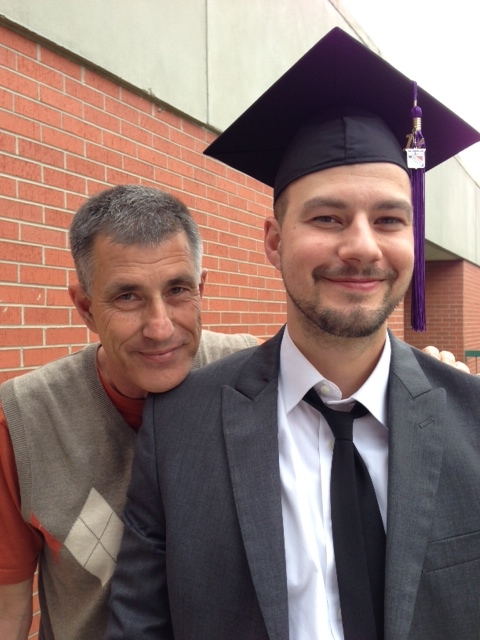
Jim and Jordan

Jim and Jordan

My son graduated from law school today and this event, in its own way, brings up warm memories of my friend, Bill Glasser.

Jordan was never much enamored with traditional teaching methods, although learning has always been important to him. During his middle school years he was drawn to music and has poured a lot of his abundant creativity into his guitar, keyboard, and drums ever since. After graduating from high school he was not very excited about college and continuing the whole school thing and seemed intent on heading out on his own, even if the heading out involved elements that to me were short-sighted, unrealistic, and even dangerous.

By the time Jordan graduated from high school in 2001, Glasser and I had become friends. The Glasser Institute (its name at the time) was doing quite a bit of training on the Pacific Union College campus and Glasser was on campus a number of times over a three year period. I had shared with him about Jordan and some concerns I had and he expressed an interest in talking with Jordan, which Jordan was open to as well. After his time with Jordan, Glasser assured me that Jordan was fine and that he was going to be fine in the future.

I felt that Jordan would be fine, too, although the routes that Jordan chose at times created questions in my mind. He did do the college thing for a while, but with just a year left to finish his social work degree, he headed off to New York City to pursue his music and to .  .  .  well .  .  . experience New York City. NYC is not the easiest place to survive, yet he did so, on his own, and he re-enrolled in Brooklyn College and finished his undergraduate degree. I think he was in NYC for close to seven years.

Not too long after Jordan connected with Glasser, I began my doctoral program, which eventually led to my doing a dissertation on the development of Glasser’s ideas, which then led to my becoming his biographer. Starting in 2003 Glasser and I had a lot of time together, sometimes during formal interviews and sometimes just visiting about life. He would frequently bring up Jordan, interested in how he was doing and what the latest was with him. “He’s gonna be fine,” he would point out. I appreciated his interest and his confidence in my son.

I wish I could call Bill today and let him know that Jordan is more than fine; that he’s married; that he and Katy own a food truck; that they grow a lot of their own food; that they have six chickens; that Jordan continues to love his music; and that he graduated from law school. Bill would celebrate with us today. I feel that he was a part of Jordan’s journey.

Someone said to me today, “You must be very proud.” I replied that I don’t think pride is the word that describes my feelings. I explained that I am very happy for Jordan and that I am impressed with what he navigated to achieve a degree in law. To me, “being proud” has to do with his accomplishment somehow meeting my needs. I want to be careful not to go there. Maybe I am too sensitive about this (a result of choice theory, I think), but I don’t want to convey that something he has done has increased his value in my eyes. I was proud of him before he entered law school and, yes, I am proud of him afterward, but not because of the degree. I am proud of him for the man he has been becoming for quite a while now.

So, it is a big day for our clan and I wish Bill could have been a part of it. Somehow, I think he knew a day like this was coming for Jordan. Thanks again, Bill, for your belief in Jordan, and Jordan, dude, way to go!


Is My Self-Evaluation the Only One That Matters?

self-assessment-1

My friend, Tim, who I respect a lot, questioned the idea that self-evaluation is the only evaluation that really matters. I think there is definitely room for discussion on this point. His comment follows below and my reply follows after that.

The irony–

I read this: “Glasser and Deming agreed that self-evaluation was really the only evaluation that mattered. We have to hold to this principle, pursue it, nurture it, if we are to create learning environments that are need-satisfying.”

While the seniors are filling out their evaluations of me and the various mini-courses in their religion class this year, I don’t think my self-evaluation is the only one that matters!

Even since writing the following reply I continue to think about the need for and process of evaluation. Here’s the response I came up with a couple of days ago, though.

Yes, student feedback is important, but the real question is what is the feedback for?
If it is for you, then how you evaluate or respond to their feedback is the key piece in the process.
Some teachers will have student feedback available, but not even look at it for fear of what it might say.
Other teachers will read the student data and comments, but dismiss them because the students really don’t understand what education is about or what the teacher is trying to accomplish.
Still others will read the comments and resent the students for their candor.
And finally, some teachers will read student comments and truly reflect on what they are saying and how those comments might help them improve their instruction.
Students can say all kinds of things, but what they say matters only in the ways the specific teacher relates to their comments.
In the end, the only evaluation that really matters is self-evaluation, or how I process the feedback from others.
I have a personality that can get positive feedback from nine people and feedback for improvement from one person and it will be that “negative” comment or feedback for improvement that I will obsess on. My self-evaluation is not helpful to me at that point. I would benefit from someone who could help me see things more accurately, both the positive and the areas for growth. I think this is a special area in which superintendents and principals could change the way in which teacher evaluations are done.
Ultimately, it is how I respond to being evaluated that is the important thing.
Presently, I don’t think that most evaluators or evaluatees get this at all.

Still a classic, no matter how many times I see it.

I see that my response might clarify things a bit, but not nearly enough. In the next blog post I will share an article that Bob Hoglund wrote a while back that offers further clarification when it comes to evaluation. He sees an important difference between reasonable external expectations (standards) and external control. For instance –

Do you want a pilot who self-evaluated that he is able to fly a passenger jet?

================

Just a reminder – The Choice Theory Study Group for this weekend has been cancelled.