Posts tagged “William Glasser

California Senate Commends William Glasser

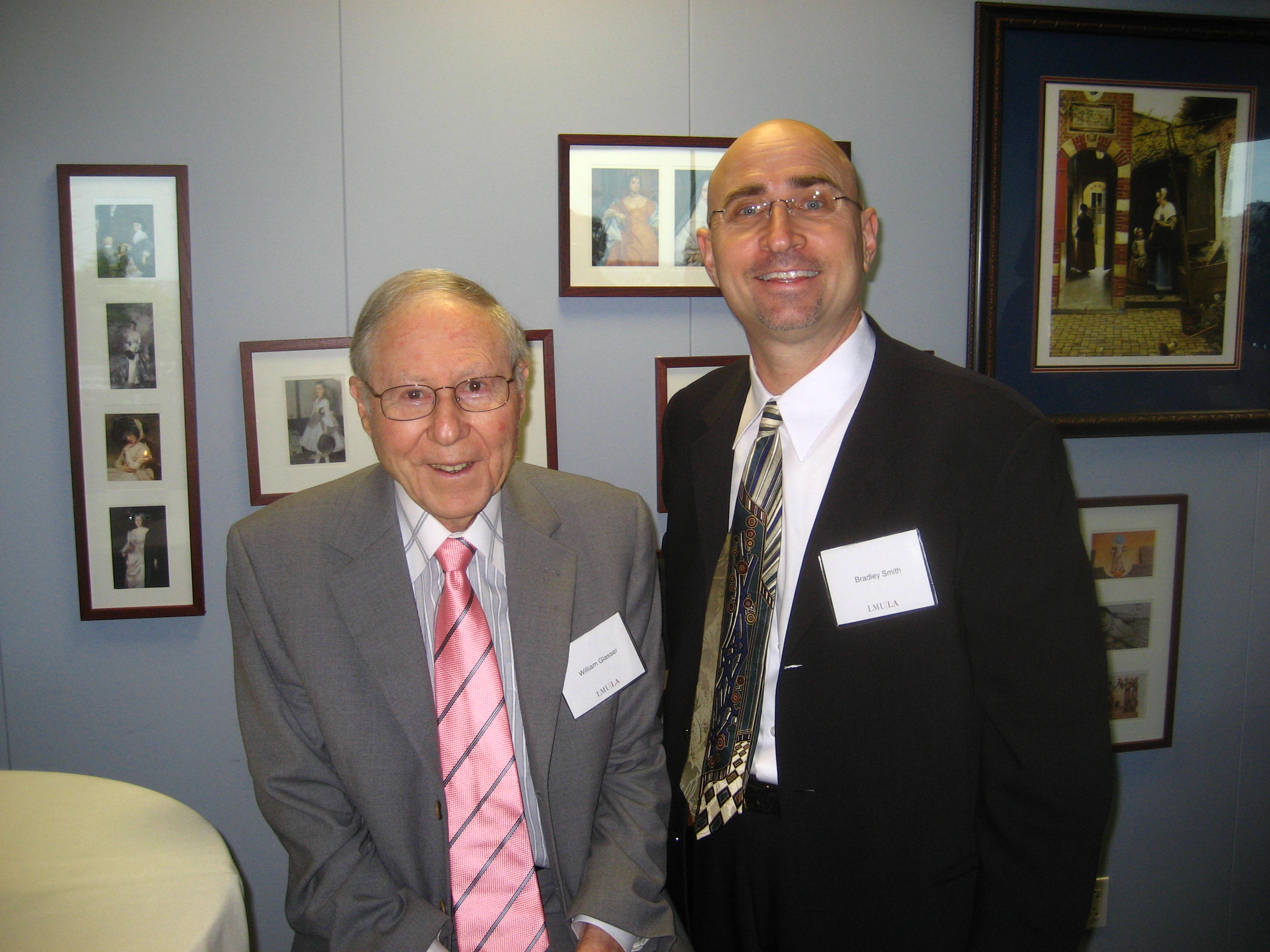
William Glasser and Brad Smith

William Glasser and Brad Smith, 2008

An amazing event took place recently within the walls of the California Institution for Women in Chino, California. Amazing because a graduation was held for the women within the prison who had completed the Choice Theory Connection Program. Due to the efforts of staff (especially Brad Smith) and students at Loyola Marymount University in Los Angeles, and the efforts of staff (especially Les Johnson) within the prison, inmates were taught choice theory and the ways in which people can manage their thinking and behavior. The graduation became even more special when, as part of the ceremony, Dr. Glasser was recognized by the California Senate for his contributions to the fields of psychology, social services, and education, and to the people of the state of California. He began his career in 1956 as the psychiatrist for the Ventura School for Girls, basically a prison for young women, so it is fitting that at the close of his career he was once again working with women within the prison system.

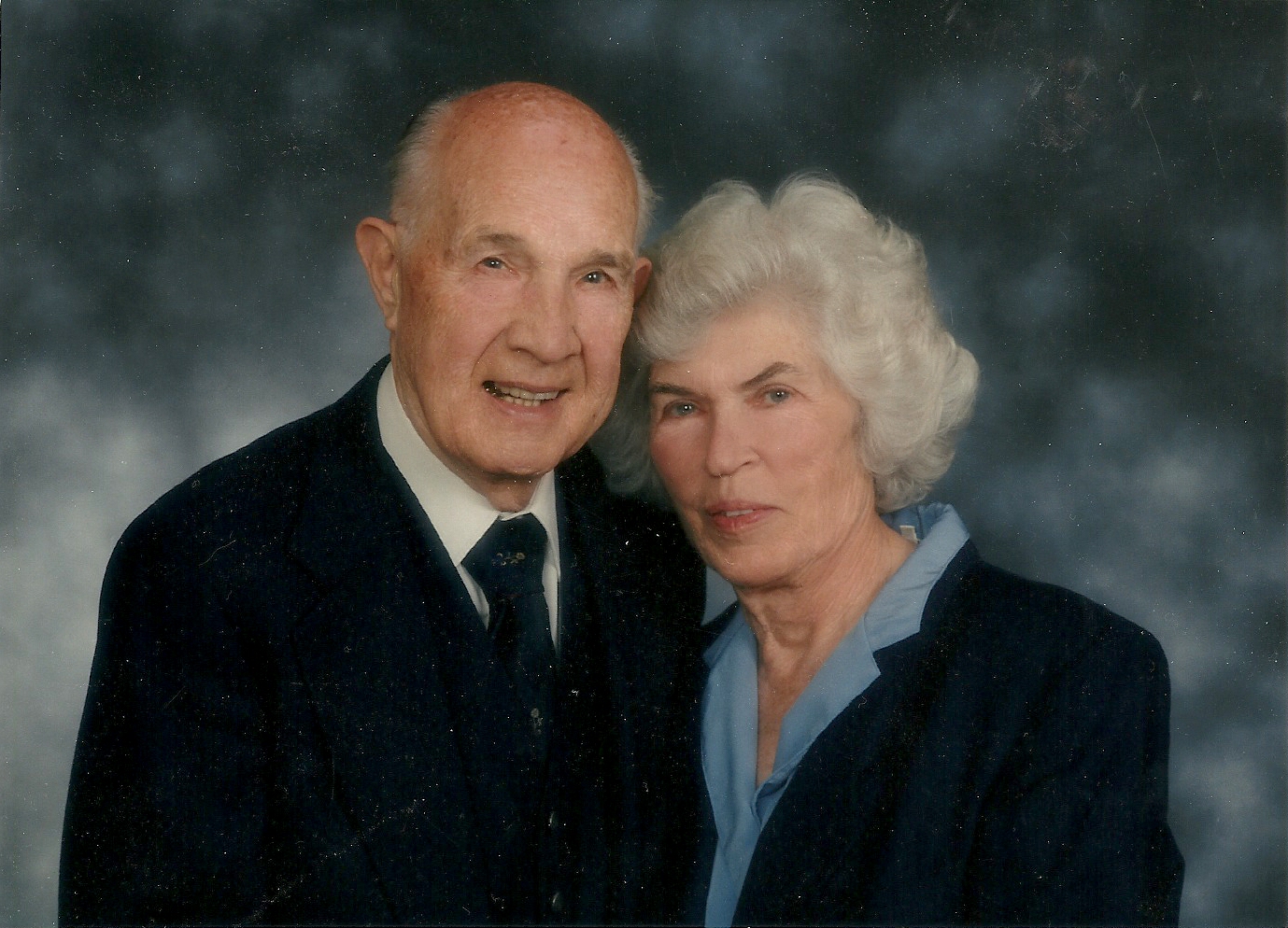
William Glasser, shortly after graduating from medical school, about to begin his psychiatric residency.

William Glasser, shortly after graduating from medical school, about to begin his psychiatric residency.

In 2010, I had the privilege of visiting the California Institution for Women in Chino and saw and heard firsthand the results of the Choice Theory Connection Program. It was a profound experience for me as I listened to women, some who had received life sentences for murder, describe how, even though they were in prison, they felt free for the first time in their lives. Several of them mentioned how different their lives would have been had they learned choice theory sooner.

These women declared how needed choice theory was in schools, especially inner city schools. They encouraged us to share the concepts of choice theory with students of all ages. I know that as teachers and principals we want to do just that. The women wanted to prevent young people from ending up behind bars and schools can be a large part of that prevention.

I am glad Bill is being recognized for his contributions. Being his biographer, I would have worded the commendation a bit differently, but the important thing is that people in leadership took a moment and reflected on what he has done for people and organizations across the state and beyond.

CALIFORNIA SENATE 

By the Honorable Carol Liu, 25th Senatorial District; and the Honorable Loni Hancock, 9th Senatorial District; Relative to Commending:

William Glasser M.D.

WHEREAS, Dr. William Glasser, a distinguished Los Angeles resident and highly esteemed member of the medical profession, has brought great credit and distinction to himself through his professional and public achievements, and in recognition thereof, it is appropriate to highlight his many accomplishments and extend to him the special honors and highest commendations of the people of California; and

WHEREAS, a world-renowned psychiatrist who employs a nontraditional approach, Dr. William Glasser has been recognized since 1989 as a member of the distinguished faculty of pioneers in the psychological professions by the Evolution of Psychotherapy Conference of the Milton Erickson Foundation; and

William Glasser, presenting at the Evolution of Psychotherapy Conference, 2005

William Glasser, presenting at the Evolution of Psychotherapy Conference, 2005

WHEREAS, in his early years as a psychiatrist, Dr. Glasser obtained experience at the Veterans Administration Hospital in Los Angeles, and in 1967, he founded The Institute for Reality Therapy, which was renamed The Institute for Control Theory, Reality Therapy and Quality Management in1994, and The William Glasser Institute in1996; today, the institute, which is headquartered in Tempe, Arizona, has branches throughout the world; and

WHEREAS, the recipient of numerous honors and awards, Dr. Glasser was presented the American Counseling Association’s 2004 Legend in Counseling Award for his development of reality therapy and, in 2005, was awarded the prestigious Master Therapist designation by the American Psychotherapy Association, and over the course of his stellar career, he has shared his expertise as the author and co-author of numerous chapters and books, including Take Charge of Your Life, Choice Theory, and Eight Lessons for a Happier Marriage; and

WHEREAS, intelligent and articulate, aware and involved, Dr. William Glasser is a fine example of a public-spirited citizen willing to assume the responsibilities of leadership, and through his remarkable personal and professional achievements, he has become a legendary figure who is admired by people throughout the State of California and beyond; now, therefore, be it

RESOLVED BY SENATORS CAROL LIU AND LONI HANCOCK, that they recognize and thank Dr. William Glasser for a lifetime of achievements and meritorious service to humanity, and convey sincere best wishes that his indomitable efforts will continue in the years ahead.

Member Resolution No.643- May 11, 2013

—————————————————————————

In some ways, Glasser’s legacy is secure. He developed Reality Therapy and Choice Theory, and along the way helped many, many people to function better in their lives. He especially helped teachers and students to understand the process of learning and thriving within a classroom. His books, 24 of them, and the many articles that he authored would seem to further establish the legacy. A book on a shelf, though, is not the legacy Glasser worked for throughout his career.  The legacy he sought was improved lives, better thinking and behavior, better mental health. Each of us can have a part to play in that legacy, beginning with ourselves, and then extending to those with live with at home or work with at school or a host of other businesses. That is the legacy Glasser would be most happy about.

——————————————————————————

TEACHERS – Will you be teaching your students about choice theory this coming school year? Could you take a moment and send me a brief description of how you go about it? A lesson plan would be awesome, but even a short paragraph would be wonderful, too.


19 Ways to Lead, Rather Than Boss

Leadership Road Sign

Inspired by the “Boss vs. Leader” comparisons at the beginning of The Quality School, Dr. Ed Boyatt, one of my mentors, has worked to expand and refine a list that identifies the key traits of effective leaders. Ed has been a teacher, a principal, a superintendent, and recently retired as Dean of the School of Education at La Sierra University in Riverside, California.

Boyatt on Leadership
Based on the Leadership Principles of William Glasser
————————-
Traditional Management or New Leadership

Power through position or Power through expertise

Leadership from the top or Leadership from beside

Permanent leader and followers or Interchangeable ldrs and followers

Boss leadership or Servant leadership (Mt 20:25)

External control of employees or Internal control by employees

To and for employees or With employees

Tell and command or Ask and persuade

Mandate and coerce or Collaborate and guide

Other-assessment or Self-assessment

Compliance from force or Commitment from choice

Manage others or Manage yourself

Caution or Courage

Status quo or Change and renewal

High fear and low trust or High trust and low fear

Conflict avoidance or Conflict confrontation

Negative conflict or Positive conflict

Stimulus-response or Choice theory

Organizational needs only or Blended needs of person & organization

Adversarial relationships or Collaborative relationships

Glasser, W. (1990). The quality school: Managing students without coercion. New York: Harper Collins.

Glasser, W. (1998). Choice theory.  New York: Harper Collins.

——————————-

Has this list inspired you to think of other key leadership traits? Just click on the Reply button and share your thoughts. I’m sure Ed would love to hear your ideas.

——————————-

It’s easy to re-post this article on your Facebook page. Just click on the Facebook icon at the end of the article and it will quickly walk you through a couple of easy steps. It is a good way to share great information with your friends and it will spread the word about The Better Plan blog.

Stringless Love

strings-attached

A key choice theory axiom, maybe THE choice theory axiom, states that the only person we can control is ourselves. This doesn’t mean that we don’t try to control others. We very often do, and in ways that are so subtle that we aren’t aware of it, even as we are in the midst of doing it. Today’s blog will attempt to pull back the curtain of our behavior and give examples of just how powerful this process is, a process that has everything to do with our quality world pictures.

When it comes to axiom #1 it would be more accurate to say that we are controlling for our perceptions, rather than controlling our own or another’s behavior. In other words, the only person’s perceptions we can control is our own. Let me give you an example that Mike (not his real name) shared with me recently –

The other day I am out shopping with my wife, each of us with a list of items to find, and while working on my list I notice her further down the same aisle I am in. I see her and for some reason I want to go to her and express my affection for her, to touch her, you know, to “look lovingly into her eyes” kind of thing. So I’m thinking about that as I’m standing there in the bread section. Some of you may be thinking, “What are you waiting for? Go tell her you love her!” But it’s not exactly that simple. We’re working through some stuff. We’re doing good, but anyway .  .  .

For some reason the question occurs to me, there in the bread section, am I wanting to express my affection to her because I just want to give her affection, or am I wanting to express affection so that she will give me affection in return? Am I wanting to touch her because she would then touch me, too? As I thought about it, I realized that what I really wanted was for her to want me, for her to express affection for me, and for her to touch me. I did feel affection toward her, but more importantly, I was fishing for something from her. My gift was not so much a gift, as much as it was a prompt, maybe even a bit of a trap.

I must admit I was stopped in my tracks at that moment. What you had been saying in the Soul Shapers class kind of just flashed into me. I had this picture in my mind of how I wanted my wife and I to be, how I wanted her to treat me, and there I was trying to create it, trying to turn my picture into a reality. I was stunned at how subtle, yet how real, the process was in my thinking. I was further stunned by how many years I had been behaving this way. My “affection” was really a form of manipulation.

Mike realized that his “love” had strings attached. He was giving, but it was giving to get something in return. When his giving wasn’t responded to in a way that matched his expectations he became frustrated and hurt, and then went about creating another behavior to try to get what he wanted. Maybe this new behavior would be another “loving” action; maybe it would be a punishing action like the silent treatment.

Spouses face this process every day. So does a teacher with his/her students. People have antennae that discern the strings that are attached to gifts. Love with strings attached really isn’t love. Let’s be clear, though. The problem isn’t that we have expectations, at least if the expectations are reasonable and healthy, the problem occurs when we manipulate or coerce to get what we want. It is actually relationship-strengthening to state your expectation and then, using the caring habits, discuss and negotiate the ways in which that expectation can happen.

——   “Love with strings attached really isn’t love.”   ——

On a deeper and more important level, I think this process reveals something about what the presence of sin has brought to our little planet. Jeremiah wrote about our righteousness being like filthy rags, or in other words, even our love seems to involve selfishness. I think the process also reveals one of choice theory’s limitations – that being that choice theory can give us insights into our behavior, but it cannot change the heart. Only the Holy Spirit can give us a perfect love that doesn’t care about strings. Stringless love. That would be powerful.

—————————————

How about telling a friend about The Better Plan blog? It’s easy – http://thebetterplan.org

If today’s blog is helpful, take a moment and click on the Liked link.

Every once in a while you run across something that puts a smile on your face and a bounce in your step. This music video does that for me. It doesn’t stop with the smile and the bounce, though, as the lyrics to the song are a good reminder for all of us. The message is simple – When the morning comes, things will probably look better. Let the worry go. This too will pass.
I think middle-schoolers and high-schoolers should watch this video as often as needed. A little encouragement with a smile and a bounce can be a good thing. Enjoy!


(*It is true that a music video doesn’t hold the ultimate answer to life’s distresses. Good mental health depends on a positive connection with the Holy Spirit, combined with a good understanding of how our brains work (e.g. – choice theory). Within this context, though, an upbeat piece of music can lift the thinking and the feeling. I can’t vouch for all of OK GO’s music, although their videos are really fun and creative. Also, thanks to the Notre Dame marching band.)

PS – Good mental health includes the ability to consciously and intentionally decide that “this too shall pass.” From a total behavior perspective we run into problems when the rear wheel Feeling tire gets too big. When this happens it is a helpful to practice the “this will pass” skill, especially when we are reminded of passages like –

Because the Lord is my shepherd I have everything I need. Ps. 23:1

And this same God who takes care of me will supply all your needs from his glorious riches, which have been given to us in Christ Jesus. Philippians 4:19

Unless the Lord had helped me, I would soon have died. I cried out, “I’m slipping!” and your unfailing love, O Lord, supported me. When doubts filled my mind, your comfort gave me renewed hope and cheer. Psalms 94:17-19

Choice Theory on Interstate 5

Passing on I 5

This past Friday I headed north on Interstate 5 to be a part of a reunion for my wife’s extended family. She had gone up earlier in the week to help her mother and to get ready for everyone’s arrival, so I was driving there by myself. I usually drive pretty reasonably as far as speed goes, however on Friday I decided to try and get there a little quicker, maybe even see how fast I could get there without any of the common stops we usually make.

Traffic, as is almost always the case on Interstate 5, was moving right along. A car in front of me in the fast lane wasn’t going as fast as I would have liked and I moved into the right hand lane to go around him. As I did so, though, the car sped up. I went a little bit faster to get around him, but he sped up even more. At this point we going over 80 mph. It was plain to me that he didn’t want me to pass him. He stayed out in front, which was fine with me. I had no desire to turn it into some sort of competition, and best of all, I now had a blocker in front of me. If you are driving a bit faster, it is good to have someone clearing the way in front of you.

Later on I thought about this little event as a choice theory moment — in reverse. He reacted to my wanting to pass and ended up driving at a speed that was more of my choosing, than of his. It was like he had given me the power to control his speed.

We hear phrases like “pushing his buttons” or “yanking his chain,” which linguistically captures the process of one person messing with another’s boundaries or preferences, especially when pushing buttons leads to an entertaining reaction. I must have pushed the other driver’s button when I attempted to pass him. In the end, I got better in return than I intended.

Children and adolescents, especially those with anger management issues or low frustration levels, can be helped by examples such as these. Kids seem to “get” that when they are reacting to a classmate’s behavior in a way that leads to trouble or embarrassment, they are actually giving their power away to the classmate who did the button-pushing. I have seen the light go in a student’s head when they begin to realize that they don’t want to be a game piece on someone else’s chess board. They want to decide how they are going to act, rather than letting someone supposedly dictate their behavior.

This is an important reminder for all us, regardless of our age. If you have “buttons” featured prominently in your demeanor, why not get rid of them? If you have a “chain” that people keep yanking, how about losing it once and for all? It’ll be great for you, and as you model being in control of your life in front of your children or students, it will be great for them, too.

———————————

I am very thankful how well the Soul Shapers 1 class went this past week. What a great group of people! We indicated our desire to stay in touch during the coming school year, and I hope we do that. The Better Plan blog is one way we can all keep choice theory in our thinking and stay connected in the process. Soul Shapers 2 is taking place this week.

Thanks Choice Theory for a Happy Fathers’ Day

My son and I at a New York City subway stop (2008)

My son and I at a New York City subway stop (2008)

A dad I knew once said to me –

“When my kids say Happy Fathers’ Day to me I want them to be able to mean it.”

When I asked him to elaborate a bit more he continued –

“It isn’t rocket surgery. I just want to have treated them in such a way that they would be comfortable wishing me well. I want to care for them and appreciate them in the hope that they would want to care for me, too.”

I have admitted more than once that the concepts of choice theory saved my relationship with my own children. I began really reading about choice theory around 1992 (it was actually known as control theory until 1996), and received Quality School training a short time later. In 1995, when the school in which I was principal embraced choice theory, my daughter was 16 and my son was 13. The timing here is significant. I was coming into a deeper knowledge and understanding of choice theory at just the time my children were dealing  with the angst of adolescence. When conflict arises, as can happen between parent and teenage children, I am just as capable as the next guy of being arbitrary and controlling. I am capable of wanting to take charge and be in control.

It was rare that I would do something like this, but one time I asked Glasser for some personal advice. After graduating from high school my son wanted to buy a very old van with two other friends and move to Southern California to make it in the music business. I could tell he was serious. I really didn’t want him to do it, for a number of reasons, but I wasn’t sure what to say or how to say it. Glasser listened as I described the situation and when I was finished he said –

“You want to keep two things in mind. The first thing is stay connected. Whatever you do or say, do or say it in a way that keeps the two of you connected. The second thing is to not say anything that in any way smacks of I told you so. In other words, don’t come across in a way that would ever make it harder for your son to come back home.”

I thought that maybe I understood enough about what Glasser was trying to get across to me and I decided to talk with my son. What I said went something like this –

“You already know that I don’t really want you to do what you have described to me, and that I would rather you get started in college. Instead of belaboring that, though, I just want to say a couple of things. It might sound like it isn’t smart for me to say this, but I think you are very capable of making this idea happen, of buying the van and carving out an existence in Los Angeles. I would worry a bit about how you were doing, but you are resourceful and resilient when the going gets tough. I also think you are an excellent and entertaining musician. If you didn’t get discovered it wouldn’t be because of a lack of talent. There are just so many excellent athletes and musicians that never make it to the big show. If you do decide to go ahead with this plan, please remember that whether you get discovered or not, you always, always have home to come back to. Thanks for listening. Let me know if you want to talk more about this.”

Glasser and choice theory helped me to say my peace in a way that not only kept my son and me connected, it actually brought us closer. Choice theory taught me to listen, to respect, to accept, and to negotiate. I wanted to understand the basic need that was urging my son to come up with this plan. I wanted to understand the quality world pictures that he wanted his life to match. The ideas of choice theory helped me, I think, to be a better dad.

If you are interested, my son eventually decided not to head to LA in a 1965 van. The van was already purchased, so there was momentum in the plan, but it was like our talk had taken the fight out of it. I acknowledged his ability and talent, yet stated my preference. He knew that I knew he could do it if he chose to. I believe that if I had come across in a traditional, controlling way, that he would have headed to LA, if only to prove that I was wrong.

Waiting for the next train, New York City subway (2008)

Waiting for the next train, New York City subway (2008)

It’s been 12 years since this took place and my children have gone on to begin lives and families of their own. It meant a lot to me that both of them wished me a happy Fathers’ Day yesterday and that our relationship is such that I think they meant it. Thanks, choice theory for being a part of our family.

Heredity loads the gun and environment pulls the trigger, BUT . . .

Ruth Rittenhouse Murdoch

Ruth Rittenhouse Murdoch

After graduating from Pacific Union College in 1977 I headed to Andrews University to get a Masters degree. While there I had the privilege of taking classes from Ruth Murdoch, a retired professor who by then was an icon in education and psychology. (The large elementary school in Berrien Springs had already been named after her.) On a day that she was scheduled to give a presentation, it just so happened that my father-in-law was visiting us and attended the talk with me. He had been attending psychiatry meetings in Chicago and drove up to Andrews to say to hi.

Her presentation was about the nature vs. nurture question and at one point in the talk she stated that “heredity loads the gun and environment pulls the trigger.” It was a catchy phrase that emphasized her point well. (So catchy that I still remember it 35 years later.) Although it was not necessarily a discussion format I noticed that at this point my father-in-law, Charles Lindsay, was raising his hand. I hadn’t been a part of the Lindsay family that long (Maggie and I had been married only a few months then) yet I had heard of Charles legendary antics. At that moment I could only wonder what he had in mind as Dr. Murdoch stopped her presentation and acknowledged him.

“I think heredity is important,” Charles began, “and I think environment is super important, too, but I also think that the power of choice can overrule both of them.” Dr. Murdoch affirmed the point Charles had made and went on with her talk, but I don’t think  I went with her, so to speak, because what Charles said made a real impression on me.

At this time in my life, early 1978, I had not even heard of William Glasser (although I would read Schools Without Failure for one of my MA classes in April of that year), yet there was something in me, the very young version of me, that resonated with the theme of choice and freedom. I would learn later that it was in early 1978 that the power of choice began resonating with Glasser, too, as it was then that he started working with William Powers. Powers introduced Glasser to control theory and mentored Glasser as the new ideas took hold. It would be a few years down the road before control theory would take hold of me, too, 14 years to be exact. As a young principal I read The Quality School in 1992 and I have been on a distinct journey ever since.

Charles and Rae Lindsay (circa 1995)

Charles and Rae Lindsay (circa 1995)

Charles Lindsay, a psychiatrist and to me an icon in his own right, said something very significant that day. Our heredity may be flawed and our environment might have been troubled, but we need not be captives of dysfunction. Our power to choose can be a part of overcoming a painful or frustrating past. I say “part of” because I believe Jesus was right when He said that without Him we can’t do anything. (John 15:5) And Steps to Christ reminds us that “Education, culture, the exercise of the will, human effort, all have their proper sphere, but here they are powerless. They may produce an outward correctness of behavior, but they cannot change the heart; they cannot purify the springs of life. There must be a power working from within . . that power is Christ.” (SC 18) Our power of choice does have an important role in our lives, but it can only go so far. Real heart change comes when our choices are tied into the Holy Spirit’s leading and power.

Heredity is important, and environment is important, but the power of choice can overrule them both.

Is Choice Theory in the Bible?

Choice Theory and Scripture

The ideas of choice theory have appealed to me a lot. Initially, I the appeal had to do with my belief that choice theory ideas would improve the school at which I was a principal. As I learned more about the ideas, though, I came to see that they were deeper than mere school improvement, as important as that goal is, and that similar to a C.S. Lewis phrase out of Narnia, choice theory involved “deeper magic.” In other words, unintentionally, Glasser had stumbled onto spiritual principles as his therapeutic strategies took form.

I have thought about choice theory and its comparison to spiritual principles a great deal and thus far it has appeared to me that they consistently strengthen and support one another. Choice theory is not a gospel in itself. Choice theory describes and explains human behavior, but it doesn’t empower. It can explain, as our last blog did, how a person can repeatedly choose an unhealthy way to meet a need, yet this insight does not necessarily bring about change. Scripture is full of choice theory, yet religionists have missed it. So many of us church-attenders have not come into a knowledge and appreciation for our own role in making good choices, in believing, in having a saving faith. Many are waiting for God to change them from the outside-in, like a giant puppeteer, but alas, they’re still waiting. So, anyway, I think the two – the principles of choice theory and the principles of Scripture – can help each other.

Over the years I have been collecting Biblical texts that speak to or support choice theory components. What follows are texts that speak to each of the basic needs. Glasser settled on five basic needs – survival, love and belonging, power, freedom, and fun – although in Control Theory (1984) he allowed for flexibility in this list. My list of basic needs looks slightly different and includes – Purpose and Meaning, Love and Belonging, Power and Achievement, Freedom and Autonomy, Joy and Fun, and Security and Safety. I invite you to add to this list. What Scriptures have you found that support the basic needs?

Purpose and Meaning

“For I know the plans I have for you,” says the Lord. “They are plans for good and not for disaster, to give you a future and a hope.”   Jer. 29:11

“The thief’s purpose is to steal and kill and destroy. My purpose is to give life in all its fullness.”   John 10:10

Love and Belonging

But when the Pharisees heard that he had silenced the Sadducees with his reply, they met together to question him again. One of them, an expert in religious law, tried to trap him with this question: “Teacher, which is the most important commandment in the law of Moses?”
Jesus replied, “‘You must love the Lord your God with all your heart, all your soul, and all your mind.’This is the first and greatest commandment. A second is equally important: ‘Love your neighbor as yourself.’The entire law and all the demands of the prophets are based on these two commandments.”    Matthew 22:34-40

Dear friends, since God loved us that much, we surely ought to love each other. No one has ever seen God. But if we love each other, God lives in us, and his love is brought to full expression in us.   1 John 4:11, 12

Power and Achievement

Trust in the Lord and do good.
Then you will live safely in the land and prosper.
Take delight in the Lord,
and he will give you your heart’s desire.   Ps. 37:3, 4

“I also pray that you will understand the incredible greatness of God’s power for us who believe him.”   Ephesians 1:19

Freedom and Autonomy

“The Spirit of the Sovereign Lord is upon me, because the Lord has appointed me to bring good news to the poor.  He has sent me to comfort the brokenhearted and to announce that captives will be released and prisoners will be freed.”   Isaiah 61:1

Now, the Lord is the Spirit, and wherever the Spirit of the Lord is, he gives freedom.  2 Cor. 3:17

Joy and Fun

Taste and see that the Lord is good.
Oh, the joys of those who take refuge in him!   Psalms 34:8

“I have loved you even as the Father has loved me. Remain in my love. When you obey me, you remain in my love, just as I obey my Father and remain in his love. I have told you this so that you will be filled with joy. Yes, your joy will overflow!”  John 15:9-11

Security and Safety

“Fearing people is a dangerous trap, but to trust the Lord means safety.”   Proverbs 29:25

“I am leaving you with a gift — peace of mind and heart.  And the peace I give isn’t like the peace the world gives.  So don’t be troubled or afraid.”   John 14:27

—————————————–

I am comfortable with the concept of the basic needs. I cannot prove their existence, and if we agree on their existence we cannot prove exactly what a person’s basic need strengths are. Yet theory of the basic needs provides a very good starting point when considering personality and motivation. To know ourselves seems to be a life-long process. Sometimes when I pray I ask the Spirit to show me me. Over time I have come to see myself a little differently. I used to think that I have a very high power need; now it seems to me that my power need is somewhat average, while my love and belonging need is very high. Regardless, the premise of the basic needs is supported in Scripture. And it is so cool that God cares about our needs so much. As Paul wrote – “And this same God who takes care of me will supply all your needs from his glorious riches, which have been given to us in Christ Jesus.”   Philippians 4:19

We Want to Feel GOOD, Pt. 4

The Good and the Bad

You’d think that feeling good was good for you, but alas, that isn’t always the case. You’d think that the quality world is, in fact, about quality, however again, that may not be so.

I started drinking in ninth grade. My friends were doing it and it was a way to feel like I was a part of the group. I was a bit shy and quieter than the others, but I came out of my shell after a few drinks. Kind of without realizing it I came to depend on alcohol for feeling normal, at least I viewed it as feeling normal. I was an alcoholic by the time I should have been entering college.    Mark

Every human being wants his/her unique set of personal needs to be met. Choice theory explains that when we discover someone or something that is need-satisfying, we place a specific picture of that person or thing or idea or activity in our quality world. As much as possible we want the real world around us to match these pictures in our head. This description of the quality world may sound acceptable and even appropriate, however there is a catch. The catch is this — the quality world is good at storing the need-satisfying pictures that will ultimately guide our lives, but it is not necessarily a good judge of quality. Put simply, it is an amoral storage center.

When I  get home from work after a long day of managing employees and dealing with unhappy customers, I am more than ready for some comfort. Even though I never get home before 6:00 PM, part of my evening ritual includes eating a lot of food that isn’t that good for me. I haven’t even been on this job for a year, yet I am starting to deal with some serious health challenges, not the least of which is a significant weight increase.  Marla

The quality world doesn’t decide what’s good for us. Instead, it identifies the people and things that satisfy one or more of our needs. I have thought about referring to it as the MNM world, which stands for My Needs Met, but the monicker lacks a certain ring. In any case, we put people, things, and behaviors we value, for whatever reason, into our quality world.

I just started high school. My family moved across the country over the summer and everything is new to me. Things still feel unsettled, boxes still to unpack, a community to get to know, and new people to meet. I miss close friends from my old school. My parents seem aware of what I am going through and check in with me every day to see how I am doing. Instead of resenting what some kids would call nosiness, I appreciate my parents interest. I like knowing they’re available if I need them.  Jake

Mark placed alcohol into his quality world. He felt it helped him belong to the group and feel more confident. Instead of really helping him, though, it turned into an addiction that he wrestled with for years. Marla valued food and television in the evening after a day at work. These things didn’t serve her well in the long run, but she very much wanted them every evening when she got home. Jake’s parents are in his quality world, which is great. Apparently, they have stayed connected to Jake without trying to control him. Being there to help without forcing it has led Jake to want their advice. These scenarios are small examples of how Mark, Marla, and Jake are living through their quality worlds.

We decide what pictures go into our quality world. As you can tell, these pictures set the course of our life. It is hard to overstate the significance of these pictures. Fortunately, we can also take pictures out of our quality world. Taking a picture out, especially the picture of someone we love, is not easy, but it can be done. Ultimately, our quality world pictures represent what we want in life.

—————————————–

The phrase – We Want to Feel Good – sounds simple enough, straight-forward, yet it represents a process that is deeper than first meets the eye. We, all of us, every person on the planet is striving to feel good, to feel, as much as possible, like we are in control, even if its only a little bit of control, even if it is merely feeding an addiction. We have a great deal to do with creating an all we want world. In fact, we have very specific pictures of how we want the world around us to look and feel. Speaking of feeling — remember that feelings are the gauge of how we monitor the events in our lives. For some, the feeling mechanism takes on more significance than it deserves, which creates imbalance and unhappiness. We want to feel good, but good doesn’t always mean good. We just want to feel that our needs are being met and sometimes we come up with unhealthy ways to do that.

——————————————

Encourage a friend or colleague to check out  http://thebetterplan.org

God and Choice Theory: Some Thoughts

A few days ago I posted a question on why the God of the Old Testament seems to behave so differently than He does in the New Testament. Was the God of the Old Testament a choice theorist? Several of you commented on this topic – thank you, Paul, Bob, and Tom for helping us with this conversation. I, too, will attempt a comment. What follows is my two cents worth –

Comparing the behavior of God in the Old Testament to His behavior in the New Testament has challenged the thinking of theologians for centuries. There seems to be such marked differences between the two, yet we know that the same God was centrally involved both before (during) and after the Cross. Why the difference?

I don’t claim to have the answer to this vital question. Since coming into an appreciation for choice theory I must admit that I have thought about the question with greater interest. In the process, I have come to recognize the importance of the power of choice and the freedom with which God created us. And since we are created in His image I have to believe that these are qualities He values a great deal. With that in mind, I offer the following ideas to the discussion –

1) The Old Testament Had Its Flaws

Heresy, you may say, but hold on. I actually got this idea from Jesus. A significant section of the Sermon on the Mount (Matt. 5:21-48) is devoted to Jesus pointing out that “You have heard that the law says . . .” whereupon He comments on things like anger, murder, adultery, divorce, vows, vengeance, and relationships. After stating what the Old Testament law supposedly demanded, He surprises us by continuing with ” . . . but I say unto you . . .” whereupon He shares a much different response, a decidedly different way of being. Don’t return violence for violence, he encourages, but instead give your cheek to be slapped if that will help. Don’t only want to be in relationship with friends, he offers, but instead behave in a way that will even show love to people you consider to be your enemy.

Jesus, who is the God of the Old Testament, must have had a huge challenge communicating with the human race. I think we really don’t understand the gulf that sin created between us and heaven. Only God coming to our little outpost called earth, and showing us who He really is and what He is really like, would begin to shed light on the events of the Old Testament.

2) We Struggled with LSL (Love as a Second-Language)

As a result of sin, the gulf between earth and heaven was wide, and our ability to commune with God directly was broken. Not severed, but seriously damaged. God’s primary language, which is love, became foreign to us. Communication was an issue. Some of the Bible writers seemed to get this language of love; others not so much. A passage in Genesis is relevant here.

“And the LORD told Moses, “When you arrive back in Egypt, go to Pharaoh and perform all the miracles I have empowered you to do. But I will harden his heart so he will refuse to let the people go.” Ex 4:21

I don’t think that God reached down and forced pharaoh to be obstinate. Most of us agree that God simply knew in advance how pharaoh was going to react to Moses’ demands. This seems to be an example of the kinds of misleading passages sometimes found in the Old Testament. Bible writers said it the best way they knew how, and maybe said it in the way they thought their hearers or readers would understand, but something was lost in the translation.

Many Bible writers did “get” God’s love language, though, and the Old Testament is full of such examples. Take, for instance, a passage from the Psalms.

Listen to me, O my people, while I give you stern warnings.
O Israel, if you would only listen to me!
You must never have a foreign god; you must not bow down before a false god.
For it was I, the LORD your God, who rescued you from the land of Egypt.
Open your mouth wide, and I will fill it with good things.
But no, my people wouldn’t listen. Israel did not want me around.
So I let them follow their own stubborn desires, living according to their own ideas.
Oh, that my people would listen to me.  Psalms 81:8-13

This description reveals a God anxious to fill people with good things, and hurt and frustrated that His people didn’t even want Him around. Instead of fire and brimstone and threats and punishment, it simply says then He let us follow our own stubborn desires and live according to our own ideas. To me, this writer is capturing a more accurate picture of God; a picture that emphasizes His love for us, and at the same time reminds us of our ability to either embrace Him and what He stands for or to tell Him to take a hike. And even in the midst of our telling Him to take a hike, He continues to love and support us; to seek us out; to save us.

Language is important. And the words we choose are important, especially so when they depict the character of God. An obvious theme throughout scripture is the theme of choice. God created us with the ability to choose and He has sought to maintain that freedom from the beginning. Let’s keep this theme in mind as we read the messages of scripture.

C.S. Lewis commented on this topic when he wrote in his classic book, The Great Divorce, “In the end there will be but two classes of people—those who say to God, Thy will be done, and those to whom God says, thy will be done.”

Of all our choices, this really is the ultimate choice.