Posts tagged “mental health

4 Reasons to Choose Misery

images

People spend billions of dollars on creams, and even surgeries, to look younger from the outside-in, yet maybe our aging has more to do with what’s happening from the inside-out. For instance, a recent study indicates that people who are depressed appear, at a molecular level, to be biologically older. An article in the journal, Molecular Psychiatry*, which reported on a study of over 2,000 subjects, concluded that depression can make us older by speeding up the aging process within our cells. So much for creams and scalpels.

There may actually be good news in this molecular view! Glasser believed that we choose our misery. Could it be that in the process of negotiating life’s twists and turns, and that as we choose to be happy or choose to be miserable, we are actually choosing our age? This is not the stuff of science fiction movies; this is a very real possibility.

Glasser described in Control Theory* (1985) that it can make sense to choose misery. In fact, he listed four reasons for people making such a choice.

1. It keeps angering under control

Rather than expressing our anger outward, and maybe even threatening and hurting other people, we turn it inward. We don’t know how to deal with our anger in the public arena, so we direct it to a private location.

2. It gets others to help us

When we show up as miserable or depressed it can serve as a cry for help, which can be especially appealing for men, who often don’t like to just come out and ask for help.

images-2

3. It excuses our unwillingness to do something more effective

The more miserable or depressed we become, the more helpless we become, too. We convey that we are not capable of doing much when we are overcome with misery.

4. It helps us regain control

When we feel out of control because of how someone else is treating us or because of the difficulty of a circumstance, choosing to be miserable or to depress can very much increase our sense of control. No one can challenge us when we are helpless.

Any of these behaviors can make sense at the moment. We are desperate for a behavior that will help us feel better and we rummage around in our behavior system for something that will give us even a smidgeon of control. Being miserable doesn’t feel that great, but it feels better than the alternative, whatever we perceive the alternative to be. Somehow, misery is need-satisfying.

Of course, it is not usually a good idea to tell a person who is in the midst of being depressed or miserable that he/she is choosing it. A miserable person can become quite defensive of their misery. But there will come a time, when things are better or when the pressure is off a bit, when he/she will be more open to considering their role in the misery process.

And what a special moment it is when you first realize that misery isn’t something that just happens to you. An awareness begins to dawn in your thinking, an empowering awareness that maybe, just maybe, you can literally choose your state of mind. As you grow in your understanding of choice theory, it’s like you become immunized against misery and even depression. Yes, it can be scary to realize how much power and responsibility you have for your own mental health, but the trade from victim to empowerment is well worth it.

Without this kind of immunization our misery can sap us of the life force within us and quite literally age us way too quickly. I say go for the choice theory immunization. It keeps you young and happy all at the same time.

* The article about depression and aging can be found at http://www.bbc.co.uk/news/health-24897247

* Control Theory has been re-printed as Take Charge of Your Life: How To Get What You Need with Choice Theory Psychology. It is available in paperback and electronically through Amazon and other booksellers.

———————————

IMG_3941

My thoughts have been directed toward Beirut, the schools there that I had the privilege to visit recently, and to the incredible people who work and teach in those schools. My heart goes out to them as tension and violence once again impact the region. I am praying that the Spirit will give you courage, comfort, and protection. I am praying that your schools will continue to thrive!

IMG_3953

———————————

If this blog post has been helpful, remember to click on the LIKE button below. Also consider re-posting the blog to your Facebook friends.

———————————

Share The Better Plan address with others who are interested in choice theory –

http://thebetterplan.org

———————————–

Next Choice Theory Study Group

December 7

The Amazing Grid on the Carpet

Professor Tom Lee and his amazing grid on the carpet.

Professor Tom Lee and his amazing grid on the carpet.

I was walking by one of the classrooms in our department recently and caught a glimpse of something going on that lured me into the room to find out more. It turned out to be Tom Lee’s middle school methods class. Tom is one of my colleagues in the teacher education program at PUC and is famous for coming up with learning activities that are engaging and relevant.

What I saw when I entered the room was a grid that Tom had taped onto the carpet. He had moved tables in the room to create a large space for this grid, which had Gardner’s eight multiple intelligences along the vertical axis and Bloom’s taxonomy categories across the horizontal axis.

As a reminder, Gardner’s intelligences included –

1) Verbal/Linguistic

2) Logical/Mathematical

3) Visual/Spatial

4) Rhythmic/Musical

5) Body/Kinesthetic

6) Intrapersonal

7) Interpersonal

8) Naturalistic

Bloom’s taxonomy (the new version) includes –

1) Remembering

2) Understanding

3) Applying

4) Analyzing

5) Evaluating

6) Creating

The students were asked to place a marker on one of the grid spaces and then describe a lesson focus or activity based on that grid space’s “address.” For instance, a student could place a marker on the space that combined Body/Kinesthetic (vertical) and Applying (horizontal), and then, on-the-spot, create a lesson focus based on a combination of those two categories.

A blogger in search of a bird's eye view of the grid.

A blogger in search of a bird’s eye view of the grid.

Instead of placing a marker in a grid space students could also throw a marker onto the grid for a more random challenge. Students just needed to keep in mind that a row or column could not contain more than two markers. Initially, students would be able to comment on areas in which they felt more confident, however as the game went on they would need to comment on every area of the grid, regardless of their level of prior knowledge.

I joined in the activity and enjoyed listening as students displayed their creative understanding of Gardner’s intelligences and Bloom’s taxonomy. There was a special energy in the room as students engaged in the activity.

What does Tom Lee’s lesson have to do with choice theory? From a classroom perspective, quite a bit. Choice theory explains the importance of school being a need-satisfying place. Tom’s lesson was need-satisfying on several levels.

Purpose/Meaning – Students were allowed to make personal meaning from the experience. The activity was very relevant to them and challenged them to take previous learning (Gardner and Bloom) and add new layers to their own understanding.

Love/Belonging – There was an obvious camaraderie that developed during the activity. Students rooted for one another and offered comments in support of each other. This camaraderie existed between students and teachers as well.

Power/Success – You could tell students felt satisfaction as they came up with their own lesson objectives. Their ideas were ultimately affirmed by classmates and by Tom.

Freedom/Autonomy – Students had so many choices to make during this activity. They could choose the grid space to attack, and afterward they would choose the kind of lesson they wanted to teach.

Joy/Fun – Joy and fun were both present throughout this activity. Students were engaged with the learning and with each other.

Safety/Survival – I think the students, to some extent, looked into the future and saw themselves as teachers working through the same kind of challenge. Doing the activity well had something to do with their professional survival.

I love the “grid on the carpet” that Tom came up with. In future Soul Shaper / choice theory workshops that I teach I want to steal this great idea. For instance, I can see having the Basic Needs across the top (the columns) and content areas on the side (the rows). By content areas I mean Social Studies, Math, Science, Language Arts, etc. I will then have participants select a grid space (either intentionally or randomly)  – let’s say the grid space combining Social Studies and Freedom/Autonomy – and then describe how lesson objectives in that content area could address or meet that basic need. This idea is really growing on me!

Can you think of ways in which you could use the “grid on the carpet” idea? And could you take a moment and share your idea with the rest of us?

———————————–

Remember to invite a friend to join us on The Better Plan blog. It’s easy. Just go to –

http://thebetterplan.org

————————————

If you like today’s blog, click on the LIKE button below. Your support will help The Better Plan grow. (If you haven’t done so yet, you may need to register with WordPress to be able to LIKE a blog, but the process is very easy.)

————————————-

Our next Choice Theory Study Group is December 7!

Why Are So Many Christians So Un-Christian?

slide.001

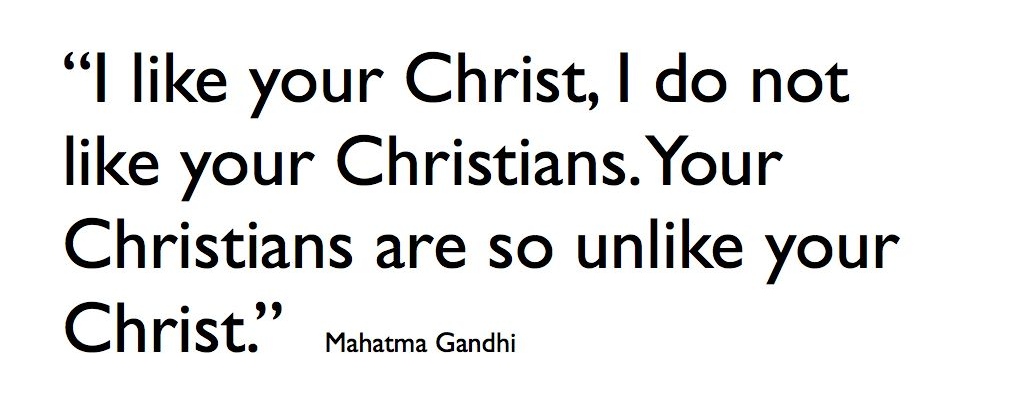
A recent article headline caught my attention. Why Are So Many Christians So Un-Christian? it asked. I have been asking that same question for years. What gives with people who claim Jesus Christ as the ultimate role model putting so much energy into wanting to govern people into behaving the way they see fit? What gives with “Christians” wanting to deny others health care, or cutting food stamps for the poor, or grousing about raising the minimum wage, or fighting efforts to care for the planet? What is it about their fascination with guns, their promotion of the military, and their craving for power in general?

Choice theory, it turns out, provides helpful insights into the cause of this disappointing reality. Two important components of the choice theory model are 1) the Quality World – the place in our heads where we store the pictures of the people, places, things, beliefs, activities, etc. that we find need-satisfying – and 2) the Perceived World – the reality that we perceive as our experiences pass through our knowledge and values filter. The Quality World is the most important of the choice theory concepts, however I find the Perceived World to be the most fascinating. Choice theory contends that from the moment we are born we begin to learn to satisfy our needs. This collection of need-satisfying people and behaviors forms our own personal Quality World, the center that motivates all of our behavior. The Quality World represents what we WANT. We experience the world through our five senses, although our perceptions are coded through filters before becoming our reality. Our Perceived World represents what we HAVE, or probably better put, what we THINK WE HAVE.

One of the filters our experiences pass through is our valuing filter or, put more accurately, the filter of our Quality World. Our personal Quality World represents everything we value and these values have an incredible influence on our perception of reality. We literally place a picture into our Quality World because we believe that picture will satisfy a need. That picture also now becomes a filter through which all of our perceptions must travel before being coded in the brain. These picture filters are very good at letting certain beliefs and images into our reality, modifying others, and in some cases, prohibiting other images and beliefs from coming anywhere near our reality.

Amanda Marcotte, the author of Why Are So Many Christians so Un-Christian?, may not be a choice theorist, but she explained the process very similarly.

It’s a process called rationalization or motivated reasoning, and to be perfectly fair, it’s how most people think about most things most of the time: They choose what to believe and then look for reasons to explain why they believe it. Huge reams of psychological research show this is just how the human brain works. Almost never do we look over a bunch of arguments and choose what to believe based on reasoning our position out. As Chris Mooney at Mother Jones explains, “We push threatening information away; we pull friendly information close.” Our faculties are usually put to the task of trying to defend what we already believe, not towards developing a better understanding of the world.”

Even before I had read Marcotte’s article, a passage in the book of Matthew got me to thinking about this topic. As part of his Sermon on the Mount, Jesus explained that –

“Your eye is a lamp that provides light for your body. When your eye is good, your whole body is filled with light. But when your eye is bad, your whole body is filled with darkness. And if the light you think you have is actually darkness, how deep that darkness is!”   Matthew 6:22, 23

Interesting that Jesus even described a filtering process that affects our ultimate view of reality. When your eye is a good filter you are filled with light and truth and healthy insight; when your eye is bad you are filled with darkness. The bad eye filter is so effective that a person can reach a point where they think they are filled with light, even as they are surrounded in darkness. “How deep,” he says, “that kind of darkness will be.”

slide.001

How is it possible to reach the point where you think you are in the light, yet you are in a total blackout? Especially spiritually? How is it possible to be concerned about living a Godly life and attend church and give offerings and hang out with other “Godly” people, and yet be filled with darkness? Which brings me to another text that got my attention. In the upper room, prior to His arrest and crucifixion, Jesus, wanting to strengthen His disciples and alert them to a terrible reality ahead, said –

“I have told you these things so that you won’t abandon your faith. For you will be expelled from the synagogues, and the time is coming when those who kill you will think they are doing a holy service for God.”   John 16:1, 2

Talk about blackness. Murder as a holy service for God. Jesus experienced this kind of “holy service” himself, by religious leaders who killed Him, but wanted the whole affair done as soon on Friday afternoon as possible, since they wanted to get home by sundown so they wouldn’t break the Sabbath.

Such is the power of our ability to create our own reality. We have everything to do with creating what we WANT (Quality World), and we also have a great deal to do with creating what we THINK WE HAVE (Perceived World). My hope and prayer is that we will let God re-create us in His image, rather than us putting so much energy into changing Him into our image. Love, amazing love, is at the heart of God’s character and He wants us to not only experience it ourselves, but also to share it generously with others.

This is the message we heard from Jesus and now declare to you: God is light, and there is no darkness in him at all. Dear friends, since God loved us so much, we surely ought to love each other.    1 John 1:5; 4:11

(You can access Marcotte’s article at http://www.alternet.org/belief/why-are-so-many-christians-so-un-christian.)

——————————–

Let’s work together to increase the number of Followers of The Better Plan blog. If you think that good stuff is being shared on the blog, why not invite others to join us? There are different ways of doing this. You can –

1. Share The Better Plan address with a friend, co-worker, or loved one. That address is  http;//thebetterplan.org

2. Click on the LIKE button at the end of a post. The LIKE buttons are a big deal in the blogging community. (You need to register on WordPress to be able to LIKE a blog, but this is a very simple process.)

3. Share a blog that you appreciate with your Facebook friends. This is easy to do and it will greatly increase the number of people who see the post.

The Fisherman and the Monkey

The restaurant beside the small harbor.

The restaurant beside the small harbor.

During my last day in Lebanon, I was reminded about just how powerful the basic need for freedom can be in a person’s life. I had visited a very unique and important school in Tyre (yes, the Tyre talked about in the Bible) and afterward was taken to a seaside restaurant where I was able to talk more with the school’s principal about the history of the school and its future mission. The story of the school must be told, as it is an amazing tale of faith and courage, but for now I will share something (else) I observed as I sat by the water’s edge.

Mending nets.

Mending nets.

There was a sea wall that protected a marina area that was home to many small fishing boats. Nets were piled on the sterns of many of the boats, or piled along the docks just behind the boats. This was a working marina, if you will. I noticed one man sitting in his boat working on one of his nets. He had white hair pulled back tightly into a short ponytail and was shirtless, revealing his weathered, overly tanned skin. It struck me as I watched him concentrating on a portion of fishing net on his lap how that might have been Peter’s exact position when Jesus walked up and asked Peter to join him. (When the school principal saw me looking at the white-haired fisherman he told me about how this fisherman was so distinctive that when documentaries are made about Tyre, as National Geographic did, the film makers always want scenes that include this man.)

A literal monkey on his back.

A literal monkey on his back.

A few moments later a younger man (younger than 35) walked onto another boat near where I was sitting. He was in jeans and an old t-shirt, and he had a little monkey on his back. Literally. This got my attention and I continued to watch this interesting duo. The man struggled to get the monkey off his back, literally, but eventually did. The monkey was on a leash and the man attached the leash to one of the metal uprights supporting a small roof for the boat. The monkey settled in, at times climbing the upright for a better view, at times just sitting on the deck and watching his companion work on nets. When the principal saw that I was focused on this younger fisherman and the monkey he told me something that expanded my understanding of the basic need that people have for freedom.

Another day at the office for the monkey.

Another day at the office for the monkey.

The young fisherman, the principal explained, had a good job as a pilot of a large boat or yacht for some rich person in the area, but that he didn’t like being under someone’s supervision or direction, and that he preferred the life of a simple fisherman, not knowing how much his income would be, but being in total control of his actions and destiny. Instead of good-sized paycheck, and having to answer to someone else, he chose a smaller, sporadic paycheck, and having total say over the details of his life. Once, the principal continued, the young fisherman caught a huge lobster, easily worth $50 if he sold it. “But he didn’t sell it,” the principal said with some passion in his voice. “When I asked him what he did with the lobster if he didn’t sell it, he told me, I ate it!

Somewhere Frank Sinatra is singing "I Did It My Way."

Somewhere Frank Sinatra is singing “I Did It My Way.”

This story reminds us of the power of the basic needs, in this case the need for freedom. He acted on his need for autonomy, which strikes some of us as gutsy. He could have stayed with the good paying job, which provided security, but for him the trade-off wasn’t worth it. Apparently, he has a lower survival need. The need for freedom doesn’t force a person to give up good paying jobs. Sometimes people work in what for them is a less than ideal situation because it pays them enough money to satisfy their need for freedom in other ways besides their jobs – maybe they travel or have expensive hobbies. If we have a high need for freedom, though, and don’t satisfy that need we will most likely be unhappy. The basic needs don’t just go away. We were born with them and they are with us for life.

The young fisherman struggled to get the monkey off his back when he wanted to start working on his nets. That moment may have captured what the fisherman felt as he wrestled with what to do with his life. Maybe his good paying job felt like a monkey on his back, too. Monkeys can be like that for all of us.

—————————————-

 The Choice Theory Study Group is meeting this coming Sabbath, November 2, at 2:00 pm in room 212 of the Education building at Pacific Union College in Angwin, California.

Thirteen (so far) Essential Psychological Skills for Kids

Kids

In the last Better Plan blog we considered the kinds of skills that kids should have before they turn 18 and definitely before they leave home. One of the categories that was missing from the list, though, was a category for Psychological Skills. Several of you responded to my request for help at forming such a list. The following list summarizes your suggestions.

Psychological Skills We Want Our Kids to Learn
1. To be able to recognize the motivation behind their choices.
2. To be able to handle failure and see it as an opportunity to learn.
3. To be able to self-evaluate.
4. Knowing the seven Caring Habits (Supporting, Listening, Encouraging, Accepting, Trusting, Respecting, and Negotiating Differences) and using them.
5. To really recognize their priceless worth, not because of their performance, achievement, or behavior, but because they are a child of God.
6. Relational skills, such as connecting, compassion, communication, and empathy.
7. To be able to process and navigate emotions in a positive way.
8. To be aware of the ability to choose their response to the conditions/circumstances of life.
9. To understand that divergent thinking is healthy.
10. To know when to –
FIGHT for something worth fighting for;
ACCOMMODATE when the relationship is more important than the issue, and
AVOID when it makes sense to split the difference and compromise.
11. Also knowing and understanding the seven Deadly Habits (Criticizing, Blaming, Complaining, Nagging, Threatening, Punishing, and Rewarding to Manipulate).
12. To learn to be caring and compassionate, especially using the skill of empathy.
13. To gain a work ethic that reflects a willingness to work and a desire to do their best.
This list is a great start, but (I wonder) have important psychological skills been left off? Reply to this blog with more suggestions and help to make the list even more complete. This could be a great resource to those of us who work with kids and to those of us who give workshops and presentations. For instance, I am scheduled to begin teaching choice theory to 10th graders this coming Friday morning. I could see myself sharing this list with “kids” and getting their response. Let’s grow this list and identify more of the psychological skills we want our kids to have.
===============================
???????????????????????????????????????
The Choice Theory Study Group that met near where I live this past Sabbath was a success! Group members shared examples of ways they have taught or used choice theory so far this school year, and coached and affirmed each other throughout the process. Some things that came out of our time together include –
George Barcenas, PE teacher, athletic director, and language teacher at Redwood Adventist School in Santa Rosa, CA, described how grades 9-12 began the school year with a multi-day retreat in the Santa Cruz mountains, with choice theory principles as the theme they wanted to set the tone for the school year. He has followed that opening week by consistently referring to the choice theory elements in his classes. Already students are beginning to bring up the basic needs, maybe their own or those of another student, when problem-solving moments arise.
Joel Steffen, fifth and sixth grade teacher at Foothills Adventist Elementary School, has been conducting daily class meetings. One thing he shared is that it really makes a difference which guiding question you use to start the meeting. When you choose well and kids are interested in the topic the meeting goes pretty well. Choose less well and it becomes apparent rather quickly. He sees both the effective and the less effective meetings as steps in the learning process, though, and plans to continue honing his questioning skills.
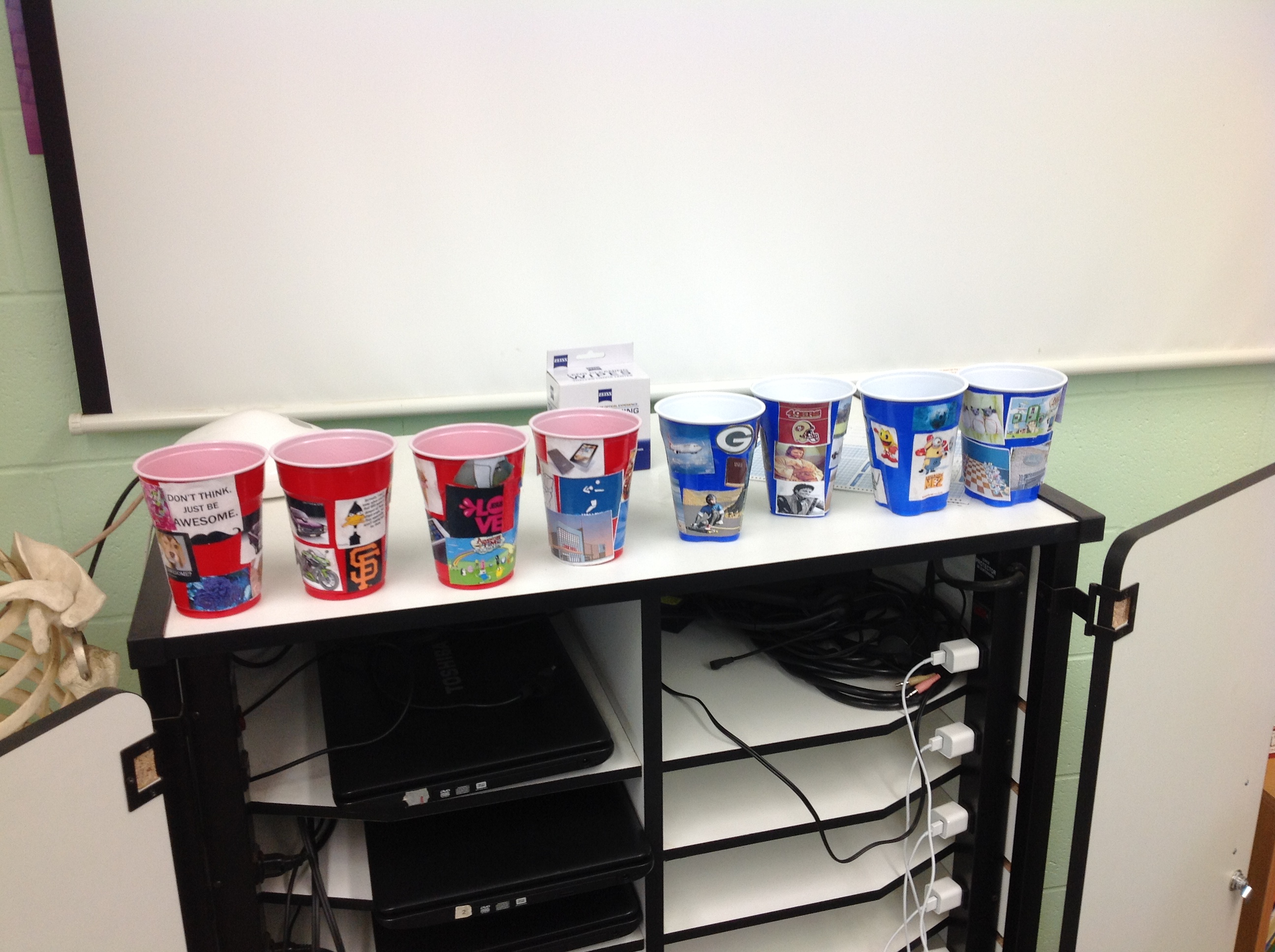
Joel Steffen is having his fifth and sixth graders create their own quality world cup.

Joel Steffen is having his fifth and sixth graders create their own personal quality world cup.

Amy Palma, fifth grade teacher at Calistoga Elementary, has been teaching there for 10 years, and has been implementing a choice theory management approach, specifically Marvin Marshall’s ABCD model for seven of those years. Amy’s story is important because she is an example of a teacher who successfully uses choice theory, even though she is the only one in the school doing so. Over the years, the school has tried different external control programs, and each time Amy has respectfully declined. While other teachers have been less than satisfied with how a school year has gone, Amy likes how it has gone and attributes choice theory as one of the key reasons. Teachers sometimes ask me, “What if I am the only teacher in the school teaching this way?” At that moment I tell them about Amy.
Sean Kootsey, History teacher at Pleasant Hill Adventist Academy, described how significant the idea of giving students multiple chances to master the learning has been for him, and for his students. He reminded us that learning and assessing is not a “gotchya” process. If students need more than one chance to learn the concepts, why is that bad, he asked. At first other teachers in the school chuckled or even scoffed at the idea of multiple learning chances, but now all of them are teaching that way and are pleased with the results. The culture there has shifted.
Ron Bunch, a local community member, shared how much the ideas have influenced his personal relationships, and especially how the choice theory ideas have helped him in his spiritual journey. He described new insights regarding the character of God and His design of us and for us. God did not create us to be a victim of circumstances, but instead gave us incredible freedom and power to make choices.
These were just a few of the things expressed in the recent study group. One thing the group decided was that we want to keep meeting, maybe even on a monthly basis. It was felt like the get-together is a good way to keep choice theory ideas from being crowded out by other things; it is a good way to re-charge the concepts and to feed off the energy of colleagues. We will be meeting twice more before the Christmas break. I’ll share those dates soon.
==========================
One thing that came out of the blog entitled Compelling Reasons to Teach Choice Theory is the recognition that we need to begin sharing more about how to get this done. We need to assemble a clearinghouse, a place where people can go to access resources and materials, or even specific lesson plans that address choice theory elements. This is important! We need to get this started!
==========================
Become even more popular than you already are by sharing The Better Plan with colleagues and friends. It’s simple –
You can also improve your popularity by sharing this post on your Facebook page. It’s easy to do and it will help to grow The Better Plan community.

What to Teach Your Kids Before They Leave Home

YOU ARE INVITED!

YOU ARE INVITED!

Reminder and Invitation
For those of you within driving distance of the Napa Valley, remember you are invited to our Choice Theory Study Group on Sabbath afternoon, September 21, from 2:00-4:00 PM at Foothills Elementary School, located just up the hill from St. Helena. The address is 711 Sunnyside Road, St. Helena, 94574. It is very easy to get to. Head north on the Silverado Trail from Napa; turn right on Deer Park Road (the blinking red light); turn right at Sunnyside Road; the school is at the corner of Deer Park Road and Sunnyside.

——————————

It would be great if by 18 every young person could do the following –

So began an article I re-discovered today while going through some old files. I am getting ready to teach a classroom management class (classes begin on Monday) and found an article I filed 12 years ago titled What to Teach Your Kids Before They Leave Home. It included a list of 12 different categories with specific skills under each one.

Domestic Skills
Cook a traditional breakfast, lunch, and dinner.
Wash and iron clothes.
Replace a button.
Bake bread.

DSCF97631-300x225

Physical Skills
Throw and catch balls.
Swim half a mile and tread water for half an hour.

Handyman Skills
Hang a picture straight.
Paint neatly and be able to clean up afterwards.
Know which tools perform which functions.

Changing Tire_2

Outdoor Skills
Hike with friends all day.
Bait a hook.
Plan and manage a weekend camping trip.

Practical Skills
Type with both hands.
Drive a car.
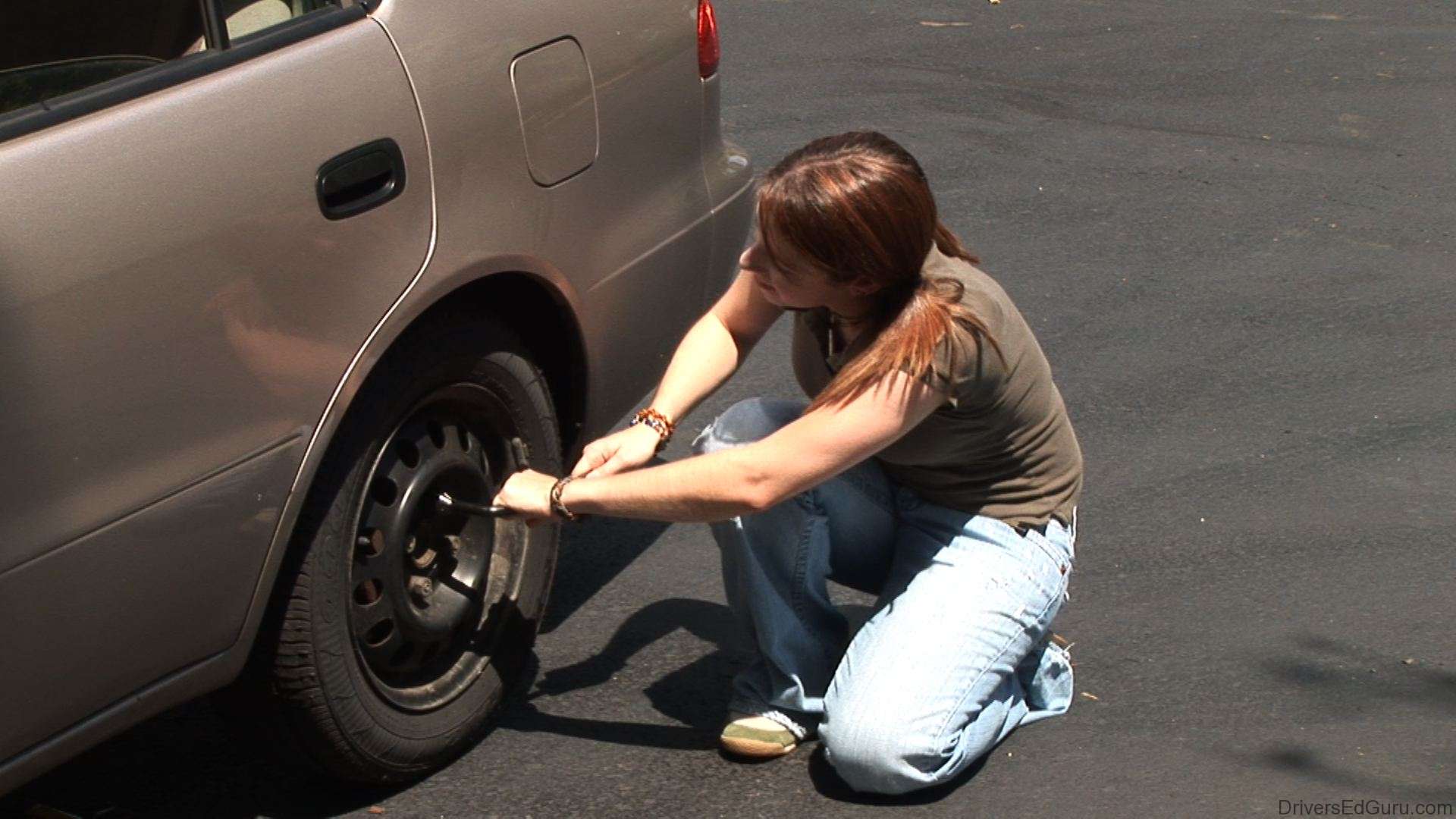
Change a flat tire.

You get the idea. There were other skills, too, things like –
Speaking before a group.
Knowing how to play a musical instrument.
Reading a map.
Knowing basic first aid.

355903-26712-50

The short article of bulleted lists drew me in and I soon was evaluating the skills the author suggested, wondering to myself if these lists really did represent the necessary survival skills for life. One category, I noticed, that was missing was a category for Psychological Skills. What do you think? Of all the categories, wouldn’t Psychological Skills be the most important one of all? Let’s add this category and answer the following question –

What Psychological Skills Would You Want to Teach Your Kids Before They Leave Home?

I really want to hear from you on this one. Let’s see what kind of skills we can come up with.

———————————

Some news on the Glasser biography!! It looks like it will be published in November. Stay tuned.

Compelling Reasons to Teach Choice Theory to Students

IMG_0635

1. It will improve students’ mental health

I was reminded recently of one of the essential pieces of choice theory implementation, that being the need for teachers to teach their students about the concepts of choice theory. It is a little bit frustrating for me to see the excitement for choice theory and the commitment to nurture a choice theory environment in classrooms, and then learn that the usual pressures of the school year seem to derail the idea of sharing choice theory with students. I am convinced, though, that bringing students on as choice theory partners will sooner establish choice theory as part of the school culture.

The recent reminder came from an article I read in the Psych Central online journal. The title — Mental Health in High School: Teach Students Link Between Thinking Patterns, Emotions and Behavior — caught my eye. Sure enough, the article could have been written by a choice theorist.

Researchers from the Ohio State University College of Nursing found that a program called COPE (Creating Opportunities for Personal Empowerment) reduced depression, enhanced health behaviors, and improved grades. Health classes used an intervention that focused on cognitive behavioral skills. While not the only focus, the study’s author, Bernadette Melnyk, observed that –

“This is what has been missing from prior healthy lifestyle programs with teens — getting to the thinking piece. We teach the adolescents that how they think directly relates to how they feel and how they behave.”

The important thing about the program is building skills that help students learn to become aware of their negative thoughts, the ways in which such thoughts affect their self-concept, and the behaviors that can come out of that kind of thinking.

“Schools are great at teaching Math and Social Studies,” Melnyk continues, “but we aren’t giving teens the life skills they need to successfully deal with stress, how to problem-solve, or how to set goals, and those are key elements in this healthy lifestyle intervention.”

We know, as teachers and parents, how much our own mental health has been improved through our understanding of choice theory. What is keeping us from intentionally and purposefully teaching the concepts to our students? Glasser once pointed out that expecting students to be successful at life without teaching them about choice theory is like expecting them to play and win a game without teaching them the rules. Kids are wrestling with so many personal challenges and conflicts. And without choice theory (or something like it) their mental health is put at risk.

2. It will improve teacher understanding of choice theory principles

It has been said that a person never understands something so well as when he has to teach it to someone else. A German proverb comments on the same principle by stating –

He who teaches children learns more than they do.

A classic book from 1971, Children Teach Children: Learning by Teaching, cited the results of an anti-poverty reading program in New York City in which older students tutored younger students with reading difficulties. After five months of one on one help it was discovered that the younger students showed a six month gain in their reading scores, which was great. They also tested the older tutors and were blown away to discover that they had made a gain of 3.4 years in their reading scores. Not expecting that kind of gain at all, it alerted them to the potential of increasing the learning through teaching.

IMG_0633

Not only will we learn choice theory better as we teach the concepts to our students, imagine for a moment how well students could learn choice theory by teaching it to each other.

I think some teachers may hesitate to teach about choice theory because they don’t feel like they have a lot of expertise in it yet. Maybe they’ll share more after they read another book or attend another workshop. I think some may hesitate, too, because giving the choice theory concepts away to students could lead them to monitor or judge our fledgling efforts toward non-coercive change. It is true that at the very beginning we may want to experiment with the ideas privately, without making a big deal out of them. Pretty quickly, though, we need to share choice theory with our students. Maybe they will monitor our fledgling efforts. All the better as situations and events become teachable “choice theory” moments.

Chances are you don’t need the Psych Central article to remind you that students need mental health instruction as much as they need physical health instruction. I encourage you to go for it!

————————–

One of the things we’ll be doing at our Choice Theory Study Group this coming Sabbath afternoon, Sept. 21, at Foothills Elementary is sharing some of the ways we have used or implemented choice theory so far this school year. I will pass on some of these examples in future blog posts.

————————–

Spread the word about The Better Plan blog. Share it with a colleague or share a post that you appreciate on your Facebook page.

It Is More Important That I Like Them

IMG_0629

Fall quarter begins on September 23 at Pacific Union College, the school at which I teach in the teacher credential program, which means that two weeks from today I will be teaching. Next week there will be quite a few campus meetings and time will feel crunched. Therefore, I thought it wise to get going on office organization and class preparation today. I attacked some stacks of stuff on top of my file cabinets, stacks that had been resting there for some time (it turns out), and re-discovered some papers, folders, and articles that were actually worthwhile in some way. One of the sheets of paper I ran across was some notes I took from a presentation I attended. It is written in my handwriting, but I had no name or no date anywhere on the paper. I remember being impressed with the talk, but I can’t remember who gave it. If one of you shared these thoughts, let me know. In any case, I have typed out my notes from the talk below –

What have you not learned yet?

What can I offer you?

It takes three years to figure out if you’re in the right place, doing it well, etc.

Give yourself permission to fail; and then to fail again.

Be reflective about your teaching.

I felt I couldn’t do anything well.

It is more important that I like them, rather than focusing on them liking me.

What mountain are you willing to die on?

One week does not a year make.

God does not call us to be successful; He calls us to be faithful.

#1 rule of teaching – Do no harm.

The one about it being “important that I like them” really jumped out at me. Of course, it oozes and overflows with choice theory. We can choose and nurture our own thoughts and behavior, but that is where our control stops.

It is amazing how much energy we can put into worrying about being liked by others. New teachers especially have to come to grips with this. Until they do it can be so draining trying to manipulate others into behaving a certain way. Being a teacher takes real strength. It takes strength to like students when they aren’t very likeable.

It can be easy to skip over the liking part and focus on having a spirit of love. The thing is, liking is loving in action. Liking is the “hi” in the morning, even when you know you’re not going to get an enthusiastic hi in return. Liking is talking about the football game and making small talk. Liking is being interested in another person and the things they are interested in. Liking is wishing another person a good evening and reminding them that you are looking forward to seeing them tomorrow.

I really believe that some students have never experienced an unconditional liking relationship. As their teacher or significant adult in their life, you may be the first to treat them like they are special and that they have a purpose in this world. They may be used to being ignored, resented, yelled at, manipulated, and controlled. It may be a shock to them to have someone say, “good morning,”

——————————-

Which of the statements from the notes speaks to you? I’d love to hear from you.

——————————-

Remember September 21!

If you live within driving distance of PUC, think about joining us for a choice theory study group!

Where: Foothills Elementary (just down the hill from PUC)

When:   Sept. 21, 2:00-4:00 pm

Attend services at one of the local churches (The Haven, next to the St. Helena Hospital, is close and they provide a lunch each week after church) and then head over to Foothills for choice theory ideas and support.

The Rest of the Story: Part 2

Today’s blog continues where we left off in The Rest of the Story: Part 1. You’ll get more out of the story if you read Part 1 first.

——————————————-

I began the presentation, and had only been going a few minutes when I noticed someone in the corner of my eye enter the room. There were no seats left and he edged along the wall to my left and sat down on the floor. When I realized that the person sitting on the floor was Jeff Tirengel, I was almost overcome emotionally, and even physically. Jeff and I had met 10 years earlier, when we were both completing the Glasser certification week training. We became friends and stayed in touch from then on. Although he possesses a wonderful, dry wit, he has a way of always bringing the conversation to the important. And as we talked about the important things in life we became close. As he sat there on the floor, though, I knew the rest of the story, as the late Paul Harvey would say. I knew that he was in a battle for his life, that he was hanging in there through tough chemotherapy that, while trying to kill the bad cells, was draining him of the good, too. That he would somehow muster up the strength, which he had in such small supply, and come to my talk .  .  . I can barely write about it even now without choking up.

I briefly described each of the chapters, occasionally reading excerpts from the manuscript. I pulled back the curtain and talked about how the whole thing began and how Bill and worked together. Pictures of Bill on the screen behind me, from childhood to adulthood, added to the story. The hour and fifteen minutes for the breakout went by quickly and I began to wrap things up. I had prepared more material than the breakout time would allow, but had presented what I could. I fairly frequently give breakout talks and trainings, so I know the drill, but I was not prepared for what happened next. Instead of people saying thanks and then heading off to supper, they started asking me when they could hear the information from the rest of the chapters that I was not able to get to. I got my wits about me and stammered that I would be open to that. One person wondered aloud if we could continue early the next morning before breakfast. Other suggestions were tossed back and forth and it was finally decided to continue that evening after supper. Instead of the classroom we were in at that moment we agreed to meet in the general area, a large open space surrounded by vendor tables.

When the breakout was over I went over to Bill. He tried to speak, but he was too choked up to get the words out. “I don’t know what to say,” he finally got out. I tried to lighten the moment (I’m not saying it was the right thing to do, but it’s what I did.) and said, “I couldn’t have done it without you, Bill,” in an obvious attempt at understatement. “Thank you,” he said quietly as he held my hand tightly. I became overcome, too, the two of us in a moment that only the two of us could understand. Jeff joined us, our hug simultaneously conveying congratulations and appreciation. After I returned home Jeff emailed a picture he had taken with his cell phone during the breakout. It shows me talking to the group with Glasser in his wheelchair in the background. The resolution is not very good, yet it will always be one of my most treasured photographs. Jeff was not in the picture, but to me, he is as much in the picture as Bill and I.
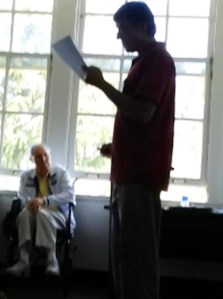
Jeff Tirengel's picture of me presenting during the first breakout session with Glasser in the background.

Jeff Tirengel’s picture of me presenting during the first breakout session with Glasser in the background.

I was drained, in a good way, as I headed to supper. I don’t remember eating much. Instead I got ready for part two of the presentation. As it turned out, more than twice as many people came to the next session. In spite of the late hour, Bill came to the next session, too. There was so much interest in Glasser’s life, the circumstances surrounding his career, and the evolution of his ideas. He was quiet throughout the evening, but I could tell he was taking everything in, the appreciation that people at the session had for him, the admiration, and the affection.

After the conference was over and I was driving back home to northern California it began to sink in. I had met or re-connected with so many wonderful people, learned important ideas from other breakout presenters, poured everything I had into my own breakout sessions, and, as I visited with others, even came upon more anecdotes for the ending of the biography, yet none of these things represented the most significant piece of the conference for me. It began to sink in that the most important part of the conference for me, the best reason for my attending the conference, was Glasser hearing and seeing the interest that others had in his story and hearing their thanks and affirmation for his efforts. I had been concerned for months and even years that he might pass away before I could put a physical copy of the book in his hands. Now, after the breakout sessions that he attended, I felt that he had experienced what readers would feel as they read his story. Somehow it felt to me that a ribbon had been placed on the package, so to speak, during those breakout sessions. He knew the book was coming and got a taste of the interest others had in the book’s content. I didn’t have a publisher yet, but at least I knew that Glasser knew it was coming and knew that people were looking forward to it.

Driving on Hwy 5 from Los Angeles to northern California can provide a lot of time to think.

Driving on Hwy 5 from Los Angeles to northern California can provide a lot of time to think.

As I drove up Hwy 5, the main north and south roadway artery from the southern part of California through Oregon and Washington all the way to the Canadian border, I had such a deep feeling of contentment as I reflected on my Glasser conference experiences. It struck me just how close I had come to not attending at all. I would have missed so much had I not attended. A bit of pride could have kept me from wanting to do the breakout at all. Discomfort at the thought of having to share a room with someone tempted me to pull the plug on the whole idea of attending the conference.

The good feelings I had, especially the feelings I had about Glasser attending the breakout sessions, were enough to fuel my contentment for quite a while. (Here comes the Paul Harvey “Rest of the Story” part.) But there’s more. In November, 2012, five months after the Glasser conference in June, I get a call from Carleen Glasser. I was just getting out of my car and about to head into Calistoga High School to observe a student teacher when her call came in. She said something about Barry Karlin and that I should call Jeff Zeig because he was interested in seeing the manuscript. For months I had been working on finding a publisher for the book, even exploring self-publishing options. Harper-Collins was a possibility, I thought, but they turned it down, even though they liked the manuscript a lot. It appeared there might be a possibility with Simon & Schuster, but that didn’t work out either. Queries to Beacon Press didn’t open any doors and I was really wondering what to do next. Then the phone rings and it is Carleen encouraging me to get in touch with Jeff Zeig. Zeig is the founder and CEO of the Milton Erickson Foundation, a highly respected organization in the field of counseling and psychotherapy. I did get in touch with Zeig and sure enough he was interested in seeing the manuscript.  He read it, along with others on their editorial board, and they decided they wanted their publishing company to print it. We have been working on the book together, especially with his editor, Suzi Tucker, ever since.

It turns out that Barry Karlin, who I met at the Glasser conference months before, contacted Jeff Zeig and let him know of the manuscript’s existence. Barry and I had good visits during the conference and I was impressed with how committed he was to the Glasser message. He attended my breakouts and was one of the voices that asked for the second breakout session later that evening. Barry and I departed the conference as friends. I sent him the manuscript and sought his comments on what he read. He really felt like the book needed to be published and on his own he contacted Jeff Zeig and the Milton Erickson Foundation. That contact ultimately led to the book being published within the next few months.

Once again, the details of the situation hit me. Had I not gone to the conference I wouldn’t have met Barry and he wouldn’t have become part of the manuscript and the publisher search. The Milton Erickson Foundation would probably never have come up on my radar screen. I knew that Jeff Zeig was the force behind the success of the Evolution of Psychotherapy conference, but I didn’t know that the Milton Erickson Foundation had a publishing house until Carleen and Barry told me about it. Barry taking the initiative made all the difference in the world.

So now you know how the biography came to be published. It’s a bit of a convoluted tale, but most good tales are. The moral of the story? Don’t let pride keep you from experiencing life. As far as this story is concerned, a little bit of pride would have scuttled everything.
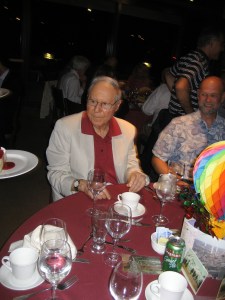
Bill Glasser at the banquet, held on the last evening of the conference, June, 2012.

Bill Glasser at the banquet, held on the last evening of the conference, June, 2012.

————————————————-

If this post has been interesting or helpful to you, it might be of interest to others, too. It’s easy to share this post with your Facebook friends or Twitter connections. Simply click on the Facebook icon at the end of the article. The rest is easy.

The Rest of the Story: Part 1

Bill and Carleen Glasser during the 2012 international conference.

Bill and Carleen Glasser during the 2012 international conference.

This is a story I think needs to be shared, however I am not sure where to share it. At first I thought about it as an Epilogue for the biography, but I don’t think it is a good fit for that. So I will share it here. Some of you will be especially interested in the details of the story; others of you probably not so much. But there are lessons in the story, particularly one that stands out for me. The story is too long for one blog article so I will share it in parts. Here goes Part 1.

~~~~~~~~~~~~~

William Glasser passed away in his home, the home that he built after first moving to Los Angeles in 1954, on Friday evening, August 23, 2013. He was 88 years old.

I had wanted to place a copy of his biography in his hands while he was still living, but I will miss being able to do that by just a couple of months. While writing the manuscript I shared portions of it with him and he affirmed the story that was taking shape, so he was aware of at least that much. Something happened last summer, though, that helps me to better accept that he never held a copy of the completed book in his hands. That “something” goes like this –

The annual International Glasser Conference was held at Loyola Marymount University in southern California during June, 2012. Compared to most international conferences the planning took place rather quickly, however this was due, to a great extent, to Glasser’s health. It was clear that he was not doing so well and Institute board members realized that if colleagues and friends from around the world were going to be able to thank him for all he had done that a conference should be planned as soon as possible, and that it should take place as close to Glasser’s home as possible.

When I received the announcement about the conference, which also included a call for breakout proposals, I immediately felt that I should submit a proposal that would serve as an update on Glasser’s biography. I had been less involved with the Institute since 2008 and wanted to let people know that the manuscript was almost done. More than that, though, it would be a way for me to say thank you to Glasser for what he meant to me and for what we had accomplished together.

I went ahead and completed a breakout proposal called My Time with Bill, and then waited to hear from the organizers. Several weeks later I heard back from them and was surprised, and a bit miffed, to learn that they wondered whether I would be alright with doing a half a breakout, instead of a full time allotment breakout. My ego pretty quickly echoed thoughts like, Well, if they don’t think this is important enough for a full breakout then I don’t need to do it all. I didn’t respond to their email immediately, though, and thought about the situation for a bit. Within a couple of days I realized that this wasn’t about me or my ego. The conference was about him, about Bill, and it was about me saying thank you to him. And so I emailed back and said, Sure, I’ll take whatever time you give me. I had already begun communicating with Jim Coddington, the person I was going to split the breakout time with, when I received word that things had changed and that he and I would each be given a full breakout slot. I was fine with that, too, and proceeded to prepare the presentation.

Not long after that I contacted the organizers to reserve a room at Loyola during the conference. I had wrestled with what to do about lodging, but eventually settled on staying in one of the dorms right there on campus. I indicated that I wanted a private room, thinking my dorm days and living with other guys was behind me. I learned, however, that there were no more private rooms available and that I would have to share a room with someone. (The words surprised and being miffed come to mind.) Once again, my ego weighed in–Why even go to the conference when it felt that at every turn things felt difficult? I didn’t want to share a room with a stranger, probably listening to his snoring at night (or him listening to mine). But again, after thinking about it, I remembered that this wasn’t about me. It was about saying thank you to Glasser. So I let the room reservation people know that it was fine and to put me with whomever.

The conference turned out to be an amazing experience for me! Even the lodging arrangements contributed to the positivity. When I checked in to my room I discovered that one of the two wonderful gentlemen with whom I shared the rather spacious accommodations was Rhon Carleton. Rhon and I were acquaintances before the conference. We knew each other through various Glasser Institute functions. During the conference, though, we were able to become much closer friends. He and I are somewhat unique in that while we are fully immersed and committed to the principles of choice theory, we come at these principles from a faith perspective. Rhon is a former chaplain in the armed services, and now serves as a pastor in Mississippi. I am a professor in a teacher credential program in a liberal arts college sponsored by the Seventh-day Adventist church. My first book, Soul Shapers, alerted SDA teachers to the incredible ways in which Glasser’s ideas informed and supported the journey of faith. During the conference, Rhon and I had many discussions on these kinds of topics. As a result, my lodging arrangements actually added to the quality of my experience.

I met or re-connected with many wonderful people as the conference progressed. Those who were aware of the Glasser biography project expressed interest in it and wanted to know how close we were to seeing it in print. One of the people I was surprised to see at the conference was Diane Gossen. Diane was viewed as controversial by some because of her central role in the organizational schism of 1996. She had authored a program called Restitution, which became very successful in schools looking for practical help with effective student discipline. Diane was a long time Glasser trainer and had tapped into control theory principles as she developed Restitution. Yet, when Glasser rejected all school discipline plans, including his own Ten Step Plan, he rejected Restitution, too. Ultimately, Diane left the Institution, along with others, and continued on her own. When I saw her walk into the general eating area as the conference began, it had been over 15 years since she had attended a Glasser function. Maybe her presence, more than anything else, underscored to me what the conference really was about. It was about saying thank you to an important person in a lot of our lives. It was about saying good by, too. In spite of whatever had happened in the past, Diane was proclaiming loud and clear that Glasser was that important to her! It meant a great deal to me to see her there.

Diane Gossen and Bill Glasser share a moment at the conference.

Diane Gossen and Bill Glasser share a moment at the conference.

I also met Barry Karlin at the conference. He was very interested in the Glasser biography project and, as it happens, I like talking with people who are interested in projects on which I am working. He had an energy about him and I enjoyed listening to his ideas.

When it came time for my breakout the room began filling as I set up my computer and got things ready. By the time I started the room was packed to overflowing, however it wasn’t the numbers in the room that caught my eye. As I scanned the room it hit me what I was about to do. Glasser himself was there, along with Carleen. He was in a wheelchair, as he had been throughout the conference, yet he seemed very present to me. Many who had been part of the Glasser organization for many years, some since almost the very beginning, were seated there, too. Diane Gossen was part of those in attendance as well. Diane and Bill in the same room after all these years. I couldn’t believe it! I looked at the faces looking at me, so many of them people I had written about or mentioned in the biography. I thought, with a note of panic, Who am I to be talking about Glasser’s journey when these people experienced the journey with him.

That concludes Part 1; stay tuned for Part 2

——————————-

Those of you in the northern California area, remember to join us for our first Choice Theory Study Group on Sabbath afternoon, September 21, at 2:00 PM at Foothills Elementary in St. Helena. Mark it in your calendar right away!

——————————-

If you haven’t already done so, sign up for The Better Plan Facebook page. By “signing up” it would be more accurate to say LIKE the page.