GREAT DREAM – Acronym for Happiness

happiness

A recent survey of 5,000 people asked them to identify the everyday habits that make them happier. Here are the 10 habits, along with the average rating, on a scale of 1-10, that indicate how often the participants performed each habit.

1. GIVING: do things for others – 7.41

2. RELATING: connect with people – 7.36

3. EXERCISING: take care of your body – 5.88

4. APPRECIATING: notice the world around you – 6.57

5. TRYING OUT: keep learning new things – 6.26

6. DIRECTION: have goals to look forward to – 6.08

7. RESILIENCE: find ways to bounce back – 6.33

8. EMOTION: take a positive approach – 6.74

9. ACCEPTANCE: be comfortable with who you are – 5.56

10. MEANING: be part of something bigger – 6.38

The first letter of each habit spells out GREAT DREAM, which sounds like a good thing, although choosing to engage in any of these habits has been scientifically proven to improve our happiness level. These habits aren’t just a dream, they work.

It is quickly pretty plain that choice theory is embedded throughout this list of habits. Each of them involves a choice, either in the course we set for ourselves as an individual or as a way we respond to setbacks and difficult circumstances.

Glasser felt that happiness is an essential indicator of mental health. In fact, he equated three terms as inextricably linked – choice theory, mental health, and happiness. When you talk about one of these, he felt you were basically talking about the other two at the same time as well.

He also felt it is important to differentiate between happiness and pleasure, with happiness involving something that adds strength to our lives and that often brings us closer to other people, while pleasure involves things that temporarily feel good, but that ultimately weakens us and that threatens or harms our relationships with others.

We all have been designed to desire true happiness, although we too often settle for pleasure instead. The GREAT DREAM list is a good reminder of the tangible decisions we can make that will help us experience real happiness, rather than being addicted to chasing short-term pleasure.

======================

Classroom Application:
+ Define and discuss the idea of true happiness or real happiness.
+ Develop an age-appropriate survey, maybe similar to the GREAT DREAM list of activities, on which your students can indicate the things they do that brings them happiness.
+ Process the responses and discuss the results. (The responses can be processed as a part of Math class; the results can be discussed as a part of Health class, Social Studies, or even Bible class.)
+ As appropriate, have students consider the difference between happiness and pleasure.
+ Help students explore the role of choice in achieving personal happiness.

=====================

The Glasser biography has officially gone to the printer. Hopefully, an announcement will be forthcoming soon regarding how to order copies of the book.

=====================

Our next Choice Theory Study Group is this coming weekend – March 15.

=====================

For more info on the GREAT DREAM survey, go to the PSY BLOG website at –

http://www.spring.org.uk/2014/03/10-simple-habits-proven-to-make-you-happier.php?utm_source=feedburner&utm_medium=email&utm_campaign=Feed%3A+PsychologyBlog+%28PsyBlog%29

Are We Biologically Built to Focus on the Negative?

2324612788_379faaa22e-300x197

An interesting reminder was recently shared on the Mental Health and Happiness website. The focus was on gratitude. Here’s how it read –

Many of our present day gurus, as well as almost all profound guides through the ages, tell us to count our blessings. Because our brain is designed to bombard us with all of the data about how our world is not matching up with what we want, we need to practice how to override this automatic function of our brain.
Life is filled with hard moments, disappointments and difficult challenges. At the same time life is filled with moments of joy, delight and awesome discoveries. Both abound in every day.
And since we are biologically built to focus on the negative we need to practice looking for and celebrating the positive.

The reminder to focus on thankfulness and gratitude is a good one. Absolutely no argument there! The part that is interesting to me, though, is the idea or belief that “we are biologically built to focus on the negative.” According to this view our brains are designed to provide “data about how our world is not matching up with what we want.” Therefore, thankfulness and gratitude are thinking processes in which we “override this automatic function of the brain.” This explanation gave me pause.

During this pause or time of reflection I have come up with a few summary statements –

+ I do believe that our brain is constantly monitoring the status of how what we HAVE compares with what we WANT. (Probably more accurate to say “what we think we HAVE compared with what we think we WANT.”)

+ As far as original design, I think God designed us for internal control, able to achieve harmony between our HAVES and WANTS.

+ Sin and rebellion entering the world hugely affected the ability of human beings to achieve harmony and balance between HAVES and WANTS. What was natural and even easy before now became a struggle.

+ Given this struggle I do believe it is necessary to “override” negative thinking and negative scripts that we practice and rehearse and instead choose to recognize the people, things, and areas in our life for which we can be thankful.

+ I think we were designed for love, belonging, freedom, and joy. I think we were designed for balance and the ability to match our HAVES and our WANTS (without keeping others from achieving their balance, too). I believe there is something deep within each of us that yearns to honor that original design, and that wants to learn to balance the HAVES and the WANTS, even in the midst of the frustration and pain of a sinful world.

What do you think about the idea that we are biologically built to focus on the negative?

===============

I encourage you to check out Mental Health and Happiness at

mentalhealthandhappiness.com.

===============

Some of you will be interested to know that the Glasser biography, in its final version, went to the printer this past Tuesday, February 25. Supposedly, it should be available very soon, although the process has taken a bit longer than I anticipated at every step of the way. I will be providing more information on the biography and its availability as soon as I learn of the details.

===============

CALENDAR CHANGE – Please note that our next Choice Theory Study Group has been changed to March 15 at 2:00 pm. (It was previously scheduled for March 8.)

A news story out of Colorado caught my eye recently, because it had to do with a school that is replacing traditional suspensions with meaningful conversations. They call it restorative justice. It sounds pretty choice theory to me.

At Hinkley High School in Aurora, Colo., students, parents and administration are meeting face-to-face to resolve student conflict with conversation. The number of physical altercations has taken a nosedive as this new type of disciplinary action, called “restorative justice,” replaces suspension. Hari Sreenivasan has the story.

Believing in Students: The Power to Make a Difference

I recently ran across a blog post by Dr. Richard Curwin, the architect of Discipline with Dignity, a program that is highly complimentary to choice theory. I actually ran across this short article in Edutopia, a wonderful online educational resource that focuses on what works in education. If you haven’t connected with Edutopia yet, you must do so quickly!

Here is the article – Believing in Students: The Power to Make a Difference – which first appeared in December of 2012.

curwin-belief-in-students

by Richard Curwin

After a morning Discipline With Dignity training, the high school principal and I walked to the cafeteria to eat lunch. He said, “I love your session, but it’s not practical.” I responded with my view that it was practical because it works — but it’s just not easy.

He pointed to a girl sitting alone at a table and said, “Do you think it would work with her?” She looked like she was a character from the Mad Max movies. She had just been released from federal prison. Her look was extreme (maybe not so much today) with spiked orange and purple hair, tattoos, all black makeup including black lipstick and black rouge, and severe body piercings. The principal looked at me and said, “So what would you do?” I asked back, “What about you? How do you handle her?” He said that he would draw a line and tell her she’d better not cross it. I responded, “What if she says, ‘I’ll kill you?’ Which one of you will be more afraid, her because she crossed the line you drew, or you because she threatened you with death?” The truth is that if she’s been to prison, nothing that can be done in a school would frighten her. Detention? Calling her mother?

So he again asked what I would do. I said, “Talk to her.” And he invited me to go over and try it right then. So I did. Dressed in my three-piece suit, I sat down at her table. She looked at me for a minute and said, “Who the f**k are you, a***ole?” I was a little stunned and didn’t have time to read a book or check my notes. So I relied on two strategies I had just taught the teachers in my morning session: meet the real needs of students and use challenge instead of threat.

I said, “I’m someone writing a book on teenage violence, and I think you know better about it than me. If you have the courage to tell the truth and answer one question (challenge), I’ll put your name in my book (need to be noticed).” She asked what the question was, so I replied, “Are there any teachers who you listen to, follow directions, show respect and learn from?” She said she had one like that, and I asked her what made that teacher different from the others.

Her answer is one that I will never forget and has been one of the constants in my work ever since. It’s a movie scene that replays over and over in my mind. Right before my eyes, her answer transformed her from a tough, hardened criminal to a frightened little girl.

Because she’s stupid. She thinks I can get a job someday, that I may even be able to go to college, or be a good mother because I know all the things not to do.

Then she started crying. The tears streaked down her black make-up and made her look like a zebra with black drops falling on her white top.

I ain’t going to college and I ain’t getting a job. I’ll never be a mother. I’m a dead girl. In prison when they write your name on the wall, you die, and my name is there. I know I’m going back. But that teacher believes in me, and man, it really, really matters.

Later I put her name, Roxanne, in my book and tried to find her to give her a copy, but nobody knew where she was or how to find her.

Sometime later, I traveled the country doing trainings. I asked administrators if I could meet with about ten of their most troubled students. I did this for grades K-12, in urban, rural and all economic areas. I did it on two Indian reservations. I asked two questions: “Who is your favorite teacher and why?” I expected most to say they had no teacher who was a favorite. But they all did. Among the top reasons was, “They believe in me.”

Five Ways to Reach Out
Believing in students is not simply telling them that you believe in them. These words matter only if they are true and if you demonstrate them by your actions. There is no way to fake it, because kids have built in crap detectors (a phrase taken from Neil Postman, and Charles Weingartner, in Teaching As a Subversive Activity), and they can tell if you don’t mean it. Here are some ways to express it.

1. Stop Using Rewards
Rewards are not needed if you believe in a student. The reward implies to them that they only way you can get them to do something is to pay them. That is the opposite of believing.

2. Encourage Effort More Than Achievement
Not every child can meet the unrealistic goals of a test-mad curriculum. Every child can try to do his or her best. Ironically, the harder students are encouraged to try, the better they do on our crazy high-stakes testing.

3. Give Second, Third and Fourth Chances
In many states, the law says, “Three strikes and you’re out.” In most schools, the most troubled kids get only one strike. The message is, “Be the way we want or we don’t want you.” School is for all children and mistakes are part of the learning process, not just for academics, but also for behavior. Rather than strike them out, teach them the skills they need to overcome their deficiencies.

4. Don’t Say “You Failed” – Say “You Haven’t Done It Yet”
Encourage hope by letting students know that, no matter what they do, they can still do better. Safety always comes first in a school environment, of course. Sometimes safety concerns override points 3 and 4, but not as often as we think.

5. Increase Opportunities to Learn
The children who need recess the most are the first ones to lose it. Being removed from field trips, the cafeteria, library and all other learning opportunities only makes students less able to handle them in the future. No one would say to a basketball player, “You missed too many foul shots. You can’t practice until you get better.” It is time to stop giving more opportunities to those who have already proven they are successful while denying opportunities to those who need them the most.

If we can start reaching kids like Roxanne sooner rather than later, who knows how many lives could change?

==========

Jim Roy follow-up — Choice theory is based on the idea that people are self-governed through an internal control system. People respond to the world about them — to their environment, to expectations, and even to external pressure or force — from this internal control system. Teachers have the special challenge of reaching students who are forced to be in school and who are often distressed because of awful life circumstances. These students, while they may outwardly put up protective walls, yearn to be affirmed. Only by genuinely honoring their internal control systems can we begin to melt the walls and get through to them.

Stay on the choice theory journey! Either you will find the answer there or you will be in the right neighborhood to find the answer.

8 Books on William Glasser’s Bookshelf (that are now on mine)

Used bookstore in San Luis Obispo, CA.

Used bookstore in San Luis Obispo, CA.

For almost a year there has been an old book on top of one of the stacks on my bedside table, and even though I haven’t read it, my love and belonging and power needs are met every time I see it.

Glasser and I talked about a lot of things as I wrote his biography. During our interviews he would frequently bring up what he happened to be reading at the moment. He read a lot. Sometimes he would talk about an article he read in the New Yorker; or about an editorial in the Los Angeles Times; or about a book he was reading. When we visited about his childhood he described how much he read even then.

As a child he especially liked a group of books known as The Young Trailers Series. He spoke fondly and respectfully of the Young Trailers author, Joseph Altsheler, and about how he could really write adventure stories, tales that required resourcefulness and bravery. He read these books so many times that he could not remember the exact number. I had never heard of them or the author, but became curious about them due entirely to Glasser’s enthusiasm. I did some checking, figuring that I would just go to half.com or Amazon and pick up one or two of these books, and discovered instead that getting my hands on an Altsheler book was not as easy as I thought it was going to be. If I was willing to part with $200 I could have one mailed to my house. Otherwise I would need to begin searching the occasional used bookstores I was able to frequent.

Looking on my bookshelves now, I am reminded of the different books that Glasser alerted me to, and that I was able to find at used bookstores here and there. Books like Jesse Stuart’s, The Thread That Runs So True (1949), and Ernest Kurtz’s, Not God: A History of Alcoholics Anonymous (1979). He loved anything that Anthony Trollope wrote, who he felt could really get inside a character and what he or she was thinking. I don’t have any of Trollope’s books yet, but I probably will someday add a few of his books to the Glasser section in my library. I go to a used bookstore in San Luis Obispo, California, at least twice a year and while browsing there a few years back I discovered an old copy of Glasser’s all-time favorite book, Raintree County (1947), by Ross Lockridge, Jr. “I’ve read that book at least seven times,” he shared with me, which is no small feat considering it runs 1,060 pages long. When I took it to the counter to buy I thought it might be kind of expensive, but it wasn’t. Didn’t they know it was William Glasser’s favorite book?

IMG_0942

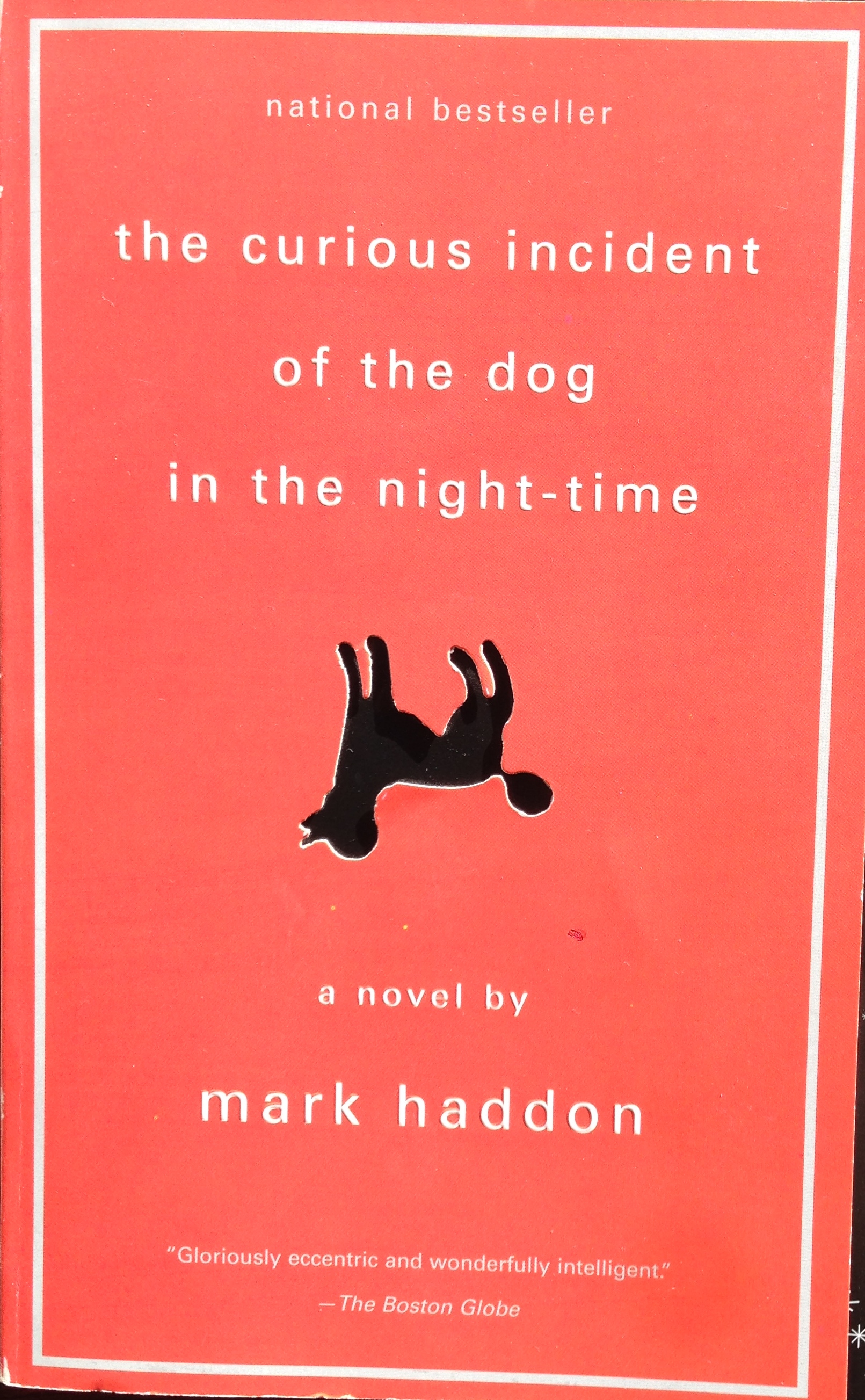
Not all of Glasser’s recommendations were of old books. For instance, he convinced me that I needed to go out and buy a book by Mark Haddon called The Curious Incident of the Dog in the Night-Time (2003), an incredible book with an autistic savant as the hero of the story. He also convinced me on books like Mad in America (2002), by Robert Whitaker; America Fooled (2006), by Timothy Scott; and especially Beyond Prozac (2005), by Terry Lynch. For those years that Glasser and I worked together he seemed to be with me whenever I went book shopping, be it in a Barnes & Noble, a used bookstore, or online. My experience was that he had a good eye for reading material.

IMG_0947

I had kind of given up on finding any of Altsheler’s books, although last year when I was in a used bookstore in Nevada City, California, and discovered they had a kid’s section, I decided to look more carefully. There could be a chance. And then, as I looked from book spine to book spine, there it was. There was The Forest Runners (1908), by Joseph Altsheler. I opened and closed my eyes to make sure I was seeing correctly. I looked inside and saw that it was the second book of eight in The Young Trailers Series. I wondered about its price as I approached the cash register. I was told it was $18 and that it would come to almost $20 with tax. I got the $20 out of my wallet so fast the bookstore owner must have been tempted to say, “Wait a minute, now I can see the price more clearly. It’s not an 18, that’s an 80. I meant to say $80.” But he didn’t and I left with a special treasure.

IMG_0939

The Forest Runners has sat on my bedside table ever since. I haven’t read it and I don’t intend to soon, yet I feel good every time I see it. I feel a connection to Bill and remember his joy and excitement as he described things the book’s characters overcame. My oldest grandson is three and a half, so he’s not ready for swashbuckling adventure yet, but when he is I know of a book we can share together. (Oh, bother. How am I going to find the other seven books in the series?)

=================

Interested in stories about Bill Glasser? Glad for choice theory tips on how to live a happier life? Appreciate ideas on how to bring choice theory into the classroom? Then why not pass it on and tell a friend or colleague about The Better Plan blog.

http://thebetterplan.org

==================

Follow on Twitter – @thebetterplan

==================

Remember the new 2103 – At A Glance link at the upper left hand corner of the page when looking to catch up on topics from last year. Quick links to all the articles are chronologically listed.

Grief and Choice

Been quite a week for me – Went to bed sick on Sunday and am still basically in bed as I write this (on Thursday), although I think I am starting to crawl out of my hole. Antibiotics, chest x-ray, many of you are probably familiar with the drill. Hope your week has been a bit better.

I noticed something on Facebook a few days back and, with the author’s permission, I would like to share it with you. It is a short piece about grief and choice. Karen Nicola, the author, and her husband, Steve, have been good friends of mine for many years and I am glad to pass on her insight and wisdom to you. Her bio and contact information follow.

OLYMPUS DIGITAL CAMERA

MONDAY MOURNING:  What if grief was an option? Who would take it?  Can’t think of too many who would willingly sign up for that kind of uncertain full body slam.  While mourners cannot choose to wake up tomorrow and find themselves in a different emotional, mental, and physical continent, we can choose how we will travel the unfamiliar terrain in which we find ourselves.

So let’s talk a little about the freedom of choice and how that influences the outcome of our crushed souls.  We can choose to do things that contribute to wellness.  Even with limited appetite, we can choose healthy foods to eat; we can take additional vitamins and minerals to enhance our body’s health.  Any outdoor exercise improves our circulation and thus increases our capacity to deal with the surges of emotional tides.  We can choose what we listen to and allow music to be a calming influence in our daily routine.  We can choose to write about our process.  Keeping a special book that captures our pain is a safe and useful tool of releasing the whirlpool of fear, guilt, blame, shame, anger, pain, sorrow, and despair.  Have you imagined the potential of choosing healing?  Sometimes the bereaved believe that clinging to our pain is evidence of our unending devotion to the one we dearly love.  Choosing to heal can be one of the most difficult choices we make.  Healing has no predetermined process; it comes differently for each one. Choosing healing actually demonstrates respect for the deceased in that we are allowing their absence to create space for us to become whole again and even deeper, richer individuals than before.

This kind of healing comes from a Higher Power than ourselves. Choosing to trust God with the process of healing just might be our most important choice of all. How would it work if we made just made one conscious choice each day to move towards health and healing?  We might find that one day leads to the next and the uncertain terrain of living apart from the one we love is moving us further from darkness and brokenness and nearer to an open, mended, and giving heart.

Karen Nicola writes and speaks encouragement that comes from her own experience with God and His Word as she worked through her grief following her three-year-old son’s death from leukemia.  Now, more than twenty-five years later, Karen continues to be passionate about the hope of God’s healing for our brokenness.  She is also aware that many struggle to know how to comfort those who mourn, so she is eager to encourage the encouragers too.  Through her book, Comfort for the Day, readers encounter two of God’s most effective healing tools; His word and journaling opportunities. Karen maintains a web site that runs two blogging conversations; one for the bereaved and the other for those comforting them. Visit www.comfortfortheday.com for more information. When she is not leading seminars, she thrives in the high school classroom, teaching international students at Rio Lindo Adventist Academy.  But her favorite activities involve anything to do with her family.

==================

May I Have Your Attention!!

check-this-out

I am really pleased to announce the addition of a new page to The Better Plan blog!

If you look at the top left-hand side of your screen you will see a link that reads 2013 – At A Glance. When you click on that link it will take you to quick links of all the 2013 posts, which are additionally listed in chronological order. For those wanting to “catch up” with what we have been covering or for those wanting to locate a particular post, this new page is going to make such a difference.

The Better Plan blog has always had the Archives section on the left-hand side of the screen, but it was a bit cumbersome to use, especially if you want to read posts in the order in which they appeared. There were a number of posts last year that were a part of a series — like The 7 Worst Things Good Parents Do and the We Want to Feel Good series — and you really had to read them in the right order.

There has always been, and there will continue to be a Search entry box on the left-hand side of the page, beneath the Archives section. It can be helpful if you know a keyword or phrase in a blog post you are trying to locate.

I think you will find, though, that the new 2013 – At A Glance page is the best thing since sliced bread! It provides a reminder for topics we covered last year, as well as quick links to access them easily. All of the post Replies and Discussions are included, too. I’m telling you this is life-changing!

==============

Remember to stay in touch with the Upcoming Events calendar,  also on the left-hand side of the page. For instance, the next Choice Theory Study Group is coming up on March 8.

==============

Find us on Twitter @thebetterplan

Where In the World?

thebetterplan PP redo

Where in the world did the phrase – the better plan – come from? And why was it chosen as the name for this blog?

Good questions, both. So lets get to the first one. Here is the passage “the better plan” comes from –

Those who train their pupils to feel that the power lies in themselves to become men and women of honor and usefulness, will be the most permanently successful. Their work may not appear to the best advantage to careless observers, and their labor may not be valued so highly as that of the instructor who holds absolute control, but the after-life of the pupils will show the results of the better plan of education.   Fundamentals of Christian Education, p. 57

As to why I chose “the better plan” as the name for the blog, I think it has to do with the Three Remarkables that can be found in the passage

Remarkable #1
The phrase was actually first written in 1872, and its author stuck with the theme of this passage through the turn of the century until her death in 1915. The passage is remarkable because of what she said – that schools should be focusing on the power that lies within students – and when she said it – at the start of the Industrial Revolution and its massive influence on the way schools operated. This internal power had everything to do with choice, freedom, and responsibility. The passage was emphasizing choice and freedom at a time when schools were becoming like factories, with an emphasis on external control.

Old-timey-school-classroom-21

Remarkable #2
The passage presents the reality that teachers who introduce their students to the power that lies within themselves – in other words, internal control – rather than focusing on controlling them through external control, will be misunderstood and under-appreciated. Careless observers will not get it. Traditionalists will cling to external control as the answer. It is amazing that over 100 years after it was first written the passage is still timely today.

Remarkable #3
The passage was written by a religious author, who we might assume would be part of the traditionalist, external control, “make em do what we want em to do” scheme of things. However the author wasn’t like that at all. She saw the need for and value of students coming into an understanding of their choice power. And she saw the importance of this being an inside-out process, rather than outside-in. In her opinion this process was so important that she equated “the better plan” with connecting students to a healthier after-life, including the best after-life of all – that being the forever life of life eternal.

These are some of the reasons I like the phrase “the better plan” so much. It’s all about choice and freedom.

====================

Ellen White, the author of the better plan phrase, and the author who wrote about the special power that students have within themselves, consistently emphasized that humankind is powerless without Jesus. Through Him, she wrote time and time again, all things are possible, without Him nothing is possible. He created human beings to have the power of choice and to be free. Nothing indicates our having been created in Jesus’ image as much as this incredible freedom to act and to do and to be. And it was this freedom that He died on the Cross to preserve. Satan likes nothing better than to deface a person’s power to choose; he likes nothing better than to trap and addict and imprison. But Jesus came to earth to do a couple of incredible things –

1 – He came to destroy the works of the devil.  1 John 3:8

2 – He came to set the captives free.  Luke 4:18

Now that’s an awesome Better Plan!

==================

Just a reminder to keep the calendar dates on the left of the page in mind, especially the Soul Shaper dates in June.

Quitting Smoking and the Nuclear Strategy

savingmoney

The Happiness Project, a blog I follow, recently posted a letter from a gentleman who described his strategy to break the habit of smoking. Citing a number of habit breaking strategies in the post, the specific strategy described in the letter was categorized as “the nuclear strategy.”

I am curious what you think about this habit-breaking approach. Do you think this would be a good way to break a particularly difficult habit?

And to my fellow choice theorists, how does this strategy complement or contradict the principles of choice theory?

Here’s the letter –

I picked up smoking when I studied abroad in Vietnam. The father of my host family didn’t speak English, but he smoked, so he encouraged me to join him. Open to new experiences, I went from zero to a pack a day in one week.

That pack-a-day habit stuck with me for three years while I tried everything to quit smoking — set deadlines, cursed my lack of willpower, thought that switching to a tobacco pipe was somehow better. It was terrible.

Of the hundred ways I tried to quit, here’s what worked: I set a date in advance that held meaning for me (the one year anniversary of graduating college), I wrote out a long list of both the things I hated about smoking, and the things I loved about smoking (so I knew the tradeoffs), and then — what I consider the innovative part — I hand-wrote fifteen letters to friends and family members saying “If, after May 20, 2001, I ever smoke another cigarette, I will pay you $200.” I sent these letter particularly to friends who themselves were smokers.

When the date came, I gave away my remaining cigarettes, lighters and accessories. I scheduled new after-work activities to break up my routines for a couple of weeks. And I noticed a funny thing: my smoking friends, who had previously tried to lure me back to smoking in my earlier quitting attempts, were now constantly handing me cigarettes — then reminding me of the money I was going to pay them if I accepted the cigarette. “This cigarette will cost you $200,” my friends would say. The letters had turned my enablers into enforcers. Needless to say, when that one cigarette would cost me $3000, it was easier to refuse it.

And that was it. I still love smoking, and really wish I could smoke. But I went from a pack a day to zero, cold turkey on May 20, 2001 and haven’t smoked again.

The blog went on to explain that a nuclear option is when there’s some major drawback to breaking a habit. For some people, it pointed out, this really helps.

So what do you think? Is the nuclear option simply a gimmick? And if so, are gimmicks ever ok within the choice theory framework?

=========================

 images

Follow

The Better Plan

on Twitter

@thebetterplan

Sage, succinct advice; pithy insights; encouraging phrases; brief formulas that crack the codes of life; maps that uncover the mysteries of understanding; and yes, shortcut links to The Better Plan blog posts.

Join now for FREE!

The Teacher in Me

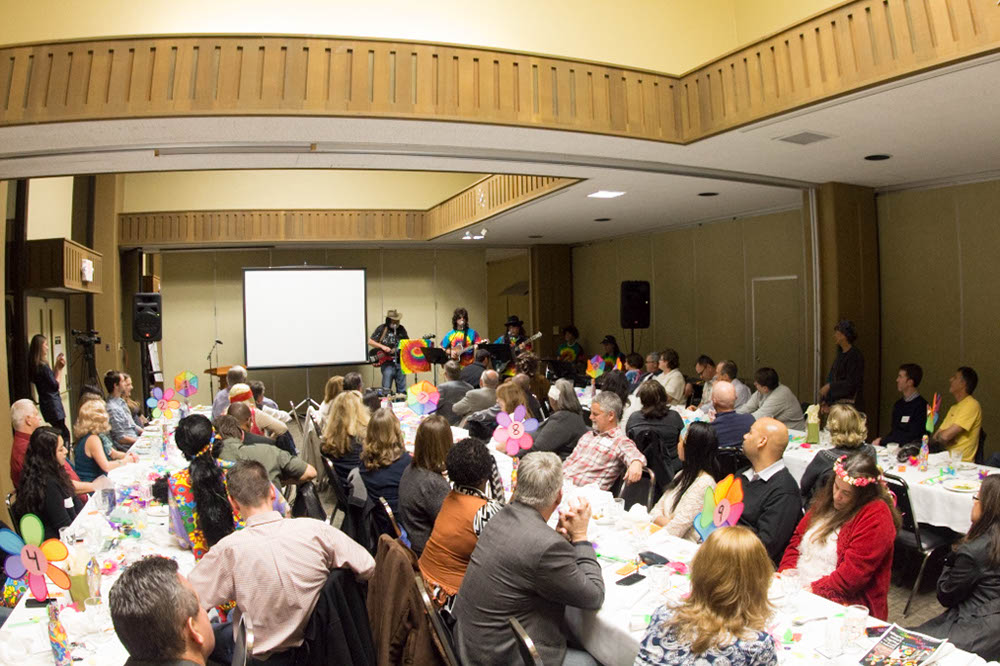
Our theme for the banquet was The 70s, with quite a few in attendance, including the band, dressing accordingly. Lots of fun.

Our theme for the banquet was The 70s, with quite a few in attendance, including the band, dressing accordingly. Rob Fenderson, principal at Redwood Adventist Academy, and Albert Miller, Assoc. Supt. for No. Cal. Conf., headlined the band.

Our Education Days’ banquet and job interviews took place this past Monday and Tuesday. This annual event is designed to connect our graduating teacher candidates with potential employers. A banquet on Monday evening leads to meet and greet mini-interviews on Tuesday morning. During the introduction part of the banquet, candidates head to the microphone and share about themselves as future teachers, often commenting on what motivated them to become a teacher and the pictures they have in their heads about the kind of teacher they want to be. For those of us who saw these candidates come to PUC as Freshmen, and have watched them conquer challenges and grow into adulthood, it is special to listen to them, on the verge of being hired and beginning their careers, describe their vision for education.

We enter our teaching careers with promise, exactly like these young teaching candidates, resolved to care about kids and make a difference in their lives, however it isn’t unusual for the pressures of the classroom and the rush of life to sweep our intentions aside. For instance, I received an email last week, written by one of my former students after he read the According to the Quality School blog

I just read your post about quality schools.  Ya know, I got into education wanting a classroom much like the one described in that post.  I specifically wanted to teach in public schools because I believed a teacher who had Christ in his heart and a desire to truly help children grow and not just claim a paycheck once a month and get summers off was needed more in the public school systems than in one of our Seventh-day Adventist schools.  But 9 years later I find myself being just like one of those teachers I swore I would never be.  I often feel defeated.  I feel like I am in a battle between myself and my principal, between myself and the state department, and between myself and a system that only cares about test scores and could care less about young people.  It has been a losing battle.  I feel defeated.  I have swum against the stream for so long and I am tired and it shows.  I used to create lesson plans that were fun, lessons that focused on getting young minds to explore, to ask questions, to learn from mistakes.  Now I find myself scouring the Internet for a worksheet just so I can “cover” a skill.  The other day I caught myself refusing to “waste time” answering a question from a student because it wasn’t a topic that would be tested on the state test.  A few years ago I would have stopped everything and had the kids start reading, searching the Internet, conducting experiments, and drawing conclusions to answer that question.  I would have tossed aside the lessons I spent hours preparing to let the kids answer that question.  Instead, I actually found myself saying, “Ask me at recess, we don’t have time for that right now.”  The child never asked me the question at recess.  And I forgot all about it.  What happened to me?  Ugh!!!  Not sure why I am dumping all this on you right now. Just read that post and guess I needed to get that off my chest and maybe receive some sage advice.  Sometimes I wish I was still at PUC.  The pressures of college were nothing compared to the pressures of full time teaching in a system that only cares about looking good on paper.   I hope all is well with you and your family.  God bless.

I share this letter because I think it may capture the thinking and feeling of quite a few veteran teachers. The constant crush of classroom responsibilities and details can crowd out our real reasons for wanting to teach. Choice theory beliefs seem to be especially fragile in the midst of this “crush.” We leave a choice theory workshop or training, or maybe finish reading a book about choice theory, and are fully intent on putting these ideas into practice. And we do for a time. But then the crush hits from multiple sides, maybe home is complicated, maybe our spouse is acting weird, maybe church is stressful, and then there is always the crush of school.  This is one of the main reasons I wanted to start The Better Plan blog. I want it to be a small part of your day that keeps the choice theory ideas alive and that reminds you that there are others of us that are on this journey, too.

I’m not sure if I responded exactly right, but what follows is part of what I wrote back to my former student – “It sounds like that teacher you feel you used to be is still in you, still wanting to show up in your classroom. I believe the circumstances you mentioned are real, especially the pressure to achieve on standardized tests. There are some things you cannot change. The question is, what are some things you can change? What are some things that would help you to like going to work more? What are some things that you can do that would help students realize they are cared for and that they can succeed? Is your school or district doing much with the Common Core yet? I see the Common Core as an important step away from the NCLB emphasis. The Common Core needs teachers to teach creatively and to empower students to learn.”

I don’t think what I said was that special, yet when he sent me a reply that included the following I was reminded how easy it can be to encourage one another.

As I read your post I am astounded by the fact that I don’t practice what I preach.  “You are the only one that you can control” has been a mantra of mine for several years now.  Your advice aligns perfectly with that mantra.  That is definitely what I will begin doing ASAP, taking a closer look at what I can do instead of focusing on what is out of my control.

His final thought is good advice for all of us. What are areas in our life in which we do have influence and control, and how can we make improvements in those areas? And to my fellow choice theorists, what are some of your “go to” thinking or acting habits when the crush begins to close in on you?

======================

Have a blessed weekend! We are finally getting rain and fog in northern California, which we desperately need, so it should be cozy soup-eating, book reading (or blog reading), by-the-fire weather.

Have Choose a good day!