Posts tagged “William Glasser

The Glasser Four

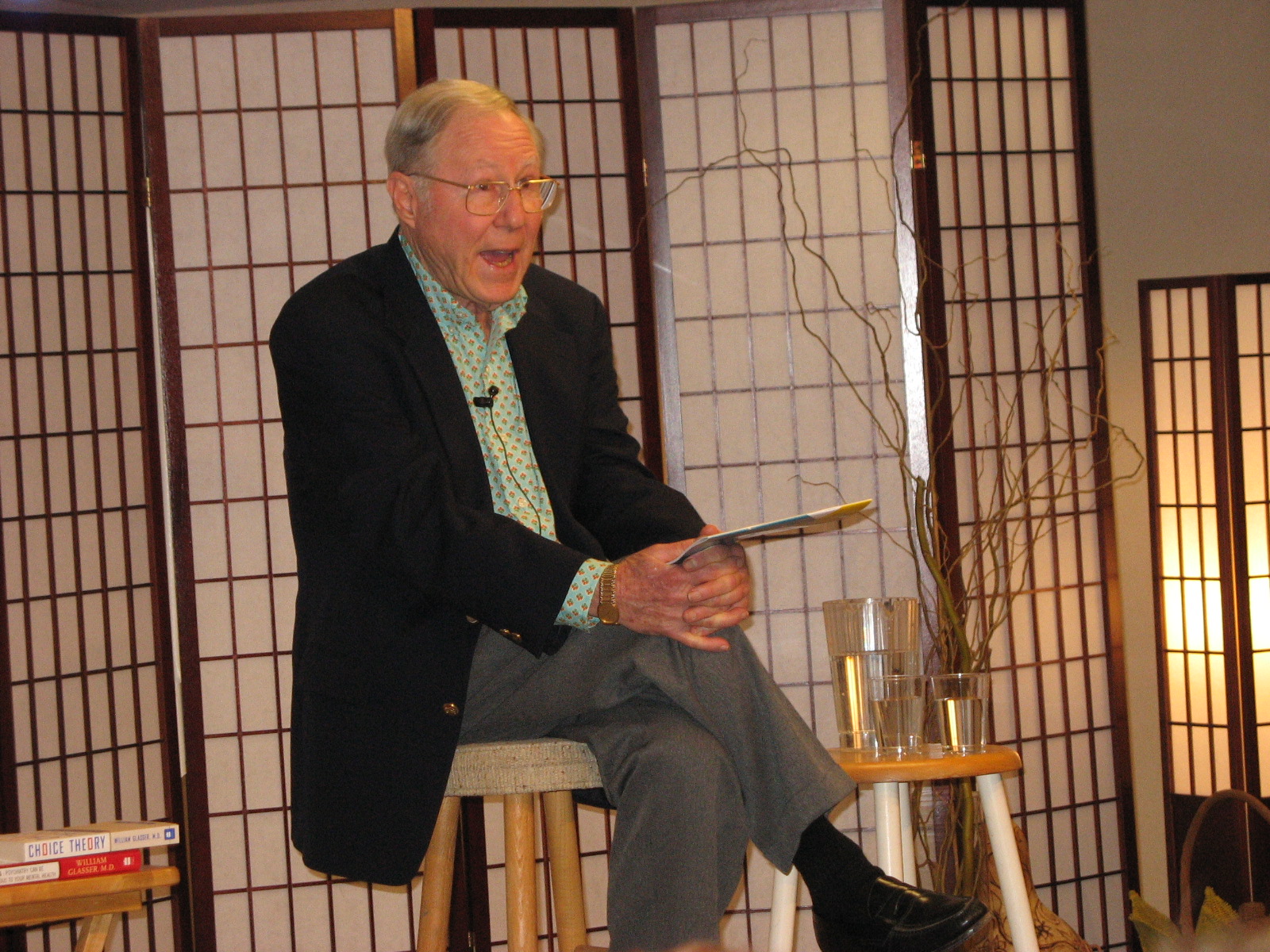
Glasser giving a talk in Ventura, California, in 2006.

Glasser giving a talk in Ventura, California, in 2006.

William Glasser was well-known for being able to speak to large audiences for hours without a script or even notes. And it wasn’t just that he could speak to an audience; he could teach and entertain in a way that people seemed to become unaware of the time. It was common for the stage or platform from which he was going to speak to have a few simple items – a chair or stool, a small table with a glass or pitcher of water, and a microphone. That was it. No lectern, no screen, and no media to help him get his points across. And yet, people listened, by the thousands, and by the hour.

I asked him during one of our interviews if he had an outline in his head of what he wanted to cover and he said that he did. Basically, he wanted to cover what he saw as the four essentials –

1. Basic needs

2. The quality world

3. Creativity

4. Total behavior

Other than this simple outline there was no script or set presentation. To some extent, each time he presented he wondered himself what he was going to come up with. If the talk was shorter, then he had to make his points quickly; if it was longer, then he could explain more deeply and share more anecdotes. Either way the success of his talks was dependent on his own creativity. He also described how much the audience’s interest and energy promoted or hindered his creativity. He tried to put into words how his creativity could almost be on fire when an audience was supportive.

This short outline gave him what he needed to share informative and impressive presentations. Chances are, though, an outline this short wouldn’t be enough for the rest of us. For the rest of us it would help if these essential areas were filled out a bit. So, let’s do that. Let’s fill them out and add some detail. I will start the process, however I would like a lot of you to send me additional bullet points that I can add to each of them.

In other words, for each of the Four Essentials think of a word or phrase that defines or describes that Essential in a way that helps to make it more clear. For instance –

Basic Needs
+ A unique set of urges / needs that constantly exert pressure on us to be met
+ Genetically passed on to us
+ Do not change over time
+ Are comprised of five psychological needs – purpose and meaning, love and belonging, power and success, freedom and autonomy, joy and fun – and one physiological need – survival and safety. (Glasser believed there are four psychological needs – love and belonging, power, freedom, and fun.)

Quality World
+ A place in our head where we store pictures of anyone or anything that helps us to satisfy one or more of the basic needs.
+ QW pictures can be of people, places, objects, activities, and beliefs
+ The QW is an amoral picture book. In other words, we may collect pictures that help us to temporarily feel good, but that may not be good for us.

Creativity
+ Our brain is always creating potential behaviors in response to the changing circumstances around us.
+ Some behaviors become “old stand-by” behaviors for us and we store these for use as needed.
+ It is much preferable to depend on the Caring Habits as our go-to, “old stand-by’ behavior. The Caring Habits include supporting, encouraging, listening, accepting, trusting, respecting, negotiating differences.
+ It is common, though, to use one or more of the Deadly Habits when our circumstances change in a way that we don’t like. Deadly Habits include criticizing, blaming, complaining, nagging, threatening, punishing, and rewarding to manipulate.
+ We create behaviors that we think will satisfy our needs at the moment. A behavior we choose might not bring a lot of satisfaction, but it doesn’t take much for us to make this choice. For instance, we might choose one of the Deadly Habits because it gives us a very small feeling of control.

Total Behavior Car

Total Behavior
+ All behavior is purposeful.
+ Every behavior is made up of four parts that are best described by the words thinking, acting, feeling, and physiology.
+ We have direct control over two of the parts – thinking and acting.
+ We only have indirect control over the other two parts – feeling and physiology.

Help me improve these bulleted lists by adding things I have left out or by correcting any mistakes I may have made. Maybe some of them could be worded better. Let me know.

===============

One of the things we’ll be talking about during the Choice Theory Study Group tomorrow afternoon, March 15, is the concept of total behavior. We start in the PUC Education Building at 2:00 pm. I hope you can be there.

===============

Being honest may not get you a lot of friends,
but it will get you the right ones.
John Lennon

GREAT DREAM – Acronym for Happiness

happiness

A recent survey of 5,000 people asked them to identify the everyday habits that make them happier. Here are the 10 habits, along with the average rating, on a scale of 1-10, that indicate how often the participants performed each habit.

1. GIVING: do things for others – 7.41

2. RELATING: connect with people – 7.36

3. EXERCISING: take care of your body – 5.88

4. APPRECIATING: notice the world around you – 6.57

5. TRYING OUT: keep learning new things – 6.26

6. DIRECTION: have goals to look forward to – 6.08

7. RESILIENCE: find ways to bounce back – 6.33

8. EMOTION: take a positive approach – 6.74

9. ACCEPTANCE: be comfortable with who you are – 5.56

10. MEANING: be part of something bigger – 6.38

The first letter of each habit spells out GREAT DREAM, which sounds like a good thing, although choosing to engage in any of these habits has been scientifically proven to improve our happiness level. These habits aren’t just a dream, they work.

It is quickly pretty plain that choice theory is embedded throughout this list of habits. Each of them involves a choice, either in the course we set for ourselves as an individual or as a way we respond to setbacks and difficult circumstances.

Glasser felt that happiness is an essential indicator of mental health. In fact, he equated three terms as inextricably linked – choice theory, mental health, and happiness. When you talk about one of these, he felt you were basically talking about the other two at the same time as well.

He also felt it is important to differentiate between happiness and pleasure, with happiness involving something that adds strength to our lives and that often brings us closer to other people, while pleasure involves things that temporarily feel good, but that ultimately weakens us and that threatens or harms our relationships with others.

We all have been designed to desire true happiness, although we too often settle for pleasure instead. The GREAT DREAM list is a good reminder of the tangible decisions we can make that will help us experience real happiness, rather than being addicted to chasing short-term pleasure.

======================

Classroom Application:
+ Define and discuss the idea of true happiness or real happiness.
+ Develop an age-appropriate survey, maybe similar to the GREAT DREAM list of activities, on which your students can indicate the things they do that brings them happiness.
+ Process the responses and discuss the results. (The responses can be processed as a part of Math class; the results can be discussed as a part of Health class, Social Studies, or even Bible class.)
+ As appropriate, have students consider the difference between happiness and pleasure.
+ Help students explore the role of choice in achieving personal happiness.

=====================

The Glasser biography has officially gone to the printer. Hopefully, an announcement will be forthcoming soon regarding how to order copies of the book.

=====================

Our next Choice Theory Study Group is this coming weekend – March 15.

=====================

For more info on the GREAT DREAM survey, go to the PSY BLOG website at –

http://www.spring.org.uk/2014/03/10-simple-habits-proven-to-make-you-happier.php?utm_source=feedburner&utm_medium=email&utm_campaign=Feed%3A+PsychologyBlog+%28PsyBlog%29

8 Books on William Glasser’s Bookshelf (that are now on mine)

Used bookstore in San Luis Obispo, CA.

Used bookstore in San Luis Obispo, CA.

For almost a year there has been an old book on top of one of the stacks on my bedside table, and even though I haven’t read it, my love and belonging and power needs are met every time I see it.

Glasser and I talked about a lot of things as I wrote his biography. During our interviews he would frequently bring up what he happened to be reading at the moment. He read a lot. Sometimes he would talk about an article he read in the New Yorker; or about an editorial in the Los Angeles Times; or about a book he was reading. When we visited about his childhood he described how much he read even then.

As a child he especially liked a group of books known as The Young Trailers Series. He spoke fondly and respectfully of the Young Trailers author, Joseph Altsheler, and about how he could really write adventure stories, tales that required resourcefulness and bravery. He read these books so many times that he could not remember the exact number. I had never heard of them or the author, but became curious about them due entirely to Glasser’s enthusiasm. I did some checking, figuring that I would just go to half.com or Amazon and pick up one or two of these books, and discovered instead that getting my hands on an Altsheler book was not as easy as I thought it was going to be. If I was willing to part with $200 I could have one mailed to my house. Otherwise I would need to begin searching the occasional used bookstores I was able to frequent.

Looking on my bookshelves now, I am reminded of the different books that Glasser alerted me to, and that I was able to find at used bookstores here and there. Books like Jesse Stuart’s, The Thread That Runs So True (1949), and Ernest Kurtz’s, Not God: A History of Alcoholics Anonymous (1979). He loved anything that Anthony Trollope wrote, who he felt could really get inside a character and what he or she was thinking. I don’t have any of Trollope’s books yet, but I probably will someday add a few of his books to the Glasser section in my library. I go to a used bookstore in San Luis Obispo, California, at least twice a year and while browsing there a few years back I discovered an old copy of Glasser’s all-time favorite book, Raintree County (1947), by Ross Lockridge, Jr. “I’ve read that book at least seven times,” he shared with me, which is no small feat considering it runs 1,060 pages long. When I took it to the counter to buy I thought it might be kind of expensive, but it wasn’t. Didn’t they know it was William Glasser’s favorite book?

IMG_0942

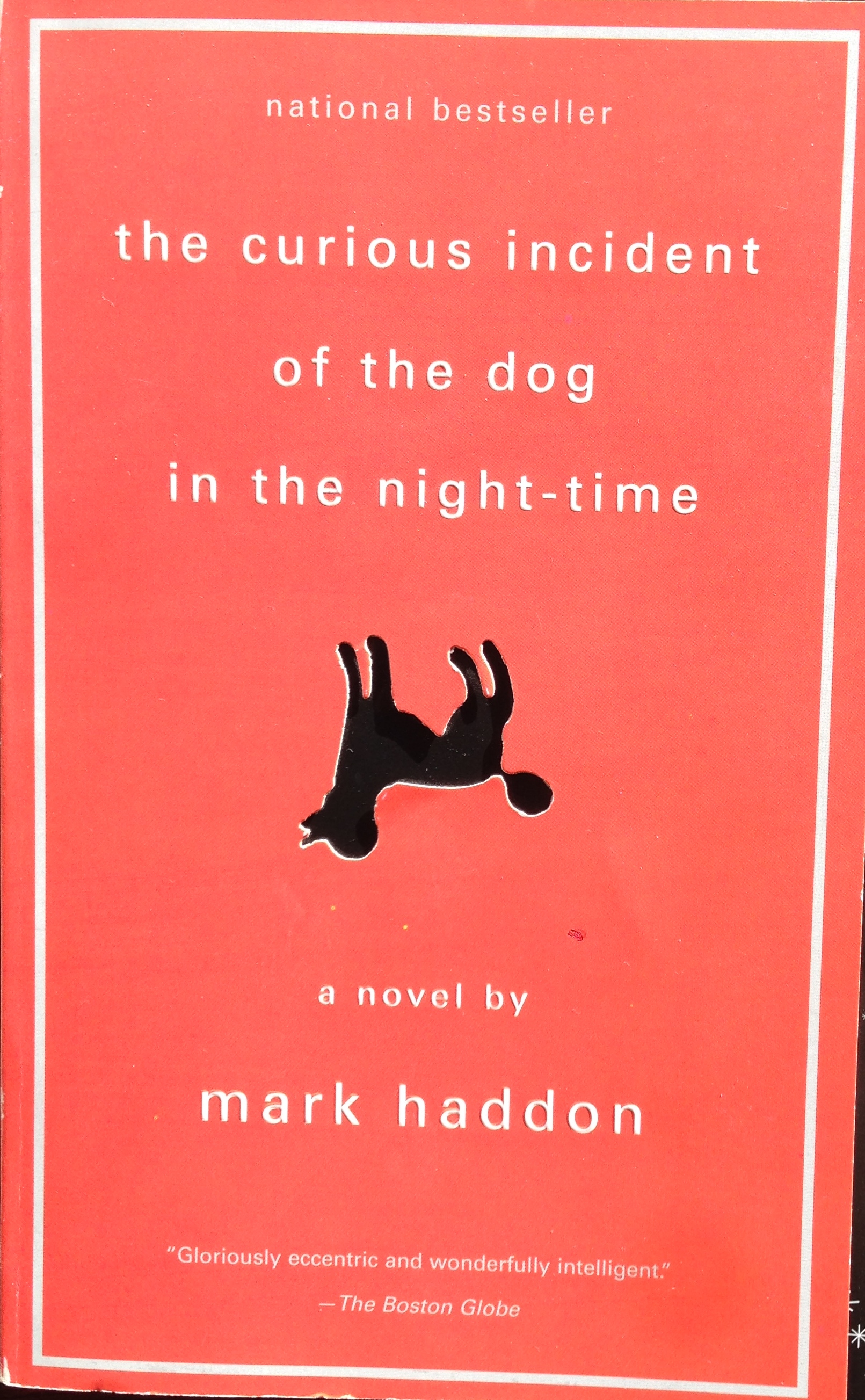
Not all of Glasser’s recommendations were of old books. For instance, he convinced me that I needed to go out and buy a book by Mark Haddon called The Curious Incident of the Dog in the Night-Time (2003), an incredible book with an autistic savant as the hero of the story. He also convinced me on books like Mad in America (2002), by Robert Whitaker; America Fooled (2006), by Timothy Scott; and especially Beyond Prozac (2005), by Terry Lynch. For those years that Glasser and I worked together he seemed to be with me whenever I went book shopping, be it in a Barnes & Noble, a used bookstore, or online. My experience was that he had a good eye for reading material.

IMG_0947

I had kind of given up on finding any of Altsheler’s books, although last year when I was in a used bookstore in Nevada City, California, and discovered they had a kid’s section, I decided to look more carefully. There could be a chance. And then, as I looked from book spine to book spine, there it was. There was The Forest Runners (1908), by Joseph Altsheler. I opened and closed my eyes to make sure I was seeing correctly. I looked inside and saw that it was the second book of eight in The Young Trailers Series. I wondered about its price as I approached the cash register. I was told it was $18 and that it would come to almost $20 with tax. I got the $20 out of my wallet so fast the bookstore owner must have been tempted to say, “Wait a minute, now I can see the price more clearly. It’s not an 18, that’s an 80. I meant to say $80.” But he didn’t and I left with a special treasure.

IMG_0939

The Forest Runners has sat on my bedside table ever since. I haven’t read it and I don’t intend to soon, yet I feel good every time I see it. I feel a connection to Bill and remember his joy and excitement as he described things the book’s characters overcame. My oldest grandson is three and a half, so he’s not ready for swashbuckling adventure yet, but when he is I know of a book we can share together. (Oh, bother. How am I going to find the other seven books in the series?)

=================

Interested in stories about Bill Glasser? Glad for choice theory tips on how to live a happier life? Appreciate ideas on how to bring choice theory into the classroom? Then why not pass it on and tell a friend or colleague about The Better Plan blog.

http://thebetterplan.org

==================

Follow on Twitter – @thebetterplan

==================

Remember the new 2103 – At A Glance link at the upper left hand corner of the page when looking to catch up on topics from last year. Quick links to all the articles are chronologically listed.

According to The Quality School

sleepy-teen

Another recent study1 confirms what many previous studies have already indicated, that delaying high school start times increases the amount of sleep that adolescents get, improves their emotional states, improves their alertness and performance at school, and even reduces the teen car crash rate2. It would seem with these kinds of results that schools would quickly move to change the start of the school day until later in the morning. Even small delays in start times can lead to statistically significant improvements. Such scheduling changes aren’t taking place, though, at least to any noticeable degree, and students continue to battle fatigue, including drinking lots of coffee, deal with depression in growing numbers, and struggle to do well in academic content.

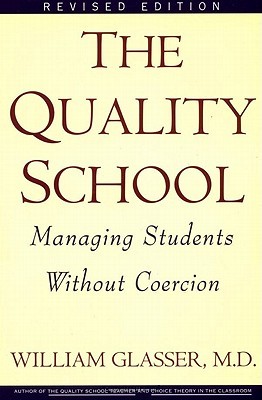
I recently gave my Secondary Methods students a choice of reading one of Glasser’s books that focused on educational practice. Several of them chose his book, The Quality School (1990),which outlines the elements that contribute to a school being a student-friendly place in which they can become the best versions of themselves. I don’t recall Glasser specifically talking about school start times in The Quality School, however I am confident that, given the data, he would support later school day start times if were still around. (He liked to sleep in, too.)

678611

When I first read The Quality School as a young principal in the early 90s, I can remember thinking that I wanted to be a part of such a school. Later, during my doctoral research I analyzed the book more carefully and developed a list of elements that Glasser felt Quality Schools would prioritize. I include that list below.

===================

According to The Quality School

Relationships are highly valued – especially between students.

Staff and students like coming to school.

No student will be able to say, “No one cares about me.”

Cooperative learning is a common instructional format.

Focus is on quality; low quality work is not accepted.

There is no busywork.

There are no bad grades; B’s are required to receive credit.

To receive an A, students would have to produce something beyond competence.

Grades can be improved.

No nonsense is taught or tested; no objective tests, all tests are open book.

There is no compulsory homework.

There is no elitism.

Rules are kept to a minimum.

There is no punishment.

Parents are not asked to fix problems at school.

When students get into trouble and need to be suspended, there is no set suspension time. The suspension lasts as long as needed for the student to address the mistake.

Students may be asked to leave class.

The keys are 1) eliminating coercion, and 2) incorporating self-evaluation.

A loving, flexible environment is more valued than a rigid, threatening one.

Focus is on changing the system, rather than on changing students.

==================

School start times aren’t mentioned on the list, but I would like to think that a school wanting to become a quality school would be open to such a change. Of the elements that are listed above, which of them appeal to you as more important and more needed? Which of them are you more skeptical about? As always, I encourage you to share your thoughts with the rest of us.

===================

1. An article in the Journal of Developmental & Behavioral Pediatrics, by Boergers, et al., 2013, described how later school start times improve sleep and daytime functioning in adolescents.

2. A study described in the Journal of Clinical Sleep Medicine, by Danner and Phillips, 2008, indicated the following: Average hours of nightly sleep increased and catch-up sleep on weekends decreased. Average crash rates for teen drivers in the study county in the 2 years after the change in school start time dropped 16.5%, compared with the 2 years prior to the change, whereas teen crash rates for the rest of the state increased 7.8% over the same time period.

====================

Tell a colleague about http://thebetterplan.org

7 Cardinal Rules for Life

Cardinal

I’ve appreciated the stuff that often is posted by the website at www.lifehack.org, like the 7 Cardinal Rules for Life that follow here. (What cardinals have to do with rules for life, I’m not sure.) Along with the Rules I share a choice theory response to each of them. (Of note: The Soul Shaper workshop dates for this summer have been set and are listed at the end of the blog.)

7 Cardinal Rules for Life

Rule #1 – Make peace with your past, so it doesn’t spoil your present. Your past does not define your future – your actions and beliefs do.

It would be hard to come up with a more choice theory statement than this one. I think the phrase “make peace with your past” is important. We’re not trying to run from the past, hide from it, cover it, or deny it. We come to desire our joy in the present and realize our need to see the past for whatever it is and, like it says, make peace with it. I like the statement’s emphasis on thinking and acting, too, which supports the idea of every behavior being a total behavior. It really is pretty amazing that we were created to have direct control over what we think and what we do.

Rule #2 – What others think of you is none of your business. It’s how much you value yourself and how important you think you are.

Choice theory emphasizes that the only person we can control is ourselves, but I like how Rule #2 is worded. It is such a debilitating condition to be worried about what others think of you. It is so freeing to let this particular worry go.

Rule #3 – Time heals almost everything, give time, time. Pain will be less hurting. Scars make us who we are; they explain our life and why we are the way we are. They challenge us and force us to be stronger.

I hesitate to write about #3. The topic of wounds, especially emotional and spiritual wounds, is a sacred space to me and deserves a special respect. That said, it is apparent to me that some people allow healing to take place and continue to want to make the best of life, while others seem to want to nurture the hurt and hold onto it.

Rule #4 – No one is the reason for your own happiness, except you yourself. Waste no time and effort searching for peace and contentment and joy in the world outside.

The world of choice theory is a place of responsibility. A key, though, is that responsibility is something that dawns on a person, rather than it being a message that one person enforces on another. Responsibility functions best when it is like the sun coming up in a person’s life, providing light to see the world in a new light.

Rule #5 – Don’t compare your life with others. You have no idea what their journey is all about. If we all threw our problems in a pile and saw everyone else’s, we would grab ours back as fast as we could.

Comparing our life to that of others traps us in thinking that our happiness depends on our circumstances being different. Or worse, that our happiness depends on our circumstances being better than someone else’s. Choice theory keeps bringing us back to our happiness coming from within, not from without.

Rule #6 – Stop thinking too much. It’s alright not to know the answers. Sometimes there is no answer, not going to be any answer, never has been an answer. That’s the answer! Just accept it, move on, NEXT!

I’ll have to think about this one.

Rule #7 – Smile, you don’t own all the problems in the world. A smile can brighten the darkest day and make life more beautiful. It is a potential curve to turn a life around and set everything straight.

A smile is a choice. Yes, sometimes we laugh as a reflex, but sometimes we just need to choose to smile. And in making that choice, in a small way, the day does get just a little bit better.

++++++++++++++++++

Which of the Life Hack Rules do you relate to? Did any of them get you thinking about choice theory ideas? Let me know.

Reminder – Middle School and High School teachers can share the Rules with students and have them respond to them and evaluate them. They can be a great springboard for talking about choice and responsibility. Tie a writing assignment to them. Discuss them in a life skills class.

++++++++++++++++++

Important Dates

The Soul Shaper workshop dates for this coming summer at PUC have been set.

Soul Shapers 1 –  June 16-19

Soul Shapers 2 –  June 23-26

If you have questions about the workshops get in touch with me at jroy@puc.edu.

Know Yourself

You probably don’t know the guy in the picture. Until recently, I didn’t know him either. His name is Charles Handy and it turns out that in the world of business and management he is rather famous. An Irish philosopher and author, Handy has been rated on the Thinkers 50 list, a list that ranks the most influential living management thinkers. In 2001, he was second on the list, behind only Peter Drucker. In 2005, he was tenth. Sounds like a tough list.

I digress. Anyway, in a book he wrote entitled The Hungry Spirit (his eleventh book, written in 1997) he outlined the ingredients for a successful school system in the modern world (But aren’t we in the post-modern era? Again, I digress.) He listed four ingredients for success, although it was the first one that struck me for some reason. Handy’s first ingredient, at the top of the list is –   ( d r u m r  o   l    l )

* The discovery of oneself is more important than the discovery of the world.

What a great choice theory statement! Those seeking to learn about choice theory and put it’s principles to use in their lives really are on a journey to discovering themselves. As you come to recognize that the pictures in your quality world have been purposefully placed there by you, it becomes clear that knowing yourself is of the utmost importance. Blaming others or the world for your problems makes less and less sense as you realize the significance of your power to think and to act.

Handy must have recognized the importance of this challenge, too, and recommended that teachers assist students in discovering their own identities and strengths. Discovering their identity is one of the greatest gifts a student could ever receive. Coming into a knowledge of who they are, what they value, what makes them happy, what fulfills them, and the behaviors that bring them closer to the important people in their lives will put students on the road to success.

In case you are curious about the other three ingredients on Handy’s list. Here they are –

* Everyone is good at something.

* Life is a marathon, not a horse race. (Don’t focus on testing to the exclusion of cooperation, team working, curiosity, and confidence.)

* The best learning comes after experience. (So much education nowadays comes before experience.)

*******************

Teaching students about the basic needs and the quality world is a sure way to help them discover who they are. Glasser once said that there is nothing in choice theory that a six year old can’t understand. I agree with him.

With smaller children, up to age 7, focus on simply teaching them about the basic needs. Give them simple definitions. As you read stories to the children, ask them about the basic needs of the characters in the story. Have them think out loud about which needs seem to be the strongest. As different situations come up in the classroom, take a moment and review the basic need that helped or hindered a good outcome. The point is to dialogue openly with the students about the needs. Don’t focus on what a particular student’s needs are. Just talk about them in general.

As students get older they become more able to consider their own personality makeup and to consider their own basic need strengths. This is an excellent time to introduce the quality world to students, as the people and things and activities we collect in our quality world give us clues into what our personal basic needs really are.

IMG_0880

An excellent resource for primary grade teachers is My Quality World Workbook by Carleen Glasser. You can purchase the workbook at www.wglasserbooks.com or you can call 310-313-5800.

***********************

Choice Theory Study Group is this coming Sabbath afternoon, January 25, 2:00 pm in the PUC Education Department building, Room 212.

Learning from Jim Carrey or the NYC Murder Rate

Hmm .  .  . what to write about. While reading a weekly journal called appropriately, The Week, I ran across two items that caught my attention. I’ll briefly share both of them and you can let me know which direction to head.

jim-carrey2-450x600

1st Item – A Quote from Jim Carrey

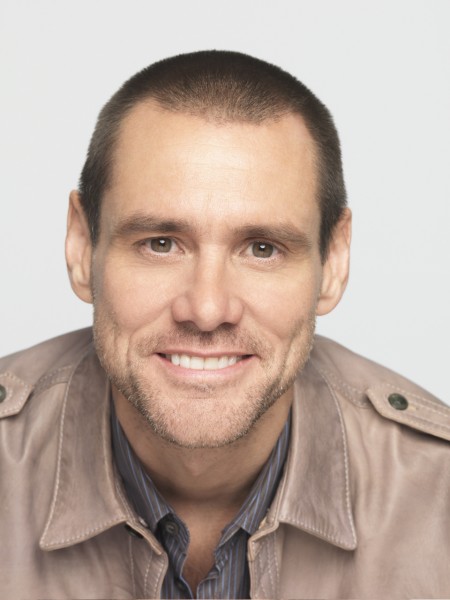
I think everybody should get rich and famous and do everything they ever dreamed of so they can see that it’s not the answer.   Jim Carrey

Really true, isn’t it? We often do look at the rich and famous and compare our lives to our perceptions of their lives. Each time we see a magazine cover with their gorgeous faces and perfect (photoshopped) bodies and see pictures of them on vacation in exotic places that normal people never go to, we are reminded of how far from their lives we really are. In the process, it’s easy to forget about the often screwed-up lives of the people in those pictures and their desperation for normalcy. And in the process we lose sight of the things for which we can be thankful. We forget to nurture a spirit of gratitude.

Jealousy and covetousness erode us from the inside out. The thinking we embrace and coddle affects our actions, our feelings, and even our physiology. Stinkin thinkin leads to all kinds of problems. Take a cue from Jim Carrey and quickly review your blessings. If the list is short you may need to intentionally seek the reasons for which to be thankful, but any effort put into improving your thinking will make a huge difference in your relationships and your happiness.

Item #2 – Murder Rates in NYC Reveal an Interesting Pattern

9819177-large

A total of 334 people were murdered in New York City last year, only 29 of them by strangers. That’s down from more than 2,245 murders in 1990, and the lowest number of murders in the city on record.

The low number of murders is good, but what I really noticed had to do with how only 29 of them were committed by strangers. When I saw that I immediately thought of Glasser’s belief that all long-lasting psychological problems are relationship problems. It is telling that over 90% of the murders in NYC were committed by people who knew their victims. Taking the life of a friend or loved one is an extreme act that in a strange way conveys the importance of relationships. We value relationships and get worked up when a relationship doesn’t go the way we want it to go. Murdering another person is never the answer, yet 305 people in NYC last year didn’t know about other options and went ahead and acted out in violence.

This is where choice theory can help. The principles of choice theory gently, but firmly pull us out from the pit of victimhood and place us back in possession of ourselves. We come to understand the control we have on our thinking and our acting and the ways in which we create our own reality. We begin to value our relationships more and to recognize the role we play in whether or not our relationships are successful. Ultimately, without hurting or taking advantage of others, we become responsible for our own happiness.

So, what to write about — Jim Carrey and gratitude or on what can be learned from the NYC murder rate? Hmm .  .  .

———————-

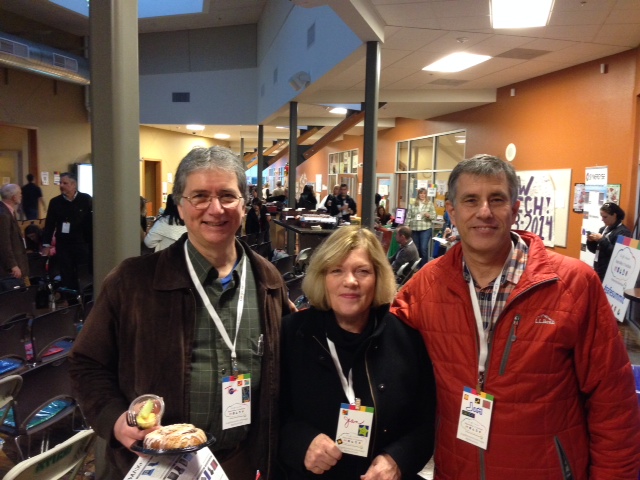
Tom Lee, Jean Buller, and Jim Roy at the Google Education Conference. Each of them are professors in the teacher education program at Pacific Union College.

Tom Lee, Jean Buller, and Jim Roy at the Google Education Conference. Each of them are professors in the teacher education program at Pacific Union College.

I attended a Google Apps for Educators Conference on Jan. 8 and 9 at New Tech High in Napa, CA. Wow! If you ever have a chance to attend a Google educator conference I highly encourage you to do so. (45 such conferences will be put on this coming year) The things you learn and ideas you hear are educationally transformative.

For example, the Research tool in Google Docs places the world (websites, articles, pictures, and video clips) at students’ fingertips. And by students we aren’t just talking about college and secondary students. Elementary students can quickly learn to study a topic more deeply and then demonstrate their understanding in exciting ways. Their presentations become much more RELEVANT to them and their classmates. As you probably recall, relevance is one of the most important qualities in a choice theory classroom.

———————–

Our next Choice Theory Study Group is January 25 at 2:00 pm.

Let me know if you have agenda items or topics you would like to cover.

A recent Wall Street Journal headline caught my eye and got me to thinking in all kinds of creative ways. The headline read, “Want to Stop Arguing and Change Spouse’s Behavior? Start With Mirror.” The article then opened with –

Ever want to change something about your partner? Get him or her to eat better or work less? Exercise more? Stop nagging or yelling? Start with a mirror.

Your best chance of transforming someone else—and the dynamic in your relationship—is to demonstrate your willingness to alter your own actions, experts say.

The article went on to cite studies and give good examples that supported this theme, however I was captivated by the reference to the item that each of us uses every day – that being a mirror. It struck me that a mirror, more than any other thing or item, may be the best mascot for representing the choice theory approach to life. The total behavior car is a graphic or thing that has entered the pantheon of choice theory tools, but the simple mirror may capture the essence of choice theory in ways the car cannot.

One teacher tapped into this truth beautifully when she hung a mirror in the back of her classroom, with the following captions prominently displayed underneath.

Whose behavior can I control?

How can I behave in a way that might change this situation for the better?

She referred to the mirror as she taught about the concepts of choice theory, especially at the beginning of the year. It wasn’t unusual for her to see a student standing in front of the mirror, studying themselves in the frame before them, quietly reviewing the questions underneath.

Toward the close of the school year one fifth-grader shared, “That mirror got to me. There was some other choice theory stuff I liked, but that mirror .  .  . it just sat there, day after day reminding me about how I’m the only person I can control. It’s true.” The teacher learned just how much of an impact the mirror in the classroom had on this student when the child’s mother informed the teacher that her son had written out these questions and taped them to the bathroom mirror at home? The teacher recalled how the mother became emotional as she described the effect that bathroom mirror was having on their home, especially on the conversations she and her husband were starting to have.

HELP!

A mirror – a simple, common mirror – needs to be a part of my choice theory workshops from now on. I need to think of mini-lessons or activities that will tap into the power of this everyday item. Your help on this would be appreciated. Any ideas?

Still a classic, no matter how many times I see it.

Ezekiel, yes, dry bones Ezekiel “got” this important principle – the principle of the mirror – when he wrote in Ezekiel 3:10 –

Then he added, “Son of man, let all my words sink into your own heart first. Listen to them carefully for yourself.”

—————————-

A Michael Jackson song proclaims the truth about the mirror, too. The chorus of his famous song says –

I’m Starting With The Man In The Mirror

I’m Asking Him To Change His Ways

And No Message Could’ve Been Any Clearer

If You Wanna Make The World A Better Place

Take A Look At Yourself And

Then Make That . . .

Change!

——————————

The Choice Theory Study Group this month meets on January 25.

I recently discovered a link that lists the 20 most popular TED talks of all time. The number one TED talk of all time was given by Ken Robinson, on how schools kill creativity, with well over 23,ooo,ooo views. It caught my eye that Daniel Pink’s talk on the surprising science of motivation is listed at number 10 on the all-time list with 9,176,053 views (which is 300,000 views less than a TED talk on ten things you didn’t know about orgasm). Daniel Pink, you remember, is the author of DRIVE, the book I reviewed a couple of blogs ago. If you don’t have the time to read the book, his 18 minute TED talk will give you the essence of what the book is emphasizing.

+++++++

If you are interested here is the link to the Top 20 TED Talk List.

http://www.educatorstechnology.com/2013/12/the-20-most-popular-ted-talks-of-all.html

————————————-

Glasser didn’t care much for the word motivation, because for most people it stands for one person trying to get another person to do something. As far as how people often apply them, the words motivate and manipulate mean pretty much the same thing. Motivation is important, huge, actually! It’s just that we need to remember that our motivation comes from within us. Yes, we can be influenced from the outside; a reward or punishment might get our attention for some reason. But ultimately there is something inside of us that wants to do a certain thing or be a certain way. Choice theorists keep this in mind as they work to create an environment in which others can be motivated.

—————————————

Our next Choice Theory Study Group is January 25. Make plans to join us. It’ll be FUN!

—————————————

7d08fa4f-5ccb-42e0-82c6-e488ffc355c8

Those of you who live in the Northern California area may also be interested in a special weekend event coming up at The Haven, the church in Deer Park located right next to the St. Helena Hospital. Tim Jennings, the author of several books, including The God-Shaped Brain, will be speaking on Friday evening, January 10, and then again on Sabbath, January 11. I have been told that he and I should meet as we both believe strongly in a person’s power to choose and in the freedom with which God created us. If you are into choice theory you should enjoy this weekend a lot.

2013 and The Better Plan Blog

2013 is just about to go into the history books. As New Year’s Eve ushers in 2014, I thought I would share some data and info regarding the life of The Better Plan blog over the past year.

+  I started the blog for Seventh-day Adventist teachers and parents who had read my book Soul Shapers and as a result wanted to know more about choice theory. Many who signed up to follow the blog are SDA teachers or parents, but many of you are not SDA. As a result, the blog has focused on the principles of choice theory. There has been an occasional emphasis on SDA quotes or stories, but not as much as I originally planned.

+  The very first blog was posted on Dec. 16, 2012.
There were five posts and 90 views during December, 2012.

+  There are now 189 people following the blog.

+  During 2013, there were 78 posts or articles.
Of the 78 posts there were 8,256 views.
That represents an average of 23 views per day.
To the 78 posts there were 371 comments.

+  The low day for views was on December 20, 2013, when there was just one view.
The high day for views was on August 24, 2013, when there were 231 views, with most of the views being directed at the I Will Miss You, Bill post.
The average views for the month of August was 44 views per day.
The posts related to Glasser’s passing away in August definitely had the most views during the year.

+  A couple of blogs I put some time and thought into were Give Me Victory or Give Me Death on January 22, and Why Are So Many Christians So Un-Christian? on November 10.

+  A couple of blogs that meant a lot to me were The Rest of the Story, Part 1, on September 3, and Part 2 on September 5.
The comments several of you shared in response to The Rest of the Story meant a great deal to me.

+  An example of the kind of blogs I thought would have gotten more views was Stringless Love on July 11.

+  There were other contributors besides myself during the past year, something I would like to see more of in 2014. Examples of contributions from other writers include 19 Ways to Lead, Rather than Boss, by Ed Boyatt, on July 27, and Push or Pull, by Chris Sequiera, on July 24.

IMG_0826

Reflecting back I am pleased with the caliber of the content and I look forward to continuing the blog. It has been a labor of love, although it isn’t too hard to write about choice theory when you get a new idea or have an epiphany of some sort. I would like to see the blog grow and become an even better resource to teachers, parents, and choice theorists of all kinds. I would love your ideas on how to make the blog more valuable. (I am thinking about creating an eBook with all of The Better Plan 2013 blogs in chronological order. The blog template I am using makes it hard to read through the archived blogs chronologically.)

As I close 2013 I want to wish all of you every blessing for 2014!

Have Choose a great year!