Posts tagged “classroom management

Believing in Students: The Power to Make a Difference

I recently ran across a blog post by Dr. Richard Curwin, the architect of Discipline with Dignity, a program that is highly complimentary to choice theory. I actually ran across this short article in Edutopia, a wonderful online educational resource that focuses on what works in education. If you haven’t connected with Edutopia yet, you must do so quickly!

Here is the article – Believing in Students: The Power to Make a Difference – which first appeared in December of 2012.

curwin-belief-in-students

by Richard Curwin

After a morning Discipline With Dignity training, the high school principal and I walked to the cafeteria to eat lunch. He said, “I love your session, but it’s not practical.” I responded with my view that it was practical because it works — but it’s just not easy.

He pointed to a girl sitting alone at a table and said, “Do you think it would work with her?” She looked like she was a character from the Mad Max movies. She had just been released from federal prison. Her look was extreme (maybe not so much today) with spiked orange and purple hair, tattoos, all black makeup including black lipstick and black rouge, and severe body piercings. The principal looked at me and said, “So what would you do?” I asked back, “What about you? How do you handle her?” He said that he would draw a line and tell her she’d better not cross it. I responded, “What if she says, ‘I’ll kill you?’ Which one of you will be more afraid, her because she crossed the line you drew, or you because she threatened you with death?” The truth is that if she’s been to prison, nothing that can be done in a school would frighten her. Detention? Calling her mother?

So he again asked what I would do. I said, “Talk to her.” And he invited me to go over and try it right then. So I did. Dressed in my three-piece suit, I sat down at her table. She looked at me for a minute and said, “Who the f**k are you, a***ole?” I was a little stunned and didn’t have time to read a book or check my notes. So I relied on two strategies I had just taught the teachers in my morning session: meet the real needs of students and use challenge instead of threat.

I said, “I’m someone writing a book on teenage violence, and I think you know better about it than me. If you have the courage to tell the truth and answer one question (challenge), I’ll put your name in my book (need to be noticed).” She asked what the question was, so I replied, “Are there any teachers who you listen to, follow directions, show respect and learn from?” She said she had one like that, and I asked her what made that teacher different from the others.

Her answer is one that I will never forget and has been one of the constants in my work ever since. It’s a movie scene that replays over and over in my mind. Right before my eyes, her answer transformed her from a tough, hardened criminal to a frightened little girl.

Because she’s stupid. She thinks I can get a job someday, that I may even be able to go to college, or be a good mother because I know all the things not to do.

Then she started crying. The tears streaked down her black make-up and made her look like a zebra with black drops falling on her white top.

I ain’t going to college and I ain’t getting a job. I’ll never be a mother. I’m a dead girl. In prison when they write your name on the wall, you die, and my name is there. I know I’m going back. But that teacher believes in me, and man, it really, really matters.

Later I put her name, Roxanne, in my book and tried to find her to give her a copy, but nobody knew where she was or how to find her.

Sometime later, I traveled the country doing trainings. I asked administrators if I could meet with about ten of their most troubled students. I did this for grades K-12, in urban, rural and all economic areas. I did it on two Indian reservations. I asked two questions: “Who is your favorite teacher and why?” I expected most to say they had no teacher who was a favorite. But they all did. Among the top reasons was, “They believe in me.”

Five Ways to Reach Out
Believing in students is not simply telling them that you believe in them. These words matter only if they are true and if you demonstrate them by your actions. There is no way to fake it, because kids have built in crap detectors (a phrase taken from Neil Postman, and Charles Weingartner, in Teaching As a Subversive Activity), and they can tell if you don’t mean it. Here are some ways to express it.

1. Stop Using Rewards
Rewards are not needed if you believe in a student. The reward implies to them that they only way you can get them to do something is to pay them. That is the opposite of believing.

2. Encourage Effort More Than Achievement
Not every child can meet the unrealistic goals of a test-mad curriculum. Every child can try to do his or her best. Ironically, the harder students are encouraged to try, the better they do on our crazy high-stakes testing.

3. Give Second, Third and Fourth Chances
In many states, the law says, “Three strikes and you’re out.” In most schools, the most troubled kids get only one strike. The message is, “Be the way we want or we don’t want you.” School is for all children and mistakes are part of the learning process, not just for academics, but also for behavior. Rather than strike them out, teach them the skills they need to overcome their deficiencies.

4. Don’t Say “You Failed” – Say “You Haven’t Done It Yet”
Encourage hope by letting students know that, no matter what they do, they can still do better. Safety always comes first in a school environment, of course. Sometimes safety concerns override points 3 and 4, but not as often as we think.

5. Increase Opportunities to Learn
The children who need recess the most are the first ones to lose it. Being removed from field trips, the cafeteria, library and all other learning opportunities only makes students less able to handle them in the future. No one would say to a basketball player, “You missed too many foul shots. You can’t practice until you get better.” It is time to stop giving more opportunities to those who have already proven they are successful while denying opportunities to those who need them the most.

If we can start reaching kids like Roxanne sooner rather than later, who knows how many lives could change?

==========

Jim Roy follow-up — Choice theory is based on the idea that people are self-governed through an internal control system. People respond to the world about them — to their environment, to expectations, and even to external pressure or force — from this internal control system. Teachers have the special challenge of reaching students who are forced to be in school and who are often distressed because of awful life circumstances. These students, while they may outwardly put up protective walls, yearn to be affirmed. Only by genuinely honoring their internal control systems can we begin to melt the walls and get through to them.

Stay on the choice theory journey! Either you will find the answer there or you will be in the right neighborhood to find the answer.

Glasser Biography Is Published! (kind of)

Jim Roy and Carleen Glasser with the first edition of Bill's biography. Taken at the Evolution of Psychotherapy Conference.

Jim Roy and Carleen Glasser with the first edition of Bill’s biography. Taken at the Evolution of Psychotherapy Conference.

I stopped by the Evolution of Psychotherapy Conference in Anaheim, California, this past Thursday (Dec. 12, 2013) and headed to the conference bookstore to see the Glasser biography for the first time myself. I wasn’t totally clear whether the bio would be ready, and if so, what it would look like. So it was good to see that it had been printed and to hold it in my hand. It was a very special moment for me to walk to the bookstore with Carleen Glasser, who Bill had been married to since 1995 until he passed away in August, and for both of us to hold the book together.

I said that the biography is “kind of” published because apparently the conference edition of the book is a pre-publication version, with the actual big printing taking place next month. For instance, one thing I noticed after buying a copy of the book, was that the Foreword was missing. The publisher had asked Bob Wubbolding to write a Foreword, which I very much supported, and which Bob did, yet for some reason it hasn’t made it into the book yet. Hopefully, that will be fixed soon, along with a few other less notable fixes.

———————–

Choice Theory Study Group is Growing

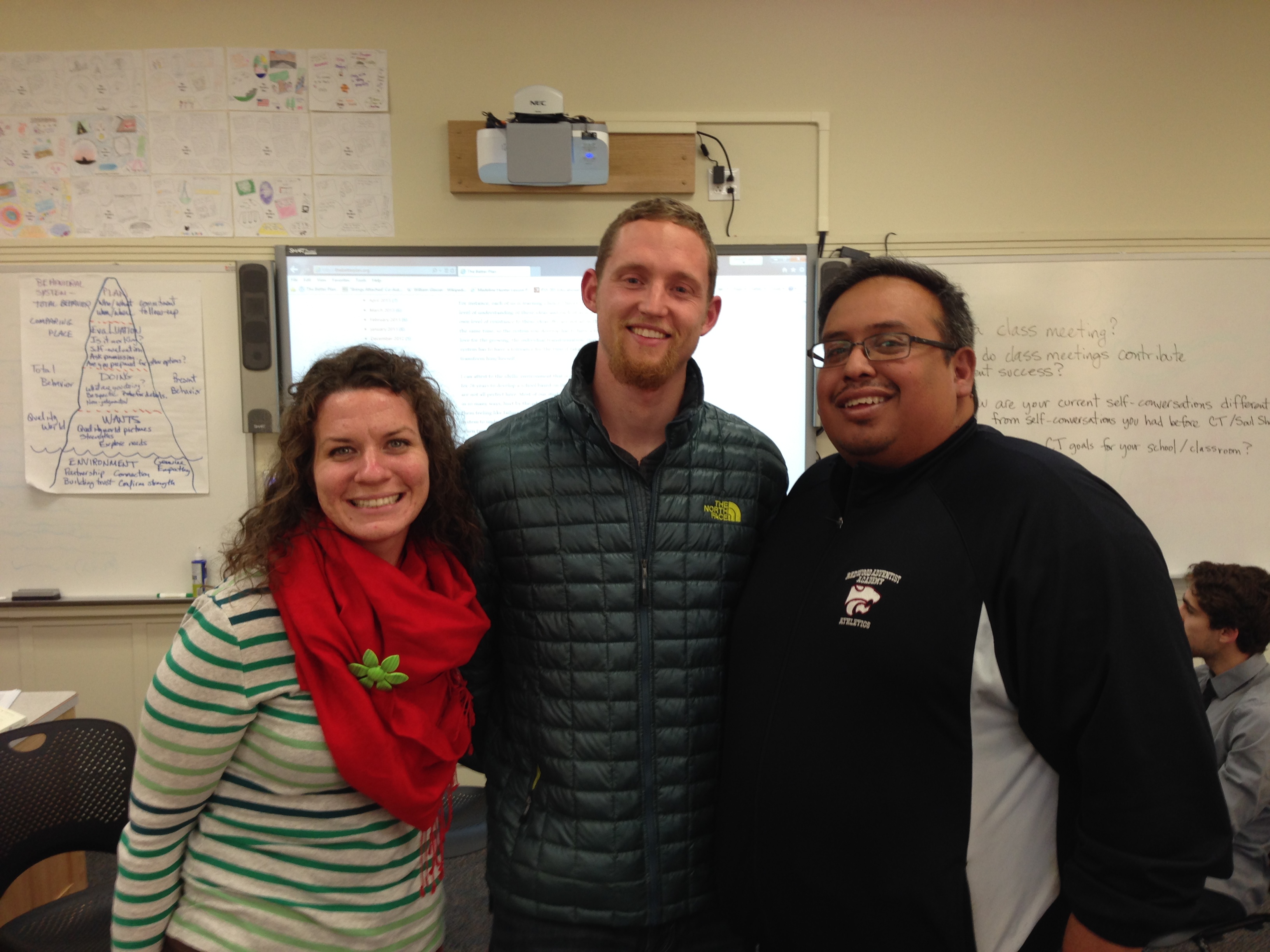
Three of those who attended the recent Choice Theory Study Group: Sonya Reaves, teaching principal at Oakhurst SDA Elementary near Yosemite; Joel Steffan, Gr. 5/6 at Foothills Adventist Elementary School in St. Helena, CA; and George Barcenas, Physical Education and Spanish teacher at Redwood Adventist Academy in Santa Rosa, CA.

Three of those who attended the recent Choice Theory Study Group: Sonya Reaves, teaching principal at Oakhurst SDA Elementary near Yosemite; Joel Steffan, Gr. 5/6 at Foothills Adventist Elementary School in St. Helena, CA; and George Barcenas, Physical Education and Spanish teacher at Redwood Adventist Academy in Santa Rosa, CA.

Our recent Choice Theory Study Group on December 7 broke a record for attendance and we are already looking forward to our next study group on January 25. Put the January date in your calendar now and plan to join us for choice theory discussion and activities. One of the topics we covered on the 7th had to do with classroom meetings. I have included the handout here. Check it out.

Class Meeting guidelines

———————–

Classroom Management Philosophy Paper

I taught Classroom Management during Fall quarter and one of the culminating assignments for my students was to think about and write their philosophy of classroom management. We use Harry Wong’s The First Days of School and Marvin Marshall’s Discipline Without Stress, Punishment or Reward as course textbooks. Part of class time is devoted to introducing choice theory to these future teachers. We really only have time for an orientation to the choice theory principles, yet this year’s students really seemed to take to the ideas. One of my undergraduate students, Laura Helm, put together a concise, yet effective description of the teacher she wants to be. I thought I would share (with her permission) what she wrote.

Classroom Management is an integral part of a teacher’s career. Without effective management, it is very challenging for successful learning to take place. Classroom management seems like a daunting task, and it can be very challenging. After taking this class, I am more prepared to tackle this aspect of being a teacher. Taking Classroom Management has taught me an incredible amount about effective management and the different ways to achieve it. My classroom management philosophy involves self-governance, Choice Theory, procedures, internal motivation, moving away from rewards and punishments, and having relationships with your students.

Possibly the most important concept we learned about is Choice Theory. Choice Theory focuses on self-responsibility along with natural consequences. It is about having the power to choose how you act and how you respond. A significant point of this theory is that you are the only person you can control, and you cannot control others. We govern ourselves and have the power to choose our behavior. Everything we do is working to fulfill our basic needs, as outlined by Glasser in his Choice Theory model. Implementing Choice Theory and its principles in the classroom is essential. Teaching students the significance of self-responsibility and about our basic needs is very important to me. Not only will this be of great importance in the classroom, but also in the future lives of my students. Choice Theory is a way of understanding ourselves and our students on a deeper level, and getting to know how each of us is motivated.

My key beliefs about classroom management surround Choice Theory and management without coercion. I believe that we are motivated intrinsically; therefore external coercion is not effective or beneficial. We do what we do because of something internal, and to fulfill our basic needs. External control, such as rewards and punishments, is not an effective motivator. I think we, as teachers, need to understand that everyone is motivated internally and use that to help the learning process.

In my opinion the use of rewards and punishments in the classroom should be lessened, if not eradicated, as they are a form of coercion. By using rewards, students only focus on getting the reward, not the importance of the learning or doing the work. Punishments often do not address the specific behavior, and can be altogether unrelated. How is it going to help a student learn not to hit other people if he is forced to sweep the parking lot instead of working on changing his behavior? Instead of punishments, natural consequences should be emphasized. There are consequences for behavior and choices that are made, some positive and some negative. Since the student chose their behavior, they will deal with the natural consequences that come about as a result. Unrelated punishments may help for a short time, but they will not help the student to learn why their behavior was wrong and will prevent them from growing or learning to change their behavior.

Another crucial aspect of classroom management in my opinion is procedures. Procedures are of the utmost importance in having a well-managed classroom. Procedures are the way in which the classroom is run and how things are done. Procedures are not rules and they do not have punishments, but students face the consequences of not following procedures correctly. Having specific procedures in place leads to a classroom that runs smoothly. This was made clear to me from watching the video of Mrs. Seroyer’s classroom management techniques. This video impacted me and gave me a new perspective on how to manage a classroom. She emphasized the importance of procedures and how they are one of the most significant parts of effective classroom management. By setting up procedures, teaching them, then rehearsing them until they are learned, students know what the expectations are and how they are supposed to do tasks in the classroom.

To me one of the most important aspects of classroom management is having a strong, positive relationship with your students. Genuinely caring about your students and showing them that you want them to succeed and are there to help is crucial. Once the students believe this, they will be more willing to put effort and care into their work and their behavior. Heather Denton highlighted the importance of this when we visited her classroom. She told us that students will be less willing to care about what we are saying if we do not show them we care for them. I agree with her that relationships are extremely important and are essentially the basis for successful classroom management.

Before taking this course, I had no knowledge about Choice Theory. I thought the only way to manage classrooms was what I had seen and experienced from being a student in many different classrooms. Most of my teachers managed their classrooms with the use of rewards and punishments, and I figured that was the most effective way to manage a classroom. I was usually one of the “good” students, and I rarely got in trouble. When I did, I was punished by time out, having my name written on the board, or something similar that did not help me learn from my mistakes.

My view on classroom management changed substantially after taking this course. It was intriguing to learn about Choice Theory, and that there is more than one way to manage a classroom. Just because classrooms are traditionally managed with rewards, punishments, and other forms of external control, it does not mean that I have to manage my classroom in those ways. I have realized that managing students begins with having a relationship with them. I also understand that everyone is motivated internally, so coercion is not effective with most students. Using rewards, punishments, and coercion never sat well with me, but now I have the knowledge to teach without using coercive techniques.

It is so encouraging to know that candidates such as Laura will be joining our teaching ranks shortly.

————————-

It’s been almost a year exactly since I started The Better plan blog. Thanks for being a part of the journey.

$10 and Push Ups

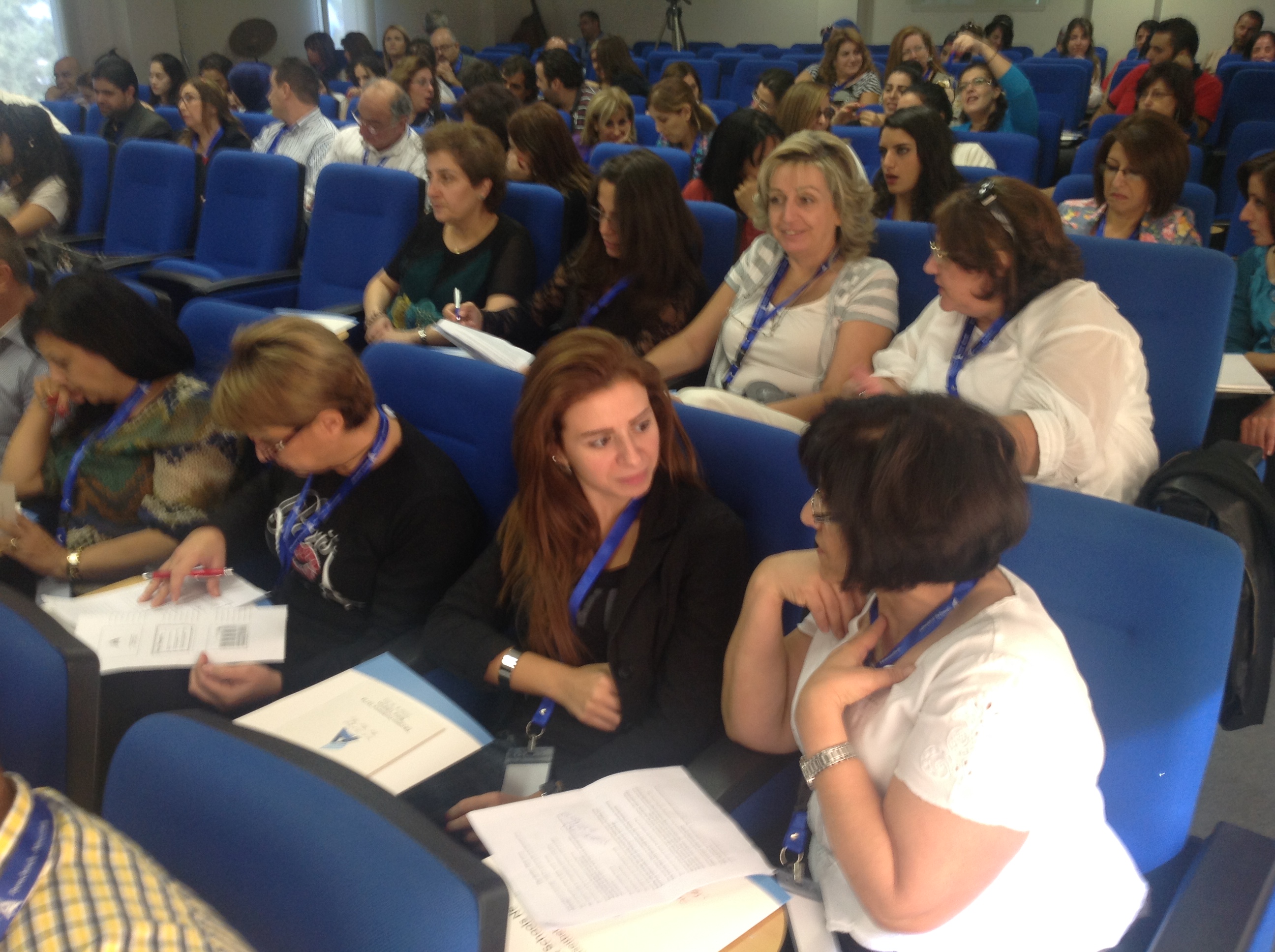
Working with partners during one of the morning session activities.

Working with partners during one of the morning session activities.

Some anecdotes from the Beirut conference, Sunday, October 20, 2013:

My view of the Middle East culture, now that I am a veteran of a few days here, is that they are reserved with someone they don’t know that well, but not reserved at all with each other. By the end of the conference, people were greeting me and even saying thank you, but not much more than that. They seemed to be into the topics that were covered, especially if the learning involved an activity, but I didn’t get a lot of direct feedback from them one way or another. There was positive energy in the room; I could definitely feel that. One woman who attended came up to me during a break and thanked me rather strongly, ultimately sharing with me that I had come to the Middle East just so she could here about choice theory.  Made my day, actually.

it's about 67 cents per push up.

It’s about 67 cents per push up.

I do an activity where I hold up a $10 bill and say that I will give it to the person who comes to the front of the room and does 15 legal push ups. Usually, there will be some who start waving their hands to be chosen as I slowly approach others and one by one offer them the money for the pushups. People will decline; some refuse even to give me any eye contact for fear I will ask them. I continue trying to get someone (not waving his/her hands) to go for it. Eventually, I select a person and he/she does the push ups, whereupon I congratulate them and hand them the money. This activity is a lead-in to a discussion on behaviorism and stimulus-response approaches to motivation. I ask them “What just happened here? Did the $10 make the person do the push ups?” It didn’t seem to work with those who declined, some of whom could have done the push ups. Ultimately, the group realizes that external motivators work for some people, some of the time, and always for reasons that are inside of them. The reason I share this is that when I did this activity in Beirut I had fewer responses than at any other place I have used it. Absolutely no women were interested in doing the push ups, and basically none of the men were either. One raised his hand briefly, but then his hand kind of disappeared. An American student missionary eventually said he would do it, which he did, and he got the $10. I am curious, though, if this is a cultural thing or if I just didn’t do it right. I’ve been doing it for a long time, so I don’t think it is the latter, but you never know. (Most of the participants who have done the push ups and won the $10 over the last, say three or four years, have been women.)

Great rendition, from the heart, of the Lebanese national anthem.

Great rendition, from the heart, of the Lebanese national anthem.

For variety, I also offer $10 to the person who will come to the front and sing the national anthem, a cappella. People seemed even less interested in doing this than they did in doing the push ups. I offered and invited, but no takers. Finally, a gentleman said he would do it and moved to the piano on the stage to play as he sang. I said, no, it needed to be a cappella. He complied, took the microphone, and begin to sing the Lebanese national anthem. He sang with conviction and gusto. Very quickly after he began to sing, one by one audience members stood to their feet and began to sing as well. Rather than simply being entertained by this impromptu solo, they felt compelled to stand in honor of their country and join in singing their national anthem. It was an impressive moment, a touching moment. I was out another $10, but it was totally worth it, though.

An afternoon problem-solving group solving problems.

An afternoon problem-solving group solving problems.

After lunch, problem-solving groups were created that were asked to apply information from the morning session to real classroom settings. For instance, one of the questions asked group members to identify a need-satisfying classroom strategy or activity for each of the Basic Needs. I was very impressed as group reporters from each of the groups went to the microphone and explained their choice theory strategies for a better classroom environment.  Examples included –

Purpose and Meaning– explaining assignments better; allowing students to ask and explore “why” questions; helping students to research career possibilities without pressuring them in a certain direction

Love and Belonging – greeting students personally at the start of the school day and asking them how they are doing; teaching them to work with partners or in small groups more effectively; looking out for the student who may not feel as connected; modeling positive relationships by being supportive of each other as staff members

Power and Achievement – having students present to the class or to teach the class a skill that they do well; allowing students to re-do an assignment until they get it; giving students roles or jobs in the classroom; try to provide students with choices when it comes to how they fulfill assignments

Freedom and Autonomy – trust students more and expect them to live up to that trust; allow to give input into how an assignment could best be done; allow students to give input into the selection and wording of some of the class procedures and rules

Joy and Fun – read funny stories or share jokes; create an environment that is emotionally and physically safe, where creativity can flourish; be optimistic with students; express belief in their ability

Survival and Safety – design and implement a structured school program that protects students physically, emotionally, and academically; be aware of any students displaying bullying behaviors; repair damaged or broken equipment or furniture quickly; prioritize the emotional well-being of every student

————————————

Check your calendar, because if you were really responsible and organized you would have Sabbath afternoon, November 2, from 2:00-4:00 pm already scheduled for the next Choice Theory Study Group. If you haven’t scheduled it yet, you can go ahead and do that now. Hope you can be there!

————————————

Let me know if you have questions or topics for The Better Plan blog to address. Get in touch with me at thebetterplan@gmail.com or through the blog contact form.

Choice Theory in Beirut

Beirut sunset

Beirut sunset

I am in Beirut. Yes, Lebanon.

As I write this there is a beautiful sunset to the west and the lights of the city, like stars, are beginning to come alive and twinkle. I hear the sounds of sirens echoing from the city below. I see the sunset, the sky turning gorgeous shades of darker hues, and hear the sounds of the city from my third floor dorm room, my room with a view. Quite spectacular, actually.

I am in the Middle East for the first time in my life, invited here to share the ideas of choice theory. My perception of this area of the world is that it tends toward authoritarian approaches to life, maybe especially so in the Muslim community, and both of these thoughts were confirmed by Beirut natives in discussions after I arrived. Still, though, there is a desire by teachers here to consider the principles of choice theory.

My presentations occurred on Sabbath afternoon, October 19, and most of the day on Sunday, October 20. Dr. Ed Boyatt, recently retired Dean of the School of Education at La Sierra University, is a co-presenter with me and gave his talks on Friday evening and Sabbath morning. There were three things I wanted to emphasize during the comparatively short time I had to introduce the group to the concepts of choice theory. They were –

1. God designed us for internal control based on freedom.

2. Positive relationships are the foundation on which other success pieces are built.

3. Schools can be need-satisfying places that students and teachers want to come to each day.

A large group came together for the choice theory conference on Sunday.

A large group came together for the choice theory conference on Sunday.

Sabbath afternoon really focused on the first theme, including the idea that since God created us for internal control even He won’t control us. Sunday focused on some of the choice theory elements – understanding the basic needs and the concept of the quality world – that contribute to fulfilling the second and third themes.

One of the quotes that supports the idea that we have been created for internal control, and the quote that years ago first alerted me to a possible similarity between Ellen White, one of the SDA church founders, and William Glasser, says that

The training of children must be conducted on a different principle from that which governs the training of irrational animals.  The brute has only to be accustomed to submit to its master; but the child must be taught to control himself.  The will must be trained to obey the dictates of reason and conscience. A child may be so disciplined as to have, like the beast, no will of its own, his individuality being lost in that of his teacher.  Such training is unwise, and its effect disastrous.             Fundamentals of Christian Education, p. 57

This quote led me to further reading of Ellen White’s books, which then led me to a detailed comparison between Glasser and White, and which ultimately led to the writing of the Soul Shapers book. Both Glasser and White explain, describe, remind, warn, invite, and encourage. Their written words state ideas in ways that get our attention. For example (a few other quotes shared during the conference) –

True education is not the forcing of instruction on an unready and unreceptive mind.    Education, p. 41

Those who train their pupils to feel that the power lies in themselves to become men and women of honor and usefulness, will be the most permanently successful.  Their work may not appear to the best advantage to careless observers, and their labor may not be valued so highly as that of the instructor who holds absolute control, but the after-life of the pupils will show the results of the better plan of education.                    Fundamentals of Christian Education, p. 58

The latter quote provided the idea for the name of this blog. For Ellen White, “the better plan” had everything to do with working with students in a way that honors the internal control with which they are designed. These are just some of the quotes that spurred our discussion during the conference.

Jim Roy and Jimmy Choufani

Jim Roy and Jimmy Choufani

This is a picture of Jimmy Choufani and me as we talk about the Sunday afternoon session of the conference. I can’t say enough good things about Jimmy! He will read this and probably be a little upset at me for saying these nice things about him, but .  .  . well .  .  . tough. Jimmy is a gifted educational administrator. If you haven’t been to Beirut, it may be hard for you to understand what he and his team have accomplished at Bouchrieh Adventist Secondary School (BASS). Ed Boyatt and I had the privilege of observing in classrooms today at the school and I am impressed. I am impressed with the organization and structure of the school, the ability of the teachers, and the level of respect by the students.

Isaac Atem Thon Atem and Jim Roy.

Isaac Atem Thon Atem and Jim Roy.

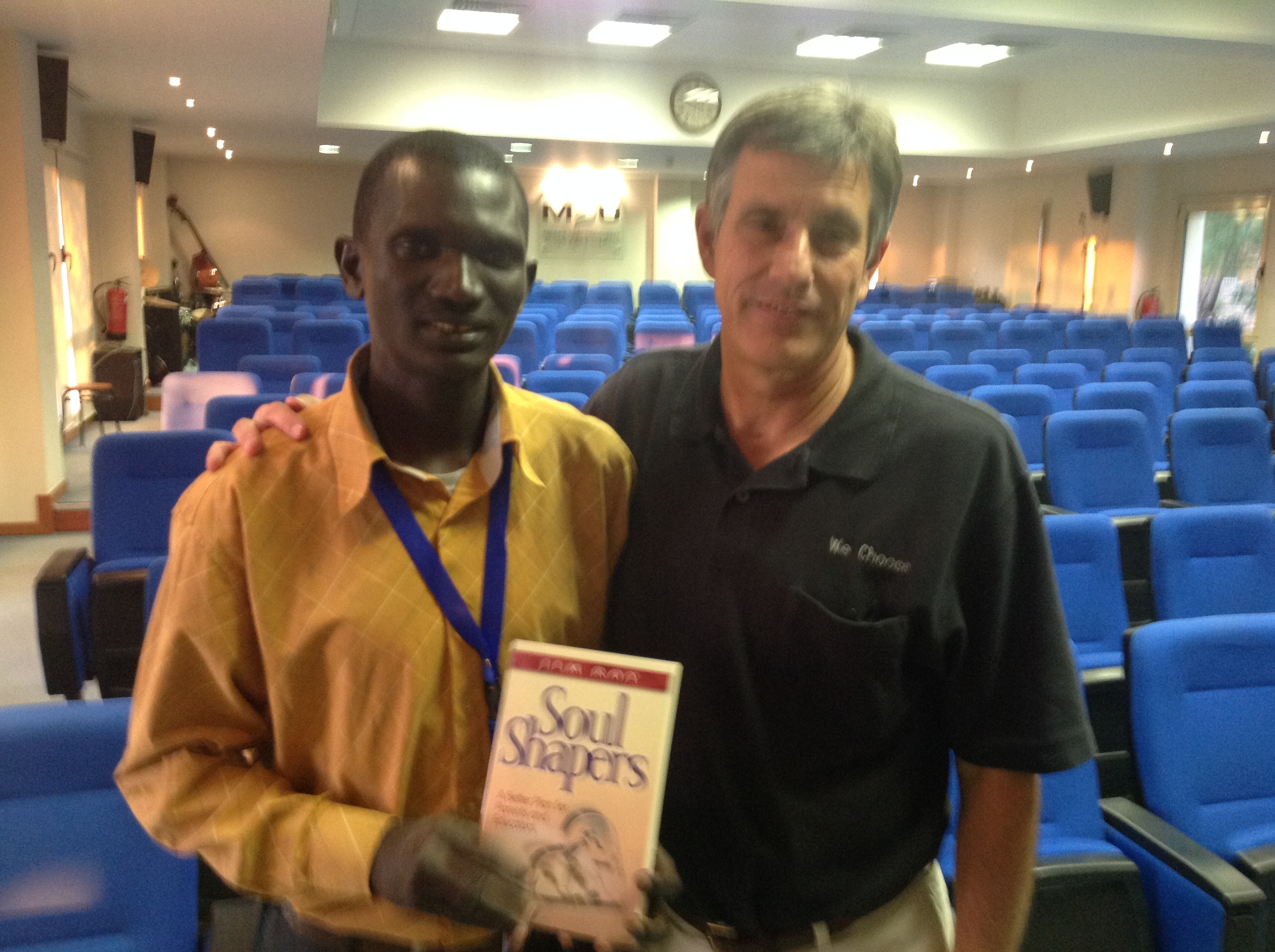
This last picture is of me and Isaac Atem Thon Atem. Isaac is just about to complete his teaching degree at Middle East University and attended the conference over the weekend as a future teacher on the lookout for good ideas. He approached me during one of the breaks and asked if he could purchase one of the Soul Shaper books. I didn’t bring any with me to sell, but as I listened to him tell me about his plan to return to South Sudan and to teach there, I quickly said, please, take my copy. It is a privilege for me to support Isaac. He is a gentle soul ready to go to a difficult place and do what he can to make life better for his students.

I never imagined that choice theory would bring me to the Middle East, but it has and I am very thankful for it. I look forward to a few more days here, and to discussions about the future of choice theory in Beirut!

Good morning, Mr. Kinney

Chris Kinney, in his classroom at Lower Lake High School.

Chris Kinney, in his classroom at Lower Lake High School.

Chris Kinney, a former student of mine who is now teaching in the Clear Lake area of northern California, shares a great update on how choice theory is making a difference in his classroom and school. He also shares some good reminders for many of us in the process.

Hi Dr. Roy,

I received the your email and a request to join your Choice Theory Facebook Page on the same day and I thought it was a happy coincidence.  I have been successful in putting in place Choice Theory practices within my classroom and have received a great response about it, as evidenced in the email below.  Other than that I thought I would drop you and PUC a line about how I am doing at Lower Lake High.

The first year at LLHS I noticed the lack of effort by the students. There was a huge culture of failure.  I approached the principal about creating a new world history class geared towards students achieving a higher success, he agreed and I had 32 students take a Honors level class the following year.  The principal and superintendent took notice and I was placed on a committee to help improve the school on with a campus wide focus. The implementation was this year and already students have said how much they look forward to coming to school, instead of looking at it as just somewhere they have to be.

This year the honors class has grown to two periods with nearly 60 students in it. At first the students were standoffish about taking the class but once in it the use of CT techniques soon leads them to a path of success and enjoyment of the class.  LLHS has also seen an increase in test scores for World History of 25% shift from the bottom two CST levels towards the top three in the past two years.  This success has directly been related to my teaching, and prompted the principal to make me chair of the department and teaching the AP US History class, both of which came with a nice pay bump.

Thank you for helping teach me the use of Choice Theory while I was at PUC.

Chris

At the start of this school year Chris was really pleased to receive a letter from a parent helped to confirm his efforts.

Good Morning Mr. Kinney,

I just wanted to take a moment to contact you to let you know what an impact you had on Corrinne.  Prior to the first day of school she was the least excited about your History class and would exclaim that she “hated History”.  When I picked her up from school the first day, she was so excited about your class.  She went on and on about your expectations, your teaching style and she was suddenly so incredibly motivated.  She feels that you have challenged your students to get an A in your class and instead of begrudging it, she is excited to face your challenge.  She would be so perturbed and bothered if she knew I contacted you so please don’t tell her.  I just wanted to thank you for kick starting my sometimes procrastinating sophomore.

Hope you had a great start to your new school year!

Tracie

When I asked Chris if I could share his email with others he said that would be fine, and went on to share a few more key points.

By all means feel free to share it. It was intended as an artifact that CT works, and can work very quickly in some cases, such as with this student. What I have been doing shows the effect that CT can have on a school, even if only one person is actively doing it. Other staff members are picking it up and asking questions about my classroom management.  I really don’t go out of my way to label what I am doing as the staff is very suspect of “fad teaching” and immediately resent anything that has a label.  What I do find is they see what I am doing as effective teaching regardless of what it is called.  It truly is an amazing transformation that is going on at this school.

Several things stand out for me in Chris’s emails. One is that I introduce candidates to choice theory during their credential classes at PUC, but because of the pressure of state requirements, I am not able to go into a deeper training mode. That Chris is having this kind of impact with an “orientation” level of choice theory is amazing! Imagine what he could do if he dived even more deeply into choice theory. The second thing that stands out for me is the label phenomena. I really agree with Chris that teachers can be highly suspect of something new, especially if it has a label. He is right to simply do what choice theory can do and let people see the results, rather than argue with some about the theory. Chris’s email made my day as one of his former teachers, but it was more than that. He is on the front lines of education in a placement that many would describe as difficult, yet he is thriving and helping his students to thrive, too. May Chris’s testimony be an encouragement to all of us!

———————————————-

Those of you in the northern California area may want to be a part of a Choice Theory study group that will be meeting on Sabbath afternoon, September 21, from 2:00-4:00 PM at Foothills Elementary in St. Helena. You might want to attend the wonderful new church format at The Haven (formerly the Elmshaven SDA Church) and hear Matthew Gamble preach the Word, enjoy the meal provided each week by The Haven, and then head the short distance to the school for the study group. Mark it in your calendar and make plans to join us.

Hey! It works!

A teacher shares what happened recently when he had the opportunity to use the conferencing skills he learned earlier this summer.

This summer I had the privilege of taking the Soul Shaper 1 & 2 class at Pacific Union College.  After doing so and reading a number of Glasser books, I was extremely interested in putting conferencing into practice.  We did a number of role plays in class to prepare for a conference, but there is something exciting about leading out in a real life scenario.

I received a call from a close friend about a relationship issue he was experiencing.  He was looking for some advice from me, so I told him to meet me at a local coffee shop.  On my way to our meeting, I thought back to the role plays in class and the acronym WDEP came to mind.  After reminding myself what each letter stood for, (W – What do you want, D- What are you doing? E- Evaluate if it is working, and P- The plan) I convinced myself that this would be the ideal time to practice what I had learned.

After breaking the ice a bit over coffee, I finally began our dialogue by asking him what was on his mind.  He gave me a long version of his dilemma, which was whether or not he should break up with his girlfriend.  He was quick to blame this dilemma on his significant other, telling me how he didn’t like how she did such and such. I listened carefully and after he was through I simply asked him, well what do you want right now?  He looked at me, kind of perplexed and asked me what I meant.  I asked him again, “deep down, what is it that you feel you need right now? I know we are here about the relationship, but that aside, what do you want?” He thought a bit, I sipped some coffee trying to keep myself from talking to break the silence.  Finally he spoke up and began to paint a picture that depicted freedom to me.  After he was through, I said, “would it be safe to say that what you need right now is freedom?” He assured me that this is what he needed.  I then asked him if he could find this freedom in his current relationship.  Without much thought he told me no. To make sure, I asked him what it would take to gain the freedom that he felt he needed and again asked if there was any way the relationship could still work with this need.  He assured me that he did not think he could get the freedom he needed while maintaining the relationship.  I then reminded him about the blame he put on his significant other for the current conflict.   I asked him, “Could it be that deep down you have wanted out of this relationship for awhile and you were waiting for a good excuse to end it?”  At this point he looked at me and told me that I was “freaking him out”.  He thought I was reading his mind or something.  We joked a bit and then continued on.  He agreed that this was indeed the case, but he was worried that if he broke things off he may not find someone else that had some of the traits he appreciated about her.  We worked through the process again a bit and he came to the conclusion that he needed to end the relationship.  We role played how that would look and talked about blame and how destructive that could be. He agreed and we were able to talk out what a break up might look like.

I don’t want to say that this experience went perfectly. I talked a bit more then I have expressed here and wish I could have been better at listening, but overall I saw that he had self-evaluated which made for a very rewarding experience for me, and hopefully for him.

——————————————-

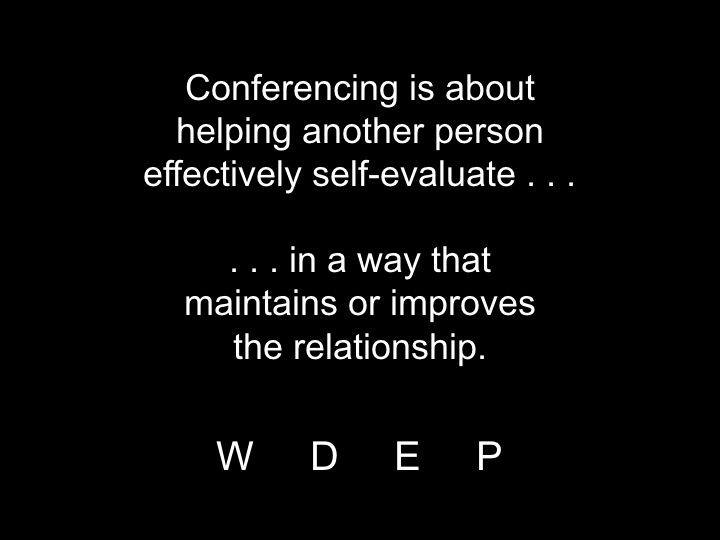
The story above reminds us that we experience problem-solving conferencing opportunities in many normal, every day moments. We can use WDEP conferencing skills as teachers and principals, but we can also tap into WDEP skills as parents and friends. The above story also seems to embody the definition of problem-solving conferencing – that being

Slide1

A lot of us are well-intentioned “fixers” who quickly start sharing advice and solutions when our student, colleague, or friend really just wants someone to listen and help them figure things out. The concept of self-evaluation is hugely important in the choice theory scheme of things. Whether it relates to academic performance and grading or to conferencing with a student regarding a behavior at school, the student’s ability to self-evaluate is the key. The KEY! We can count on this reality as surely as we can count on the law of gravity or the sun coming up in the morning. There is no getting around it. We can advise, direct, order, prescribe, or even threaten, but until a student comes to understand and acknowledge the situation for himself our efforts will lead to frustration and a strained relationship.

When we can non-judgmentally ask WDEP questions the results are frequently amazing! Often, people just need a little help thinking through things on their own and coming up with a plan of their own creation.

19 Ways to Lead, Rather Than Boss

Leadership Road Sign

Inspired by the “Boss vs. Leader” comparisons at the beginning of The Quality School, Dr. Ed Boyatt, one of my mentors, has worked to expand and refine a list that identifies the key traits of effective leaders. Ed has been a teacher, a principal, a superintendent, and recently retired as Dean of the School of Education at La Sierra University in Riverside, California.

Boyatt on Leadership
Based on the Leadership Principles of William Glasser
————————-
Traditional Management or New Leadership

Power through position or Power through expertise

Leadership from the top or Leadership from beside

Permanent leader and followers or Interchangeable ldrs and followers

Boss leadership or Servant leadership (Mt 20:25)

External control of employees or Internal control by employees

To and for employees or With employees

Tell and command or Ask and persuade

Mandate and coerce or Collaborate and guide

Other-assessment or Self-assessment

Compliance from force or Commitment from choice

Manage others or Manage yourself

Caution or Courage

Status quo or Change and renewal

High fear and low trust or High trust and low fear

Conflict avoidance or Conflict confrontation

Negative conflict or Positive conflict

Stimulus-response or Choice theory

Organizational needs only or Blended needs of person & organization

Adversarial relationships or Collaborative relationships

Glasser, W. (1990). The quality school: Managing students without coercion. New York: Harper Collins.

Glasser, W. (1998). Choice theory.  New York: Harper Collins.

——————————-

Has this list inspired you to think of other key leadership traits? Just click on the Reply button and share your thoughts. I’m sure Ed would love to hear your ideas.

——————————-

It’s easy to re-post this article on your Facebook page. Just click on the Facebook icon at the end of the article and it will quickly walk you through a couple of easy steps. It is a good way to share great information with your friends and it will spread the word about The Better Plan blog.

Sandy Hook, Choice Theory, and Forgiveness

sandy_hook_birthers-620x412

It is one of the most significant of all human qualities – that being the ability to forgive. I was reminded of this truth from a remarkable source – Newtown, Connecticut.

My cousin, a school administrator in New York City, knowing of my interest in choice theory, recently sent me an article* written by Dr. Anthony Salvatore, president of the Newtown Association of School Administrators. It turns out that Newtown schools, including Sandy Hook Elementary School, have been studying and implementing the ideas of William Glasser and choice theory since the early 1990s. As a result, Newtown has sought to be a needs-satisfying school system for students.

In the aftermath of the unspeakable tragedy that occurred at Sandy Hook Elementary, Dr. Salvatore represents a voice of healing. Even his comments about the shooter reflect compassion.

“Although I will never know the answer,” he begins, “I keep thinking of what the conversation was that was going on in Adam Lanza’s head. How can we do better in school to help avoid this behavior again, even knowing we can’t control someone else’s behavior, but we can control the conditions around that person. And that takes a whole global community, not just a school or a classroom. Suicide is a final act and one that tells me he saw no other option for meeting his basic human needs. Did he feel like he was loved and belonged to his family or community? I don’t know. Did he feel like he had power in his life to feel competent about who he was? I don’t know. Did he feel like he had a choice in his life besides taking his own life? I don’t know. Did he feel like his life was filled with fun? I don’t know.”

Salvatore emphasized the need for schools to build positive relationships with students “so they can learn how to make the best choice for meeting their own needs and for helping others in society meet theirs as well. Building on the value of relationships and choice, he closed the article on a note I will not soon forget. His vision of forgiveness is more than inspiring!

“It’s time to focus on cooperation instead of competition in our society. It won’t bring back the lives of the 28 victims who died on Dec. 14, 2012, but it will honor the sacrifice they made that day. My fear is we will make the same mistake other communities have made and not recognize that Adam Lanza also was a victim that day. This is where Newtown can truly be a leader toward a new vision and new understanding. We need forgiveness on so many levels, but we first need healing. We already know from research that isolating bullies in school is harmful to the individual and to the school climate. Alienating someone from a community only exacerbates the feeling of powerlessness and not belonging. We must forgive mistakes and nurture our capacity to do good. We have control over that.”

May Dr. Salvatore’s words be an invitation and inspiration to each of us. May the Spirit work in us to prepare our hearts to respond to others, even those who do us harm, with similar compassion.

——————————-

Forgiveness is such an essential part of good mental health. Within the scheme of choice theory, though, where does it fit in? Which of the basic needs, for instance, are being satisfied when we forgive someone?

My mind quickly goes to the need for love and belonging. Forgiveness has to do with our relationships. We seek forgiveness, whether from an earthly friend or our heavenly Father, to restore a relationship. And we offer forgiveness for the same reason – to restore or maintain a relationship.

What about the other needs, though. Does forgiveness satisfy the need for power in some way? How about the need for freedom? How about the need for joy and fun? And we shouldn’t leave out the physiological need for survival. Does forgiveness impact us on a physiological level?

I would like to hear from you regarding forgiveness and the basic needs. How does forgiveness help us meet our psychological or physical needs?

——————————-

A few of us have started a Facebook page also called The Better Plan. We want it to be a collecting point for choice theory ideas and strategies. I invite you to join us. An article was posted today from a primary grade teacher who has just learned about choice theory on how her management is going to change this coming school year. Great stuff! Check it out.

* This article appeared in the Summer, 2013, edition of The Leader, the newsletter of the American Federation of School Administrators.

Ears, Mouth, and Choice Theory

A young principal described how his dad was a great guy, but that he didn’t know how to listen. With the challenges that come with being a school administrator, Dave (we’ll call him) would occasionally share what he was up against with his dad. He confided that –

I would call him, just needing to talk with someone, someone not close to the situation. My dad was a sharp guy and had a lot of life experience and as soon as I explained the problem, sometimes even before I was done explaining, he would quickly start telling me what I needed to do. He was trying to help. I have no question about that. But I didn’t call for advice. I just needed to talk. The sad thing is that when he started giving me advice during the phone call, I would feel myself withdraw or pull away. I kinda wanted the phone call to be over at that point.

It is easy to fall into the same habit as Dave’s dad. We are quick to tell what the answer is or where the solution lies, rather than simply listening and then accepting or affirming. Husbands are quick to do this with wives, parents are quick to do this with children, and teachers are quick to do it with students. We mean well. The answer seems obvious to us. We just want to save time and get to the solution.

Teachers who learn about choice theory begin to understand the pitfalls of telling, rather than listening, and begin to see that one of the best things we can do for another person is to help them develop their own solutions. In other words, the goal is to help a person effectively self-evaluate. Whether we are a listening to a friend explain why she wants to quit her job and go back to school, a husband listening to his wife wonder aloud about problems with the upcoming Home & School potluck, or a teacher working with a student who keeps forgetting one of the classroom procedures, the answer may have more to do with asking the right question, instead of giving the person your solution.

———-

Conferencing is about

helping another person effectively self-evaluate

in a way that maintains or strengthens the relationship.

———-

Becoming a listener who knows how to ask questions that can lead to self-evaluation is one of the most important steps we can take toward being a choice theory teacher or parent.

One of my mentors, Kendall Butler, once shared with me that “it is better to get something out of someone’s mouth than it is to put it into their ear.” Rather than being smart enough to emphasize the right point, the skill and wisdom lie in asking the right question.

——————–

A new Facebook page has been created called The Better Plan. I invite you to Like the page and become a part of The Better Plan community. Joel Steffen will be helping me manage it and our goal is to locate helpful teaching resources, many of them from within our own community, and to provide a place for teachers and parents to ask questions or comment on other’s questions.

What does a lead-manager sound like?

(Not the actual seagulls that Tim photographed. These gulls were willing to fill in as substitutes at the last second. A big thank you to them.

(Not the actual seagulls that Tim photographed. These gulls were willing to fill in as substitutes at the last second. A big thank you to them.)

Lead-management is based on persuasion, invitation, and reasonable guidelines with natural consequences; on the other hand boss-management is based on directing, demanding, and often arbitrary boundaries with reward and punishment applied when boundaries are broken. Capturing the tone of a lead-manager is an important step toward becoming a choice theory teacher or parent. Today’s blog comes to us courtesy of Tim Mitchell, Bible teacher at Mountain View Academy in Mountain View, California. Tim has been a successful pastor for many years, but last year he decided to teach Bible, rather than preach it, and made the switch to the classroom from the pulpit. After attending summer classes, including Soul Shapers 1 at PUC, Tim sent the following Facebook message to his students, a message that captures the tone and content of a lead-manager.

Just took this shot from my backyard where I am working on my summer homework. These birds were about 500 feet in the air and pass overhead regularly. Whenever they fly over I think of you, my students — I want you guys to soar!

My summer school classes are about giving students room to feel freedom and plot out the course of their education as a team. Most schooling is too confining. It’s worse than the average workplace. “Sit in your chair.” Don’t talk.” “Do the (irrelevant) work I tell you to do.” I hated school from 7th grade until about age 22 when I was getting my Masters Degree. And I can see the same in many of your eyes. Once I got interested in school again my grades shot back up.

Pray for me/us so that Bible class can be more relevant, free, team-oriented, humane, and FUN! (Fun is one of the basic human needs!) Let’s begin working in August to set up our procedures so they don’t get in the way of your natural human interest in learning and experiencing new things.

Soar!

I really appreciate Tim’s message. Teaching Bible, teaching any subject for that matter, can be challenging and it’s not unusual for teachers to turn classroom interactions into struggles and battles when students act like, well students. As teachers, we may not want fights, but we tend to go into fight mode when students “ask for it.” Tim’s message “takes the fight out of the classroom” and is setting the tone for a fun, productive, enjoyable school year.

———————————————-

Do you have artifacts — letters, messages to parents, lesson plans, management strategies — that have helped to implement a choice theory approach? I would love to see them, and share them, when you send them on to me. Please take a moment and send me something that has worked for you, or even that you are working on.

———————————————-

Remember to click on the Follow link to become a part of the blog. Our goal is to strengthen and support the choice theory community. Let friends and colleagues know about the blog, too. Thanks.

http://thebetterplan.org