Posts tagged “choice theory

Good News About Guilt

dreamstime_132351051-300x200

During one of our interviews for the biography, Glasser said something that caught my ear. Maybe it was my religious upbringing that acted like Velcro to his comments on guilt, but whatever it was the comments have stuck with me ever since.

One of the girls Glasser worked with at the Ventura School seemed to have a breakthrough, and upon realizing she needed to start being truthful with those trying to help her, began revealing the details of her destructive past. She felt a lot of guilt and hoped to be forgiven.

The Ventura School for Girls, before it was moved to Ojai.

The Ventura School for Girls, before it was moved to Ojai.

Recalling this later, Glasser wrote in Reality Therapy (1965) that, “Instead of forgiving her, which used to be my natural impulse before I discovered how wrong it is therapeutically, I told her she was right to feel miserable and probably would continue to feel bad for the next few weeks. In reality therapy,” he continued, “it is important not to minimize guilt when it is deserved.”

From my own upbringing the idea of guilt had been a kind of bad word, something you needed to stay away from, and even to be cleansed from, so considering it from this matter of fact perspective was ear-catching. The following excerpt from Champion of Choice (2014) further explains his perspective.

When I questioned Glasser on that stance, he replied, “Yeh, yeh, I think guilt is a perfectly good emotion. I have nothing against guilt.” He added: “Well, the girls used to ask me this question, ‘Dr. Glasser, will you forgive me for the things I’ve done?’ You know they have a little religious background, some of them, and I said, ‘That’s not up to me to forgive you. I won’t hold what you’ve done against you, but in terms of forgiving that’s something you have to work out with your own self. I can’t forgive you. You did something wrong. You did it. The best way, if you’ve done something wrong, is to stop doing it, and maybe even treat the people you wronged, if you treated people wrong, better. That’s my advice, but that again up to you.’”

But if someone, like a person may come into my private office and say, ‘I feel so guilty, and I don’t know why.’ I said, ‘What have you done wrong?’ And that came as a new concept. Guilt without sin is a very common concept among people. It’s like you carry around the sin of the world or something like that. I said, ‘Well, if you can tell me something you’ve done really wrong, then I could certainly appreciate that you feel guilty about it, and I think that’s good. The guilt will prevent you from doing it again. But if you’re all upset and worked up and you’ve done nothing wrong, then I have no interest in it. It’s up to you.’”   pg. 111

Guilt is a huge factor when it comes to mental health. Not dealing with guilt effectively leads to a poor self-concept, broken relationships, and often a series of trips to a counselor or therapist. Religion is supposed to help us deal with guilt, but unfortunately, religion often does the opposite.

Shame3-720x380

Thanks to a tip from a friend I was alerted to the work of Dr. Brene Brown, who does research on shame and guilt. In her book, Daring Greatly (2012), Brown states that “Shame derives its power from being unspeakable. That’s why it loves perfectionists—it’s so easy to keep us quiet. If we cultivate enough awareness about shame to name it and speak to it, we’ve basically cut it off at the knees. Shame hates having words wrapped around it. If we speak shame, it begins to wither.”

Shame is a foreboding sense of unworthiness that is powered by the belief that, at the core of who I am as a person, “I am bad.” Guilt, on the other hand, has to do with a specific behavior or mistake. Instead of thinking I am bad, our self-talk would say that “I did something bad.” Interestingly, while shame leads toward self-protection, blaming others, and rationalizing our imperfections, guilt can prod us toward apologizing and changing a behavior.

Glasser alerted me to the idea that guilt can be useful and serves a purpose when it 1) causes us to stay aligned with our deeply held values, and 2) helps us stay connected to others. Brown seems to view guilt in the same way, that it can be a healthy part of our lives, but emphasizes how shame is different altogether from guilt. Shame causes us to isolate rather than reach out, to become silent rather than communicate openly, and to wrap ourselves in aloneness rather than foster intimacy with those who are important to us.

It might be hard to believe there is good news in guilt, but apparently there is.

===============

Now priced at $18.51 on Amazon; 21 reviews have been submitted.

Now priced at $18.51 on Amazon; 21 reviews have been submitted.

The eBook version can be accessed at –

https://www.zeigtucker.com/product/william-glasser-champion-of-choice-ebook/

The paperback version can be accessed at –

http://wglasserbooks.com

or from Amazon at –

http://www.amazon.com/William-Glasser-Champion-Jim-Roy/dp/193444247X/ref=sr_1_1?s=books&ie=UTF8&qid=1410617000&sr=1-1&keywords=champion+of+choice

Signed copies of Champion of Choice can be accessed through me at –

jimroyglasserbio@gmail.com

Compassion and Slim Choices

photo

The power of choice may be the most powerful power that human beings can access! We have the ability, do we not, to choose what we will do this moment, to choose our course of action, to literally choose our destiny. Some embrace this as the reason for their own success, while at the same time citing it as the reason for other’s failure. People who are struggling could make different choices. It is as simple as that. But is it that simple?

A friend who works with people who are coping with grinding, generational poverty, recently talked with me about this. He described how the spectrum of choices available to different individuals can vary so greatly that they are barely comparable. Consider the following graphic –

photo 1

Person 1 – Joe, does have a spectrum of choices, however financially, socially, and emotionally slim those choices might be.

photo 2
Person 2 – Gavin, has a much wider spectrum of choices. He comes from a financially solid background and has a large number of social connections from which to attain his own goals.

It is interesting that the choice options which may appear as the absolute best for Joe appear as the lowest possible options for Gavin. Their worlds are that different. And given this reality, what are the implications for those who work with the Joe’s and Gavin’s among us?

1950s, pre-fame Bill Glasser

1950s, pre-fame Bill Glasser

In his first big seller, Reality Therapy (1965), Glasser emphasized the role of personal responsibility. He described then how being responsible is analogous to being mentally healthy, while being irresponsible is equated with mental illness. Responsibility was basic to reality therapy and living responsibly ultimately led to happiness. These statements may have been accurate, yet Glasser became uncomfortable with how the concept of responsibility was being applied. Practitioners, many of them teachers, social workers, counselors, or in law enforcement, were using responsibility more like a “sledge hammer” than a goal or guide. When it became apparent that a student or parolee or client was behaving irresponsibly, then guilt or threats or disappointment would be applied in various forms. Seeing this trend develop, Glasser pulled back from the responsibility emphasis. The strands of responsibility could only be presented or emphasized from a foundation of involvement or a positive relationship.

The spectrum of choice issue may be similar to the responsibility issue, in that it may be too easy to assume that choice is choice and that everybody has access to a wide spectrum of options. If we think that way it will be just as easy to become judgmental toward anyone that doesn’t access good choices (which are obvious to us) or who may even make bad choices (when to us it is so plain that it could only be a bad choice).

The implication for us is to remember how different the choice options are for people, especially those affected by poverty, and how important it is for us to be compassionate in our thinking and our behavior.

Expecting Joe to view his life options in the same way that Gavin views his options is not realistic, and in some ways even cruel. One of the awesome aspects of choice theory is that it enables us to work with others as individuals, truly taking their reality into account as plans are formed toward a better future.


An Unpublished Glasser Letter to the Editor

It’s good to hear Glasser’s voice again in this unpublished letter to the editor of the Los Angeles Times.

Bhs_2014-01-18_20-33

First, an introduction. Birmingham High School, located in the San Fernando Valley of Southern California, came under attack as a bad high school at the close of 2005 and the beginning of 2006. Three years later, in 2009, the school was allowed to become a charter school, with part of the school breaking away to become a smaller magnet school. In 2006, though, because of multiple articles appearing in the LA Times, Glasser became aware of Birmingham’s challenges and wrote a letter to the editor that he hoped would be published. He shared it with me at the beginning of February, 2006. I don’t think the letter ever was published, but I pass it on to you as a reminder of the ideas that Glasser held dear. (The letter is a little long, but you can take that up with Bill.)

THE SCHOOLS ARE NOT OUR ONLY FAILING INSTITUTION
By William Glasser, M.D.

After reading the high school articles in the Los Angeles Times, I feel it is important that the reader not get the impression that school failure is the most serious failure of our society. Many of your readers might be interested in hearing how school failure compares with other failures that are more difficult to solve and much more costly than improving the schools. Our schools are hardly the least effective institution in our society.

Let’s take a look at some of our other failures and I think you’ll see what I mean. Right now, around half the marriages end in divorce and a majority of the half who stays together are very unhappy. There are huge costs in both money and misery associated with so many broken homes.

It is also very interesting to note that while school failure occurs predominantly among low economic classes, marital failure strikes mostly the rich and the middle class. Many couples get sexually involved and have children without getting married. Divorce rates would be much higher if more of them married.

Right now our three domestic car manufactures are failing because the workers and the managers have not been able to figure out how to make a car Americans will buy. Schools often fail because they are both under funded and challenged by student poverty but that is not the problem in the auto industry. They are trying to sell millions of cars below cost, losing billions in the process and laying off thousands of well-paid employees they no longer need. American workers making American cars were the mainstay of our middle class for almost a century. As that class shrinks, many people will suffer.

But our schools, marriages and auto industry are bastions of success compared with our health care delivery system. We spend more money on health care than any other first world country and deliver less care in the process. This system is run by highly educated people who have billions of dollars at their disposal but they are so ineffective that over 40% of our population, many of them well educated and hard working, have no coverage at all. Health care costs adversely affect education, marriage and the work place. But even agreeing on what’s wrong with the system much less fixing it, is no more than a distant dream.

With due respect to the authors of these four articles, they could have written about these other failures as well because the basic questions that need to be answered are (1) Why is there so much failure? And 2) What can we do to reduce it? But if we could answer those questions for Birmingham, the answers would not only be relevant to schools; they would be relevant to marriage, work and health care, literally to many other failures we struggle with not mentioned here.

If we ask teachers, parents and students, what’s wrong with Birmingham, their answers would be clear and simple: each group would blame either one or both the other groups. If we ask husbands and wives, what’s wrong with their marriage, the same thing occurs: they blame each other. If we ask the car manufacturers why their cars which used to sell, no longer move off the showrooms, they’ll blame the workers for asking for too much pay and too many benefits. In turn, the workers will blame the management for poor product design, out of date engineering and exorbitant salaries.

Even in delivering health everyone will tend to agree that it costs too much. But if you ask all the people actually involved in health care such as doctors, nurses, technicians and drug manufacturers why the costs are so high, no one will stand up and say I charge too much. What they will say is that the other group or groups are to blame for the failure even though none of them would be clear on specifics. But to be fair, we can’t expect them to have this knowledge. If they had it, these problems would have already been solved.

The general answer the people involved in these failures use is to go beyond blame and use coercion to try to force the other to change. But even coercion has problems. When low grades, failure and detention were used in Birmingham the students stopped attending. When coercion is used in marriage, divorce or not, the marriage is destroyed. When it is used in industry the workers do low quality work.

In delivering health care, there is no one to coerce. You can’t force people to pay for something with money they don’t have. In desperation, sick people are now clogging our emergency rooms that must treat them or break the law.

Peaceful persuasion, through negotiation, has been the hallmark of what we call democracy for centuries. When we negotiate no one gets all he or she wants but each gets enough to be satisfied, at least for a while. Our whole legal system is based on using a court, judge and jury when the parties can’t negotiate successfully by themselves.

But there is another ancient way to solve our failure problems that could be used in school, marriage, work or health care. That way is education. This gets me back to what initially led me to write this paper. I believe that we can teach people to get along with each other much better than they do now. But it is also true that we, as a society, don’t even attempt to teach in any school from kindergarten through graduate school, what we all need to learn: how to get along with the important people in our lives much better than we do now.

I believe many people don’t even think about the previous statement. They don’t for two reasons. First, they see so many people failing in the schools and in marriage that they don’t think getting along better is even possible. Second, as long as our society seems to function well enough to satisfy the low standards of the majority, we accept large, amounts of school failure, marital failure, product failure, and even medical failure. Most people will read about Birmingham and our other failures and think, that’s the way it is, what can I do about it?

But what if we can easily find a large school in which the students, staff and parents have been taught to care for and support each other and learned how satisfying this experience is. This is now taking place in the Grand Traverse Academy, K-12, one of a group of highly effective public schools, charter and non charter, in which, essentially, every student enjoys school and is successful.

While it may seem that this would be a very expensive, these schools accomplish this for no more, often less, than is spent in neighboring public schools. What they do in these schools will work in any school including Birmingham High. But, please, don’t believe me. Send two of the reporters writing the articles to visit Grand Traverse, talk with the students, staff and parents all of whom know exactly what is going on and see with their own eyes what has been accomplished. I advise two, one might not be convincing.

The problems in marriage could be substantially reduced if we could offer both premarital and marital partners a course in how to get along well together, essentially, using the same ideas that are used in Grand Traverse. Marriages fail not because the partners have never loved each other but because they have not learned how add lasting friendship to early infatuation.

Our car manufacturers fail because they have made low quality cars for so long that they don’t believe that they and their workers can make a quality car. They managed their workers for years in ways that did not build long lasting supportive relationships among the lower managers and with the workers. Right now they are giving steep price cuts to try to sell cars their former customers have lost faith in. Cutting prices is not the way to persuade customers to regain faith in their cars. The customers see the price cuts as a way to sell a shoddy product.

There is a way that has a good chance to persuade their customers to come back without steep price cuts. Advertise and sell the cars with a five year or hundred thousand mile warranty that covers every repair by giving the owner, no questions asked, a loan car until his or her car is fixed.

Americans want to buy American cars and support American workers. American workers can certainly do quality work. They are doing it now for our foreign competitors. If this warranty were provided, both the workers and the management would have an incentive to learn to work together for quality that they don’t have now.

Health care costs could immediately be lowered substantially if we would only provide health care for people who were sick. Right now half of the people who seek medical care have no diagnosable disease which means they have no pathology to explain their symptoms. Without pathology there are no specific treatments. They suffer from symptoms, including a lot of severe pain and fatigue, because they are unhappy. And they are unhappy because they do not know how to get along with each other and still maintain their self-respect.

Basically, all four of these institutions are filled with adversaries. Adversaries cannot design or build quality cars any more than they can build quality schools, quality marriages, or quality health care systems.

So in the end because we are genetically social creatures, it’s all about learning how to pursue happiness together. Everyone who wants to could do this by learning some version of what is now being taught at the Grand Traverse Academy. For a few pennies on each dollar we spend now, we could teach unhappy teachers, students, parents, husbands, wives, workers, managers, doctors and nurses how to get along better with each other and the people they work with.

Add to that group, millions of unhappy people who are symptomatic but not sick, most of them now wrongly labeled with an illness they do not have, we could teach groups of these unhappy people to become much happier by learning how to improve their relationships. All these people are now miserable, not all the time, perhaps, but in substantial parts of their lives.

Teaching what is done at Grand Traverse to the students, staff and parents of Birmingham High would result in many more students, not only graduating but also convinced of the value of education. An education in which, starting in kindergarten, they would learn to get along well with each other. This would not to hard to do at Birmingham because even the group who called themselves the “outsiders” realized what they had thrown away and were still trying. I don’t believe you could convince many of the 500 students who graduated last June that they graduated from a failing school.

=============

Now priced at $17.34 on Amazon; 19 reviews have been submitted. (We're closing in on 20. Yes!)

Now priced at $17.34 on Amazon; 19 reviews have been submitted. (We’re closing in on 20. Yes!)

Somebody needs to enter a review of the biography so that we can get to 20 reviews. It could be you!

Let me know if you want to order a signed copy of the book from me at jimroyglasserbio@gmail.com.

If you prefer an electronic copy of the book, go to  https://www.zeigtucker.com/product/william-glasser-champion-of-choice-ebook/

============

The greatest weapon against stress is our ability to choose one thought over another.  William James
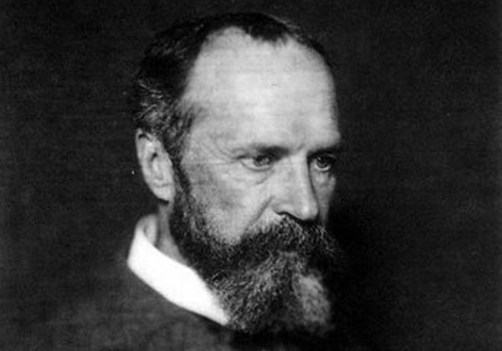
William James (1842-1910); some saw him as the "father of American psychology."

William James (1842-1910); some saw him as the “father of American psychology.”

 

God as Coercer

Belief-in-an-Angry-God-Now-Linked-to-Mental-Illness-2

When it comes to God being coercive, we can respond in one of several ways.

Way #1 – If the Bible says it then that is how it is. Sure, He was coercive during those Old Testament times. He had to be coercive to do what needed to be done. I would have been coercive, too, if I were Him.

Way #2 – The Bible says stuff that I am not totally comfortable with, but I am going to give God a break until all the facts come out.

Way #3 – If God is like how the Bible portrays Him, then I want to head another direction entirely. Agnosticism or atheism suits me fine.

The topic of God as Coercer has been an important one for me personally. Choice theory explains human motivation and behavior better than any other theories of which I am aware. And I have come to appreciate God even more as I think about Him actually creating humankind with the freedom and power that choice theory proclaims. It is so significant to me that God did not create us to be his puppets, but instead gave us this incredible ability to decide what or who we will follow. “Come let us reason together,” He invites (Isaiah 1:18). He seems to be saying, weigh the evidence and choose. There is much in Scripture to support this view. And yet, there are passages in Scripture that also portray God in a different light. This different light portrays God as controlling and even violent. Some see a difference between the God of the Old Testament and the God of the New Testament. God is unchanging, though. Jesus himself said, “If you have seen me, you have seen the Father.” (John 14:9) So how are we to view these God as Coercer passages?

puppet-strings-image

For years I have been collecting Scriptural texts that relate to choice theory. I have categories like Survival & Safety, Love & Belonging, Power & Achievement, Freedom & Autonomy, Joy & Fun, Perceived World, and God the Coercer. As I read different stories and passages, some of them seem to step forward and urge me to store them in one of these folders. Of the three “Ways” described earlier, I am most closely aligned with Way #2, although rather than passively waiting for details to emerge, I am on a mission to find out what’s going on with God and the use of force or manipulation.

Here, for example, are some stories of God as manipulative coercer –

And the Lord told Moses, “When you arrive back in Egypt, go to Pharaoh and perform all the miracles I have empowered you to do. But I will harden his heart so he will refuse to let the people go.” Exodus 4:21

The way this is worded it leads us to think that God needed Pharaoh to be a power-hungry jerk, so He touched Pharaoh’s heart and made him jerky. Or how about this passage describing a scene from the life of King Saul, which led Saul to look for an anti-depressant in the form of the musician, David –

Now the Spirit of the Lord had left Saul, and the Lord sent a tormenting spirit that filled him with depression and fear. 1 Samuel 16:14

angry-god-13106479

Again, the writer attributes Saul’s mental distress directly to God. Apparently, Saul was minding his own business when God sent a tormenting spirit to attack him. These texts fly in the face of God creating humankind with free will and the intelligence to make reasoned choices. It flies in the face of the hundreds of times in Scripture where God or angels reassure humans with the words “Don’t be afraid,” or “Fear not.” And it contradicts the apostle Paul’s clear statement that “God has not given us a spirit of fear, but of love, power, and a sound mind.” (1 Tim. 1:7)

The book of 1 Kings in the Old Testament is full of language that makes God responsible for every terrible and destructive action that takes place. When kings and their entire families were assassinated during a coup, it was because God wanted it to happen. If God’s people didn’t obey Him then He would “uproot” them from the land; He would “reject” them; and He would make them “an object of mockery and ridicule.” People will gasp in horror and ask, “Why did the Lord do such terrible things?” You get the gist.

The story of Elijah begins in 1 Kings 17 and even here we see the same language and view of God. Because of a severe drought, Elijah finds shelter and food with a poor family, a widow and her son, in the village of Zarephath. God is miraculously sustaining this little unit, yet when the boy gets sick and dies the mother cries out to Elijah, “O man of God, what have you done to me? Have you come here to point out my sins and kill my son?” (1 Kings 17:17, 18) Her comment reminds us of the way people then viewed the behavior of their gods and the fact that there were uncontrollable forces about that could only be attributed to the supernatural.

elijah_the_prophet__image_1_sjpg2104

I would have expected better from Elijah. I mean, he was one of the greatest prophets in the Old Testament. And he was one of the few people in the history of the earth to be translated without seeing death. The dude has some rather impressive credentials. Yet when he took the boy’s lifeless body upstairs he then did his own crying out. “O Lord my God,” he began, “why have you brought tragedy to this widow who has opened her home to me, causing her son to die?” (v20) Even Elijah had been saturated with this way of looking at God.

AngryGod1

I think it is hard for us living in a 21st century secular world to relate to the 9th century BC religious world. If we define religion as a vehicle for humans to access, relate to, and appease their gods, then the world during Old Testament times would have been a deeply religious place. Unfortunately, similar to the Greek gods of mythology, the “gods” of the Old Testament were capricious, arbitrary, moody, and self-serving, even to the point of demanding human sacrifices. “Gods” of that day were thought to control nature and cause catastrophes as a way to manipulate humans. This was the context of the day; not an accurate context, but it was their view of reality. And it was the context in which God had to communicate. I think this issue, the context issue, is the cause for a lot of our misunderstanding regarding God’s Old Testament behavior. I don’t have it all figured out yet, but I think this is a part of the answer.

My quest to know God better and to be in relationship with Him is very important to me, and my belief in choice theory is very important to me, too. The two really need to be able to go together. I want to remain open as I continue to search for clues that speak to the extent to which God is a choice theorist. My belief is that God is the ultimate choice theorist, that He invented the concept of freedom and wants us to experience freedom every day. Stay tuned.

“Now, the Lord is the Spirit, and wherever the Spirit of the Lord is, He gives freedom.”   2 Cor. 3:17

===============

Now priced at $17.40 on Amazon; 19 reviews have been submitted. (We're closing in on 20. Yes!)

Now priced at $17.40 on Amazon; 19 reviews have been submitted. (We’re closing in on 20. Yes!)

The eBook version can be accessed at –

https://www.zeigtucker.com/product/william-glasser-champion-of-choice-ebook/

The paperback version can be accessed at –

http://wglasserbooks.com

or from Amazon at –

http://www.amazon.com/William-Glasser-Champion-Jim-Roy/dp/193444247X/ref=sr_1_1?s=books&ie=UTF8&qid=1410617000&sr=1-1&keywords=champion+of+choice

Signed copies of Champion of Choice can be accessed through me at –

jimroyglasserbio@gmail.com


Misdirected Zeal and Why We Keep Trying or Quit

photo

It’s amazing to me just how important our view of reality is! And it is fascinating to me how involved we are in shaping our personal view of reality!

In choice theory-speak, the perceived world represents what we think we HAVE, or what we believe reality to be. (The quality world, on the other hand, represents what we WANT.)

I have read a couple of things recently that reminded me of the significance of our individual perceived worlds. One of the things I read is from Scripture; the other is from a study* out of Rutgers University on perseverance.

The apostle Paul, describing people who want to make themselves good by keeping religious rules, uses a phrase that got my attention. He writes –

I know the enthusiasm they have for God, but it is misdirected zeal.              Romans 10:2 NLT

The phrase misdirected zeal conveys our ability as human beings to become convinced about an idea or belief that isn’t true. Our self-created convictions can lead to zealous behavior, but this behavior doesn’t make the conviction any truer. We see extreme examples of misdirected zeal when terrorists blow themselves up or when members of the Westboro Baptist Church put on hateful demonstrations. Their extremism, though, shouldn’t divert our attention to the numerous more common examples of how we create our own reality. That Fox News is now a major media outlet is testimony to the millions of viewers who view reality from a certain perspective.

Fox 708

For choice theorists the Rutgers study will not be earthshaking, yet it is worthy of our attention. The researchers’ goal was to find out what caused some people to quit, while others work harder and push on. The answer they discovered has to do with how much control people perceive they have over the situation.

The student who fails an exam because he feels he didn’t study hard enough will probably study harder, or differently, the next time. On the other hand, the student who fails an exam because he believes the teacher used trick questions on the test that didn’t really cover the content will probably give up studying or even drop the course.

Landscape

Classroom Application

Teachers may need to give students “bad news,” but it should be done in a way that conveys belief in the student’s ability to complete the task. Some possible approaches include –

+ “Let’s think of some ideas that will help you understand this better.”

+ “Would changing the way you study for this kind of test be helpful? Would you like to talk about different study strategies?”

+ Would you like another chance on this assignment? Do you understand it well enough to give it another try?”

+ “I think you’re very capable of doing well on this material. I wonder what is preventing it so far.”

Helping students to perceive that their doing well is within their control is really a key. The Rutgers research recognizes the value of providing constructive feedback that encourages students to persevere and keep on keeping on. We all like that kind of feedback actually. We all persevere with things we feel are in our control.

* An article regarding the Rutgers study can be found here –  http://www.medicaldaily.com/whether-you-quit-or-persevere-depends-your-perception-control-what-make-us-try-again-301706


Two Lawnmowers

IMG_1407

There is so much choice theory in this picture.

Two lawnmowers parked in a backyard shed, their work done for now, resting as the grass grows once again, but ready to get back at it when the lawn once again needs a trim.

Two lawnmowers. One real, heavy, dusty, its grasscatcher hanging out the back; the other small, plastic, unimposing, a toy.

Of course, the picture captures more than these two objects. It captures something about a relationship, something about the caring habits, and something about lead management. You can see the lawnmowers; do you see choice theory sitting there, too?

When I get the mower out to mow the lawn, my grandson invariably grabs his mower and wants to join me. He will ask, “Grandpa, can I help you mow the lawn?” And I will answer with something like, “Yes, I could use the help. Thank you very much.” I can imagine an adult answering that question with “No, I need you to stay out of the way. Lawnmowers are dangerous and you need to keep your distance.” Or maybe “No, I don’t need your help. You can play on the lawn after I am done.” I don’t like those answers, though, since I really like my grandson’s help with the different projects in which I am involved.

As I mow he is pushing his mower across the grass, too. Sometimes out in front of me, sometimes behind me, sometimes off to the side. He has a system, a plan that he follows, much the same as me having a plan as I work to efficiently get all the grass cut. He laughs a lot as he darts around, and I do, too, for that matter. When I stop to empty the grasscatcher, he stops, too, and walks with me to the green trash can, where we empty the clippings.

This last time, after we were all done with mowing, I pushed the mower to the back of the property, where there is a shed that keeps stuff like lawnmowers. I pushed it up the little ramp and was about to shut the shed door, but noticed that my grandson was now pushing his little mower up the ramp, too. I asked if he was sure he wanted to leave his mower there, as he wouldn’t be able to play with it if it was locked in the shed. He said he understood that, but that he wanted his mower to be in the shed, too, ready for the next time the lawn needed to be mowed.

IMG_1415

I suppose I could have said, “No, let’s not put your mower in the shed. That’s not where it goes.” But that didn’t occur to me. I was so touched by our two mowers sitting there together.

So where’s the choice theory? A lot of you, as you read this, have already come up with multiple examples. Here are a few that come to my mind –

The Relationship
My grandson and I have a really good relationship. I enjoy being with him and I like it a lot when he wants to help me. He talks a blue streak as we work, some of the talk related to the job, but a lot of it not. And while sometimes he actually can hand me something I need or carry a board to where it is needed, not all of his “help” is actually helpful. But I want him close, I want his “help”, all of it.

The Caring Habits
Words like accepting, encouraging, and listening come to mind as I think about our mowing the lawn together. Yes, he is just pushing a toy around, and yes, I could respond in kind, but I don’t think our two mowers would be sitting in the shed together right now if I used one of the deadly habits like criticizing or complaining.

IMG_1414

Lead Management
My grandson loves helping with projects. A few weeks back I constructed 75’ of new fence. It was a grueling job that involved the removal of the old fence, disposal of the old boards, removal of the old fence posts, and the digging of the new holes. It was hot, too. And yet he was with me a lot of the time. Out there in his Crocks and his underwear, talking, listening, handing me stuff, and doing stuff on his own. He is growing up to be an involved, helpful young man, not because we are making him be that way, but because we are open to his being involved. We are supportive of his interest and his efforts. At times we invite his participation or try to persuade him to join in the work. Usually, it is more about accepting his offer to help.

The picture of the two mowers captures what is possible when we place a high value on relationships and keep the caring habits in mind. Whether young or old, people thrive when the elements of lead-management are present.

===============

Me and Chris Kinney.

Me and Chris Kinney.

The talk at Lower Lake High School this past Thursday evening (9-11-14) went well. Chris Kinney, a teacher at the school and one of my former students, organized the event and recorded it, too. There are administrators and teachers at the school that want to head in a choice theory direction and Chris is fueling and supporting that vision. I will be sharing more about this in an upcoming blog. Well done, Chris! It was a great evening all the way around!

===============

We have been stuck on the number 16 when it comes to Amazon book reviews for Champion of Choice. It would be great for the book, and by extension the ideas of choice theory, if that number could go significantly higher. Reviews don’t have to be long and they are simple to do.

Now priced at $17.23 on Amazon; 16 reviews have been submitted. (We've been stuck on 16 for a while.)

Now priced at $17.23 on Amazon; 16 reviews have been submitted. (We’ve been stuck on 16 for a while.)

The eBook version can be accessed at –

https://www.zeigtucker.com/product/william-glasser-champion-of-choice-ebook/

The paperback version can be accessed at –

http://wglasserbooks.com

or from Amazon at –

http://www.amazon.com/William-Glasser-Champion-Jim-Roy/dp/193444247X/ref=sr_1_1?s=books&ie=UTF8&qid=1410617000&sr=1-1&keywords=champion+of+choice

Signed copies of Champion of Choice can be accessed through me at –

jimroyglasserbio@gmail.com


Mistakes, Mischief, and Mayhem

There are some things we just never forget!

The phrase “mistakes, mischief, and mayhem” turned out to be one of those things for me. I first saw it in Jane Nelsen’s book, Positive Discipline (1981, 2006), twelve years ago, and it made such an impression on me that it has become a part of my management paradigm, a kind of beacon that, combined with choice theory, helps to point me in the right direction.

b101_small

Nelsen felt that classroom behaviors can be categorized as either mistakes, mischief, or mayhem, and that our management strategies need to keep these levels of behaviors in mind. For the sake of clarity, the following definitions will help –

Mistakes – misbehaviors that are just that, mistakes. It is easy for us to forget how complex a classroom can be. There are so many expectations regarding how students relate to one another, how they relate to things, how they relate to places, and how they relate to time. Additionally, each of them comes from unique backgrounds that differ greatly. Most of the “misbehavior” in classrooms fit into the mistakes category.

Mischief – misbehavior that has an element of intentionality. It may not have a meanness element to it, however it is distracting, probably draining to the teacher if not corrected, and takes away from the learning environment.

Mayhem – misbehavior that breaks a rule and crosses the line of civility and respect, whether the behavior is directed at fellow students, teacher, or things within the classroom. Mayhem behaviors involve disrespect, disobedience, and/or destruction. These are serious misbehaviors that require a student response, maybe in the form of an action plan to prevent the misbehavior in the future, which also may involve steps to restore what their misbehavior harmed (e.g. – relationship, trust, broken object).

It becomes plain that misbehaviors are not all equal and that a mistake is vastly different than mayhem. Treating each of these misbehaviors on the level they deserve can greatly affect the learning atmosphere of the classroom, and will allow teachers to head home each day without a pit of worry and tension in their stomach.

discipline

One common mistake for teachers is to treat any and all misbehavior as mayhem. Teachers may not know about the concept of Procedures or have forgotten about their value and treat all behavior, or lack thereof, on the level of Rules. A student forgets to walk into the classroom after recess – Bam! – he broke a rule; a student leaves her desk and gets a drink during a teacher presentation – Bam! – she broke a Rule. Treating everything like mayhem creates a controlling, tension-filled space that foments rebellion in all kinds of forms.

It is freeing to teachers when they acknowledge that most misbehaviors are simply mistakes that can be prevented or corrected through the use of Procedures. Mistakes don’t have to be about getting in trouble or being punished. Procedures are taught, reviewed, and rehearsed, and when students forget a Procedure they are reminded of it and probably asked to rehearse it correctly.

Harry Wong emphasizes that the first two weeks of school should focus on learning Procedures. Once students “get” the idea of Procedures and know the Procedures needed to get the school year started the classroom environment is then ready for students to “soar!”

Using Procedures to provide helpful classroom structure will prevent most of the usual behavioral issues, although there may still be students who are mischievious in class in a way that distracts from the learning. It is common for mischief to include clowning and various forms of pranks. Mischief can be reduced and eliminated by 1) consistently implementing the Procedures, and 2) creating a need-satisfying classroom. By need-satisfying I mean a classroom where the teacher is intentional about helping students meet their need for purpose, love and belonging, power, freedom, and fun. In other words, planning activities, events, and opportunities for students with a high need for power to meet that need, and students with a high need for fun to meet that need, and so forth. As teachers we don’t just hope this happens or merely allow it to happen, we plan for it to happen.

shutterstock_14193661_crop380w

Lastly, we hope that mayhem behaviors never occur in our classroom, but inevitably they do. Kids sometimes behave poorly, sometimes very poorly, and when they do we must confront the behavior and assist them toward forming better behaviors. It is important that teachers convey compassion to the student being confronted, but this compassionate spirit should not prevent dealing with such behaviors decisively. Mayhem behaviors (e.g.- defiance of the teacher, attacking another student verbally or physically, willful destruction of school property) may involve a time out or in-school suspension and may involve the student developing a plan to restore what was broken and prevent further incidences in the future. As the teacher I need to have a sense that the student understands the importance of kind and safe behavior and that s/he can make a commitment to kindness, respect, and cooperation. We can’t expect perfection, however we can expect a willingness and a desire to grow in these areas.

And so the 3Ms of classroom behavior are Mistakes, Mischief, and Mayhem. Treating each of them for what they are will go a long way toward student success this year!

=====================

Chris Kinney, who teaches at Lower Lake High School, and who was featured in the August 20, 2013, blog (Good Morning, Mr. Kinney) right here in The Better Plan, invited me to come and talk to people at his school about the new Glasser biography and about choice theory in general. So, I will be doing just that tomorrow evening, September 11, from 6:00-7:00 pm. He put together the following flyer, which is really well done. I would love it if local choice theorists could attend this event!

BuiYAd1CcAAskUI

=====================

The quickest and cheapest way to access William Glasser: Champion of Choice is to purchase the eBook version at the following link –

http://www.zeigtucker.com/product/william-glasser-champion-of-choice-ebook/

Now priced at $17.73 on Amazon; 16 reviews have been submitted. (We've been stuck on 16 for a while.)

Now priced at $17.73 on Amazon; 16 reviews have been submitted. (We’ve been stuck on 16 for a while.)

Off and Running with Glasser and Wong

Screenshot 2014-09-06 19.44.32

Classes begin on Sept. 22 at PUC and one of the courses I will be teaching this Fall quarter is Classroom Management. Pre-service teachers worry ahead of time about whether or not they will be able to manage a classroom and after entering the profession, those teachers who leave teaching mostly do so because of issues relating to management. Classroom management is a very important skill set for teachers to possess. I enjoy teaching the class, even as I feel the pressure of the responsibility to teach it well and teach it right.

There are basically two different paradigms from which to consider classroom management – either you view the world operating according to external control (reward / punishment) or you see it operating according to internal control and the principles of choice theory. There are many different approaches and management models to choose from, but each of them sits on one of these paradigms.

056

I am using two books as texts for the class that I haven’t used before. The first is Choice Theory in the Classroom (1986; 2001), which I am quite familiar with, and the second one is The Classroom Management Book (2014), which is brand new.

9780976423331_p0_v3_s260x420

I chose these books because I think they will help students understand and appreciate the essential elements of classroom management. (A big THANK YOU to those who posted their essential elements in the last blog. I am going to share your insights with my class.) Some of the elements I would like to include –

+ Know yourself – Recognize that your beliefs about motivation and behavior (which you can change) form the frame within which all of your classroom management pieces fit.

+ Prevention rather than cure – Seek to create a need-satisfying class in which students want to be. Focus on positive relationships all the way around. Focus on instructional organization. Focus on teaching and rehearsing the Procedures needed for the room to run smoothly.

+ Natural consequences rather than punishment – If students do break a rule, help them learn to take responsibility for their behavior and restore what they have broken.

I plan to start with Glasser’s Choice Theory in the Classroom and have him help us understand the concepts of choice theory and how the internal control model of human behavior really is the only model that honors the way our brains work. I think role plays in class will help us get the essential points in better ways than me lecturing the points.

Bill giving a talk in Ventura, CA (2006)

Bill giving a talk in Ventura, CA (2006)

I am glad I re-connected with Choice Theory in the Classroom. I have known about the book, of course, but I haven’t tapped into it like I am about to. Here are a few key points from the book. You can almost hear Glasser’s voice –

“We cannot pressure any student to work if he does not believe the work is satisfying.” (12)

“We are far too concerned with discipline, with how to ‘make’ students follow rules, and not enough concerned with providing the satisfying education that would make our overconcern with discipline unnecessary.” (12)

“When we talk about better discipline with no attempt to create a more satisfying school, what we are really talking about is getting disruptive students to turn off a biological control system that they cannot turn off.” (58)

I then plan to transition into Harry Wong’s new book, The Classroom Management Book. I have been using Wong’s classic The First Days of School for a number of years, and I really like that book, but I decided to go with his new book. The new book is so strong on Procedures and how to teach them. I can supplement what the book doesn’t cover, but I really want the students to have access to what he does cover. I think experienced teachers will want to check out his new book, too.

IMG_1390

I just recently received the latest edition of Educational Leadership, the journal for the Association for Supervision and Curriculum Development, and the entire journal is devoted to the topic of motivation. I will be having the students read several of the articles, including the keynote (lead) article by Daniel Pink, entitled Motivated to Learn: A Conversation with Daniel Pink. The title reminded of the many journal articles back in the day that featured control theory or choice theory and had as part of the title A Conversation with William Glasser. As it so happens, even though this current journal has been devoted to the topic of motivation, and specifically motivation within the school environment, not one of the articles references Glasser or mentions him in any way. It is true that his ideas and beliefs are splashed throughout the journal. Schools wanting to improve instruction and embrace educational “best practice” are heading the way Glasser pointed for years. That really is the important thing.

============

Discipline is helping a child solve a problem.
Punishment is making a child suffer for having a problem.
To raise problem-solvers, focus on solutions, not retribution.
L.R. Knost
(Thank you Bette Blance for sharing this on Facebook)

============

One way to keep Glasser’s legacy alive is to let colleagues know about The Better Plan blog. Think about it.

http://thebetterplan.org

============

Now priced at $17.73 on Amazon; 16 reviews have been submitted.

Now priced at $17.73 on Amazon; 16 reviews have been submitted.

The eBook version of William Glasser: Champion of Choice can be accessed at the following link –

http://www.zeigtucker.com/product/william-glasser-champion-of-choice-ebook/

The paperback version can be accessed at the following Amazon link –

http://www.amazon.com/William-Glasser-Champion-Jim-Roy/dp/193444247X/ref=sr_1_1?s=books&ie=UTF8&qid=1409718917&sr=1-1&keywords=champion+of+choice

For U.S. customers, get a signed copy of Champion of Choice for $20 + $6 (shipping). Send your check, along with any special instructions (e.g.- if the book is a gift), as well as your shipping address, and I will get the biography out to you right away.
Please include your email address, just in case I have questions about your order. My address is P. O. Box 933, Angwin, CA 94508

Get a signed copy of Soul Shapers: A Better Plan for Parents and Teachers for $17.

1308277


Well . . . this is frustrating . . . in kind of a good way

02BOOK1-popup

I just learned about a new book by Allen Frances that Harper Collins has published. It is called Saving Normal: An Insider’s Revolt Against Out-of-Control Psychiatric Diagnosis, DSM-5, Big Pharma, and the Medicalization of Ordinary Life.

The Harper Collins ad for the book proclaims that it was written by “the most powerful psychiatrist in America” and that it is “a deeply fascinating and urgently important critique of the widespread medicalization of normality.”

Dr. Allen Frances

Dr. Allen Frances

The actual description of the book, when you find it on Amazon, reads as follows –

Anyone living a full, rich life experiences ups and downs, stresses, disappointments, sorrows, and setbacks. These challenges are a normal part of being human, and they should not be treated as psychiatric disease. However, today millions of people who are really no more that “worried well” are being diagnosed as having a mental disorder and are receiving unnecessary treatment. In Saving Normal, Allen Francis, one of the world’s most influential psychiatrists, warns that mislabeling everyday problems as mental illness has shocking implications for individuals and society: stigmatizing a healthy person as mentally ill leads to unnecessary, harmful medications, the narrowing horizons, misallocation of medical resources, and draining of the budgets of families and the nation. We also shift responsibility for our mental well-being away from our own naturally resilient and self-healing brains, which have kept us sane for hundreds of thousands of years, and into the hands of “Big Pharma,” who are reaping multi-billion-dollar profits.

Frances cautions that the new edition of the “bible of psychiatry,” the Diagnostic and Statistical Manual of Mental Disorders-5 (DSM-5), will turn our current diagnostic inflation into hyperinflation by converting millions of “normal” people into “mental patients.” Alarmingly, in DSM-5, normal grief will become “Major Depressive Disorder”; the forgetting seen in old age is “Mild Neurocognitive Disorder”; temper tantrums are “Disruptive Mood Dysregulation Disorder”; worrying about a medical illness is “Somatic Symptom Disorder”; gluttony is “Binge Eating Disorder”; and most of us will qualify for adult “Attention Deficit Disorder.” What’s more, all of these newly invented conditions will worsen the cruel paradox of the mental health industry: those who desperately need psychiatric help are left shamefully neglected, while the “worried well” are given the bulk of the treatment, often at their own detriment.

Masterfully charting the history of psychiatric fads throughout history, Frances argues that whenever we arbitrarily label another aspect of the human condition a “disease,” we further chip away at our human adaptability and diversity, dulling the full palette of what is normal and losing something fundamental of ourselves in the process. Saving Normal is a call to all of us to reclaim the full measure of our humanity.

It is a little bit frustrating for me (not a lot, but a little bit) that Harper Collins is pushing Saving Normal. I contacted the editor at Harper Collins when I had the Glasser biography manuscript halfway completed, a book that covers the same topics as Saving Normal, and was told that no one was interested in the life story of William Glasser. I disagreed, pointing out Glasser’s long and well-known career, the many books he had published, some of them huge sellers, the worldwide organization he had formed, the over 65,000 people that had participated in Glasser training workshops, and the many Glasser Quality Schools he had inspired throughout the United States.

I contacted this same editor when the manuscript was finished and he surprised me by saying he would love to read it, although he reminded me that he didn’t see Harper Collins getting involved. Still, I was a bit buoyed by his interest in the book. He ended up being very complimentary of the manuscript, emphasizing that it was very well written. I took it as a compliment when he expressed that he didn’t think it needed much editing. In spite of his belief that it was well written and interesting, he wished me luck in finding a publisher.

Since Harper Collins didn’t want to publish the book, or at least one of the editors didn’t want to publish the book, I have very much wanted to prove him wrong. I very much want a lot of people to be interested in Glasser’s story and the development of his ideas. Allen Frances, it turns out, is known for chairing the taskforce that produced the DSM-4, so his prominence is earned. Still, I see Glasser’s contributions to psychiatry, psychology, and education as so much more significant. That Harper Collins would jump on Frances’ bandwagon after so many years of working with Glasser, well, it’s just a bit frustrating.

It is good, though, that Saving Normal has been published. It is now one more voice reminding readers that the ups and downs of life, the challenges and disappointments, the sadness and grief, are not indicators of mental disease. It reminds us that human beings possess a resiliency capable of working through problems, rather than running to Big Pharma. It’s not a cheap book at $45, but I welcome it to the “discussion.” Did I mention that it’s presence is a tad frustrating?

==============

Now priced at $17.73 on Amazon; 16 reviews have been uploaded so far.

Now priced at $17.73 on Amazon; 16 reviews have been uploaded so far.

The eBook version of William Glasser: Champion of Choice can be accessed at the following link –

http://www.zeigtucker.com/product/william-glasser-champion-of-choice-ebook/

The paperback version can be accessed at the following Amazon link –

http://www.amazon.com/William-Glasser-Champion-Jim-Roy/dp/193444247X/ref=sr_1_1?s=books&ie=UTF8&qid=1409718917&sr=1-1&keywords=champion+of+choice

For U.S. customers, get a signed copy of Champion of Choice for $20 + $6 (shipping). Send your check, along with any special instructions (e.g.- if the book is a gift), as well as your shipping address, and I will get the biography out to you right away.
Please include your email address, just in case I have questions about your order. My address is P. O. Box 933, Angwin, CA 94508

Get a signed copy of Soul Shapers: A Better Plan for Parents and Teachers for $17.

1308277

25 Ways to Ask Your Kids “How Was School Today?”

2014-08-29-25ways-890x395_c

If you are into choice theory you have come to recognize how valuable a well-worded question can be. Not all questions are well-worded and lead to quality responses, though.

The Omaha Sun Times recently ran an article entitled, 25 Ways to Ask Your Kids ‘So How Was School Today?’ Without Asking Them ‘So How Was School Today?’ This regularly-asked question garners pretty much the same answer from kids, “Uh, ok.” So what kind of questions might actually get more than an “Uh, ok,” response? Here are some examples from the 25 Ways list –

What was the best thing that happened in school today?

Tell me something that made you laugh today.

If you could choose, who would you like to sit by in class? (Not sit by?)

If I called your teacher tonight, what would she tell me about you?

How did you help somebody today?

How did somebody help you today?

When were you the happiest today?

Who would you like to play with at recess that you’ve never played with before?

What do you think you should do more of at school? (Less of?)

Who in your class do you think you could be nicer to?

If you got to be the teacher tomorrow, what would you do?

Tell me about three different times you used your pencil today.

These kinds of questions will get more than “Uh, ok” answers and will begin to help us empathize with the lives of our children.

Those taking the Soul Shapers training during the summer at PUC (or those taking the basic or advanced Glasser training at locations around the world) learn about the WDEP method of problem-solving conferencing. The letters WDEP stand for categories of questions that will assist the person you are conferencing with – be they student, fellow teacher, parent, or administrator – to effectively self-evaluate and engage in solving the problem, whatever the problem may be.

W stands for Want or What do you Want?
D stands for Doing or What are you Doing?
E stands for Evaluation or Is it Working?
P stands for Plan or What is your Plan?

There are many different questions in each of these categories that can be asked to facilitate self-evaluation and discussion. The key is that good questions can help your student or your child or whoever it is you are trying to help to figure out what they should do and how they should do it. Good questions also minimize the talking that we do and maximize the talking of the person who should be doing the talking – that being your student or child or colleague.

Examples of questions from each of these categories include –

What do you want?
What is your goal?
What are you willing to settle for?
How do you want your class to be?
When was the last time you were happy?

What are you doing?
What action have you taken?
What have you tried?
When you think those thoughts, what do you usually do?
What do you do between 8:00 and 10:00 PM as a general rule?

Is it working?
If you continue to act that way, what do you think will happen?
Are you satisfied with the way things are?
In what ways have things improved?
Is your behavior helping you or hurting you?

What is your plan?
What? Where? When? With whom? How often? What time?
What would you commit yourself to for the rest of the week?
Can you think of something that would help you put this plan into action?
How committed are you to making this happen?

Whether you are creating a PBL lesson (Project-Based Learning) or leading out in a problem-solving conference, a great question is worth its weight in gold!

==========

William Glasser: Champion of Choice is now available as an eBook and can be accessed at the following link –

http://www.zeigtucker.com/product/william-glasser-champion-of-choice-ebook/

Now priced at $17.73 on Amazon; 16 reviews have been uploaded so far.

Now priced at $17.73 on Amazon; 16 reviews have been uploaded so far.