Posts tagged “choice theory

We WANT to Feel Good, Pt. 2

Refund check

In this post we will cover the WANT part of the phrase – We Want to Feel Good.

The income tax refund sat on the kitchen counter dwarfing the rest of the mail and beckoning for someone to come up with a way to spend it. Jack and Jill Hill, marriage partners for 12 years and the recipients of said check, are each beginning to lock in on a vision for its use. Jack, ever the romantic, envisions a get-away vacation to an exotic location; Jill, on the other hand, envisions something closer to home, like say, a new couch. As they tinkered in the kitchen, part putting groceries away and part putting something together for supper, Jack found himself assuming that Jill’s lack of excitement regarding a trip meant that time together wasn’t important to Jill – in fact, he wasn’t important to her.  At the same time, Jill found herself assuming that Jack didn’t understand that her home was an important reflection of herself.  She wanted it to be beautiful and was embarrassed by the stained, sagging couch they had had since they got married.  Not only does Jack not care about my feelings, he doesn’t really care about me.

One of the ingenious elements of choice theory is a place in our brains called the quality world. Not only ingenious, it may be the most important element of all the pieces that make up the choice theory model. Its genius lies in the simple way it describes the complex process of why we do what we do. Understanding the concept of the quality world, especially our own personal quality worlds, leads to understanding what motivates us.

Ted Miller, who teaches Math at a high school near you, is frustrated that only a few of his 2nd period students seem to care about doing well in his class. Hector is one of those students. It’s like it satisfies a need inside of him when he does well in class. Gavin, on the other hand, is almost the exact opposite. He cuts up and clowns around in class constantly. It’s like .  .  . (a light bulb is about to go on in Ted Miller’s head), it’s like it satisfies a need inside of him when he gets attention for being the clown.

As said before, every person is born with a unique set of basic needs, but unlike many animals, humans do not arrive with a set of instructions as to how to meet those needs. From birth, human beings begin to learn how to meet their need for purpose and meaning, love and belonging, power and achievement, freedom and autonomy, joy and fun, and survival and safety. A behavior that results in a need being met is then stored as a picture in our personal quality world. This picture book is like a scrapbook in our heads in which we store the people, places, activities, beliefs, and things that help us meet one or more of the needs or that brings us a greater feeling of control. We put these behavioral pictures into our mental scrapbooks; we can also take pictures out of our scrapbooks. In other words, this process is purposeful.

Karina just about slams the plastic mixing bowl into a sink already cluttered with other mixing bowls from the supper she has created. She got the idea for a special meal this evening as everyone was headed out the door, scattershot, to school, to work, quick yells of good-by thrown over shoulders, earlier that morning. She planned the menu throughout the day. They needed to be together more as a family she thought. Now, as her husband finished mowing the lawn and her kids lingered in their rooms upstairs, the food was getting cold on a beautifully set table. A dish towel clenched in one hand, a serving spoon clenched in the other, Karina fumed as she pondered how to convey her anger.

It is important to understand that putting and keeping a behavioral picture in our quality world creates a target that we want the events in our lives to hit, or put more accurately, that we want the significant people in our lives to hit on our behalf. Putting a behavioral picture in our quality world is like setting a thermostat for a certain temperature. The thermostat monitors whether or not the desired temperature is present. If it isn’t it sends a signal to a heater or an air conditioner to do their thing. The temperature is the focus; that preset level of cool or warm becomes the target to achieve and maintain. Similarly, by putting a picture in our quality world we have formed a picture of the expected behavior of others, we have formed, at least in our mind, the way events or circumstances must go. Like the thermostat, when our quality world pictures aren’t fulfilled we send a signal to another place in our brain, the behavioral center, to do something about it. This moment, the moment when we are urged to do something often involves us trying to change the behavior of another person so that he or she will show up in a way that matches our preset picture. The behavioral center, though, we will save for another time.

For now, just think about the quality world pictures you have in your own brain. Some of those pictures are wonderful, like a relationship with a grandchild or an accomplishment at work, and lead to personal needs being satisfied. Other of our pictures, though, like expectations we have of a spouse or the way we want other drivers to navigate the road around us, are the cause of a lot of frustration and even anger. When an unmet need is important enough, given time, it can lead to emotional and physical distress. It is easy to get in the habit of thinking that these quality world pictures, these expectations, just arrived in our head somehow, almost like we are the victim of an expectation. Choice theory explains that rather than being a victim, we intentionally place certain pictures in our head for a reason. Understanding the quality world process can go a long way toward releasing the pressure within us and putting a smile back on our face.

————————————————–

I encourage you to FOLLOW the blog and become a part of The Better Plan community. Remember to let colleagues and friends know of The Better Plan blog, too. Just enter   thebetterplan.org   and you’re there.

Keep in mind that the Soul Shapers workshops at Pacific Union College will take place next month.

Soul Shapers 1   June 17-20

Soul Shapers 2   June 24-27

Sign up for summer courses at PUC at:  www.puc.edu/summer-teacher

WE Want to Feel Good, Pt. 1

We Choose

I recently discovered that May is Mental Health Month, which is cool, although I would like it even better if the other 11 months were mental health months, too. With that in mind, let’s look at the following —

We want to feel good.

The phrase we want to feel good seems too simple and too self-evident to even take a glance at, yet there may be more in these few words than first meets the eye. Rather than dismiss the phrase, I suggest we actually consider it more deeply. To that end, today we begin a four-part series that will explore how we want to feel good, one part of the phrase at a time.

WE .  . want .  . to feel .  . good.

The picture accompanying today’s blog is of one of my shirts. The company I get some of my shirts from includes free monogramming and I decided to place We Choose over the pocket. People frequently ask about the shirt (Do I sell them? No, I don’t.) or about the phrase (What’s that about? or What do we choose?). The shirts have definitely led to good discussions relating to choice theory and internal motivation. When I had the first shirt monogrammed I wrestled with whether I should use I Choose rather than We Choose. I settled on We because I think it is accurate. We are all in this planet earth soup together. We all make choices every day.

It is significant that in this case the concept of We is a principle. It transcends time and place. Whether we live in the mountains of Nepal, the plains of Africa, or in a large city in the United States, we share a desire to feel good. We have in common a motivation to survive, but that is only the beginning; we want to identify our purpose, to be connected to others, to accomplish worthwhile goals, to experience freedom, and darn it, to have some fun in the process.

We is not limited by geography or culture. Different cultures come up with unique ways for people to meet their own needs, but at our human core we are all the same. We strive to have our needs met, to feel connected to others and to achieve success. We is not limited by religious affiliation. Around the globe humans have for millennia come up with ways to connect with deity and express their beliefs. With so many different religions around the world (over 300 in the U.S. alone) it would appear that religion is more about what we want from God than what He wants from us, but whatever the case we share a common urge to act on our religious beliefs.

We is not limited by age. We don’t strive to feel good when we reach a certain age or a certain level of maturity. The process of wanting to feel good begins at birth with every human being. This is why understanding the principles of choice theory is so important for parents and teachers. Acknowledging the needs that children are attempting to satisfy and even helping them to understand their needs and the ways they can fulfill these needs is a huge gift. Creating a needs-satisfying curriculum at school is also hugely significant.

And so, regardless of how old we are, where we live, and what we do, We is us, all of us.

You Gain Power as You Give It Away

NapaLearns logo 2

I recently became a member of NapaLearns, a non-profit organization doing amazing things to support and improve the learning throughout Napa county. Our monthly meeting yesterday, which began with tours of two classrooms, took place at American Canyon Middle School. These classrooms are noteworthy because they are using Project-Based Learning (PBL) as the framework for their lessons. In PBL students focus on real-life challenges and demonstrate their answers or solutions. Technology is an important piece of this approach and the school provides classrooms with Chromebooks for students to use as they tackle the assignments. It was impressive for me to enter a classroom and see 100% of the students involved in the learning.

Find out more about NapaLearns at – http://napalearns.org/

After our time in the classroom we were able to visit with our guide, a teacher from the school who is now a PBL mentor, and the school principal. I really appreciated what these gentleman shared with us, especially when it came to some of the peripheral impacts of the PBL approach. The principal explained that PBL changes the power structure in the classroom from the teacher holding all the power and telling or lecturing to the teacher now sharing the power with the students. Instead of the sage on the stage, the teacher becomes the guide on the side. While this shift may sound simple enough, it can be a real stretch for teachers accustomed to another way of doing things. We noticed that everyone on campus was wearing a card on a lanyard around their necks. The principal, who was also wearing a card, explained this was a trust card. When students misbehaved in some way (e.g.- looking at inappropriate sites on the internet, disrespecting a classmate) they had to give up their trust card. The plan is that students who lose their cards, and the privileges that go with them, need to take the responsibility to go to their teachers and work out how they can get their cards back. Some students are able and willing to work through this process and restore the trust that was broken. Some students, though, maybe because of pride, maybe because of fear, maybe because they have never worked with an adult in this way before, are unable to approach their teacher and engage in restoring the trust. This dynamic has called on teachers and staff to create an atmosphere of positive, caring relationships. They want their campus to be a safe environment where students learn to fix what they have broken. I don’t think that choice theory is driving their emphasis at American Canyon Middle School, but their program is definitely aligned with a choice theory approach. Teachers are learning to give up academic and behavioral control and to effectively share that power with students. It is true, you gain power as you give it away.

——————————————–

Along these same lines, the Los Angeles Unified school board voted yesterday “to ban suspensions of defiant students, directing officials to use alternative disciplinary practices instead.” The vote is viewed as a step back from zero tolerance policies that swept the nation after the Columbine shooting more than a decade ago. It was noted that harsh discipline practices did not lead to better behavior. In fact, such practices led to poor academic achievement and run-ins with law enforcement.

It is important to understand that willful defiance included all kinds of lesser behaviors, like not taking off a hat or having a cell phone in class or failing to wear a school uniform. Proponents of yesterday’s vote cited growing national concern that suspending students from school hurt their learning and disproportionately singles out minority students. The vote does not prevent schools from dealing with student problems. It just prevents them from sending students home for every little thing. In-school suspensions, for instance, are still an option.

I talked about suspensions in the Soul Shapers book. I am not a proponent of automatically sending students home for misbehavior. When students defy a teacher in some way or mistreat a fellow student they need to think through what they have done and make a commitment to behave better. Rather than students simply be sent away when they mess up, this is a time when they especially need support to help them resolve the problem. With the L.A. school board wanting school officials to employ “alternative disciplinary practices” it is a great time for choice theory to provide such a strategy.

The link to the L.A. Times article can be found at –

http://www.latimes.com/news/local/la-me-lausd-suspension-20130515,0,5454548.story

Reminder – The Soul Shapers workshops are just around the corner. Soul Shapers 1 is scheduled from June 17-20 and Soul Shapers 2 is scheduled from June 24-27. Invite colleages to join you in taking Soul Shapers 1, which you can sign up for at -www.puc.edu/summer-teacher. I encourage those of you that have already taken Soul Shapers 1 to sign up for Soul Shapers 2. You can re-take Soul Shapers 2, which is a great way to stay current in the choice theory conferencing skills.
Keep letting your colleagues know about thebetterplan blog. Let’s grow the choice theory community together.

Happy Birthday, Bill!

On Saturday, May 11, William Glasser turns 88 years of age. Since 1960, when his first book, Mental Health or Mental Illness?, was published, and even before when he began to give presentations to youth authority staff around the state of California, Glasser has been a distinctive, ground-breaking voice in the fields of mental health and education. Books like Reality Therapy (1965), Schools Without Failure (1969), Control Theory (1985), The Quality School (1990), and Choice Theory (1998) appealed to millions of readers and offered clear, reasonable approaches for those working with the mentally distressed, for counselors and therapists, for social workers, and for educators. Some of his best work turned out to be for schools. Millions of students have benefitted from his non-coercive management approach, an approach that improved the lives of teachers as well.

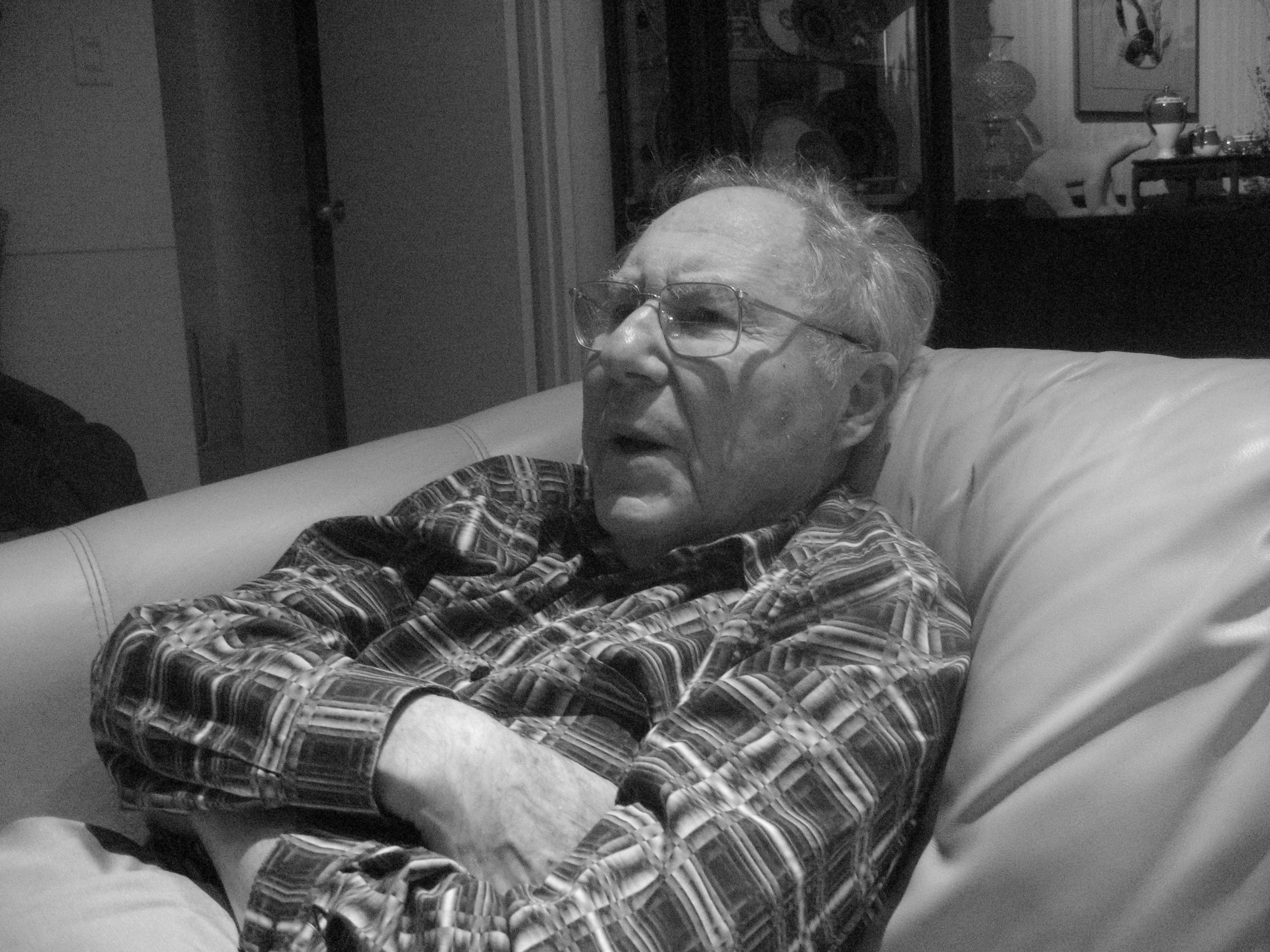
One of my favorite pictures of Bill, taken while we watched the Superbowl together.

One of my favorite pictures of Bill, taken while we watched the Superbowl together.

I became friends with Glasser in 2000, which led to our working closely together, beginning in 2003, on what would become his biography. I read most everything he wrote, all of his 23 books and many of his journal articles, and interviewed family members, friends, and colleagues about his career, however it was the almost 60 interviews that he and I did together that formed the backbone for the book. The timing of our work turned out to be important, as he was still strong and sharp as we looked back into his long and impressive career. To pick his brain on important topics in such a personal setting is a privilege I shall always treasure. The book (I think there is a good possibility it will be called William Glasser: Champion of Choice) should be available in a few months.

Taken of me and Glasser as I present him with a copy of my dissertation, which was a biographical study on the development of his ideas.

Taken of me and Glasser as I present him with a copy of my dissertation, which was a biographical study on the development of his ideas.

———————–

Something significant occurred within the psychiatric community over the last couple of weeks and it reminded me, in a roundabout way, of Glasser’s basic message. The “something significant” was that the director of the National Institute of Mental Health (NIMH), Dr. Thomas Insel, has come out against the long-awaited DSM-V. Rejecting the most recent version of the DSM (Diagnostic and Statistical Manual of Mental Disorders), referred to as the bible of psychiatry, seems to admit what Glasser said for so many years, that it described symptoms, but didn’t define mental illness. People may act differently and even strangely, but that doesn’t necessarily mean their brain is diseased. Psychiatry and the psychiatric drug industry is desperate to discover the biological connection between behavior and disease in the brain, but as yet no connection has been determined.

William Glasser and Thomas Szasz at the 2005 Evolution of Psychotherapy conference. Glasser and Szasz were not close during their careers, but they did agree that there was no such thing as mental illness.

William Glasser and Thomas Szasz at the 2005 Evolution of Psychotherapy conference. Glasser and Szasz were not close during their careers, but they did agree that there was no such thing as mental illness.

A recently published book about how the DSM is compiled, The Book of Woe: The Making of the DSM and the Unmasking of Psychiatry (2013), states simply that “Psychiatric diagnosis is built on fiction and sold to the public as fact.” Gary Greenberg, the author of the book and a psychotherapist himself, reminds readers of what people like Glasser have been saying for a long time, that while the public seems to believe that psychiatric diagnosis is based on scientific data and comprehensive research there is still “not one biological test for a DSM disorder.”

———————–

My hope is that on this day, Glasser’s birthday, we will appreciate him for creating and refining such an empowering and hopeful explanation of how our brains work and why we behave the way we do. Rather than our being victims of a diseased brain, we can begin to take steps, however small, toward responsibility and happiness. For fifty years he has pointed the way to mental health, emphasizing the importance of the relationships with others in our lives and explaining the power and freedom of our choices. His ideas have meant a great deal to me personally and have added value to my life.

Thank you, Bill. May this day be special in every way!

Don’t Always Believe What You Think

The concept of the basic needs is one of the core beliefs of choice theory. As you read today’s blog post you will come to see just how basic and how important these needs are. A quick review – choice theory describes how everyone is born with a unique set of basic needs. I believe these needs include a physiological need, that being the need for survival, and several psychological needs, that being the need for purpose and meaning, the need for love, belonging, and connection with others, the need for success and the power to achieve worthy goals, the need to be free, and the need to experience fun and joy. From the moment we are born, all of our behavior is an attempt to meet one or more of these needs. During the Soul Shapers workshop, after we have more carefully reviewed the basic needs, I ask the question, “Which need do you think ultimately is in the driver’s seat? Which need do you think has the greatest influence on our behavior?” Usually, the responses quickly indicate that the survival need would have the last word when it comes to our behavior. The feeling is that we are programmed to survive and the survival mechanism would therefore have the greatest influence.

Headlines from this past week reminded us that this is not the case. New sobering and disturbing statistics reveal that more people are taking their own lives than ever before in the U.S. Data from the Center for Disease Control and Prevention indicate that over the last year more people died from suicide—38,364—than in motor vehicle accidents—33,687. That is nearly 5,000 more deaths. It is significant, too, that it is middle-aged Americans, the baby boomers, making by far the biggest leap in the suicide increase.

One thing we can take from this statistic (and this is a statistic that should very much get our attention) is the incredible power of the psychological needs. Our logic wants to believe that the need for survival would ultimately hold sway, yet this data is a stark reminder that this just isn’t true. Each of the psychological needs, when perceived as not being met, could lead a person to overrule his/her need to survive.

One of the reasons I so strongly believe in choice theory is that people who understand it’s principles and begin to implement the principles in their lives enter into a kind of personal stability from which they can process life more effectively. Choice theory doesn’t offer a perfect stability, but it helps. I personally have melancholy tendencies and am very capable of choosing to get “down in the dumps” or of choosing to depress, yet coming to understand and appreciate my choice power has helped a great deal. It is this choice power, including the concepts of the basic needs and the quality world that I so much want teachers and students to understand and practice, as well.

From a secular perspective, choice theory offers hope. We can come to recognize when a basic need isn’t being met and begin to take steps, no matter how tiny those steps might be, that will bring us closer to stability and happiness. When choice theory is understood and implemented from a spiritual perspective the results can become even more hopeful and even powerful. Students can be taught about the basic needs and the ways in which those needs urge us to behave. Students can be taught the concept of the quality world and the central importance of the pictures we place in our quality world. I see this kind of understanding as preventive mental health of the highest order.

A bumper sticker worth noting read, “Don’t Always Believe What You Think.” Choice theory helps us to understand how this bumper stick, especially relevant regarding today’s topic, might be true.

—————————-

Remember to sign up for the upcoming Soul Shaper workshops taking place next month at PUC. Encourage your colleagues to experience the workshop, too. When more than one teacher or staff member at a school understands choice theory, significant changes can occur. Soul Shapers 2 is designed to be re-taken more than once. Get in the habit of taking Soul Shapers 2 each summer and re-charge the choice theory battery.

Soul Shapers 1 meets from June 17-20

Soul Shapers 2 meets from June 24-27

Sign up for either course at  www.puc.edu/summer-teacher

—————————–

Let others know about The Better Plan blog. After close to six months of being in existence there are 67 people officially “following” the blog. I think more than the 67 are reading the blogs, but let’s try to get the number higher. The goal is to create and support a non-coercive, choice theory community. I’m always glad to hear from you. Let me know if you have helpful ideas.

Tough Love?

Reality Therapy cover]

“Patients want you to correct their irresponsible behavior,
but they want it to be done in the genuine spirit of helping them,
not to satisfy yourself by winning a power struggle.”
William Glasser

The above quote is from Reality Therapy, the book that propelled Glasser onto an international stage. While I am not a therapist the quote spoke to me as an educator, as I think students want something similar from us as principals and teachers. Students don’t mind being corrected, but not when it feels like they are losing a contest. Reality Therapy emphasized the idea of responsible vs. irresponsible behavior and Glasser became known for a get-tough approach, not only in psych wards and private practice offices, but in schools, too. Through Glasser’s writing and speaking, through advertisements in journals and magazines, and through word-of-mouth testimonials, educators became aware of his matter-of-fact toughness and it appealed to them.

As he saw, though, how teachers were latching onto the responsibility theme, and how they wanted to blame students for their irresponsible behavior, Glasser pulled back from his use of the word responsible. His “toughness” was always meant to be cradled in what he called involvement. Involvement was about a warm, caring relationship between two people, a meaningful connection between therapist and patient, or in our case, between principal and student. It may be that we need to correct a student who makes a mistake, or that we need to correct a faculty member who uses poor judgment, but this interaction should not become a contest between two people. The skill lies in our ability to confront without attempting to control; to correct while preserving the student’s or faculty member’s sense of freedom.

A spirit of wanting to feel in control and wanting to “win” interactions with others can run very deep in our personal way of being. Our lives are not easily compartmentalized and if we show up this way at school, chances are we will show up this way at home, too. Our spouse and our children may experience us in this mode on a regular basis. At least two bad things happen when we go into the control or contest mode. One, the focus becomes the contest, rather than the needed area of improvement. And two, the relationship is harmed. Whether between principal and student, husband and wife, or parent and child, a controlling interaction removes capital from a relationship bank account that is not that easily replaced. Over time a controlling approach can bankrupt even our most precious connections with loved ones.

It’s not that correction is bad. Correction is sometimes needed. The trick is staying in a place of love and empathy as we seek to maintain a necessary boundary. The apostle Peter came to understand this way of being and gently reminded us to –

“Care for the flock that God has entrusted you.
Watch over it willingly, not grudgingly
—not for what you will get out of it,
but because you are eager to serve God.
Don’t lord it over the people assigned to your care,
but lead them by your own good example.
1 Peter 5:2,3

(This post first appeared as a contribution I made to a recent edition of Leading the Journey, an e-newsletter on excellence in leadership, which is being co-written and sponsored by Dr. Ed Boyatt, retired and former Dean of the School of Education at La Sierra University, and Dr. Berit von Pohle, Director of Education for the Pacific Union Conference. I wrote it with school principals in mind, however I think it can apply to teachers and parents as well. To receive the Leading the Journey e-newsletter, send an email to leadingthejourney@puconline.org)

Sink into our own hearts first

ss 001

We are improvers, changers, and fixers, especially when it comes to improving and changing other people, especially loved ones like children and spouses. We seem to be gifted at identifying the faults and flaws of others and then fixing those flaws according to our improvement plan. Of course, with this responsibility of correcting others we are constantly on the lookout for effective resources to help our cause. A good book on going vegan and reducing calories can be an excellent improvement tool, or a magazine article on the need for regular exercise, or a sermon on guarding the edges of the Sabbath. We are convinced, yea, verily, we are convicted that if a loved one or a friend, in the midst of living in a way that we can’t approve of, would just read this book or listen to this sermon that it would change them. For the better.

In the Soul Shapers 1 class, which takes place at PUC each June, one of the first things we consider is the message found in Ezekiel –

Then he added, Son of man, let all of my words sink into your own heart first. Listen to them carefully for yourself.          Ezekiel 3:10

This text is very, very choice theory. It affirms the choice theory axiom that the only person we can control is ourselves. It urges us to stop looking at others as the problem and to begin to look within. “Let all of my words sink into your own heart first.” We may feel convinced that criticizing and nagging are our only options, that someone we know would really benefit from the Truth, but our role isn’t to convict others with our words. Our need is to listen to them carefully for ourselves.

The message in Ezekiel doesn’t prevent us from sharing our opinions with others. It just says to let God’s words sink into our being first. It reminds me to focus on the person I am responsible for, the person I can control, that person being me. It reminds me, too, that there is a way, a time, and a place for improvement messages to be shared with others. Such sharing is always dependent on a positive relationship being in place. Such sharing is also dependent on my having let the words sink into my own heart, on my having experienced the transformation that I am hoping for in the other person, and on my asking for and receiving permission from that person to talk about the topic in question. When others know that we love them and that we recognize their power to choose, heartfelt discussions can take place without defensiveness and manipulation.

An Invitation

Begin to make plans to attend one or both of the Soul Shaper workshops this summer at Pacific Union College.

Soul Shapers 1 meets June 17-20.

Soul Shapers 2 meets June 24-27.

Encourage colleagues to attend as well.
Remember that Soul Shapers 2 can be taken more than once. It is an excellent way to recharge your choice theory battery and review non-coercive classroom strategies.
Both workshops can be taken for one or two hours of credit (your choice).
If you need elective credits for your Master’s program, I can work with you individually to create that credit option.
I would very much like to see you at PUC this coming June!

The Be-Attitudes and Choice Theory

Beatitudes (2)

What if the Beatitudes, the famous “Blessed are they .  . ” statements found in Matthew 5, were written with choice theory in mind? While preparing to teach a class whose topics for the period included the Beatitudes, a class in the process of considering scripture from a choice theory perspective, I made an attempt at re-writing them from the viewpoint of mental health. The Amplified Bible, instead of using the phrase “Blessed are they . . “, uses phrases like “Happy are they .  .” or “To be envied are those .  . ” or “Spiritually prosperous are those .  . ”  I remember hearing a talk on the Beatitudes where the speaker explained that the word Blessed, as used by Jesus to open his hillside sermon, actually means Happy in the broadest sense. So in the spirit of considering the Beatitudes from a choice theory perspective .  .  .

Mentally healthy are those who recognize their need for God.

Mentally healthy are those who recognize the needs of others around them and who ache for their healing – physically, emotionally, and spiritually.

Mentally healthy are those who are gentle; who do not seek power for personal advantage; who understand that the only person I can (need to, should) control is myself; who understand the value of every human being.

Mentally healthy are those who crave what is good and just, and who seek justice on behalf of those who are less able to seek it for themselves.

Mentally healthy are those who accept others and who live forgivingly.

Mentally healthy are those who are fresh and clean and who breath Heaven’s air, rather than the vice and impurity of this present world; who are free to seek happiness, rather than addicted to pursuing pleasure.

Mentally healthy are those who desire peace; who are willing to give up pieces of what they want; who seek other’s success; who live win/win.

Mentally healthy are those who value doing right so much that they are willing to be mistreated and abused for its sake.

May each of us experience sound mental health today. As Paul reminds us, “For God has not given us a spirit of fear, but of love, power, and a sound mind.” II Timothy 1:7

One day is ours — Today!

happiness-project

I want to give a shout-out to Gretchen Rubin and The Happiness Project (You can access her blog and website at www.happiness-project.com/.  I receive a quotation about being happy every morning from The Happiness Project and one of these quotes very much resonated with choice theory. It went like this –

“There is almost one time that is important – Now! It is the most important time because it is the only time we have any power.”    Leo Tolstoy

Reality therapy is based on the belief that all problems are present problems. Something in our past may have influenced our behavior, but we can only deal with what’s happening in our lives right now. Choice theory states that the only person we can control is ourselves. Similarly, that control is always in the present, in the now, as Tolstoy would say it. William Glasser understood as well as anyone the importance of living in the present. The past is past, gone, nothing we can do to change it, and the future isn’t here yet, but we can affect the now, the present.

Glasser didn’t formulate reality therapy or choice theory from a spiritual perspective. He believed such views made sense and would best contribute to mental health, but his views weren’t based on scripture. At least he wasn’t aware of a scriptural tie-in. As it turned out, though, living life in the present is very scriptural. In the Sermon on the Mount, after explaining that His Father will give us everything we need, Jesus further assured us with, “So don’t worry about tomorrow, for tomorrow will bring its own worries. Today’s trouble is enough for today.” Matthew 6:34

Commenting on Matthew 6:34, a little book called Thoughts from the Mount of Blessing encourages us to embrace the principle of today. Let these words sink into your heart, soak in them, be at peace.

   When we take into our hands the management of things with which we have to do, and depend upon our own wisdom for success, we are taking a burden which God has not given us, and are trying to bear it without His aid. We are taking upon ourselves the responsibility that belongs to God, and thus are really putting ourselves in His place. We may well have anxiety and anticipate danger and loss, for it is certain to befall us. But when we really believe that God loves us and means to do us good we shall cease to worry about the future. We shall trust God as a child trusts a loving parent. Then our troubles and torments will disappear, for our will is swallowed up in the will of God.

   Christ has given us no promise of help in bearing today the burdens of tomorrow. He has said, “My grace is sufficient for thee” (2 Corinthians 12:9); but, like the manna given in the wilderness, His grace is bestowed daily, for the day’s need. Like the hosts of Israel in their pilgrim life, we may find morning by morning the bread of heaven for the day’s supply.

   One day alone is ours, and during this day we are to live for God. For this one day we are to place in the hand of Christ, in solemn service, all our purposes and plans, casting all our care upon Him, for He careth for us. “I know the thoughts that I think toward you, saith the Lord, thoughts of peace, and not of evil, to give you an expected end.” “In returning and rest shall ye be saved; in quietness and in confidence shall be your strength.” Jeremiah 29:11; Isaiah 30:15.         Thoughts from the Mount of Blessing, p. 100, 101

One day alone is ours – today!

Remember to let colleagues and friends know about The Better Plan blog. The goal of the blog is to support people as they think about and implement choice theory principles. Encourage them to enter their email address and click on the Follow link.

The Sacrifice of Thanksgiving

JesusCalling

A little book, Jesus Calling, by Sarah Young, has become a part of my morning devotion time. A recent passage in the book encouraged readers to bring to Jesus the sacrifice of their thanksgiving. I did a bit of a double-take. Sacrifice of thanksgiving? How do those words go together? Sure enough, though, the phrase is from the Bible and can be found in Psalms 116:17. “I will offer to You the sacrifice of thanksgiving,” writes David (probably sings David), “And will call upon the name of the Lord.”

The passage in Jesus Calling went on to describe how, when we focus on what we don’t have or on situations that displease us, our thinking becomes darkened. We nurture a blaming, complaining, and critical spirit as a way of defending and rationalizing our resentment, hurt, and anger. We deserve to be hurt or offended, we convince ourselves, and go about showing others how hurt we are. Choice theory explains that we choose our misery, and this passage seemed to strongly support that view. In a moody condition it is easy to miss the blessings in which we wallow and to take for granted the good things in life that surround us. It is also easy to obsess on fixing the problem, which is almost always involves the behavior of another person in our lives, usually someone close to us like a spouse or colleague.

As I was reading this, still wondering about the phrase ‘sacrifice of thanksgiving,’ it hit me. When we approach God with thanksgiving, when we maintain a spirit of gratitude, we become willing to let go of what we don’t have. As we remain thankful for what we do have we give up the anger and hurt and frustration over perceived offenses and unfairness. We literally offer to God the sacrifice of our thanksgiving. It isn’t much of a sacrifice when you really think about it. We give up our slights and our bruised egos and our misery and God, in His graciousness, counts it as a sacrifice. He seems to understand how hard it is for us to give up our resentments and worries.

We really do have the choice to be thankful.  White reminds us that “It is within the power of everyone to choose the topics that shall occupy the thoughts and shape the character.” (ED127) We can nurture hurts and resentments, which actually feels good in its own way, or we can nurture gratitude and healing, which feels way better and which strengthens us in the process. Let’s choose gratitude and begin to sacrifice our complaints on the altar of thanksgiving.

See also Romans 8:31; Psalms 118:24; Psalms 23:1