A.I. vs R.I.

The buzz over artificial intelligence, a topic that until recently only ultra-techies cared about, has hit the mainstream media big time! The buzz is actually well-deserved. Once the stuff of science fiction (e.g.- HAL, the computer in 2001: A Space Odysey; C3PO and R2D2, the droids in Star Wars; Ava in Ex Machina; Sonny in I, Robot: and Wall-E in, well, Wall-E), artificial intelligence (AI) is entering our everyday lives in breathtaking ways and at breathtaking speeds. Examples include self-driving cars, machines that can do everything from performing surgeries to building cars, drones that can deliver packages, and on-line assistance for just about anything you need (think Siri). We are no longer surprised by what computers and machines can do. Even the sky seems not to be the limit.

2001: A Space Odyssey (1968)

2001: A Space Odyssey (1968)

Star Wars (1977)

Star Wars (1977)

Wall-E (2008)

Wall-E (2008)

In spite of the impressiveness of these developments, some experts would say that they are not examples of AI at all, but instead are software running comprehensive “if/then” programs. Computers are capable of amazing feats when enough if/then commands at their disposal, even driving a car. Universities like Stanford and MIT, funded by huge grants, are in pursuit of true artificial intelligence, yet no breakthroughs have happened yet. “While there has been progress on autonomic functions,” one expert admits, “real artificial intelligence progress has been disappointing and limited.” None-the-less the lure of AI is so strong that newcomers are jumping on the bandwagon on a regular basis. Just this month Toyota announced a five year, $1 billion dollar AI research and development effort headquartered in Silicon Valley.

Google's self-driving car

Google’s self-driving car

Amazon drone prototype

Amazon drone prototype

With so much attention being given to artificial intelligence, though, it is interesting how little we talk about real intelligence. If A.I. is more and more impressive the closer it gets to R.I., why aren’t we just as impressed, if not more impressed, with the real thing? We’re all abuzz about the artificial, the “fake”, when the real is all around us, in fact, inside of us!

Let us make human beings in our image, to be like us.
Genesis 1:26

It is incredible when you think about the attributes of real intelligence – individuality, the power to think and not merely reflect, to create, to weigh evidence, the power to choose, and even the power to yield or withhold obedience – that God actually created us with this amazing level of freedom! Whether creating us with intelligence and freedom in the first place or dying to preserve our freedom on the Cross, God has always been about freedom.

It would have been simpler for Him to create robots with “if/then” programs designed to respond to external circumstances. But such a design would not accurately reflect His character. The little book Steps to Christ explains that –

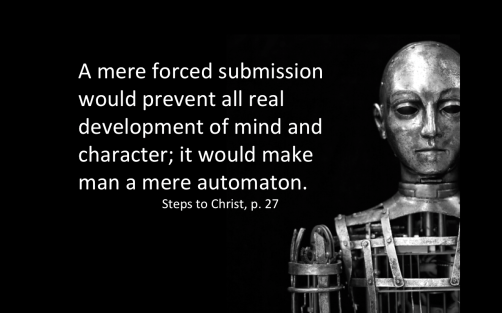
The government of God is not, as Satan would make it appear, founded upon a blind submission, an unreasoning control. It appeals to the intellect and conscience. “Come now, and let us reason together” is the Creator’s invitation to the beings He has made. Isaiah 1:18 God does not force the will of His creatures. He cannot accept a homage that is not willingly and intelligently given. A mere forced submission would prevent all real development of mind or character; it would make man a mere automaton. p. 27

I cannot claim that choice theory is a perfect explanation of how God designed us. I can say that choice theory is the best explanation of human behavior that I have come upon to this point in my life. And while choice theory was not developed with God in mind, it loses none of its clarity when studied through the lens of Scripture or the Spirit of Prophecy.
Screenshot 2015-11-21 18.24.54

Whether from a secular perspective and current therapeutic theories and research studies, or from a moral perspective and the character of God, choice theory offers insights into what makes us tick and why we do what we do. Ultimately, for me, choice theory underscores the importance of choice and freedom. On both a personal and professional level I want to do better and better at living in alignment with those values.

Even though artificial intelligence is artificial it is still pretty cool. It’s impressive what programmed machines can do. Let’s not let being enamored with the artificial, though, distract us from being amazed and appreciative of the REAL.

=================

It was so good to spend time this past week with the educational administrators of the Lake Union Conference of SDA’s in Berrien Springs, Michigan, just down the road from Andrews University. Welcome to those of you who signed up to be a part of The Better Plan blog!

=================

If you have read and enjoyed Soul Shapers: A Better Plan for Parents and Educators, why not take a moment and write a review on Amazon. Such testimonies go a long way toward alerting others to the book’s message. Thanks.
Young, Future Teachers “Get It” When It Comes to Choice Theory

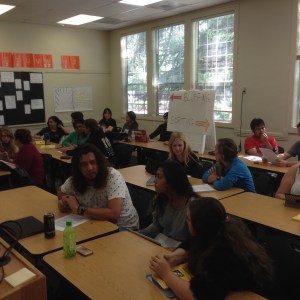
Ethical Dimensions class in action.

Ethical Dimensions class in action.

We hear from two of my students in today’s blog post. They both are candidates in the teacher credential program at Pacific Union College, and are enrolled in Ethical Dimensions of Teaching and Learning, a course I teach during Fall quarter. One of the short essays represents a creative response to a chapter on Fearing in Ted Sizer’s book, The Students Are Watching. The other two are pretend Diary Entries in response to reading the chapter on Being and Becoming in the book, Soul Shapers. The Sizer book does not overtly refer to Glasser or choice theory, yet students in our Education program are more and more coming into a deeper understanding of choice theory principles and it shows up in their writing. The Soul Shaper book is an introduction to choice theory for teachers and parents.

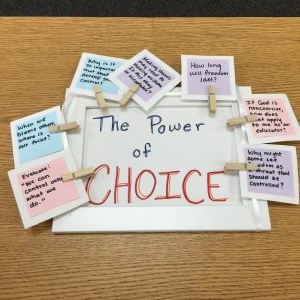
Each of the cards have responses on the other side. (A student creation from Ethical Dimensions.)

Each of the cards have responses on the other side. (A student creation from Ethical Dimensions.)

The actual assignment for chapter four in Soul Shapers went like this –
After reading the chapter on Being and Becoming, pretend you are an experienced teacher that has taught in traditional, controlling ways, and write a Dear Diary entry revealing his/her thinking as they begin to see the implications of their current teaching strategies. Remember to weave key chapter points into your entry.

From Ashley –

Dear Diary,
There are days when I am just so frustrated with the behavior of students in my classroom. There are times when I feel myself repeating over and over for someone to “sit down” or “stop talking.” I try warnings and consequences. Some students have just accepted that they will sit out recess or run extra laps. I’m pretty sure some of the boys have even made it a competition to see who can get the most laps in one day. I take away privileges and have talked to some of their parents. Why can’t they just listen? I guess that is where I need to start.
While I wonder why they repeat bad behavior over and over, the better question, though, is why are they even doing it in the first place? I am always so focused on punishing bad behavior sometimes that I forget to get to the source of the problem. If I could figure out why they are misbehaving, I can come up with a better strategy for solving it.
I also need to stop focusing only on my students, and maybe focus on myself as well. I admit that my attitude has a huge impact on the attitude of my students. Are there days when I just want to pack up and go home early? Of course. Do I do it? Of course not. But when I choose to stay, do I also choose to change my attitude? I care about each and every one of my students, but do they know that? If I want to create an environment where my students care about each other, I need to set that tone in the classroom. If I expect respect, I better be willing to respect my students. It isn’t always about them being a problem; it often times is about me and how I am as a model.
As a model, I also need to act in the way I want them to become. If I want them to write neatly, I need to write neatly. If I want them to keep a clean classroom, then I need to keep a clean desk area. My goal is to guide them on their journey to becoming respectable adults who are accountable for themselves, and in order to do so, I have to be one.
So next time someone acts up I need to take a breath, think about my attitude, and try to understand why there is an issue. If I can convey to the students that I am trying to work with them and not against them, so many battles will be avoided and my job as an educator can only get better. With patience and prayer, I got this.

One of the key themes in chapter four is the idea that as teachers (and parents) we need to BE what we want our students to BECOME. Ashley’s Diary Entry captures the angst a teacher feels as she searches for clues and insights on how to accomplish it.

BEing what we want our students to BECOME.

Lenny’s Diary Entry captures the difficulty of letting go of what feels like control, as well as where such a focus leads –

Dear Diary,
I don’t know what to do. I feel like a failure. I love what I do, I love working with children, teaching them and mentoring them, but it’s not working. There’s something that happens in someone’s heart when the children they love don’t respond to them in kind. I know they’re not mine biologically, but they’re mine all the same. I love them all, but one in particular stands out. Ethan.
Today started out normally, adhering to the strict schedule created for optimal efficiency. I believe that for students who struggle to learn, the only way to move past it is efficiency, efficiency, efficiency. It’s simple math; the more information I can get to them, the more information they will retain. There are simple rules that need to be followed to reach the highest possible level of efficiency: silence, stillness, and focus. All it takes is a little discipline. Ethan, however, has a hard time staying still. And in the process of not being still, he breaks the silence, which in turn ruins the focus of the class. I don’t know what got into me, but today was the last straw. All I want to do is help him. I love him. But he won’t let me help him. He won’t listen. He won’t stay still. The others can do it, why can’t he? Perhaps I went too far. He was so angry, so embarrassed. All that work, all that progress, I feel like it was for nothing.
I must not falter. It is my responsibility to hold him accountable, no matter how he feels about me. I know what is best. I’m the teacher. I know what is best. Sometimes a thing must be broken to be put back together again, correctly. It will hurt me as much as it will hurt him, but I will break him. I have to.

I gave this Diary Entry full credit and added, “A compelling read. You capture conviction and determination. Yet in the end so sad. For all involved. Wow!

It is sad when teachers get caught up in thinking based on “I’m going to win” or “I’m gonna control this kid.” When we are tempted to go there I hope we can remember the axiom that You Gain Power As You Give It Away!

A total behavior car made from a paper towel tube. (Created for one of the Ethical Dimensions assignments.)

A total behavior car made from a paper towel tube. (Created for one of the Ethical Dimensions assignments.)

The Sizer chapter talked about schools and teachers using fear to motivate students. The assignment went like this –
After reading the chapter on Fearing, and in the tradition of The Breakfast Club (1985), write a one-page essay on the use of fear in school. Write the essay in 1st person voice from the perspective of a high school student. Creatively weave at least two elements from the chapter into your essay.

Once again we hear from Lenny on the topic of fear in school –

They tell me that they are here to help me. They tell me they care about me and about my future. Some even say that they love me. But that is not what I see. What I see is a system designed to keep me in my “place”. This system is creating unrealistic standards for me to meet in order to motivate me to keep working harder and faster. They treat me like a donkey with a stick tied to my back and a carrot dangling in front of me. They say it’s for my own good, the hours and hours of studying. But I see through them. I know what’s really going on.
The fear they are creating in me and my peers is their natural response to the fear within themselves. Their fear of failure as a teacher. Unlike other professions, a teacher’s success is abstract. They do not produce anything concrete, anything palpable, anything visible to the human eye. There is nothing to be inspected. Their success as a teacher is tied inexorably with the success of their students. Of my friends. My success is their success. My failure is their failure. When I falter, they falter. They feel the same fear I feel when they set unreasonable goals as a means of motivation. As a means of striking fear into the hearts of their students.
The irony of course is that both fears are paralyzing. If they would just relax and treat us like human beings instead of a means of personal success or failure, everything would run so much smoother. We would have attainable goals and feel better about ourselves, and as the teacher of a successful class, they in turn would feel better about themselves.
But until then, I will not subscribe to their methods of control. I will do what I must to break the chain. I am the student, they are the teachers. It is not my job to placate their fear, it is theirs to placate mine. So until they figure it out how to do their jobs, I refuse to do mine.

I wish you could read all of the papers for these two assignments and get caught up in the joy of seeing candidates like these move ever closer to having their own classrooms. I am privileged to see every day the beliefs and talents of the young teachers about to take their place on the stage of the educational system. These short essays (remember they are pretend responses to a hypothetical prompt) are examples of their insight, which I hope will prompt and provoke your choice theory thinking. Blessings!

==================

If you find it difficult to get a copy of Soul Shapers, let me know and I will quickly ship a copy to you.

Choice theory from a unique perspective. Original and practical.

Choice theory from a unique perspective. Original and practical.

The Devil Made Me Do It

Flip Wilson

Flip Wilson

Flip Wilson, a comedian who many saw as “television’s first Black superstar,” became known for his hilarious skits that often included the phrase, “the devil made me do it!” People laughed as Geraldine (one of the characters Wilson often portrayed) described some fix she had gotten into or some misbehavior she had done, only to lament with great conviction that the devil had made her do it. (The following 3-minute audio recording captures Geraldine’s view of things quite well.)


Language is a powerful influence in our lives, not only in how our words affect others, but also in how our words affect us. Words affect the hearer; words affect the speaker. Our vocabulary very much becomes of a part of how we see the world. What we can put into words contributes to our forming a picture of what we see. This process is especially obvious as toddlers begin to communicate, as well as with ELL students in a school setting. As humans we see and perceive through our vocabulary.

We chuckle at Wilson’s emphasizing that the devil made him do it, but we can be just as capable of blaming something or someone else for our attitudes or behavior. “He makes me so mad,” we might hear, or “that makes me so happy” a friend will bubble. The words reflect a worldview that things outside of us control our thinking. The words confirm our belief that things outside of us make us behave one way or another.

seeing-red

Choice theory reminds us that other people or circumstances don’t make us do anything. Circumstances may influence our decisions, but ultimately we choose a behavior that we think will best work for us at that moment. Choice theory also reminds us that the words we commonly use can help or hinder our mental health (i.e. – our levels of contentment and optimism vs. our levels of dissatisfaction and unhappiness).

YouMakeMeHappy_TlcCreations

This is why Glasser loved verbs, even changing nouns to verbs as part of his desire to make a point. Instead of anger or being angry, Glasser explained how it is better to say I am angering or I am choosing to anger. It is interesting how powerful our words can be and how much they can influence our perception of things. Choice theory accepts that angering is an option, we just need to accept responsibility for it and not blame someone or something outside of us for our attitude.

On a spiritual note, Flip Wilson’s phrase – the devil made me do it – brought a passage to my mind from the little book Steps to Christ. It goes like this –

When Christ took human nature upon Him, He bound humanity to Himself by a tie of love that can never be broken by any power save the choice of man himself. Satan will constantly present allurements to incline us to break this tie—to choose to separate ourselves from Christ. Here is where we need to watch, to strive, to pray, that nothing may entice us to choose another master; for we are always free to do this. But let us keep our fixed upon Christ, and He will preserve us. Looking unto Jesus, we are safe. Nothing can pluck us out of His hand. In constantly beholding Him, we “are changed into the same image from glory to glory, even as by the Spirit of the Lord. II Cor. 3:18           Steps to Christ, p. 72

41et01Szt-L

The devil can “present allurements” and can “entice,” but although Flip Wilson says otherwise, the devil can’t make us do anything. He certainly can’t separate us from God. As Steps to Christ points out, Jesus is bound to humanity by a tie of love that no power can break! No power on earth can break it, nor can any power throughout the universe. The only way this tie can be broken is if we, as individuals, choose to break it.

Choice theory wants us to use verbs as much as possible and learn to live responsibly, that is, to take ownership of our thinking and our behaving, rather than quickly blaming others. Living responsibly has a profoundly positive effect on our relationships with others, our relationship with God, and ultimately our outlook on life.

=======================

Click on the book to quickly access it on Amazon.

The book that connects the dots of William Glasser's ideas and his career.

The book that connects the dots of William Glasser’s ideas and his career.

A Gun and Winter Survival

EQG_WSAM1911a1_2

With so much attention being centered on guns, my mind recalled a group exercise in which I participated years ago. I was completing a degree in Educational Leadership and the exercise was meant to “compare the effectiveness of five different methods of group decision-making.”* The exercise, which placed group members in a hypothetical survival scenario, revealed the communication habits of not only groups, but also specific members within the group. Our focus today, though, will be less on the communication patterns and more on the survival scenario on which the exercise was based.

After organizing the groups (and each group is given a unique set of instructions) the following scenario is distributed –

You have just crash-landed in the woods of northern Minnesota and southern Manitoba. It is 11:32 am in mid-January. The light plane in which you were traveling crashed on a lake. The pilot and copilot were killed. Shortly after the crash the plane sank completely into the lake with pilot’s and copilot’s bodies inside. None of you is seriously injured and you are all dry.

The crash came suddenly, before the pilot had time to radio for help or inform anyone of your position. Since your pilot was trying to avoid a storm, you know the plane was considerably off course. The pilot announced shortly before the crash that you were twenty miles northwest of a small town that is the nearest known habitation.

You are in a wilderness area made up of thick woods broken by many lakes and streams. The snow depth varies from above the ankles in windswept areas to knee-deep where it has drifted. The weather report indicated that the temperature would reach minus 25 degrees Fahrenheit in the daytime and minus 40 at night. There is plenty of dead wood and twigs in the immediate area. You are dressed in winter clothing appropriate for city wear – suits, pantsuits, street shoes, and overcoats.

While escaping from the plane, several members of your group salvaged twelve items. Your task is to rank these items according to their importance to your survival, starting with 1 for the most important item and ending with 12 for the least important one.

You may assume that the number of passengers is the same as the number of persons in your group and that the group has agreed to stick together.

unnamed

The items to be prioritized are as follows:

______ ball of steel wool
______ newspapers (one per person)
______ compass
______ hand ax
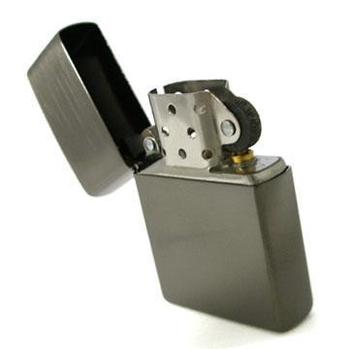
______ cigarette lighter (without fluid)
______ loaded .45-caliber pistol
______ sectional air map made of plastic
______ 20-ft by 20-ft piece of heavy-duty canvas
______ extra shirt and pants for each survivor
______ can of shortening
______ quart of 100-proof whiskey
______ family-size chocolate bar (one per person)

Ok, so your task is to rank these from 1-12, from most important to least important. Think, too, about how you would defend your rankings to your fellow group members. (One way to do the activity is to have individuals complete the ranking and then have the group complete a group ranking. The group score needs to be the same for each group member. Each member then compares his individual ranking and group ranking to the answer sheet, noting the numerical difference between their scores and the right score. For example, if Joe lists the compass as #1, and it turns out to be ranked #12, that would be a difference of 11. If the group ranks the compass at #9, the difference then would be 3. Like golf you want the lowest score possible. When the score sheets are all completed, with the differences noted, you can begin to see how well the group functioned.)

+++++++++++++++++++++

290966327_4GB_Cigarette_lighter_pinhole_mini_DVR_c_1_xlarge

Welcome back. You’ve finished your ranking scores, right?

Fortunately, a small expert panel weighed in on how to prioritize the items, along with a rationale for their ranking. There are surprises, but that is part of the fun of the exercise.

For instance, the top three items in order of their importance are –

+ the cigarette lighter
+ the ball of steel wool
+ and the extra shirt and pants for each survivor

The gravest danger to the group is exposure to the cold; therefore the greatest need is creating a source of warmth. The lighter, even without fluid, is essential in that it can still create sparks. The steel wool is the best substance to catch a spark and support a flame. The second greatest need is for signaling devices. According to survival experts, the importance of the rest of the items on the list would be in the following order –

+ the can of shortening (the lid would be an excellent reflector)
+ the large piece of canvas
+ the hand ax
+ the chocolate bars
+ the newspapers
+ the loaded pistol
+ the bottle of whiskey
+ the sectional map
+ the compass

It is interesting to me that the loaded gun appears toward the bottom of the list. It has some value as a signaling device, and the gunpowder from the shells could help in starting a fire, but these advantages are significantly outweighed by the danger a loaded gun contributes to the dynamics of the group.

Surviving a plane crash in a life-threatening environment, especially with two people killed in the crash, is traumatic. With people in shock, clear-headedness and reasoning may be all that stands between life or death. The gun represents quick access to power and control, not good when the group needs to work together to survive. As the group waits to be rescued, members will need to deal with fear, anger, irritability, and even lapses in rationality. The presence of the gun brings a substantial danger to the group under these circumstances.

It seems to me that guns bring a similar level of danger to the everyday situations across the country in which fear, anger, or irritability are present.

++++++++++++++++++

The Winter Survival Exercise is an excellent activity from which individuals and groups can learn to communicate more effectively. Why do some people try to force their wrong answers on others? Why do others with the correct answers silently sit in the background? On what basis do we allow some to influence us, while we ignore others? These are important questions that can be addressed within the choice theory classroom. There are many such exercises. Others include Stranded in the Desert, Lost on the Moon, and Lost at Sea. Each of them are based on the same group format.

* All quotes in this post, as well as all of the specific material related to the Winter Survival Exercise, have been taken from David and Roger Johnson’s classic book, Joining Together: Group Theory and Group Skills (1994).

===================

Reading Glasser’s biography is one of the best ways to learn about choice theory. Access an electronic version of the book ($10) here. Access a hard copy of the book through Amazon by clicking this link. Or you can get in touch with me at jimroyglasserbio@gmail.com for an autographed copy of the book.

The book that connects the dots of William Glasser's ideas and his career.

The book that connects the dots of William Glasser’s ideas and his career.


Feelings Are Weather

Donald Miller

Donald Miller

Donald Miller, the author of Blue Like Jazz (2003), A Million Miles in a Thousand Years (2009), and many other books, recently tweeted –

I think the love we build is much more reliable than the love we feel. Feelings are weather.

The tweet immediately got me to thinking, especially that concise little sentence: “Feelings are weather.” To what extent, I wondered, is the tweet choice theory friendly or choice theory accurate. My mind tends to go there when I read a tweet or a blog or a story or an article or even when I watch a movie. Feelings are weather. Hmm . . .

Let’s see how far we can take the weather metaphor.

+ Weather can be mild or it can be extremely powerful. Choice theorists would agree that feelings are sometimes mild and sometimes overwhelmingly – at least it feels overwhelming – powerful.

Hurricane_Fran_sept_1996

+ Weather can quickly change, while at other times we can anticipate changes days in advance. Our feelings can be the same way.

+ Weather can’t be controlled, although I can choose my response to it. I can’t stop the rain, but I can grab an umbrella. I can’t cool the sun, but I can wear a hat. Choice theory teaches us that we cannot directly control our feelings, but that we can control our thinking and our acting. Because the four parts of our behavior – thinking, acting, feeling, and body physiology – always come into alignment, our feelings and our physiology will ultimately come into alignment with the part of our behavior we can control, that being our thinking and our acting.

(As I write this on Sabbath morning, October 3, 2015, at 9:00 am, the weather in Angwin is warm and calm, a beautiful morning actually, yet reports are indicating a fire advisory this evening into tomorrow morning with high winds and gusts up to 50 mph. As you can tell, I am interested in the weather.)

weather-alert10-14-14-300x110

+ We are aware of and monitor the weather constantly. If you are having an outdoor wedding and it’s taking place next week you will be especially interested in weather forecasts. Similarly, we monitor our feelings constantly.

There is no question that feelings, our emotions, play a big role in our moment-to-moment, day-to-day lives. The real question has to do with the level of importance we assign to our feelings and the extent to which we let them hold sway over our picture of our reality. Given the number of people caught up in self-medicating behaviors, including the pursuit of drugs to artificially modify emotions, it appears that a lot of us are believing whatever our feelings are telling us. Some of us, it appears, place so much importance on our feelings that we let them have far too much influence on our sense of wellbeing.

The tires on a car are used to represent the four parts of total behavior.

The tires on a car are used to represent the four parts of total behavior.

One of Glasser’s most important contributions, and one of his unique contributions, is the concept of total behavior. As much as any of his ideas, the concept of total behavior describes the role of feelings in our lives and helps us understand the ways in which we can influence them or on the other hand be a victim of them.

Total behavior proposes the following key ideas –

+ All we (human beings) do is behave.

+ All behavior is purposeful.

+ All (or each) behavior is made of four parts – Thinking, Acting, Feeling, and Physiology.

+ We have direct control over our thinking and our acting.

+ We have indirect control over our feelings and our physiology.

Every behavior is made up of these four parts, and more importantly, the four parts, based on our focus, will come into alignment with each other. We all experience this alignment process throughout every day –

+ I THINK a bike ride will be good for me; I ACT by getting on the bike and heading down the hill; I begin to FEEL freer and empowered; and my PHYSIOLOGY (heart rate, perspiration, breathing, etc.) matches the demands placed on my body in the process.

+ I FEEL tense and anxious; my PHYSIOLOGY includes a clenched stomach and a tight chest (two of a number of body responses); my THINKING focuses on reasons to be afraid or angry; and I ACT by going home, grabbing high fat/high sugar foods, and distracting myself in front of the TV.

+ I FEEL frustrated and resentful; I acknowledge the feeling, but THINK it is time for me to talk with the person with whom I am frustrated; I ACT by using the caring habits of Accepting and Negotiating Differences; and my PHYSIOLOGY, momentarily heading toward high blood pressure and muscular tightness, remains at reasonable levels.

Keep in mind that we don’t have direct control over our feelings (or the weather). We can intensify our feelings by (through our thinking) affirming them and even nurturing them, but why not head in a better direction. Since we can directly control our thinking and our actions, why not focus on the best versions of ourselves we can be.

I think Donald Miller was right – feelings are weather.

====================

For insights into how to navigate life, including the continual debate over gun control, check out Glasser’s biography.

The book that connects the dots of William Glasser's ideas and his career.

The book that connects the dots of William Glasser’s ideas and his career.

Launching Better Versions of Ourselves

(Image by Karen Gately)

(Image by Karen Gately)

One of the great gifts we can share with students is to help them develop an awareness of their own identity and purpose. How we answer the question Who am I? is important to all of us.

The Who Am I? project idea is a great way for students to explore ideas related to their own purpose and identity. Their quality world pictures, like a finished jigsaw puzzle, will provide them with clues about what they value and who they are becoming. The project is powerful, even though the directions are very simple.

collage

Directions:

+ Provide students with a sheet of poster paper. Bigger is better.

+ Explain that they will be creating a personal collage of pictures that in some way answer the following questions –

What motivates me?

What are my best abilities?

How do peers influence me?

When am I at my best?

Who are my best sources of help?

How can I do more of what will best help me to succeed?

+ They can cut out pictures from old magazines or take original pictures themselves that give clues to the answers for these questions.

+ They can also cut out words from headlines and advertisements that can add to the message they are trying to convey.

+ The pictures and words can then be taped or glued onto the poster. Encourage them to arrange the pictures strategically in some way.

+ Finished posters can form the basis for brief student presentations and then be displayed afterwards.

I walked on this trail to work yesterday, a picture I would include in my own Who Am I? collage.

I walked on this trail to work yesterday, a picture I would include in my own Who Am I? collage.

The Who Am I? project is a great, but simple way to introduce (or maintain) choice theory into the classroom! Our quality world pictures are important to us and being able to focus on them is a pleasure to people of all ages. The collage process also gives teachers a reason to talk about the concept of the quality world with students. Another important choice theory principle is the process of self-evaluation, which is what answering these questions is all about.

Another process that can help with identity and purpose is journaling. For instance, how could you use the following writing prompts?

+ I used to be .   .   .   but now I am .   .   .

+ I used to think .   .   .   but now I think .   .   .

You can even add to the prompts for even more helpful focus. For instance –

+ I used to think that trying does not matter, but now I think .   .   .

+ I used to think that school was pointless, but now I think .   .   .

+ I used to be afraid of what others think, but now I am .   .   .

Again, this takes a common classroom activity and infuses it with some choice theory opportunities. There are many ways throughout the day that we can help students understand their own identity and purpose better. Keep in mind, too, that positive change always comes out of a strength area, not by focusing on eliminating a weakness. This goes for us adults as well. It is from our strengths that we launch better versions of ourselves!

(Inspired by and adopted from an excellent Edutopia blog by Maurice Elias on Helping Students Start the Year with a Positive Mindset.)

================

Get to know the architect of choice theory, and a lot more about choice theory in the process, by checking out his biography. Click here to link to Amazon books.

The book that connects the dots of William Glasser's ideas and his career.

The book that connects the dots of William Glasser’s ideas and his career.

We Will Get Through This Together

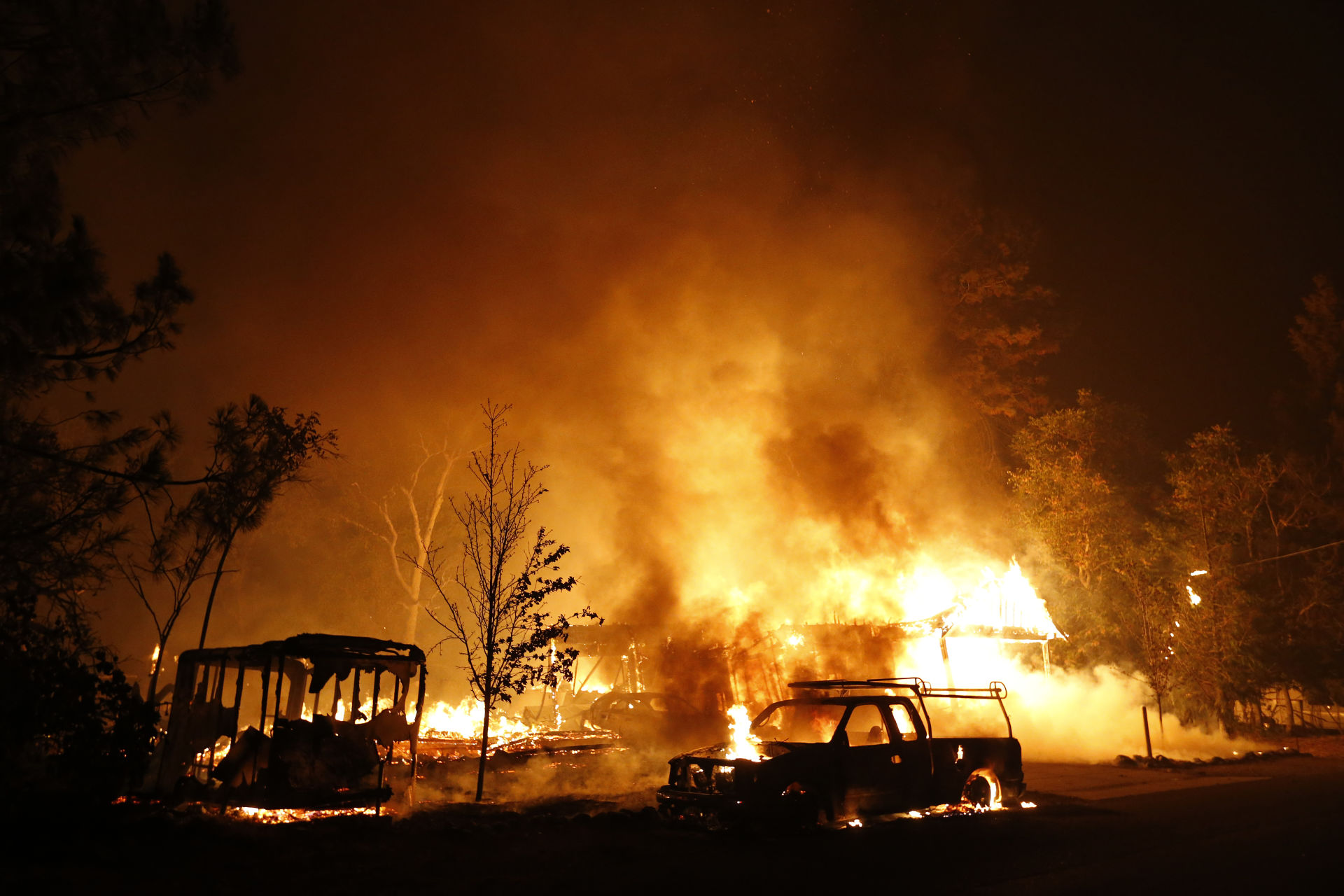
The picture of the Middletown sign burning last weekend became one of the iconic photos that captured the seriousness of the Valley Fire and its effect on the towns of Cobb, Middletown, and Hidden Valley Lake. I shared it in my last blog (The Valley Fire and Fitting Your Life Into a Car) for that very reason.

The picture that came to represent the devastation of Middletown during the first night of the fire.

The picture that came to represent the devastation of Middletown during the first night of the fire.

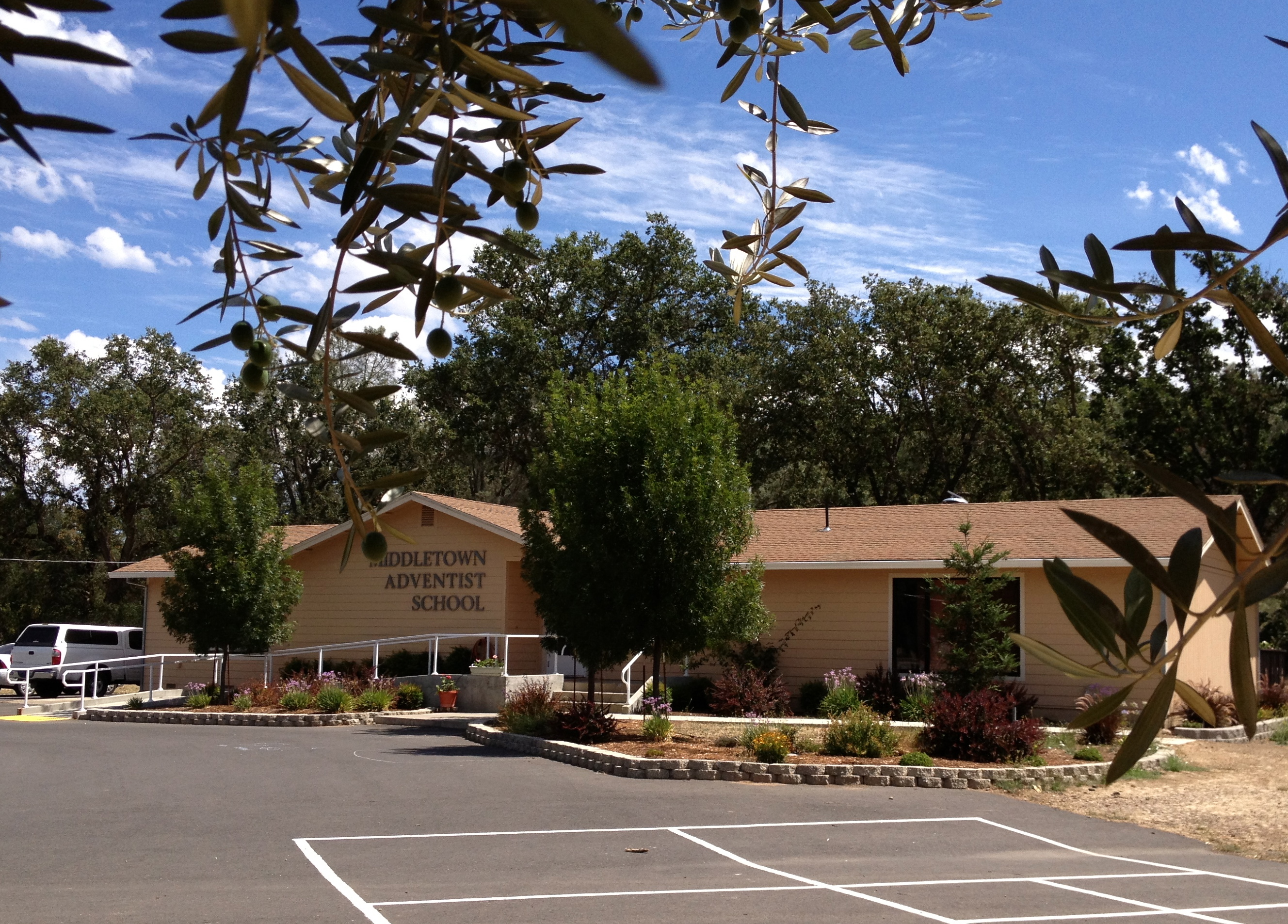
It turns out that this very sign (which I had forgotten) is located directly in front of the Middletown Seventh-day Adventist church and school. Early reports indicated that the church and school were lost in the fire (maybe because people saw what happened to the sign), but now we know that quite the opposite is true. A video taken a couple of days after the fire had passed through the area shows that while everything around the church and school property (and I mean right up to the property line) was charred black, other than a pump house for the water, neither the church or school was damaged. (The video on Facebook has gone viral with over 188,000 views at the time of this writing.)

Middletown SDA School, taken before the fire. Things around it look different, but the school looks the same.

Middletown SDA School, taken before the fire. Things around it look different, but the school looks the same.

Besides “favoriting” the video, many have shared comments along the lines that God and His angels prevented the fire from coming any further, and that they are praising God for His selective protection. I don’t think these comments are exclusively from SDAs. I had a sense they are from the greater Christian community. I am starting to notice other comments that are reacting to this view with concern and even disgust. At least three people were killed in the fire and close to 600 homes have been destroyed (I am close to some of the people who lost their homes and I know them to be friends of God). Are we to assume that God didn’t send His angels to protect them?

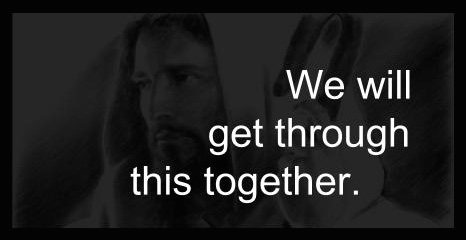
Posters like these abound, but are they accurate?

Posters like these abound, but are they accurate?

I don’t presume to understand or to be able to explain God’s involvement in our affairs. There seem to be “rules of engagement” that affect even Him. For millennia people have tended to believe that God is responsible for everything that happens, but I don’t see it that way. (Examples of this way of thinking can be found in Luke 13:4 where people wondered if 18 people who died when a tower fell on them were worse sinners, and in John 9:2 where people wondered if a man had been born blind because of his own sins or because of his parents’ sins.) I am convinced that God aches with each of our hurts and losses and that He has a way of comforting and strengthening and fixing that is incredible. I am also convinced that it is important to keep two things in mind –

One: Our planet is struggling through the effects of sin. The rebellion that began in heaven (of all places) got a foothold on earth (thanks to our ancestors’ choices) and the results have been awful. Manmade things wear out and break, leading to hurt and death, and even nature itself seems to be falling apart.

And Two: We are a planet marked by free will and personal choice. God designed us with free will and He has gone to great lengths to preserve our choice power. This power is awesome when people use it for good and terrible when they use it selfishly. (Choice theory appears to me to be a part of God’s original design.)

My own belief is that from the minute the fire began God started working miraculously on people’s behalf. I don’t presume to know how or where that exactly happened, but that is my sense. Sin and its architect want to destroy; God wants to protect and heal.

One thing that is apparent, as people affected by the fire begin to pick up the pieces of their lives, is the incredible outpouring of support and donations by the public. May that outpouring become a deluge of services, things, and money! May our mantra be We Will Get Through This Together!

We Will Get Through This Together

PS – I am glad that the Middletown church and school were not destroyed by the fire and I hope that they become a place of even greater service and support for their community, rather than in any way smugly coming across like God protected them while not protecting others.

The Valley Fire and Fitting Your Life Into a Car

The Valley Fire ravaged Middletown, CA, but clear information re: the extent of the damage is still trickling out.

The Valley Fire ravaged Middletown, CA, but clear information re: the extent of the damage is still trickling out.

It felt surreal, standing in my bedroom, trying to think about what we should pack. Could this really happen? I thought. I was stuck, not really wanting to go to a lot of trouble getting things organized and packed, yet circumstances seemed to demand just that. What to take, what to leave behind, where to go if we did have to leave, these and countless other questions flooded my mind.

Pictures and important files being packed.

Pictures and important files being packed.

You may be aware of the fires that are wreaking havoc in California. One of those fires, known as the Valley Fire, started north of us in the small mountaintop community of Cobb and then exploded in multiple directions extremely quickly. Nearby communities like Middletown and Hidden Valley Lake barely had time to get out of harm’s way. Fire fighters called the intensity and speed of the fire “unprecedented.” Drought conditions, combined with hot temperatures and high winds, contributed to the disaster, which as I write three days later is still ongoing.

A car burns in front of a burning home. An estimated 13,000 people have had to evacuate because of the Valley Fire.

A car burns in front of a burning home. An estimated 13,000 people have had to evacuate because of the Valley Fire.

As of this morning (Tuesday, Sept. 15) the fire has burned over 67,000 acres, including 500 homes, and is only 15% contained.

Cobb, Middletown, and Hidden Valley Lake are all communities that are close to Angwin, where I live. We have close friends that live in each of these places. The teacher credential program at PUC, where I work as a teacher, sends student teachers to schools in these places. Clear, accurate reports of the damage the fire has caused are hard to come by, but information is trickling out that close friends are among those who have lost everything, their homes completely burned to the ground.

The fire began around 1:30 pm on Saturday, but by 6:00 pm it was already becoming clear that this wasn’t going to be your average catastrophe. Although not in the immediate vicinity of the fire, parts of Angwin were put on advisory evacuation status, with some areas of Angwin soon placed on mandatory evacuation status. My house was right on the borderline of mandatory evacuation. As Sunday turned into Monday, all we could do was stay glued to news sources and social media for clues as to the fire’s direction.

IMG_0661

Our little dog, Pearl, knows where to be when suitcases are being packed.

On Friday of last week, the day before the fire began, I played in a benefit golf tournament (for PUC Prep) at Hidden Valley Lake. Waiting to tee off on hole #15, an elevated tee that gives you an incredible view of the surrounding area, I remember taking it all in, including watching a glider silently flying over the valley below, and feeling relaxed and thankful. Standing on that tee box today and looking across the valley toward Cobb Mountain would be an entirely different view, a devastating view.

Me, Spencer, Evan McGraw, and Pastor Matthew Gamble, enjoying golf the day before the fire started. Spencer's house may have been harmed in the fire.

Me, Spencer, Evan McGraw, and Pastor Matthew Gamble, enjoying golf the day before the fire started. Spencer’s house may have been harmed in the fire.

Forty-eight hours after the golf, on Sunday afternoon, with the fire 0% contained and headed our way, standing in my bedroom trying to think about what to do and what to pack, I was no longer relaxed. I suppose you could call it an intense choice theory moment. How do you fit your life into a couple of cars? I was struck by the choices I faced, so struck that I was almost in denial that I needed to begin packing. Rather than being panicked, though, at what our community faced, maybe I had been influenced by Glasser’s matter-of-fact approach to life. I wrote about this matter-of-factness quite a bit in his biography, but now I faced circumstances that seemed to bring the same out in me.

The cars, if need be, waiting to be packed.

The cars, if need be, waiting to be packed.

Pack some clothes, assemble important files and papers, box up the family pictures and memorabilia, make sure you have everything the pets will need, but so much is being left behind. If we do have to leave, I wondered, actually have to put the keys in our cars’ ignitions and drive out of the driveway, where would we go? And for how long?

Our hearts go out to those who not only had to go through this preparation, but who did have to drive out of their driveways into the unknown, especially those whose houses were ultimately completely destroyed.

We are supposed to get rain tomorrow (what a blessing!), but the wind is predicted to turn back toward us as well. We will continue to stay in touch with news sources, social media, and friends.


Willie, Ya Gotta Get Into the Spiritual Thing

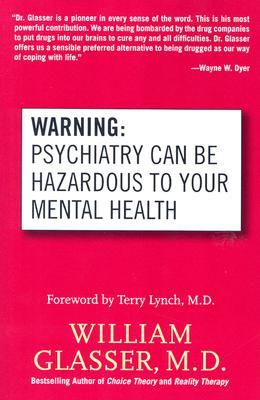
Like many I was saddened when I heard of Wayne Dyer’s passing, but hearing his name also brought back some Glasser interview memories for me. I began the interviews with Glasser for his biography in late 2003. During several of our early interviews Glasser talked about Dyer. He had attended one of Dyer’s presentations and was very glad that Dyer had written a cover endorsement for the book Warning: Psychiatry Can Be Hazardous to Your Mental Health. Not being all that knowledgeable myself, I mentioned to Glasser that I was surprised that he was so interested in getting an endorsement from Dyer when I felt that Glasser was so much more well known than Dyer. Glasser assured me that wasn’t the case. He realized that Dyer could tap into a spiritual market that he himself could not.

Bill in office 1, Mar, 07

In his own words from our very first interview on September 26, 2003 –

Glasser:  I’m still pretty healthy, and this, this Maine thing, that could be a big deal. They really want me there. They’ve heard me. I’ve been a big speaker at the ACA two years in a row. I’m speaking at the Michigan ACA in October, Wisconsin in February, these are big states, and then in March the state of Maine. And then, and then, a few days later I’m going from the state of Maine to the national, where I’m making four presentations now. And Mark Polk, the head of them, is firmly behind me and trying to get these ideas going. So I think there’s going to be some positive movement. I think it’s really, it’s really going to happen. And Wayne Dyer, that’s his letter, I read it, but, when I was on with him and, and you know, he had his daughter there and she sings and he was singing and all this thing, but he’s a really . . . Wayne Dyer is a good guy. His latest book is called There’s A Spiritual Solution to Every Problem. And, but when he describes what the spiritual solution is, it’s a relationship not only with God, but with the people around you. And so, uh, and then he recognized me in front of the audience. I had never met him, although he said, he said in the group, it was a big meeting there, and he said to the audience, that when he was starting out he had read two books and these books got him started on his path. One of them was Reality Therapy and the second was Schools Without Failure. He was working at that time in schools, I think. He then picked me out of the audience and had me stand up, and then explained how Dr. Glasser has written a new book called Warning: Psychiatry Can Be Hazardous To Your Mental Health. He gave me a very good plug and that was wonderful, but uh . . .

Roy:  Where did this . . .

Glasser: This was in a conference in Ohio, in Cleveland, which was a spirituality conference, and uh, he’s . . . he’s spiritual, but he’s spiritual in a very tangible way. He’s not spiritual in that you should sit around and pray. You should go out and do your work, and, I can’t describe exactly, but boy the audience was mesmerized by it. And he talked about getting in touch with your spiritual side.

Roy:  Is he spiritual but non-religious, or is he a . . .

Glasser:  Well he mentions Jesus, but he mentions other religious leaders, too. It’s not, it’s not just one . . . he said that all religions kind of have a common core, which is basically to me the common core of all religions, if they practice properly, is the golden rule. I mean, I’m a firm believer in the golden rule. And anyway, I wrote him a letter afterwards, a nice little short letter. I don’t know what his letter says, and I don’t want to read it cuz I might be upset and it would screw up our thing here. But Linda says it’s a very good letter. That’s what she said. I said I’d appreciate it, because you have such a powerful influence on people, if you could, without mentioning me or the Warning book, cause I don’t want to ask him to push me or the book. If he would just say that he, too, has serious doubts about the overdrugging of people in our society, that would be enough. And I think he’s going to, which would be good because I saw how the people were just absolutely entranced by everything he said. I don’t threaten him at all, because he’s way, way too powerful and well known for me to threaten him. I’m one of the people on whose back he’s riding, you know what you said, because I’m about twenty years older than him, a little more than twenty. No, no, no, fifteen years exactly. Fifteen years older than him. He’s 63 and I’m 78. But, uh, so now if he’s going to get behind it, it could be very, very powerful. So I’ll read what he says and then I’ll write him back and support him a little bit. See he doesn’t use a computer. He only writes by pen.

Roy:  Really.

Glasser:  Yeh, see that letter. That’s the only way he writes, so, so he doesn’t use, and he wrote me, the blurb was all by pen, and he says he doesn’t want to use a computer. There’s something for him that’s unspiritual about the machine, but to me there’s something super spiritual about the machine. (laughter)

A young Bill Glasser and one year old, Joe, his first child. (circa 1952)

A young Bill Glasser and one year old, Joe, his first child. (circa 1952)

The first four books that Glasser wrote were by hand – Mental Health or Mental Illness (1960); Reality Therapy (1965); Schools Without Failure (1969); and The Identity Society (1972). He really appreciated being able to use a word processor for his writing. The handwritten Dyer endorsement that Glasser refers to appeared on the front cover of the Warning book and went like this –

“Dr. Glasser is a pioneer in every sense of the word. This is his most powerful contribution. We are being bombarded by the drug companies to put drugs into our brains to cure any and all difficulties. Dr. Glasser offers us a sensible preferred alternative to being drugged as our way of coping with life.” Wayne W. Dyer

678610

During our second interview on October 17, 2003, Dyer’s name came up again.

Roy:  The last time we were together you were very, very pleased, actually, because of a fax from Wayne Dyer . . .

Glasser:  Oh yeh. Yeh.

Roy:  . . . that indicated that he was planning to say something on a PBS special, I think in support of your ideas. The thing that caught my attention was how you went on about how big this was, and how big and important he was, you felt he was way bigger than you are . . .

Glasser:  Right now, yes I think he is. I saw his audience of 400 people, when I had about 120 people in my group. He had more than twice the group that I had when I was in Cleveland. It was packed, and, I mean, they’re just hanging on his every word. Now Wayne Dyer has something that I don’t have, that I can’t have because I have a different belief system. Wayne Dyer’s book is, There’s a Spiritual Solution for Every Problem.

Roy:   Right, right.

Glasser:   And, my friend Frank, who’s just a moneymaker, he says, Willie, you gotta get into the spiritual part, you’re missing . . . (laughter) So, that’s, that’s what I’m using you for, you’re gonna, you’re gonna get me into the spiritual part here. (more laughter)

Roy:  Well I, I don’t know if I’ve shared this with you, but I actually, uh, I actually think of you as a secular Christian.

Glasser:   (he chuckles) That’d be ok.

Roy:   You know, because you’re . . .

Glasser:   (chuckles again) I’m, I’m a secular Jew, too. (laughter)

Roy:   Yeh, when I’m, so much of what I have observed, and so much of what I’ve read, uh, your ideas actually strengthen my Christian perspective, and uh . . .

Glasser:  Yeh, I’m basically, really, I’m not a selfish person. I’ve never been. I’m willing to do this work for nothing and help people.

Nick Cummings, another giant in the mental health field, and Bill Glasser. (circa 2005)

Nick Cummings, another giant in the mental health field, and Bill Glasser. (circa 2005)

I guess you can say that Glasser stayed true to his agnostic underpinning, even as he recognized that he could have made some significant money catering to a spiritual audience. I think Dyer was staying true to his underpinning, too. As listeners and readers we seek information and experiences that help us make sense of the world, and that help us achieve personal satisfaction and peace. People relate to Dyer and to Glasser on a deeply personal level. I have found help from Glasser’s ideas as I travel on my spiritual journey even though he never presented himself as a spiritual guru.

Glasser respected Dyer as a fellow lecturer and author who wanted to help people make the most of their potential and live lives of happiness and peace. They said things differently and they reached a different audience, but they saw tremendous value in each other. I know that my life is better because of their influence.

==================

Receive The Better Plan posts and inspirational choice theory quotes on
images@thebetterplan

====================

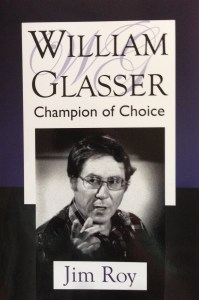
One of the best ways to learn about choice theory is to read Glasser’s recently published biography – Champion of Choice.

The book that connects the dots of William Glasser's ideas and his career.

The book that connects the dots of William Glasser’s ideas and his career.

20 Dyer Quotes To Help You Become a Better You

20150831183135-wayne-dyer

A recent article* saying good-by to Wayne Dyer (he passed away on August 29) listed 20 of his quotes to “Help You Become a Better You.” They appear below. You will hear echoes of choice theory as you read them. There was a Dyer / Glasser connection, which I will say more about in the next blog post.

images-3

When Glasser passed away two years ago several of us wrote farewell messages, but as I recall there were no farewells that featured some of Glasser’s quotes. A neat idea that I might work on in the future. In the meantime, cherish a good thought toward Dr. Dyer as you reflect on his beliefs –

“Circumstances do not make a man, they reveal him.”

“If you believe it will work out, you’ll see opportunities. If you believe it won’t you will see obstacles.”

“Change the way you look at things and the things you look at change.”

“With everything that has happened to you, you can feel sorry for yourself or treat what has happened as a gift. Everything is either an opportunity to grow or an obstacle to keep you from growing. You get to choose.”

go-for-it-today

“Go for it now. The future is promised to no one.”

“When I chased after money, I never had enough. When I got my life on purpose and focused on giving of myself and everything that arrived into my life, then I was prosperous.”

“Stop acting as if life is a rehearsal. Live this day as if it were your last. The past is over and gone. The future is not guaranteed.”

“Everything you are against weakens you. Everything you are empowers you.”

“How people treat you is their karma. How you react is yours.”

dear-karma

“You cannot be lonely if you like the person you’re alone with.”

“Procrastination is one of the most common and deadliest of diseases and its toll on success and happiness is heavy.”

“There is no scarcity of opportunity to make a living at what you love. There’s only scarcity of resolve to make it happen.”

“You leave old habits behind by starting out with the thought, ‘I release the need for this in my life.’”

“The fact that you are willing to say, ‘I do not understand, and it is fine,’ is the greatest understanding you could exhibit.”

“When you judge another, you do not define them, you define yourself.”

“You may have convinced yourself that giving is impossible because you have too little for yourself. If you are not generous when it is difficult, you will not be generous when it is easy. Generosity is a function of the heart, not the wallet.”

extra_mile


“It’s never crowded along the extra mile.”

“Peace is the result of retraining your mind to process life as it is, rather than as you think it should be.”

“When the choice is to be right or to be kind, always make the choice that brings peace.”

“When you squeeze an orange, orange juice comes out, because that’s what’s inside. When you are squeezed, what comes out is what is inside.”

images-4

Which of these beliefs especially speak to you? Which of them seem to especially reflect the values and principles of choice theory? Which of them could be made into a poster and placed on the wall of your classroom?

* The original article can be found at this link – Remembering Wayne Dyer – 20 Quotes to Help You Become a Better You