No Word for Accountability? Are You Kidding Me?

finland

Finland is doing something really, really right with their schools, yet the U.S. education system is either ignoring what Finland is doing, or is incapable of seeing the value in what they are doing. I suggest we Americans take a moment and consider three key points in Finland’s approach.

In “quality of life” global surveys, out of all the countries in the world Finland ranks #1. The PISA (Programme for International Student Assessment) survey, which compares 15 year olds from 18 different countries in reading, math, and science, ranks Finnish students at the top as well. Since 2001, they have either been ranked 1st, 2nd, or 3rd. PISA performance for U.S. students has been middling at best.

Flag_of_Finland.svg

So what gives in Finland? Here are three keys to keep in mind.

1)  Finland is an education superpower because it values equality over excellence.
When Finland recognized in the 1970s that they had to fix their schools they decided to create an education system that worked for all of its citizens, and especially their children. Today there are hardly any private schools in Finland, and those that do exist cannot charge tuition. Their goal was not to focus on choice, but on equity; not on competition, but on cooperation.

2)  They view learning as a constructive process.
Finnish schools assign less homework and schedule more creative play. Except for a national matriculation exam at the end of high school, there are no standardized tests. Periodically, some tests are given to sample groups, but these tests simply provide a snapshot of how their education system is doing in specific content areas.

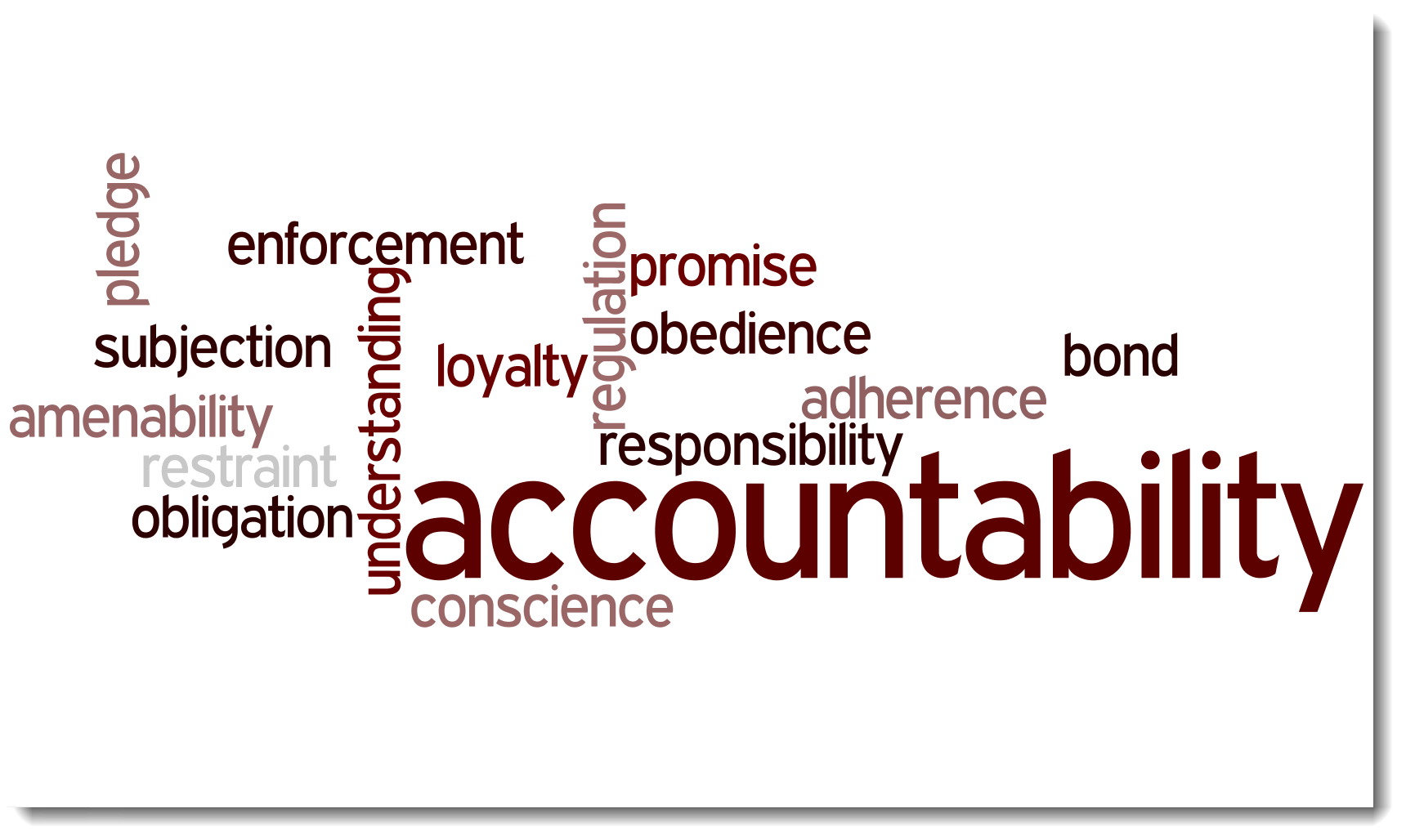
3)  There is no word for accountability in Finnish.
No wonder the Finnish approach to education is going completely over the heads of Americans. We are obsessed with accountability, and because of this we are always on the lookout for a strategy to keep track of performance and then apply the right carrot or stick as needed. Pasi Sahlberg, director of the Finnish Ministry of Education’s Center for International Mobility, during an interview at Teachers’ College of Columbia University, when asked about accountability, shrugged as he pointed out that “There’s no word for accountability in Finnish.” He then explained that “Accountability is something that is left when responsibility has been subtracted.”
accountabilityimage

From a choice theory perspective there is so much here to think about. Equity over choice might alarm some, but think about the implications of this emphasis. Their goal is to have 100% of their schools be the kind of school that any student would want to attend. In America we don’t work to create excellent schools for all students, but then we use the idea of “choice” to wiggle out of this level of responsibility. We stress competition, even as the “playing field” heavily favors those with money. And no word for accountability? How can that be? As I have thought about it I have come to see the external control nature of accountability. Accountability is monitoring performance so that an external reward or punishment can be strategically applied.

I suppose that accountability does not have to be a bad word. Glasser used the word responsibility a lot to begin with, but then retreated from it when he saw how teachers were using it to pressure kids. He didn’t have good feelings about the word motivate either. He thought that it conveyed the idea of one person applying some sort of external stimuli to get another person to behave in a certain way. Maybe accountability is a similar kind of word. Maybe, though, there is a way to use it appropriately; may it can be used in a way that doesn’t attempt to control people. If we do like the concept of accountability we will need to be vigilant. External control can be so tempting.

Apparently, the Finns don’t have the word accountability in their dictionary. I wonder how we can get it out of ours.

============

You can access The Better Plan posts on –

TWITTER
@thebetterplan

============

12 Amazon reviews; can we make it 13?

12 Amazon reviews; can we make it 13?

For U.S. customers, get a signed copy of Champion of Choice for $20 + $6 (shipping). Send your check, along with any special instructions (e.g.- if the book is a gift), as well as your shipping address, and I will get the biography out to you right away.
Please include your email address, just in case I have questions about your order. My address is P. O. Box 933, Angwin, CA 94508

==============

Today’s blog was based on an article in The Atlantic (Dec. 29, 2011) by Anu Partanen titled What Americans Keep Ignoring About Finland’s School Success. There have been many other articles touting Finland’s school system since then.

Love and Belonging: Same Side of the Coin?

confused

I am trying to wrap my head around something Glasser wrote in Choice Theory (1998, p.96) about how to measure the strength of our need for love and belonging. “It is important to understand,” he began, “that the strength of this need is measured by how much we are willing to give, not by how much we are willing to receive.” At first glance this seems easy enough to understand, but as I think about what this really means I begin to sense something deeper and more important.

I teach about the Basic Needs as part of the choice theory workshops I facilitate each summer, including asking participants to try to identify their own Basic Need strength levels.

When participants assess their personal need for Love and Belonging I am pretty sure they focus more on their perceived need to belong than on their need to love. Belonging has to do with our need for connection, and I think that is where participants go when they self-evaluate in this area. “To what extent do I need to connect with others?” they are probably wondering.

belong-and-connection

But that’s not really how to measure this strength, at least according to Bill. Belonging is about our need to “receive” from others, to be affirmed through membership within a group or from a relationship with another person, and to be included. Love, on the other hand, is giving affection and caring about others, without regard to receiving favors in return.

As the Love chapter in 1 Corinthians says –

Love is patient and kind.
Love is not jealous or boastful or proud or rude.
It does not demand its own way.
It is not irritable, and it keeps no record of being wronged.
It does not rejoice about injustice, but rejoices whenever the truth wins out.
Love never gives up, never loses faith, is always hopeful, and endures through every circumstance.   ! Cor. 13:4-7

1Cor13Day20Verse7

There seems to be a distinct difference between love and belonging. Both are about relationships, yet one is about what we take from the relationship, while the other is about what we bring or give to the relationship.

Glasser hits this theme again when he describes the Solving Circle for marital discord. (He actually recommended drawing an imaginary circle on the floor that spouses would enter before beginning their conversation.) “Step into the circle,” he coached, “and tell each other not what you want but what you are willing to give.” (Choice Theory, p.98)

So what do we do with the Love and Belonging need? Is it possible to have a high need for belonging and a low need to love? Given Glasser’s view that the strength of the Love and Belonging need is how much a person is willing to give, it would seem the person with a low need to love and a high need to belong ends up with a lower score for Love and Belonging. Does that make sense? I am really thinking about how to process this piece in future workshops.

===============

10 Amazon reviews; can we make it 11?

10 Amazon reviews; can we make it 11?

For U.S. customers, get a signed copy of Champion of Choice for $20 + $6 (shipping). Send your check, along with any special instructions (e.g.- if the book is a gift), as well as your shipping address, and I will get the biography out to you right away.
Please include your email address, just in case I have questions about your order. My address is P. O. Box 933, Angwin, CA 94508


Relevance Captured in a Simple Graphic

IMG_1332

We can make it more complicated, but this is what it boils down to, especially for teachers and parents.

Like every human being on the planet, students crave relevance. They yearn for their learning and experiences at school to be meaningful. Teachers face this challenge every day, and it can be a daunting challenge. The curriculum standards are formidable and textbooks can be over 1,000 pages long, yet from within these resources teachers must find relevance.

Choice theory reminds us that relevance is need-satisfying. It meets our need for power and success when we are immersed in something that matters to us. It also meets our need for joy. It is just plain fun to be involved in an interesting, relevant project.

Relevance is so important that when, as teachers, we go about creating lesson plans, whether on a Friday afternoon or a Sunday evening, if we cannot see that relevant link between the topic and the students, then we need to let that topic go and move on to a topic in which we can find the relevance link. Teaching irrelevant topics is a waste of time. Teachers should always strive to find relevance, but when they can’t find it they need to feel that they have permission to find a topic that is relevant.

The stairs leading to the front door of the Education building. I'm not sure which class in which this idea was used, but I like it!

The stairs leading to the front door of the Education building. I’m not sure of the class in which this idea was used, but I like it!

Quick ideas that add relevance to common topics –

Math
Write a series of story problems for others to solve.
Do a survey of students’ likes and dislikes and then graph the results.
Learn addition and subtraction through drum beats.

Language Arts
Learn to read, write, and decipher code language.
Play vocabulary words “Pictionary.”
Use a “human graph” to see where a group stands on an issue

Social Studies
Find examples where “history repeated itself.”
Have imaginary talks or interviews with people from the past.
Hold a historical period / costume / food day.

Science / Health
Make up an imaginary conversation between parts of the body.
Create the rotation of planets with the class as the solar system.
Find five different ways to classify a collection of leaves.

Without relevance, teaching can be drudgery; with relevance, teaching can be a blast!

IMG_1030

For U.S. customers, get a signed copy of Champion of Choice for $20 + $6 (shipping). Send your check, along with any special instructions (e.g.- if the book is a gift), as well as your shipping address, and I will get the biography out to you right away.
Please include your email address, just in case I have questions about your order. My address is P. O. Box 933, Angwin, CA 94508

====================

We just entered double figures — there are now 10 reviews of Champion of Choice on Amazon.

The Future of Choice Theory Is In Our Hands

In the last Better Plan post I shared the questions that people would ask William Glasser himself, if he were still with us. (If you have insights or answers to one of the questions, please share them with us.) Today I will post the results of the other assignment I gave during the Toronto talk, that being – What suggestions do you have to get Glasser’s ideas out to the public more effectively?

Those in attendance at the Toronto talk were asked to work with a partner and think of things that could be kept in mind as the organization moves forward. If there was more than one suggestion for the same idea I placed an “x” after that idea. Some ideas have quite a few x’s by them. If we had more time in Toronto we could have refined these ideas even more. However, here they are in their more raw form.

TED talks. x x x x x x x x x

Create a YouTube channel with strategic key words that will attract people when they do searches. x x x x x x

Use social media more. Facebook. Twitter. Blogs. x x x x x x

Writing reviews on Champion of Choice. x x x x

Choose a business model and concentrate our efforts to market choice theory, including hiring people who know marketing. Develop a recognizable brand and logo. x x x

Establish and support the William Glasser Foundation. x x

Model the theory and walk our talk. x x

Training to certification must be quicker for the millennial generation. x

Research. x

Create partnerships with different people, communities, or businesses. x

Let people know about mentalhealthandhappiness.com. x

Be clearer about what is required to be certified.

Keep reality therapy in the discussion – don’t limit it to choice theory.

Reach out to universities and textbook writers. Get the word out to academics.

Develop a graduate curriculum for reality therapy.

Develop a reality TV show on reality therapy and choice theory.

Talk shows – Ellen, Oprah, Saturday Night Live, etc.

Market “Choice Theory in Motion” more aggressively.

Create a database of supporting evidence (annotated) of studies supporting choice theory.

Create marketing for Take Charge of Your Life.

WGI members need to be attending and presenting at other conferences, like the ACA.

Make a movie of Champion of Choice.

Never give up.

Write a book about Rochester School and the experiences we had implementing choice theory in our community.

Find a young person to be his (Bill’s) champion.

Focus on youth.

Providing funding to offer training to principals and teachers.

Produce a film or documentary on Bill and his ideas.

Massive book launches.

Effective one-day workshops.

Filming teachers who are effectively applying RT/CT in the classroom and publishing these examples.

A focused voice from each discipline using choice theory.

We’re getting too old as an organization. We need to connect to youth.

#choice theory

Create a presence on maternity wards and geriatric centers – e.g. material that would help new parents

Introduce CT concepts in the school system at an early age – embed in the curriculum.

There are some very good ideas here. Some of them we can do as individuals, while some of them would need to be addressed at an organizational level. Do you want to lobby for one of these ideas? Respond in the box below and let us know what you are thinking. Thank you to each set of partners during the Toronto talk who came up with these suggestions.

================

“If you don’t like something, change it;
if you can’t change it, change the way you think about it.”
Mary Engelbreit

Questions for Bill

IMG_0489

It’s hard to believe that two weeks ago today the 2nd International Glasser Conference was just beginning, and that I kicked off the conference by talking about his just published biography – Champion of Choice. Thanks to Banning Lary, that talk was posted in the last blog. I still have such positive memories about the conference and the time I was able to spend with so many of you. Although traveling can be a hassle and expensive, I am so glad I attended. Thank you to WGI – Canada for such a wonderfully planned event.

Carleen Glasser speaking at the Toronto conference.

Carleen Glasser speaking at the Toronto conference.

During the talk I had people work with a partner and answer a couple of questions. The first invited those in attendance to consider – If Bill were still with us, what question would you like to ask him? The second question asked – What can the organization or individuals do to get the choice theory word out to the public better? Today’s blog is going to focus on the first one and share some of the questions that are on your heart and mind.

Some of you will know the answers to some of these questions. If so, I invite you to respond to this post and share your knowledge. Some of the questions are answered or commented on in the biography. If so, I will indicate that. And some of the questions we can only wonder what Bill might say. The questions definitely invite us to think and reflect.

There were too many questions to list all of them, but here are a few –

In looking back on your life do you have any regrets? (A number of you asked this question in one form or another.)

What is the role of the unconscious mind in choice theory? (At first glance, I thought this question had an obvious answer, since Bill consistently wanted us to focus on the conscious mind. That being true, though, this question is still valid.)

What would you suggest that we do to promote choice theory in education and to get it into all the schools?

How did you come to realize that external control doesn’t work? (In the biography.)

How can RT/CT help understand autism?

How did your childhood, and specifically your relationship with your mother, contribute to your outlook, beliefs, and success? (In the biography.)

What would you like to say that you’ve never said before?

Do you think homosexuality is genetic or by choice? (In the biography.)

How difficult was it to apply your theories to your personal life? (In the biography.)

Which components of the choice theory framework are the most important?

What do you still want to accomplish professionally?

What do you wonder about currently?

If you were a politician, what would your first project be?

How long did it take you to move from external control to internal control in living your life? (In the biography.)

In looking back, would you have used other ways or methods to further your ideas?

What does freedom look like for you?

You seem uncomfortable with religion, but have you ever had, or come close to having, a spiritual experience?

Was it you or your ideas that had the greatest influence?

When working with young children who find it extremely difficult to verbalize, or even truly understand their emotions, what successful approaches can be implemented to assist them in terms of their behavior choices?

How did you get to the analogy of the car for Total Behavior? (In the biography.)

How did political and cultural activities of the 1960s affect your theories? (In the biography.)

What other career would you pursue if you had your time over?

What do you think about sexual addiction/compulsion?

What has brought you the most joy in your life?

That last question is a great one to end on. As I said at the outset, some of you have great responses to certain of these questions. I encourage you to take a moment and share your thoughts with the rest of us.

One thing the questions do is remind us how much we miss Bill and how much we wish he was still with us to answer the questions himself. Toronto represented the first international conference without Bill and it will be interesting to see how his ideas move ahead on their own. Of course, his ideas are not alone. They aren’t orphans. His ideas have us to care for them and proclaim them.

==================

As of July 24, the Amazon reviews for Champion of Choice remains at –

9

====================

“Happiness is when you feel good about yourself without the need for anyone else’s approval.”

Toronto Keynote

The opening keynote address at the 2nd International Glasser Conference, held July 9-12, 2014, in Toronto, Canada, given by Jim Roy, author of Champion of Choice, the recently published biography of William Glasser.

It was good to meet so many of you during the conference in Toronto. Hopefully, the video will bring back good memories of the conference and our time together.

Champion of Choice Reviews
As of this morning, July 22, nine reviews of the Champion of Choice biography have been shared on Amazon. As a simple way to support Bill’s ideas and draw attention to the book, let’s continue to get that number higher.

Big Time Thank You
Many thanks to Banning Lary, who took the video at the conference, edited it, and then set up a channel on YouTube for us to access it. He really edited some nice touches into the video.

The only person you are destined to become is the person you decide to be.   Ralph Waldo Emmerson

In a Nutshell

Inbound-Marketing-in-a-Nutshell

I sometimes get asked, “In a nutshell, what is choice theory?”

The person doing the asking may not have heard of William Glasser or choice theory and, when the conversation comes around to Glasser and his ideas, they become interested in a short-cut description.

It’s a fair question. So, how would you, in a nutshell, describe choice theory?

Some possible descriptions include –

Choice theory explains how human beings are motivated and guided by an internal control mechanism. Whether we are proactively creating new behaviors or simply responding to external circumstances, it is this internal control process from which we decide how to behave or how to respond.

Choice theory describes a psychology that is based on the belief that human beings behave in purposeful ways to meet their personal needs. These needs include connecting with others, being successful at what we want to do, being free to do what we want without undo restrictions, and having fun and enjoying life. Rather than being controlled by others, we are constantly behaving in a way that we think will be need-satisfying.

Choice theory describes how free we are, and how much power we have, to be the architects of our own mental health. It helps us understand how to become more responsible for our thinking, our acting, our feelings, and even our physiology.

What is your nutshell description? Do you have a “go to” answer for this situation?


FE_PR_121010_crossroads425x283

The implication of people being motivated and guided by an internal control system is huge! Bigger than huge! It takes existing approaches and practices and sweeps them away. For educators the implications of internal control are especially significant.

Choice theory, along with explaining the reality of internal control, also explains why external control—rewards and punishments in their varied forms—is ineffective, at best, and destructive at its worst. For over a century schools in the U.S. have sought to discover some new form of reward or punishment to externally control students, and even teachers, toward better performance. The No Child Left Behind school improvement plan led to underperforming schools being listed in the newspaper, with the hope that public embarrassment would spur them toward higher achievement. It didn’t work that way, as you might predict. Policy makers with an external control mindset want to extend the hours of the school day and lengthen the school year, thinking these external factors will make better learning take place. What they have failed to see is that doing things ineffectively, only now doing them for longer periods of time, still result in ineffective performance. What is needed is to design a school experience that acknowledges the internal control system by which every student is guided. Only when we intentionally create schools that are need-satisfying to students will performance reach the desired levels.

New-Technology-High-School-logo

Some schools have created this kind of environment and are experiencing wonderful results. Glasser Quality Schools would be a prime example. Closer to home for me, the New Technology schools throughout Napa County are creating this kind of environment as well. It can be done.

==============

IMG_1030

Thank you to those who have written a review on Amazon for the Champion of Choice biography! Eight reviews have been submitted so far. It would be good if we could get that number up to 80, or even higher. Writing a review is a simple way to draw attention to Glasser’s life and his ideas.

==============

“I am not what happened to me. I am what I choose to become.”
Carl Jung

Yoda on a Cold, Dark Football Field

Instead of heading west back to California after the Glasser conference, Maggie and I headed a half hour east of Toronto to the city of Oshawa. Oshawa is special to us for a number of reasons – I got my first teaching job as a physical education teacher at Kingsway College in Oshawa; it was really the first place Maggie and I lived after getting married; and our daughter, Rachel, was born there. I was 23 when I began teaching and Maggie was 21. How could we have been so young, so ready to tackle a new place, so naïve in so many ways? We left Oshawa and moved back to California in 1980, so it has been 34 years since I last saw the campus, and since I saw some of the good friends we made during our time there.

I am not at the end of my career yet, but I can see the end beckoning to me from my present vantage point of being a couple months short of 60 years old. To be able to go back and visit the place in which my career started was special, a kind of magical doorway into the past.

The old Kingsway gym.

The old Kingsway gym.

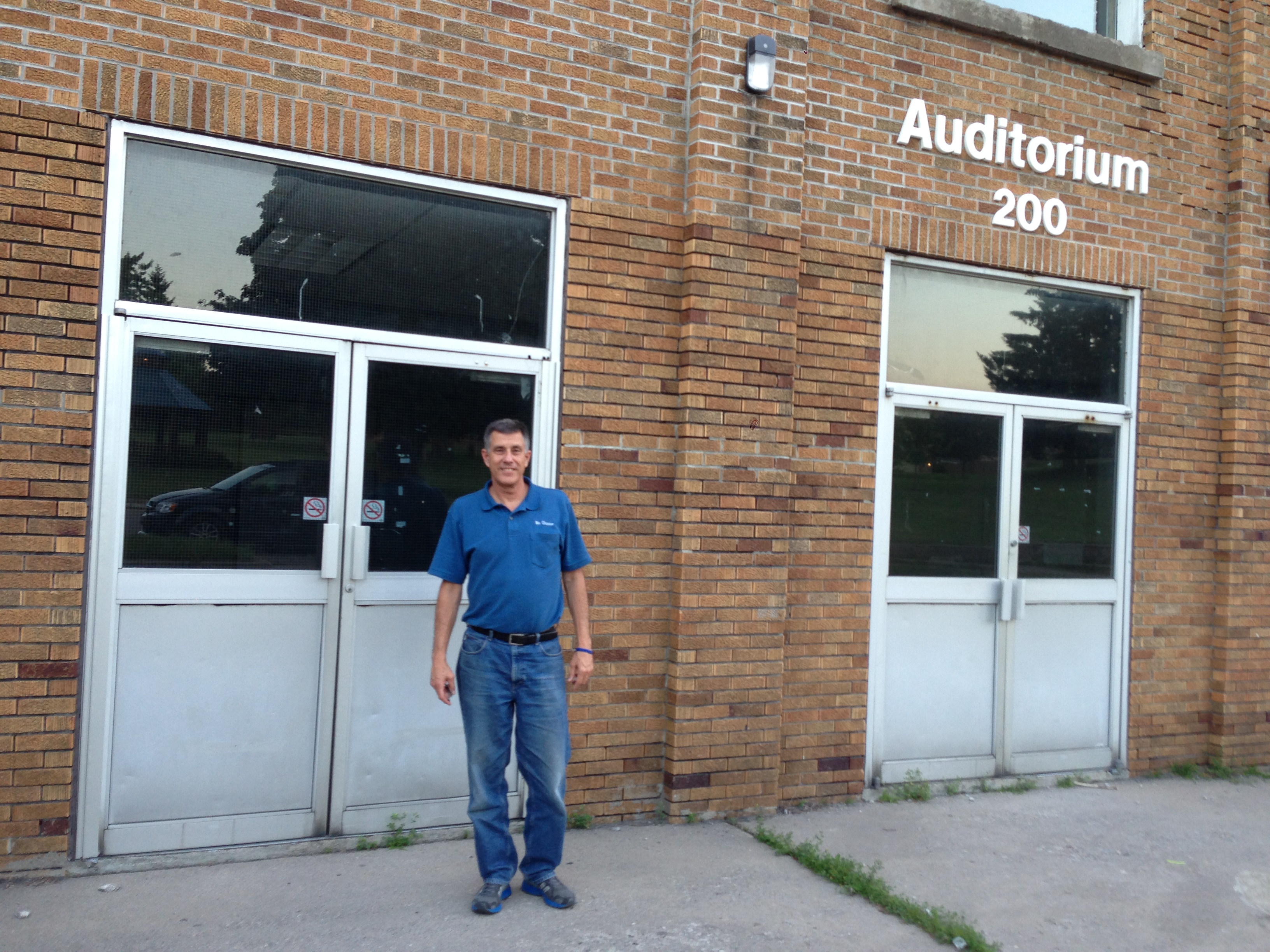
Me and the gym, together again after 34 years.

Me and the gym, together again after 34 years.

The old building I am standing in front of was the gymnasium. It was old when I first arrived at Kingsway, too, but I was so excited to have a gym I could call my own. I remember painting the entryway with a fresh coat of paint, with a burgundy stripe that added life to the space, and then tearing up the old carpet in the entryway so that tile could be installed. I was proud of the improvements, glad that others on campus would see that the gym was important enough to update. I peeked in the doors and could see that those improvements had become distant memories. The entryway is now completely black, a worn out space leading to what looked like a storage area. (Just in case you’re wondering, a wonderful new gym has been built to replace it.)

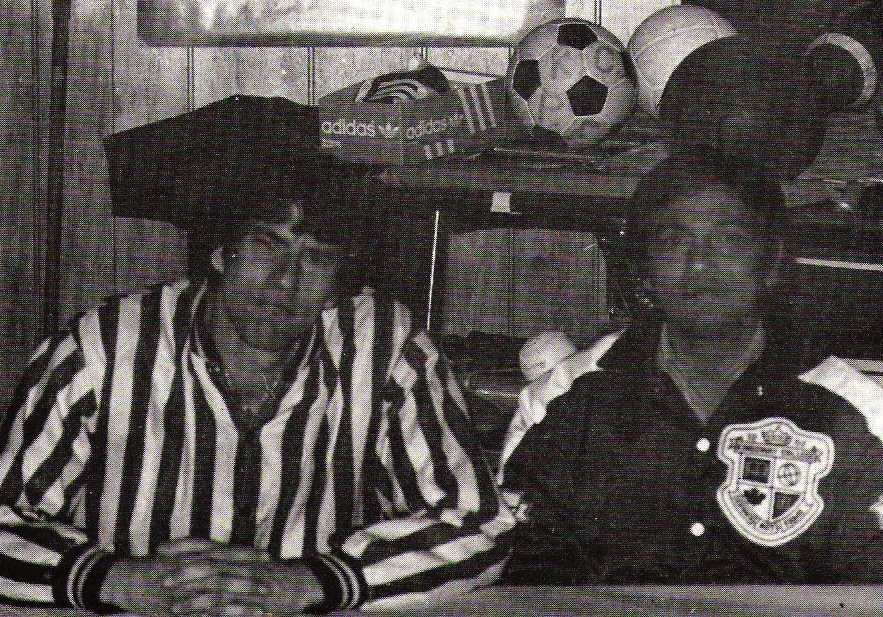
Me when I first began teaching at Kingsway, in my referee jacket. Ralph Jurianz is on the right. We were student association sponsors that year.

Me when I first began teaching at Kingsway, in my referee jacket. Ralph Jurianz is on the right. We were student association sponsors that year.

Besides seeing the campus, it was even better re-connecting with friends. Kurt and Anne Cao arrived at Kingsway in 1978, the same year I arrived. They were experienced teachers from Monterey Bay Academy; me, not so much. Kurt was the new boys’ dean and Anne taught part-time in the physical education program with me. Seeing them again recalled how much they meant to us, a young couple just recently married and in a totally unfamiliar environment, and to me, a brand new teacher just beginning to find his way.

Jim, Maggie, Anne, and Kurt

Jim, Maggie, Anne, and Kurt

In those early days I had not heard of choice theory yet and had not identified what it even meant to be a progressive educator. A readiness for progressive approaches was somewhere down deep in me, but I had not yet started to build on that foundation. Being with Kurt and Anne, though, memories began to flood back regarding their mentoring of me. Anne helped me develop the structure that was needed to teach multiple classes and run intramurals. And Kurt modeled to me the kind of love, patience, and commitment that really supporting students required. He would frequently involve me in dorm events, and sometimes even dorm challenges. So many times I saw him patiently working with students, teenage men, sometimes from dysfunctional backgrounds, often with so few emotional tools to navigate adulthood and responsibility, patiently trying to help them understand that they have choices. I have a clear memory of Kurt and I walking across the football field one night, walking back from my house to the dorm, talking about the challenges at the school that year. I was frustrated with some of the students and was ready to talk about how we could make them get into line, yet I remember Kurt, rather than grousing about their behavior, expressing how much he cared about the guys in the dorm and how he only had four months left to reach them. Other teachers and staff might have been yearning for the school year to get over and send the kids home, but Kurt was treasuring every day left in the school year as one more opportunity to connect with students and help them.

I had forgotten that moment, that dark and cold evening, until I saw Kurt again. Now that moment floods back and I recall how significant it was to me. Years later I would be introduced to the concepts of a Glasser Quality School and choice theory. Something in me would resonate at a very deep level with those concepts, and I would eventually embrace them as a way of life. I would forget, though, until now, how maybe, just maybe, there were moments in my past, people in my past, that prepared me to desire and resonate with choice theory ideas, that had prepared me to see the importance of connecting with kids, and acknowledging their need for power, freedom, and fun. Before I became familiar with a movie character named Yoda, I was fortunate to have Kurt as a kind of Yoda in my life.

Jim and Yoda. I'm wiser; I don't think Yoda can get any wiser, can he?

Jim and Yoda. I’m wiser; I don’t think Yoda can get any wiser, can he?

Also years later I would meet another Yoda, a guy by the name of William Glasser, and my journey would continue. I would add pieces to my thinking and beliefs that would build on moments like those on that cold, dark football field, that faraway galaxy from a long time ago. I’m still adding pieces.

I don’t know if Kurt remembers that football field moment, and I don’t know if he recognizes his Yoda-like qualities, and that is why I am sharing this with you. You could be a Yoda to someone right now, and like Kurt, not even realize it. You could be a Yoda to someone just learning about choice theory for the first time, or maybe to a young teacher finding his or her way, or maybe to a friend admitting he or she wants a better marriage. Stay the course with choice theory. You never know who is watching and listening.

25

=============

Got home last night from Canada and will be filling the book orders placed at the conference today or tomorrow at the latest. I will also be setting up a way to sell signed copies of the Glasser biography right here from the blog. Stay tuned.

Please add a book review of Champion of Choice to Amazon.com. It doesn’t have to be long and it will make a big difference!

Reflections on Toronto

IMG_1281

Jim Roy and Bob Wubbolding. (Bob is wearing the Bengals hat he got for my son. Thank you, Bob.)

My emotions were truly mixed as I left Toronto yesterday afternoon, after good-byes to fellow choice theorists, some of them having traveled from the other side of the world to attend the conference. In total behavior language, my back tire of feeling, and even my physiology, was experiencing the reality of saying farewell to people who I may not see again for quite a while. I had been looking forward to seeing them as the conference approached, but now the conference had ended and we were all heading home. I intentionally decided to get back on the front tire of thinking and tried to embrace thoughts like – I’ll stay in better touch, or I’ll see people again at the next conference in Korea (summer, 2016), or We can stay connected through The Better Plan blog – but no sooner had I got on the front tires when that huge back feeling tire reminded me that the conference was over and the wonderful time I had spent with dear friends was soon to be a moment in the past. Maybe there is a kind of appropriate grief at the end of a Glasser conference.

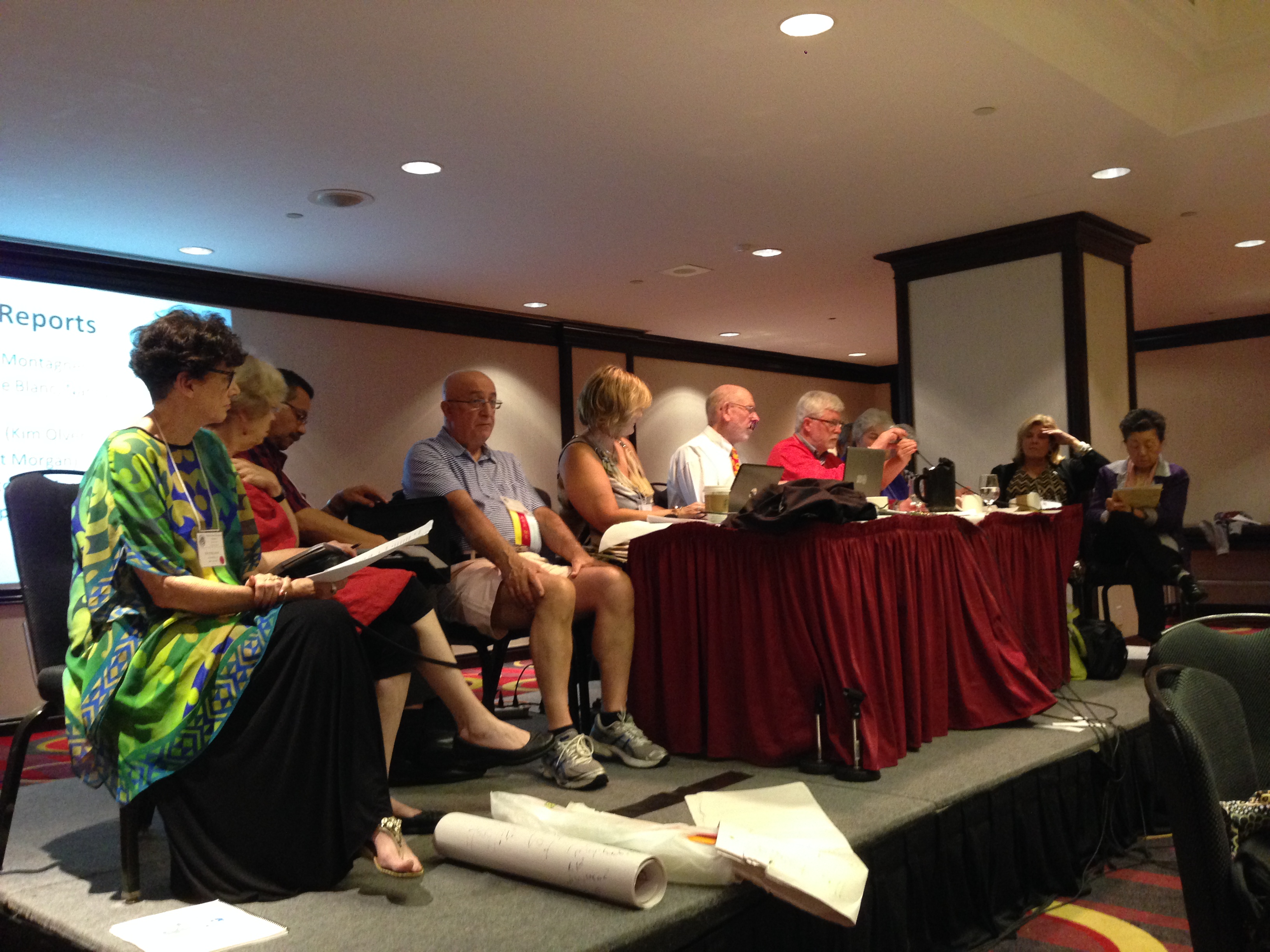
The board members of William Glasser International.

The board members of William Glasser International.

The conference was such an international event! I can’t provide a complete list of the countries represented at the conference, however I spoke to people from Canada, Ireland, Australia, Croatia, New Zealand, South Africa, Iran, Columbia, Argentina, Japan, Korea, and Malaysia. Pretty amazing! And several of these countries have fostered an incredible choice theory presence in their respective cultures. An example of this international success was seen during the conference when representatives from Japan stood and indicated that the Achievement Corporation, the company in Japan that promotes the Glasser ideas through publishing and training, was giving $100,000 to the newly established William Glasser International endowment fund. They are doing something right to be able to donate that kind of money! Very cool!

izmqWKcGwBzY

The support for and affirmation of the Glasser biography was very special for me personally, especially from those who were actually a part of Glasser’s life. My hope is that, as a result of my speaking at the conference, more people now know about the book, and that they will pass the word along to others in their communities that Glasser’s story is available. Throughout his life Glasser wanted to make mental health understandable to anyone interested in learning about how our brains work. I wanted his biography to do the same, and I attempted to write it in a way that would capture any reader’s attention. Time will tell the extent to which the biography does that.

thebetterplan PP redo

A big WELCOME to those of you just joining The Better Plan blog as a result of the recent Glasser conference! I think you will find a lot of choice theory support here. Previous posts are listed on the left hand side of the page, and you can quickly and easily access all of the blogs from last year by clicking on the 2013 – Year At A Glance link. Take a moment to enter your email address and click on the FOLLOW link. It’s great to have you join The Better Plan community.

================

Remember to write a review on Amazon for Champion of Choice. Your review will alert others to the value of the book. Take a quick moment and spread the word about reality therapy and choice theory.

IMG_1030


A Selfie from Toronto

I am in Toronto, Canada, attending the 2nd International Glasser Conference, from July 9-13. I was asked to give the opening keynote address, which I did yesterday morning. The following selfie, taken as I began the talk, captures part of the crowd as the conference opened.

Hello from everyone at the 2nd International Glasser Conference in Toronto!

Hello from everyone at the 2nd International Glasser Conference in Toronto!

The energy in the room was very positive, which helped my creativity as I shared details of the writing of Glasser’s biography, as well as stories from his life. (The talk was video-taped, so I am may be able to post that on The Better Plan soon. Feedback from those who have already read the biography has been very positive. Glasser “old-timers” are pointing how there are details about Glasser’s life and his ideas that they did not know about. There is a strong desire to “get the word out” about the book, including other countries like Australia, Ireland, Japan, and Korea. The biography is already being translated into Japanese, and people approached me about translating the book into Korean and Arabic, too.

I brought close to 40 copies of the book to the conference, but they all sold very quickly. I wish I could have brought more copies with me. Those wanting signed copies of the book can get them from me directly. (More on that later.) Of course, the book is also quickly accessible through Amazon.

Carleen Glasser, Maggie Roy, and Sandie Wubbolding.

Carleen Glasser, Maggie Roy, and Sandie Wubbolding.

I was especially frustrated that so many of those attending the conference from other countries were not able to bring copies of the book back home with them. I have checked on shipping costs to Canada and the rates are ridiculous. If I am looking at the websites of the US Postal Service, FedEx, and UPS correctly, it will cost more to ship the book than the cost of the book itself. Not acceptable. My hope is that something can be done to make the cost of the book reasonable to Glasser advocates around the world. We will solve this!

There are so many wonderful things going on at the conference, so many wonderful presentations and breakout sessions. One of the wonderful things is a choice theory curriculum for children out of Australia. Developed by Ivan Honey, the program is called The Amazing Adventures of Doug Dragster. A pilot project is going on right now in Los Angeles, in cooperation with Loyola Marymount University, to determine the extent to which the program teaches children the skills to improve their mental health, resiliency, and well-being. There is actually a really good sale going on until Sunday, July 13. Through Sunday you can download the book for 99 cents; plus all proceeds from the book will go to support the research project that is being done by LMU on the effects of the Doug Dragster curriculum.

51t5bNhzuSL._AA160_

Speaking of Amazon, it’s really important for everyone to submit a review of the Glasser biography, Champion of Choice. It’s easy to do and it will make a huge difference toward getting the word out there about so many of the positive things William Glasser did throughout his life. It doesn’t have to be long.

More tomorrow! In the meantime .  .  .

Ahh .  .  . Toronto. What a great city!

Ahh . . . Toronto. What a great city!