A Duke University study indicates that corporal punishment fosters anxiety and aggression in children, and that hugs afterward don’t remove these effects. In fact, the article states that “A loving mom can’t overcome the anxiety and aggression caused by corporal punishment, and her otherwise warm demeanor may make it worse.”
Such results would not surprise a person who believes in Choice Theory, which is based on non-coercive principles. Punishment is one of the deadly habits that harms relationships, influence, and performance. In other words, punishment strategies have a way of nurturing the exact behavior you are trying to eliminate.
Excerpts from the article include –
If you believe that you can shake your children or slap them across the face and then smooth things over gradually by smothering them with love, you are mistaken. Being very warm with a child whom you hit in this manner rarely makes things better. It can make a child more, not less, anxious.
Generally, childhood anxiety gets worse when parents are very loving alongside using corporal punishment. The researchers aren’t sure why, but it simply might be too confusing and unnerving for a child to be hit hard and loved warmly all in the same home. More severe punishment leads to more severe aggression and anxiety.
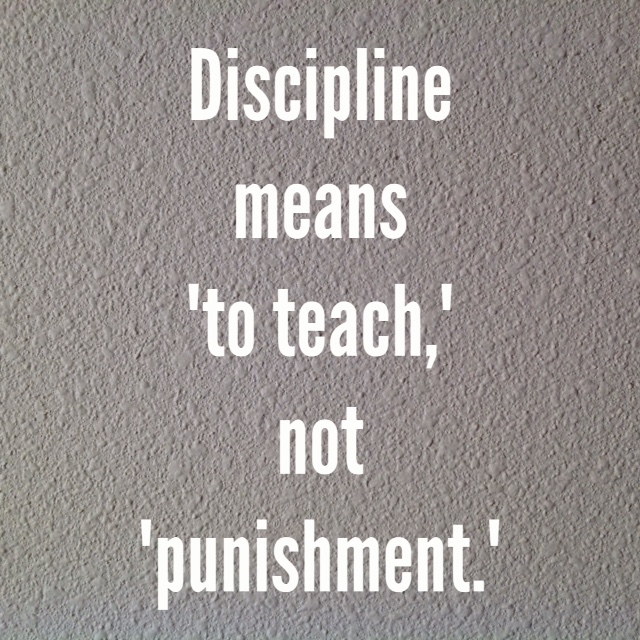
It is far more effective and less risky to us non-physical discipline. Discipline means “to teach,” not “punishment.”
43 countries have outlawed corporal punishment
Punishing shares the same mindset that fosters all of the other deadly habits. It is basically our desire to intimidate and to threaten put into action. These coercive behaviors all come from the same worldview. My personal belief is that intimidation has a similar effect on children when it comes to anxiety and aggression. As we attempt to change the behavior of our children by yelling, threatening, lashing out and punishing, they internalize this model and use these same behaviors when they want to change how a sibling or friend is behaving. The ineffective cycle is perpetuated.
Helping a toddler, or a child, or an adolescent become the best version of themselves involves patient instruction and when needed, compassionate confrontation. We need to explicitly describe and explain the needed behavior and hold the line on expecting it. Children need to be corrected when they are being unkind or bossy or too rough, but not just by yelling at them or threatening them. We assume that children, even toddlers, know what to do and how to do it, however I don’t think this is the case. Seeing my own grandchildren occasionally go into an emotional melt down over some perceived injustice (e.g. – bath issues, nap issues, food issues, have to be strapped into car seat issues, etc.), and then seeing my daughter patiently ask them to use their words to talk about their frustration, rather than acting out emotionally, is an example of this kind of instruction. Kids need to be taught the most basic skills and behaviors, and re-taught when they forget.
===================
For those interested in the Soul Shaper classes at PUC during the summer, please keep the following schedule in mind and contact me if you have any questions –
Soul Shapers 1: June 22-25
Soul Shapers 2: June 29 – July 2
===================
Get signed copies of Soul Shapers from me for $12 + shipping.
One of the biggest realizations from learning about choice theory is the understanding that our behavior comes from within us – the product of our thinking and our choices. A thought or behavior might be self-generated, a creative urge that appears to have no connection to our environment, or it may be influenced by our circumstances, and thus be a response to an opportunity or to trouble. But in either case our behavior is ultimately the result of our thinking and our choice to act.
Like a sunrise on a glorious day, as the implications of our internal design become clear we begin to perceive the power and freedom that is ours to reach out and take hold of. Rather than being pawns on some universal chessboard or puppets in somebody else’s play, we realize that we can choose our course of action. This freedom and power are especially significant when it comes to our spiritual lives. A quote from Desire of Ages reminded me of this freedom –
All true obedience comes from the heart. It was heart work with Christ. And if we consent, He will so identify Himself with our thoughts and aims, so blend our hearts and minds into conformity to His will, that when obeying Him we shall be but carrying out our own impulses. Desire of Ages, p.668
What a wonderful way to comment on the essence of choice theory. Our ability to live well and choose well, in alignment with God’s will for us, springs out of our mind and heart. And Christ fully “got” this. He knew how He designed us and He sought to be freely chosen by us in the same way that He freely chooses us. It is interesting that this kind of obedience is qualified as true obedience, as opposed to . . . false obedience? Could it be that false obedience is the kind of behavior that is forced on us or pressured on us? And that we “obey” when certain people are present or simply to dodge a punishment?
It is so cool that as we come into a loving and belonging relationship with God, and as we choose to internalize His influence, “that when obeying Him we are but carrying out our own impulses.” Some see God as arbitrary, severe, controlling, and unforgiving, but these attributes are the exact opposite of what God is like. Rather than arbitrary He created us with creativity and the ability to choose from multiple options; rather than severe and unforgiving He is patient, long suffering, and affirming; and rather than controlling He is committed to our freedom.
How we relate to our children reflects our picture of God. Many of us are in the process of unlearning the pictures our parents and teachers modeled to us and instead are learning about the gentle way that God works with us. Choice theory, with its focus on solutions rather than blame, and guidance rather than punishment, provides adults with a framework that accurately reflects how God works with us. Better that our children learn about a love and belonging God, rather than having to unlearn pictures of an arbitrary, controlling one.
A well-worded and well-timed question can lead to stimulating reflection and wonderful talks between friends. Rather than being buried in a smart phone, why not ask each other some of these great questions?
Margarita Tartakovsky, an associate editor for the World of Psychology web page, recently shared these questions in an article entitled, 45 Conversation Starters to Bolster Your Bond with Your Friends and Family. She also quoted Garry Poole, the author of The Complete Book of Questions, who reminds us that –
“There is something powerful about questions that force you to think, look within yourself, examine your heart, and search for answers. And it’s in the process of responding to those questions that you often make discoveries about yourself — things you never even realized before.”
Speaking of good friends and coffee, Jim Roy and Tom Amato begin the day early at the Roasting Company.
Ask a friend or loved one out for coffee and start asking!
1. What books have you read that’ve had a big influence on you?
2. What goals have you recently set for yourself? How are you doing with these goals so far?
3. What strange habit do you have?
4. What do you think is your best quality?
5. What fear would you like to overcome?
6. What person, dead or alive, do you wish you could be more like?
7. Growing up, what was your favorite children’s story or fairy tale?
8. What’s your favorite poem or saying?
9. What’s one of your greatest accomplishments?
10. What was your favorite subject in school?
11. How have your priorities changed over time?
12. Who’s had the biggest influence on you?
13. Have you ever helped a complete stranger? How?
14. What’s your earliest childhood memory?
15. What nightmare woke you up in a panic?
16. What memorable lesson did you learn from your parents?
17. If you could travel back in time, what year would you visit?
18. If you could spend an hour doing anything, what would it be?
19. If you could visit with any person in history, who would it be?
20. If you could go anywhere for dinner tomorrow, where would you go?
21. If you could turn into any animal, which one would you be?
22. If you could write a bestselling book, what would it be about?
23. If you were a painter, what picture would you paint first?
24. What does success mean to you?
25. Why are some people cruel and unkind?
26. What does it mean when two people have chemistry?
27. What do you think is the most significant event in the history of the human race?
28. What is the meaning of life?
29. What’s one thing you know for sure?
30. What scares you the most about the future?
31. What would make you totally content right now?
32. What’s the hardest thing you’ve ever done?
33. What lesson has failure taught you?
34. How do you deal with doubt?
35. When was the last time you cried?
36. What stresses you out?
37. What was the greatest day of your life?
38. Why do you think there are so many religions in the world?
39. What is your definition of a miracle?
40. When do you pray? How often? What motivates you to pray?
41. When do you feel most alone?
42. Do you believe the human soul is eternal?
43. What’s something about you that no one knows?
44. What fills up your heart to bursting level?
45. What do you look forward to?
A Reality Therapist is not the only one who can tap into the power of a good question. Since people are internally motivated, trying to externally coerce them is counterproductive. Instead, the right question can invite a person to internally investigate and explore and ultimately make new choices.
For those of you who have experienced Glasser training or the Soul Shaper workshops, consider adding these 45 questions to your WDEP collection of problem-solving questions.
PS – As some of you share more great questions with us in the comment section, I am adding them here –
From Suzy Hallock-Bannigan
Do you ever choose to use music to change your mood? Tell me about a time…
Are there pieces of music over your lifetime that remain special? If so, what are they?
Which genre of music are you inclined to access? Why— do you suppose?
Do you have any special memories about music?
=====================
Quickly purchase Soul Shapers: A Better Plan for Parents and Educators from Amazon by clicking on the book below. New copies are available for $12.59; used copies for $.87. I’m tellin ya, it’s worth all 87 of those pennies.
Is this message to parents choice theory friendly? How should a choice theorist relate to these kinds of posters?
There are lots of choice theorists out there and I don’t presume to speak for all of them, however I do have a personal opinion on the matter. I saw this message on Facebook and noticed it had garnered a lot of likes. Amy Chua is the author of the 2011 viral book, Battle Hymn of the Tiger Mother, which many interpreted as a manifesto for parents needing to take control of their children’s lives. There was a huge amount of attention given to the book and the topic of parenting, in general. My goal here is not to share a review of the book. I will share below a seven-minute interview of Ms. Chua on PBS, because I think it captures a more complete picture of her motivation to write the book. She explains that much of what she wrote was tongue-in-cheek and that she didn’t expect her ideas to go viral in the way they did. In the end she admitted that her strategies did not work with her youngest daughter, in fact the strategies threatened the relationship between her and her daughter, and had to be softened. Check out the video and decide for yourself.
My goal as a parent is to prepare you for the future, not to make you like me. Amy Chua
The either-or design of the statement – You can have a successful child or you can have a good relationship with him – is really a false choice. It conveys the idea that you can’t have both at the same time, which is a problem for a choice theorist, who sees the statement needing to be worded more like – My goal as a parent is to nurture a consistent and positive relationship with my child, from which I can inspire and guide him to success.
The phrase “My goal as a parent is to prepare you for the future” is really a statement about what success is and specifically, what the parent’s picture of success is. Parents that live this statement seem to be saying “I know what is best for you” and “I know how you should get to where I want you to go.” Such an approach emphasizes control, rather than influence, and children (like every human being on the planet) resist being controlled. It has been said that as long as we are connected to our children, we have influence on their thinking and behavior. Disregard that connection and focus on control at your child’s peril.
The phrase “not to make you like me” implies I actually can make you like me, but that I am willing to sacrifice this luxury in favor of your eventual success. This is inaccurate in that a person cannot be made to like anybody. A relationship can be invited, but not forced. Again, the relationship element is seen as possibly nice, but probably a distraction or worse, and thus needs to be de-valued or even eliminated.
Statements like the Chua quote seem to tap into what the reader already believes or wants to believe. It confirms a belief in the value of control, even if it means coercing behavior. People with this mindset read “Spare the rod; spoil the child” as a directive to assertively control kids into submission. They see the rod as a necessary weapon. Others, with a different mindset, see the “rod” as a gentle tool, like that with which shepherds guide and prod and nudge.
The Amy Chua quote has much more to do with the needs of adults, than it has to do with the needs of children. It has to do with what we think success looks like, rather than helping children and students identify their own vision for success. And it has to do with our willingness to de-value relationships, instead of acknowledging the desperate need children have for positive, nurturing, supportive relationships.
William Glasser (1981)
William Glasser ran into this same challenge early in his career. He emphasized personal responsibility in his groundbreaking book, Reality Therapy (1965), which was a part of a total approach that included involvement (the term Glasser originally used to convey human connection and warm relationships) and never giving up. Some latched on to the idea of responsibility and used it as a way to pressure and control kids, which was a huge concern to Glasser and caused him to pull back from the emphasis. He knew that relationships had to be at the top of the list, and that responsibility must be planted in and grow out of these relationships.
Amy Chua learned this, too, and changed her approach before it ruined her relationship with her second daughter. For those working with students, this same dynamic will play out for us, too. We can have a false sense of control or we can have true influence. We decide.
=========================
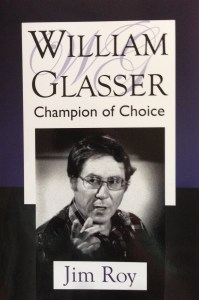
Quickly access a digital version of the Glasser biography, Champion of Choice, by clicking on the book below –
Thanks for your help with this request. I begin teaching Spring quarter classes on Monday, March 30, and one my classes is EDUC 368/568: Teaching K-12 Bible. Your responses will help a lot as the class embarks on this journey. Remember to check the box below your response that says “Notify me of new comments via email,” as that way you will know when one of my students makes a reply.
A bulletin in our Education Department at PUC with pictures of the teaching credential candidates in our program.
Chris Borland, taken during the Nov. 27, 2014, game against the Seattle Seahawks.
Sports media, and news media in general, was abuzz this week over the decision of a young man to retire from football . . . at the age of 24. Chris Borland, a linebacker for the San Francisco 49ers, announced that he is hanging up his cleats and heading another direction. He explained that he had looked carefully at the data regarding head impact and trauma, and that the numbers regarding CTE (chronic traumatic encephalopathy), early dementia, memory loss, and depression are pretty alarming. For him the risk wasn’t worth the reward.
Borland, focused and ready to attack just prior to the snap.
Borland was scheduled to make $504,000 this coming season, not that much by NFL standards, but he most certainly was headed toward making much more than that in the near future. Drafted in the third round out of Wisconsin last year, he caught the notice of the football world when he filled in for an injured Patrick Willis and played like a human missile, consistently unleashing havoc on opponents throughout the second half of last season. In fact, even with less than a full season of playing he led the 49ers in tackles. With Willis recently retiring because of his physical status, 49er fans were comforted by the fact that they had Borland to step in and fill that void. Borland’s announcement to the contrary hit SF Bay Area fans particularly hard.
Talking heads of the sports world went nuts with Borland’s announcement. ESPN covered it as one of their major news stories. On a personal level, most commentators felt that Borland had the right to choose as he saw fit regarding his football career, although they were incredulous at his ability to walk away from the money and the fame he was in the process of receiving. The real story, though, was Borland’s decision and its effect on the NFL. Would Borland, for instance, be the first of many to walk away from the violent sport? Some commentators felt that the answer to that question was yes, and that Borland’s decision literally marked the beginning of the end for football as we know it. Not immediately, but eventually. The following Sports Illustrated headline reflects the concern.
With Chris Borland deciding risk not worth reward, questions linger for NFL
Chris Borland’s choice took the sports world by surprise, yet it is completely consistent with the principles of choice theory. Given that choice theory’s contention is that 1) all behavior is purposeful and need-satisfying, and that 2) people behave in a way that best meets their needs at any given moment, Borland’s decision is understandable and, many would say, sensible.
On the January 22, 2013, blog I posted – Give Me Victory or Give Me Death – I wrote about athletes who are willing to risk injury and death in the pursuit of fame. Elite athletes from many different sports must contend with the temptation to enhance their performance through unfair or illegal means. The post especially looked at the sport of cycling and the way in which serious sanctions and penalties did not dissuade elite cyclists (the most famous being Lance Armstrong) from using performance-enhancing drugs (PEDs). From a choice theory perspective, the post argued that while their decision to use PEDs was wrong according to the rules, it was explainable based on the basic needs and quality world of the cyclists within the context of how the sport was then governed.
If I am going to comment on a low-point in sports – the PED cycling dilemma – and the out-of-control athletes seeking to gain and maintain a winning advantage as an example of choice theory’s explanation of human behavior, I figure I should also be on the lookout for what I believe to be a high-point in sports – that being Chris Borland’s thoughtful decision to retire from football – and a completely in-control athlete as an example of choice theory as well.
The sports world doesn’t know what to do with the Borland decision. Most don’t get it at all – “he’s a quitter” or “ wuss” some Twittered. (Anyone who saw him play could not intelligently use his name and wuss in the same sentence.) Some get it, but shake their heads none-the-less, unable to fully get how a young man could walk away from fame and fortune. For Borland it wasn’t all that complicated. (Choice theory has a way of making things less complicated.) In his own words, “I just honestly want to do what’s best for my health. From what I’ve researched and what I’ve experienced, I don’t think it’s worth the risk.”
Borland during team activities without helmet and pads.
We are “inside-out” creatures. “Outside-in” punishments didn’t keep cyclists from cheating, nor did “outside-in” fortune and fame keep Borland on the playing field.
==================
“Everything we do – good or bad, effective or ineffective, painful or pleasurable, crazy or sane, sick or well, drunk or sober – is to satisfy powerful forces within ourselves.” William Glasser
We are masters at creating reality;
experts of self-justification.
How can it be me
that got me into this mess?
I don’t like messes.
I’m sure it can’t be me.
We are gifted at crafting a perception
that explains our powerlessness
and protects us from change.
It’s so unfair how I have been treated,
so misunderstood and under-appreciated.
I want to do my part,
but not when people take advantage of me.
We are capable of lifting the lid
to our pandora mind;
and seeing the truth
that explains our past, present, and future.
Capable maybe,
but what about the bravery part?
What about the part
where I become willing to see my role
on the road more traveled.
It is a brave thing
to look within;
not for justification,
but for the truth,
whatever it might be.
I don’t think I can do it alone.
I’m too good at seeing things my way.
I’m afraid of what I will find,
afraid of glimpsing the people I have hurt.
I’m ready;
ask me the questions that will help me discover . . . me.
=============
It is more the rule than the exception that people grow into adulthood without ever challenging their self-justifications. For such an adult, much energy goes toward crafting a narrowly-focused self view, while at the same time fighting off and even denying different perspectives. The result of this narrow view is a less than happy life, as relationships and circumstances come to be viewed through a victim lens.
It is an incredible gift for parents and teachers to guide and mentor children toward being able to bravely look at themselves. The endless cycle of self-justification needs to be melted and it can begin early.
Keep in mind that while learning to effectively self-evaluate is one of the most important skills a person can have, it can’t be forced or pressured. In fact, pressure almost always leads to the opposite outcome. It has been explained that –
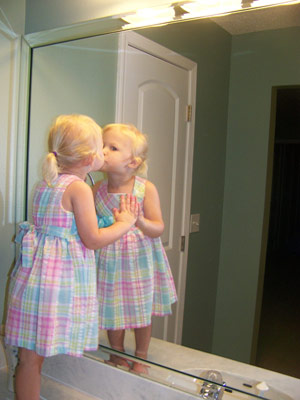
We volunteer to look into this mirror; we choose to pursue self-reflection. People – like teachers and parents – may want to push children to the mirror and force them to think about themselves, but it doesn’t work that way. In fact, pushing to the mirror causes children to push back and to refuse to think and reflect. Turner Herrold
This same person went on to say that –
Blame and punishment are tools that adults can use to push children toward the mirror, but they are an ill-suited pair for such a task. Looking into the mirror requires bravery; blame and punishment create resentment and defensiveness. Looking into the mirror requires vulnerability; blame and punishment build entrenchment.
Choice theory can take on many roles – telescope, microscope, compass, GPS, and map, to name a few – but one of its most important roles is that of mirror. Looking into choice theory we begin to see ourselves more accurately.
=============
The William Glasser biography – Champion of Choice – will be a huge help toward melting ineffective self-justification. Click on the book to quickly order one from Amazon.
Check out Brene’ Brown’s three minute video on blame and discover why I relate to it on such a personal level.
A few years back, my family decided to go out to eat at a Mexican restaurant we liked. Our kids had invited friends over so the group that piled into our van that late afternoon was bigger than the usual four in our family. We lived in Spokane, Washington, at the time and it was cold. No snow on the ground, but definitely chilly. When I learned of the restaurant plan I found a jacket, threw on some boots by the door, and headed to the van myself.
Restaurants in cold-weather places like Spokane often have an alcove or entrance vestibule leading to the actual front door, which serves as a buffer between the dining area and the biting cold outside. After pulling into the parking lot, our group quickly exited the van and headed to the outer vestibule door. About to exit the van myself, I noticed that I hadn’t yet tied my shoelaces. The boots I had jumped into actually had long laces that now formed a willy-nilly pattern on the floor mat under my feet. I thought about tying them, but then felt it would be cool and casual if I left them to drag out behind me, a symbol of my easy going, devil-may-care attitude.
I joined the others in the vestibule, although part of our group had already entered the second door and was now spilling into the dining area. I could see my wife, at the front of the group, talking with the hostess about the size of table we would need. The group, probably because of the cold vestibule and the warmth inside, continued to creep into the dining room as the staff put a couple of smaller tables together and get place settings arranged for us. I ended up almost straddling the second doorway, between the dining area and the vestibule, holding the door ajar as I stood there (worried those dining were swearing under their breath at me for holding the door open).
A Thousand Words Is Worth a Picture
I was relieved when the hostess motioned for our group to come to be seated. Those in line in front of me started to head toward the table and I scrunched into those directly in front of me, which allowed the vestibule door to close finally. Soon, I could head toward the table, too, and began the process that has come to be known as walking.
Walking can be a little bit shaky when you are 10 months old, but soon you get the hang of it and can walk in all kinds of situations without giving it even a second thought. By the time you are 45, for instance, which is how old I was when this happened, you are quite good at it. It is necessary, at this point in the story, though, to dissect this skill which is, for the most part, invisible to us.
“Not a good situation!” the alarms are yelling.
Seeing the person in front of me move toward the table, I started the walking process by leaning forward ever so slightly. Just milliseconds after beginning this leaning forward, in a coordinated effort that plays out hundreds of times every day by countless fellow human beings, my right foot begins to step forward, following the subtle momentum that my upper body has started. My brain quickly notes, though, that my right foot isn’t moving, in fact, cannot move. Not a panic situation yet as the upper body momentum has only just started. I am, to the casual observer (of which, I will note, there were many), a man beginning to walk to his table. My brain now sends a message back to the right foot to try harder, a stronger effort, possibly violent, being in order. The foot obeys, only to discover the same determined fixedness, the same stubborn immobility. I must point out that the upper body has continued its slight forward momentum, fully expecting the feet to follow. Panic has still not set in, but alarms are now going off in the brain. “Not a good situation!” the alarms are yelling. “Get feet moving!” A decidedly firm and urgent message is sent to the left foot to take a step forward and bring the body back into balance, physically, as well as emotionally, since the alarms have now awoken various chemicals throughout the body system to respond to a potential . . . well . . . disaster. Remarkably, mixed with a fair amount of terror, the left foot responds that it, too, is fixed to the floor. Again, firmer and even violent effort to free the left foot meets with the same non-moving result. We should recall here the inevitable influence of physics on everyday life, for while much attention has been given to my feet, my upper body, obedient to my original directive has continued to lean forward, it’s slight, almost invisible, speed at first now picking up greater momentum. Those dining begin to become aware of something out of the ordinary and shift their gaze from their food to this event taking place right there in front of them. The brain is actually quite pragmatic when push comes to shove or when feet are somehow nailed to the floor. The legs, torso, and head, a one-piece unit, straight as a board, respond to the invitation of gravity and fall with alarmingly increasing speed, the eyes scanning for a landing place. The brain shifts from the feet, which turned out to be a huge disappointment, and now focuses on the arms and hands. The feet could not prevent this event, but arms and hands can soften the blow. The effects of the impending face plant can by minimized.
It is interesting, and here is where I am right with Brene’, that before I hit the floor I muttered a name loudly enough for many in the dining area to hear me. With frustration and accusation in my voice I muttered the name, RACHEL. Then bam, I hit the floor. Some in the restaurant, my family included, heard the commotion, however had not seen the whole drama play out. Of course, turning in my direction now they saw nothing. How could they? I was flat on the floor.
You may be wondering, What happened? My brain, quickly recovering from the mortification process, asked the same thing. What the *&%$@ just happened? Still laying on the floor, I turned to examine my feet and immediately ascertained the problem. I can be a quick study, to be sure. Mr. Cool and Casual had been bitten by the bug of his earlier decision. My laces, untied, dragging out behind me in a statement against societal norms, had laid neatly across the metal threshold of the vestibule door, which when I let the door close behind me had firmly pinned my shoelaces in a death grip between door and threshold. I looked around as onlookers politely stifled laughter and had to chuckle at the vestibule door’s efficiency.
My family was less polite in terms of the laughter thing. In fact, they seemed oblivious to my feelings and quite frankly laughed a bit harder than necessary. They seemed to be laughing so hard that I thought that some of them might pee, which would serve them right as far as I was concerned. Let them experience their own form of mortification. Eventually, maybe a couple of hours later, everyone stopped laughing and we were able to eat and I was able to relate the unfortunate details that I have shared with you.
How is it possible that I could be so quick to blame?
The thing is, how could I, in less than a second, while my brain is furiously distracted, have blamed someone so quickly. Rachel, I should tell you, is my daughter. She was 17 when this happened and had developed an excellent sense of humor, so excellent, in fact, that I immediately, even before hitting the floor identified her as the culprit. Like so many times when we resort to a deadly habit, the problem is more about us than it is about the person we see as the problem. In this case, Rachel had absolutely nothing to do with my face plant in front of a dining room full of people. It was all about me, about my desire to be cool and casual, and about my standing in an ill-advised location with my laces dragging behind me.
We so often see our blaming as the result of a circumstance or person outside of us, yet stories like these remind us that blaming begins within us and is a spirit waiting to be judgmentally applied to others. It’s hard for some of us, but the habit of blaming is one we need to break. Most of the time it’s nobody’s fault but our own.
A recent article by Angela Stockman celebrates the incredible value of reflective questions. For teachers, reflective questions at the end of class can bring more effective closure to the learning than a teacher-shared summary ever could.
Think of the benefits of reflection –
It challenges us to think deeply about what we have learned.
It deepens our ownership of the learning. It makes our learning matter more.
It encourages risk-taking and helps us to FAIL FORWARD.
It helps us to know ourselves better and to align our actions to our vision.
It helps us to identify what we want and what we need to do to help ourselves.
It helps us realize our strengths and how they might be used in service to others.
Stockman points out that “Deadlines drive instruction for too much than they should, forcing learners and teachers to value perfection, products, and grades more than the development of softer and perhaps, more significant skills.” Those significant skills develop from the inside-out, rather than from external expectations and pressures. Asking the right questions at the right time tap into that “inside journey,” the journey that choice theory encourages.
With this inside journey in mind, here are ten examples of reflective questions that can be asked at the end of instruction –
Reflect on your thinking, learning, and work today. What are you most proud of?
Where did you encounter struggle today, and what did you do to deal with it?
What about your thinking, learning, or work today brought you the most satisfaction? Why?
What is frustrating you? How do you plan to deal with that frustration?
What lessons were learned from failure today?
Where did you meet success, and who might benefit most from what you’ve learned along the way? How can you share this with them?
What are your next steps? Which of those steps will come easiest? Where will the terrain become rocky? What can you do now to navigate the road ahead with the most success?
What made you curious today?
How did I help you today? How did I hinder you? What can I do tomorrow to help you more?
How did you help the class today? How did you hinder the class today? What can you do tomorrow to help others learn more?
So much about choice theory relies on recognizing the value of and insightfully asking the right questions. Students learn as they begin to organize and make sense of the content at a very personal level. All learning is about creating meaning and understanding. Knowledge isn’t inserted in us from without. It must be created from within. Reflective questions are a wonderful tool that supports that essential process.
* Angela Stockman’s article, Ten Reflective Questions to Ask at the End of Class, can be found on Brilliant of Insane: Education on the Edge website at http://www.brilliant-insane.com.
=============
Digital versions of Champion of Choice for iPad and Kindle can easily be accessed by clicking HERE.
When you get into choice theory and begin to apply its concepts to your life, you begin to see the world around you through a choice theory lens. Events at work, circumstances at home, and even books you read or movies you watch, prompt you to begin to reflect on them with choice theory in mind.
Teachers are always on the lookout for things and ideas they can use in their classrooms. It is impossible for them to go on a trip or vacation, for instance, without buying stuff to bring back and show their students. So teachers who get into choice theory are on double-duty – one, they are on the lookout for special things they can share, and two, they are on the lookout for ways they can teach the concepts of choice theory.
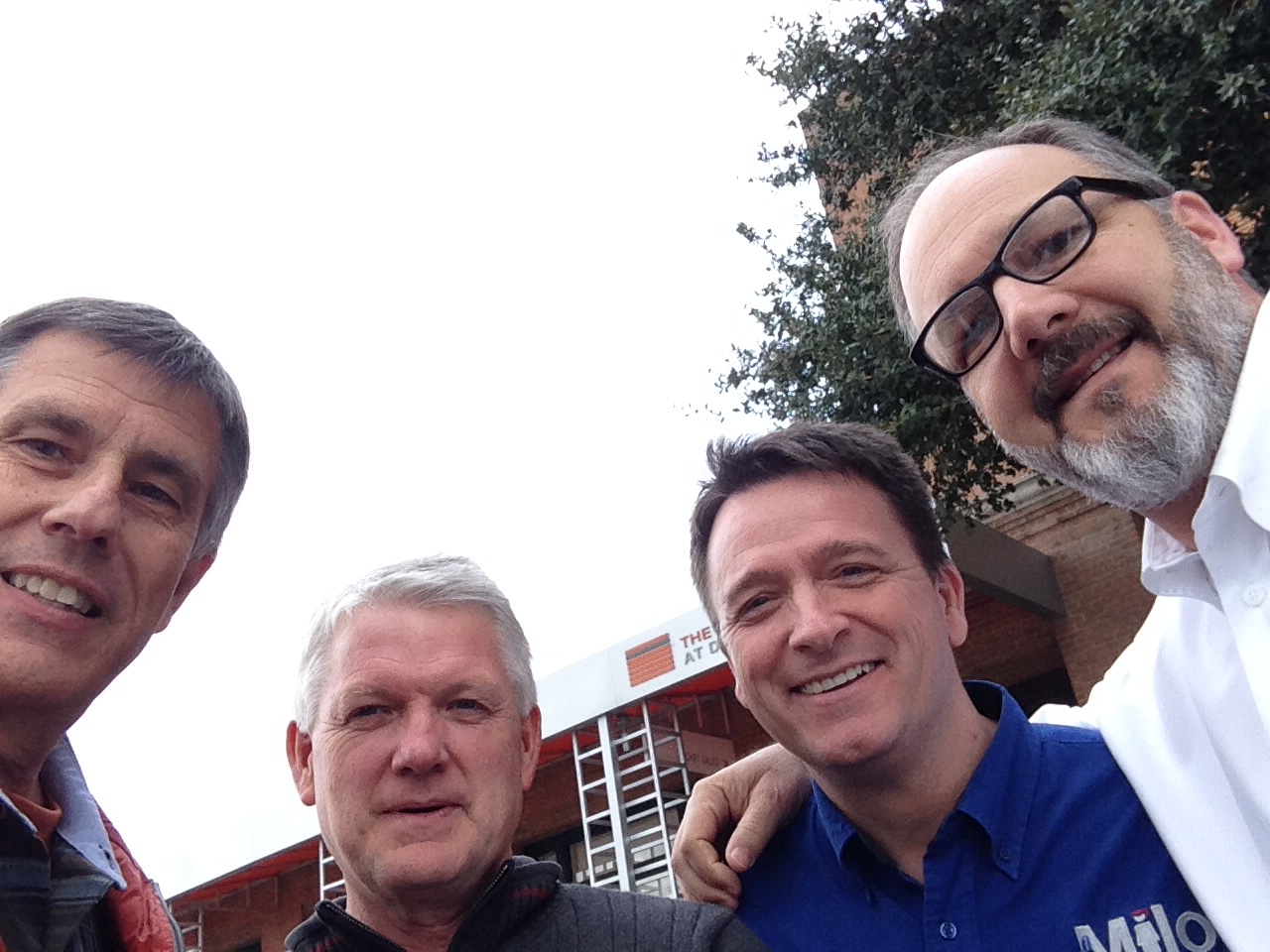
The group that went to the Sixth Floor Museum – me; Gale Crosby, Supt. of Education, Oregon Conference; Randy Thornton, Principal, Milo Academy; and Dan Nicola, Principal, Portland Adventist Academy.
This happened to me last week when I attended a conference in Dallas, Texas. I presented two breakouts on Leading the Quality School, but on one of the afternoons I had time to go with some friends to the Sixth Floor Museum at Dealey Plaza, which is the site from which John F. Kennedy was fatally shot and killed. The museum is very well done – the layout and displays are eye-catching and informative, plus when you enter the museum they provide you with a handheld device and headphones to narrate through the displays.
The museum is a very detailed, powerful, and sobering history lesson. You are reminded of world events that preceded Kennedy’s presidency, the challenges he worked through during his presidency (e.g. Cuban missile crisis), the details of his trip to Texas and the reception he received at each of the scheduled cities, the details of Oswald’s attack, the gut-wrenching funeral procession, and the conspiracy theories that followed. Through audio recordings, informative posters, fascinating photographs, and original film footage, you are brought back to 1963. You can stand in the very corner on the sixth floor from which the fatal shot was fired. You can stand on the grassy knoll that was the subject of so much conspiracy talk.
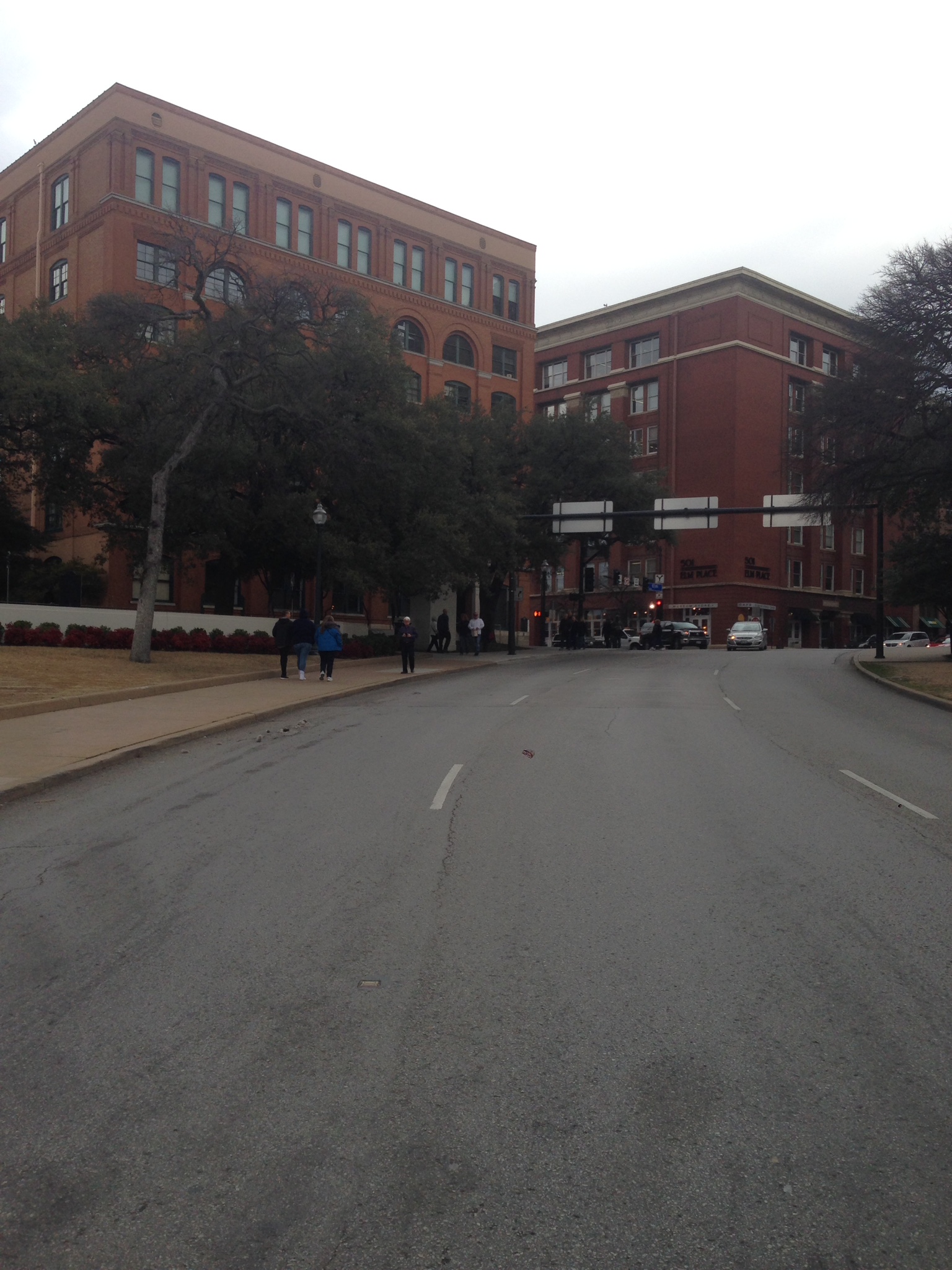
Taken from the exact spot on which JFK was fatally hit, looking back up to the sixth floor window from which the shot was fired.
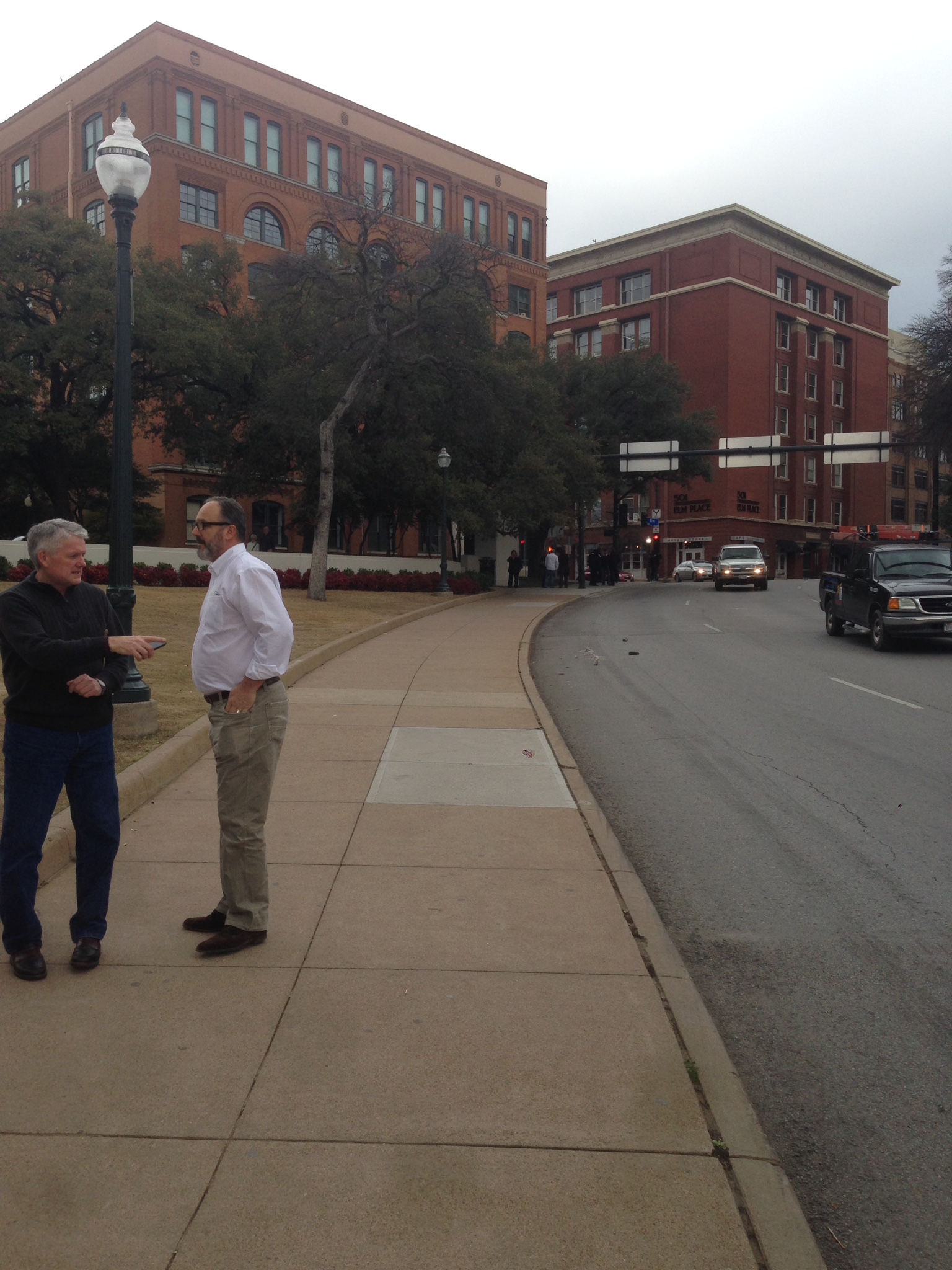
I must admit that actually visiting the Sixth Floor Museum and seeing the distance the fatal shots needed to travel, and actually standing on the sidewalk next to where the limousine was when Kennedy was hit, I find myself wondering if one man could really pull it off.
Taken from the sidewalk next to the grassy knoll; Gale and Dan in the foreground.
Since the visit, though, like any red-blooded teacher who is into choice theory, I have been wracking my brain over how to use my Sixth Floor Museum visit to teach something about choice theory. I realize that such a lesson or unit would be for high school or maybe middle school. I am very interested in what your thoughts might be on this.
What element or elements of choice theory could be taught from a study of the JFK assassination and the people involved with those events? How can JFK’s death lead to choice theory insights?
Use the Reply space below to share your thoughts. Remember to check the box that allows you to be alerted when anyone responds to your Reply. I look forward to hearing your ideas.
============
Reading the Glasser biography, Champion of Choice, is one of the best ways to learn about choice theory and we behave the way we do,
Click HERE for an electronic copy for your iPad or Kindle – only $10.

















 The Better Plan . .