Posts tagged “teaching

Gentle Parenting (and thank you, Milo)

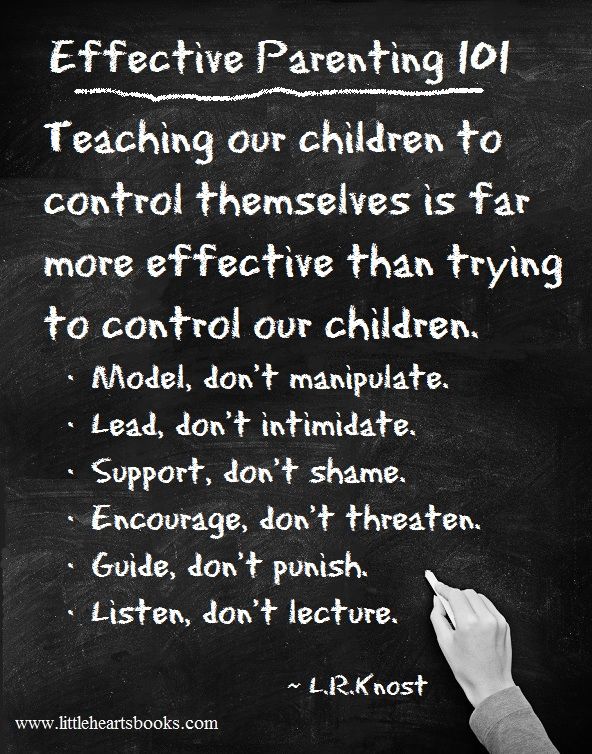
A great list for parents, but just as great for the rest of us, too!

A great list for parents, but just as great for the rest of us, too!

What a great poster from Little Hearts / Gentle Parenting Resources! It makes essential points in a very small amount of space. Some of you may have seen the poster on Facebook, but I wanted to share it with the rest of you who may not have seen it. I have done some exploring on the Little Hearts website, from whence the poster originated, and I am impressed with what is being said and how it is being said. For those of you who are parents, you can check out the website for yourself at –

www.littleheartsbooks.com

The Little Hearts message is so choice theory, yet I didn’t see any evidence of a connection with Glasser or any of his material. For a second, I wondered how the site could be so choice theory, yet not have any choice theory background. Then, of course, I am reminded that effective ideas can be discovered from many angles, by many different people, in many different locations, and in many different ways. If a certain approach works better, that approach is likely to be found by those searching for a better way.

Glasser’s ideas are an example of this kind of “parallel development.” Even though he was an original thinker, not all of his ideas were original. There were other therapists that placed a high value on a positive, caring relationship with clients, for example, and there were other writers who tried to explain the fallacies of the commonly held views regarding mental illness. Each of them, Glasser included, came at their ideas from their own unique perspectives. The upcoming Glasser biography will say more about this kind of parallel development.

—————————————-

airphoto

An aerial view of Milo Adventist Academy.

I did a Soul Shapers 1 workshop last week at Milo Adventist Academy in southern Oregon. Along with the staff from Milo there were teachers from four other schools in the Oregon Conference also in attendance. I was blessed by the experience in several ways. One of the blessings came from making new friends. Choice theory has a way of opening doors to deeper, more personal discussions, and while I didn’t know many of the staff before the week started, I feel that I made some very good friends by the time the week ended. Another blessing came in the form of their good questions. They truly wanted to understand how choice theory could be applied in their lives, personally and professionally. As a result, I have been thinking about some of those questions ever since. I hope to stay in touch with Milo over the coming school year. Maybe technology can help us with that.

—————————————-

The 2013/2014 school year is about to begin. (At least that is the schedule for schools located on west coast of the U.S., from where I am writing.) As a teacher your physical, emotional, and mental “clocks” are probably counting down to the first days of school. Some of you are literally in final countdown mode as you process how many hours you have left compared to the To-Do list of what you still need to accomplish. Even for veterans this can be an intense time as you try to get everything done that needs to be done.

For those wanting choice theory concepts to have a greater presence in their classrooms, just remember that “Structure is our friend.” The opposite of boss-management is not lead-management. The opposite of boss-management is laissez-faire, or the lack of structure or guidance at all. On this continuum, with over-control on one end and no control on the other end, lead-management comes somewhere in between. A lead manager very much wants elements of appropriate and helpful structure to be in place. It is especially helpful when classroom Procedures are identified, clearly described, and then rehearsed as a class. Procedures help classrooms run smoothly. It is also helpful when the classroom rules, the behaviors — e.g. – disrespect toward the teacher or classmates, bullying, dishonesty — that are never acceptable are also clearly outlined, along with a description of the natural consequences that come after breaking a rule. Too many people wrongly assume that choice theory means that kids can apparently do whatever they want. Not true at all. What is true is that lead-managers want to create need-satisfying classrooms in which discipline is not an issue. And if a rule is broken, lead-managers want to lovingly confront the behavior and help the student to make a plan for its correction.

Structure is our friend.

I would love to hear from you regarding ways in which you are keeping choice theory elements in mind for the coming school year – either as a teacher or a parent. Take a moment and share an example of how choice theory is going to affect your classroom or your home.
California Senate Commends William Glasser

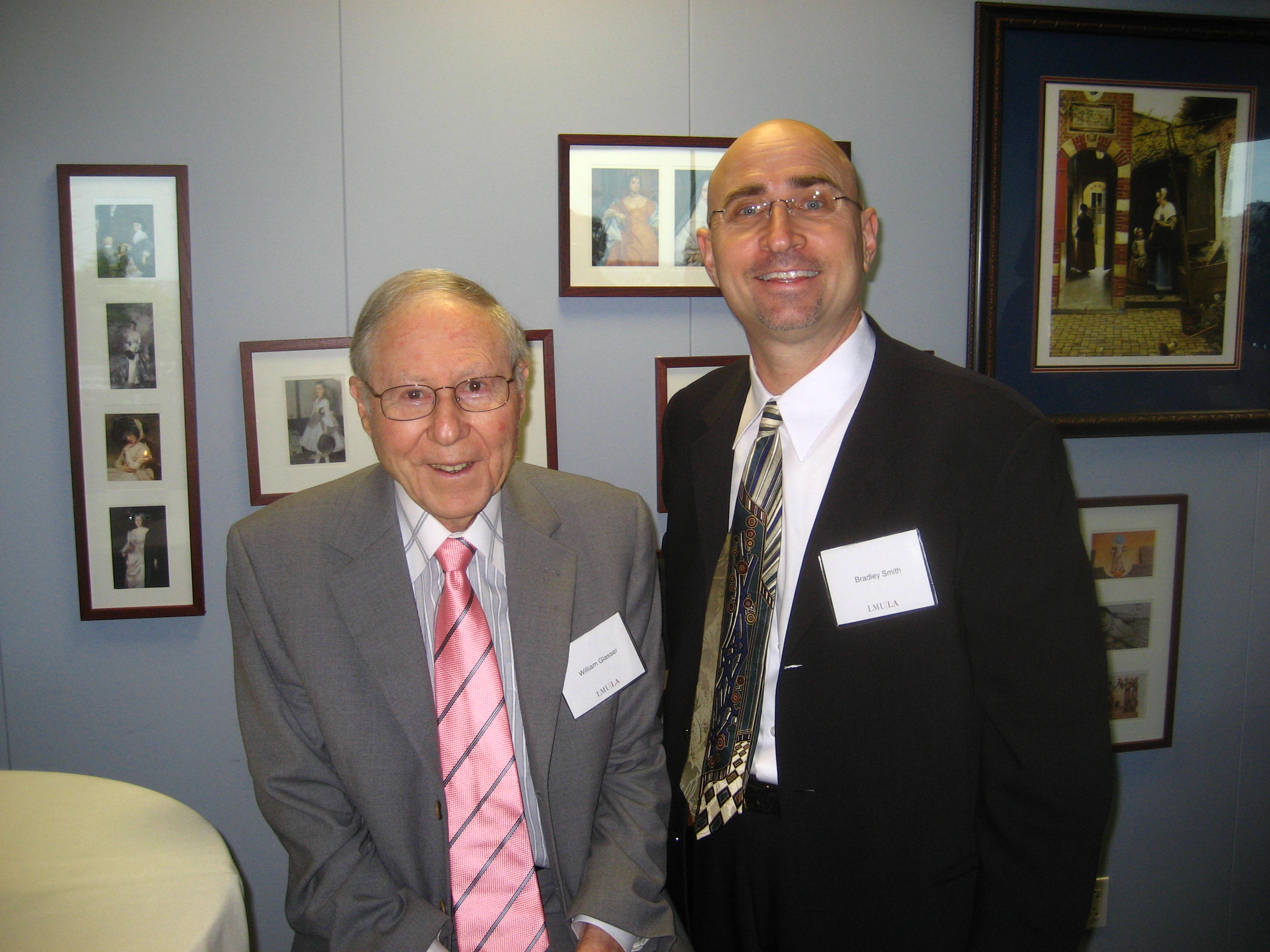
William Glasser and Brad Smith

William Glasser and Brad Smith, 2008

An amazing event took place recently within the walls of the California Institution for Women in Chino, California. Amazing because a graduation was held for the women within the prison who had completed the Choice Theory Connection Program. Due to the efforts of staff (especially Brad Smith) and students at Loyola Marymount University in Los Angeles, and the efforts of staff (especially Les Johnson) within the prison, inmates were taught choice theory and the ways in which people can manage their thinking and behavior. The graduation became even more special when, as part of the ceremony, Dr. Glasser was recognized by the California Senate for his contributions to the fields of psychology, social services, and education, and to the people of the state of California. He began his career in 1956 as the psychiatrist for the Ventura School for Girls, basically a prison for young women, so it is fitting that at the close of his career he was once again working with women within the prison system.

William Glasser, shortly after graduating from medical school, about to begin his psychiatric residency.

William Glasser, shortly after graduating from medical school, about to begin his psychiatric residency.

In 2010, I had the privilege of visiting the California Institution for Women in Chino and saw and heard firsthand the results of the Choice Theory Connection Program. It was a profound experience for me as I listened to women, some who had received life sentences for murder, describe how, even though they were in prison, they felt free for the first time in their lives. Several of them mentioned how different their lives would have been had they learned choice theory sooner.

These women declared how needed choice theory was in schools, especially inner city schools. They encouraged us to share the concepts of choice theory with students of all ages. I know that as teachers and principals we want to do just that. The women wanted to prevent young people from ending up behind bars and schools can be a large part of that prevention.

I am glad Bill is being recognized for his contributions. Being his biographer, I would have worded the commendation a bit differently, but the important thing is that people in leadership took a moment and reflected on what he has done for people and organizations across the state and beyond.

CALIFORNIA SENATE 

By the Honorable Carol Liu, 25th Senatorial District; and the Honorable Loni Hancock, 9th Senatorial District; Relative to Commending:

William Glasser M.D.

WHEREAS, Dr. William Glasser, a distinguished Los Angeles resident and highly esteemed member of the medical profession, has brought great credit and distinction to himself through his professional and public achievements, and in recognition thereof, it is appropriate to highlight his many accomplishments and extend to him the special honors and highest commendations of the people of California; and

WHEREAS, a world-renowned psychiatrist who employs a nontraditional approach, Dr. William Glasser has been recognized since 1989 as a member of the distinguished faculty of pioneers in the psychological professions by the Evolution of Psychotherapy Conference of the Milton Erickson Foundation; and

William Glasser, presenting at the Evolution of Psychotherapy Conference, 2005

William Glasser, presenting at the Evolution of Psychotherapy Conference, 2005

WHEREAS, in his early years as a psychiatrist, Dr. Glasser obtained experience at the Veterans Administration Hospital in Los Angeles, and in 1967, he founded The Institute for Reality Therapy, which was renamed The Institute for Control Theory, Reality Therapy and Quality Management in1994, and The William Glasser Institute in1996; today, the institute, which is headquartered in Tempe, Arizona, has branches throughout the world; and

WHEREAS, the recipient of numerous honors and awards, Dr. Glasser was presented the American Counseling Association’s 2004 Legend in Counseling Award for his development of reality therapy and, in 2005, was awarded the prestigious Master Therapist designation by the American Psychotherapy Association, and over the course of his stellar career, he has shared his expertise as the author and co-author of numerous chapters and books, including Take Charge of Your Life, Choice Theory, and Eight Lessons for a Happier Marriage; and

WHEREAS, intelligent and articulate, aware and involved, Dr. William Glasser is a fine example of a public-spirited citizen willing to assume the responsibilities of leadership, and through his remarkable personal and professional achievements, he has become a legendary figure who is admired by people throughout the State of California and beyond; now, therefore, be it

RESOLVED BY SENATORS CAROL LIU AND LONI HANCOCK, that they recognize and thank Dr. William Glasser for a lifetime of achievements and meritorious service to humanity, and convey sincere best wishes that his indomitable efforts will continue in the years ahead.

Member Resolution No.643- May 11, 2013

—————————————————————————

In some ways, Glasser’s legacy is secure. He developed Reality Therapy and Choice Theory, and along the way helped many, many people to function better in their lives. He especially helped teachers and students to understand the process of learning and thriving within a classroom. His books, 24 of them, and the many articles that he authored would seem to further establish the legacy. A book on a shelf, though, is not the legacy Glasser worked for throughout his career.  The legacy he sought was improved lives, better thinking and behavior, better mental health. Each of us can have a part to play in that legacy, beginning with ourselves, and then extending to those with live with at home or work with at school or a host of other businesses. That is the legacy Glasser would be most happy about.

——————————————————————————

TEACHERS – Will you be teaching your students about choice theory this coming school year? Could you take a moment and send me a brief description of how you go about it? A lesson plan would be awesome, but even a short paragraph would be wonderful, too.

Push or Pull

Chris Sequiera, the author for today’s blog teaches History, Bible, Health and Geometry at Livingstone Adventist Academy in Salem, Oregon. He was a part of LAA shifting to school practices that emphasize choice theory principles and has been a master teacher for ITI – Integrated Thematic Instruction.

Push or Pull

“Bosses fail because they force and punish, and leaders succeed because, without forcing and punishing, students see it is to their benefit to follow them and do so more because they like them than because of what they teach.”
William Glasser, Choice Theory

Like many teachers, this summer I am taking summer classes. In my Middle Ages and Renaissance of Europe History class I am in the process of reading the works of Niccolo Machiavelli and Thomas More, specifically their works titled “The Prince” and “Utopia” respectively. Though written about 500 years ago, it occurred to me that King Solomon was right when he said, “There is nothing new under the sun.” I am not saying that either Machiavelli or More were closet Choice Theorists, but their political dialog does have an uncanny resemblance to the comparing and contrasting today of traditional and choice theory classrooms, tradition versus Quality School if you will.

In introducing the concepts of Quality Schools, Glasser has us take a look at Edward Deming’s business model. In it he differentiates between boss managing and lead managing. As one education coach shared with me, as teachers our role is to be the guide on the side, not the sage on the stage. I also like the way that General Eisenhower illustrated the point. Placing a long rather large chain on the floor, he asked his leadership team how to best move it from point A to point B. There are two obvious solutions, attempt to push it across the floor, or to pull it. In critiquing the two methods, one finds that by pushing, only the links that are directly pushed are really affected, making the chain as a whole rather difficult to maneuver. However, if one were to grab the end of the chain and pull it across to the designated point you will find it much more effective. People, and students are people, are no different, not only would they rather be pulled than pushed, it is much more effective. The Choice Theory classroom starts with this premise.

So I got to thinking, what are the ways that I “pull” students to success in my classroom. Here are some ideas, by no means an exhaustive list, but one to consider in building a Choice Theory classroom:

  • Attitude – even before I step into the classroom, I need to evaluate what paradigm I am in, boss or leader.
  • Class/school environment – I want my classroom to be inviting and warm, a place of comfort. The rubric I use is, “Does my class look more like a sterile fast food joint or a cozy coffee shop?” I try to ensure, for instance, that what my students see in my room has some relevance to what we are learning. I also try to focus on what TO DO, rather than on what not to do. (e.g.- giving more attention to the Seven Caring Habits than the Seven Deadly Habits)
  • Direction – this tends to be a very grade level topic. As a high school teacher where I see a different group of kids every period it is much more work to provide a means of direction, a constitution, than in a self-contained classroom, but nonetheless student input – every year – is vital to them buying into how the class runs.
  • Collaboration – statistically students learn more from each other than their teacher. I need to provide the most beneficial means to do that. How I seat my students, for instance, matters.
  • Content – meaningful content is something that students don’t have to make too big a stretch to see its value; some topics/subjects are easier to do this with than others.
  • Movement – the brain is an organ, an organ that requires blood flow. I need to ensure that my students are getting adequate blood flow to their brains.
  • Choice – whether it is variation in the assignment or choices in projects, students buy in more when there is choice in what they do.
  • Flexibility – in regards to time and amount of work done should to at least some degree be negotiable. As a student in an upper division college history class, I know I would appreciate that in my professor.
  • Feedback – give students honest and immediate feedback on their work.
  • Application – as a Choice Theory teacher it is not my job to ‘cover’ material, it is my job to ensure that my students have mastery.
  • Commit – when students see how committed I am to their success, their commitment soon follows.

There is more to being a Choice Theory teacher, but this is a great place to start and add on to. Have a super year, but enjoy the rest of your summer too!

Sandy Hook, Choice Theory, and Forgiveness

sandy_hook_birthers-620x412

It is one of the most significant of all human qualities – that being the ability to forgive. I was reminded of this truth from a remarkable source – Newtown, Connecticut.

My cousin, a school administrator in New York City, knowing of my interest in choice theory, recently sent me an article* written by Dr. Anthony Salvatore, president of the Newtown Association of School Administrators. It turns out that Newtown schools, including Sandy Hook Elementary School, have been studying and implementing the ideas of William Glasser and choice theory since the early 1990s. As a result, Newtown has sought to be a needs-satisfying school system for students.

In the aftermath of the unspeakable tragedy that occurred at Sandy Hook Elementary, Dr. Salvatore represents a voice of healing. Even his comments about the shooter reflect compassion.

“Although I will never know the answer,” he begins, “I keep thinking of what the conversation was that was going on in Adam Lanza’s head. How can we do better in school to help avoid this behavior again, even knowing we can’t control someone else’s behavior, but we can control the conditions around that person. And that takes a whole global community, not just a school or a classroom. Suicide is a final act and one that tells me he saw no other option for meeting his basic human needs. Did he feel like he was loved and belonged to his family or community? I don’t know. Did he feel like he had power in his life to feel competent about who he was? I don’t know. Did he feel like he had a choice in his life besides taking his own life? I don’t know. Did he feel like his life was filled with fun? I don’t know.”

Salvatore emphasized the need for schools to build positive relationships with students “so they can learn how to make the best choice for meeting their own needs and for helping others in society meet theirs as well. Building on the value of relationships and choice, he closed the article on a note I will not soon forget. His vision of forgiveness is more than inspiring!

“It’s time to focus on cooperation instead of competition in our society. It won’t bring back the lives of the 28 victims who died on Dec. 14, 2012, but it will honor the sacrifice they made that day. My fear is we will make the same mistake other communities have made and not recognize that Adam Lanza also was a victim that day. This is where Newtown can truly be a leader toward a new vision and new understanding. We need forgiveness on so many levels, but we first need healing. We already know from research that isolating bullies in school is harmful to the individual and to the school climate. Alienating someone from a community only exacerbates the feeling of powerlessness and not belonging. We must forgive mistakes and nurture our capacity to do good. We have control over that.”

May Dr. Salvatore’s words be an invitation and inspiration to each of us. May the Spirit work in us to prepare our hearts to respond to others, even those who do us harm, with similar compassion.

——————————-

Forgiveness is such an essential part of good mental health. Within the scheme of choice theory, though, where does it fit in? Which of the basic needs, for instance, are being satisfied when we forgive someone?

My mind quickly goes to the need for love and belonging. Forgiveness has to do with our relationships. We seek forgiveness, whether from an earthly friend or our heavenly Father, to restore a relationship. And we offer forgiveness for the same reason – to restore or maintain a relationship.

What about the other needs, though. Does forgiveness satisfy the need for power in some way? How about the need for freedom? How about the need for joy and fun? And we shouldn’t leave out the physiological need for survival. Does forgiveness impact us on a physiological level?

I would like to hear from you regarding forgiveness and the basic needs. How does forgiveness help us meet our psychological or physical needs?

——————————-

A few of us have started a Facebook page also called The Better Plan. We want it to be a collecting point for choice theory ideas and strategies. I invite you to join us. An article was posted today from a primary grade teacher who has just learned about choice theory on how her management is going to change this coming school year. Great stuff! Check it out.

* This article appeared in the Summer, 2013, edition of The Leader, the newsletter of the American Federation of School Administrators.

Ears, Mouth, and Choice Theory

A young principal described how his dad was a great guy, but that he didn’t know how to listen. With the challenges that come with being a school administrator, Dave (we’ll call him) would occasionally share what he was up against with his dad. He confided that –

I would call him, just needing to talk with someone, someone not close to the situation. My dad was a sharp guy and had a lot of life experience and as soon as I explained the problem, sometimes even before I was done explaining, he would quickly start telling me what I needed to do. He was trying to help. I have no question about that. But I didn’t call for advice. I just needed to talk. The sad thing is that when he started giving me advice during the phone call, I would feel myself withdraw or pull away. I kinda wanted the phone call to be over at that point.

It is easy to fall into the same habit as Dave’s dad. We are quick to tell what the answer is or where the solution lies, rather than simply listening and then accepting or affirming. Husbands are quick to do this with wives, parents are quick to do this with children, and teachers are quick to do it with students. We mean well. The answer seems obvious to us. We just want to save time and get to the solution.

Teachers who learn about choice theory begin to understand the pitfalls of telling, rather than listening, and begin to see that one of the best things we can do for another person is to help them develop their own solutions. In other words, the goal is to help a person effectively self-evaluate. Whether we are a listening to a friend explain why she wants to quit her job and go back to school, a husband listening to his wife wonder aloud about problems with the upcoming Home & School potluck, or a teacher working with a student who keeps forgetting one of the classroom procedures, the answer may have more to do with asking the right question, instead of giving the person your solution.

———-

Conferencing is about

helping another person effectively self-evaluate

in a way that maintains or strengthens the relationship.

———-

Becoming a listener who knows how to ask questions that can lead to self-evaluation is one of the most important steps we can take toward being a choice theory teacher or parent.

One of my mentors, Kendall Butler, once shared with me that “it is better to get something out of someone’s mouth than it is to put it into their ear.” Rather than being smart enough to emphasize the right point, the skill and wisdom lie in asking the right question.

——————–

A new Facebook page has been created called The Better Plan. I invite you to Like the page and become a part of The Better Plan community. Joel Steffen will be helping me manage it and our goal is to locate helpful teaching resources, many of them from within our own community, and to provide a place for teachers and parents to ask questions or comment on other’s questions.

Stringless Love

strings-attached

A key choice theory axiom, maybe THE choice theory axiom, states that the only person we can control is ourselves. This doesn’t mean that we don’t try to control others. We very often do, and in ways that are so subtle that we aren’t aware of it, even as we are in the midst of doing it. Today’s blog will attempt to pull back the curtain of our behavior and give examples of just how powerful this process is, a process that has everything to do with our quality world pictures.

When it comes to axiom #1 it would be more accurate to say that we are controlling for our perceptions, rather than controlling our own or another’s behavior. In other words, the only person’s perceptions we can control is our own. Let me give you an example that Mike (not his real name) shared with me recently –

The other day I am out shopping with my wife, each of us with a list of items to find, and while working on my list I notice her further down the same aisle I am in. I see her and for some reason I want to go to her and express my affection for her, to touch her, you know, to “look lovingly into her eyes” kind of thing. So I’m thinking about that as I’m standing there in the bread section. Some of you may be thinking, “What are you waiting for? Go tell her you love her!” But it’s not exactly that simple. We’re working through some stuff. We’re doing good, but anyway .  .  .

For some reason the question occurs to me, there in the bread section, am I wanting to express my affection to her because I just want to give her affection, or am I wanting to express affection so that she will give me affection in return? Am I wanting to touch her because she would then touch me, too? As I thought about it, I realized that what I really wanted was for her to want me, for her to express affection for me, and for her to touch me. I did feel affection toward her, but more importantly, I was fishing for something from her. My gift was not so much a gift, as much as it was a prompt, maybe even a bit of a trap.

I must admit I was stopped in my tracks at that moment. What you had been saying in the Soul Shapers class kind of just flashed into me. I had this picture in my mind of how I wanted my wife and I to be, how I wanted her to treat me, and there I was trying to create it, trying to turn my picture into a reality. I was stunned at how subtle, yet how real, the process was in my thinking. I was further stunned by how many years I had been behaving this way. My “affection” was really a form of manipulation.

Mike realized that his “love” had strings attached. He was giving, but it was giving to get something in return. When his giving wasn’t responded to in a way that matched his expectations he became frustrated and hurt, and then went about creating another behavior to try to get what he wanted. Maybe this new behavior would be another “loving” action; maybe it would be a punishing action like the silent treatment.

Spouses face this process every day. So does a teacher with his/her students. People have antennae that discern the strings that are attached to gifts. Love with strings attached really isn’t love. Let’s be clear, though. The problem isn’t that we have expectations, at least if the expectations are reasonable and healthy, the problem occurs when we manipulate or coerce to get what we want. It is actually relationship-strengthening to state your expectation and then, using the caring habits, discuss and negotiate the ways in which that expectation can happen.

——   “Love with strings attached really isn’t love.”   ——

On a deeper and more important level, I think this process reveals something about what the presence of sin has brought to our little planet. Jeremiah wrote about our righteousness being like filthy rags, or in other words, even our love seems to involve selfishness. I think the process also reveals one of choice theory’s limitations – that being that choice theory can give us insights into our behavior, but it cannot change the heart. Only the Holy Spirit can give us a perfect love that doesn’t care about strings. Stringless love. That would be powerful.

—————————————

How about telling a friend about The Better Plan blog? It’s easy – http://thebetterplan.org

If today’s blog is helpful, take a moment and click on the Liked link.

What does a lead-manager sound like?

(Not the actual seagulls that Tim photographed. These gulls were willing to fill in as substitutes at the last second. A big thank you to them.

(Not the actual seagulls that Tim photographed. These gulls were willing to fill in as substitutes at the last second. A big thank you to them.)

Lead-management is based on persuasion, invitation, and reasonable guidelines with natural consequences; on the other hand boss-management is based on directing, demanding, and often arbitrary boundaries with reward and punishment applied when boundaries are broken. Capturing the tone of a lead-manager is an important step toward becoming a choice theory teacher or parent. Today’s blog comes to us courtesy of Tim Mitchell, Bible teacher at Mountain View Academy in Mountain View, California. Tim has been a successful pastor for many years, but last year he decided to teach Bible, rather than preach it, and made the switch to the classroom from the pulpit. After attending summer classes, including Soul Shapers 1 at PUC, Tim sent the following Facebook message to his students, a message that captures the tone and content of a lead-manager.

Just took this shot from my backyard where I am working on my summer homework. These birds were about 500 feet in the air and pass overhead regularly. Whenever they fly over I think of you, my students — I want you guys to soar!

My summer school classes are about giving students room to feel freedom and plot out the course of their education as a team. Most schooling is too confining. It’s worse than the average workplace. “Sit in your chair.” Don’t talk.” “Do the (irrelevant) work I tell you to do.” I hated school from 7th grade until about age 22 when I was getting my Masters Degree. And I can see the same in many of your eyes. Once I got interested in school again my grades shot back up.

Pray for me/us so that Bible class can be more relevant, free, team-oriented, humane, and FUN! (Fun is one of the basic human needs!) Let’s begin working in August to set up our procedures so they don’t get in the way of your natural human interest in learning and experiencing new things.

Soar!

I really appreciate Tim’s message. Teaching Bible, teaching any subject for that matter, can be challenging and it’s not unusual for teachers to turn classroom interactions into struggles and battles when students act like, well students. As teachers, we may not want fights, but we tend to go into fight mode when students “ask for it.” Tim’s message “takes the fight out of the classroom” and is setting the tone for a fun, productive, enjoyable school year.

———————————————-

Do you have artifacts — letters, messages to parents, lesson plans, management strategies — that have helped to implement a choice theory approach? I would love to see them, and share them, when you send them on to me. Please take a moment and send me something that has worked for you, or even that you are working on.

———————————————-

Remember to click on the Follow link to become a part of the blog. Our goal is to strengthen and support the choice theory community. Let friends and colleagues know about the blog, too. Thanks.

http://thebetterplan.org

Every once in a while you run across something that puts a smile on your face and a bounce in your step. This music video does that for me. It doesn’t stop with the smile and the bounce, though, as the lyrics to the song are a good reminder for all of us. The message is simple – When the morning comes, things will probably look better. Let the worry go. This too will pass.
I think middle-schoolers and high-schoolers should watch this video as often as needed. A little encouragement with a smile and a bounce can be a good thing. Enjoy!


(*It is true that a music video doesn’t hold the ultimate answer to life’s distresses. Good mental health depends on a positive connection with the Holy Spirit, combined with a good understanding of how our brains work (e.g. – choice theory). Within this context, though, an upbeat piece of music can lift the thinking and the feeling. I can’t vouch for all of OK GO’s music, although their videos are really fun and creative. Also, thanks to the Notre Dame marching band.)

PS – Good mental health includes the ability to consciously and intentionally decide that “this too shall pass.” From a total behavior perspective we run into problems when the rear wheel Feeling tire gets too big. When this happens it is a helpful to practice the “this will pass” skill, especially when we are reminded of passages like –

Because the Lord is my shepherd I have everything I need. Ps. 23:1

And this same God who takes care of me will supply all your needs from his glorious riches, which have been given to us in Christ Jesus. Philippians 4:19

Unless the Lord had helped me, I would soon have died. I cried out, “I’m slipping!” and your unfailing love, O Lord, supported me. When doubts filled my mind, your comfort gave me renewed hope and cheer. Psalms 94:17-19

There Is Something About Grandparents

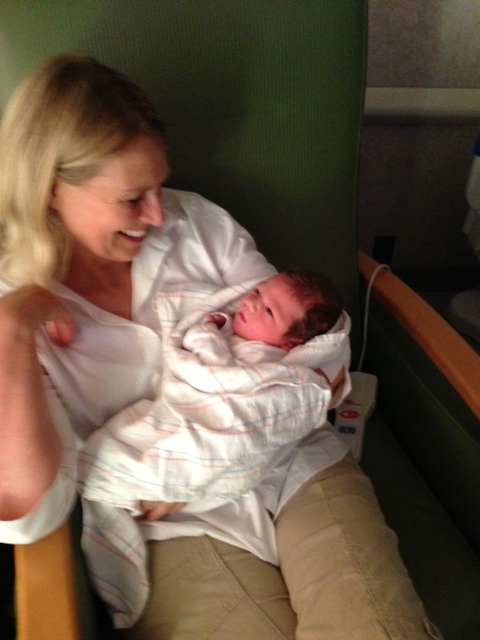
Grandma Maggie and Charlie, who is several hours old in this picture. (Charlie, that is.)

Grandma Maggie and Charlie, who is several hours old in this picture. (Charlie, that is.)

Yesterday was truly a birth day, as my daughter gave birth to my second grandson yesterday afternoon. (Sometimes you hear people say, “I wasn’t born yesterday,” but Charley can’t say that. He was born yesterday.) As you can imagine, it was a day of joy, celebration, love and belonging, thankfulness, and, yes, there was some concern mixed in there, too. It was so good to have mother and son healthy and cuddled together following the procedure’s successful conclusion.

Given that my grandchildren will be doubling in number, I thought it might be appropriate to think about the role of grandparents, and more specifically, how grandparents, when it comes to loving and supporting children, seem to “get it right.” Grandparents have in common that this is our second go-around with the whole “little people thing.” It’s like we’ve been given another chance to get it right when it comes to kids, or at least get it better. We learned some stuff the first time around and now is a chance, as summarized in the following list, to show what we know.

We are MORE RELAXED
We have seen it all. We survived our children and a host of their dramas, some of them real (Ok, some of them very real). We realize the journey is doable, though, and that life goes by faster than you think. Now we want to live in and enjoy the moment.

We SAVOR THE RELATIONSHIP
We recognize the importance of the relationship, and we are careful to not let children’s little mistakes and learning blunders threaten our connection with them. We are more apt to live in the moment and treasure the many ways in which children grow and mature. We are less concerned about controlling children and more aware that they are in the process of becoming who they will be.

We are MORE FOCUSED ON IDENTITY, RATHER THAN ROLL
We seem to accept that children aren’t placed on earth to fulfill our job descriptions. It is so easy for parents to want to have their own needs met through the accomplishments of their children. Children can hear early in life about the kind of role – doctor, administrator, Indian chief, etc. – they are expected to fill in society. Grandparents have learned that helping children form a healthy self-identity is much better than pressuring them into a certain role in life. Coming into a sense of your identity, of who you are and what you stand for, as a child is way better than postponing this process into adulthood. I know people in their 50s that are still desperate for this kind of self-knowledge.

We DISCIPLINE DIFFERENTLY
Well, actually we don’t discipline much at all. We joke about getting to do all the fun stuff with the grandchildren without the headaches of discipline that parents have to deal with. There is truth in this joking, but the joking hides the fact that we discipline differently, too. It’s not that we ignore bad behavior in our grandchildren. We just keep things in perspective in ways that we didn’t the first time around with our own children. We strategically overlook some behaviors, gently deal with others, and for the behaviors that just can’t be ignored we confront them in a way that will not harm our relationship.

We SEEK TO BE NEED-SATISFYING
We get accused of giving too much stuff to our grandchildren, having too much fun with them, being willing to help them in any way at the drop of a hat, and being too interested in them. Guilty. What we are is grandkid-centric. It’s not about spoiling kids. They can see through that. It’s about love and support. We literally give ourselves to them. We love to hear about our grandchildren, talk about them, show pictures of them to others, and most of all, spend time with them.

Not all grandparents are into choice theory, but choice theory gives us insight into a lot of grandparents. Grandparents have a patience and a flexibility when it comes to their grandchildren that a lot of first time parents would do well to emulate. Here’s to parents who can show up like grandparents!

Choice Theory on Interstate 5

Passing on I 5

This past Friday I headed north on Interstate 5 to be a part of a reunion for my wife’s extended family. She had gone up earlier in the week to help her mother and to get ready for everyone’s arrival, so I was driving there by myself. I usually drive pretty reasonably as far as speed goes, however on Friday I decided to try and get there a little quicker, maybe even see how fast I could get there without any of the common stops we usually make.

Traffic, as is almost always the case on Interstate 5, was moving right along. A car in front of me in the fast lane wasn’t going as fast as I would have liked and I moved into the right hand lane to go around him. As I did so, though, the car sped up. I went a little bit faster to get around him, but he sped up even more. At this point we going over 80 mph. It was plain to me that he didn’t want me to pass him. He stayed out in front, which was fine with me. I had no desire to turn it into some sort of competition, and best of all, I now had a blocker in front of me. If you are driving a bit faster, it is good to have someone clearing the way in front of you.

Later on I thought about this little event as a choice theory moment — in reverse. He reacted to my wanting to pass and ended up driving at a speed that was more of my choosing, than of his. It was like he had given me the power to control his speed.

We hear phrases like “pushing his buttons” or “yanking his chain,” which linguistically captures the process of one person messing with another’s boundaries or preferences, especially when pushing buttons leads to an entertaining reaction. I must have pushed the other driver’s button when I attempted to pass him. In the end, I got better in return than I intended.

Children and adolescents, especially those with anger management issues or low frustration levels, can be helped by examples such as these. Kids seem to “get” that when they are reacting to a classmate’s behavior in a way that leads to trouble or embarrassment, they are actually giving their power away to the classmate who did the button-pushing. I have seen the light go in a student’s head when they begin to realize that they don’t want to be a game piece on someone else’s chess board. They want to decide how they are going to act, rather than letting someone supposedly dictate their behavior.

This is an important reminder for all us, regardless of our age. If you have “buttons” featured prominently in your demeanor, why not get rid of them? If you have a “chain” that people keep yanking, how about losing it once and for all? It’ll be great for you, and as you model being in control of your life in front of your children or students, it will be great for them, too.

———————————

I am very thankful how well the Soul Shapers 1 class went this past week. What a great group of people! We indicated our desire to stay in touch during the coming school year, and I hope we do that. The Better Plan blog is one way we can all keep choice theory in our thinking and stay connected in the process. Soul Shapers 2 is taking place this week.