Posts tagged “choice theory

Learning from Jim Carrey or the NYC Murder Rate

Hmm .  .  . what to write about. While reading a weekly journal called appropriately, The Week, I ran across two items that caught my attention. I’ll briefly share both of them and you can let me know which direction to head.

jim-carrey2-450x600

1st Item – A Quote from Jim Carrey

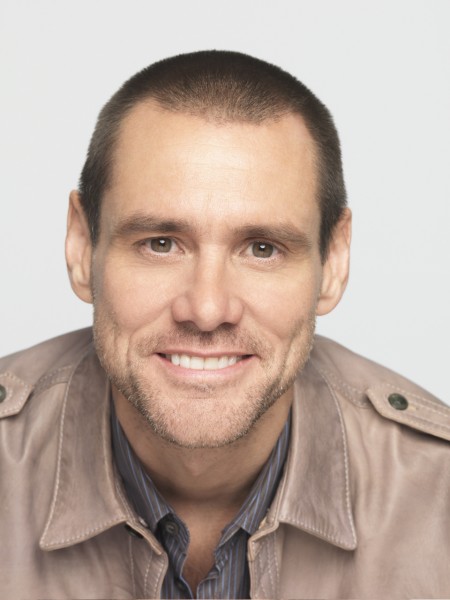
I think everybody should get rich and famous and do everything they ever dreamed of so they can see that it’s not the answer.   Jim Carrey

Really true, isn’t it? We often do look at the rich and famous and compare our lives to our perceptions of their lives. Each time we see a magazine cover with their gorgeous faces and perfect (photoshopped) bodies and see pictures of them on vacation in exotic places that normal people never go to, we are reminded of how far from their lives we really are. In the process, it’s easy to forget about the often screwed-up lives of the people in those pictures and their desperation for normalcy. And in the process we lose sight of the things for which we can be thankful. We forget to nurture a spirit of gratitude.

Jealousy and covetousness erode us from the inside out. The thinking we embrace and coddle affects our actions, our feelings, and even our physiology. Stinkin thinkin leads to all kinds of problems. Take a cue from Jim Carrey and quickly review your blessings. If the list is short you may need to intentionally seek the reasons for which to be thankful, but any effort put into improving your thinking will make a huge difference in your relationships and your happiness.

Item #2 – Murder Rates in NYC Reveal an Interesting Pattern

9819177-large

A total of 334 people were murdered in New York City last year, only 29 of them by strangers. That’s down from more than 2,245 murders in 1990, and the lowest number of murders in the city on record.

The low number of murders is good, but what I really noticed had to do with how only 29 of them were committed by strangers. When I saw that I immediately thought of Glasser’s belief that all long-lasting psychological problems are relationship problems. It is telling that over 90% of the murders in NYC were committed by people who knew their victims. Taking the life of a friend or loved one is an extreme act that in a strange way conveys the importance of relationships. We value relationships and get worked up when a relationship doesn’t go the way we want it to go. Murdering another person is never the answer, yet 305 people in NYC last year didn’t know about other options and went ahead and acted out in violence.

This is where choice theory can help. The principles of choice theory gently, but firmly pull us out from the pit of victimhood and place us back in possession of ourselves. We come to understand the control we have on our thinking and our acting and the ways in which we create our own reality. We begin to value our relationships more and to recognize the role we play in whether or not our relationships are successful. Ultimately, without hurting or taking advantage of others, we become responsible for our own happiness.

So, what to write about — Jim Carrey and gratitude or on what can be learned from the NYC murder rate? Hmm .  .  .

———————-

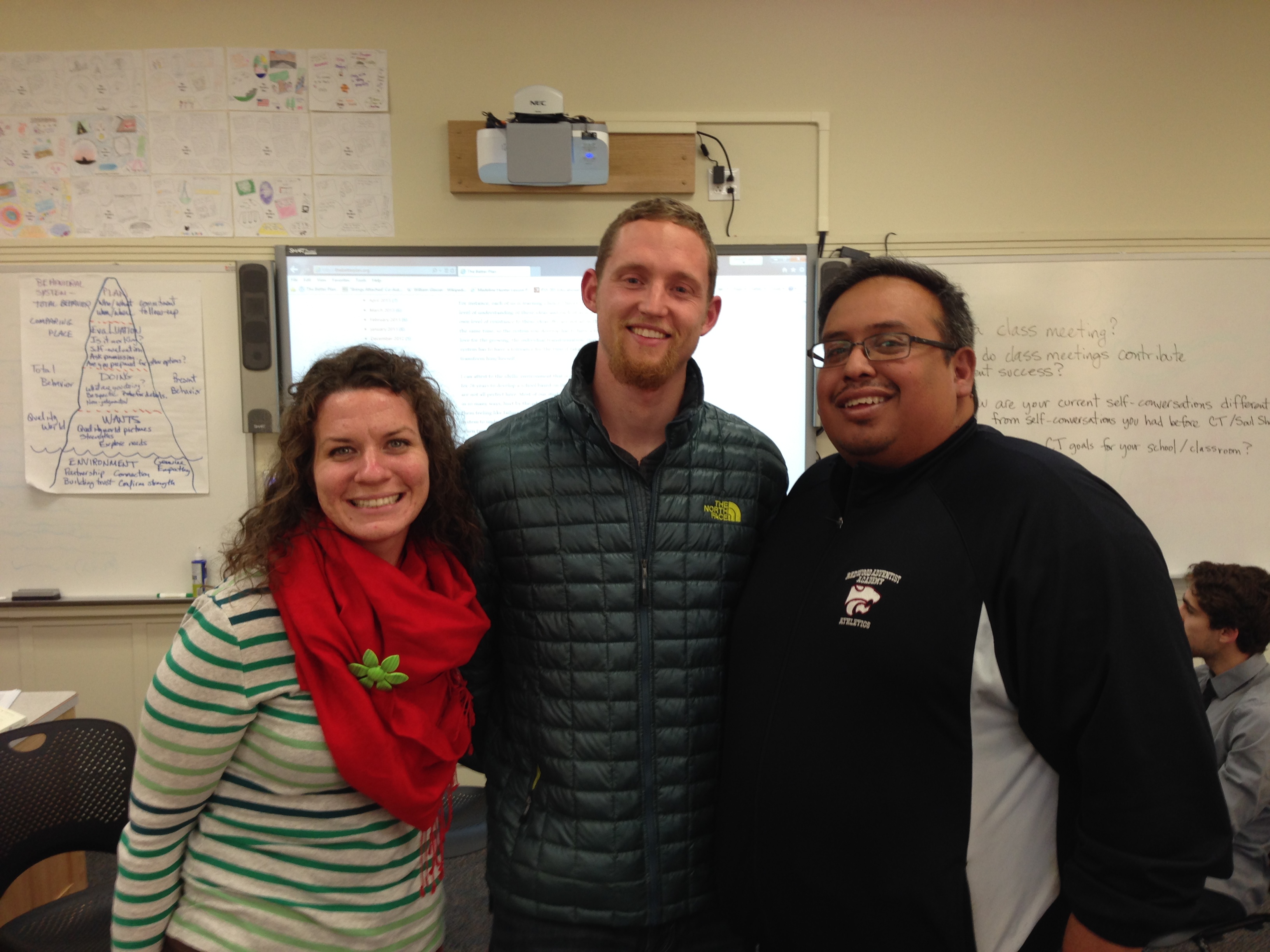
Tom Lee, Jean Buller, and Jim Roy at the Google Education Conference. Each of them are professors in the teacher education program at Pacific Union College.

Tom Lee, Jean Buller, and Jim Roy at the Google Education Conference. Each of them are professors in the teacher education program at Pacific Union College.

I attended a Google Apps for Educators Conference on Jan. 8 and 9 at New Tech High in Napa, CA. Wow! If you ever have a chance to attend a Google educator conference I highly encourage you to do so. (45 such conferences will be put on this coming year) The things you learn and ideas you hear are educationally transformative.

For example, the Research tool in Google Docs places the world (websites, articles, pictures, and video clips) at students’ fingertips. And by students we aren’t just talking about college and secondary students. Elementary students can quickly learn to study a topic more deeply and then demonstrate their understanding in exciting ways. Their presentations become much more RELEVANT to them and their classmates. As you probably recall, relevance is one of the most important qualities in a choice theory classroom.

———————–

Our next Choice Theory Study Group is January 25 at 2:00 pm.

Let me know if you have agenda items or topics you would like to cover.

A recent Wall Street Journal headline caught my eye and got me to thinking in all kinds of creative ways. The headline read, “Want to Stop Arguing and Change Spouse’s Behavior? Start With Mirror.” The article then opened with –

Ever want to change something about your partner? Get him or her to eat better or work less? Exercise more? Stop nagging or yelling? Start with a mirror.

Your best chance of transforming someone else—and the dynamic in your relationship—is to demonstrate your willingness to alter your own actions, experts say.

The article went on to cite studies and give good examples that supported this theme, however I was captivated by the reference to the item that each of us uses every day – that being a mirror. It struck me that a mirror, more than any other thing or item, may be the best mascot for representing the choice theory approach to life. The total behavior car is a graphic or thing that has entered the pantheon of choice theory tools, but the simple mirror may capture the essence of choice theory in ways the car cannot.

One teacher tapped into this truth beautifully when she hung a mirror in the back of her classroom, with the following captions prominently displayed underneath.

Whose behavior can I control?

How can I behave in a way that might change this situation for the better?

She referred to the mirror as she taught about the concepts of choice theory, especially at the beginning of the year. It wasn’t unusual for her to see a student standing in front of the mirror, studying themselves in the frame before them, quietly reviewing the questions underneath.

Toward the close of the school year one fifth-grader shared, “That mirror got to me. There was some other choice theory stuff I liked, but that mirror .  .  . it just sat there, day after day reminding me about how I’m the only person I can control. It’s true.” The teacher learned just how much of an impact the mirror in the classroom had on this student when the child’s mother informed the teacher that her son had written out these questions and taped them to the bathroom mirror at home? The teacher recalled how the mother became emotional as she described the effect that bathroom mirror was having on their home, especially on the conversations she and her husband were starting to have.

HELP!

A mirror – a simple, common mirror – needs to be a part of my choice theory workshops from now on. I need to think of mini-lessons or activities that will tap into the power of this everyday item. Your help on this would be appreciated. Any ideas?

Still a classic, no matter how many times I see it.

Ezekiel, yes, dry bones Ezekiel “got” this important principle – the principle of the mirror – when he wrote in Ezekiel 3:10 –

Then he added, “Son of man, let all my words sink into your own heart first. Listen to them carefully for yourself.”

—————————-

A Michael Jackson song proclaims the truth about the mirror, too. The chorus of his famous song says –

I’m Starting With The Man In The Mirror

I’m Asking Him To Change His Ways

And No Message Could’ve Been Any Clearer

If You Wanna Make The World A Better Place

Take A Look At Yourself And

Then Make That . . .

Change!

——————————

The Choice Theory Study Group this month meets on January 25.

I recently discovered a link that lists the 20 most popular TED talks of all time. The number one TED talk of all time was given by Ken Robinson, on how schools kill creativity, with well over 23,ooo,ooo views. It caught my eye that Daniel Pink’s talk on the surprising science of motivation is listed at number 10 on the all-time list with 9,176,053 views (which is 300,000 views less than a TED talk on ten things you didn’t know about orgasm). Daniel Pink, you remember, is the author of DRIVE, the book I reviewed a couple of blogs ago. If you don’t have the time to read the book, his 18 minute TED talk will give you the essence of what the book is emphasizing.

+++++++

If you are interested here is the link to the Top 20 TED Talk List.

http://www.educatorstechnology.com/2013/12/the-20-most-popular-ted-talks-of-all.html

————————————-

Glasser didn’t care much for the word motivation, because for most people it stands for one person trying to get another person to do something. As far as how people often apply them, the words motivate and manipulate mean pretty much the same thing. Motivation is important, huge, actually! It’s just that we need to remember that our motivation comes from within us. Yes, we can be influenced from the outside; a reward or punishment might get our attention for some reason. But ultimately there is something inside of us that wants to do a certain thing or be a certain way. Choice theorists keep this in mind as they work to create an environment in which others can be motivated.

—————————————

Our next Choice Theory Study Group is January 25. Make plans to join us. It’ll be FUN!

—————————————

7d08fa4f-5ccb-42e0-82c6-e488ffc355c8

Those of you who live in the Northern California area may also be interested in a special weekend event coming up at The Haven, the church in Deer Park located right next to the St. Helena Hospital. Tim Jennings, the author of several books, including The God-Shaped Brain, will be speaking on Friday evening, January 10, and then again on Sabbath, January 11. I have been told that he and I should meet as we both believe strongly in a person’s power to choose and in the freedom with which God created us. If you are into choice theory you should enjoy this weekend a lot.

2013 and The Better Plan Blog

2013 is just about to go into the history books. As New Year’s Eve ushers in 2014, I thought I would share some data and info regarding the life of The Better Plan blog over the past year.

+  I started the blog for Seventh-day Adventist teachers and parents who had read my book Soul Shapers and as a result wanted to know more about choice theory. Many who signed up to follow the blog are SDA teachers or parents, but many of you are not SDA. As a result, the blog has focused on the principles of choice theory. There has been an occasional emphasis on SDA quotes or stories, but not as much as I originally planned.

+  The very first blog was posted on Dec. 16, 2012.
There were five posts and 90 views during December, 2012.

+  There are now 189 people following the blog.

+  During 2013, there were 78 posts or articles.
Of the 78 posts there were 8,256 views.
That represents an average of 23 views per day.
To the 78 posts there were 371 comments.

+  The low day for views was on December 20, 2013, when there was just one view.
The high day for views was on August 24, 2013, when there were 231 views, with most of the views being directed at the I Will Miss You, Bill post.
The average views for the month of August was 44 views per day.
The posts related to Glasser’s passing away in August definitely had the most views during the year.

+  A couple of blogs I put some time and thought into were Give Me Victory or Give Me Death on January 22, and Why Are So Many Christians So Un-Christian? on November 10.

+  A couple of blogs that meant a lot to me were The Rest of the Story, Part 1, on September 3, and Part 2 on September 5.
The comments several of you shared in response to The Rest of the Story meant a great deal to me.

+  An example of the kind of blogs I thought would have gotten more views was Stringless Love on July 11.

+  There were other contributors besides myself during the past year, something I would like to see more of in 2014. Examples of contributions from other writers include 19 Ways to Lead, Rather than Boss, by Ed Boyatt, on July 27, and Push or Pull, by Chris Sequiera, on July 24.

IMG_0826

Reflecting back I am pleased with the caliber of the content and I look forward to continuing the blog. It has been a labor of love, although it isn’t too hard to write about choice theory when you get a new idea or have an epiphany of some sort. I would like to see the blog grow and become an even better resource to teachers, parents, and choice theorists of all kinds. I would love your ideas on how to make the blog more valuable. (I am thinking about creating an eBook with all of The Better Plan 2013 blogs in chronological order. The blog template I am using makes it hard to read through the archived blogs chronologically.)

As I close 2013 I want to wish all of you every blessing for 2014!

Have Choose a great year!

Why DRIVE Drives Me

drive2_custom-9249e86ca8c89adc06c6484e8498e3e5e8672279-s6-c85

Drive (2009), Daniel Pink’s New York Times Bestseller, represents one of the reasons I was “driven” to write the Glasser biography. Drive is a well-written, captivating explanation of human motivation. Pink describes what he sees as a progression from Motivation 1.0 – motivation based purely on a biological drive for survival – to Motivation 2.0 – motivation based on extrinsic reward and punishment – to Motivation 3.0 – motivation based on intrinsic needs for autonomy, creativity, and achievement. Reading Pink’s insights and examples are like reviewing a What’s What list of research and a Who’s Who list of thought leaders and gurus in the fields of psychology, philosophy, and business over the last 50 years. Only problem is, even though the book covers the dawning of intrinsic motivation and the human need for freedom and self-determination, the influence and contributions of William Glasser are never mentioned.

I read and re-read Drive with such intense mixed emotions. On the one hand I really appreciate the way Pink makes a case for choice theory, while on the other hand I am really frustrated, and even a bit angry, that choice theory or Glasser is totally left out of the book. Abraham Maslow is included; Deci and Ryan are included; and others like Csikszentmihalyi, Seligman, Herzberg, and Deming are mentioned, and a host of others, but not Glasser. How you can write a book about human motivation that summarizes the theories on the topic from the last 50 years and not include William Glasser is beyond me.

Drive is not the only example of Glasser being left out or overlooked. In the course of my research for the Glasser biography I noticed a troubling trend of his work and ideas being less and less at the forefront and more and more slipping into the shadows. Even as the wave of internal control psychology grew bigger, affirming the personal power of choice, people seemed to forget the identity of one of the original wave creators. This felt unfair to me, and even unwise. Unfair because Glasser was one of the pillars on whom others built, and unwise because his message, and the behavior model he developed, is so helpful.

Part of what has motivated me to write Glasser’s story is the hope that the biography will contribute toward establishing his legacy and his prominence as a progressive leader in the fields of mental health and education. I don’t want his ideas to ride off into the sunset. I want his ideas to be recognized as laying the foundation for today’s effective practices.

In spite of Drive not referring to choice theory or Glasser, I still recommend you read it. Drive really is an excellent book and if you are into choice theory you will find that it adds to your understanding and expertise. Just be prepared to have mixed emotions as you go through it.

———————————–

Do you know friends who are into choice theory and who would benefit from these posts? Remember to let them know about thebetterplan.org.

If you appreciate today’s blog, remember to click on the LIKE button at the end of the post.

If you are on Facebook, you can share the post with your friends, too.

———————————

“Everything that frees our spirit without giving us control of ourselves is ruinous.”  Goethe

Choice Theory and Christmas

IMG_0807

I have been thinking about choice theory and Christmas and I have come to the conclusion that they are wonderfully connected!

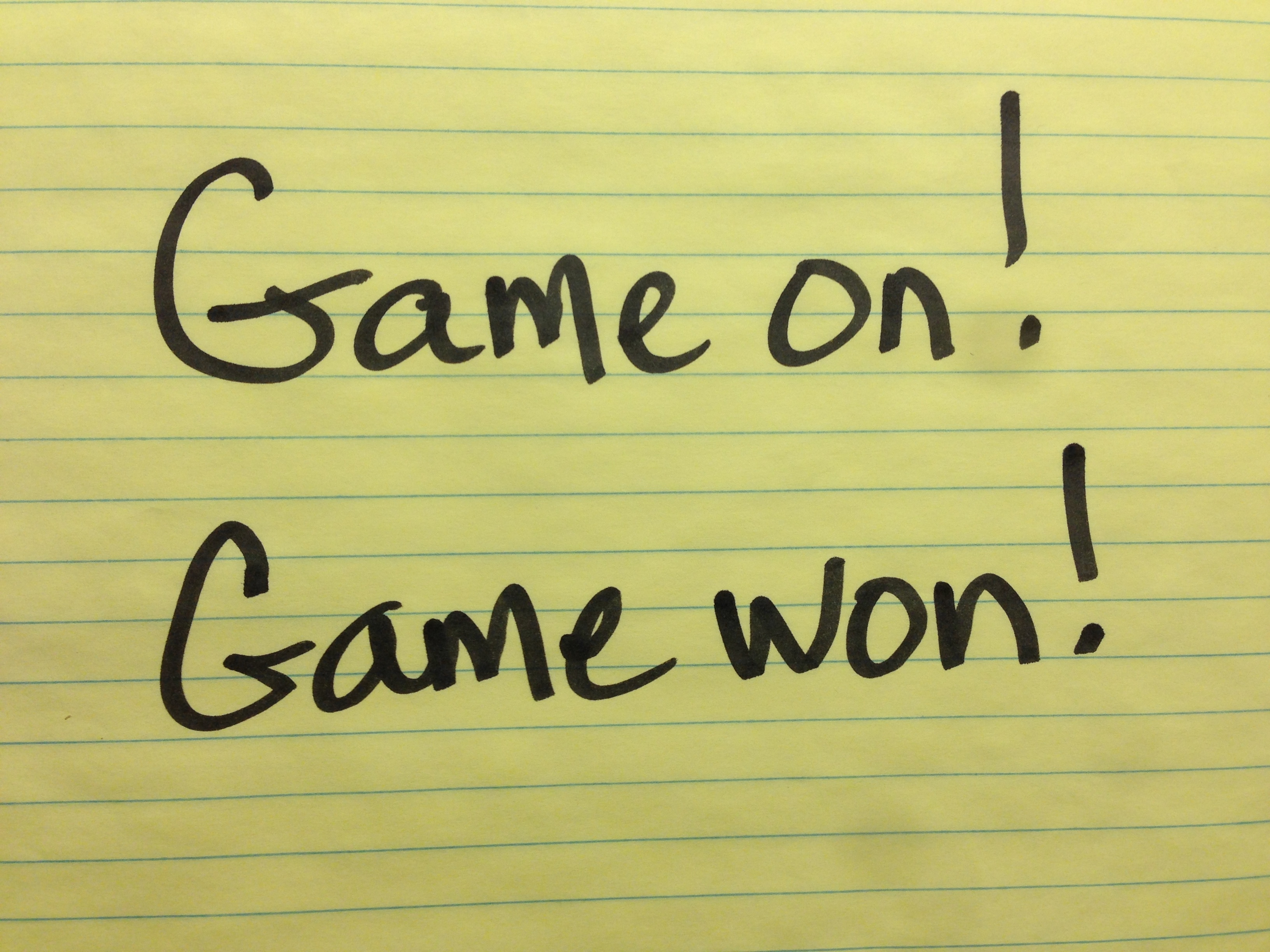
My logic goes like this. Christmas marks the moment that God gave up His riches and glory to become one of us with our weakness and poverty. He entered a literal battlefield, a war zone, as a vulnerable, tiny baby. The Christ Child was the Commander of heaven’s armies, though, and He ultimately came to wreak havoc on the enemy’s schemes. Luke described how the choir that announced the Child’s arrival to the shepherds was actually made up of “the armies of heaven.” (Luke 2:13, 14) This incredible display was God’s way of saying Game On. And John declares that –

“The Son of God came to destroy the works of the devil.” 1 John 3:8

The works of the devil are bad news. Driven by his hatred of everything for which God stood, he would do everything he could to deface and hurt God’s creation. Having already lured over a third of the angels to distrust God and join him in forming a new government, he focused on convincing us, the crowning work of God’s creative power, to distrust God, too. We chose to believe the devil, to seek a higher place, to go our own way, to align ourselves with a new, alternative government. A void was formed between humans and their Creator and fear and insecurity rushed in to fill the space. Instead of the self-control with which we were created, the devil took advantage of our allegiance to him and sought to capture us in his trap, to chain us within his dungeon, to addict us in behaviors from which their appeared no escape.

How fortunate for us that when the Commander Child arrived in the humble Bethlehem stable it was in fulfillment of the prophecy of Isaiah. Thirty years later, as Commander Messiah, He would read this prophecy in the synagogue as a declaration of His mission.

“I have come to release the captives and set the prisoners free.” Isaiah 61:1

God’s government is based on freedom, on the power to choose, on the ability to be in control of our thinking and behavior. Immanuel-the God with us Child-came to win back our freedom to choose, to level an unfair playing field, to give us back to ourselves.

The manger and the cross were one from the beginning. The Child was born in the shadow of death. Yet by His death we are healed, the shackles are unlocked, the prisons of our lives are opened. Through His Spirit we are free.

“For God has not given us a spirit of fear, but of love, power, and a sound mind.” 2Tim. 1:7

This freedom, this power to choose, this ability to be who you want to be, is so important to God that He was willing to give up everything to insure its future. Freedom was and is His universal non-negotiable.

Choice theory explains how we are motivated from within for reasons that are uniquely personal to us, and that we choose to behave in a way that we think will best meet our needs at that moment. How incredible that God would create us with this kind of autonomy! Let Christmas be a reminder of the freedom that God created us with, and also of His return to redeem us as Commander Child.

Game on at the manger!

Game won at the cross!

We are free!

Since we have been united with him in his death, we will also be raised as he was. Our old sinful selves were crucified with Christ so that sin might lose its power in our lives. We are no longer slaves to sin. For when we died with Christ we were set free from the power of sin. Romans 6:5-7

(This post was a re-print from last Christmas, but I don’t think many of you saw it.)

—————————–

Workshop Ideas – Several of you indicated how much you appreciated the Coca Cola commercial that was shared in the last blog, and suggestions for how the commercial clip could be used in a workshop setting include –

Let participants know that you are going to show a commercial and that you want them to look for a choice theory message in the clip. Ask participants to share their ideas afterward.

Let participants know that you are going to show a commercial about a young couple raising a young child and that the clip is made up of short vignettes. Their assignment is to consider which of the vignettes contains the most powerful choice theory moment. Or which of the vignettes would especially tempt a parent to resort to stimulus-response, reward-punishment?

——————————–

Merry Christmas to all, and to all good night!

Every once in awhile a commercial comes along that captures something special. Coca Cola Argentina recently did just that with a commercial that traces the life of a young couple and the wonderful challenges that come with having children. I won’t say more than that for now. Just watch the commercial. Afterward, I have a question for you.

Yeh, I know. A powerful message for all of us, whether we have young children or not.

So, my question is – Could this video clip be used in a choice theory workshop, and if so, how might it be used?

Looking forward to hearing your ideas.

Glasser Biography Is Published! (kind of)

Jim Roy and Carleen Glasser with the first edition of Bill's biography. Taken at the Evolution of Psychotherapy Conference.

Jim Roy and Carleen Glasser with the first edition of Bill’s biography. Taken at the Evolution of Psychotherapy Conference.

I stopped by the Evolution of Psychotherapy Conference in Anaheim, California, this past Thursday (Dec. 12, 2013) and headed to the conference bookstore to see the Glasser biography for the first time myself. I wasn’t totally clear whether the bio would be ready, and if so, what it would look like. So it was good to see that it had been printed and to hold it in my hand. It was a very special moment for me to walk to the bookstore with Carleen Glasser, who Bill had been married to since 1995 until he passed away in August, and for both of us to hold the book together.

I said that the biography is “kind of” published because apparently the conference edition of the book is a pre-publication version, with the actual big printing taking place next month. For instance, one thing I noticed after buying a copy of the book, was that the Foreword was missing. The publisher had asked Bob Wubbolding to write a Foreword, which I very much supported, and which Bob did, yet for some reason it hasn’t made it into the book yet. Hopefully, that will be fixed soon, along with a few other less notable fixes.

———————–

Choice Theory Study Group is Growing

Three of those who attended the recent Choice Theory Study Group: Sonya Reaves, teaching principal at Oakhurst SDA Elementary near Yosemite; Joel Steffan, Gr. 5/6 at Foothills Adventist Elementary School in St. Helena, CA; and George Barcenas, Physical Education and Spanish teacher at Redwood Adventist Academy in Santa Rosa, CA.

Three of those who attended the recent Choice Theory Study Group: Sonya Reaves, teaching principal at Oakhurst SDA Elementary near Yosemite; Joel Steffan, Gr. 5/6 at Foothills Adventist Elementary School in St. Helena, CA; and George Barcenas, Physical Education and Spanish teacher at Redwood Adventist Academy in Santa Rosa, CA.

Our recent Choice Theory Study Group on December 7 broke a record for attendance and we are already looking forward to our next study group on January 25. Put the January date in your calendar now and plan to join us for choice theory discussion and activities. One of the topics we covered on the 7th had to do with classroom meetings. I have included the handout here. Check it out.

Class Meeting guidelines

———————–

Classroom Management Philosophy Paper

I taught Classroom Management during Fall quarter and one of the culminating assignments for my students was to think about and write their philosophy of classroom management. We use Harry Wong’s The First Days of School and Marvin Marshall’s Discipline Without Stress, Punishment or Reward as course textbooks. Part of class time is devoted to introducing choice theory to these future teachers. We really only have time for an orientation to the choice theory principles, yet this year’s students really seemed to take to the ideas. One of my undergraduate students, Laura Helm, put together a concise, yet effective description of the teacher she wants to be. I thought I would share (with her permission) what she wrote.

Classroom Management is an integral part of a teacher’s career. Without effective management, it is very challenging for successful learning to take place. Classroom management seems like a daunting task, and it can be very challenging. After taking this class, I am more prepared to tackle this aspect of being a teacher. Taking Classroom Management has taught me an incredible amount about effective management and the different ways to achieve it. My classroom management philosophy involves self-governance, Choice Theory, procedures, internal motivation, moving away from rewards and punishments, and having relationships with your students.

Possibly the most important concept we learned about is Choice Theory. Choice Theory focuses on self-responsibility along with natural consequences. It is about having the power to choose how you act and how you respond. A significant point of this theory is that you are the only person you can control, and you cannot control others. We govern ourselves and have the power to choose our behavior. Everything we do is working to fulfill our basic needs, as outlined by Glasser in his Choice Theory model. Implementing Choice Theory and its principles in the classroom is essential. Teaching students the significance of self-responsibility and about our basic needs is very important to me. Not only will this be of great importance in the classroom, but also in the future lives of my students. Choice Theory is a way of understanding ourselves and our students on a deeper level, and getting to know how each of us is motivated.

My key beliefs about classroom management surround Choice Theory and management without coercion. I believe that we are motivated intrinsically; therefore external coercion is not effective or beneficial. We do what we do because of something internal, and to fulfill our basic needs. External control, such as rewards and punishments, is not an effective motivator. I think we, as teachers, need to understand that everyone is motivated internally and use that to help the learning process.

In my opinion the use of rewards and punishments in the classroom should be lessened, if not eradicated, as they are a form of coercion. By using rewards, students only focus on getting the reward, not the importance of the learning or doing the work. Punishments often do not address the specific behavior, and can be altogether unrelated. How is it going to help a student learn not to hit other people if he is forced to sweep the parking lot instead of working on changing his behavior? Instead of punishments, natural consequences should be emphasized. There are consequences for behavior and choices that are made, some positive and some negative. Since the student chose their behavior, they will deal with the natural consequences that come about as a result. Unrelated punishments may help for a short time, but they will not help the student to learn why their behavior was wrong and will prevent them from growing or learning to change their behavior.

Another crucial aspect of classroom management in my opinion is procedures. Procedures are of the utmost importance in having a well-managed classroom. Procedures are the way in which the classroom is run and how things are done. Procedures are not rules and they do not have punishments, but students face the consequences of not following procedures correctly. Having specific procedures in place leads to a classroom that runs smoothly. This was made clear to me from watching the video of Mrs. Seroyer’s classroom management techniques. This video impacted me and gave me a new perspective on how to manage a classroom. She emphasized the importance of procedures and how they are one of the most significant parts of effective classroom management. By setting up procedures, teaching them, then rehearsing them until they are learned, students know what the expectations are and how they are supposed to do tasks in the classroom.

To me one of the most important aspects of classroom management is having a strong, positive relationship with your students. Genuinely caring about your students and showing them that you want them to succeed and are there to help is crucial. Once the students believe this, they will be more willing to put effort and care into their work and their behavior. Heather Denton highlighted the importance of this when we visited her classroom. She told us that students will be less willing to care about what we are saying if we do not show them we care for them. I agree with her that relationships are extremely important and are essentially the basis for successful classroom management.

Before taking this course, I had no knowledge about Choice Theory. I thought the only way to manage classrooms was what I had seen and experienced from being a student in many different classrooms. Most of my teachers managed their classrooms with the use of rewards and punishments, and I figured that was the most effective way to manage a classroom. I was usually one of the “good” students, and I rarely got in trouble. When I did, I was punished by time out, having my name written on the board, or something similar that did not help me learn from my mistakes.

My view on classroom management changed substantially after taking this course. It was intriguing to learn about Choice Theory, and that there is more than one way to manage a classroom. Just because classrooms are traditionally managed with rewards, punishments, and other forms of external control, it does not mean that I have to manage my classroom in those ways. I have realized that managing students begins with having a relationship with them. I also understand that everyone is motivated internally, so coercion is not effective with most students. Using rewards, punishments, and coercion never sat well with me, but now I have the knowledge to teach without using coercive techniques.

It is so encouraging to know that candidates such as Laura will be joining our teaching ranks shortly.

————————-

It’s been almost a year exactly since I started The Better plan blog. Thanks for being a part of the journey.

If Dr. Glasser’s Ideas Are So Great . . .

The following article was written by Charlotte Wellen, a teacher at Murray High School in Virginia. Murray was the first public high school in the U.S. to become a Glasser Quality School.

puzzled-look

If Dr. Glasser’s Ideas Are So Great and Have Been Around for Fifty Years, Why Aren’t All Schools Using Them?

— A Murray High School Perspective

Recently, I received an email from a teacher who hopes to convince the administration and staff of her school to move in the direction of creating a Glasser Quality School. She was asked the question that is the title of this article and she wanted my help to answer it. Perhaps she sent this to many of the Glasser Quality Schools. I found this a compelling question and I wanted to share my answer here because we have all given a lot of thought to our goal of teaching the world choice theory and we have often wondered why there aren’t more Glasser Quality Schools. Below is my answer to her question:

What a great question! Actually, it has only been 20 years since Dr. Glasser put his ideas together into a form that could help people create an entire school. He came out with The Quality School and Quality School Teacher in the mid-90’s. Also, this is not the type of program that can be started in a school at the beginning of a year and then changed a couple of years later. This is a program that starts up inside of each participant, from the administration to the teachers, the students, and finally going home to the parents, and home to the teachers’ families and the principal’s family, too.

Choice Theory is not a program. Glasser Quality Schools are not a program. They are a thought system, a way of life, a new way of thinking about the world, about the relationships between students and teachers, administrators, and families. It has taken us 26 years to create our current level of mastery of Dr. Glasser’s ideas here at Murray. We still have a long way to go and are involved in making many changes, many improvements. Dr. Glasser always said that 95% of any problem was a system problem and only 5%, if that much, was a people problem. So, the job of creating a Glasser Quality School is to come up with a system that works to create happiness in the school. This is not as easy as it sounds, nor as difficult.

For instance, each of us is learning Choice Theory. Each of us has our own level of understanding of these ideas and each of us is wrestling with our own level of resistance to these ideas. We are not all in the same place at the same time, so the system you develop has to have a tolerance and a love for the growing, the individual transformation, that is required. The system has to have a tolerance for the time it takes for each individual to transform him/herself.

I can attest to the idyllic environment that is created when you work hard for 26 years to develop a school based on Dr. Glasser’s Choice Theory. We are not all perfect here. Most of our students have been very hurt by life in so many ways, hurt by the education system that has left too many of them feeling like failures. We have conflicts every day, but we have a system to understand the conflicts and to work them out. For instance, when two students became angry at one another on Friday, both of them requested to be able to separate from the other, so no physical conflict would arise. They walked away. This is the result of years of work with these two boys to learn Choice Theory, that they can get in charge of the choices they make when anger hits them. They did not get “in trouble” because they raised their voices at each other and disrupted class. They got time and attention from trained and loving teachers who heralded their decisions not to hit each other and helped them think through what had happened that led to the conflict, what they each could have done differently, and on Monday, will help them mediate with each other until a plan they can both agree with is in place and a solution to their conflict has begun.

There is so much to say about this program. Our test scores soar because our students are happy here and want to do well to help the school, and themselves. But the best of all is the feeling of camaraderie, of friendship between students and teachers. Here, there is trust between us. We work hard at it. We constantly work to improve our relationships because we know kids won’t learn well from people they don’t love and who don’t love them. We use the word love all the time here. We aren’t afraid to say we love our kids and they aren’t embarrassed to say they love us, too. We think schools should be built on a foundation of love and trust.

So, why aren’t there thousands of these schools — good question. We work all the time to help schools consider adopting these ideas. Our students travel to schools around the world, teaching people how to start up a Glasser Quality School. No one is as great a spokesman about Glasser Quality Schools than the kids who are educated here. Just last week, we hosted a team from a county in North Carolina who had heard about Murray and wanted to see it in action. Afterwards, they were so overwhelmed by the level of love the kids shared about the program and the level of understanding they had about why they are being educated the way they are. They said they want that for their school. They asked our kids for advice about how to implement these ideas with middle school kids and got lots of suggestions. They are planning to bring a team of Murray kids to North Carolina to talk to their faculty.

I think that it takes a long time and a lot of commitment to help an entire staff come to believe that it’s possible to create a school based entirely on love and respect and to be willing to transform themselves by learning Choice Theory, Reality Therapy, and Lead Management, in order to bring this about. For instance, teachers may have become set in their ways and it might be tough for them to give up their “teacher look,” the one that nails a kid who is disrupting. But that look is a threat. That look has no place in a Glasser Quality School. So to even give up the looks we’ve come to rely on, that’s asking a lot. And it takes YEARS of practice, but like anything worth doing, years of practice pay off hugely! We think our kids deserve an education from a team of professionals who have been practicing for years to treat them respectfully, and to expect great things from them, so they feel inspired to excel. But I think you can see that each of the individual transformations that will need to take place for this to happen take time and inclination and especially belief.

When we first started Murray, we all believed we could change schools so kids and teachers would like them more. At first, we brought all our old controlling and punitive behaviors with us and we used them all. This was good because we got to see that they don’t really work, if working means helping resistant students come to love us and to therefore love school and education. And because we began the school open to changing education in a serious way, we kept tinkering. We kept developing methods of helping ourselves as staff grow and slough off our old punitive ways and to keep from having a school of chaos with kids running around causing untold trouble. We learned that kids who love their school don’t want to cause trouble and are willing to keep working to unlearn their old habits of acting out and hurting others without thinking. They are mostly grateful to be learning the skills they can clearly see will help them in their lives, both in and out of school.

So, if you want to talk more about Glasser Quality Schools, feel free to call me. I LOVE talking about Glasser Quality Schools because I believe that these ideas are so superb that one day all schools will be using them. Educators would be fools not to use these ideas when they work so well at helping people love school and learning.

I would be greatly interested in your opinions in this site regarding my thoughts about the challenges of setting up thousands of Glasser Quality Schools.

Love,

Charlotte Wellen, NBCT, Murray Choices Teacher
Instructor at the William Glasser Institute – US

Murray High School
Ashby Kindler, Principal
Charlotte Wellen, Contact
1200 Forest Street, 
Charlottesville, VA 22903
PH: 434-296-3090   
FX: 434-979-6479
wellen1@earthlink.net

——————————-

Tomorrow is Thanksgiving Day, 2013!
May each of us become able to recognize the blessings for which we can be thankful!
And may we choose to be grateful.

——————————-

Choice Theory Study Group
December 7
4 Reasons to Choose Misery

images

People spend billions of dollars on creams, and even surgeries, to look younger from the outside-in, yet maybe our aging has more to do with what’s happening from the inside-out. For instance, a recent study indicates that people who are depressed appear, at a molecular level, to be biologically older. An article in the journal, Molecular Psychiatry*, which reported on a study of over 2,000 subjects, concluded that depression can make us older by speeding up the aging process within our cells. So much for creams and scalpels.

There may actually be good news in this molecular view! Glasser believed that we choose our misery. Could it be that in the process of negotiating life’s twists and turns, and that as we choose to be happy or choose to be miserable, we are actually choosing our age? This is not the stuff of science fiction movies; this is a very real possibility.

Glasser described in Control Theory* (1985) that it can make sense to choose misery. In fact, he listed four reasons for people making such a choice.

1. It keeps angering under control

Rather than expressing our anger outward, and maybe even threatening and hurting other people, we turn it inward. We don’t know how to deal with our anger in the public arena, so we direct it to a private location.

2. It gets others to help us

When we show up as miserable or depressed it can serve as a cry for help, which can be especially appealing for men, who often don’t like to just come out and ask for help.

images-2

3. It excuses our unwillingness to do something more effective

The more miserable or depressed we become, the more helpless we become, too. We convey that we are not capable of doing much when we are overcome with misery.

4. It helps us regain control

When we feel out of control because of how someone else is treating us or because of the difficulty of a circumstance, choosing to be miserable or to depress can very much increase our sense of control. No one can challenge us when we are helpless.

Any of these behaviors can make sense at the moment. We are desperate for a behavior that will help us feel better and we rummage around in our behavior system for something that will give us even a smidgeon of control. Being miserable doesn’t feel that great, but it feels better than the alternative, whatever we perceive the alternative to be. Somehow, misery is need-satisfying.

Of course, it is not usually a good idea to tell a person who is in the midst of being depressed or miserable that he/she is choosing it. A miserable person can become quite defensive of their misery. But there will come a time, when things are better or when the pressure is off a bit, when he/she will be more open to considering their role in the misery process.

And what a special moment it is when you first realize that misery isn’t something that just happens to you. An awareness begins to dawn in your thinking, an empowering awareness that maybe, just maybe, you can literally choose your state of mind. As you grow in your understanding of choice theory, it’s like you become immunized against misery and even depression. Yes, it can be scary to realize how much power and responsibility you have for your own mental health, but the trade from victim to empowerment is well worth it.

Without this kind of immunization our misery can sap us of the life force within us and quite literally age us way too quickly. I say go for the choice theory immunization. It keeps you young and happy all at the same time.

* The article about depression and aging can be found at http://www.bbc.co.uk/news/health-24897247

* Control Theory has been re-printed as Take Charge of Your Life: How To Get What You Need with Choice Theory Psychology. It is available in paperback and electronically through Amazon and other booksellers.

———————————

IMG_3941

My thoughts have been directed toward Beirut, the schools there that I had the privilege to visit recently, and to the incredible people who work and teach in those schools. My heart goes out to them as tension and violence once again impact the region. I am praying that the Spirit will give you courage, comfort, and protection. I am praying that your schools will continue to thrive!

IMG_3953

———————————

If this blog post has been helpful, remember to click on the LIKE button below. Also consider re-posting the blog to your Facebook friends.

———————————

Share The Better Plan address with others who are interested in choice theory –

http://thebetterplan.org

———————————–

Next Choice Theory Study Group

December 7