Posts tagged “Soul Shapers

According to The Quality School

sleepy-teen

Another recent study1 confirms what many previous studies have already indicated, that delaying high school start times increases the amount of sleep that adolescents get, improves their emotional states, improves their alertness and performance at school, and even reduces the teen car crash rate2. It would seem with these kinds of results that schools would quickly move to change the start of the school day until later in the morning. Even small delays in start times can lead to statistically significant improvements. Such scheduling changes aren’t taking place, though, at least to any noticeable degree, and students continue to battle fatigue, including drinking lots of coffee, deal with depression in growing numbers, and struggle to do well in academic content.

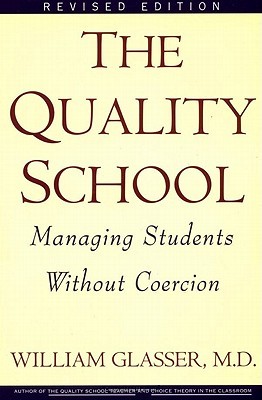
I recently gave my Secondary Methods students a choice of reading one of Glasser’s books that focused on educational practice. Several of them chose his book, The Quality School (1990),which outlines the elements that contribute to a school being a student-friendly place in which they can become the best versions of themselves. I don’t recall Glasser specifically talking about school start times in The Quality School, however I am confident that, given the data, he would support later school day start times if were still around. (He liked to sleep in, too.)

678611

When I first read The Quality School as a young principal in the early 90s, I can remember thinking that I wanted to be a part of such a school. Later, during my doctoral research I analyzed the book more carefully and developed a list of elements that Glasser felt Quality Schools would prioritize. I include that list below.

===================

According to The Quality School

Relationships are highly valued – especially between students.

Staff and students like coming to school.

No student will be able to say, “No one cares about me.”

Cooperative learning is a common instructional format.

Focus is on quality; low quality work is not accepted.

There is no busywork.

There are no bad grades; B’s are required to receive credit.

To receive an A, students would have to produce something beyond competence.

Grades can be improved.

No nonsense is taught or tested; no objective tests, all tests are open book.

There is no compulsory homework.

There is no elitism.

Rules are kept to a minimum.

There is no punishment.

Parents are not asked to fix problems at school.

When students get into trouble and need to be suspended, there is no set suspension time. The suspension lasts as long as needed for the student to address the mistake.

Students may be asked to leave class.

The keys are 1) eliminating coercion, and 2) incorporating self-evaluation.

A loving, flexible environment is more valued than a rigid, threatening one.

Focus is on changing the system, rather than on changing students.

==================

School start times aren’t mentioned on the list, but I would like to think that a school wanting to become a quality school would be open to such a change. Of the elements that are listed above, which of them appeal to you as more important and more needed? Which of them are you more skeptical about? As always, I encourage you to share your thoughts with the rest of us.

===================

1. An article in the Journal of Developmental & Behavioral Pediatrics, by Boergers, et al., 2013, described how later school start times improve sleep and daytime functioning in adolescents.

2. A study described in the Journal of Clinical Sleep Medicine, by Danner and Phillips, 2008, indicated the following: Average hours of nightly sleep increased and catch-up sleep on weekends decreased. Average crash rates for teen drivers in the study county in the 2 years after the change in school start time dropped 16.5%, compared with the 2 years prior to the change, whereas teen crash rates for the rest of the state increased 7.8% over the same time period.

====================

Tell a colleague about http://thebetterplan.org

7 Cardinal Rules for Life

Cardinal

I’ve appreciated the stuff that often is posted by the website at www.lifehack.org, like the 7 Cardinal Rules for Life that follow here. (What cardinals have to do with rules for life, I’m not sure.) Along with the Rules I share a choice theory response to each of them. (Of note: The Soul Shaper workshop dates for this summer have been set and are listed at the end of the blog.)

7 Cardinal Rules for Life

Rule #1 – Make peace with your past, so it doesn’t spoil your present. Your past does not define your future – your actions and beliefs do.

It would be hard to come up with a more choice theory statement than this one. I think the phrase “make peace with your past” is important. We’re not trying to run from the past, hide from it, cover it, or deny it. We come to desire our joy in the present and realize our need to see the past for whatever it is and, like it says, make peace with it. I like the statement’s emphasis on thinking and acting, too, which supports the idea of every behavior being a total behavior. It really is pretty amazing that we were created to have direct control over what we think and what we do.

Rule #2 – What others think of you is none of your business. It’s how much you value yourself and how important you think you are.

Choice theory emphasizes that the only person we can control is ourselves, but I like how Rule #2 is worded. It is such a debilitating condition to be worried about what others think of you. It is so freeing to let this particular worry go.

Rule #3 – Time heals almost everything, give time, time. Pain will be less hurting. Scars make us who we are; they explain our life and why we are the way we are. They challenge us and force us to be stronger.

I hesitate to write about #3. The topic of wounds, especially emotional and spiritual wounds, is a sacred space to me and deserves a special respect. That said, it is apparent to me that some people allow healing to take place and continue to want to make the best of life, while others seem to want to nurture the hurt and hold onto it.

Rule #4 – No one is the reason for your own happiness, except you yourself. Waste no time and effort searching for peace and contentment and joy in the world outside.

The world of choice theory is a place of responsibility. A key, though, is that responsibility is something that dawns on a person, rather than it being a message that one person enforces on another. Responsibility functions best when it is like the sun coming up in a person’s life, providing light to see the world in a new light.

Rule #5 – Don’t compare your life with others. You have no idea what their journey is all about. If we all threw our problems in a pile and saw everyone else’s, we would grab ours back as fast as we could.

Comparing our life to that of others traps us in thinking that our happiness depends on our circumstances being different. Or worse, that our happiness depends on our circumstances being better than someone else’s. Choice theory keeps bringing us back to our happiness coming from within, not from without.

Rule #6 – Stop thinking too much. It’s alright not to know the answers. Sometimes there is no answer, not going to be any answer, never has been an answer. That’s the answer! Just accept it, move on, NEXT!

I’ll have to think about this one.

Rule #7 – Smile, you don’t own all the problems in the world. A smile can brighten the darkest day and make life more beautiful. It is a potential curve to turn a life around and set everything straight.

A smile is a choice. Yes, sometimes we laugh as a reflex, but sometimes we just need to choose to smile. And in making that choice, in a small way, the day does get just a little bit better.

++++++++++++++++++

Which of the Life Hack Rules do you relate to? Did any of them get you thinking about choice theory ideas? Let me know.

Reminder – Middle School and High School teachers can share the Rules with students and have them respond to them and evaluate them. They can be a great springboard for talking about choice and responsibility. Tie a writing assignment to them. Discuss them in a life skills class.

++++++++++++++++++

Important Dates

The Soul Shaper workshop dates for this coming summer at PUC have been set.

Soul Shapers 1 –  June 16-19

Soul Shapers 2 –  June 23-26

If you have questions about the workshops get in touch with me at jroy@puc.edu.

Know Yourself

You probably don’t know the guy in the picture. Until recently, I didn’t know him either. His name is Charles Handy and it turns out that in the world of business and management he is rather famous. An Irish philosopher and author, Handy has been rated on the Thinkers 50 list, a list that ranks the most influential living management thinkers. In 2001, he was second on the list, behind only Peter Drucker. In 2005, he was tenth. Sounds like a tough list.

I digress. Anyway, in a book he wrote entitled The Hungry Spirit (his eleventh book, written in 1997) he outlined the ingredients for a successful school system in the modern world (But aren’t we in the post-modern era? Again, I digress.) He listed four ingredients for success, although it was the first one that struck me for some reason. Handy’s first ingredient, at the top of the list is –   ( d r u m r  o   l    l )

* The discovery of oneself is more important than the discovery of the world.

What a great choice theory statement! Those seeking to learn about choice theory and put it’s principles to use in their lives really are on a journey to discovering themselves. As you come to recognize that the pictures in your quality world have been purposefully placed there by you, it becomes clear that knowing yourself is of the utmost importance. Blaming others or the world for your problems makes less and less sense as you realize the significance of your power to think and to act.

Handy must have recognized the importance of this challenge, too, and recommended that teachers assist students in discovering their own identities and strengths. Discovering their identity is one of the greatest gifts a student could ever receive. Coming into a knowledge of who they are, what they value, what makes them happy, what fulfills them, and the behaviors that bring them closer to the important people in their lives will put students on the road to success.

In case you are curious about the other three ingredients on Handy’s list. Here they are –

* Everyone is good at something.

* Life is a marathon, not a horse race. (Don’t focus on testing to the exclusion of cooperation, team working, curiosity, and confidence.)

* The best learning comes after experience. (So much education nowadays comes before experience.)

*******************

Teaching students about the basic needs and the quality world is a sure way to help them discover who they are. Glasser once said that there is nothing in choice theory that a six year old can’t understand. I agree with him.

With smaller children, up to age 7, focus on simply teaching them about the basic needs. Give them simple definitions. As you read stories to the children, ask them about the basic needs of the characters in the story. Have them think out loud about which needs seem to be the strongest. As different situations come up in the classroom, take a moment and review the basic need that helped or hindered a good outcome. The point is to dialogue openly with the students about the needs. Don’t focus on what a particular student’s needs are. Just talk about them in general.

As students get older they become more able to consider their own personality makeup and to consider their own basic need strengths. This is an excellent time to introduce the quality world to students, as the people and things and activities we collect in our quality world give us clues into what our personal basic needs really are.

IMG_0880

An excellent resource for primary grade teachers is My Quality World Workbook by Carleen Glasser. You can purchase the workbook at www.wglasserbooks.com or you can call 310-313-5800.

***********************

Choice Theory Study Group is this coming Sabbath afternoon, January 25, 2:00 pm in the PUC Education Department building, Room 212.

I recently discovered a link that lists the 20 most popular TED talks of all time. The number one TED talk of all time was given by Ken Robinson, on how schools kill creativity, with well over 23,ooo,ooo views. It caught my eye that Daniel Pink’s talk on the surprising science of motivation is listed at number 10 on the all-time list with 9,176,053 views (which is 300,000 views less than a TED talk on ten things you didn’t know about orgasm). Daniel Pink, you remember, is the author of DRIVE, the book I reviewed a couple of blogs ago. If you don’t have the time to read the book, his 18 minute TED talk will give you the essence of what the book is emphasizing.

+++++++

If you are interested here is the link to the Top 20 TED Talk List.

http://www.educatorstechnology.com/2013/12/the-20-most-popular-ted-talks-of-all.html

————————————-

Glasser didn’t care much for the word motivation, because for most people it stands for one person trying to get another person to do something. As far as how people often apply them, the words motivate and manipulate mean pretty much the same thing. Motivation is important, huge, actually! It’s just that we need to remember that our motivation comes from within us. Yes, we can be influenced from the outside; a reward or punishment might get our attention for some reason. But ultimately there is something inside of us that wants to do a certain thing or be a certain way. Choice theorists keep this in mind as they work to create an environment in which others can be motivated.

—————————————

Our next Choice Theory Study Group is January 25. Make plans to join us. It’ll be FUN!

—————————————

7d08fa4f-5ccb-42e0-82c6-e488ffc355c8

Those of you who live in the Northern California area may also be interested in a special weekend event coming up at The Haven, the church in Deer Park located right next to the St. Helena Hospital. Tim Jennings, the author of several books, including The God-Shaped Brain, will be speaking on Friday evening, January 10, and then again on Sabbath, January 11. I have been told that he and I should meet as we both believe strongly in a person’s power to choose and in the freedom with which God created us. If you are into choice theory you should enjoy this weekend a lot.

Every once in awhile a commercial comes along that captures something special. Coca Cola Argentina recently did just that with a commercial that traces the life of a young couple and the wonderful challenges that come with having children. I won’t say more than that for now. Just watch the commercial. Afterward, I have a question for you.

Yeh, I know. A powerful message for all of us, whether we have young children or not.

So, my question is – Could this video clip be used in a choice theory workshop, and if so, how might it be used?

Looking forward to hearing your ideas.

Glasser Biography Is Published! (kind of)

Jim Roy and Carleen Glasser with the first edition of Bill's biography. Taken at the Evolution of Psychotherapy Conference.

Jim Roy and Carleen Glasser with the first edition of Bill’s biography. Taken at the Evolution of Psychotherapy Conference.

I stopped by the Evolution of Psychotherapy Conference in Anaheim, California, this past Thursday (Dec. 12, 2013) and headed to the conference bookstore to see the Glasser biography for the first time myself. I wasn’t totally clear whether the bio would be ready, and if so, what it would look like. So it was good to see that it had been printed and to hold it in my hand. It was a very special moment for me to walk to the bookstore with Carleen Glasser, who Bill had been married to since 1995 until he passed away in August, and for both of us to hold the book together.

I said that the biography is “kind of” published because apparently the conference edition of the book is a pre-publication version, with the actual big printing taking place next month. For instance, one thing I noticed after buying a copy of the book, was that the Foreword was missing. The publisher had asked Bob Wubbolding to write a Foreword, which I very much supported, and which Bob did, yet for some reason it hasn’t made it into the book yet. Hopefully, that will be fixed soon, along with a few other less notable fixes.

———————–

Choice Theory Study Group is Growing

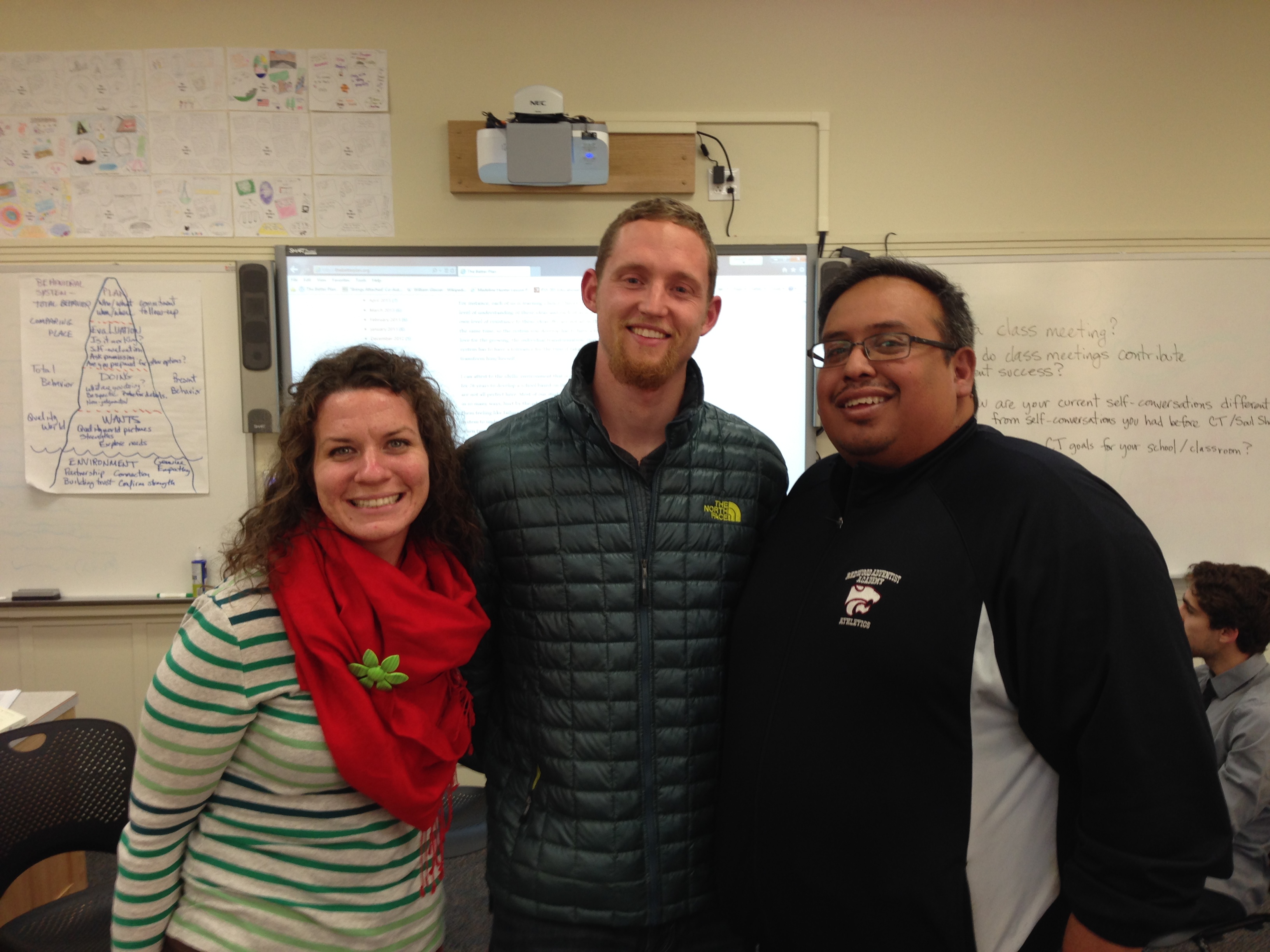
Three of those who attended the recent Choice Theory Study Group: Sonya Reaves, teaching principal at Oakhurst SDA Elementary near Yosemite; Joel Steffan, Gr. 5/6 at Foothills Adventist Elementary School in St. Helena, CA; and George Barcenas, Physical Education and Spanish teacher at Redwood Adventist Academy in Santa Rosa, CA.

Three of those who attended the recent Choice Theory Study Group: Sonya Reaves, teaching principal at Oakhurst SDA Elementary near Yosemite; Joel Steffan, Gr. 5/6 at Foothills Adventist Elementary School in St. Helena, CA; and George Barcenas, Physical Education and Spanish teacher at Redwood Adventist Academy in Santa Rosa, CA.

Our recent Choice Theory Study Group on December 7 broke a record for attendance and we are already looking forward to our next study group on January 25. Put the January date in your calendar now and plan to join us for choice theory discussion and activities. One of the topics we covered on the 7th had to do with classroom meetings. I have included the handout here. Check it out.

Class Meeting guidelines

———————–

Classroom Management Philosophy Paper

I taught Classroom Management during Fall quarter and one of the culminating assignments for my students was to think about and write their philosophy of classroom management. We use Harry Wong’s The First Days of School and Marvin Marshall’s Discipline Without Stress, Punishment or Reward as course textbooks. Part of class time is devoted to introducing choice theory to these future teachers. We really only have time for an orientation to the choice theory principles, yet this year’s students really seemed to take to the ideas. One of my undergraduate students, Laura Helm, put together a concise, yet effective description of the teacher she wants to be. I thought I would share (with her permission) what she wrote.

Classroom Management is an integral part of a teacher’s career. Without effective management, it is very challenging for successful learning to take place. Classroom management seems like a daunting task, and it can be very challenging. After taking this class, I am more prepared to tackle this aspect of being a teacher. Taking Classroom Management has taught me an incredible amount about effective management and the different ways to achieve it. My classroom management philosophy involves self-governance, Choice Theory, procedures, internal motivation, moving away from rewards and punishments, and having relationships with your students.

Possibly the most important concept we learned about is Choice Theory. Choice Theory focuses on self-responsibility along with natural consequences. It is about having the power to choose how you act and how you respond. A significant point of this theory is that you are the only person you can control, and you cannot control others. We govern ourselves and have the power to choose our behavior. Everything we do is working to fulfill our basic needs, as outlined by Glasser in his Choice Theory model. Implementing Choice Theory and its principles in the classroom is essential. Teaching students the significance of self-responsibility and about our basic needs is very important to me. Not only will this be of great importance in the classroom, but also in the future lives of my students. Choice Theory is a way of understanding ourselves and our students on a deeper level, and getting to know how each of us is motivated.

My key beliefs about classroom management surround Choice Theory and management without coercion. I believe that we are motivated intrinsically; therefore external coercion is not effective or beneficial. We do what we do because of something internal, and to fulfill our basic needs. External control, such as rewards and punishments, is not an effective motivator. I think we, as teachers, need to understand that everyone is motivated internally and use that to help the learning process.

In my opinion the use of rewards and punishments in the classroom should be lessened, if not eradicated, as they are a form of coercion. By using rewards, students only focus on getting the reward, not the importance of the learning or doing the work. Punishments often do not address the specific behavior, and can be altogether unrelated. How is it going to help a student learn not to hit other people if he is forced to sweep the parking lot instead of working on changing his behavior? Instead of punishments, natural consequences should be emphasized. There are consequences for behavior and choices that are made, some positive and some negative. Since the student chose their behavior, they will deal with the natural consequences that come about as a result. Unrelated punishments may help for a short time, but they will not help the student to learn why their behavior was wrong and will prevent them from growing or learning to change their behavior.

Another crucial aspect of classroom management in my opinion is procedures. Procedures are of the utmost importance in having a well-managed classroom. Procedures are the way in which the classroom is run and how things are done. Procedures are not rules and they do not have punishments, but students face the consequences of not following procedures correctly. Having specific procedures in place leads to a classroom that runs smoothly. This was made clear to me from watching the video of Mrs. Seroyer’s classroom management techniques. This video impacted me and gave me a new perspective on how to manage a classroom. She emphasized the importance of procedures and how they are one of the most significant parts of effective classroom management. By setting up procedures, teaching them, then rehearsing them until they are learned, students know what the expectations are and how they are supposed to do tasks in the classroom.

To me one of the most important aspects of classroom management is having a strong, positive relationship with your students. Genuinely caring about your students and showing them that you want them to succeed and are there to help is crucial. Once the students believe this, they will be more willing to put effort and care into their work and their behavior. Heather Denton highlighted the importance of this when we visited her classroom. She told us that students will be less willing to care about what we are saying if we do not show them we care for them. I agree with her that relationships are extremely important and are essentially the basis for successful classroom management.

Before taking this course, I had no knowledge about Choice Theory. I thought the only way to manage classrooms was what I had seen and experienced from being a student in many different classrooms. Most of my teachers managed their classrooms with the use of rewards and punishments, and I figured that was the most effective way to manage a classroom. I was usually one of the “good” students, and I rarely got in trouble. When I did, I was punished by time out, having my name written on the board, or something similar that did not help me learn from my mistakes.

My view on classroom management changed substantially after taking this course. It was intriguing to learn about Choice Theory, and that there is more than one way to manage a classroom. Just because classrooms are traditionally managed with rewards, punishments, and other forms of external control, it does not mean that I have to manage my classroom in those ways. I have realized that managing students begins with having a relationship with them. I also understand that everyone is motivated internally, so coercion is not effective with most students. Using rewards, punishments, and coercion never sat well with me, but now I have the knowledge to teach without using coercive techniques.

It is so encouraging to know that candidates such as Laura will be joining our teaching ranks shortly.

————————-

It’s been almost a year exactly since I started The Better plan blog. Thanks for being a part of the journey.

If Dr. Glasser’s Ideas Are So Great . . .

The following article was written by Charlotte Wellen, a teacher at Murray High School in Virginia. Murray was the first public high school in the U.S. to become a Glasser Quality School.

puzzled-look

If Dr. Glasser’s Ideas Are So Great and Have Been Around for Fifty Years, Why Aren’t All Schools Using Them?

— A Murray High School Perspective

Recently, I received an email from a teacher who hopes to convince the administration and staff of her school to move in the direction of creating a Glasser Quality School. She was asked the question that is the title of this article and she wanted my help to answer it. Perhaps she sent this to many of the Glasser Quality Schools. I found this a compelling question and I wanted to share my answer here because we have all given a lot of thought to our goal of teaching the world choice theory and we have often wondered why there aren’t more Glasser Quality Schools. Below is my answer to her question:

What a great question! Actually, it has only been 20 years since Dr. Glasser put his ideas together into a form that could help people create an entire school. He came out with The Quality School and Quality School Teacher in the mid-90’s. Also, this is not the type of program that can be started in a school at the beginning of a year and then changed a couple of years later. This is a program that starts up inside of each participant, from the administration to the teachers, the students, and finally going home to the parents, and home to the teachers’ families and the principal’s family, too.

Choice Theory is not a program. Glasser Quality Schools are not a program. They are a thought system, a way of life, a new way of thinking about the world, about the relationships between students and teachers, administrators, and families. It has taken us 26 years to create our current level of mastery of Dr. Glasser’s ideas here at Murray. We still have a long way to go and are involved in making many changes, many improvements. Dr. Glasser always said that 95% of any problem was a system problem and only 5%, if that much, was a people problem. So, the job of creating a Glasser Quality School is to come up with a system that works to create happiness in the school. This is not as easy as it sounds, nor as difficult.

For instance, each of us is learning Choice Theory. Each of us has our own level of understanding of these ideas and each of us is wrestling with our own level of resistance to these ideas. We are not all in the same place at the same time, so the system you develop has to have a tolerance and a love for the growing, the individual transformation, that is required. The system has to have a tolerance for the time it takes for each individual to transform him/herself.

I can attest to the idyllic environment that is created when you work hard for 26 years to develop a school based on Dr. Glasser’s Choice Theory. We are not all perfect here. Most of our students have been very hurt by life in so many ways, hurt by the education system that has left too many of them feeling like failures. We have conflicts every day, but we have a system to understand the conflicts and to work them out. For instance, when two students became angry at one another on Friday, both of them requested to be able to separate from the other, so no physical conflict would arise. They walked away. This is the result of years of work with these two boys to learn Choice Theory, that they can get in charge of the choices they make when anger hits them. They did not get “in trouble” because they raised their voices at each other and disrupted class. They got time and attention from trained and loving teachers who heralded their decisions not to hit each other and helped them think through what had happened that led to the conflict, what they each could have done differently, and on Monday, will help them mediate with each other until a plan they can both agree with is in place and a solution to their conflict has begun.

There is so much to say about this program. Our test scores soar because our students are happy here and want to do well to help the school, and themselves. But the best of all is the feeling of camaraderie, of friendship between students and teachers. Here, there is trust between us. We work hard at it. We constantly work to improve our relationships because we know kids won’t learn well from people they don’t love and who don’t love them. We use the word love all the time here. We aren’t afraid to say we love our kids and they aren’t embarrassed to say they love us, too. We think schools should be built on a foundation of love and trust.

So, why aren’t there thousands of these schools — good question. We work all the time to help schools consider adopting these ideas. Our students travel to schools around the world, teaching people how to start up a Glasser Quality School. No one is as great a spokesman about Glasser Quality Schools than the kids who are educated here. Just last week, we hosted a team from a county in North Carolina who had heard about Murray and wanted to see it in action. Afterwards, they were so overwhelmed by the level of love the kids shared about the program and the level of understanding they had about why they are being educated the way they are. They said they want that for their school. They asked our kids for advice about how to implement these ideas with middle school kids and got lots of suggestions. They are planning to bring a team of Murray kids to North Carolina to talk to their faculty.

I think that it takes a long time and a lot of commitment to help an entire staff come to believe that it’s possible to create a school based entirely on love and respect and to be willing to transform themselves by learning Choice Theory, Reality Therapy, and Lead Management, in order to bring this about. For instance, teachers may have become set in their ways and it might be tough for them to give up their “teacher look,” the one that nails a kid who is disrupting. But that look is a threat. That look has no place in a Glasser Quality School. So to even give up the looks we’ve come to rely on, that’s asking a lot. And it takes YEARS of practice, but like anything worth doing, years of practice pay off hugely! We think our kids deserve an education from a team of professionals who have been practicing for years to treat them respectfully, and to expect great things from them, so they feel inspired to excel. But I think you can see that each of the individual transformations that will need to take place for this to happen take time and inclination and especially belief.

When we first started Murray, we all believed we could change schools so kids and teachers would like them more. At first, we brought all our old controlling and punitive behaviors with us and we used them all. This was good because we got to see that they don’t really work, if working means helping resistant students come to love us and to therefore love school and education. And because we began the school open to changing education in a serious way, we kept tinkering. We kept developing methods of helping ourselves as staff grow and slough off our old punitive ways and to keep from having a school of chaos with kids running around causing untold trouble. We learned that kids who love their school don’t want to cause trouble and are willing to keep working to unlearn their old habits of acting out and hurting others without thinking. They are mostly grateful to be learning the skills they can clearly see will help them in their lives, both in and out of school.

So, if you want to talk more about Glasser Quality Schools, feel free to call me. I LOVE talking about Glasser Quality Schools because I believe that these ideas are so superb that one day all schools will be using them. Educators would be fools not to use these ideas when they work so well at helping people love school and learning.

I would be greatly interested in your opinions in this site regarding my thoughts about the challenges of setting up thousands of Glasser Quality Schools.

Love,

Charlotte Wellen, NBCT, Murray Choices Teacher
Instructor at the William Glasser Institute – US

Murray High School
Ashby Kindler, Principal
Charlotte Wellen, Contact
1200 Forest Street, 
Charlottesville, VA 22903
PH: 434-296-3090   
FX: 434-979-6479
wellen1@earthlink.net

——————————-

Tomorrow is Thanksgiving Day, 2013!
May each of us become able to recognize the blessings for which we can be thankful!
And may we choose to be grateful.

——————————-

Choice Theory Study Group
December 7

4 Reasons to Choose Misery

images

People spend billions of dollars on creams, and even surgeries, to look younger from the outside-in, yet maybe our aging has more to do with what’s happening from the inside-out. For instance, a recent study indicates that people who are depressed appear, at a molecular level, to be biologically older. An article in the journal, Molecular Psychiatry*, which reported on a study of over 2,000 subjects, concluded that depression can make us older by speeding up the aging process within our cells. So much for creams and scalpels.

There may actually be good news in this molecular view! Glasser believed that we choose our misery. Could it be that in the process of negotiating life’s twists and turns, and that as we choose to be happy or choose to be miserable, we are actually choosing our age? This is not the stuff of science fiction movies; this is a very real possibility.

Glasser described in Control Theory* (1985) that it can make sense to choose misery. In fact, he listed four reasons for people making such a choice.

1. It keeps angering under control

Rather than expressing our anger outward, and maybe even threatening and hurting other people, we turn it inward. We don’t know how to deal with our anger in the public arena, so we direct it to a private location.

2. It gets others to help us

When we show up as miserable or depressed it can serve as a cry for help, which can be especially appealing for men, who often don’t like to just come out and ask for help.

images-2

3. It excuses our unwillingness to do something more effective

The more miserable or depressed we become, the more helpless we become, too. We convey that we are not capable of doing much when we are overcome with misery.

4. It helps us regain control

When we feel out of control because of how someone else is treating us or because of the difficulty of a circumstance, choosing to be miserable or to depress can very much increase our sense of control. No one can challenge us when we are helpless.

Any of these behaviors can make sense at the moment. We are desperate for a behavior that will help us feel better and we rummage around in our behavior system for something that will give us even a smidgeon of control. Being miserable doesn’t feel that great, but it feels better than the alternative, whatever we perceive the alternative to be. Somehow, misery is need-satisfying.

Of course, it is not usually a good idea to tell a person who is in the midst of being depressed or miserable that he/she is choosing it. A miserable person can become quite defensive of their misery. But there will come a time, when things are better or when the pressure is off a bit, when he/she will be more open to considering their role in the misery process.

And what a special moment it is when you first realize that misery isn’t something that just happens to you. An awareness begins to dawn in your thinking, an empowering awareness that maybe, just maybe, you can literally choose your state of mind. As you grow in your understanding of choice theory, it’s like you become immunized against misery and even depression. Yes, it can be scary to realize how much power and responsibility you have for your own mental health, but the trade from victim to empowerment is well worth it.

Without this kind of immunization our misery can sap us of the life force within us and quite literally age us way too quickly. I say go for the choice theory immunization. It keeps you young and happy all at the same time.

* The article about depression and aging can be found at http://www.bbc.co.uk/news/health-24897247

* Control Theory has been re-printed as Take Charge of Your Life: How To Get What You Need with Choice Theory Psychology. It is available in paperback and electronically through Amazon and other booksellers.

———————————

IMG_3941

My thoughts have been directed toward Beirut, the schools there that I had the privilege to visit recently, and to the incredible people who work and teach in those schools. My heart goes out to them as tension and violence once again impact the region. I am praying that the Spirit will give you courage, comfort, and protection. I am praying that your schools will continue to thrive!

IMG_3953

———————————

If this blog post has been helpful, remember to click on the LIKE button below. Also consider re-posting the blog to your Facebook friends.

———————————

Share The Better Plan address with others who are interested in choice theory –

http://thebetterplan.org

———————————–

Next Choice Theory Study Group

December 7

The Amazing Grid on the Carpet

Professor Tom Lee and his amazing grid on the carpet.

Professor Tom Lee and his amazing grid on the carpet.

I was walking by one of the classrooms in our department recently and caught a glimpse of something going on that lured me into the room to find out more. It turned out to be Tom Lee’s middle school methods class. Tom is one of my colleagues in the teacher education program at PUC and is famous for coming up with learning activities that are engaging and relevant.

What I saw when I entered the room was a grid that Tom had taped onto the carpet. He had moved tables in the room to create a large space for this grid, which had Gardner’s eight multiple intelligences along the vertical axis and Bloom’s taxonomy categories across the horizontal axis.

As a reminder, Gardner’s intelligences included –

1) Verbal/Linguistic

2) Logical/Mathematical

3) Visual/Spatial

4) Rhythmic/Musical

5) Body/Kinesthetic

6) Intrapersonal

7) Interpersonal

8) Naturalistic

Bloom’s taxonomy (the new version) includes –

1) Remembering

2) Understanding

3) Applying

4) Analyzing

5) Evaluating

6) Creating

The students were asked to place a marker on one of the grid spaces and then describe a lesson focus or activity based on that grid space’s “address.” For instance, a student could place a marker on the space that combined Body/Kinesthetic (vertical) and Applying (horizontal), and then, on-the-spot, create a lesson focus based on a combination of those two categories.

A blogger in search of a bird's eye view of the grid.

A blogger in search of a bird’s eye view of the grid.

Instead of placing a marker in a grid space students could also throw a marker onto the grid for a more random challenge. Students just needed to keep in mind that a row or column could not contain more than two markers. Initially, students would be able to comment on areas in which they felt more confident, however as the game went on they would need to comment on every area of the grid, regardless of their level of prior knowledge.

I joined in the activity and enjoyed listening as students displayed their creative understanding of Gardner’s intelligences and Bloom’s taxonomy. There was a special energy in the room as students engaged in the activity.

What does Tom Lee’s lesson have to do with choice theory? From a classroom perspective, quite a bit. Choice theory explains the importance of school being a need-satisfying place. Tom’s lesson was need-satisfying on several levels.

Purpose/Meaning – Students were allowed to make personal meaning from the experience. The activity was very relevant to them and challenged them to take previous learning (Gardner and Bloom) and add new layers to their own understanding.

Love/Belonging – There was an obvious camaraderie that developed during the activity. Students rooted for one another and offered comments in support of each other. This camaraderie existed between students and teachers as well.

Power/Success – You could tell students felt satisfaction as they came up with their own lesson objectives. Their ideas were ultimately affirmed by classmates and by Tom.

Freedom/Autonomy – Students had so many choices to make during this activity. They could choose the grid space to attack, and afterward they would choose the kind of lesson they wanted to teach.

Joy/Fun – Joy and fun were both present throughout this activity. Students were engaged with the learning and with each other.

Safety/Survival – I think the students, to some extent, looked into the future and saw themselves as teachers working through the same kind of challenge. Doing the activity well had something to do with their professional survival.

I love the “grid on the carpet” that Tom came up with. In future Soul Shaper / choice theory workshops that I teach I want to steal this great idea. For instance, I can see having the Basic Needs across the top (the columns) and content areas on the side (the rows). By content areas I mean Social Studies, Math, Science, Language Arts, etc. I will then have participants select a grid space (either intentionally or randomly)  – let’s say the grid space combining Social Studies and Freedom/Autonomy – and then describe how lesson objectives in that content area could address or meet that basic need. This idea is really growing on me!

Can you think of ways in which you could use the “grid on the carpet” idea? And could you take a moment and share your idea with the rest of us?

———————————–

Remember to invite a friend to join us on The Better Plan blog. It’s easy. Just go to –

http://thebetterplan.org

————————————

If you like today’s blog, click on the LIKE button below. Your support will help The Better Plan grow. (If you haven’t done so yet, you may need to register with WordPress to be able to LIKE a blog, but the process is very easy.)

————————————-

Our next Choice Theory Study Group is December 7!

Why Are So Many Christians So Un-Christian?

slide.001

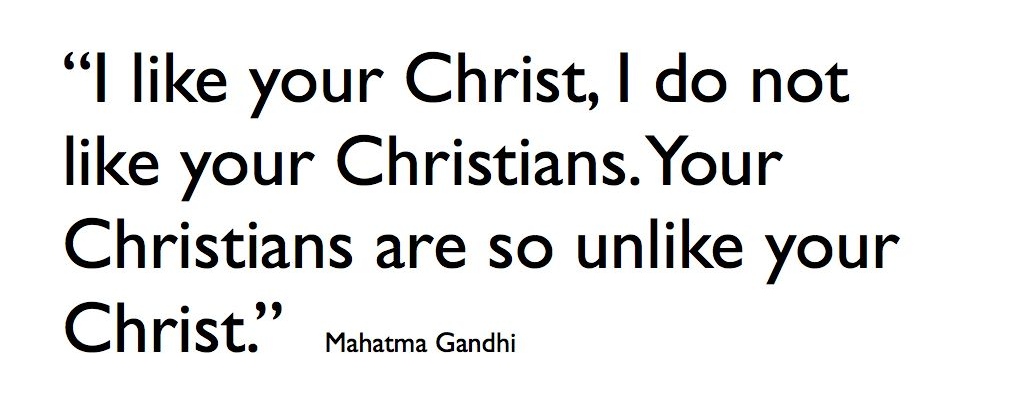
A recent article headline caught my attention. Why Are So Many Christians So Un-Christian? it asked. I have been asking that same question for years. What gives with people who claim Jesus Christ as the ultimate role model putting so much energy into wanting to govern people into behaving the way they see fit? What gives with “Christians” wanting to deny others health care, or cutting food stamps for the poor, or grousing about raising the minimum wage, or fighting efforts to care for the planet? What is it about their fascination with guns, their promotion of the military, and their craving for power in general?

Choice theory, it turns out, provides helpful insights into the cause of this disappointing reality. Two important components of the choice theory model are 1) the Quality World – the place in our heads where we store the pictures of the people, places, things, beliefs, activities, etc. that we find need-satisfying – and 2) the Perceived World – the reality that we perceive as our experiences pass through our knowledge and values filter. The Quality World is the most important of the choice theory concepts, however I find the Perceived World to be the most fascinating. Choice theory contends that from the moment we are born we begin to learn to satisfy our needs. This collection of need-satisfying people and behaviors forms our own personal Quality World, the center that motivates all of our behavior. The Quality World represents what we WANT. We experience the world through our five senses, although our perceptions are coded through filters before becoming our reality. Our Perceived World represents what we HAVE, or probably better put, what we THINK WE HAVE.

One of the filters our experiences pass through is our valuing filter or, put more accurately, the filter of our Quality World. Our personal Quality World represents everything we value and these values have an incredible influence on our perception of reality. We literally place a picture into our Quality World because we believe that picture will satisfy a need. That picture also now becomes a filter through which all of our perceptions must travel before being coded in the brain. These picture filters are very good at letting certain beliefs and images into our reality, modifying others, and in some cases, prohibiting other images and beliefs from coming anywhere near our reality.

Amanda Marcotte, the author of Why Are So Many Christians so Un-Christian?, may not be a choice theorist, but she explained the process very similarly.

It’s a process called rationalization or motivated reasoning, and to be perfectly fair, it’s how most people think about most things most of the time: They choose what to believe and then look for reasons to explain why they believe it. Huge reams of psychological research show this is just how the human brain works. Almost never do we look over a bunch of arguments and choose what to believe based on reasoning our position out. As Chris Mooney at Mother Jones explains, “We push threatening information away; we pull friendly information close.” Our faculties are usually put to the task of trying to defend what we already believe, not towards developing a better understanding of the world.”

Even before I had read Marcotte’s article, a passage in the book of Matthew got me to thinking about this topic. As part of his Sermon on the Mount, Jesus explained that –

“Your eye is a lamp that provides light for your body. When your eye is good, your whole body is filled with light. But when your eye is bad, your whole body is filled with darkness. And if the light you think you have is actually darkness, how deep that darkness is!”   Matthew 6:22, 23

Interesting that Jesus even described a filtering process that affects our ultimate view of reality. When your eye is a good filter you are filled with light and truth and healthy insight; when your eye is bad you are filled with darkness. The bad eye filter is so effective that a person can reach a point where they think they are filled with light, even as they are surrounded in darkness. “How deep,” he says, “that kind of darkness will be.”

slide.001

How is it possible to reach the point where you think you are in the light, yet you are in a total blackout? Especially spiritually? How is it possible to be concerned about living a Godly life and attend church and give offerings and hang out with other “Godly” people, and yet be filled with darkness? Which brings me to another text that got my attention. In the upper room, prior to His arrest and crucifixion, Jesus, wanting to strengthen His disciples and alert them to a terrible reality ahead, said –

“I have told you these things so that you won’t abandon your faith. For you will be expelled from the synagogues, and the time is coming when those who kill you will think they are doing a holy service for God.”   John 16:1, 2

Talk about blackness. Murder as a holy service for God. Jesus experienced this kind of “holy service” himself, by religious leaders who killed Him, but wanted the whole affair done as soon on Friday afternoon as possible, since they wanted to get home by sundown so they wouldn’t break the Sabbath.

Such is the power of our ability to create our own reality. We have everything to do with creating what we WANT (Quality World), and we also have a great deal to do with creating what we THINK WE HAVE (Perceived World). My hope and prayer is that we will let God re-create us in His image, rather than us putting so much energy into changing Him into our image. Love, amazing love, is at the heart of God’s character and He wants us to not only experience it ourselves, but also to share it generously with others.

This is the message we heard from Jesus and now declare to you: God is light, and there is no darkness in him at all. Dear friends, since God loved us so much, we surely ought to love each other.    1 John 1:5; 4:11

(You can access Marcotte’s article at http://www.alternet.org/belief/why-are-so-many-christians-so-un-christian.)

——————————–

Let’s work together to increase the number of Followers of The Better Plan blog. If you think that good stuff is being shared on the blog, why not invite others to join us? There are different ways of doing this. You can –

1. Share The Better Plan address with a friend, co-worker, or loved one. That address is  http;//thebetterplan.org

2. Click on the LIKE button at the end of a post. The LIKE buttons are a big deal in the blogging community. (You need to register on WordPress to be able to LIKE a blog, but this is a very simple process.)

3. Share a blog that you appreciate with your Facebook friends. This is easy to do and it will greatly increase the number of people who see the post.