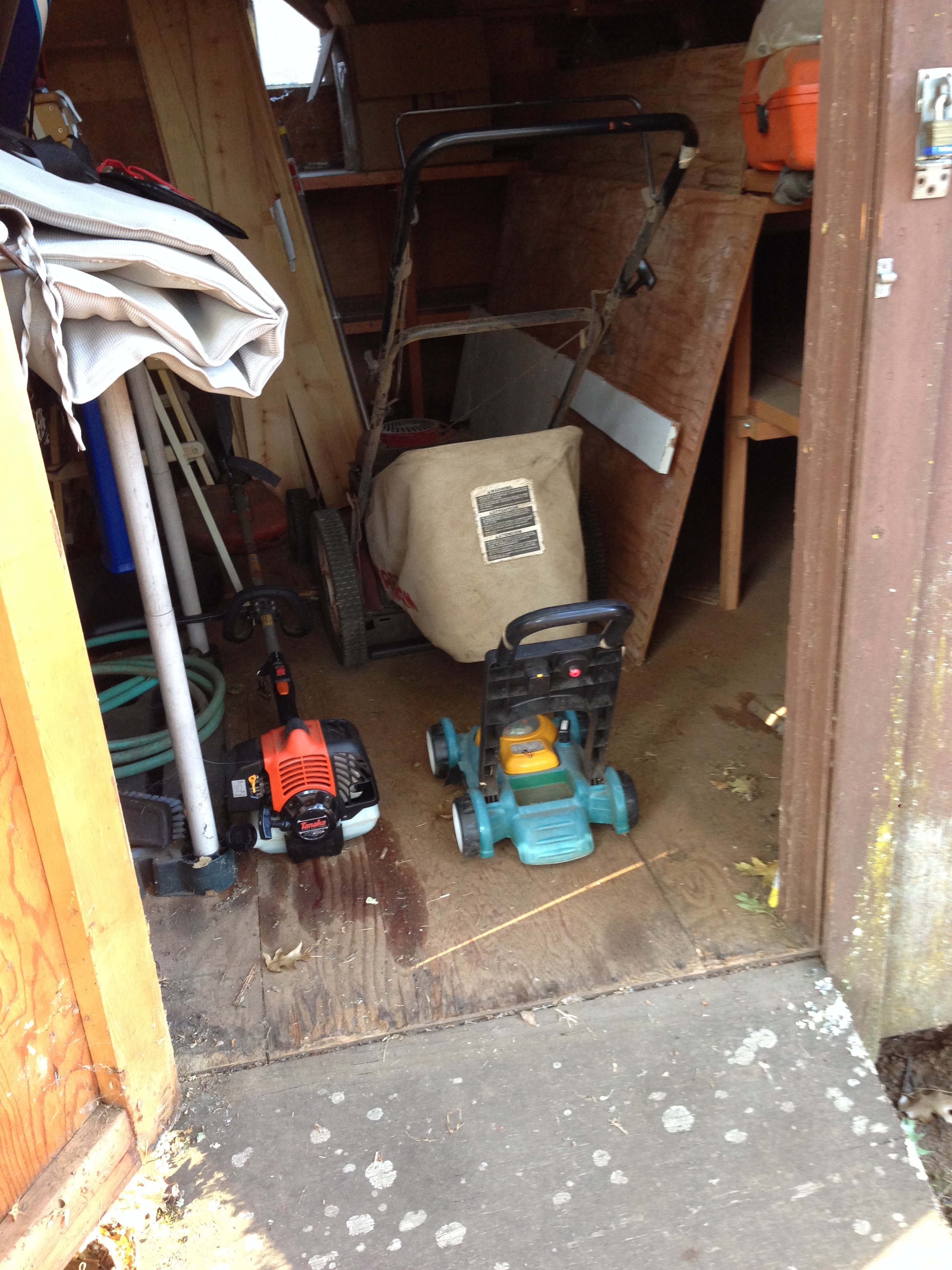
There is so much choice theory in this picture.
Two lawnmowers parked in a backyard shed, their work done for now, resting as the grass grows once again, but ready to get back at it when the lawn once again needs a trim.
Two lawnmowers. One real, heavy, dusty, its grasscatcher hanging out the back; the other small, plastic, unimposing, a toy.
Of course, the picture captures more than these two objects. It captures something about a relationship, something about the caring habits, and something about lead management. You can see the lawnmowers; do you see choice theory sitting there, too?
When I get the mower out to mow the lawn, my grandson invariably grabs his mower and wants to join me. He will ask, “Grandpa, can I help you mow the lawn?” And I will answer with something like, “Yes, I could use the help. Thank you very much.” I can imagine an adult answering that question with “No, I need you to stay out of the way. Lawnmowers are dangerous and you need to keep your distance.” Or maybe “No, I don’t need your help. You can play on the lawn after I am done.” I don’t like those answers, though, since I really like my grandson’s help with the different projects in which I am involved.
As I mow he is pushing his mower across the grass, too. Sometimes out in front of me, sometimes behind me, sometimes off to the side. He has a system, a plan that he follows, much the same as me having a plan as I work to efficiently get all the grass cut. He laughs a lot as he darts around, and I do, too, for that matter. When I stop to empty the grasscatcher, he stops, too, and walks with me to the green trash can, where we empty the clippings.
This last time, after we were all done with mowing, I pushed the mower to the back of the property, where there is a shed that keeps stuff like lawnmowers. I pushed it up the little ramp and was about to shut the shed door, but noticed that my grandson was now pushing his little mower up the ramp, too. I asked if he was sure he wanted to leave his mower there, as he wouldn’t be able to play with it if it was locked in the shed. He said he understood that, but that he wanted his mower to be in the shed, too, ready for the next time the lawn needed to be mowed.
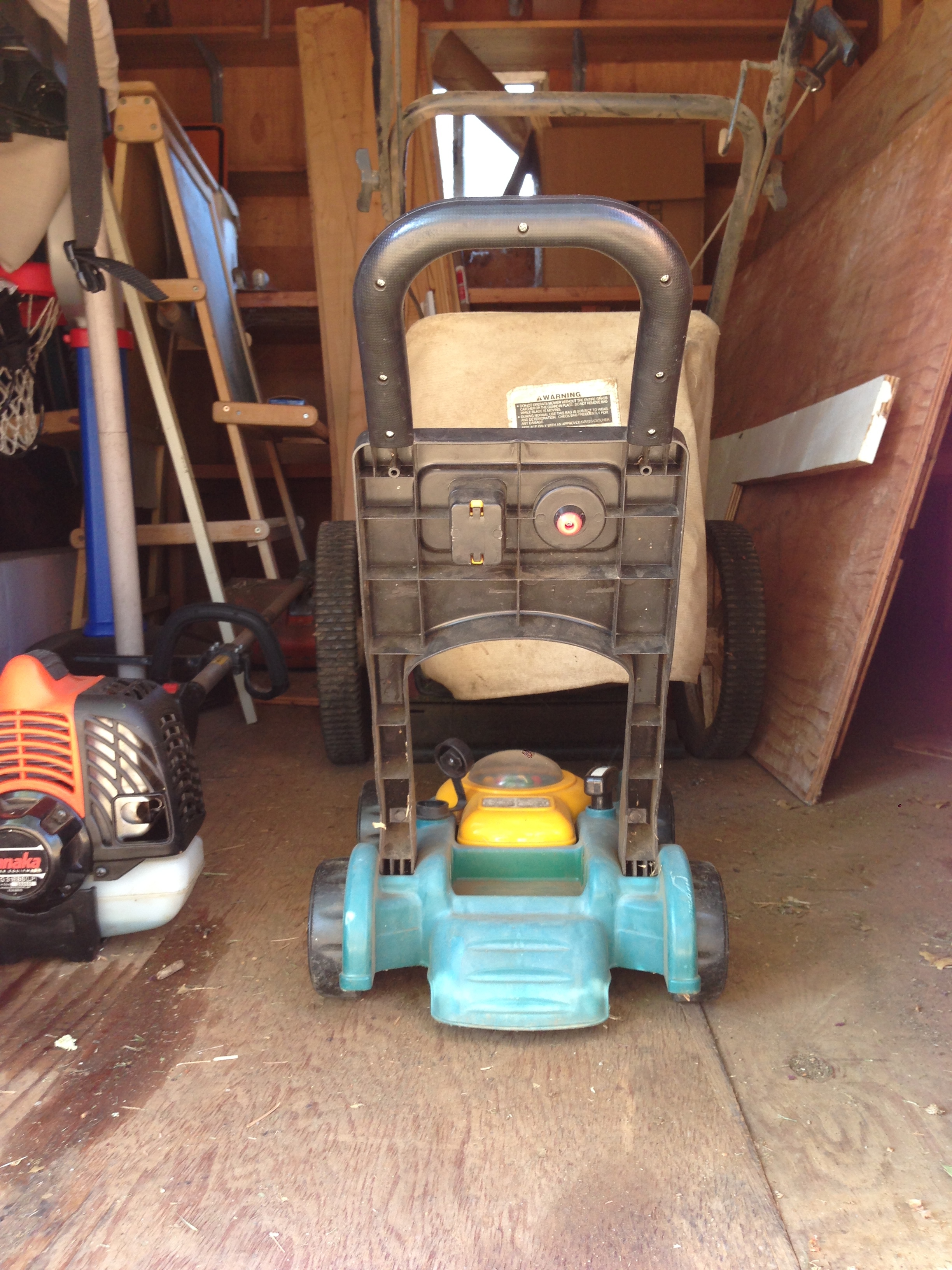
I suppose I could have said, “No, let’s not put your mower in the shed. That’s not where it goes.” But that didn’t occur to me. I was so touched by our two mowers sitting there together.
So where’s the choice theory? A lot of you, as you read this, have already come up with multiple examples. Here are a few that come to my mind –
The Relationship
My grandson and I have a really good relationship. I enjoy being with him and I like it a lot when he wants to help me. He talks a blue streak as we work, some of the talk related to the job, but a lot of it not. And while sometimes he actually can hand me something I need or carry a board to where it is needed, not all of his “help” is actually helpful. But I want him close, I want his “help”, all of it.The Caring Habits
Words like accepting, encouraging, and listening come to mind as I think about our mowing the lawn together. Yes, he is just pushing a toy around, and yes, I could respond in kind, but I don’t think our two mowers would be sitting in the shed together right now if I used one of the deadly habits like criticizing or complaining.
Lead Management
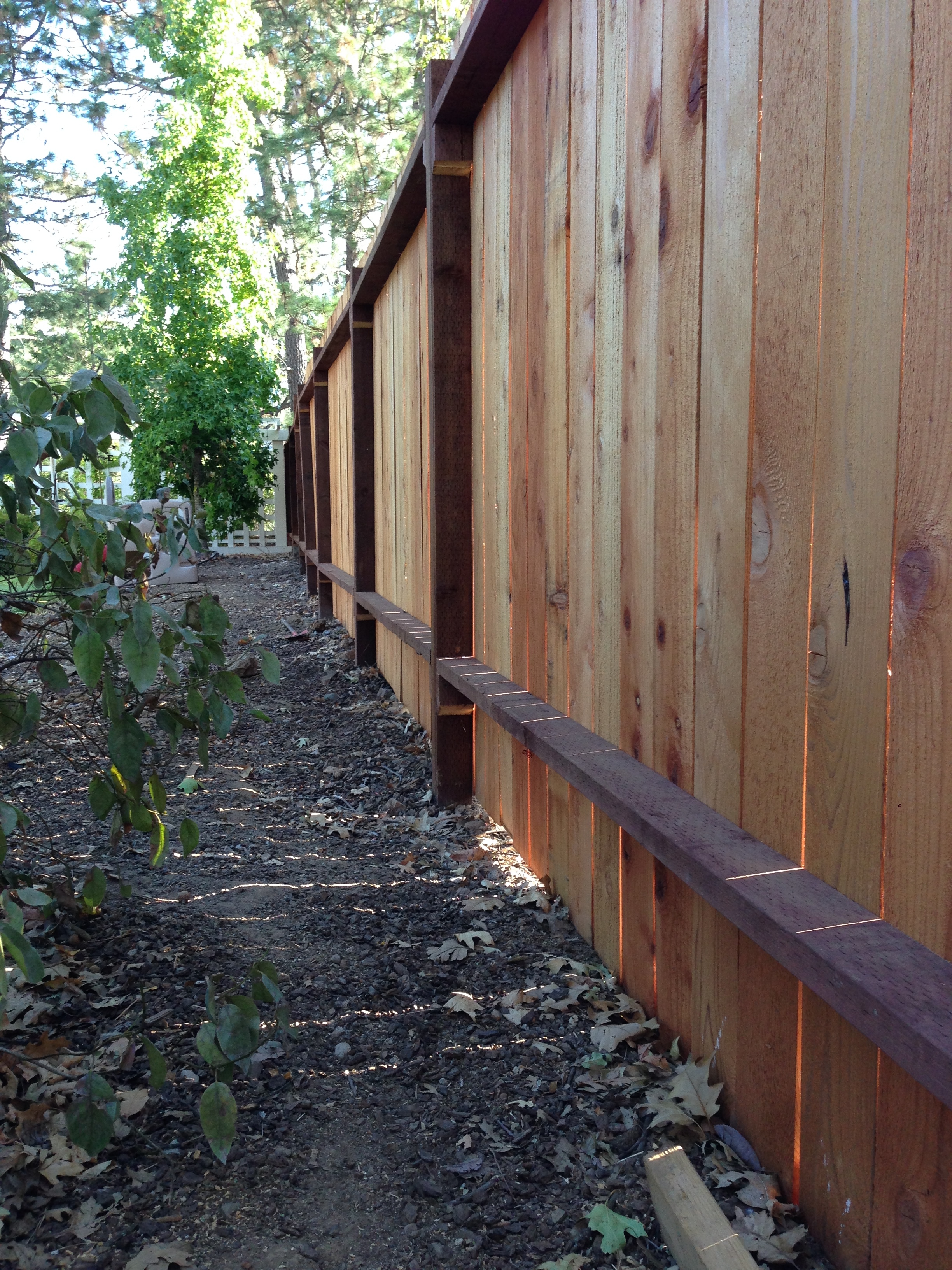
My grandson loves helping with projects. A few weeks back I constructed 75’ of new fence. It was a grueling job that involved the removal of the old fence, disposal of the old boards, removal of the old fence posts, and the digging of the new holes. It was hot, too. And yet he was with me a lot of the time. Out there in his Crocks and his underwear, talking, listening, handing me stuff, and doing stuff on his own. He is growing up to be an involved, helpful young man, not because we are making him be that way, but because we are open to his being involved. We are supportive of his interest and his efforts. At times we invite his participation or try to persuade him to join in the work. Usually, it is more about accepting his offer to help.
The picture of the two mowers captures what is possible when we place a high value on relationships and keep the caring habits in mind. Whether young or old, people thrive when the elements of lead-management are present.
===============

Me and Chris Kinney.
The talk at Lower Lake High School this past Thursday evening (9-11-14) went well. Chris Kinney, a teacher at the school and one of my former students, organized the event and recorded it, too. There are administrators and teachers at the school that want to head in a choice theory direction and Chris is fueling and supporting that vision. I will be sharing more about this in an upcoming blog. Well done, Chris! It was a great evening all the way around!
===============
We have been stuck on the number 16 when it comes to Amazon book reviews for Champion of Choice. It would be great for the book, and by extension the ideas of choice theory, if that number could go significantly higher. Reviews don’t have to be long and they are simple to do.

Now priced at $17.23 on Amazon; 16 reviews have been submitted. (We’ve been stuck on 16 for a while.)
The eBook version can be accessed at –
https://www.zeigtucker.com/product/william-glasser-champion-of-choice-ebook/
The paperback version can be accessed at –
or from Amazon at –
Signed copies of Champion of Choice can be accessed through me at –
 The Better Plan . .
Beautiful Jim, heart touching and informative, simultaneously. Best of flowering wonders with that project with Chris. You are a great example of how to make CT credible to those who haven’t discovered its enormous potential. …
I like that phrase “making CT credible.” That really is what we are trying to do, yourself included.
That was a treat . . . .brrrm, brrrrrmm
When we first put the lawnmowers away, I didn’t catch the moment. It wasn’t until several days later, when I had to go out to the shed to get something else that “picture” caught my attention. It was a cool realization when it hit me.
This a great story, Jim.
I have found that it is much easier for myself to use Choice Theory when dealing with others and my students, than with my very own offspring. When I was working as a 1-on-1 aid in peoples homes with children who were identified as Emotionally Disturbed or Autistic, I found my patience with those was also far greater than that of my own children.
I wonder if others have this struggle also.
Thankfully I have my wonderful wife who helps to keep me in check and remind me when I head in the wrong direction with the children.
I appreciate your candor, Chris. I think many of us have found your discovery to be true for us as well. Maybe it is easier to be accepting of other people’s kids because we don’t have the final responsibility for them. At the end of the day somebody else will deal with them. Maybe we don’t feel that we can really control kids at school, yet we sure better be able to at home. And maybe (and this is such a significant thing) we feel that others are looking at us to see how much control we have over own children. We might feel this kind of pressure to have our children behave a certain way. I think preachers’ kids and teachers’ kids may have to especially deal with this, as preachers and teachers can put pressure on themselves to portray a certain public persona. (As a teacher who grew up as a preacher’s kid, I kind of know about this from both sides.)
It s always harder, Chris, with those with whom we are more emotionally tied. SR habits get in between the logical reasoning brain and block our vision. Getting rid of those habits takes so much longer. They are embedded in our kinesthetic memory from our own upbringing which is why Glasser warned us we have to be steadily working on this for at least eighteen months before we even become aware that we are turning our worst habits around. Just keep praying and striving. You are certainly on the right track. I have found working with autism and especially Aspergers that the choice theory chart works wonders. They understand it better than I did when I first saw it due to it’s mechanical components. A lot easier for them to understand than people.
Apply some of these phrases to church. “He is growing up to be an involved, helpful young man, not because we are making him be that way, but because we are open to his being involved. We are supportive of his interest and his efforts. At times we invite his participation or try to persuade him to join in the work. Usually, it is more about accepting his offer to help.” Usually it is more about accepting his offer to help. We need to mentor and pass the torch to the young adults coming up — and the church could see it’s dream come true if we are patient and supportive of their contributions. Hard lesson to learn but so valuable.
You and I are on the same page. I have been thinking, and continue to think about this very area.
This blog piece is beautiful. Thank you for sharing this personal example.
With regard to the comment above. I totally agree. I have heard one or two pastors (not always from our local area) grouse about “return on investment,” implying that the amount of money their church gives to help our schools does not translate to teen participation in church. I have to work very hard not to be upset when I hear that. If our kids aren’t invited, aren’t asked to participate, and have no relationship to you or others at your church, why would they put themselves out there? When asked, and especially when personally invited, to participate in service or just to help someone they know, our kids almost inevitably rise to the occasion. They are learning how to serve, and they need to see that their contributions are valuable and significant to someone else. Adults have to reach out first. If you ignore kids at church, and they feel like they have no part or say in what goes on there, it will mean nothing to them. (Besides all of this, is the “return” on your investment attendance/participation at your specific church building, or is it a child who grows up knowing that God loves them and learning to share that love?) *Steps down from soapbox.* Sorry for the rant.
Your response is important and insightful in its own right. I believe you really have identified a key principle, maybe the key principle, described in the blog. We just have to keep this principle in mind at every age level.
Sorry to keep putting my two cents worth in here folks, but Megan, your comment touches a deep place in me and tends to stir up a little righteous anger. This is the place where preserving the institution becomes more important to some than the original thrust that set that edifice on its way. I speak of all institutions here when those who lead go too far in and forget the beginnings of things. I think of Sam Shoemaker’s poem I Stand By the Door…go in great saints into the cavernous corners …but do not forget what it was like before you entered the door, the door to truth , the door to where God is. So I stand by the door to help those who still grope for the latch and for those who have become disenchanted with what lies inside….Thank you for your sharing, Megan. after all we are all as little children, groping our way attempting to parent ourselves where our own folks left off. Except we become as little children …you know the rest.
Robin, your message brought a quote to mind from Gibran when asked to speak of children who tells us to “enter their house of wisdom” as we attempt to lead them to the threshold of their own minds because “they go (grow towards) a world we will never know” “No man can reveal to you aught but that which already lies half asleep in the dawning of your (own) knowledge”
Such a poignant story, I am so grateful that you have one another. An amazing team for years to come!
Thank you for instilling in him a joy for projects and love of family.
I treasure what we have more than words can describe!
Absolutely loved this story. I could see it all so clearly..
He is quite the helper idn’t he?
He id.