Archive for May, 2013

We Want TO FEEL Good, Pt. 3

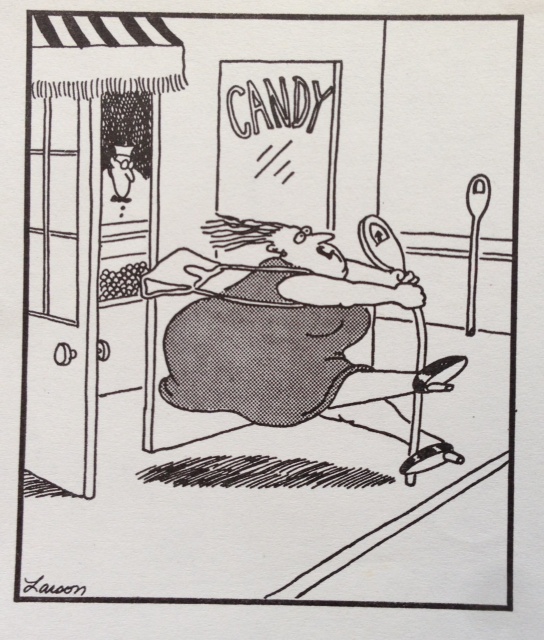
Candy Vacuum

Whatever you say about feelings, it won’t do them justice.
Invisible wave
Recurring ripple
Overwhelming tsunami
Like a bulldozer
Like a summer breeze
Like an ax
Like a scalpel
Nuclear
C4
Like sunshine
Pushed and pulled
Propped up and tripped
Luring and deflecting
Sucked in and spit out
Like a surfer can I choose the feeling I will ride?
Or am I the victim of an off-shore emotional earthquake?
Can I control or
Am I a thing with which to be toyed?
Say what you will about feelings.
Let me know when you’ve got it figured out.
I just want to drive my car where I want to drive it.
Bobbi S.

It would be difficult to overstate the power of our feelings. Our emotions can add a great deal of quality to our lives, yet they can also steer us in self-serving, destructive directions and seemingly drain us of self-control. This is because we place a lot of value on feeling good. We constantly monitor how we feel about everything from the temperature of the air around us, to the quality of the food set before us, to the way we are being treated by a colleague or loved one, to the image we see when we look in the mirror. Evaluating our feelings seems endless.

I believe that feeling good is so important that many people will go to almost any length to achieve it, even if it involves using artificial means as a prop. There are healthy ways to feel good. Glasser described how some activities could add creativity and power to our lives in his book, Positive Addiction (1976). When our needs are satisfied in way that adds value to our lives and that doesn’t erode our personal freedom the end result is a healthy feeling of accomplishment and happiness.

Unfortunately, there are also unhealthy ways to feel good. This can happen when we settle for a feeling of fleeting pleasure, rather than working for longer-lasting happiness. Achieving the moment of pleasure can also give us a temporary feeling of being in control. The many different ways we self-medicate are all testament to this pursuit of a feeling of pleasure. The illegal drug “industry” and to an extent, the legal drug industry are a huge part of this pursuit, however there are hundreds of other ways we self-medicate, too. Food, sex, gambling, shopping, and escaping into books and movies can each be part of this pursuit.

Something in choice theory that helps us understand the role of feelings in our lives is the concept of total behavior. Total behavior is based on several key beliefs –
1. Human beings are constantly behaving.
2. All behavior is purposeful.
3. All behavior is a total behavior.

Total behavior describes how each of our behaviors—whether making coffee in the morning, driving in morning rush hour, relaxing with a good book, arguing with an irate customer, or vigorously exercising at the local club—is made up of four parts. The total behavior is the result of a mixture of four distinct parts—one part representing our thinking, one part representing our acting, one part representing our feelings, and one part representing our physiology. The metaphor of a car is often used to graphically describe how total behavior works. Each of the tires represents one of the four behavior parts. Our thinking and our acting are represented by the front two tires, because in the same way we have direct control over the front two tires when we drive, we also have direct control over the thinking and acting parts of our behavior. Our feeling and our physiology are represented by the two back tires, because in the same way we don’t have direct control over the direction of the back tires, neither do we have direct control over our feelings or physiology.

To begin to understand how total behavior describes behavior, let’s take one of the behaviors mentioned above—making coffee in the morning—and attempt to define each of its parts.
Thinking – I’m thinking about the process; do I have the right amount of water and coffee? I may be thinking about the coming day, too.
Acting     – I’m actually making the coffee, installing the paper filter, turning the maker on.
Feeling    – The house is still quiet, yet I may be feeling tense due to everything that faces me that day.
Physiology – My eyes are still waking up, heart rate is starting to pick up a bit, breathing normal.
These four parts make up the behavior of making coffee in the morning.

The total behavior of riding my bike up the hill to Angwin would be much different (approx. 6 miles with an elevation gain of close to 1,700 feet):
Thinking – I think about the route, the road in front of me, especially going down the hill at 40 mph. Going up the hill I am often thinking about ideas, like what to write in this blog.
Acting – I am pedaling and steering and keeping my balance.
Feeling – Sometimes exhilarating; occasionally discouraged, but it is hard to stay discouraged while riding a bike up a hill. I often feel satisfied (even as others pass me) as I ride.
Physiology – pupils dilated at just the right amount; heart working fairly hard; breathing increased; sweat glands usually active; digestion facilitated, etc.
These four parts make up the behavior of riding a bike up a hill.

Total Behavior Car

This way of looking at our feelings helps us to understand their roles in our lives. They are an important part of our behavior, even though we don’t have direct control over them. For some of us, the feeling tire can become extremely oversized. (Picture the total behavior graphic with a feeling tire ten times bigger than the other three tires.) A car with one huge back tire would find it difficult to operate. In the same way, when our feelings get too big we can find it difficult to operate, too.

When feelings threaten to hijack us through their size and intensity, it helps to keep two things in mind –

1. Feelings are only feelings. They are our emotional response to our perception of reality. They do not have control over us, unless we give them that power. They give us feedback as we experience life, but they are just one part of our behavior.

2. We don’t have direct control over our feelings, but we do have indirect control over them through the front tire behaviors of our thinking and our acting. For instance, I admitted that a life circumstance may have me feeling a little discouraged as I start my bike ride, but that it is hard to stay discouraged as I zoom down the hill or struggle back up it. By deciding (thinking) to ride (acting), I ultimately affect my feelings and my physiology.

Just remember what a sixth grader learning about total behavior said –

“When your feelings get too big it’s like the driver of a car, while it’s like, going, letting go of the steering wheel and climbing into the back seat. That’s not too smart.”

We WANT to Feel Good, Pt. 2

Refund check

In this post we will cover the WANT part of the phrase – We Want to Feel Good.

The income tax refund sat on the kitchen counter dwarfing the rest of the mail and beckoning for someone to come up with a way to spend it. Jack and Jill Hill, marriage partners for 12 years and the recipients of said check, are each beginning to lock in on a vision for its use. Jack, ever the romantic, envisions a get-away vacation to an exotic location; Jill, on the other hand, envisions something closer to home, like say, a new couch. As they tinkered in the kitchen, part putting groceries away and part putting something together for supper, Jack found himself assuming that Jill’s lack of excitement regarding a trip meant that time together wasn’t important to Jill – in fact, he wasn’t important to her.  At the same time, Jill found herself assuming that Jack didn’t understand that her home was an important reflection of herself.  She wanted it to be beautiful and was embarrassed by the stained, sagging couch they had had since they got married.  Not only does Jack not care about my feelings, he doesn’t really care about me.

One of the ingenious elements of choice theory is a place in our brains called the quality world. Not only ingenious, it may be the most important element of all the pieces that make up the choice theory model. Its genius lies in the simple way it describes the complex process of why we do what we do. Understanding the concept of the quality world, especially our own personal quality worlds, leads to understanding what motivates us.

Ted Miller, who teaches Math at a high school near you, is frustrated that only a few of his 2nd period students seem to care about doing well in his class. Hector is one of those students. It’s like it satisfies a need inside of him when he does well in class. Gavin, on the other hand, is almost the exact opposite. He cuts up and clowns around in class constantly. It’s like .  .  . (a light bulb is about to go on in Ted Miller’s head), it’s like it satisfies a need inside of him when he gets attention for being the clown.

As said before, every person is born with a unique set of basic needs, but unlike many animals, humans do not arrive with a set of instructions as to how to meet those needs. From birth, human beings begin to learn how to meet their need for purpose and meaning, love and belonging, power and achievement, freedom and autonomy, joy and fun, and survival and safety. A behavior that results in a need being met is then stored as a picture in our personal quality world. This picture book is like a scrapbook in our heads in which we store the people, places, activities, beliefs, and things that help us meet one or more of the needs or that brings us a greater feeling of control. We put these behavioral pictures into our mental scrapbooks; we can also take pictures out of our scrapbooks. In other words, this process is purposeful.

Karina just about slams the plastic mixing bowl into a sink already cluttered with other mixing bowls from the supper she has created. She got the idea for a special meal this evening as everyone was headed out the door, scattershot, to school, to work, quick yells of good-by thrown over shoulders, earlier that morning. She planned the menu throughout the day. They needed to be together more as a family she thought. Now, as her husband finished mowing the lawn and her kids lingered in their rooms upstairs, the food was getting cold on a beautifully set table. A dish towel clenched in one hand, a serving spoon clenched in the other, Karina fumed as she pondered how to convey her anger.

It is important to understand that putting and keeping a behavioral picture in our quality world creates a target that we want the events in our lives to hit, or put more accurately, that we want the significant people in our lives to hit on our behalf. Putting a behavioral picture in our quality world is like setting a thermostat for a certain temperature. The thermostat monitors whether or not the desired temperature is present. If it isn’t it sends a signal to a heater or an air conditioner to do their thing. The temperature is the focus; that preset level of cool or warm becomes the target to achieve and maintain. Similarly, by putting a picture in our quality world we have formed a picture of the expected behavior of others, we have formed, at least in our mind, the way events or circumstances must go. Like the thermostat, when our quality world pictures aren’t fulfilled we send a signal to another place in our brain, the behavioral center, to do something about it. This moment, the moment when we are urged to do something often involves us trying to change the behavior of another person so that he or she will show up in a way that matches our preset picture. The behavioral center, though, we will save for another time.

For now, just think about the quality world pictures you have in your own brain. Some of those pictures are wonderful, like a relationship with a grandchild or an accomplishment at work, and lead to personal needs being satisfied. Other of our pictures, though, like expectations we have of a spouse or the way we want other drivers to navigate the road around us, are the cause of a lot of frustration and even anger. When an unmet need is important enough, given time, it can lead to emotional and physical distress. It is easy to get in the habit of thinking that these quality world pictures, these expectations, just arrived in our head somehow, almost like we are the victim of an expectation. Choice theory explains that rather than being a victim, we intentionally place certain pictures in our head for a reason. Understanding the quality world process can go a long way toward releasing the pressure within us and putting a smile back on our face.

————————————————–

I encourage you to FOLLOW the blog and become a part of The Better Plan community. Remember to let colleagues and friends know of The Better Plan blog, too. Just enter   thebetterplan.org   and you’re there.

Keep in mind that the Soul Shapers workshops at Pacific Union College will take place next month.

Soul Shapers 1   June 17-20

Soul Shapers 2   June 24-27

Sign up for summer courses at PUC at:  www.puc.edu/summer-teacher

WE Want to Feel Good, Pt. 1

We Choose

I recently discovered that May is Mental Health Month, which is cool, although I would like it even better if the other 11 months were mental health months, too. With that in mind, let’s look at the following —

We want to feel good.

The phrase we want to feel good seems too simple and too self-evident to even take a glance at, yet there may be more in these few words than first meets the eye. Rather than dismiss the phrase, I suggest we actually consider it more deeply. To that end, today we begin a four-part series that will explore how we want to feel good, one part of the phrase at a time.

WE .  . want .  . to feel .  . good.

The picture accompanying today’s blog is of one of my shirts. The company I get some of my shirts from includes free monogramming and I decided to place We Choose over the pocket. People frequently ask about the shirt (Do I sell them? No, I don’t.) or about the phrase (What’s that about? or What do we choose?). The shirts have definitely led to good discussions relating to choice theory and internal motivation. When I had the first shirt monogrammed I wrestled with whether I should use I Choose rather than We Choose. I settled on We because I think it is accurate. We are all in this planet earth soup together. We all make choices every day.

It is significant that in this case the concept of We is a principle. It transcends time and place. Whether we live in the mountains of Nepal, the plains of Africa, or in a large city in the United States, we share a desire to feel good. We have in common a motivation to survive, but that is only the beginning; we want to identify our purpose, to be connected to others, to accomplish worthwhile goals, to experience freedom, and darn it, to have some fun in the process.

We is not limited by geography or culture. Different cultures come up with unique ways for people to meet their own needs, but at our human core we are all the same. We strive to have our needs met, to feel connected to others and to achieve success. We is not limited by religious affiliation. Around the globe humans have for millennia come up with ways to connect with deity and express their beliefs. With so many different religions around the world (over 300 in the U.S. alone) it would appear that religion is more about what we want from God than what He wants from us, but whatever the case we share a common urge to act on our religious beliefs.

We is not limited by age. We don’t strive to feel good when we reach a certain age or a certain level of maturity. The process of wanting to feel good begins at birth with every human being. This is why understanding the principles of choice theory is so important for parents and teachers. Acknowledging the needs that children are attempting to satisfy and even helping them to understand their needs and the ways they can fulfill these needs is a huge gift. Creating a needs-satisfying curriculum at school is also hugely significant.

And so, regardless of how old we are, where we live, and what we do, We is us, all of us.

You Gain Power as You Give It Away

NapaLearns logo 2

I recently became a member of NapaLearns, a non-profit organization doing amazing things to support and improve the learning throughout Napa county. Our monthly meeting yesterday, which began with tours of two classrooms, took place at American Canyon Middle School. These classrooms are noteworthy because they are using Project-Based Learning (PBL) as the framework for their lessons. In PBL students focus on real-life challenges and demonstrate their answers or solutions. Technology is an important piece of this approach and the school provides classrooms with Chromebooks for students to use as they tackle the assignments. It was impressive for me to enter a classroom and see 100% of the students involved in the learning.

Find out more about NapaLearns at – http://napalearns.org/

After our time in the classroom we were able to visit with our guide, a teacher from the school who is now a PBL mentor, and the school principal. I really appreciated what these gentleman shared with us, especially when it came to some of the peripheral impacts of the PBL approach. The principal explained that PBL changes the power structure in the classroom from the teacher holding all the power and telling or lecturing to the teacher now sharing the power with the students. Instead of the sage on the stage, the teacher becomes the guide on the side. While this shift may sound simple enough, it can be a real stretch for teachers accustomed to another way of doing things. We noticed that everyone on campus was wearing a card on a lanyard around their necks. The principal, who was also wearing a card, explained this was a trust card. When students misbehaved in some way (e.g.- looking at inappropriate sites on the internet, disrespecting a classmate) they had to give up their trust card. The plan is that students who lose their cards, and the privileges that go with them, need to take the responsibility to go to their teachers and work out how they can get their cards back. Some students are able and willing to work through this process and restore the trust that was broken. Some students, though, maybe because of pride, maybe because of fear, maybe because they have never worked with an adult in this way before, are unable to approach their teacher and engage in restoring the trust. This dynamic has called on teachers and staff to create an atmosphere of positive, caring relationships. They want their campus to be a safe environment where students learn to fix what they have broken. I don’t think that choice theory is driving their emphasis at American Canyon Middle School, but their program is definitely aligned with a choice theory approach. Teachers are learning to give up academic and behavioral control and to effectively share that power with students. It is true, you gain power as you give it away.

——————————————–

Along these same lines, the Los Angeles Unified school board voted yesterday “to ban suspensions of defiant students, directing officials to use alternative disciplinary practices instead.” The vote is viewed as a step back from zero tolerance policies that swept the nation after the Columbine shooting more than a decade ago. It was noted that harsh discipline practices did not lead to better behavior. In fact, such practices led to poor academic achievement and run-ins with law enforcement.

It is important to understand that willful defiance included all kinds of lesser behaviors, like not taking off a hat or having a cell phone in class or failing to wear a school uniform. Proponents of yesterday’s vote cited growing national concern that suspending students from school hurt their learning and disproportionately singles out minority students. The vote does not prevent schools from dealing with student problems. It just prevents them from sending students home for every little thing. In-school suspensions, for instance, are still an option.

I talked about suspensions in the Soul Shapers book. I am not a proponent of automatically sending students home for misbehavior. When students defy a teacher in some way or mistreat a fellow student they need to think through what they have done and make a commitment to behave better. Rather than students simply be sent away when they mess up, this is a time when they especially need support to help them resolve the problem. With the L.A. school board wanting school officials to employ “alternative disciplinary practices” it is a great time for choice theory to provide such a strategy.

The link to the L.A. Times article can be found at –

http://www.latimes.com/news/local/la-me-lausd-suspension-20130515,0,5454548.story

Reminder – The Soul Shapers workshops are just around the corner. Soul Shapers 1 is scheduled from June 17-20 and Soul Shapers 2 is scheduled from June 24-27. Invite colleages to join you in taking Soul Shapers 1, which you can sign up for at -www.puc.edu/summer-teacher. I encourage those of you that have already taken Soul Shapers 1 to sign up for Soul Shapers 2. You can re-take Soul Shapers 2, which is a great way to stay current in the choice theory conferencing skills.
Keep letting your colleagues know about thebetterplan blog. Let’s grow the choice theory community together.

Happy Birthday, Bill!

On Saturday, May 11, William Glasser turns 88 years of age. Since 1960, when his first book, Mental Health or Mental Illness?, was published, and even before when he began to give presentations to youth authority staff around the state of California, Glasser has been a distinctive, ground-breaking voice in the fields of mental health and education. Books like Reality Therapy (1965), Schools Without Failure (1969), Control Theory (1985), The Quality School (1990), and Choice Theory (1998) appealed to millions of readers and offered clear, reasonable approaches for those working with the mentally distressed, for counselors and therapists, for social workers, and for educators. Some of his best work turned out to be for schools. Millions of students have benefitted from his non-coercive management approach, an approach that improved the lives of teachers as well.

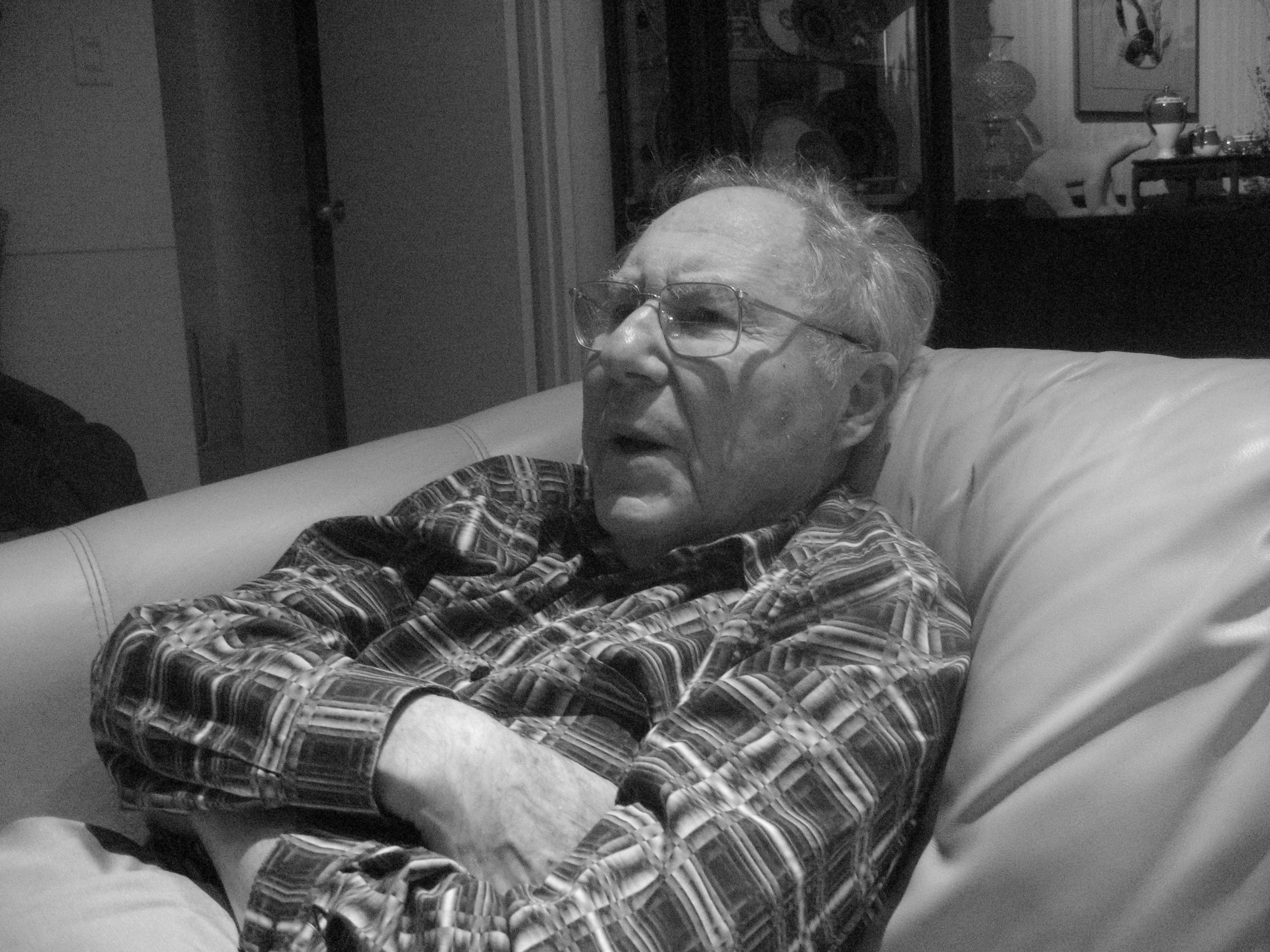
One of my favorite pictures of Bill, taken while we watched the Superbowl together.

One of my favorite pictures of Bill, taken while we watched the Superbowl together.

I became friends with Glasser in 2000, which led to our working closely together, beginning in 2003, on what would become his biography. I read most everything he wrote, all of his 23 books and many of his journal articles, and interviewed family members, friends, and colleagues about his career, however it was the almost 60 interviews that he and I did together that formed the backbone for the book. The timing of our work turned out to be important, as he was still strong and sharp as we looked back into his long and impressive career. To pick his brain on important topics in such a personal setting is a privilege I shall always treasure. The book (I think there is a good possibility it will be called William Glasser: Champion of Choice) should be available in a few months.

Taken of me and Glasser as I present him with a copy of my dissertation, which was a biographical study on the development of his ideas.

Taken of me and Glasser as I present him with a copy of my dissertation, which was a biographical study on the development of his ideas.

———————–

Something significant occurred within the psychiatric community over the last couple of weeks and it reminded me, in a roundabout way, of Glasser’s basic message. The “something significant” was that the director of the National Institute of Mental Health (NIMH), Dr. Thomas Insel, has come out against the long-awaited DSM-V. Rejecting the most recent version of the DSM (Diagnostic and Statistical Manual of Mental Disorders), referred to as the bible of psychiatry, seems to admit what Glasser said for so many years, that it described symptoms, but didn’t define mental illness. People may act differently and even strangely, but that doesn’t necessarily mean their brain is diseased. Psychiatry and the psychiatric drug industry is desperate to discover the biological connection between behavior and disease in the brain, but as yet no connection has been determined.

William Glasser and Thomas Szasz at the 2005 Evolution of Psychotherapy conference. Glasser and Szasz were not close during their careers, but they did agree that there was no such thing as mental illness.

William Glasser and Thomas Szasz at the 2005 Evolution of Psychotherapy conference. Glasser and Szasz were not close during their careers, but they did agree that there was no such thing as mental illness.

A recently published book about how the DSM is compiled, The Book of Woe: The Making of the DSM and the Unmasking of Psychiatry (2013), states simply that “Psychiatric diagnosis is built on fiction and sold to the public as fact.” Gary Greenberg, the author of the book and a psychotherapist himself, reminds readers of what people like Glasser have been saying for a long time, that while the public seems to believe that psychiatric diagnosis is based on scientific data and comprehensive research there is still “not one biological test for a DSM disorder.”

———————–

My hope is that on this day, Glasser’s birthday, we will appreciate him for creating and refining such an empowering and hopeful explanation of how our brains work and why we behave the way we do. Rather than our being victims of a diseased brain, we can begin to take steps, however small, toward responsibility and happiness. For fifty years he has pointed the way to mental health, emphasizing the importance of the relationships with others in our lives and explaining the power and freedom of our choices. His ideas have meant a great deal to me personally and have added value to my life.

Thank you, Bill. May this day be special in every way!

Don’t Always Believe What You Think

The concept of the basic needs is one of the core beliefs of choice theory. As you read today’s blog post you will come to see just how basic and how important these needs are. A quick review – choice theory describes how everyone is born with a unique set of basic needs. I believe these needs include a physiological need, that being the need for survival, and several psychological needs, that being the need for purpose and meaning, the need for love, belonging, and connection with others, the need for success and the power to achieve worthy goals, the need to be free, and the need to experience fun and joy. From the moment we are born, all of our behavior is an attempt to meet one or more of these needs. During the Soul Shapers workshop, after we have more carefully reviewed the basic needs, I ask the question, “Which need do you think ultimately is in the driver’s seat? Which need do you think has the greatest influence on our behavior?” Usually, the responses quickly indicate that the survival need would have the last word when it comes to our behavior. The feeling is that we are programmed to survive and the survival mechanism would therefore have the greatest influence.

Headlines from this past week reminded us that this is not the case. New sobering and disturbing statistics reveal that more people are taking their own lives than ever before in the U.S. Data from the Center for Disease Control and Prevention indicate that over the last year more people died from suicide—38,364—than in motor vehicle accidents—33,687. That is nearly 5,000 more deaths. It is significant, too, that it is middle-aged Americans, the baby boomers, making by far the biggest leap in the suicide increase.

One thing we can take from this statistic (and this is a statistic that should very much get our attention) is the incredible power of the psychological needs. Our logic wants to believe that the need for survival would ultimately hold sway, yet this data is a stark reminder that this just isn’t true. Each of the psychological needs, when perceived as not being met, could lead a person to overrule his/her need to survive.

One of the reasons I so strongly believe in choice theory is that people who understand it’s principles and begin to implement the principles in their lives enter into a kind of personal stability from which they can process life more effectively. Choice theory doesn’t offer a perfect stability, but it helps. I personally have melancholy tendencies and am very capable of choosing to get “down in the dumps” or of choosing to depress, yet coming to understand and appreciate my choice power has helped a great deal. It is this choice power, including the concepts of the basic needs and the quality world that I so much want teachers and students to understand and practice, as well.

From a secular perspective, choice theory offers hope. We can come to recognize when a basic need isn’t being met and begin to take steps, no matter how tiny those steps might be, that will bring us closer to stability and happiness. When choice theory is understood and implemented from a spiritual perspective the results can become even more hopeful and even powerful. Students can be taught about the basic needs and the ways in which those needs urge us to behave. Students can be taught the concept of the quality world and the central importance of the pictures we place in our quality world. I see this kind of understanding as preventive mental health of the highest order.

A bumper sticker worth noting read, “Don’t Always Believe What You Think.” Choice theory helps us to understand how this bumper stick, especially relevant regarding today’s topic, might be true.

—————————-

Remember to sign up for the upcoming Soul Shaper workshops taking place next month at PUC. Encourage your colleagues to experience the workshop, too. When more than one teacher or staff member at a school understands choice theory, significant changes can occur. Soul Shapers 2 is designed to be re-taken more than once. Get in the habit of taking Soul Shapers 2 each summer and re-charge the choice theory battery.

Soul Shapers 1 meets from June 17-20

Soul Shapers 2 meets from June 24-27

Sign up for either course at  www.puc.edu/summer-teacher

—————————–

Let others know about The Better Plan blog. After close to six months of being in existence there are 67 people officially “following” the blog. I think more than the 67 are reading the blogs, but let’s try to get the number higher. The goal is to create and support a non-coercive, choice theory community. I’m always glad to hear from you. Let me know if you have helpful ideas.